➡️ Intra-arch malocclusions that include variations in individual tooth position and malocclusions affecting a group of teeth within an arch. Intra arch malocclusions can also include condition like spacing or crowding within the dental arch.
Brief Description:
1. DISTAL INCLINATION OR DISTAL TIPPING: This refers to a condition where the crown of the tooth is tilted or inclined distally.
2. MESIAL INCLINATION OR MESIAL TIPPING: This is a condition where the crown of the tooth is tilted or inclined mesially.
3. LINGUAL INCLINATION: This is an abnormal lingual or palatal tilting of the tooth. This condition is also called Retroclination.
4. BUCCAL INCLINATION: This refers to labial or buccal tilting of the tooth. This condition is also called Proclination.
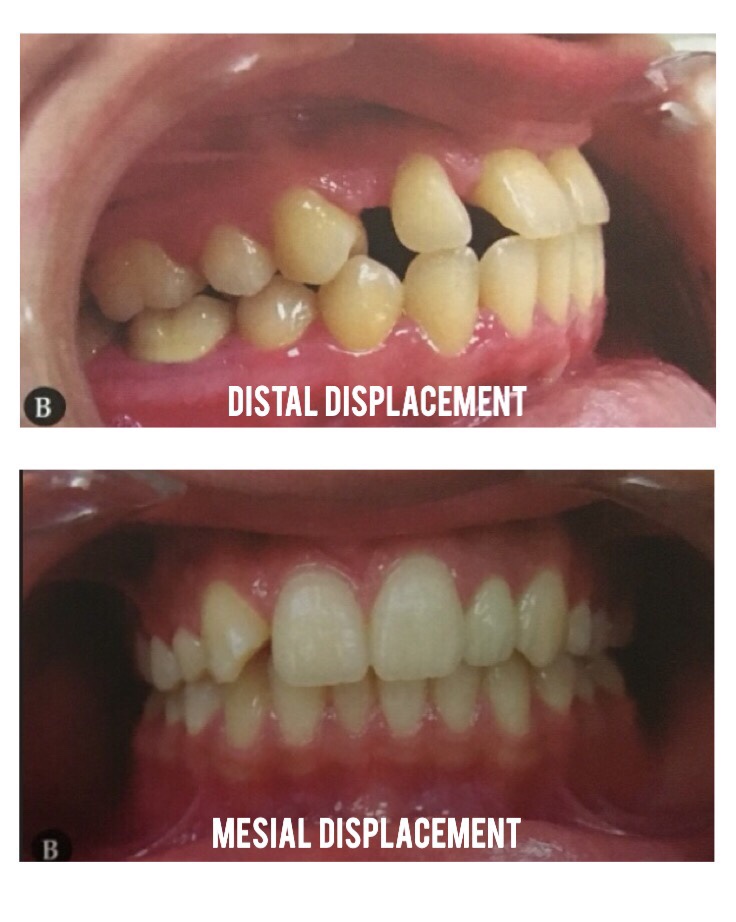
5. MESIAL DISPLACEMENT: This refers to a tooth that is bodily moved in a mesial direction towards the midline.
6. DISTAL DISPLACEMENT: This refers to a tooth that is bodily moved in a distal direction away from the midline.
7. LINGUAL DISPLACEMENT: This is a condition where the entire tooth is displaced in a lingual direction.
8. BUCCAL DISPLACEMENT: This describes a condition where the tooth is displaced bodily in a labial or buccal direction.
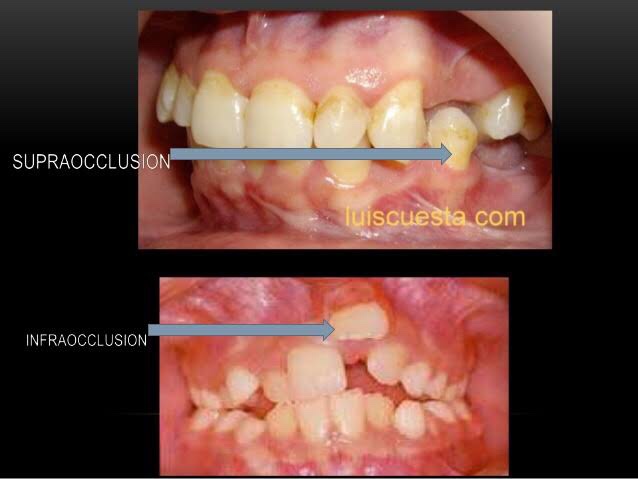
9. INFRAVERSION OR INFRA-OCCLUSION: This refers to a tooth that has not erupted enough compared to the other teeth in the arch.
10. SUPRA-OCCLUSION: This is a tooth that has over-erupted as compared to other teeth in the arch.
11. ROTATIONS: (Tooth movements around its long axis)
A) Disto-lingual or mesio-buccal rotation: This descibes the tooth that has moved around its long axis so that the distal aspect is more lingually placed.
B) Mesio-lingual or disto-buccal rotation: This descibes the tooth that has moved around its long axis so that the mesial aspect is more lingually placed.
12. TRANSPOSITION: This term describes a condition where two teeth have exchanged places.
References: Textbook of Orthodontics The Art and Science 6th Edition By Bhalajhi!
Hepatitis is a term that means inflammation of the liver. It can be caused by many different things, one of which can be from a virus. Let’s take a retrospective look at two people who unknowingly had a Hepatitis C virus.
Jacob was in his twenties when he was seriously injured in a car accident. Through his long recovery, he became addicted to his pain medication. It became quite severe and when the doctor stopped prescribing his pain medication, he turned to heroine. That’s how he met Anna. They both struggled with heroine addiction, injecting the drug at least once daily.
As their lives spiraled out of control, they resorted to riskier practices of drug use and were sharing needles with people they didn’t even know. Several weeks after this began, Anna became ill with flu-like symptoms and Jacob did not. It was a common illness and not too much thought was given to it.
Thankfully after a series of events, both Jacob and Anna successfully completed rehab and led a successful life. Now, Jacob was in his forties and he became ill. His skin was yellow in color and his abdomen was distended.
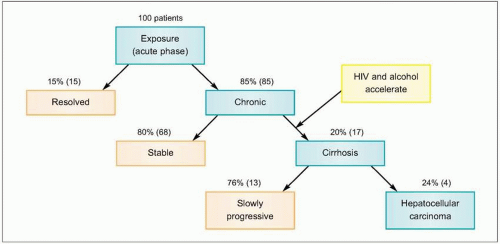
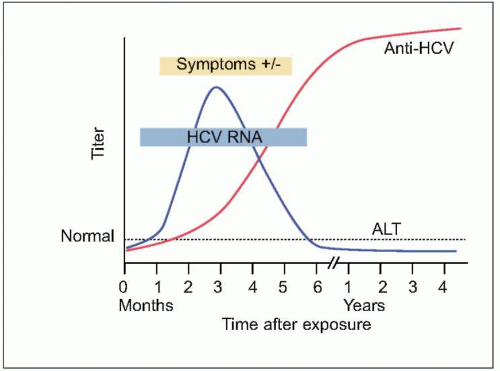
Both Jacob and Anna had the Hepatitis C virus. Anna’s illness was acute meaning that it lasted less than six months. Although she never knew she had Hepatitis C, she was part of the small percentage that fully recover without treatment. Jacob had a chronicinfection meaning that it lasted more than six months, in fact it lasted twenty years for him. Even though he had the infection all of this time, he was unaware of it until he developed symptoms from his advanced liver damage.
It is bloodborne, meaning it is spread from one person to another in the blood. The majority of cases are due to injected drug use in which needles are shared.
Since 1992, donated blood has been tested for Hepatitis C but prior to this people could contract a Hepatitis C virus through receiving blood transfusions. Inadequate medical equipment sterilization can also spread Hepatitis C from one person to another. It can be passed from mother to baby during childbirth but it is not passed through breast milk. It can be passed from one to another through sexual intercourse.
Unique Features
most common cause of cirrhosis is HCV
most common cause of acute viral hepatitis leading to chronic hepatitis ( Risk of conversion)
Hallmark feature = pauci inflammatory reaction in acute phase
Virus that comes in acute phase causes chronicity
HCV inhibit insulin function leading to post receptor signalling of insulin resistance
The majority of Hepatitis C infections do not have any symptoms present. As we saw with Jacob, he didn’t show any symptoms and was unaware that he had Hepatitis C. With chronic Hepatitis C, a person can remain asymptomatic for decades. They are usually only diagnosed after they start having symptoms from advanced liver disease as a result of the Hepatitis C virus.
Serology
HCV RNA = Gold standard marker for diagnosis of HCV
Hepatitis B is a virus that occurs in the liver. It can be acute or chronic.
Stacey is a 36-year-old woman. She has not been feeling well lately. Her symptoms are general, and she thinks she is just run down or getting the flu. She is tired, has no appetite, has abdominal pain, and has a headache. However, today Stacey noticed that her urine is a little dark. She decides to go see her doctor.
Hepatitis B is a virus of the liver. It can be acute, meaning that a person will have hepatitis B for a short period of time and then get better. Hepatitis B can also be chronic, meaning that it can cause a long-term infection and will eventually cause damage to the liver. Sometimes there are no symptoms associated with hepatitis B, but it is still contagious to others as long as it is present in the body.
Symptoms of Hepatitis B
Liver damage is by sensitised Tlymphocytes (most common)
Virus has direct cytopathic effect, damaging the liver directly by virus
HBV causes immune complex disease due to HBsAg + Anti HBs participation
This complex immune disease manifests as serum sickness like illness ( Rash, Arthralgia, High grade fever) It is Type III Hypersensitive Reaction
Associated with unrelated diseases because these disease MOT is different
leprosy
down syndrome
hodgkin lymphoma- Paul Ebstein like fever, after taking alcohol, pain occurs in lymph node.
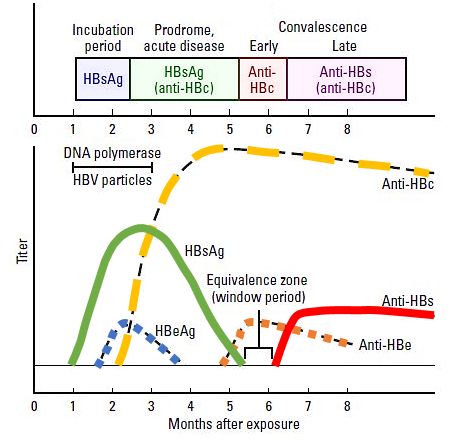
Interpreting Hepatitis B Serology in 5 Easy steps
A unique feature contributing to its virulence, is its ability to trick the host’s immune system by producing decoy antibodies. These decoy antibodies confuse the immune system and make the virus more difficult to fight.
Upon exposure to a virus, the body will produce antibodies against it. These antibodies are detectable in the blood. Hepatitis B surface antibodies, HBsAB provide immunity because the body can now recognize the virus and fight it. Presence of HBsAB can be the result of passive or active immunity immunity. Passive immunity occurs as a result of receiving the hepatitis B vaccine. Active immunity occurs after a previous hepatitis B infection.
Hepatitis B surface antigen (HBsAg)
Appears during incubation period (1-6 months), 2-7 weeks prior to symptoms.
Peaks when the patient is most ill.
Becomes undetectable in 3-6 months.
Indicates infection – recent or chronic.
Hepatitis B surface antibody (anti-HBs or HBsAb)
Arises once the acute disease has resolved.
Sometimes, not detectable unless until weeks or months after HBsAg has disappeared. This gap is called “window” period.
Indicates, immunity (by vaccination or infection).
Hepatitis B core antibody (anti-HBc or HBcAb)
Anti-HBc IgM and elevated serum transaminases also appear shortly before the symptom onset.
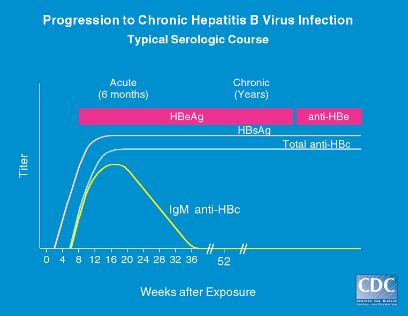
Over the next few months, anti-HBc IgM is replaced with an IgG component.
IgM = Recent (Acute) infection
IgG = Chronic infection
Hepatitis B e-antigen (HBeAg)
Shortly after HBsAg appears, HBeAg and HBV DNA can be detected in the serum and are markers of the acute viral replication.
Predictor of infectivity
Hepatitis B e-antibody (anti-HBe or HBeAb)
Anti-HBe appears shortly after HBeAg vanishes and indicates subsiding viral activity.
Predictor of low infectivity.
Causes of Hepatitis B
Hepatitis B is transmitted by body fluids including blood, saliva, semen, and vaginal secretions. It moves through mucous membranes and breaks in the skin. It can also be transmitted from mother to baby during birth. Specific actions and populations that increase the risk of contracting hepatitis B are:
Unprotected sex with someone infected with hepatitis B
Getting a tattoo or piercing with an unsterilized needle
Sharing drug needles with an infected person
Sharing razors or toothbrushes with someone infected with hepatitis B
People who are frequently exposed to blood, blood products, or other body fluids
Health care workers
Travelers who go to areas with uncertain sanitary conditions
People with a history of sexually transmitted diseases
Those who have received blood or blood products
Stacey has had several sexual partners and does not always practice safe sex. She has had four sexual partners in the last six months. Stacey makes sure to let her doctor know this information. The blood work has resulted, and Stacey is positive for hepatitis B. It seems that Stacey contracted it through having unprotected sex with a partner with hepatitis B.
Treatment for hepatitis B depends on how long a person has had the virus, if there are symptoms, and if it is a chronic infection. Acute hepatitis B with minimal or no symptoms is treated at home with eating a balanced diet, drinking fluids, resting, and avoiding drugs and alcohol. If a person is experiencing severe symptoms, an antiviral medication may be prescribed, but it is uncommon. Hepatitis B is considered acute if it lasts less than six months.
Out to accomplish one of the biggest personal goals of his life, Sam is half done hiking the mountain range spanning multiple states. He makes occasional stops to gather supplies and take a shower, but these last few weeks on the trail have been challenging. His resources are dwindling, and he is having difficulty finding clean water supplies.
Now that summer is in its prime, the scorching sun is slowing Sam down and making him incredibly thirsty. He forgoes all of his precautionary measures to purify the water from any contaminants or infectious debris. Since he has run out of water cleansing tablets and is too thirsty to boil the water prior to drinking it, he sticks his face in the stream and has his fill. Within a few weeks, Sam begins to feel ill as if he has the flu. He is barely able to make it into a public health clinic to find the cause of his symptoms.
What is Hepatitis A?
Stumbling into the clinic, it is clear that Sam does not feel well. Blood work is drawn and the staff determined that he is in a state of liver failure caused by the Hepatitis A Virus (HAV). Known to cause inflammation or swelling and irritation to the liver, HAV can have a significant impact on a person’s energy levels and ability to regulate blood clotting.
Hepatitis A is transferred when individuals come into contact with infected feces or solid waste carrying the virus. Rarely, by blood transfusion ( viremia – during late intubation period)
While HAV itself is rarely life-threatening, the virus can lead to complete liver failure and cause death in rare cases.
Symptoms of HAV
The blood work identifying the presence of HAV along with Sam’s symptoms confirm the diagnosis. Once someone contracts HAV, symptoms may or may not appear. Common symptoms of this virus include:
Flu-like symptoms – achiness, stiffness, fever
Jaundiced appearance, or yellowing of the skin, typically indicating liver disease
Children- Asymtomatic
Adults- when seen, its severe hepatitis
Mild disease in children can occur as anicteric hepatitis
Relapsing Hepatitis (sometimes)- Normal monophasic HAV
Sam learns that symptoms begin to develop about 2-4 weeks after exposure. Symptom management may last a period of up to 6 months until an individual can expect them to completely resolve.
Risk Factors
The nurse teaches Sam common ways that HAV is transmitted:
Contaminated water: dirty or unfiltered drinking water contaminated with infected feces
Unsanitary sewage: unregulated or undermanaged disposal of waste
Dirty fruits and vegetables
Intimate contact with an infected individual through sex or caregiving
Prevention
Curious to know how she could have prevented the infection, he learns that he could have received a vaccine before he left the country. The vaccine, or medication that can boost immunity to the virus, is usually given to people over the age of 1 year and comes in the form of 2 injections administered 6 months apart. Children should be vaccinated between 1 to 2 years of age but can receive the vaccine later in life as well.
Serology
IgM Anti HAV = Acute Hep A (<6months)
IgG Anti HAV = Immune (>6months)
Virus is active (doesn’t cause chronic infection)
Natural Immune – Recovered with proper bed rest and diet
Artificial Immune – Post infection Vaccine for HAV
➡️ Orthodontic tooth movement is a unique process where a solid object (teeth) is made to move through a solid medium (bone).
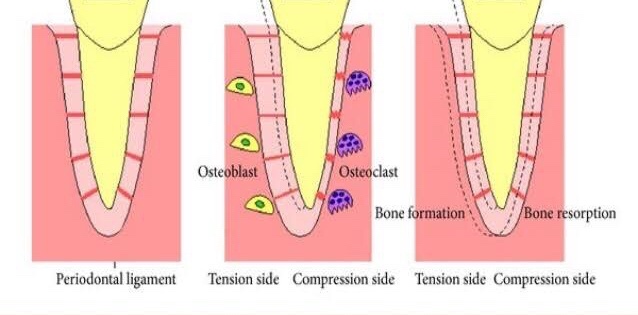
➡️ Orthodontic treatment is possible due to the fact that whenever a prolonged force is applied on a tooth, bone remodeling occurs around the tooth resulting in its movement.
➡️ Physiologic tooth movements are naturally occurring tooth movements that take place during and after tooth eruption. They include:
a. Tooth eruption
b. Migration or drift of teeth
c. Changes in tooth position during mastication
a) Tooth Eruption:
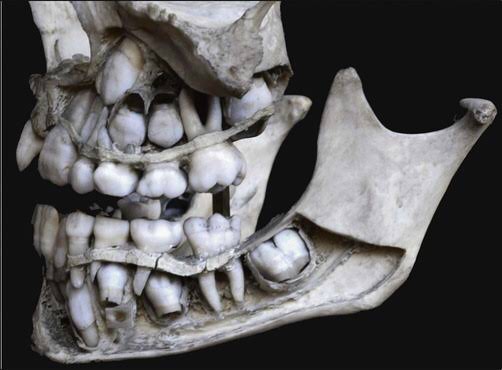
➡️ Tooth eruption is the axial movement of the tooth from its developmental position in the jaw to its final position in the oral cavity. A number of theories have been put forward to explain how the eruption process take place.
a. Blood pressure theory: According to this theory, the tissue around the developing end of the root is highly vascular. This vascular pressure is believed to cause the axial movement of the teeth.
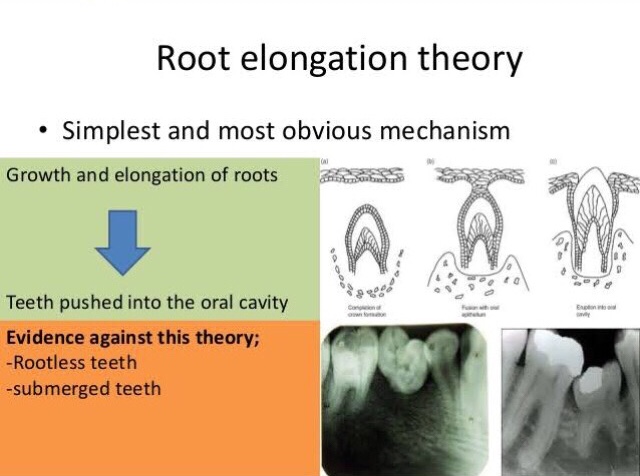
b. Root growth: According to the proponents of this theory, the apical growth of root results in an axially directed force that brings about the eruption of the teeth. This theory has not been accepted. Teeth move a greater distance during eruption than the increase in root length. In addition the onset of root growth and eruption do not seem to coincide. Teeth that are malformed and lack roots also erupt in a no. of cases.
c. Hammock ligament: According to Sicher, a band of fibrous tissue exists below the root apex spanning from one side of the alveolar wall to the other. This fibrous tissue appears to form a network below the developing root and is rich in fluid droplets. The developing root forces itself against this band of tissue, which in turn applies an occlusally directed force on the tooth.
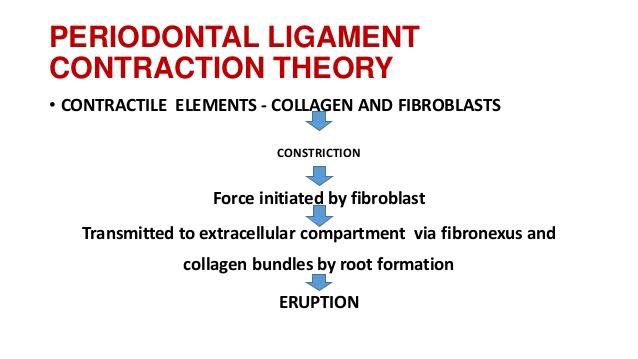
d. Periodontal ligament traction: This theory states that the periodontal ligament is rich in fibroblasts that contain contractile tissue. The contraction of these periodontal fibres result in axial movement of the tooth.
b) Migration or drift of teeth:
Migration refers to the minor changes in tooth position observed after eruption of teeth. Teeth show a lifelong ability to drift through the alveolar bone, a process called physiologic tooth migration.
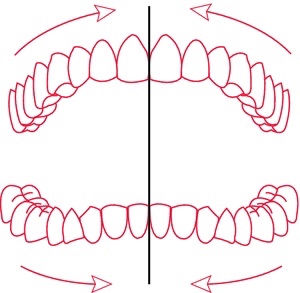
It is generally believed that the direction of tooth migration varies from species to species. The dentition in humans and primates shows a natural tendency to move in a mesial and occlusal direction. This is largely true in case of the maxillary dentition. However the lower jaw could show certain variations.
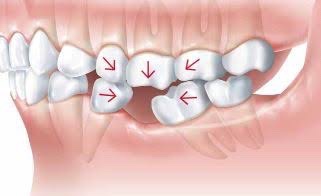
Tooth migration is usually a result of proximal & occlusal wear of teeth. As the teeth undergo occlusal and proximal wear, they move in a mesial and occlusal direction to maintain inter-proximal and occlusal contact. Change in state of equilibrium such as by loss of neighbouring or opposing teeth may induce further movement.
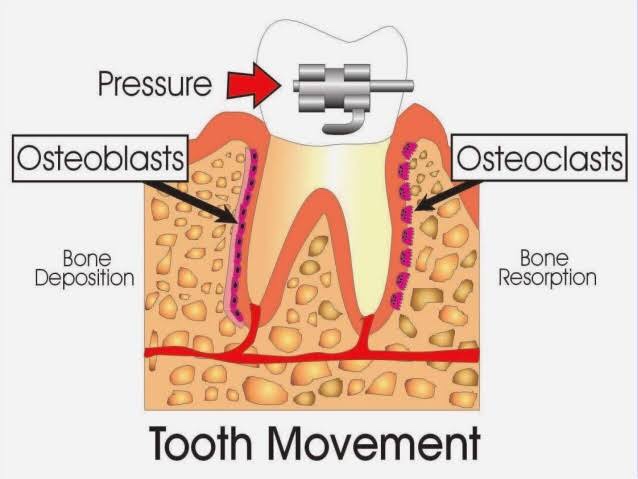
The remodeling process that accompanies physiologic migration is a normal function of the supporting structures. Osteoclasts are seen in lacunae along the alveolar bone wall towards which the tooth is moving. This is the resorptive surface. The alveolar bone wall on the opposite side from which the tooth is moving away is the depository surface and is characterized by osteoblasts depositing non mineralized osteoid which later mineralizes to form mature bone. In addition to this mesio-distal movement of teeth, they also exhibit a continued eruption throughout life accompanying the vertical development of their surrounding tissue.
C) TOOTH MOVEMENT DURING MASTICATION:
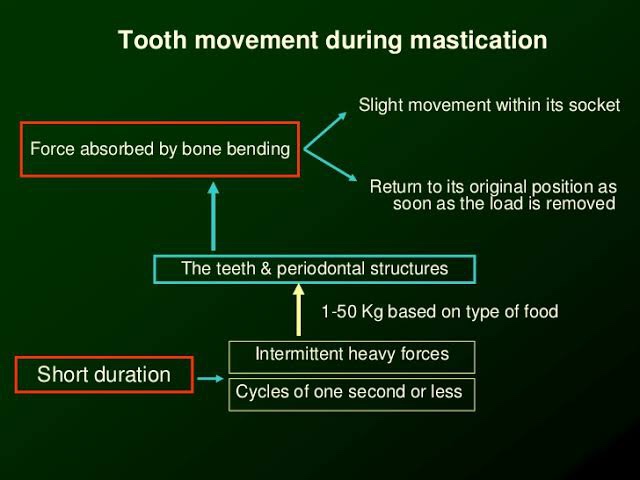
➡️ During mastication, the teeth and periodontal structures are subjected to intermittent heavy forces, which occur occur in cycles of one second or less and may range from 1-50 kg based on the type of food being masticated. A tooth subjected to these heavy forces, exhibits slight movement within its socket and subsequently returns to its original position as soon as the load is removed.
➡️ When a tooth is subjected to such heavy forces, the tissue fluid present in the periodontal space, being incompressible, prevents major displacement of the tooth within the socket. Therefore the forces are transmitted through the tissue fluids to the adjacent alveolar bone. Recent studies have shown that the alveolar bone can bend in response to heavy masticatory forces.
➡️ Whenever the forces of mastication are sustained and are more than the usual one second cycle, the periodontal fluid is squeezed out and pain is felt as the tooth is displaced into the PDL space.
References: Textbook of Orthodontics The Art and Science 6th Edition By Bhalajhi!…Image source: Google
Other than all of the things that I just mentioned the liver is important for, it’s also important for the production of something known as bile. This is a greenish liquid produced in the liver and stored in the gallbladder, which facilitates the digestion of fat.
Bile, among other things, contains something known as bilirubin. Bilirubin is an orange-yellow pigment formed from the breakdown of red blood cells. Bilirubin is converted into other substances that eventually give urine its yellow color and feces its yellow-brown color. Who knew physiology could be so colorful and yet so disgusting?
When red blood cells break down due to age or destruction, then something known as unconjugated or indirect or water-insoluble bilirubin is released into the bloodstream. Once this unconjugated bilirubin enters the liver, the liver converts it into conjugated or direct or water-soluble bilirubin by tacking on a compound known as glucuronic acid; this is what makes bilirubin water soluble.
This newly water-soluble bilirubin is then secreted into the watery bile and, from there, into the intestines.
If all of this is making your head spin, don’t worry; we can simplify it even more. Your liver is like a giant factory. Through one end, raw ingredients come in by the truckload. In our case, that’s crates and crates of raw, hard, and unprocessed indirect bilirubin. Once inside the factory, the workers take a piece of unconjugated bilirubin and stick another ingredient right onto it, thereby making an entirely new concoction, called conjugated bilirubin. This conjugated bilirubin isn’t hard like unconjugated bilirubin; it’s slushy and can dissolve easily in water instead.