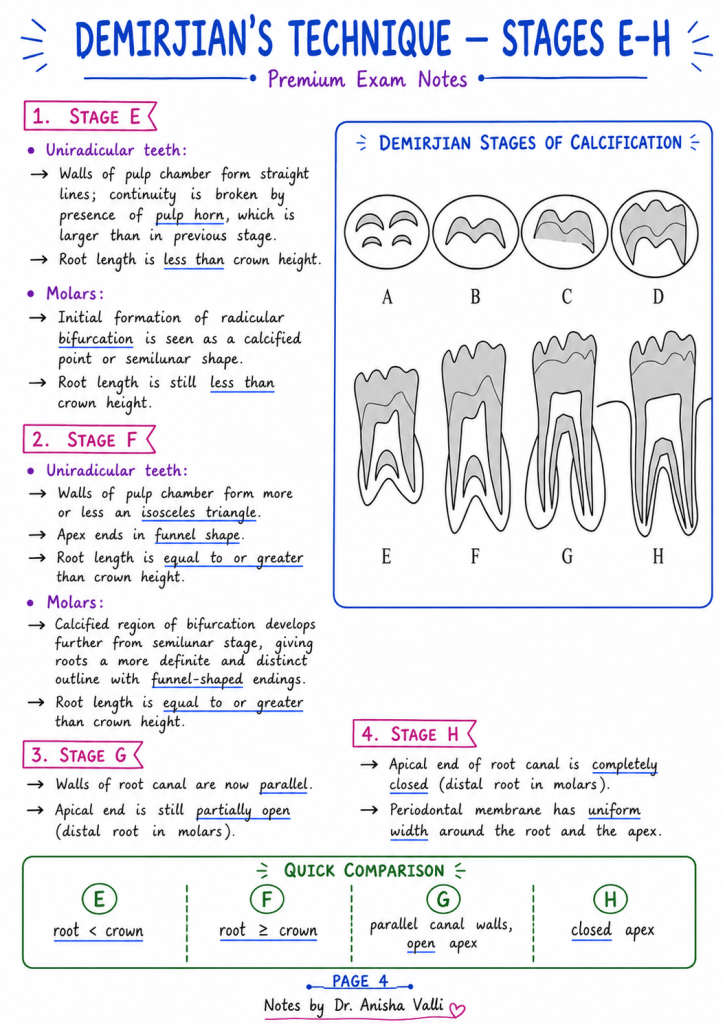
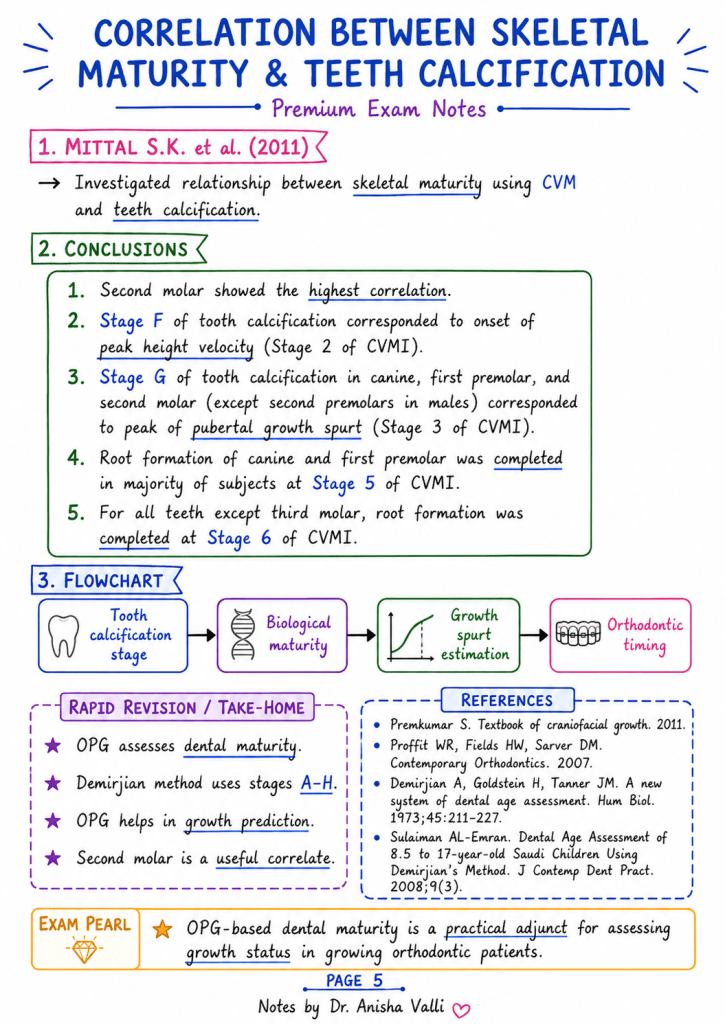
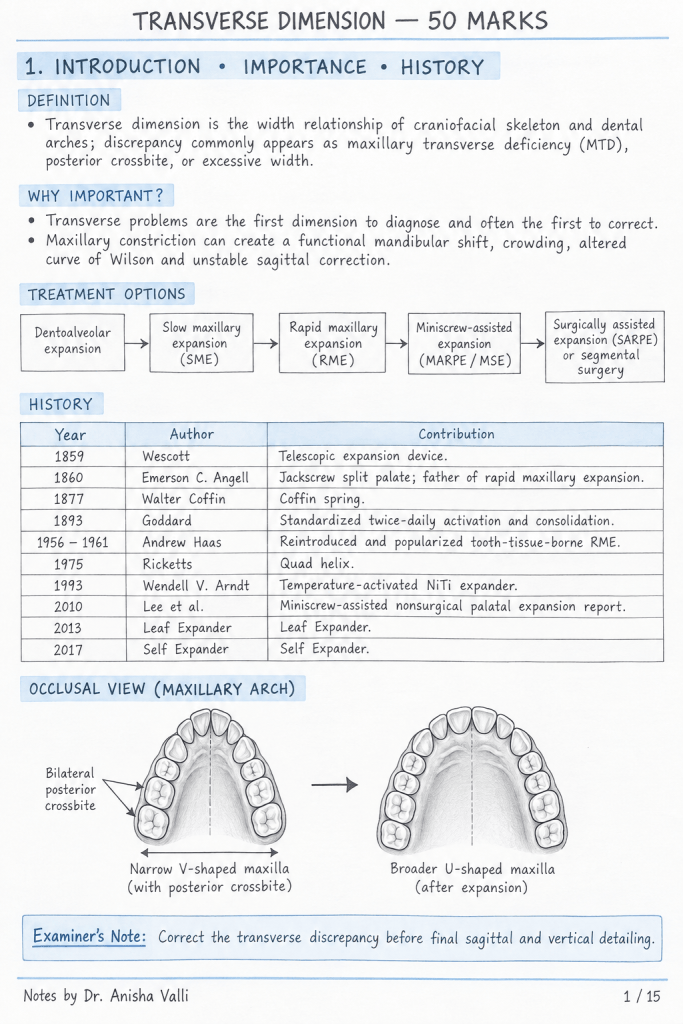
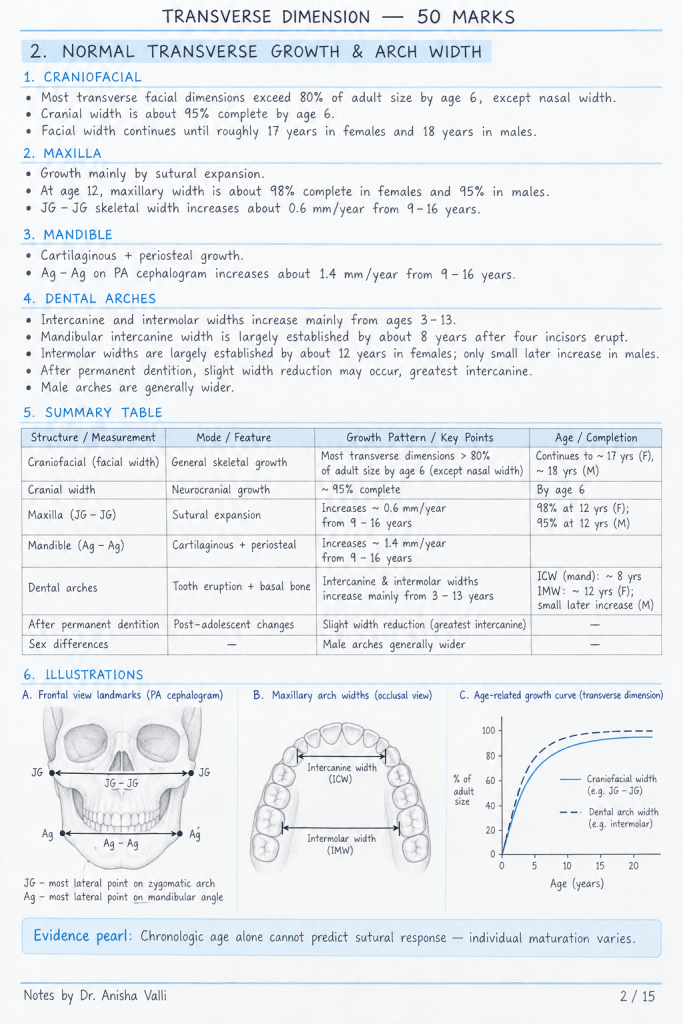
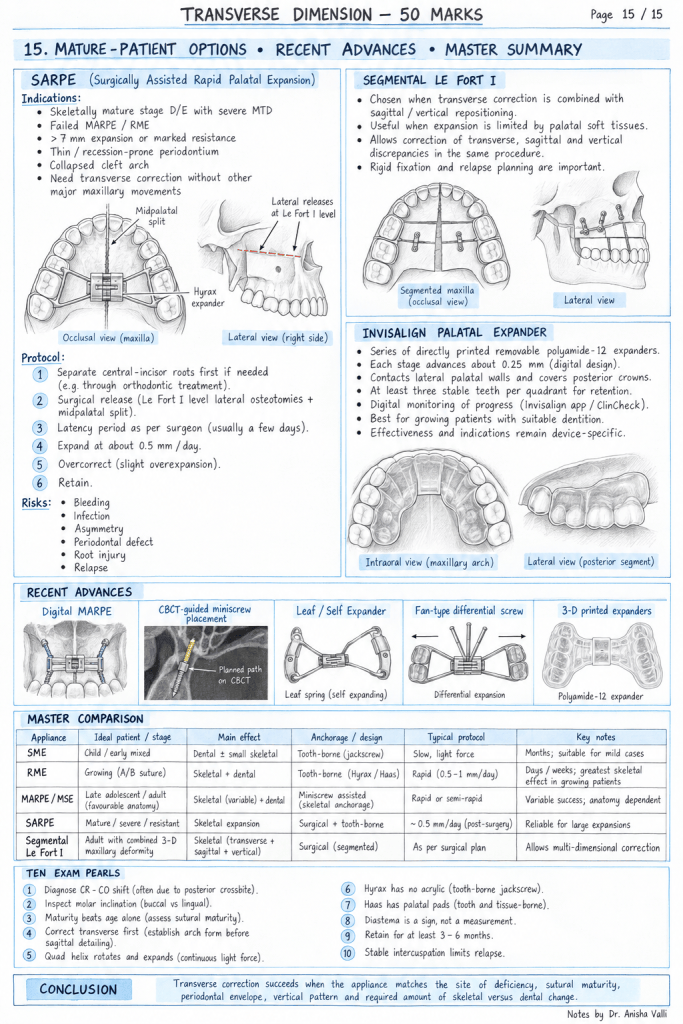
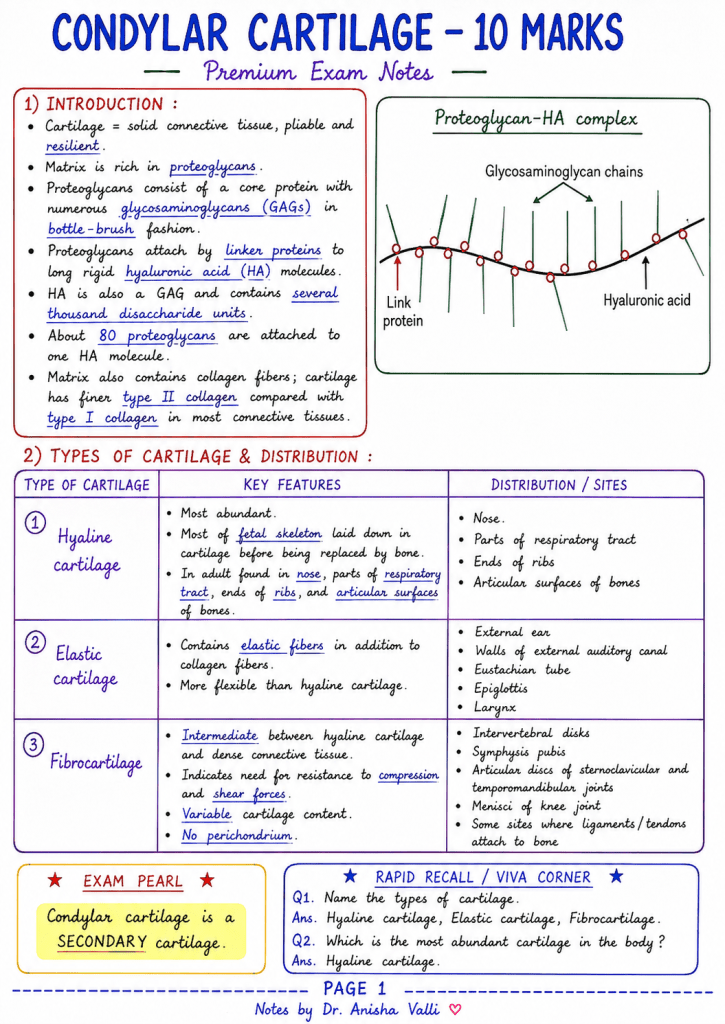
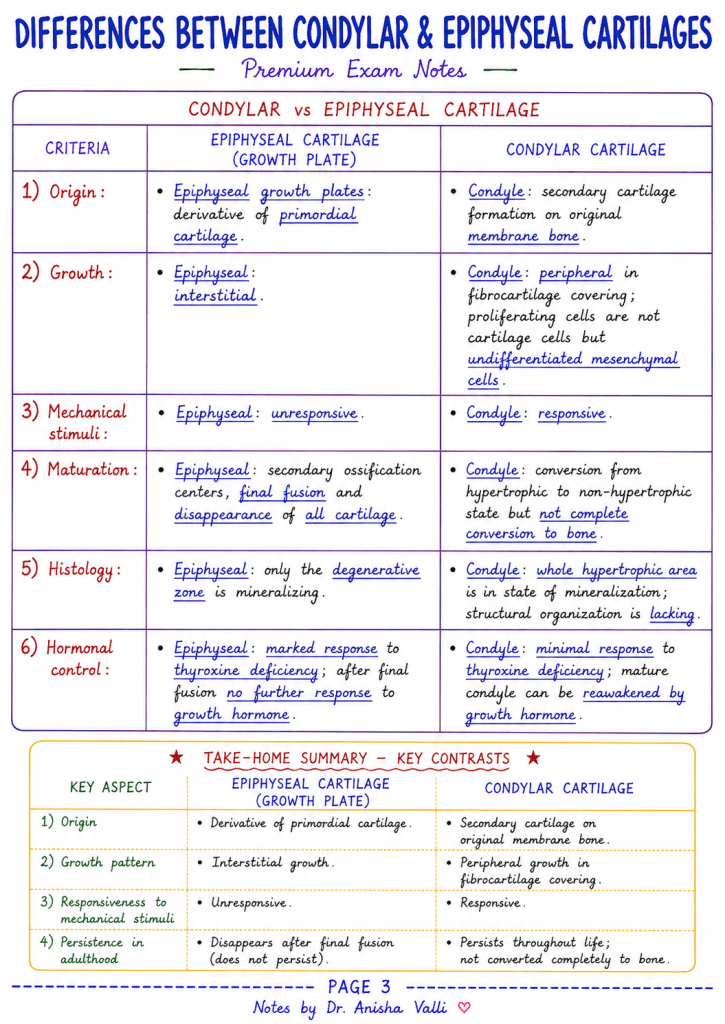
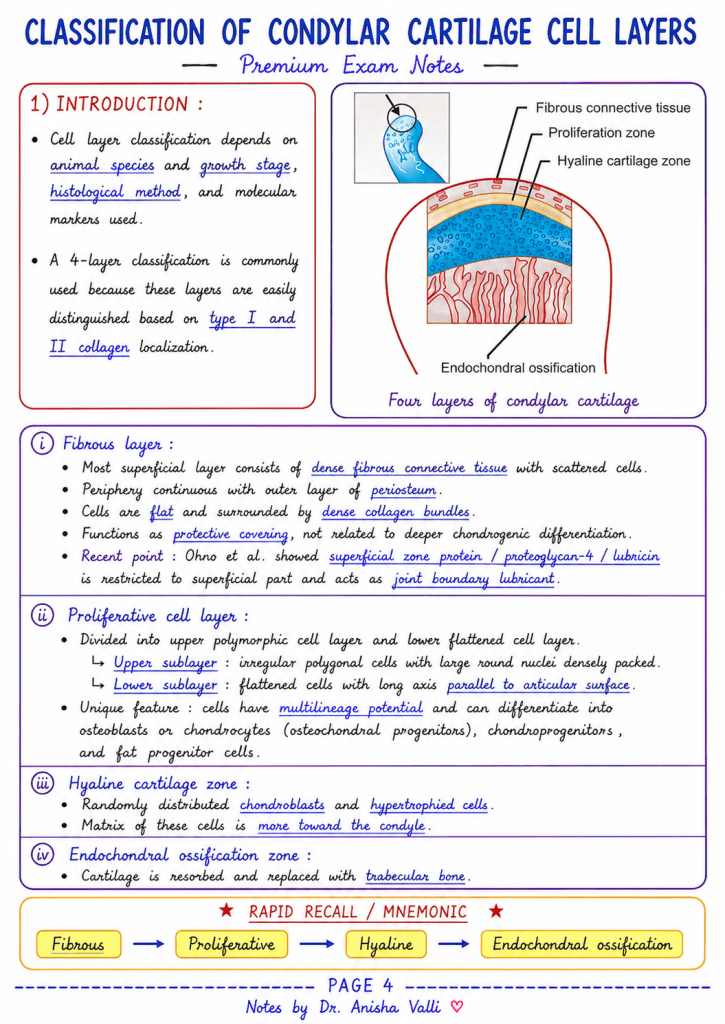
Tooth movement after orthodontic treatment with 4 second premolar extractions
Extraction TypeIncisor Retraction (mm)Space Closure (% Anterior)Anchorage Loss (Molar Advance mm)Key Viva Point 
4 Second PremolarsMax 3.3 / Man 2.950% Max / 46% ManMax 3.2 / Man 3.4Equal anterior-posterior split; reverse Spee controls tipping.
4 First Premolars10.3 combined66.5%5.2High retraction risk; reinforces Tweed’s 1/3 rule exceeded.
Upper 1st/Lower 2nd Premolar9.3 combined56.3%7.2Moderates over-retraction in borderline cases.
4 First Molars6.3 combined31%13.9Minimal anterior pull; boosts third molar eruption (90%).
Non-Extraction1.7 Max / 0.8 Man forwardN/AMinimalBaseline for stability testing.

Mnemonic: “Second Less Pull” – Second premolars: Less incisor retraction than firsts; molars pull more via root area

There are two kinds of orthodontic appliances.

The first kind enters the mouth like it’s invading a small country.

Heavy wires. Heavy forces. Heavy drama.

The second kind walks in quietly, carrying a 0.016″ Australian wire and the confidence of a man who has studied Stone Age skulls for fun.

That was Percy Raymond Begg.

And honestly? Orthodontics has never fully recovered.

Because Begg didn’t just invent a technique.
He started a rebellion against brute-force orthodontics.

His differential force method whispered something radical:

“Maybe teeth move better when we stop attacking them.”

Groundbreaking.


The Philosophy Behind Begg Mechanics

Most orthodontists looked at crowded teeth and thought:

“Push harder.”

Begg looked at ancient Australian Aboriginal dentitions and thought:

“Wait… these people had edge-to-edge bites, massive attrition, minimal crowding, and functional stability. What if nature already solved this?”

That observation changed everything.

Instead of forcing rigid bodily movement with heavy rectangular wires, Begg used:

  • Light continuous forces
  • Free tipping mechanics
  • Differential force distribution
  • Simulated physiologic attrition
  • Minimal friction
  • Biological tolerance

In short:

The edgewise appliance behaved like a strict military school.

Begg mechanics behaved like jazz.


Why Is It Called “Differential Force”?

Because not all teeth deserve equal suffering.

A molar has giant roots and excellent anchorage.

An incisor has the root surface area of a stressed intern.

So why apply the same force to both?

Begg’s answer was elegant:
Use light resilient wires that naturally deliver smaller forces to anterior teeth and relatively greater anchorage resistance posteriorly.


The Core Philosophy of Begg Technique

PrincipleWhat It Means Clinically
Light forcesLess pain, less tissue damage
Free crown tippingFaster alignment
Differential forceSmall-rooted teeth move easily
Simulated attritionExtraction/IPR compensates for absent wear
Continuous forceLong activation with fewer visits
Root correction laterStage III handles torque/uprighting
Anchor molar controlPrevents anchorage loss

The Appliance Design: Tiny Brackets, Big Personality

Begg brackets look deceptively simple.

Which is exactly why edgewise-trained orthodontists underestimate them.

The modified ribbon-arch bracket was intentionally designed to allow:

  • Free tipping
  • Minimal friction
  • Sliding mechanics
  • Efficient elastic traction

Meanwhile the wire?

Australian stainless steel wire.

The Beyoncé of orthodontic wires.

Flexible. Resilient. Dramatic when activated.


The Three Stages of Begg Therapy

Begg treatment is beautifully organized.

Like a three-act movie where every tooth has character development.


The Three Stages of Begg Mechanotherapy

StageMain GoalKey WireSignature Mechanics
Stage IAlignment + bite opening0.016″ round wireAnchor bends, tipping
Stage IISpace closure0.020″ passive wireClass II/III elastics
Stage IIIRoot paralleling0.020″ rigid base wireUprighting springs, torque auxiliaries

Stage I: Controlled Chaos

This is where Begg mechanics become entertaining.

The teeth tip freely.

Crowding unravels rapidly.

Deep bites open dramatically.

And edgewise orthodontists watching nearby start sweating.

The goal of Stage I is simple:

Get the teeth into an edge-to-edge relationship while maintaining molar anchorage.


Stage I Objectives

ObjectiveMechanics Used
Eliminate overbiteAnchor bends
Align incisorsLight round wire
Correct rotationsRotating springs
Correct AP discrepancyClass II elastics
Coordinate archesContinuous light mechanics
Maintain molar anchorageUpright molars + anchor bends

The Famous Anchor Bend

Orthodontic residents learn about anchor bends the same way people learn taxes:

Slowly. Painfully. Against their will.

But the anchor bend is biomechanical genius.

It:

  • Opens the bite
  • Controls molars
  • Helps maintain anchorage
  • Allows anterior depression

Tiny bend. Massive consequences.


Rotating Springs: Tiny Orthodontic Chaos Goblins

Begg rotating springs are wonderfully aggressive little creatures.

Their entire purpose is:

“You rotated? Excellent. Rotate more.”

Because Begg philosophy believes in overcorrection.

A tooth corrected to “perfect” usually relapses.

A tooth corrected beyond perfect becomes stable.

Orthodontics is apparently emotionally unavailable like that.


Stage II: Space Closure Without Panic

Now comes the elegant part.

Instead of dragging teeth through rigid friction-heavy mechanics, Begg used:

  • Passive heavy wires
  • Interarch elastics
  • Sliding mechanics
  • Differential force distribution

And suddenly extraction spaces begin closing efficiently.


Stage II Mechanics

GoalAppliance Feature
Maintain correctionsPassive 0.020″ wire
Close spacesElastics
AP correctionClass II/Class III elastics
Preserve overcorrectionBayonet bends
Control canine-premolar relationSliding mechanics

The Begg Philosophy on Anchorage

Most techniques:

“Protect anchorage with rigidity.”

Begg:

“Protect anchorage biologically.”

Molars remain upright.

Anterior teeth tip freely.

Forces remain light.

And because the wire slides instead of binds, movement becomes efficient.

It’s less:
“Hold the fort!”

More:
“Let physics do the paperwork.”


Stage III: The Redemption Arc

Critics loved saying:

“Begg only tips teeth.”

And Begg responded:

“Please continue reading until Stage III.”

Because Stage III is where roots get disciplined.

This stage includes:

  • Root paralleling
  • Torque correction
  • Axial inclination control
  • Finishing and detailing

Stage III Auxiliaries

AuxiliaryPurpose
Uprighting springMesiodistal root movement
Torquing auxiliaryLabiolingual root correction
Spring pinsControlled uprighting
Heavy base wireStabilization

The Legendary Uprighting Spring

The Begg uprighting spring deserves its own Netflix documentary.

Tiny wire.

Tiny coil.

Terrifyingly effective.


Viva Essentials for Uprighting Springs

FeatureValue
Coil turns
Angle135°
Coil index6:1
WireUsually 0.009″ Australian wire
Stage usedStage III

Why Patients Loved Begg Therapy

Imagine being treated in the era of heavy edgewise appliances…

…and then suddenly someone offers:

  • Less pain
  • Fewer visits
  • Faster alignment
  • Better comfort
  • Long activation intervals

Begg mechanics felt futuristic.

Appointments could be 6–8 weeks apart because Australian wire remained active for long durations.

Residents today panic if aligners aren’t changed every 7 days.

Begg was casually activating wires for months.


Advantages of Begg Technique

AdvantageWhy It Happens
Faster alignmentFree tipping
Reduced painLight forces
Less root resorptionBiologic force levels
Better anchorage controlDifferential mechanics
Fewer appointmentsLong-acting resilient wires
Efficient bite openingAnchor bend mechanics
Excellent stabilityOvercorrection philosophy

But Yes… It Had Disadvantages

No orthodontic technique escapes criticism.

Not even the ones worshipped in postgraduate seminars.


Disadvantages of Begg Technique

LimitationReason
Initial tippingRoot correction delayed
High elastic dependenceRequires compliance
Technique sensitiveAuxiliary fabrication important
Finishing difficultTorque control complex
Less estheticVisible springs and auxiliaries

The Stone Age Theory That Changed Orthodontics

Begg’s biggest contribution may not have been the appliance.

It was the idea that modern malocclusion exists partly because civilized humans stopped wearing their teeth down.

Stone Age humans had:

  • Attrition
  • Mesial migration
  • Edge-to-edge bites
  • Less crowding
  • Functional occlusion

Modern humans?

  • Soft diets
  • Deep bites
  • Crowding
  • Impacted molars
  • Orthodontic loans

Progress is complicated.


Stone Age Occlusion vs Civilized Occlusion

FeatureStone Age DentitionModern Dentition
AttritionHeavyMinimal
OverbiteEdge-to-edgeDeep
CrowdingRareCommon
Mesial migrationCompensatedCauses irregularity
Tooth wearPhysiologicAbsent
Occlusal stabilityHighRelapse tendency

Viva Pearls Every PG Should Know

Viva QuestionOne-Line Answer
Why “differential force”?Different teeth receive different effective forces
Hallmark of Stage I?Free tipping
Which stage closes spaces?Stage II
Which stage corrects roots?Stage III
Why light forces?Biologic tolerance
Why overcorrect rotations?High relapse tendency
Most iconic auxiliary?Uprighting spring
Why Australian wire?High resiliency
Stability secret?End-on bite + overcorrection

Final Thoughts

Begg mechanics reminds us of something modern orthodontics occasionally forgets:

Teeth are biologic structures.

Not furniture.

The brilliance of Begg wasn’t that he moved teeth faster.

It was that he understood why teeth wanted to move in the first place.

And honestly, there’s something deeply satisfying about a technique built on:

  • anthropology,
  • biomechanics,
  • light forces,
  • and mild disrespect for heavy edgewise wires.

Somewhere in an orthodontic department drawer right now, there’s an old Begg plier waiting patiently beside a dusty spool of Australian wire.

Still smug after all these years.

The Begg’s uprighting spring – Revisited

Somewhere in every orthodontic department, there’s a forgotten drawer. Inside? Old Begg pliers, Australian wire, random elastomeric chains—and one underrated genius of biomechanics: the Begg’s uprighting spring.

Modern orthodontics loves sleek prescriptions, digital setups, and aligner simulations. But when anchorage falters or teeth tip uncontrollably, this vintage auxiliary stages a silent comeback.

What Is It?

A light-wire auxiliary for mesiodistal root uprighting, anchorage reinforcement, controlled movement, and braking during space closure. Born in Percy Raymond Begg’s differential force technique, it now aids preadjusted edgewise systems with vertical slots.

Core Principle: Moments Matter

Decide root movement first—clockwise or anticlockwise. This sets coil direction for precise moments.

Desired MovementSpring Type
Clockwise uprightingClockwise coil
Anticlockwise uprightingAnticlockwise coil

Fabrication Essentials

  • Wire: 0.009″–0.018″ Australian for resilience and activation range.
  • Turns: 2½ coils standard; 135° arm-stem angle minimizes extrusion, tipping, or flaring.
  • Coil Index: Loop diameter ≥6× wire diameter (e.g., 0.072″ for 0.012″ wire) per Thurow, reducing fracture risk.
  • Base Arch: Rigid 0.020″ premium Australian or 0.018″ premium plus to control reactions.

Clinical Power Moves

  • Anchorage in demanding cases or presurgical ortho.
  • Braking for space closure.
  • Works with vertical-slot brackets or tip-edge.jco-online+1

It reinforces stability while protracting posteriors—like holding furniture during a room rearrange.

Why Students Need This

Master moments, predict reactions, and bend wires deliberately. In an aligner era, it restores mechanical artistry.

Quick Revision

  • Uses: Uprighting, anchorage, braking.
  • Specs: 2½ turns, 135° angle, 6× coil index.
  • Pair with rigid base wire

Reference: Kumar V, Sundareswaran S. J Orthod Sci. 2015.


Intrabracket space and interbracket distance: Critical factors in clinical orthodontics

If you’ve ever wondered:

👉 Why small wires feel better?
👉 Why twin brackets feel “stiff”?
👉 Why bimetric systems are actually genius?

Then this is your “once-understood, never-forgotten” concept.

🔑 CORE IDEA (1-LINE TAKEAWAY)

Wire efficiency = Light force + Large range + Maximum working wire

🧠 THE MASTER TRIAD (MOST IMPORTANT FOR EXAMS)

🎯 3 Conditions for Maximum Wire Efficiency

FactorWhat to doWhy
Interbracket distance↑ Increase (narrow/single brackets)More working wire → more flexibility
Wire size↓ Use smaller wiresLess force + more range
Intrabracket space↑ Increase playLess stiffness + smoother tooth movement

⚙️ CONCEPT 1: INTERBRACKET DISTANCE

💡 Logic:

Wire behaves like a beam

👉 Longer beam = more flexible
👉 Short beam = stiff

Bracket TypeInterbracket DistanceEffect
Single bracketLargeFlexible, light force
Twin bracketSmallStiff, heavy force

⚙️ CONCEPT 2: WIRE SIZE

💡 Key Principle:

Smaller wires = more flexibility + less force
Larger wires = more stiffness + more force

Wire SizeForceRange
Large🔴 High🔽 Low
Medium🟡 Moderate⚖️ Moderate
Small🟢 Low🔼 High

⚙️ CONCEPT 3: INTRABRACKET SPACE (THE GAME CHANGER)

💡 Definition:

Space between wire and bracket slot (aka play/slop)

🔥 Effects:

EffectResult
↓ ForceLess pain
↑ RangeMore activation
↓ FrictionFaster movement
↓ Wire deformationBetter efficiency

⚠️ THE PARADOX (VERY IMPORTANT THEORY QUESTION)

❗ Problem:

  • Small wires → good (flexible)
  • Large brackets → good (space)

BUT…

👉 Together = Loss of control (especially anterior torque)

🧠 One-line Answer:

“Increased intrabracket space improves flexibility but compromises control.”

💡 THE SOLUTION: BIMETRIC PRINCIPLE

🎯 Concept:

Differential slot sizing: 0.016″ anterior (control/torque), 0.022″ posterior (flexibility/play). Resolves paradox of small wires (flexible) + large slots (range) without losing anterior control.

RegionSlot SizePurpose
AnteriorSmall (0.016)Control
PosteriorLarge (0.022)Flexibility

📊 WHY BIMETRIC IS SUPERIOR

FeatureTraditionalBimetric
ForceHigh↓ Lower
RangeLimited↑ Greater
ComfortLessMore
EfficiencyModerate🔥 Maximum
Comparison% ↑ Range% ↓ ForceOverall
vs 0.018″ single68%36%Superior posterior
vs 0.022″ twin247%70%Most efficient

📊 Final Summary Table

FactorIncreaseResult
Interbracket distanceFlexibility ↑, Force ↓
Wire sizeForce ↑, Flexibility ↓
Intrabracket spaceRange ↑, Force ↓

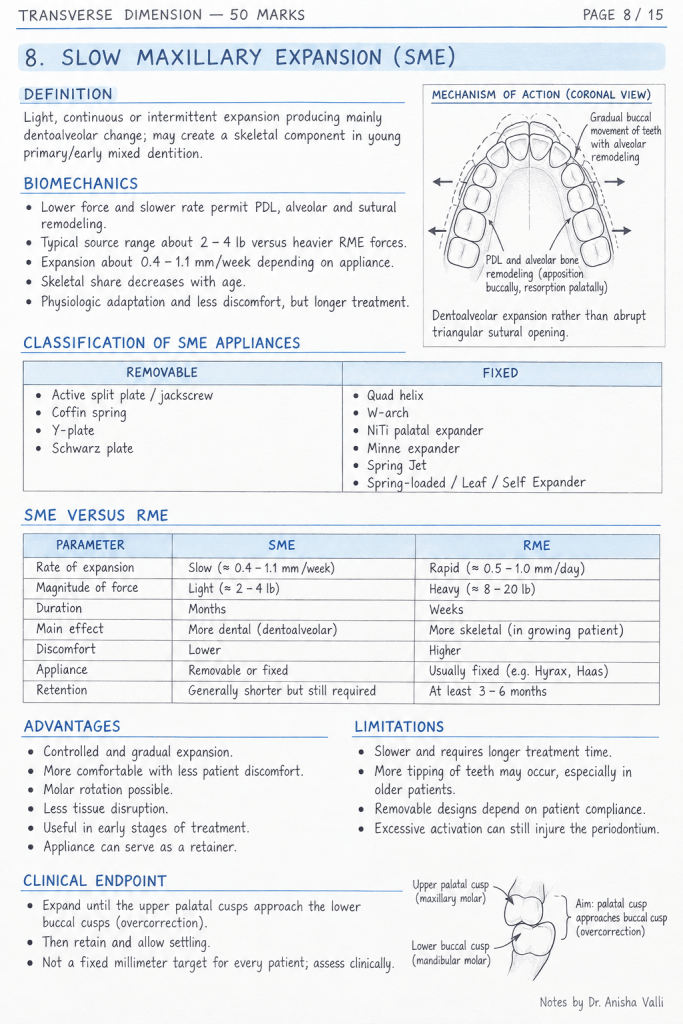
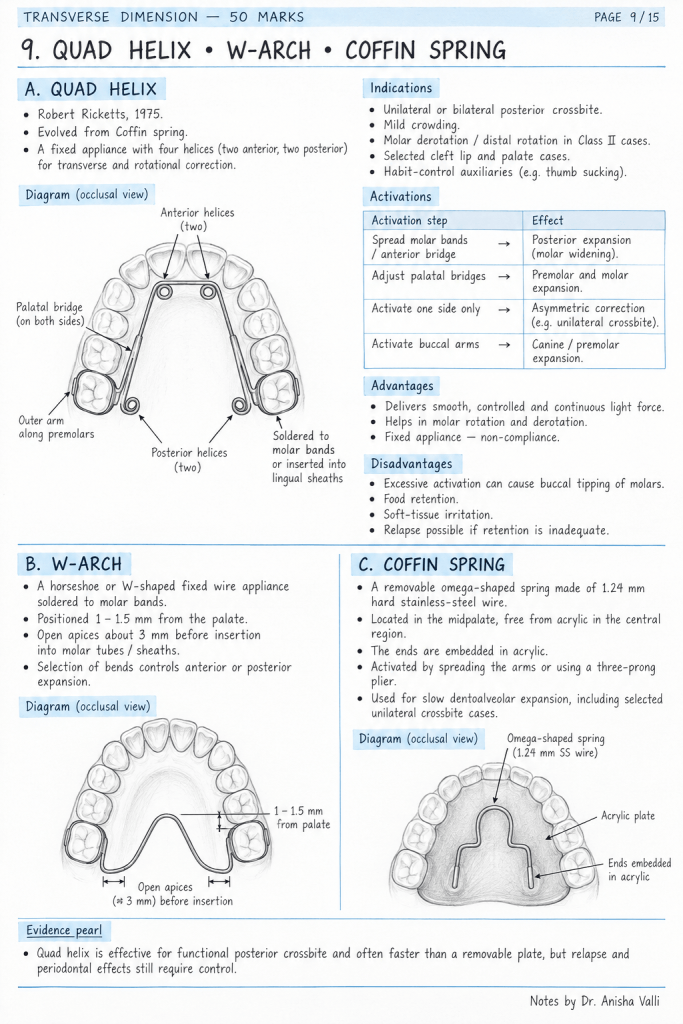
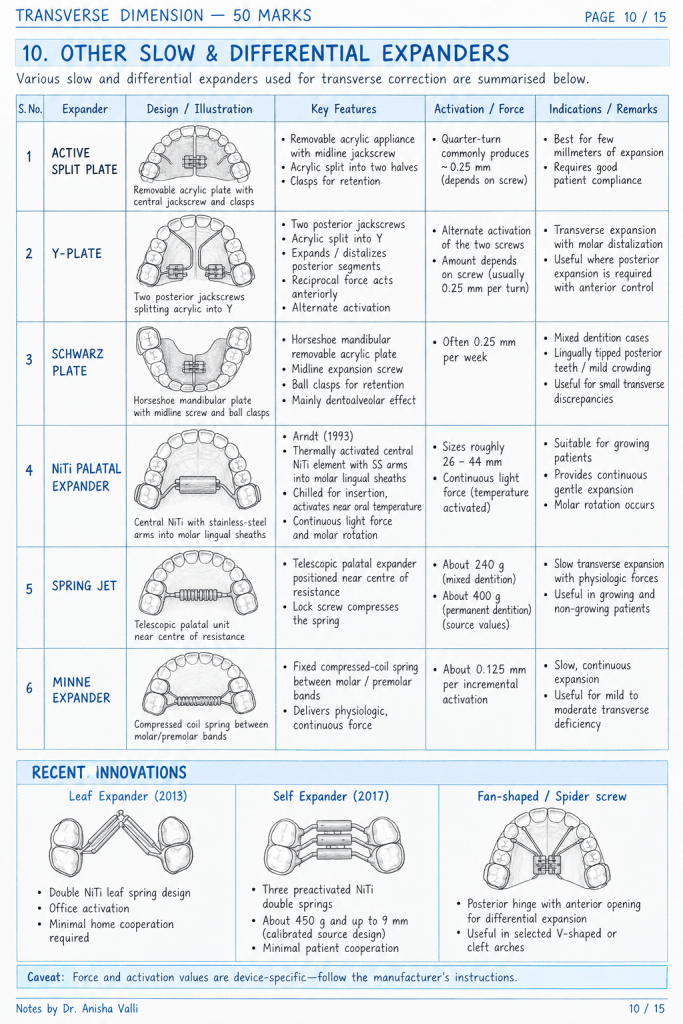
The effects of maxillary expansion using a quad-helix appliance during the deciduous and mixed dentitions

One-line takeaway: The quad-helix produces significant, stable maxillary expansion (mean +5.3 mm intermolar, +4.1 mm intercanine) with midpalatal suture opening in both deciduous and mixed dentitions — with no significant difference between the two groups.

Why Early Maxillary Expansion Matters

Functional posterior crossbite is commonly associated with a transverse maxillary deficiency. In such cases, the mandible often shifts laterally during closure to avoid occlusal interference. This functional shift can lead to several secondary problems, including:

  • Midline deviation
  • Unilateral posterior crossbite involving multiple teeth
  • Condylar displacement toward the crossbite side
  • Development of a constricted maxillary arch

The quad-helix appliance is essentially a modification of the W-arch appliance, with the addition of four helices. These helices provide greater flexibility and allow a wider range of activation compared with traditional lingual arch expansion appliances.

Typically, the appliance is fabricated from 0.036-inch stainless steel wire and soldered to bands placed on the maxillary molars. The helices act as force modulators, delivering low, continuous expansion forces to the maxillary arch.

📋 Study Snapshot

ParameterDetail
Study designProspective clinical study
Sample10 subjects (5 deciduous, 5 mixed)
Mean age6 yrs 9 months
Age range4 yrs 5 mo → 9 yrs 3 mo
PublicationAm. J. Orthod., Feb 1981, Vol. 79
Appliance wire0.036″ stainless steel round wire
CementationPolycarboxylate cement
Anchor teeth2nd deciduous molars (deciduous group) / 1st permanent molars (mixed group)

⚙️ Appliance Design — Why Quad-Helix?

The quad-helix is a W-arch modification with 4 helical loops incorporated. These loops deliver four specific advantages over a standard W-arch:

Refined adjustment capability — fine-tune forces without full removal

💡 Exam Distinction: Quad-helix = slow/continuous expansion vs. jackscrew = rapid expansion. Both open the midpalatal suture, but quad-helix produces more physiologic bone remodeling with less relapse risk.

↑ Range of force application — stores energy over greater activation distances

↑ Flexibility — lighter, continuous, physiologic force

↑ Molar rotation capability — corrects rotated posterior anchors

Clinical Protocol for Quad-Helix Expansion

The typical treatment protocol involves an initial activation that produces a modest transverse expansion force. The patient is then monitored periodically, and adjustments are made only when expansion progress slows.

General clinical steps include:

  1. Cementing the appliance onto molar bands.
  2. Activating the appliance to produce expansion equivalent to approximately half the buccolingual width of the molars.
  3. Monitoring the patient weekly or periodically during the active expansion phase.
  4. Achieving slight overexpansion so that the lingual cusp of the maxillary molar contacts the buccal cusp slope of the mandibular molar in centric relation.
  5. Maintaining the appliance in a passive state for a retention period.

The entire active phase of expansion typically lasts about one month, followed by a retention period of approximately six weeks.

📊 Treatment Course Data

VariableDeciduous (x̄ 5y 3m)Mixed (x̄ 8y 2m)
Correction time (days)28.8 ± 4.931.8 ± 5.9
Retention time (days)44.2 ± 1.845.2 ± 1.7
Total appliance time (days)73.0 ± 5.977.0 ± 6.0
No. of adjustments1.2 ± 0.41.0 ± 0.3
Midpalatal suture opening✅ All subjects✅ All subjects
Between-group significanceNS (p > 0.05)← same

Memory hook: “30-45-75” — ~30 days active, ~45 days retention, ~75 days total.

📐 Transverse Dimensional Changes (The Core Data)

MeasurementDeciduous — IntercanineDeciduous — IntermolarMixed — IntercanineMixed — Intermolar
Before treatment (mm)27.5 ± 0.431.0 ± 0.429.3 ± 0.935.3 ± 2.0
Post-retention (mm)31.4 ± 0.936.7 ± 0.633.7 ± 1.140.2 ± 1.2
3-month recall (mm)29.8 ± 0.434.8 ± 0.431.5 ± 1.038.9 ± 1.5
Expansion increase+3.9 ± 0.8+5.7 ± 0.5+4.4 ± 0.7+4.8 ± 1.3
Relapse−1.6 ± 0.9−1.9 ± 0.3−2.2 ± 0.3−1.2 ± 0.4
Net gain+2.3 ± 0.4+3.9 ± 0.5+2.2 ± 0.6+3.6 ± 1.1
Significance (p)< 0.01< 0.001< 0.01< 0.02

Overall pooled means (both groups combined):

  • Intermolar expansion: +5.3 mm → net gain after relapse: ~+3.75 mm
  • Intercanine expansion: +4.1 mm → net gain after relapse: ~+2.25 mm

🔬 Sutural Opening — The Radiographic Finding

Every single subject (10/10) showed radiographic evidence of midpalatal suture opening on occlusal radiographs taken at 2 weeks of active treatment. The separation pattern was greatest anteriorly with a progressive posterior decrease — a classic sutural opening pattern. By end of retention, suture widening was no longer detectable radiographically, confirming bone fill-in.

📌 Exam alert: This finding proved the quad-helix produces orthopedic effects, not purely orthodontic tooth tipping — especially relevant in younger patients. This was the key debate this study addressed (W arch/Porter arch were thought to be purely orthodontic appliances).

↩️ Relapse & Overexpansion Protocol

Relapse averaged ~2 mm in both intercanine and intermolar dimensions after the 3-month post-retention period. The protocol to handle this:

  • Overexpand by 2–3 mm during active phase — lingual cusp tip contacts buccal cusp slope of mandibular molars bilaterally in centric relation
  • This slight overcorrection compensates for tooth uprighting relapse once appliance is removed
  • Slow expansion → more physiologic sutural remodeling → less relapse than rapid palatal expansion

⚡ Rapid vs. Slow Expansion

FeatureQuad-Helix (Slow)RPE/Jackscrew (Rapid)
Force typeLow, continuousHigh, intermittent
Suture opening✅ Yes (both dentitions)✅ Yes
Orthopedic effectPresent (especially young)Dominant
Orthodontic effectPresent (tooth tipping)Present
RelapseLowerHigher
Adjustments needed~1.1 (minimal)Multiple activations daily
Patient complianceNot requiredDevice-dependent
Total treatment time~75 days3–6 months incl. retention

Berlocher et al. (RPE comparison): intermolar +4.2 mm, intercanine +3.8 mm using RPE — comparable to quad-helix results here.


❗ Key Conclusions — Write These in Your Answer

  1. Functional posterior cross-bites are mandibular shift-related, causing midline deviation, condylar asymmetry, and arch constriction — early correction is essential
  2. Quad-helix produces significant transverse increases in all subjects (p < 0.001 for intermolar)
  3. No significant difference between deciduous and mixed dentition groups in expansion magnitude, rate, or relapse
  4. Midpalatal suture opens in both dentitions — confirming orthopedic, not just orthodontic, mechanism
  5. ~2 mm overexpansion effectively compensates for expected relapse
  6. Mandibular arch dimensions showed no significant change — no predictable expansion effect on the lower arch
  7. Appliance had excellent patient tolerance — no pain, speech difficulty, or significant soft tissue issues

🧠 High-Yield Mnemonics

“30-45-75”Active (30d) → Retention (45d) → Total (75d)
“+5 and +4”Intermolar +5.3 mm, Intercanine +4.1 mm
“Minus 2”Relapse is ~2 mm in both dimensions
“Plus 2-3”Overexpand 2–3 mm to pre-empt relapse
“10/10 sutures”Every subject showed palatal suture opening
“No diff deciduous vs mixed”The null hypothesis was accepted between groups

How long does it take for the Pterygoid response to manifest? #VIVA

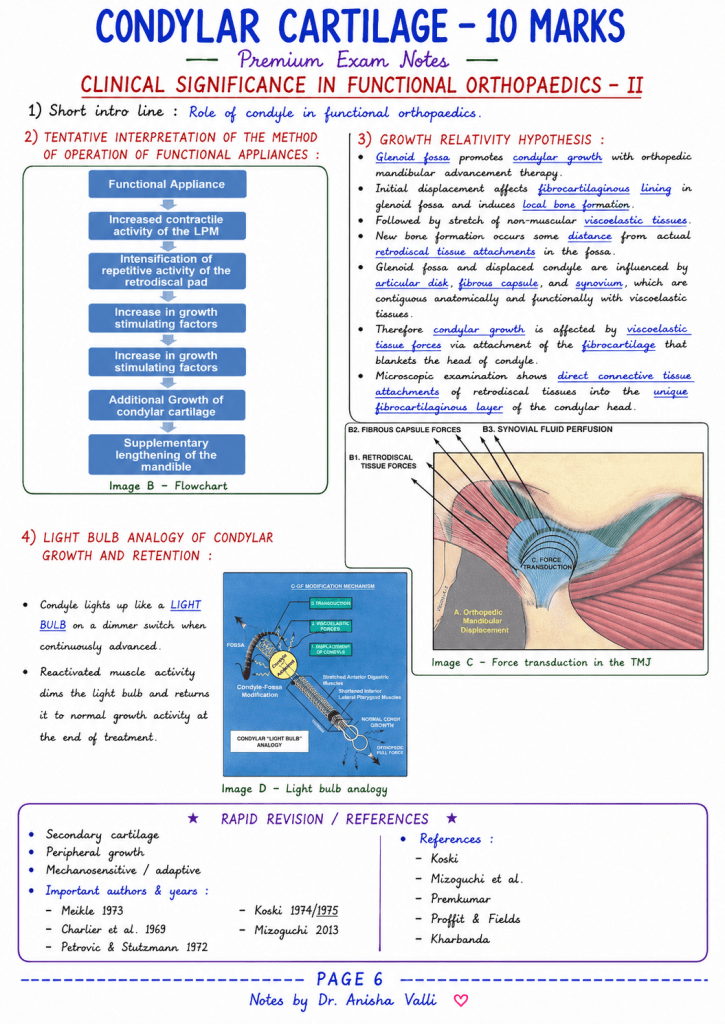
The pterygoid response manifests in a sequential timeline beginning the moment a functional appliance is placed, with the full clinical response becoming evident within approximately 2 weeks, though some sources cite 6–8 weeks for it to be clearly obvious.

Timeline of Manifestation

The sequence unfolds in stages:

  1. Immediately upon appliance placement — The neuromuscular balance is altered; lateral pterygoid muscle activity increases significantly right after insertion as the mandible is held in a protruded positionmeridian.allenpress+1
  2. Within ~2 weeks — The mandible adapts to its new protruded position; retraction back to the original position becomes effortful and painful — this is the classic pterygoid response as described by Clark (1988) [pmc.ncbi.nlm.nih]​
  3. 6–8 weeks — The successful clinical pterygoid response becomes clearly obvious and is used as a clinical checkpoint to confirm Twin Block therapy is working [pmc.ncbi.nlm.nih]​
  4. 4–6 months — Lateral pterygoid muscle activity gradually decreases as neuromuscular adaptation stabilizes, preceding the longer-term skeletal and condylar morphological changesjdat+1

Mechanism Behind It

When the mandible postures downward and forward (as directed by the Twin Block inclined planes), a tension zone forms above and behind the condyle. This area is rapidly invaded by proliferating blood vessels and connective tissue. A new pattern of muscle behavior is established, making it difficult — and ultimately painful — for the patient to retract the mandible to its former retruded position. McNamara and Petrovic (1980) attributed this to altered muscular activity of the lateral pterygoid and retractor muscles, followed by condylar adaptation. [journalijar]​

Clinical Significance

The pterygoid response serves as a key clinical indicator that the Twin Block appliance is functioning correctly. If a patient can still comfortably retract their mandible after 6–8 weeks, it suggests the bite registration may not have adequately engaged the functional inclined planes or the appliance wear compliance is poor. [pmc.ncbi.nlm.nih]​

Reference: Clark WJ. The twin block technique. A functional orthopedic appliance system. Am J Orthod Dentofacial Orthop. 1988 Jan;93(1):1–18.

Morphological and positional asymmetries of young children with functional unilateral posterior crossbite 

Santos Pinto et al., AJO-DO 2001


🎬 WHY THIS PAPER EXISTS (The “So What” in 30 Seconds)

Orthodontics always taught: “Functional crossbite = symmetric mandible, just positioned wrong. Fix the maxilla, mandible self-corrects.” Clean. Simple. Reassuring.

Santos Pinto said: Not so fast.

In growing children, a mandible that’s been displaced for months to years actually remodels and becomes structurally asymmetric — especially at the ramus. This paper is the first to prove both morphological AND positional asymmetry exist simultaneously, and that early RPE can reverse both.

🔴 Examiner hook: “Functional crossbite means symmetric mandible.” — TRUE for adults, NOT fully true for growing children. This paper is your evidence.


🪪 Paper Identity Card

AuthorsSantos Pinto, Buschang, Throckmorton, Chen
JournalAJO-DO, November 2001
Study typeProspective clinical
n15 (9♀, 6♂)
Age8.8 ± 1.0 yrs (mixed dentition)
InclusionFUPXB ≥ 3 teeth + CR–ICP shift + no TMD
TreatmentBonded RPE (1 month activation + 6 months retention)
Crossbite side10 Right, 5 Left
T1 → T21.1 ± 0.2 years apart

📐 The 3 Asymmetries — Decoded Simply

Think of it as three layers of the same problem:

LAYER 1 — POSITIONAL (Where is the mandible sitting?)

→ Whole mandible shifted LATERALLY + POSTERIORLY to crossbite side

→ Midline deviation = 1.6 mm toward crossbite side

LAYER 2 — JOINT SPACE (Where is the condyle in the fossa?)

→ Noncrossbite condyle = more anterior on articular eminence

→ Superior joint space: 4.0 mm (non-XB) vs 3.2 mm (XB) ← SIGNIFICANT

→ Posterior: larger on non-XB (not significant)

→ Anterior: EQUAL on both sides ← MCQ TRAP

LAYER 3 — MORPHOLOGICAL (Has the bone actually changed shape?)

→ Yes! Ramus is SHORTER on crossbite side

→ Co–Sy: 75.5 mm (non-XB) vs 73.9 mm (XB) — 1.6 mm difference

→ Asymmetry in RAMUS (condyle + coronoid) but NOT in body (L6–L1 equal)

⚡ THE NUMBERS BANK — Memorise These 10 Numbers

ValueWhat It Represents
5.9–9.4%Incidence of UPXB
67–79%Proportion of UPXB that are functional
1.6 mmMidline deviation + Co–Sy difference
~3 mmL6 and coronoid horizontal offset (crossbite side more lateral)
4.0 vs 3.2 mmSuperior joint space (non-XB vs XB) — only SIGNIFICANT TMJ finding
8.8 yrsMean age of subjects
15Sample size
1 monthRPE activation phase
6 monthsRetention phase
11Total SMV landmarks digitized

🔥 MECHANISM CHAIN — Viva Storytelling Version

Examiner: “Walk me through how FUPXB causes skeletal asymmetry.”

YOUR ANSWER:

Narrow maxilla creates a dental interference → mandible must shift from CR to ICP, deviating laterally and anteroposteriorly toward the crossbite side → this asymmetric posture alters condylar loading: noncrossbite condyle rides higher on the articular eminence → muscle compensation: anterior temporalis fires more on the noncrossbite side; posterior temporalis fires more on the crossbite side → sustained asymmetric forces trigger adaptive bone remodeling → the ramus on the crossbite side becomes shorter (both condylar and coronoid processes affected) → result: a functionally crossbited child now has a morphologically asymmetric mandible


🎯 EXAMINER TRAPS — Don’t Fall For These

Trap StatementThe Truth
“All joint spaces are asymmetric in FUPXB”❌ Only superior space is significant; anterior joint spaces are EQUAL 
“RPE doesn’t affect morphological asymmetry”❌ RPE + retention eliminated morphological asymmetry — crossbite side grew MORE 
“The mandibular body is asymmetric”❌ L6–L1 distance is EQUAL — asymmetry is in the ramus only 
“Glenoid fossa is asymmetric too”❌ Fossa position showed little/no transverse or AP asymmetry 
“Chewing patterns normalize after RPE”❌ Reverse chewing sequencing persists even after correction 
“Functional crossbite = symmetric mandible”⚠️ Only in adults — in growing children, morphological change occurs 

🧠 MUSCLE MNEMONIC — Never Mix This Up

“At the PARTY, Non-Cross goes FORWARD, Cross goes BACK”

  • ANTERIOR temporalis (forward-pulling) → fires more on NON-crossbite side
  • POSTERIOR temporalis (backward-pulling) → fires more on CROSSBITE side

📊 Pre vs. Post Treatment — What Changed?

MeasurementPre-TreatmentPost-RetentionVerdict
Co–Sy side differenceSignificantNot significant✅ Resolved
L6 lateral offset~3 mm~0 mm✅ Resolved
Midline deviation (L1)1.6 mmNot significant✅ Resolved
Superior joint space gapSignificantNot significant✅ Resolved
Glenoid fossa positionNot significantNot significant➡️ Unchanged (already symmetric)
Chewing pattern (reverse)AbnormalStill abnormal❌ NOT resolved

🔑 Key insight on growth: Crossbite-side ramus grew MORE than noncrossbite side during treatment — compensatory catch-up growth. The mandible also rotated forward and medially on the crossbite side, and backward and laterally on the noncrossbite side.


🏛️ LANDMARKS MNEMONIC (All 11 SMV Landmarks)

“Old Baboons Often Play Violins — Conducting Fine Concerts, Like Symphony”

Opisthion · Basion · Odontoid · Posterior vomer · Anterior Vomer
Condylion · Fossa (glenoid) · Coronoid process
Lower 1 (incisor) · Lower 6 (molar) · Symphysis

❓ SELF-TEST — Rapid Fire (Cover answers, test yourself)

QuestionAnswer
Which ramus is LONGER in FUPXB?Noncrossbite side
Which joint space is EQUAL on both sides?Anterior
Which is the ONLY significantly different joint space?Superior
Where does the asymmetry occur in the mandible?Ramus (not body)
What persists even after successful RPE?Reverse chewing sequencing
What muscle is more active on the noncrossbite side?Anterior temporalis
What does the MCP stand for and how is it constructed?Midcondylar reference plane — ⊥ bisector of Co-Co line
What was the midline deviation pre-treatment?1.6 mm toward crossbite side
Which radiograph assessed TMJ spaces?Zonograms (4-turn spiral tomography)
What is the key conclusion that overturns classic teaching?Functional crossbites cause morphological (structural) mandibular asymmetry in growing children

🩺 VIVA CLINCHER — The One Paragraph Examiners Love

“Santos Pinto et al. demonstrated that the classic view of functional crossbite as purely a positional problem is incomplete in growing children. Their prospective study showed the mandible is both positionally displaced and morphologically asymmetric — with the ramus shorter on the crossbite side due to adaptive remodeling. Crucially, the asymmetry is ramus-specific; the mandibular body remains symmetric. Early bonded RPE successfully resolved both layers of asymmetry through compensatory growth, though abnormal chewing patterns persisted, highlighting the need for functional rehabilitation post-treatment.”

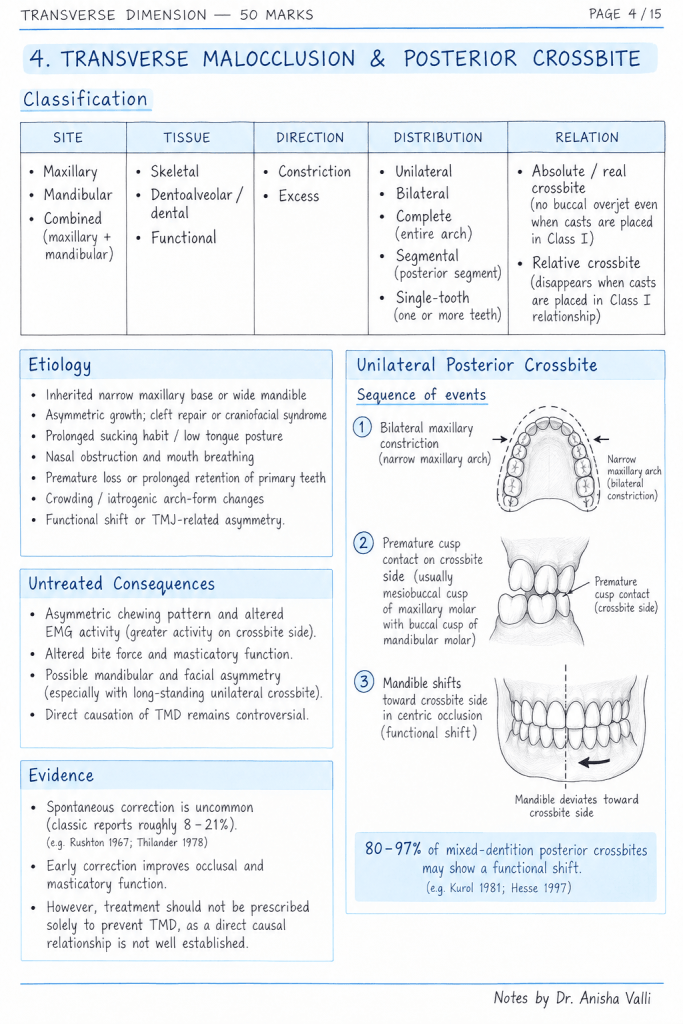
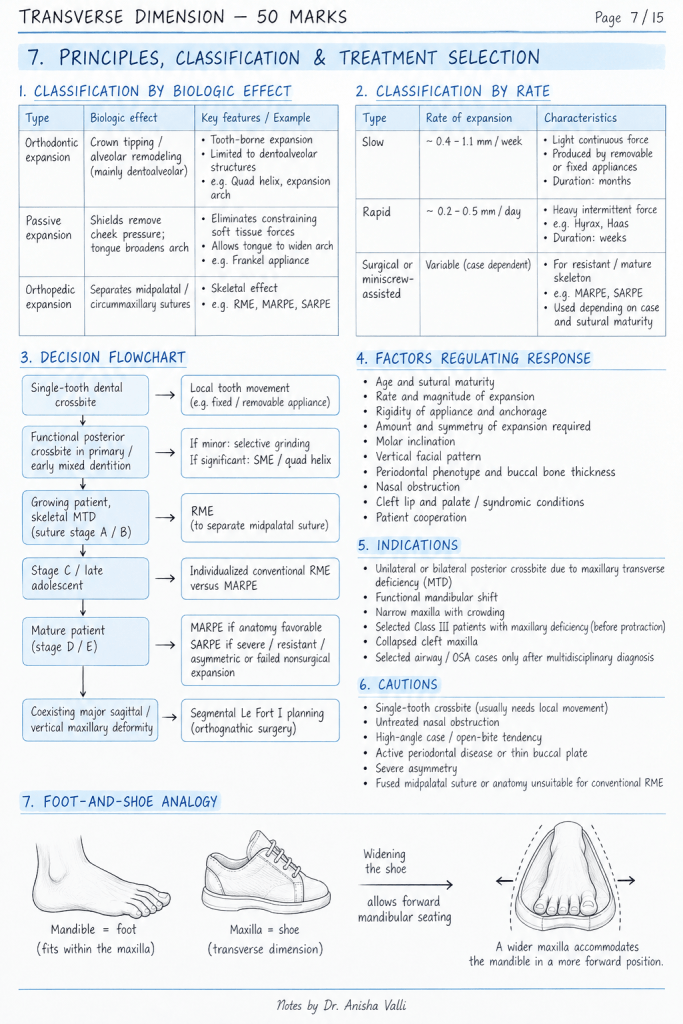
Unilateral Posterior Crossbite with Mandibular Shift

Picture this exam scenario: A 7-year-old child sits in your chair. Her mom says “her jaw looks crooked.” You notice her teeth bite on the right side but her chin shifts left. Is this dental? Skeletal? Functional? Do you treat now or wait?

Every answer in this review solves THAT case.


⚡ The “Know This Or Fail” Numbers

StatValueWhy It Matters
Posterior crossbite prevalence7–23%Most common transverse malocclusion 
FXB = unilateral with shift80–97% of all PXBNearly all UPXBs are functional! 
Self-correction rate0–9%Never justify waiting 
Deciduous dentition prevalence8.4% → 7.2% mixedSlight spontaneous decrease
Spontaneous new crossbite development7%Equals self-correction rate — net zero
Equilibration success (< 5 yrs)27–64%Only in very young, limited use
Arch perimeter gain4 mm (85% stable long-term)Bonus benefit of expansion 

🔥 EXAM TRAP: “Posterior crossbite is self-correcting” → FALSE. Only 0–9%. Never a valid clinical justification.


🧩 Etiology: The BIG Picture First

Think in 3 layers — Genetic → Environmental → Habit

 NARROWED MAXILLA

┌─────────────────────────────────┐
│ SKELETAL: Small Max/Mand ratio │ ← Genetic + mouth breathing
│ + Increased lower face height │
└─────────────────────────────────┘

┌───────────────────────────────────────┐
│ AIRWAY: Adenoids / Tonsils / Rhinitis│ → Mouth breathing → narrow maxilla
│ + Neonatal intubation │ → Direct palatal deformation
└───────────────────────────────────────┘

┌─────────────────────────────────────────────┐
│ HABIT: Pacifier / Digit sucking >4 yrs age │ → ↓ Max intercanine + ↑ Mand intercanine
└─────────────────────────────────────────────┘

🧠 Mnemonic: “GANH” (say it like “Gain” — because early treatment = gain!)

Genetics (small maxilla, wide mandible)
Airway obstruction (adenoids, tonsils, rhinitis)
Neonatal intubation
Habits (pacifier/digit sucking beyond age 4)


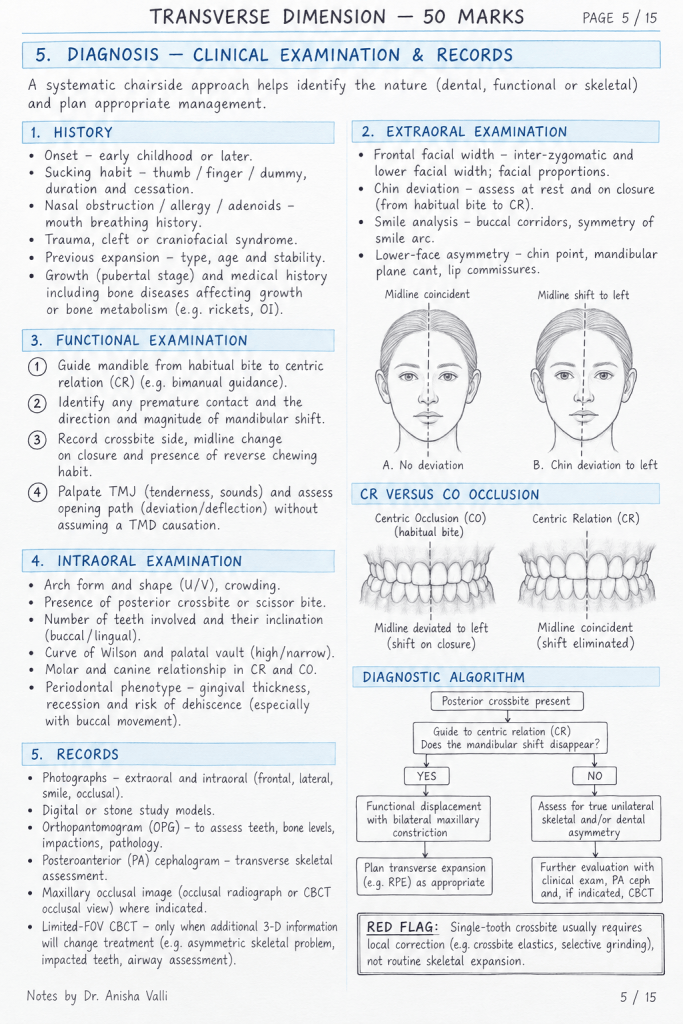
🔍 Differential Diagnosis — The Most Examined Section

The 3-Type Framework

Feature✅ FXB (Functional)Single Tooth XBTrue Skeletal Bilateral XB
CO vs CRDiscrepancy (mandatory finding)CoincidentCoincident
Mandibular midlineDeviated to crossbite sideMidline OKMidline OK
Maxillary arch shapeSymmetrical (key!)AsymmetricalSymmetrical
Crowding patternMore in maxilla (not mandible)Localized—-
Crossbite side molarClass II (partial/full)VariesBilateral Class II
Non-crossbite side molarClass INormalBilateral Class II
Condyle position (tomogram)Non-XB side: down & forward in fossaSymmetricSymmetric
CauseTransverse maxillary deficiencyOverretained teeth / arch lengthSevere skeletal discrepancy

🧠 Mnemonic: “SMACK-D” (What FXB gives you clinically)

Shift of mandible → toward crossbite side
Midline mandibular deviation → toward crossbite side
Arch — maxillary is symmetrical (despite appearing unilateral!)
CO–CR discrepancy — the defining diagnostic feature
Klass II on crossbite side / Class I on non-crossbite side (K for klass 😄)
Deficiency maxillary arch → more crowding in upper than lower

🔥 EXAM TRAP: The maxillary arch in FXB is SYMMETRICAL. The unilateral appearance is caused by the mandibular shift — not by asymmetric maxillary constriction. Examiners love asking this!


⏰ Treatment Timing — The Golden Window

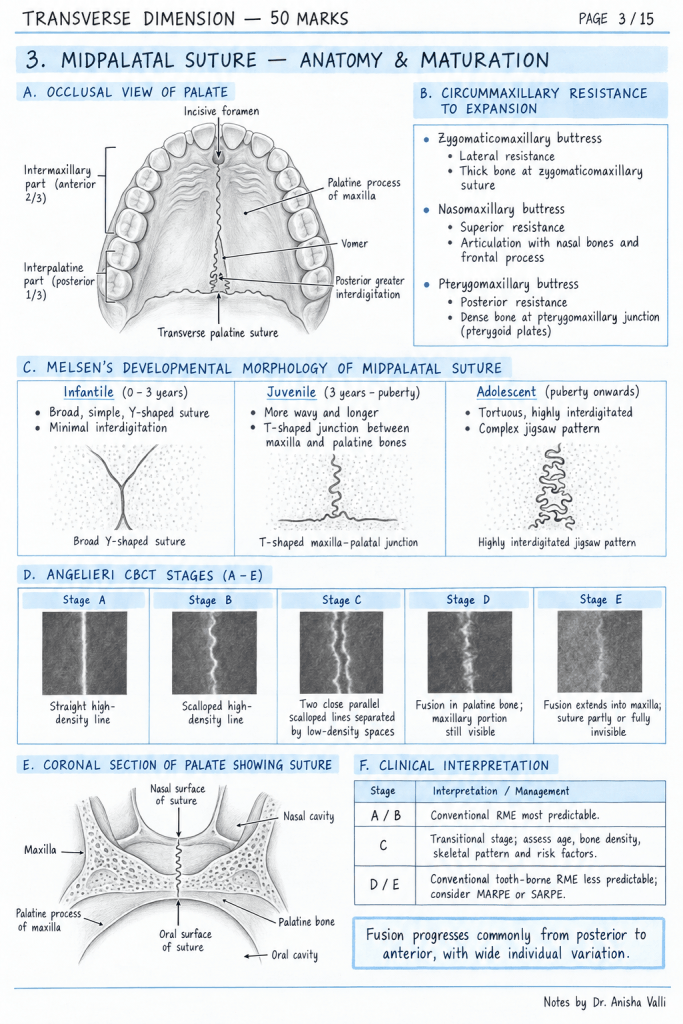
Think of the Midpalatal Suture as a WINDOW that closes with age:

Age:        2–5 yrs        6–8 yrs           9–11 yrs       12+ yrs         Adult
Suture: Wide open [BEST WINDOW] Narrowing Almost fused Fused
Force: Minimal Small forces Moderate RME needed SURGERY
Recommend: Equilibration ✅ IDEAL ⚠️ Difficult ⚠️ RME only ❌ Ortho+Surg
  • Late deciduous / early mixed dentition = IDEAL → small forces open suture, permanent incisors get space before eruption
  • Late mixed dentition = DIFFICULT — exfoliating teeth compromise appliance anchorage
  • Early permanent dentition (≥12 yrs) = RME preferred — faster rate, greater skeletal expansion, less dental tipping

🔥 EXAM TRAP: Sutural expansion > dental tipping expansion. Always aim for maximal sutural opening + minimal dental tipping. Suturally expanded cases relapse less.


🔧 Appliance Masterclass

Fixed vs. Removable — The War is Already Won

ApplianceSpeedRateTimeWinner Status
Quad HelixSlow¼ turn / 2–3 days6–12 wks🏆 Gold standard — 1/3 cost of removable, 1/5 treatment time
W-ArchSlow¼ turn / 2–3 days6–12 wks✅ Good alternative 
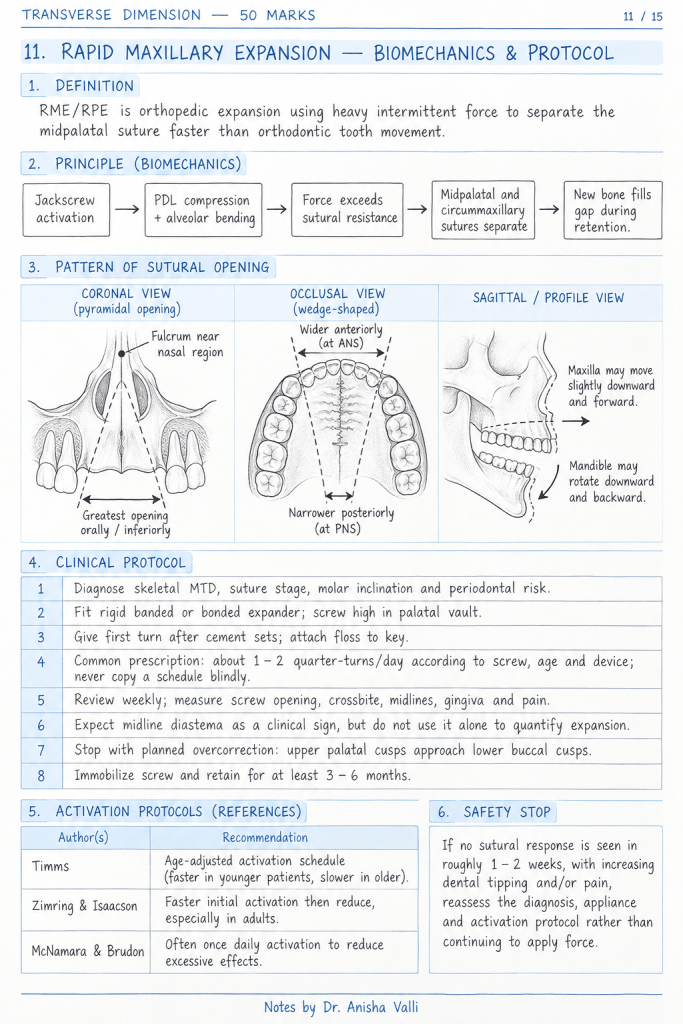
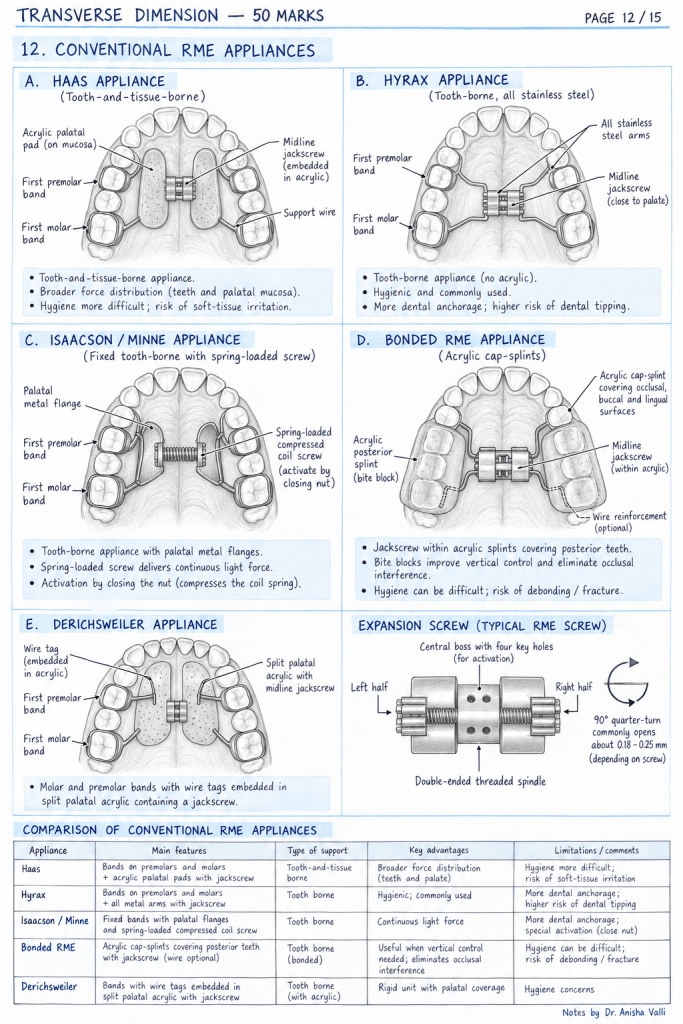
HaasRME1–2 × ¼ turn/day2–6 wks✅ Tissue-borne, most skeletal effect 
HyraxRME1–2 × ¼ turn/day2–6 wks✅ Tooth-borne, hygienic 
SuperscrewRME1–2 × ¼ turn/day2–6 wks✅ Comparable to Haas/Hyrax 
Removable plateSlow¼ turn / 5–7 daysLongest❌ NOT recommended — compliance failure, relapse, lost appliances 

📋 Retention Protocol — “SOLAR”

Stabilize screw with ligature wire or composite
Overexpand — lingual cusps of upper contact buccal cusps of lower
Leave appliance in place for retention OR make removable retainer
At least 4–6 months retention minimum
Rule: Retention period ≥ active treatment duration


⚠️ Side Effects of RME — “DEMO”

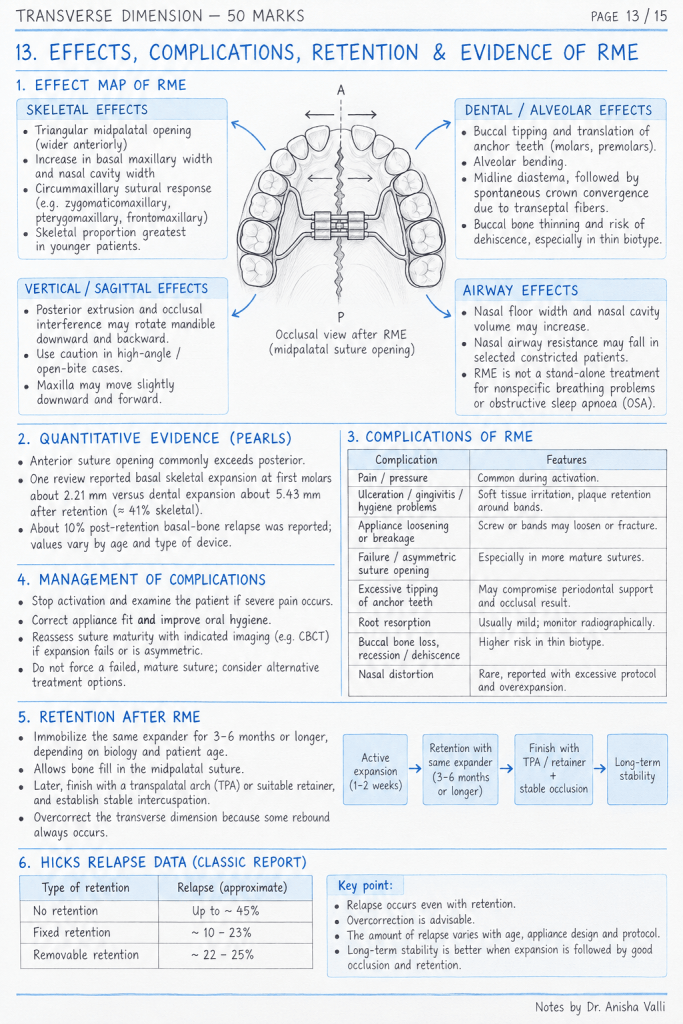
Diastema (midline maxillary — transient! closes via transeptal fibers) → warn patient/parent
Expansion of mandibular intercanine width (spontaneous — actually a bonus in crowded cases)
Maxillary protraction (forward movement of maxilla — useful in Class III patients!)
Open bite (anterior) — especially if 2nd permanent molars present; control molar eruption carefully


🧬 The Adaptation Argument (Why You MUST Treat Early)

This is the biological rationale section — examiners love conceptual questions here.

If left untreated, 3 irreversible adaptations occur:

  1. Condylar asymmetry → glenoid fossa and condyle remodel asymmetrically during growth
  2. Mandibular rotation → mandible rotates relative to cranial base (submentovertex X-ray shows this in adults)
  3. Muscle adaptation → masticatory cycle becomes asymmetric (Throckmorton et al.)

After early treatment: condyle symmetry restored, mandibular rotation corrected, masticatory symmetry re-established

Adult with untreated FXB: mandible is rotated relative to cranial base but symmetric within the fossa — adaptation has already “locked in” the asymmetry

🔥 EXAM TRAP: In adults with untreated posterior crossbite, condyles ARE symmetric within the fossa (adaptation is complete) but mandible IS asymmetric relative to the cranial base. Don’t confuse this!


🧠 The TMD Controversy — Balanced Answer Template

For essay/viva: State both sides:

  • FOR correlation: Crossbite → condylar asymmetry → joint loading → TMD signs (Alamoudi; Egermark-Eriksson studies)
  • AGAINST causation: Sari et al., Keeling et al. found no causal link
  • Safe conclusion: “Crossbite may be a cofactor in TMD identification, but its role should not be overstated”

🎯 The Selective Grinding Rule (< 5 Years Only)

  • Age limit: strictly < 5 years
  • Success rate: 27–64% (Lindner: 50% in 4-year-olds)
  • The magic number: maxillary intercanine width must be ≥ 3.3 mm greater than mandibular for best results
  • Beyond age 5 → expansion appliances required, not grinding

🏁 Master Flash Summary — “FEED-SOLAR”

(Treatment protocol in one phrase)

Functional shift eliminated by symmetric maxillary expansion
Early treatment — late deciduous / early mixed dentition
Expand symmetrically (even for unilateral presentation!)
Don’t use removable appliances

Stabilize screw, Overexpand, Leave appliance in, At least 4–6 months, Retention ≥ treatment time


🔥 5 Rapid-Fire Viva Questions

Q1. Why do we expand the maxilla symmetrically for a unilateral crossbite?
→ Because the maxilla is bilaterally constricted; the unilateral appearance is due to the mandibular shift

Q2. What is the single most important diagnostic feature of FXB?
→ CO–CR discrepancy (centric occlusion ≠ centric relation)

Q3. Why is the Quad Helix preferred over removable plates?
→ 1/3 cost, 1/5 treatment time, no compliance issues

Q4. What happens to the midpalatal diastema created during RME?
→ Closes spontaneously via transeptal fiber pull and dental tipping

Q5. Name two studies supporting crossbite–TMD correlation.
→ Alamoudi (2000) and Egermark-Eriksson et al. (1990)

Evolution of Twin Block Inclined Plane Angulation #VIVA

The angulation of the Twin Block appliance’s inclined planes underwent three distinct stages of development, each driven by clinical observations and biomechanical reasoning.

Stage 1 — 90° (Initial Design)

The earliest Twin Block appliances, developed by W.J. Clark, featured bite blocks angulated at 90° to the occlusal plane. Patients were required to consciously posture the mandible forward to occlude the blocks. However, many patients struggled to maintain this forward position and habitually returned to their original distal occlusal position, causing the flat-surfaced blocks to stack on top of each other. This resulted in a significant posterior open bite, a complication seen in approximately 30% of early Twin Block cases.

Stage 2 — 45° (Functional Correction)

To resolve the compliance problem, the angulation was modified to 45° to the occlusal plane. This immediately guided the mandible forward more passively, eliminating the stacking issue. A 45° angle provides an equal downward and forward force component to the lower dentition, promoting both vertical and sagittal growth stimuli. Clark continued using this angulation clinically for approximately 8 years before the next modification.

Stage 3 — 70° (Current Standard)

After the prolonged use of the 45° design, the angulation was increased to 70° to the occlusal plane — the current standard configuration. This steeper angle introduces a more horizontal force component, theoretically encouraging greater forward (sagittal) mandibular growth rather than a combined downward-forward stimulus. The 70° angle is now incorporated into the standard Twin Block design with maxillary and mandibular acrylic base plates.

Angulation at a Glance

AngulationRationaleLimitation
90°Original design; edge-to-edge block contact~30% posterior open bite; poor compliance
45°Equal forward + downward force vectorUsed for 8 years; less horizontal growth stimulus
70°More horizontal force; greater forward mandibular growthMay reduce mandibular postural guidance

Clinically, if a patient struggles to maintain the forward mandibular posture with a 70° design, it is advisable to revert to a 45° angulation to facilitate easier maintenance of the protruded position.

Symmetric and asymmetric expansion of molars using a Burstone-type transpalatal arch. Biomechanical and clinical analysis

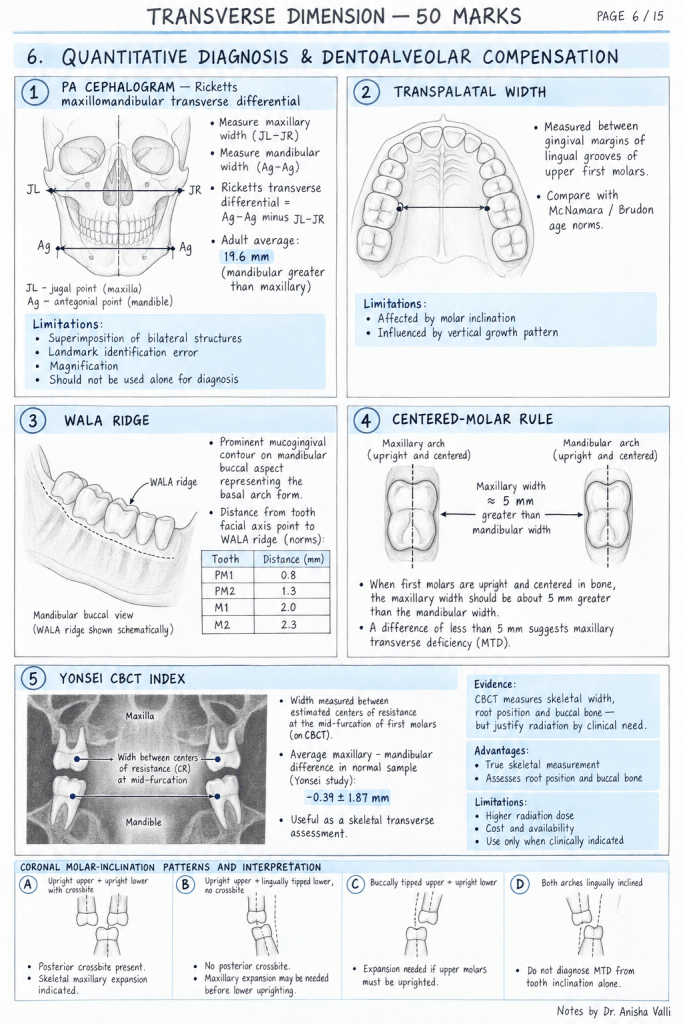
Posterior crossbite is one of the most common transverse discrepancies encountered in orthodontic practice. A transpalatal arch (TPA) is a deceptively simple appliance — but when activated using Burstone biomechanics, it becomes a powerful tool capable of producing controlled symmetric or asymmetric molar expansion.

Understanding force systemsmoment-to-force ratios, and side effects is essential if one wants to use this appliance predictably.

This article walks through the biomechanics, clinical application, and outcomes of a Burstone-type TMA transpalatal arch.


1. Why Molar Transverse Position Matters

Correct positioning of maxillary first molars is critical for:

  • Functional occlusion
  • Arch coordination
  • Midline stability
  • TMJ health

Untreated transverse maxillary deficiency may cause:

  • Posterior crossbite
  • Functional mandibular shift
  • Midline deviation
  • TMJ strain

Posterior crossbite prevalence:

  • Unilateral: ~9%
  • Bilateral: ~4%

Quick Viva Pause

Q: Why is unilateral crossbite more problematic than bilateral crossbite?

A:
Because it frequently causes functional mandibular shift, leading to asymmetry and midline deviation.


2. What is a Burstone-Type Transpalatal Arch?

transpalatal arch (TPA) connects the maxillary first molars across the palate.

It can be used in two modes:

ModePurpose
PassiveAnchorage reinforcement / stabilization
ActiveTooth movement

The Burstone system differs from traditional TPA systems.


Key Differences

FeatureBurstone TPAGoshgarian TPA
AttachmentLingual bracketLingual sheath
Wire materialTMAStainless steel
Force magnitudeLowerHigher
ControlHigh precisionLess controlled

TMA wires produce ~60% lower force compared to stainless steel, improving control and reducing unwanted side effects.


Viva Pause

Q: Why is TMA preferred over stainless steel in Burstone TPA?

Answer

  • Lower load-deflection rate
  • Greater formability
  • More controlled force delivery
  • Reduced risk of excessive tipping

3. Recommended Activation

Typical parameters reported:

ParameterValue
Activation3–10 mm
Expansive force1.5–4 N
Wire dimension0.032 × 0.032 TMA

10 mm activation produces approximately 4 N expansion force.

However, force depends on:

  • Wire length
  • Loop configuration
  • Height of arch
  • Patient anatomy

Viva Pause

Q: What happens if the TPA height increases?

Answer

The moment-to-force ratio changes, altering the type of tooth movement.


4. Types of Expansion Using TPA

1. Symmetric Expansion

Both molars move buccally.

Used for:

  • Bilateral posterior crossbite
  • Narrow maxilla

2. Asymmetric Expansion

One side expands more than the other.

Used for:

  • Unilateral crossbite

This is achieved by creating moment differential between molars.


Biomechanical Principle

SideForce System
Crossbite sideForce → tipping movement
Anchorage sideForce + counter-torque

This allows unilateral expansion without significant movement of the anchorage molar.


Viva Pause

Q: Why is tipping used on the crossbite side?

Answer

Because tipping requires less force than bodily movement, making unilateral correction easier.


5. Biomechanics of Burstone TPA

The appliance generates:

Force componentEffect
Expansive forceBuccal movement
MomentCrown tipping
Vertical forceMinor extrusion/intrusion

The center of resistance of molars lies approximately:

7 mm apical to the bracket level in the furcation region.


Viva Pause

Q: Why does TPA cause buccal crown tipping?

Answer

Because the force is applied away from the center of resistance, creating a moment that tips the crown buccally.


6. Clinical Outcomes (Study Findings)

Symmetric Expansion

ParameterResult
Mean expansion~4.5 mm
Buccal tipping~10°
Treatment time12 weeks
Vertical side effectsMinimal

Expansion occurred primarily due to buccally directed forces acting at the crown level.


Viva Pause

Q: What is the main disadvantage of symmetric TPA expansion?

Answer

Buccal crown tipping of molars, which may require later torque correction.


7. Asymmetric Expansion Outcomes

For unilateral crossbite:

ParameterCrossbite SideAnchorage Side
Tooth movement~2.5 mm~0.8 mm
TorqueHigherLower
Vertical movementMinimalMinimal

Thus effective unilateral expansion was achieved in all patients.


Viva Pause

Q: Why does the anchorage side show less movement?

Answer

Because counter-torque increases moment-to-force ratio, resisting tipping.


8. Side Effects

Vertical Effects

MovementMagnitude
Intrusion~0.6 mm
Extrusion~0.8 mm

These are considered clinically insignificant.


Sagittal Effects

Minor:

  • Mesial rotation of molars
  • Minimal sagittal displacement

Viva Pause

Q: What is the most common rotational side effect?

Answer

Mesial rotation of molars


9. Why Simulation Systems Were Used

The study used Orthodontic Measurement and Simulation System (OMSS).

Purpose:

  • Measure force systems
  • Predict tooth movement
  • Compare simulation vs clinical outcomes

Findings:

Simulated movements were highly consistent with clinical results.


Viva Pause

Q: Why can’t simulation fully replicate real orthodontic tooth movement?

Answer

Because it cannot account for:

  • Mastication
  • Occlusal contacts
  • Soft tissue forces
  • Material fatigue
  • Biological variability

10. Clinical Pearls for Orthodontists

1. TPA is not just an anchorage appliance

It can produce controlled molar movement.


2. Shape matters

Force depends on:

  • Height
  • Length
  • Configuration

3. Perfect force systems are difficult

Even identical activation may produce different forces due to anatomical variation.


4. Tipping is expected

Crossbite correction usually occurs by molar tipping rather than bodily movement.


5. Torque correction may be needed later

After expansion, clinicians may need to:

  • Add counter-torque
  • Use archwire adjustments

Rapid Revision Table

FeatureSymmetric ExpansionAsymmetric Expansion
IndicationBilateral crossbiteUnilateral crossbite
Force systemEqual bilateral forcesDifferential moment
Mean expansion~4.5 mm~2.5 mm on affected side
Crown tippingPresentControlled
Side effectsMinimalMinimal

Ultimate Viva Questions (PG Level)

Basic

1. What is the function of a transpalatal arch?

  • Anchorage control
  • Molar rotation control
  • Transverse expansion

Intermediate

2. Why is TMA preferred in Burstone TPA?

  • Lower load-deflection rate
  • Better formability
  • More controlled forces

Advanced

3. How does asymmetric TPA correct unilateral crossbite?

By generating different moment-to-force ratios on each molar.


Clinical

4. What is the most common side effect of TPA expansion?

Buccal crown tipping.


Biomechanics

5. Why does tipping occur with TPA?

Force acts away from center of resistance, generating a moment.


Final Takeaway

The Burstone-type TPA is a biomechanically sophisticated appliance capable of producing:

  • Controlled symmetric molar expansion
  • Targeted asymmetric correction of unilateral crossbite
  • Minimal side effects

When understood biomechanically, it transforms from a simple wire into a precise orthodontic force delivery system.