Predicting Functional Appliance Success: The Clinical Power of Co–Go–Me and Stutzman Angles

In orthodontics, one of the greatest clinical advantages you can develop is predictability. The ability to anticipate how a patient will respond to treatment—especially functional appliance therapy—can transform your treatment plan, appliance choice, and patient counseling. Yet many students focus on memorizing appliance designs while overlooking the cephalometric predictors that actually determine whether treatment will succeed.

One of the most valuable—but often underemphasized—predictive tools lies in understanding mandibular morphology and growth potential, particularly concepts such as the Stutzman angle and the Co–Go–Me angle.


The Landmark Study That Shifted Prognostic Thinking

A pivotal investigation by Lorenzo Franchi and Tiziano Baccetti evaluated pretreatment cephalometric predictors of mandibular growth response in Class II patients treated during peak pubertal growth.

They analyzed 51 patients who underwent functional therapy with Twin Block or Herbst appliances at CS3 (peak growth stage). Importantly, their outcome measure was actual mandibular growth increase, not merely occlusal correction—making the findings especially clinically meaningful.


The Co–Go–Me Angle: A Powerful Prognostic Indicator

The mandibular angle Co–Go–Me (condylion–gonion–menton) has emerged as a highly practical predictor of treatment response.

  • < 125–125.5° → Favorable prognosis
  • > 125.5° → Poor prognosis

Interpretation Table

ValuePrognosisClinical Meaning
< 125.5°FavorableStrong mandibular growth potential
> 125.5°UnfavorableLimited skeletal response expected

Patients with smaller Co–Go–Me angles typically demonstrate greater mandibular growth during functional appliance therapy.


Additional Cephalometric Features That Predict Success

A strong skeletal response is more likely when the patient also presents with:

  • Low mandibular plane angle (hypodivergent pattern)
  • Low basal plane angle
  • High Jarabak ratio (greater posterior vs anterior facial height)

Together, these features indicate a horizontal growth pattern, which is biologically more responsive to mandibular advancement therapy.

Viva one-liner:
Co–Go–Me < 125° with low MP angle, low basal plane angle, and high Jarabak ratio indicates good prognosis for functional appliance therapy in Class II patients.


Memory Hook

Low angle = Grower → Treat confidently with functional appliance


The Stutzman Angle: Direction Matters as Much as Amount

While Co–Go–Me predicts how much growth may occur, the Stutzman angle provides insight into how the mandible grows.

Definition:
The Stutzman angle is formed between:

  • the condylar process axis (line from the most posterosuperior condylar point to the midpoint of the mandibular foramen), and
  • the mandibular plane

Clinical Significance

This angle reflects directional growth and biologic response, not just magnitude. It is especially useful for monitoring treatment progress over time.

ChangeMeaningClinical Interpretation
Increase (Opening)Condylar axis elongates/rotatesActive growth or forward positioning
No changeMinimal structural changeLimited skeletal response
Decrease (Closing)RemodelingStabilization after advancement

Clinical rule:
Opening = growth or advancement
Closing = remodeling or stabilization


Why These Predictors Matter

Understanding these angles allows clinicians to move beyond trial-and-error treatment. Instead of hoping a functional appliance will work, you can predict response before treatment begins, improving:

  • Case selection
  • Treatment timing
  • Appliance choice
  • Patient counseling
  • Clinical confidence

In modern orthodontics, success isn’t just about mechanics—it’s about biologic forecasting. And mastering predictors like the Co–Go–Me and Stutzman angles gives you that edge.

Growth Relativity Hypothesis — The Concept You’ll Never Forget Again

If you’ve ever wondered how functional appliances actually stimulate mandibular growth, this is the idea that changes everything. Not muscles. Not magic. Not forced growth.

Instead — growth is relative.

Let’s break it down so clearly that you’ll remember it even during a 3 AM exam panic.


The Big Idea in One Line

Mandibular advancement doesn’t create new growth — it redirects existing growth potential through biomechanical signaling.


Why This Hypothesis Was Needed

For years, people believed that forward posturing appliances worked mainly because muscles became hyperactive and stimulated bone growth.

But that didn’t fully explain:

  • why growth changes occur even when muscles adapt
  • why both condyle and glenoid fossa remodel together
  • why relapse can occur when advancement stops

So researchers proposed the Growth Relativity Hypothesis — most notably explained by Voudouris.


The Three Forces That Actually Drive Growth

Think of mandibular advancement like stretching a spring-loaded system. Three biological forces start working simultaneously:

1️⃣ Displacement — The Trigger

When a functional appliance holds the mandible forward:

  • the condyle is physically displaced from its original fossa position
  • the joint must adapt to this new relationship

👉 Displacement = switch turns ON


2️⃣ Viscoelastic Tissue Pull — The Driver

Non-muscular tissues stretch:

  • retrodiscal tissues
  • capsule
  • ligaments
  • synovial structures

These tissues behave like elastic bands trying to pull the condyle back.

👉 This pull generates continuous biological signals.


3️⃣ Transduction Through Fibrocartilage — The Builder

The stretched forces don’t stay localized.

They spread through:

  • condylar fibrocartilage
  • glenoid fossa lining

This mechanical signaling stimulates:

  • bone apposition
  • remodeling
  • adaptive growth

👉 Transduction = signal converted into growth


The Golden Principle

Growth is not increased. It is redirected.

The condyle and fossa simply:

grow relative to their new displaced relationship

They are adapting — not overgrowing.


The Light-Bulb Memory Trick 💡

Imagine condylar growth as a light bulb with a dimmer switch:

  • Appliance activation → brightness increases
  • Tissue stretch → keeps light on
  • Appliance removal → light dims

You don’t create electricity.
You just turn the dial.


Why Relapse Happens (And Students Forget This!)

After appliance removal:

  • stretched tissues recoil
  • muscles regain original balance
  • joint tries returning to old position

If retention isn’t managed → relapse tendency


The One Sentence You Should Write in Exams

Condylar and glenoid fossa growth during mandibular advancement is governed by displacement, viscoelastic tissue forces, and fibrocartilage force transduction, producing adaptive remodeling rather than true growth stimulation.

Memorize that line and you can answer:

  • theory questions
  • viva questions
  • mechanism questions
  • comparison questions

Ultra-Simple Analogy (Final Memory Lock 🔒)

Functional appliance = moving a plant toward sunlight
You didn’t make the plant grow.
You just changed where it grows.


Viscoelastic Theory

Definition:
Viscoelasticity describes the combination of viscous (fluid-like) and elastic (solid-like) properties exhibited by biological tissues. It primarily applies to elastic tissues such as muscles, but the concept extends to all non-calcified tissues.

Key Concepts:

  • It concerns both viscosity and flow of synovial fluids and elasticity of soft tissues including:
    • Retrodiskal tissues
    • Fibrous capsule
    • TMJ ligaments and tendons
    • Lateral pterygoid muscle (LPM) perimysium
    • Other non-muscular, non-mineralized soft tissues
  • Essentially, it explains how these tissues deform under stress and recover when the stress is removed, with a time-dependent response.

Historical Notes:

  • The concept faced opposition from Herren (1953), Harvold (1974), and Woodside (1973) to the original Anderson–Haupl theory, which had a different interpretation of joint tissue adaptation.

Stages of the Viscoelastic Reaction

The viscoelastic reaction proceeds through five sequential stages:

  1. Emptying of blood vessels – initial vascular response to stress.
  2. Pressing out interstitial fluid – displacement of tissue fluids to redistribute pressure.
  3. Stretching of fibres – collagen and elastic fibers undergo elongation.
  4. Elastic deformation of bone – bone matrix responds elastically under load.
  5. Bioplastic adaptation – long-term remodeling and adaptation of supporting tissues.
      VISCOELASTIC REACTION

             ┌────────────────────┐
             │ Functional load /  │
             │   condylar stress  │
             └─────────┬──────────┘
                       │
                       ▼
          ┌────────────────────────┐
          │ 1. Emptying of         │
          │    blood vessels       │
          └─────────┬──────────────┘
                    │
                    ▼
          ┌────────────────────────┐
          │ 2. Pressing out        │
          │    interstitial fluid  │
          └─────────┬──────────────┘
                    │
                    ▼
          ┌────────────────────────┐
          │ 3. Stretching of       │
          │    fibres              │
          └─────────┬──────────────┘
                    │
                    ▼
          ┌────────────────────────┐
          │ 4. Elastic deformation │
          │    of bone             │
          └─────────┬──────────────┘
                    │
                    ▼
          ┌────────────────────────┐
          │ 5. Bioplastic          │
          │    adaptation          │
          └────────────────────────┘

Clinical Implications

  • To avoid condylar compression, clinicians may use a Herbst appliance combined with a thin posterior bite block and a rapid maxillary expander (RME).
  • The RME widens the upper arch, reduces occlusal interferences, and permits a stable forward positioning of the mandible without excessive TMJ strain.

The Lateral Pterygoid Muscle and Functional Appliances: From Hyperactivity Theory to Modern Understanding

In orthodontics, few topics have sparked as much debate as the role of the lateral pterygoid muscle (LPM) in functional appliance therapy. Once considered the prime driver of condylar growth through “hyperactivity,” the LPM has since undergone a scientific re-evaluation.

Let’s explore how our understanding evolved.


Why the Lateral Pterygoid Matters

The LPM plays a central role in mandibular positioning, particularly during protrusive and lateral movements. Because functional appliances posture the mandible forward, early researchers naturally questioned:

Does the lateral pterygoid muscle stimulate condylar growth through traction?

To understand the controversy, we must first revisit its anatomy.


Anatomy of the Lateral Pterygoid Muscle

The LPM has two distinct heads:

🔹 Superior (Upper) Head

  • Origin: Infratemporal surface and crest of the greater wing of the sphenoid
  • Function: Active during jaw closure and stabilization
  • Insertion: Primarily into the articular disc and anterior capsule of the TMJ

🔹 Inferior (Lower) Head

  • Origin: Lateral surface of the lateral pterygoid plate
  • Function: Active during mandibular opening and protrusion
  • Insertion: Pterygoid fovea on the condylar neck

Both heads converge posteriorly and influence condylar head positioning, disc control, and joint biomechanics.


The Hyperactivity Hypothesis: A Historical Perspective

In the 1970s, the “muscle traction theory” dominated thinking.

🔬 Petrovic & Stutzmann (1974)

  • Rat studies showed reduced condylar growth after LPM resection.
  • Suggested that muscle traction stimulates condylar cartilage growth.

📚 James McNamara (1973)

  • Described the role of the superior head in condylar positioning.
  • Introduced the concept of the “Pterygoid Response” (also called the Harvold Tension Zone).
  • Observed increased cellular activity above and behind the condyle following activator therapy.

The interpretation?
Forward mandibular positioning → LPM hyperactivity → Traction on condyle → Increased growth.

It seemed biologically elegant and mechanically convincing.


Experimental Evidence That Challenged the Theory

Science, however, demands replication and scrutiny.

🧪 Rat Myectomy Studies (Whetten & Johnston)

  • Condylar growth continued even after LPM removal.
  • Raised concerns that earlier results may have reflected vascular disruption rather than true traction effects.

📈 EMG Studies in Primates and Humans

Researchers such as:

  • Auf Der Maur
  • Pancherz
  • Ingervall
  • Bitsanis

found that during functional appliance therapy:

  • LPM activity was not increased
  • In many cases, LPM activity was actually reduced
  • Yet condylar growth and skeletal adaptations still occurred

This contradicted the hyperactivity model.


Anatomical Clarifications

Further anatomical studies revealed:

  • The LPM does not directly attach to the articular disc as previously thought.
  • Its attachment is mainly to the anterior capsule, not firmly to the disc.
  • Other muscles (temporalis, masseter) also influence condylar positioning.
  • Functional appliances actually shorten the LPM during protrusion, making sustained hyperactivity biomechanically unlikely.

This was a critical turning point.


The Demise of the Hyperactivity Hypothesis

The collective evidence led to abandonment of the muscle traction theory.

Today we understand:

✔ Condylar growth is not dependent on LPM hyperactivity
✔ Muscle traction is not the primary stimulus
✔ Growth persists even when LPM function is altered

So what explains the skeletal changes?


The Modern Understanding

Current concepts emphasize:

🔹 Stable Mandibular Repositioning

Forward posturing alters spatial relationships within the TMJ.

🔹 Tissue Stretch

Capsular tissues, periosteum, and retrodiscal tissues experience adaptive stretch.

🔹 Vascular Changes

Altered blood flow and metabolic activity contribute to remodeling.

🔹 Functional Matrix Adaptation

Growth is influenced by altered functional demands, not isolated muscle traction.

In short:

Functional appliances create an adaptive environment — not a hyperactive muscle-driven stimulus.


Clinical Implications for Orthodontists

For postgraduate students and clinicians:

  • Do not attribute condylar growth solely to LPM activity.
  • Recognize the TMJ as a biologically responsive unit.
  • Focus on stable mandibular repositioning rather than “muscle stimulation.”
  • Understand that growth modification is multifactorial — muscular, skeletal, vascular, and biomechanical.

Exam Tip / Viva Point

If asked:
“Does lateral pterygoid hyperactivity cause condylar growth during functional appliance therapy?”

Answer:

Early theories supported this view, but modern experimental and EMG evidence disproves it. Condylar adaptation occurs despite reduced LPM activity, suggesting growth is due to positional and biological adaptation rather than muscle traction.


Final Thought

The story of the lateral pterygoid muscle is a classic example of how orthodontics evolves.

What once seemed mechanically obvious was biologically incomplete.

And that’s the beauty of science — it corrects itself.


Twin Block and Herbst Appliances: Understanding Growth Relativity Beyond the Textbook

For decades, functional appliances like the Twin Block and Herbst have been mainstays in the treatment of Class II malocclusions due to mandibular retrognathism. As orthodontic students, we are often taught what these appliances do—but not always how or why their effects change over time.

This is where the concept of Growth Relativity becomes essential.

The Traditional Question: Do Functional Appliances Really Grow the Mandible?

A common question in orthodontics is whether functional appliances can truly stimulate mandibular growth beyond genetic potential. Short-term studies often show promising results—forward positioning of the mandible, improved facial profile, and apparent condylar changes. However, long-term studies consistently demonstrate that many of these effects reduce or relapse after appliance removal.

This discrepancy highlights an important principle:
👉 Not all growth observed during treatment is permanent growth.

Growth Relativity: A More Realistic Biological Explanation

The Growth Relativity hypothesis proposes that condylar and glenoid fossa changes during functional appliance therapy are relative, adaptive, and time-dependent, rather than permanent growth stimulation.

According to this concept, three major factors influence condyle–fossa modification during mandibular advancement:

  1. Mandibular Displacement
    Forward positioning of the mandible alters the spatial relationship between the condyle and the glenoid fossa.
  2. Viscoelastic Tissue Stretch
    Non-muscular tissues—such as the retrodiskal tissues, fibrous capsule, ligaments, and synovial fluid—are stretched during advancement. These tissues exert biologically significant forces on the condyle and fossa.
  3. Force Transduction via Fibrocartilage
    The unique fibrocartilaginous cap of the condyle acts as a conduit, allowing forces to be transmitted and “radiate” to areas where new bone formation may occur—even at a distance from the original soft tissue attachment.

Why the Condyle Is Not an Epiphysis

Unlike long bone epiphyses, the mandibular condyle:

  • Is covered by fibrocartilage, not hyaline cartilage
  • Lacks a strong intrinsic growth-driving mechanism
  • Responds more to functional and environmental influences

As a result, condylar changes during functional therapy are adaptive responses, not genetically programmed growth spurts.


The Light Bulb Analogy

A helpful way to visualize Growth Relativity is the light bulb on a dimmer switch:

  • 🔆 During active treatment:
    Mandibular advancement “turns up the light.” Condylar and glenoid fossa remodeling becomes more active.
  • 🔅 During retention:
    Once the appliance is removed, muscle activity returns, the condyle reseats, and the “light dims.”
  • 💡 Long-term:
    Growth activity returns close to baseline levels.

This explains why short-term gains may not be fully maintained unless carefully managed.


Clinical Implications for Twin Block and Herbst Appliances

Understanding Growth Relativity changes how we use these appliances in practice.

Twin Block

  • Intermittent force
  • Requires good patient compliance
  • Allows vertical control
  • Stepwise mandibular advancement is preferred to avoid tissue overload

Herbst Appliance

  • Continuous force
  • Compliance-free
  • Higher risk of condylar compression if poorly designed
  • Best used with:
    • Thin posterior bite blocks
    • Rapid maxillary expansion (to reduce occlusal interference)

⚠️ Condylar compression should be avoided, as it may reduce adaptive remodeling and increase the risk of TMJ problems.


Why Relapse Happens

Relapse occurs due to:

  • Release of stretched viscoelastic tissues
  • Reseating of the condyle into the fossa
  • Reactivation of masticatory muscle forces

This reinforces the idea that functional appliances reposition structures—they do not permanently override biology.


Key Takeaway for Orthodontic Students

Functional appliances are powerful tools—but only when used with biological realism.

✔ They produce relative, adaptive skeletal changes
✔ They rely heavily on soft tissue biomechanics
✔ Long-term stability depends more on growth timing, appliance design, and retention, not just advancement

Understanding Growth Relativity helps us move beyond appliance mechanics and toward biologically intelligent orthodontics.


Questions to Ponder with Answers: Class II Division 2 – Planning and Treatment Method

1. Why is the inter-incisor angle critical to stability in Class II div 2?

  • Class II div 2 has increased inter-incisor angle
  • Excessive angle → deep overbite and mandibular locking
  • Normalizing angle:
    • Reduces vertical overlap
    • Allows lower incisors to sit in zone of balance
  • Palatal torque of upper incisors is essential
  • If angle is not corrected → lower incisors relapse

Viva punchline:
👉 Stable overbite correction depends on normalization of the inter-incisor angle.


2. Why doesn’t lower incisor advancement relapse?

  • Relapse occurs only if teeth move outside muscular envelope
  • Lower incisors are advanced:
    • Within lower lip contour
    • Not beyond soft-tissue limits
  • Simultaneous:
    • Upper incisor intrusion
    • Palatal torque
  • This unlocks the mandible
  • New incisor position becomes physiologic

Viva punchline:
👉 Because the lower incisor is advanced within the soft-tissue envelope.


3. Why is flattening the curve of Spee essential?

  • Class II div 2 → exaggerated curve of Spee
  • Lower incisor advancement creates:
    • ~4–5 mm space anteriorly
    • ~8–10 mm total
  • ~2 mm per side used for:
    • Flattening curve of Spee
  • Remaining space used for alignment
  • Flattening is part of correction, not space loss

Viva punchline:
👉 Curve of Spee flattening enables non-extraction treatment.


4. Why upper removable appliance first?

  • Achieves multiple goals simultaneously:
    • Bite opening
    • Upper incisor palatal torque
    • Buccal segment distalization
    • Correction of scissor bite
    • Upper incisor intrusion
  • Frees mandible from locked position
  • Fixed appliance alone cannot do this efficiently

Viva punchline:
👉 Upper removable appliance provides coordinated first-phase correction.


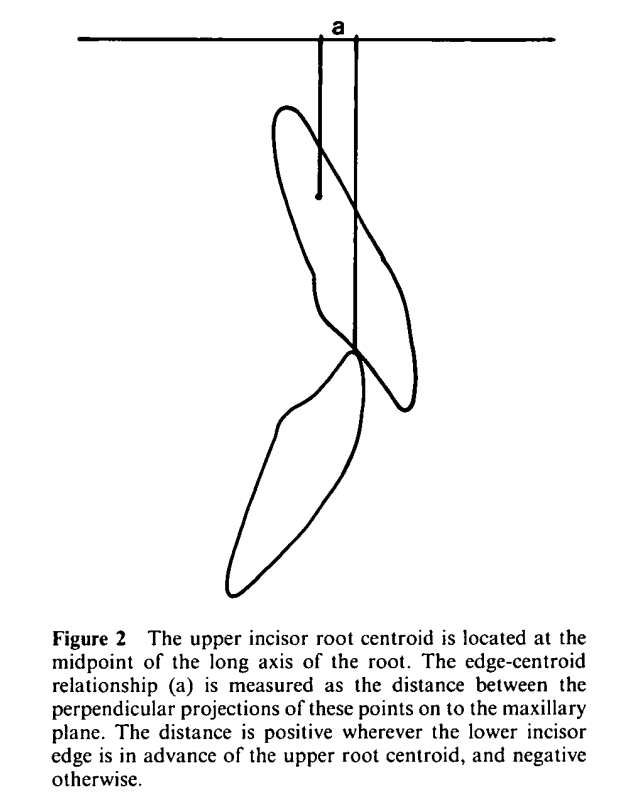
5. Importance of upper incisor centroid

  • Centroid = midpoint of incisor root
  • Helps assess:
    • Root position
    • Torque control
  • Lower incisor tip position relative to centroid determines:
    • Inter-incisor angle
    • Stability
  • Lower incisor behind centroid → unstable
  • Slightly ahead → stable relationship

Viva punchline:
👉 Centroid guides stable inter-incisor positioning.


6. When to extract? Why not first premolars?

  • Extractions only if:
    • Severe skeletal discrepancy
    • Inadequate space after leveling
  • First premolar extraction:
    • Compromises buccal segment correction
  • Second premolars preferred:
    • Maintain Class I molar correction
  • Decision after therapeutic diagnosis

Viva punchline:
👉 Extraction decisions are delayed and conservative in Class II div 2.


7. Why long-term lower bonded retainer?

  • Lower anterior relapse is unpredictable
  • Tight perioral musculature common
  • Lower anterior segment is foundation of correction
  • Bonded retainer:
    • Maintains AP and transverse position
  • Stable lower incisors support upper incisors
  • Upper arch often needs minimal retention

Viva punchline:
👉 Lower bonded retainer ensures long-term stability.


8. Role of upper incisor–lip relationship

  • Upper incisor should:
    • Contact inner slope of lower lip
    • Show 2–3 mm at rest
  • Defines soft-tissue boundary
  • Dictates:
    • Amount of intrusion
    • Palatal torque
  • Aesthetic goal = biomechanical goal

Viva punchline:
👉 Soft-tissue aesthetics guide incisor positioning.


9. Why no encroachment on lower lip?

  • Teeth outside soft-tissue envelope relapse
  • Lower lip exerts strong muscular pressure
  • Advancing beyond lip contour → instability
  • Staying within lip contour ensures:
    • Muscular support
    • Long-term stability

Viva punchline:
👉 Respecting the soft-tissue envelope prevents relapse.


10. Therapeutic diagnosis and extraction decision

  • Therapeutic diagnosis = diagnosis through treatment response
  • In Class II div 2:
    • Complete first-phase correction
    • Reassess space and alignment
  • Avoid premature extraction decisions
  • Especially useful in borderline cases

Viva punchline:
👉 Extraction is decided after observing treatment response.


Class II/Division 2 Malocclusion: A Method of Planning and Treatment

If Class II Division 1 malocclusion is loud and obvious, Class II Division 2 is quiet—but far more deceptive. At first glance, the retroclined maxillary incisors and deep bite may seem straightforward. But for an orthodontic postgraduate, this malocclusion is a reminder that what looks simple often isn’t.

Let’s break it down—clinically, biomechanically, and philosophically.

🔍 Understanding the Core Problem

Class II Division 2 malocclusion is not merely an “incisor inclination issue.” It represents a complex interaction between vertical overlap, transverse restriction, and mandibular entrapment.

Key features include:

  • Retroclined maxillary central incisors
  • Deep overbite (often traumatic)
  • Reduced inter-incisal angle adaptability
  • Constricted lower arch due to vertical locking
  • Increased freeway space and altered mandibular posture

👉 Clinical pearl: The lower arch is often trapped within the upper arch due to excessive vertical overlap—not truly deficient in size.

📐 Why Cephalometric Planning Matters

One of the most overlooked steps in managing Class II Div 2 cases is planning the final incisor position before moving a single tooth.

The treatment goal is not just to reduce overbite—but to:

  • Normalize the inter-incisal angle
  • Reposition incisors within the soft tissue envelope
  • Improve dental esthetics without compromising stability

Rather than chasing numbers, PGs should ask:

“Where should the incisors ideally sit for facial balance and long-term stability?”

🦷 Non-Extraction: When and Why It Works

Contrary to traditional thinking, many Class II Div 2 cases can be managed non-extraction, provided:

  • Skeletal discrepancy is mild to moderate
  • Overbite is reduced early
  • Curve of Spee is strategically leveled
  • Lower incisors are advanced within lip boundaries

Overbite reduction alone can create 8–10 mm of usable space—a concept every PG should internalize before deciding on extractions.

  • Severe skeletal Class II
  • Severe crowding
  • Proclination exceeds soft tissue envelope

🛠️ Appliance Strategy: Think Sequential, Not Simultaneous

A common mistake is trying to do everything at once.

A biologically sound sequence includes:

  1. Initial overbite reduction (often with removable or bite-opening mechanics)
  2. Buccal segment correction and unlocking of the mandible
  3. Lower arch leveling and alignment
  4. Upper incisor torque and final detailing

This staged approach improves control, anchorage, and patient compliance.

🔁 Stability: The Real Exam Question

If there’s one word Class II Div 2 teaches every orthodontist, it’s respect—for relapse.

Stability hinges on:

  • Normal inter-incisal angle
  • Controlled lower incisor advancement
  • Long-term bonded lingual retainers (especially 33–43)

💡 Retention is not an afterthought—it’s part of treatment planning.

Radiographic Factors Affecting the Management of Impacted Upper Permanent Canines

What Do Radiographs Really Decide in Treatment Planning?

“If you see an impacted canine on an OPG, what makes you say— expose it… or extract it?”

This is a question every orthodontic student struggles with.

We are taught to look at angulation, height, overlap, resorption, and yet—when real consultants make decisions, only two radiographic factors consistently matter.

This blog breaks down which radiographic features truly influence treatment decisions and why, based on the classic study by Stivaros & Mandall (2000).


🔍 Why This Topic Matters Clinically

Impacted maxillary canines occur in 1.7–2.2% of the population.
Once a patient presents late, the orthodontist must choose between:

  • Surgical exposure + orthodontic alignment
  • Surgical removal

The wrong decision can mean:

  • Prolonged treatment
  • Periodontal compromise
  • Failed alignment
  • Unnecessary extraction

📌 Radiographs guide this decision—but not in the way students often assume.

🧠 Study in One Line

Orthodontists do NOT base their decision on most OPG measurements.
Instead, they rely mainly on:

  1. Labio-palatal position of the canine crown
  2. Angulation of the canine to the midline

🖼️ Radiographs Used in Decision Making

RadiographPurpose
OPGAngulation, vertical height, overlap, root position, resorption
Lateral Skull RadiographLabio-palatal position of crown & root

📐 Radiographic Variables Assessed

1️⃣ Canine Angulation to Midline (OPG)

GradeAngulation
Grade 10–15°
Grade 216–30°
Grade 3≥31°

📌 Key Insight:
As angulation increases → probability of extraction increases


2️⃣ Vertical Height of Canine Crown

GradePosition Relative to Incisor
1Below CEJ
2Above CEJ but < ½ root
3> ½ root but < full root
4Above full root length

⚠️ Surprising finding:
Vertical height did NOT significantly influence the treatment decision.


3️⃣ Overlap of Adjacent Incisor Root

Overlap% Cases
No overlap13.6%
Complete overlap55.6%
GradeDescription
Grade 1No horizontal overlap of the incisor root
Grade 2Overlap of less than half the width of the incisor root
Grade 3Overlap of more than half, but less than the full width of the incisor root
Grade 4Complete overlap of the incisor root width or more

🧠 Clinical myth busted:
Even severe overlap did not statistically affect whether the canine was exposed or removed.


4️⃣ Root Resorption of Adjacent Incisor

Status% Cases
Present22.7%
Absent77.3%

📌 Detected only on OPG → bucco-lingual resorption often missed.


⭐ The MOST Important Factor:

Labio-Palatal Position of the Canine Crown

Crown PositionExposed (%)Removed (%)
Labial0100
Line of arch2080
Palatal66.733.3

🔑 Why Palatal Canines Are Favored for Exposure

  • Better gingival management
  • Easier surgical access
  • Closed eruption techniques easier to manage
  • Less risk of attachment failure

👉 Labial canines = poor periodontal prognosis → extraction preferred


📊 What Logistic Regression Showed

Radiographic FactorInfluence on Decision
Labio-palatal crown position✅ Significant
Canine angulation to midline✅ Significant
Vertical height❌ Not significant
Incisor overlap❌ Not significant
Root resorption❌ Not significant

🧠 Clinical Interpretation (Exam-Gold Section)

Despite multiple measurable radiographic parameters, orthodontists subconsciously prioritize what affects biomechanics and periodontal outcomes the most.

  • palatally placed canine can often be guided into the arch safely.
  • horizontally angulated canine fights biomechanics.
  • OPG measurements act as guides, not decision-makers.

📝 Questions to Ponder (with Answers)

❓1. Why doesn’t severe incisor overlap automatically lead to extraction?

Answer:
Modern fixed orthodontics allows alignment even from difficult positions. Overlap alone does not predict failure.


❓2. Why is labial impaction considered worse than palatal?

Answer:
Because of:

  • Attached gingiva loss
  • Higher risk of gingival recession
  • Difficulty with surgical access and rebonding

❓3. Why is angulation more important than vertical height?

Answer:
Angulation determines path of eruption and biomechanical feasibility, whereas height mainly affects treatment duration.


❓4. Why can’t OPG alone decide treatment?

Answer:
OPGs have:

  • Magnification
  • Distortion
  • Poor bucco-lingual information

👉 Lateral skull radiograph adds crucial spatial insight.


❓5. If radiographs are limited, what else influences decisions?

Answer:

  • Patient motivation
  • Oral hygiene
  • Periodontal status
  • Willingness for long treatment

🎯 Take-Home Message for Students

Don’t get lost measuring everything on an OPG.
Ask yourself just two questions first:

1️⃣ Is the canine palatal or labial?
2️⃣ How steep is its angulation to the midline?

Everything else is supporting data—not the final verdict.

Mandibular growth direction following adenoidectomy

(Based on Linder-Aronson et al., Am J Orthod, 1986)

As orthodontists, we often label a child as a “vertical grower” or “long-face case” very early—and then plan mechanics accordingly.
But what if that growth direction is not fixed?
What if airway obstruction and breathing mode are quietly influencing mandibular posture and growth direction—and correcting the airway changes the skeletal trajectory?

Understanding Mandibular Growth Direction (MGD)

What do we mean by “mandibular growth direction”?

  • Mandibular growth direction refers to the direction in which the chin (gnathion) moves during growth
  • It is assessed by:
    • Superimposing serial cephalograms on stable cranial base structures
    • Tracking the movement of gnathion
    • Measuring its angle relative to the Sella–Nasion (SN) plane

Simplified interpretation:

  • More horizontal MGD → forward chin growth → better profile, less vertical facial height
  • More vertical MGD → downward/backward chin growth → long face tendency

📌 MGD represents the sum total of multiple growth influences, not just mandibular length.


Question to Ponder

If two children have the same mandibular length, can they still have very different facial profiles? Why?


2. Why Airway Obstruction Matters in Facial Growth

What happens in children with enlarged adenoids?

Children with severe nasopharyngeal obstruction often show:

  • Mouth breathing
  • Lowered mandibular posture
  • Increased lower anterior face height
  • Steeper mandibular plane
  • Retrognathic mandible

These features are classically associated with vertical growth patterns.


Cause → Mechanism → Effect

StepExplanation
CauseEnlarged adenoids → nasal obstruction
MechanismMouth breathing → mandible held in a lowered position
EffectIncreased lower face height + vertical mandibular growth

⚠️ The key point is mandibular posture, not just airflow.


Question to Ponder

Is it the path of air or the position of the mandible during breathing that matters more for growth?


3. What Is Adenoidectomy Expected to Do (The Hypothesis)

The authors asked a simple but powerful question:

If nasal breathing is restored after adenoidectomy, does mandibular growth direction change?

Null Hypothesis: Restoring nasal breathing does not affect mandibular growth direction.

If the mandible becomes:

  • More horizontal → hypothesis rejected
  • Same as controls → hypothesis rejected

4. How the Study Was Designed

Study Groups

GroupDescription
Adenoidectomy group38 children (7–12 yrs) with severe nasal obstruction who changed from mouth to nasal breathing
Control group37 age- and sex-matched children with clear airways

Important Controls:

  • No orthodontic treatment in either group
  • 5-year follow-up using serial cephalograms
  • Separate analysis for boys and girls

Why not short-term?

  • Small growth increments exaggerate measurement errors
  • Reliable conclusions require ≥10 mm of chin growth

📌 Important learning point:
MGD measurements are highly sensitive to superimposition errors—long-term data matters.


5. What Did the Study Find? (Core Results)

A. Girls After Adenoidectomy

  • Showed significantly more horizontal mandibular growth
  • More horizontal than even female controls
  • Suggests partial recovery from earlier vertical growth

B. Boys After Adenoidectomy

  • Trend toward more horizontal growth
  • But not statistically significant
  • Still showed large individual variation
GroupChange in MGD After Adenoidectomy
GirlsSignificant horizontal shift
BoysHorizontal trend, not significant
BothGreater variability than controls
GroupBoys MGD Mean (SD)Girls MGD Mean (SD)Variability vs Controls
Adenoidectomy58° (18°)61° (16°)Higher (P<0.05)
Controls62° (11°)72° (9°)Lower

Question to Ponder
Why might girls show a clearer skeletal response than boys after airway correction?

6. Why Was Growth More Variable After Adenoidectomy?

Animal studies help explain this.

Key Insight from Primate Studies:

  • Some subjects respond to obstruction by:
    • Holding mandible down → vertical growth
  • Others:
    • Open mouth briefly for each breath → normal growth

👉 Different neuromuscular adaptations → different growth outcomes

CLINICAL IMPLICATIONS


1️⃣ Growth Direction Is Not Always Fixed

  • Traditionally, vertical growers were treated by adapting mechanics
  • This study suggests growth direction can partially recover naturally

2️⃣ Incisor Crowding May Be Environmental

After adenoidectomy:

  • Incisors often change from retroclined → proclined
  • Arch circumference may increase
  • Some crowding may resolve without extractions

📌 Not all crowding = tooth–jaw size discrepancy


3️⃣ Timing Matters

  • Adenoids are largest around 5 years
  • Often regress naturally later by age 10 years
  • Surgery should be reserved for symptomatic young children

4️⃣ Airflow Alone Is Not Enough

  • Increased nasal airflow ≠ changed mandibular posture
  • Posture is the biological driver of growth change

Question to Ponder

How might early airway evaluation change your extraction vs non-extraction decisions?

Final Take-Home Message

The mandible does not grow in isolation.
It grows within a functional environment—especially the airway.
As orthodontists, ignoring that environment means missing half the diagnosis.

Variation of patterns of malocclusion by site of pharyngeal obstruction in children

As an ortho student, you keep hearing “check adenoids, check tonsils, check breathing.” By the end of this blog, you should be able to predict the likely malocclusion pattern just from knowing where the child’s airway is obstructed – and explain the logic behind it to parents and ENTs, not just quote it.

The core question Nunes asked

Nunes & Di Francesco (2010) studied 114 mouth-breathing, snoring children (3–12 years) with tonsillar and/or adenoid enlargement, all seen in an ENT clinic.​

They asked a very simple but powerful question:

“Is the site of lymphoid obstruction (adenoids, tonsils, or both) associated with specific patterns of malocclusion (sagittal / transverse / vertical)?”

Obstruction was graded objectively: tonsils (Brodsky 1-4), adenoids (cephalometric 0-100%). Orthodontic exams classified sagittal (I/II/III), transverse (normal/crossbite), and vertical (normal/open/deep) relationships.

The groups:

  • Non-obstructive (small tonsils/adenoids)
  • Isolated obstructive tonsils
  • Isolated obstructive adenoids
  • Combined obstructive adenoids + tonsils​

LIKELY AIRWAY OBSTRUCTION → EXPECTED MALOCCLUSION

A. Adenoid + Tonsil Hypertrophy

  • 🔹 Common occlusion: Class II
  • 🔹 Transverse: Posterior crossbite common
  • 🔹 Skeletal pattern: Vertical growth tendency
  • 🔹 Clinical hint: Retropositioned mandible, narrow maxilla

B. Isolated Tonsillar Hypertrophy

  • 🔹 Common occlusion: Class III tendency
  • 🔹 Mechanism: Forward tongue posture
  • 🔹 Watch for: Lower incisor proclination

C. Isolated Adenoid Hypertrophy

  • 🔹 Usually Class I or mild Class II
  • 🔹 Often associated with maxillary constriction

TRANSVERSE DIMENSION (KEY RED FLAG 🚩)

  • Posterior crossbite prevalence ↑ in all airway obstruction types
  • Early maxillary expansion = functional + airway benefit

VERTICAL RELATIONSHIP

  • ☐ Open bite / Deep bite
  • ⚠️ Not directly site-dependent
  • Influenced by:
    • Facial type
    • Oral habits (thumb sucking, tongue thrust)

Is this malocclusion causing airway issues, or is the airway issue causing this malocclusion?
Airway obstruction causes the malocclusion. Nunes 2010 shows enlarged adenoids/tonsils (64.9% combined obstructive) drive specific patterns: combined → Class II (43.2%) via backward mandibular rotation for airflow; tonsils only → Class III (37.5%) via forward tongue thrust. Mouth breathing narrows palate → 36.8% posterior crossbite (vs 6.9-16.4% controls/population). Reverse (malocclusion → airway) not supported—it’s functional matrix disruption (Moss theory).

If I correct the teeth without correcting the airway, will this case relapse?
Yes, high relapse risk. Obstruction persists → ongoing tongue displacement, mandibular posture changes, dolichofacial growth continue post-ortho. Adenotonsillectomy normalizes GH → mandibular growth boost, but without it, ortho stability fails as functional drivers (mouth breathing) remain. Early ENT + ortho (pre-spurt) prevents irreversibility.​

Am I seeing a dental problem or a functional growth problem?
Functional growth problem. 36.8% crossbite, site-specific sagittal shifts (P=.02) signal airway-altered craniofacial development, not isolated dental misalignment. Class I appears “normal” but hides constricted arches → future crowding; true dental issues lack this obstruction-malocclusion signature.

Will correcting the airway allow self-correction of growth?
Partial self-correction possible pre-spurt: surgery normalizes GH, boosts condylar/mandibular base apposition → some malocclusion improvement. Not full—ortho often needed for transverse (crossbite), residual sagittal discrepancies.

In Class II: Is the mandible retruded due to posture or true deficiency?
Posture-driven retrusion from airway obstruction. Nunes shows combined adenoid+tonsil enlargement (64.9% sample) correlates with Class II (43.2% vs population 12.6%), caused by backward mandibular rotation—child opens posture for airflow through narrow palate, displacing mandible posteriorly. Not primary skeletal deficiency; functional adaptation becomes skeletal if untreated pre-spurt.​

In Class II: Is the head posture influencing jaw position?
Yes, head posture reinforces retrusion. Mouth breathing → forward head tilt + downward chin to compensate airway restriction, locking mandible in distal position and promoting dolichofacial growth (vertical dominance). Nunes links this cycle: obstruction → tongue flop → posture change → Class II signature (P=.02 sagittal association).​

In Class III: Is tongue pressure from tonsillar obstruction contributing?
Yes, directly. Isolated tonsillar enlargement (7%) drives Class III (37.5% vs population 1.9%)—tonsils narrow oropharynx, forcing tongue forward/downward against lower anteriors, proclining incisors and shifting mandible mesially. Adenoids alone (12% Class III) lack this lower-level pressure effect.​

In Class III: Is this a true skeletal Class III or a pseudo-Class III?
Pseudo-Class III (functional). Forward tongue thrust from tonsils creates mesial molar relation + lower incisor procline, mimicking skeletal but reversing post-tonsillectomy via normalized tongue posture and mandibular growth (GH normalization). True skeletal lacks airway trigger; differentiate via tonsil grade + tongue eval