HOLISTIC SPICES

India is the world’s largest producer, consumer and exporter of spices. We use spices in culinary art to impart taste but do you know that these spices also aid in maintaining oral health? Let us quickly go through few of them and spice up our knowledge!!

Turmeric :

  • Acts as a pit and fissure sealant (forms a mechanical barrier between tooth and oral environment).
  • It also detects the plaque adhered to the tooth surface.
  • Applying a paste made from 1 TSP of turmeric with 1/2 tsp of salt and 1/2 tsp of mustard oil provides relief from gingivitis and periodontitis.

Ginger :

  • As a sialogogue to promote salivation.
  • For treatment of toothache and gingivitis.
  • Ginger extracts can be used in treatment of oral candidiasis (ethanol extract of ginger was effective on Candida albicans at concentrations of 1:5).
  • It has antimicrobial effect against Lactobacillus & to an extent against Streptococcus mutans.

Black pepper :

  • For treatment of oral abscesses, tooth decay and tooth aches.
  • Brushing with a herbal toothpaste containing black pepper showed a significant reduction in the gingival bleeding, salivary anaerobic bacteria count and overall improvement in oral hygiene.

Cardamom :

  • To treat infection of teeth and gums.
  • The extract of cardamom exhibits broad spectrum antimicrobial activity against Streptococcus mutans, Propionibacterium, Pytyriosporum ovale, Trichophyton mentagrophytes, microorganisms that cause dental caries, acne, dandruff.

Cinnamon :

  • It possesses a strong anti-candidal effect at concentrations of 25 to 50 mg/l.
  • It also increases the salivary pH and flow.
  • Studies also showed that it has high activity against Streptococcus mutans and decreased the viable count.

Clove :

  • Extract of clove inhibits the growth of periodontal oral pathogens, including Porphyromonas gingivalis & Prevotella intermedia.
  • Eugenol has a scavenging effect – helps to prevent cell and tissue damage that could lead to disease, also acts as an enzyme activator and this property is effectively used in treating toothaches.

Fenugreek :

  • Astringent, demulcent, carminative, stomachic, diuretic, emmenagogue, emollient, expectorant
  • An infusion of Fenugreek leaves is used as gargle for recurrent mouth ulcers.

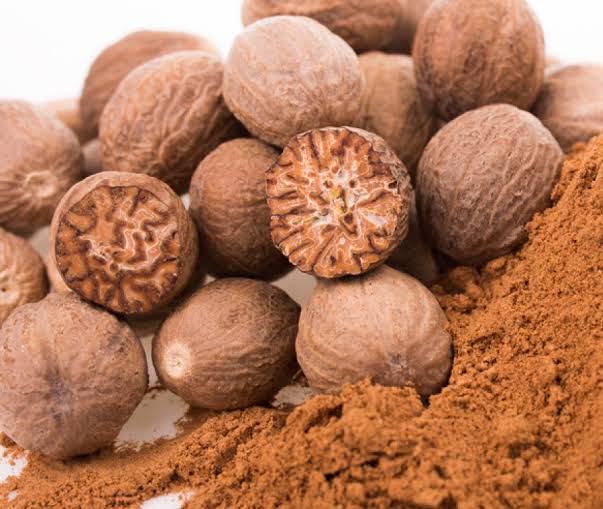
Nutmeg :

  • Routine teeth cleaning with Jaiphal powder benefits dental and gum problems.
  • It has an effect on different types of oral sores and anti-inflammatory activity and antimicrobial properties.
  • It can be incorporated in floss, wedges and root canal irrigants.
Corriander seeds :

  • It shows anti-cariogenic property
  • These seeds increase the pH of the saliva which, in turn, will counteract the effect of the acids produced by bacteria and this neutralize them.
  • It is effective against Bacillus cereus.

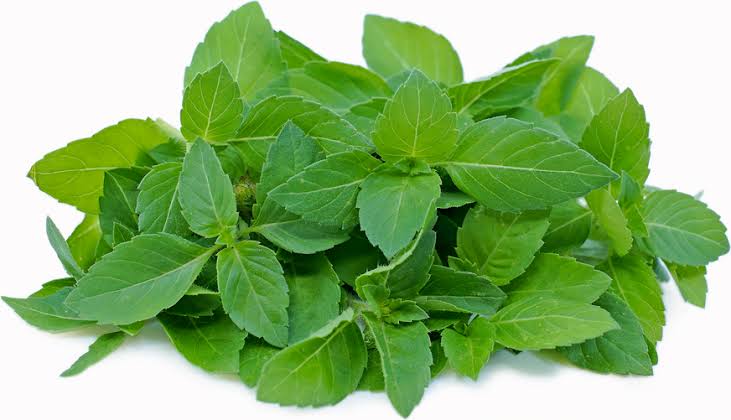
Holy basil :

  • Useful in pyorrhea and other gum disorders.
  • Chewing its leaves helps clear ulcers and infections of the mouth.
  • As a mouthwash, it is useful against bad breath and for maintaining healthy gums.
Rosemary :

  • Has power to inhibit the formation of dental biofilm by reducing the adherence of pathogens to dental surfaces, thereby avoiding the pathologies caused by it’s formation.

Herbs such as green tea (prevents dental caries, gum diseases and also prevents halitosis), neem (antimicrobial, antioxidant, prevents dental caries and oral infections), sage (antibacterial,antiviral, antifungal), thyme (antiseptic,antifungal) and peppermint leaf (in low concentrations produces cooling sensation, in higher concentrations produces local anaesthesia and irritation; chewing leaf makes a very effective reliever to dental pain) also get added to the list of those help in maintaining dental hygiene.

Source : ncbi.nlm.nih.gov

Botulinum toxin

  • Botulinum toxin also called “miracle poison” is one of the most poisonous biological substances known. It is a neurotoxin produced by bacterium Clostridium botulinum.
  • Cl. botulinum elaborates eight antigenically distinguishable exotoxins (A,B,C1,C2,D,EF&G). Type A is the most potent toxin followed by types B and F.

How does Botox work?

Intramuscular administration of botulinum toxin acts at neuromuscular junction to cause muscle paralysis by inhibiting the release of acetylcholine from presynaptic motor neurons. Botulinum toxin acts at four different sites in the body : The neuromuscular junction, autonomic ganglia, postganglionic parasympathetic nerve endings and postganglionic sympathetic nerve endings that release acetylcholine.

Applications of botulinum toxin in maxillofacial region :

Cosmetic applications :

  • Facial wrinkles : forehead rhitids are managed by injecting 10-20 U of BTA injected at least 1cm above the orbital rim
  • Lateral canthal lines known as “crow’s feet” are generally managed by superficial injections of 8-16 U of BTA into lateral orbicularis oculi.
  • Eyebrow lift can be managed by BTA injections.

Temporalis and masseter muscle hypertrophy : This hypertrophy is generally associated with clenching or other parafunctional use of the jaws. The results of BT use in such cases appears to be effective in treating chronic facial pain associated with masticatory hyperactivity.

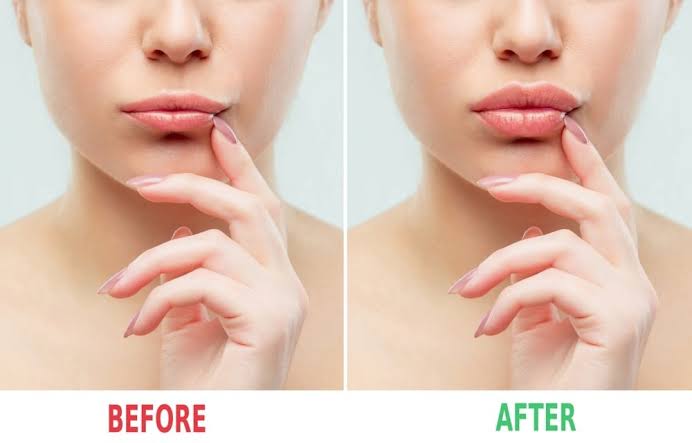
Lip flip : fast and easy procedure that takes just 30 minutes, leaving lips looking full and soft. Botox injections around the lips relax those muscles, allowing the lip to roll slightly outward. This reveals more of the lip surface, making them look larger

Gummy smile : Botox is injected in the area between upper lip and nose to temporarily freeze the muscles that contract or elevate smile which allows to smile without showing gums.

Dropping corners of the mouth : Hyperactivity of depressor anguli oris can lead to dropping of the corner of the mouth. The site of injection is on the trajectory of nasolabial fold to the jaw line.

Therapeutic applications :

  • Temporomandibular disorders (TMD) : TMDs may be myofascial (those related to muscles themselves) or arthrogenic (those related to TMJ). BTA has been found to be effective in resolving pain and tenderness in TMDs. The diverse group of TMDs those likely to be benefited by injection of BT includes : bruxism and clenching, OMDs, myofascial pain, trismus, headaches, hypermobility
  • Sialorrhea and salivary secretory disorders : injection of BTA into the parotid and submandibular glands is effective in controlling drooling. BTA injections have also been shown to be effective in managing gustatory sweating (Frey’s syndrome)
  • Implantology – BT has been postulated to be therapeutically beneficial by allowing unimpeded osseointegration of implants. Stress due to any excessive functional force or any parafunctional habit may cause implant failure. Thus injecting BTA relaxes the masticatory muscles, sparing the implant leading to unimpeded osseointegration.
  • Denture wearers : BTA is usedin patients struggling in getting used to a new set of dentures due to irregular and uncoordinated muscle activity, especially who have been edentulous for a long period of time by providing muscle relaxation.
  • Adjunct to orthodontic treatment and to prevent relapse : in some cases, relapse following an orthodontic correction may occur in patients with strong muscle activity such as that of mentalis muscle. BTA can be used during treatment to reduce the intensity of muscle contractions and muscles can be slowly & gradually trained post treatment to a more physiologic movement.

Source : ncbi.nlm.nih.gov

Laser dentistry

• laser dentistry potentially offers a more comfortable treatment option for number of dental procedures

• The term LASER stands for “light amplification by stimulated emission of radiation”. Use of laser proved to be an effective tool to increase efficiency , specificity, ease, cost and comfort of the dental treatment.

• The instrument creates light energy in a very narrow and focused beam. This laser light produces a reaction when it hits tissue allowing it to remove or shape the tissue.

• Types of lasers used in dental practice can be classified by various methods . According to laser medium used gas laser, solid laser ; According to tissue applicability hard and soft tissues ; According to range of Wavelength.

Common hard tissue procedures include :-

-Cavity detection. Lasers can detect cavities early by finding evidence of tooth decay.

-Tooth preparations and dental fillings. Local anesthesia and traditional drills are often not needed with laser treatments. Lasers can kill bacteria in a cavity, which can aid in the long-term health of a tooth.

– Treating tooth sensitivity. Teeth that have sensitivity to hot and cold can be treated with dental lasers that seal tubules on the tooth’s root.

Common soft tissue procedures include :-

-Treating a “gummy smile.” Lasers are used to reshape gum tissue associated with “gummy smile,” in which the gums’ length covers much of the tooth.

-Crown lengthening. This procedure reshapes both gum tissue and bone for healthier tooth structure, which helps with placing restorations on the teeth. Treating tongue frenulum attachment. Those with a thick or tight frenulum (the fold of skin under the front part of tongue that anchors to the mouth floor) may benefit from a laser frenectomy. This treatment helps children whose restricted frenulum causes them to be tongue-tied, have difficulty breastfeeding, or have a speech impediment.

-Removing soft tissue folds. Lasers can remove soft tissue folds from ill-fitting dentures without pain or sutures.

Other laser procedures include:-

-Optical coherence tomography allows a doctor to safely see inside a tooth or gum tissue.

-Removing benign tumors. Lasers can remove tumors from the palate, gums, and sides of the lips and cheeks through a pain- and suture-free method.

-Treating obstructive sleep apnea.  Lasers can reshape the throat and relieve associated breathing problems when sleep apnea is caused by tissue overgrowth in the throat.

-TMJ (temporomandibular joint) treatment. Lasers can help reduce pain and inflammation in the joint.

– Nerve regeneration. Lasers can help regenerate damaged blood vessels, nerves, and scars.

-Treating cold sores. Lasers can minimize healing time and reduce pain from cold sores.

-Teeth whitening. Lasers speed up the bleaching process

Benefits of laser dentistry over other methods :-

– There is potentially a decreased need for sutures with soft tissue lasers.

-Bleeding is minimized in treated soft tissues, as the laser promotes blood clotting.

-With some procedures, anesthesia is unnecessary.

– The chance for bacterial infections is lower because the laser sterilizes the area.

-Wounds can heal faster, and it’s possible for tissue to regenerate. The procedures may involve less damage to the surrounding tissues.

Disadvantages of laser :-

– Lasers can’t be used on teeth that already have certain types of filling, such as metal amalgam.

-Hard lasers can sometimes injure tooth pulp.

-Some laser procedures still require anesthesia.

– Drills are still sometimes needed to complete fillings, including shaping, adjusting the bite, and polishing the filling.

Source:- http://www.healthline.com

Emprethin and tooth jwellery

Lumineers : also called Da Vinci veneers, emprethin, empress veneers are thin porcelain material, custom made for the patient and applied with a permanent bonding agent to the tooth.

Main difference between conventional veneers and Lumineers is very thin thickness of Lumineers, like ultra thin and material of construction which is called cerinate porcelain which is very strong one and much thinner than the traditional veneers. Their thickness is comparable to contact lenses.

Advantages :

  • Painless
  • Conservation of tooth structure as very little enamel is removed
  • Elimination of post operative sensitivity
  • Ease of impression
  • Bonding to enamel
  • Longer lasting restoration due to enamel bonding
  • Higher level of acceptance by patients
  • Easy to clean and maintain

Disadvantages :

  • Bulky apperance
  • Periodontal problems due to over contouring of the veneers
  • Difficult to mask severe staining and discoloration with thin veneers.
  • Teeth width being restored cannot be altered significantly.

Indications :

  • Minor color changes
  • Masking mild to moderate tooth discoloration. Eg: enamel hypoplasia, enamel hypocalcification, tetracycline staining, teeth with enamel malformations
  • Closing diastemas
  • Restoring chipped or cracked teeth
  • Reshaping peg shaped and undersized teeth
  • Correcting minor misalignments and rotations of anterior teeth
  • Worn and adolescent dentition

Contraindications :

  • Severe discolorations or darkly stained teeth
  • Protruding teeth or crowding that will require some reduction to achieve better esthetics
  • If teeth are significantly broken down or compromised
  • Large class IV defects

Lumineers need no tooth structure removal, thus bonded directly on the tooth surface (minimally invasive technique). Lumineers bind directly to the surface tooth making it a conservative cosmetic approach. They are very durable, 10 years or longer with good oral hygiene.

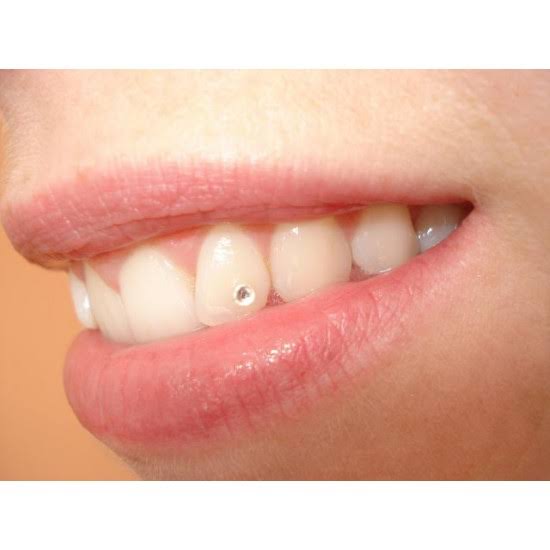
Tooth jwellery : it is an adornment that is set on the labial aspect of the teeth. A little diamond or precious metal appeal can be bonded to a tooth and it can either be there temporarily or can be kept going as long as one needs it.

A tooth jwellery applied on a natural tooth will absolutely continue to remain for 6 months upto a couple of years. These are just 0.4 mm or 0.9 mm thick and 1.8 mm to 3 mm wide, hence patient gets used to this new addition in a couple of days after the application. The presence of jewel won’t have any effect on routine dental cleanliness and hygiene measures.

Source : topnotchdentalclinic.com

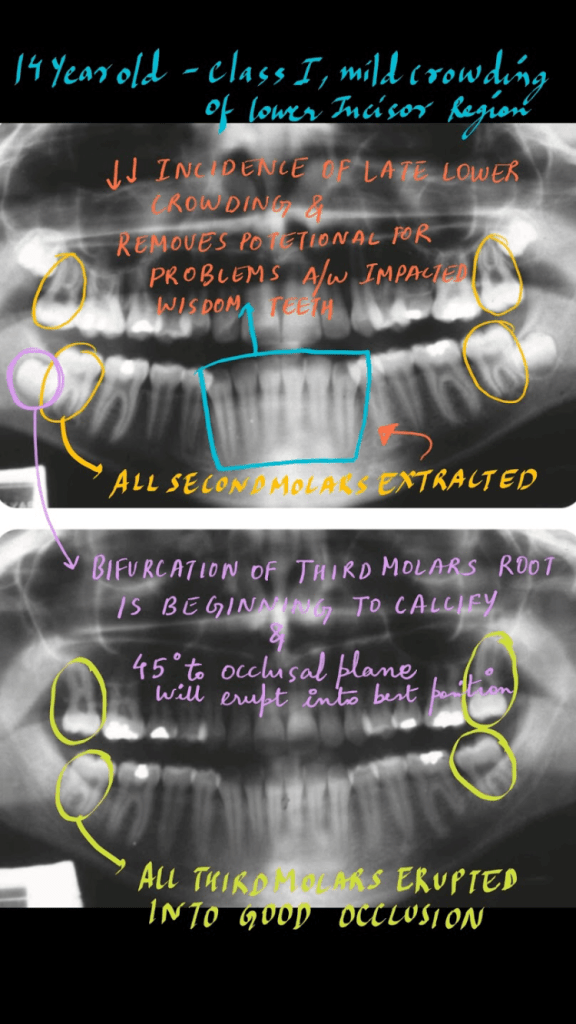
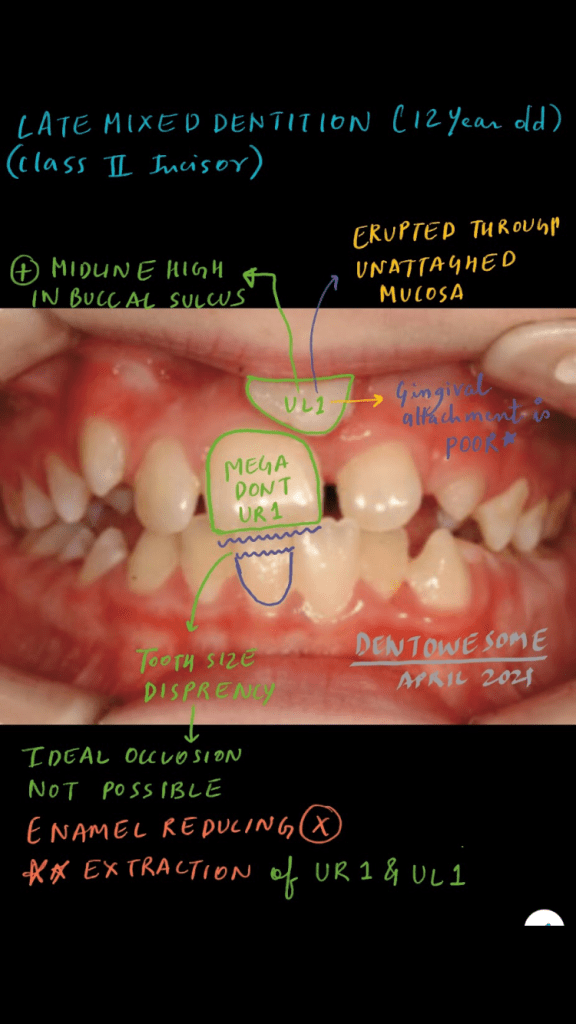
Ortho Case 2.13

A 14-year-old male with a class I occlusion complicated by mild crowding of the lower incisor teeth

We know that we need to extract second permanent molars. What are it’s disadvantages if we go ahead with this option? Is there an optimum time to extract lower second permanent molars to obtain the best eruptive position for the third molar?

In the same way, if there was crowding in the anterior region of the maxilla. Then, What are the indications for extracting a maxillary second permanent molar?

Link: https://drive.google.com/file/d/1G4n6TZ_EOFozexnRWh08cBvncUZQ1OjS/view?usp=drivesdk

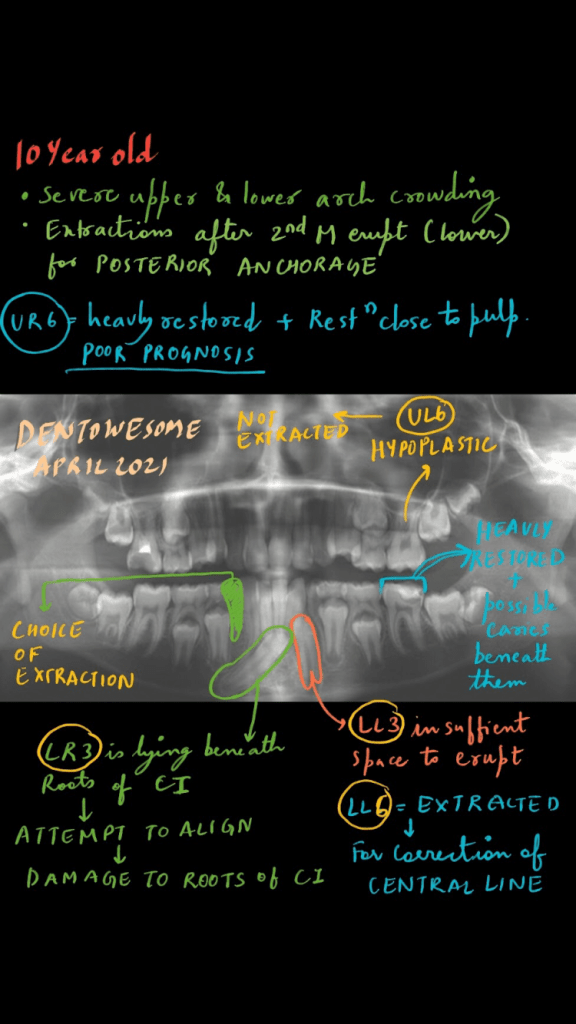
Ortho case 2.12

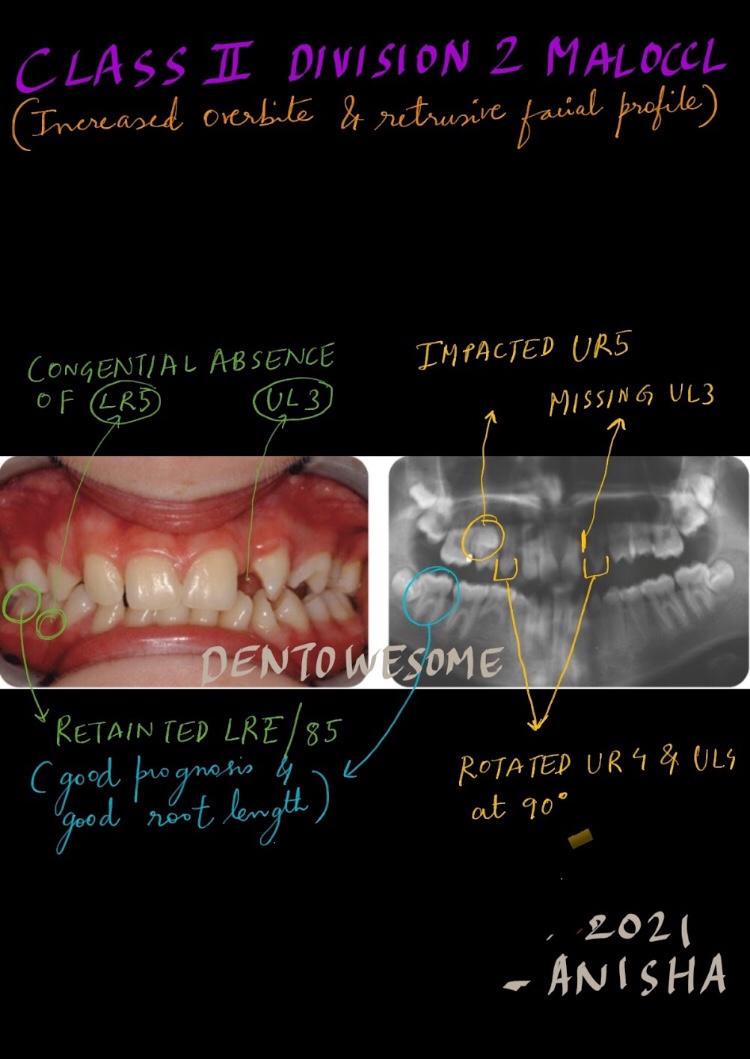
• Severe upper and lower arch crowding
• Buccally excluded UR3, impacted lower canines
• Ectopic and impacted LR3
• LR3 is excluded from the arch and ectopic in position, with its crown lying beneath the roots of the lower central incisors
• Potentially impacted LL3 due to insufficient space
• Heavily restored LL6 and UR6
• Hypoplastic UL6
• Upper and lower centre line shift to the right

How will you treat?

Link: https://drive.google.com/file/d/1UhHHaGLYLzzIeDnF_9qNTw6LrwXxbpWS/view?usp=drivesdk

RESEARCH ARTICLES RELATED TO THE PERIO CASE 7:

1) https://pubmed.ncbi.nlm.nih.gov/8832476/

Masters and Hoskins reported that 90% of mandibular furcation invasions have CEPs

2) https://www.ncbi.nlm.nih.gov/pmc/articles/PMC2848791/

Bissada and Abdelmalek reported a 50% correlation between CEPs and furcation invasion

3) https://pubmed.ncbi.nlm.nih.gov/19518034/

The length of root trunk affects attachment loss The longer a given root trunk, the less likely a furcation will be predisposed to attachment loss. Teeth with Taurodontism usually have apically displaced furcation and longer root trunk length

4) https://pubmed.ncbi.nlm.nih.gov/13513891/

Intermediate bifurcation ridges are ridges spanning across the bifurcation of mandibular molars in the mesiodistal direction These ridges are present in 70–77% of the mandibular molars. Just like other anatomic structures, the presence of an intermediate bifurcation ridge may hinder effective plaque control and root preparation by both the patient and dentist

5) https://www.nature.com/articles/bdj.2007.1059

Buccal radicular grooves and palato-gingival grooves are developmental phenomena that affect mainly the maxillary anterior teeth. These grooves run on the roots in the coronal-apical direction Due to their anatomy, the grooves frequently provide a plaque-retentive area that is very difficult to instrument, making teeth with these developmental grooves more prone to attachment loss