
Mnemonic for candidiasis

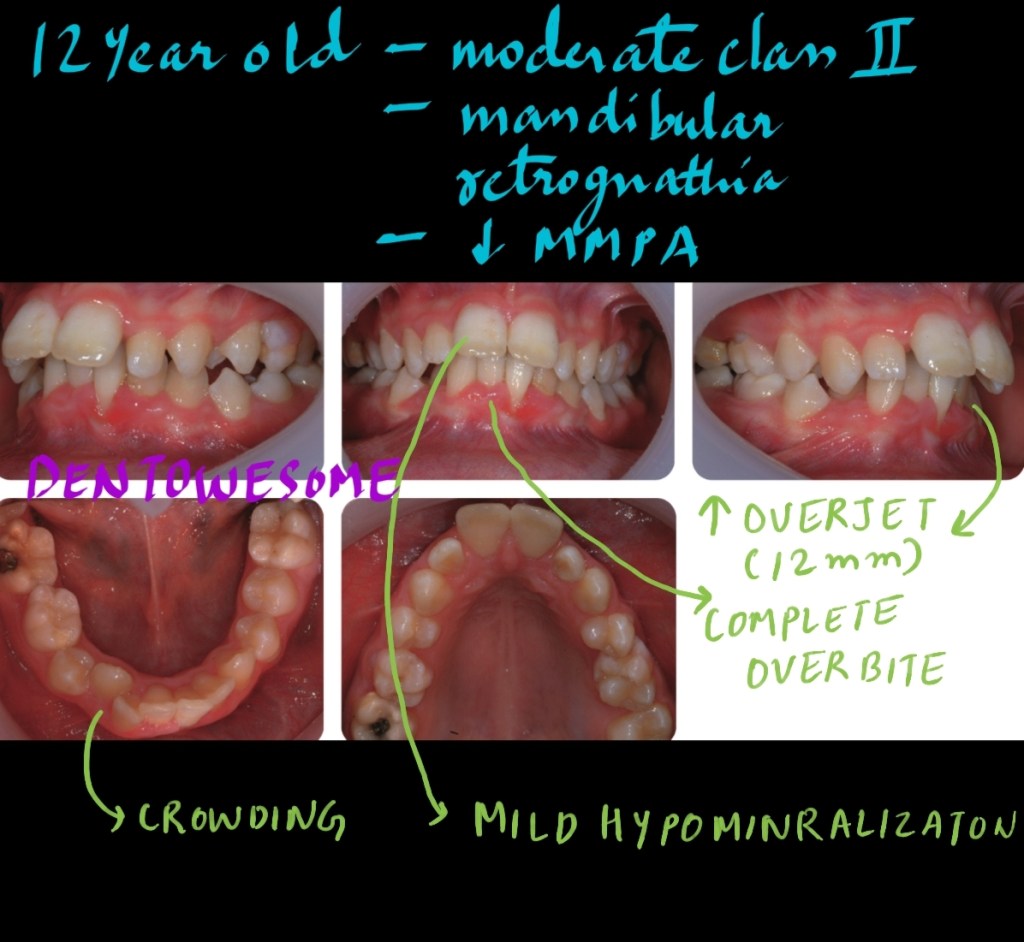
A 12-year-old female in the late mixed dentition with a class II division 1 incisor relationship on a moderate skeletal class II pattern with reduced MMPA. The malocclusion is complicated by:
• Increased overjet (12mm)
• Increased and complete overbite
• Crowding of both arches
• Mild molar–incisor hypomineralization.
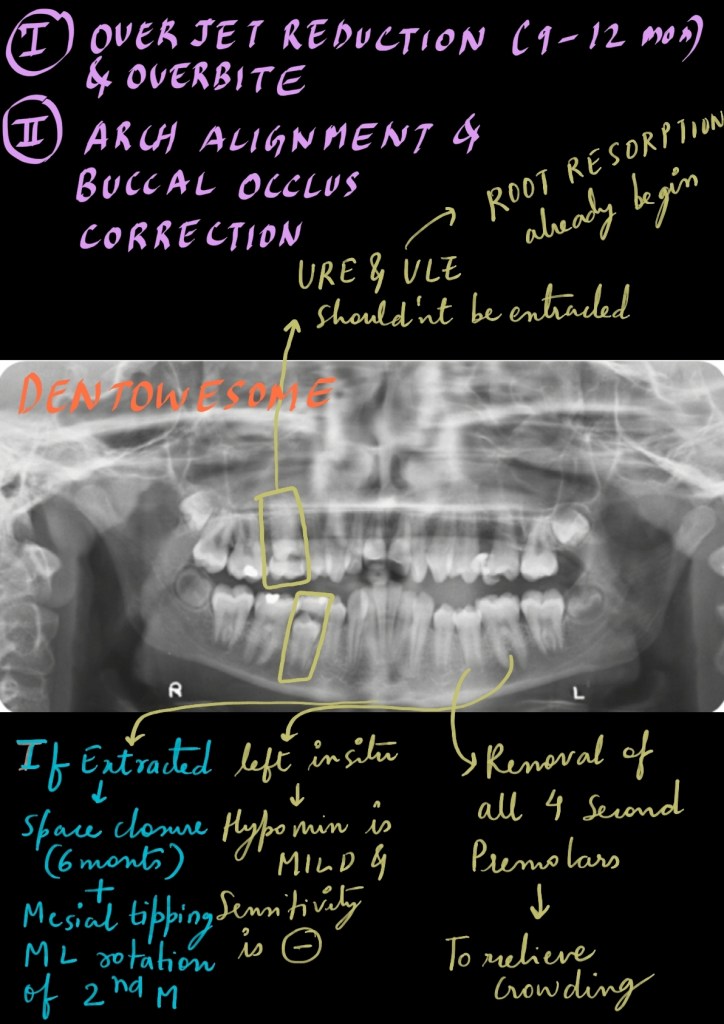
Is removal of the URE, ULE and LRE indicated at this point? How would you treat this malocclusion? What are the potential orthodontic problems associated with removal of the first permanent molars? What prescription should be used during the fixed appliance phase?
I have tried my best to explain the case in the following images! Happy reading
LINK TO PDF: https://drive.google.com/file/d/1TY0almamDToyQtMMbyZ4jZxfYRMZADOk/view?usp=sharing

Cytokines are soluble protiens/polypeptides, produces by a variety of hematopoetic and non hematopoetic cell types. They are responsible for the regulation of immunological, inflammatory and reparative host responses.
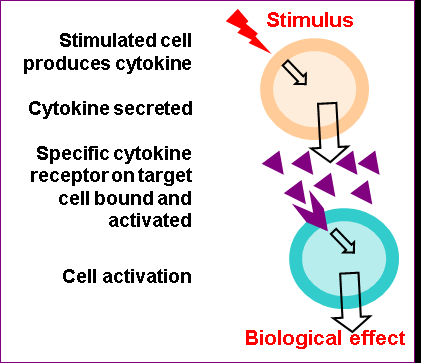
Cytokines tend to bind to high affinity receptors and the target cells and mediate their effects. Specific cytokines mediate specific reactions.

Cytokines basically mediate immune response. But some cytokines are also pro inflammatory.
These are:-
Il-1, TNF alpha and IL-6.
IL-1 is the most important pro inflammatory cytokine.
Anti inflammatory cytokines are involved in the resolution of inflammation. These include:
IL-4, IL-10 IL-13 and TGF beta.
IL-4 has mainly anti-inflammatory properties with some pro-inflammatory properties.
TGF-beta is the most important fibrogenic factor.




• Baroodontalgia refers to baro- pressure odonto – teeth Algia- pain. It’s also called as Aerodontalgia or flyers tooth or tooth squeeze
• It is the pain in the teeth caused due to changes in pressure which may be seen in case of high altitude as seen in pilots and in deep sea divers who also see severe changes in pressure which lead to pain in the tooth.
• Baroodontalgia is usually seen in teeth which have pre existing dental pathology or have improper dental treatments such as chronic pulpitis is the primary culprit; Restored teeth are more likely to be involved ; Maxillary sinusitis; Improper fillings Carious teeth and periapical cysts
• Note that normal teeth without any underlying pathologies are not affected by any change in pressure.
• Baroodontalgia occurs during initial pressure from 14.7psi to 12- 18 psi.
Why there is pain in tooth due to pressure change?
• Due to change in external pressure there will be expansion of gas with compensatory increase in pressure within the pulp chamber and root canal of the tooth which is defective due to any underlying pathology
• Direct pressure in the exposed nerve endings and microleakage of Restorative material from a faulty restoration
• pain is most seen in maxillary posteriors and results from compromised blood supply to the tooth
• In pulpitis – pain on ascent and relief on descent and in Necrosis – pain on decent and relief on ascent
TREATMENT :
– Hyperbaric oxygen therapy is the treatment to avoid baroodontalgia where the person is put in a 100% compressed oxygen chamber which prepares the body for high pressures and compression
– Identification of underlying dental pathology and getting treated properly.
Source:- healthline.com
 Dentowesome