Rapid Maxillary Expansion (RME) is a time-tested solution for correcting maxillary constriction, improving arch length, and resolving posterior crossbites. But while the skeletal and dental benefits are well known, there’s an equally important consideration: its impact on the supporting alveolar bone.
The forces generated during RME are substantial. They not only separate the midpalatal suture but also transmit stress to teeth and their supporting tissues. Consequences may include:
Buccal crown tipping
Crestal bone loss
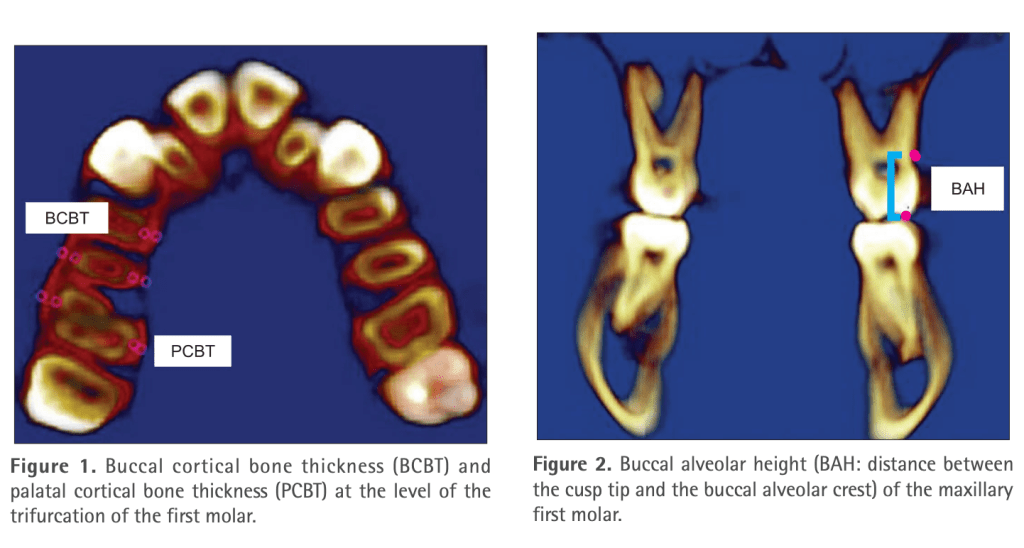
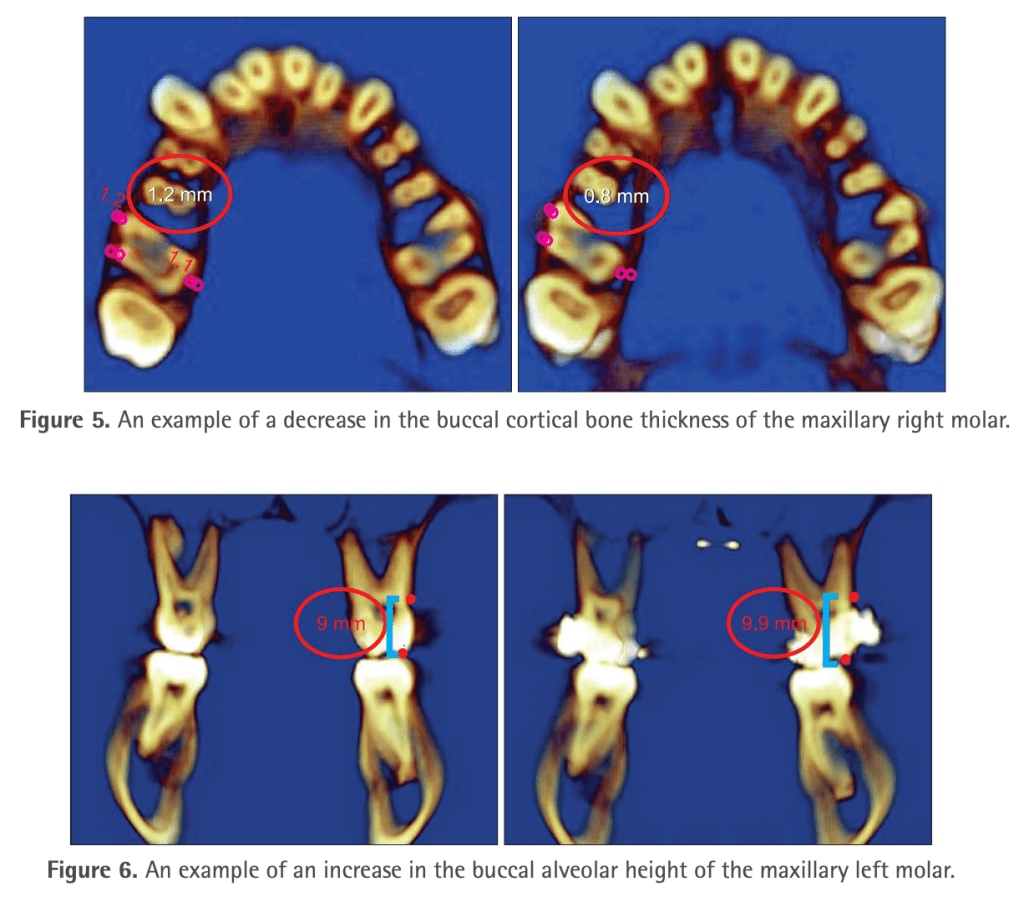
Changes in buccal and palatal cortical bone thickness
Development of dehiscence and fenestrations
Understanding these risks allows us to tailor treatment, improve patient outcomes, and safeguard periodontal health.
Appliance & Protocol
Type: Hyrax-type tooth-borne expander
Activation: 2 turns/day until palatal cusps of maxillary posterior teeth contact buccal cusps of mandibular teeth
Retention: 3 months with expander in situ → replaced with transpalatal arch for another 3 months
Key CBCT Findings
Parameter
Immediate Post-RME
After 6-Month Retention
Buccal Cortical Bone Thickness (BCBT)
Significant decrease in canines, premolars, and especially first molars
Soft tissue inflammation unresponsive to hygiene measures
Persistent discomfort or occlusal changes
Tips to Minimize Bone Loss
Avoid over-activation (follow 0.25 mm × 2/day protocol)
Consider tissue-borne or hybrid expanders in high-risk cases
Maintain optimal oral hygiene (chlorhexidine rinse during activation phase)
Use minimally invasive retention appliances post-expansion
Reference: Baysal A, Uysal T, Veli I, et al. Evaluation of alveolar bone loss following rapid maxillary expansion using cone-beam computed tomography. Korean J Orthod 2013;43(2):83–9
Ever rebonded a canine bracket, only to see the lateral incisor intrude, the midline shift, and your occlusal plane do a little dance? 😅 Don’t worry—you’re not alone. These surprises aren’t just clinical quirks—they’re biomechanical consequences, and a recent study has finally given us a powerful tool to predict them.
🧠 The Backstory: Burstone & Koenig’s Legacy
Back in 1974, Burstone and Koenig introduced the idea of analyzing two-bracket geometries to simplify the chaos of indeterminate force systems. Their theory? If you break the arch into two-bracket segments, you can analyze and predict forces more accurately.
But here’s the catch: until now, no one had really tested what happens when you add a third bracket.
🔬 The 2025 Breakthrough: Kei et al. to the Rescue
In this beautifully designed experimental study, Kei and team tested 36 different three-bracket geometries using a custom-made orthodontic force jig and high-sensitivity transducers, and various archwires (NiTi, TMA, SS).
Their setup mimicked real-world clinical brackets and angles. The goals?
✔️ Validate whether a three-bracket system behaves like two adjacent two-bracket systems ✔️ Understand how the third bracket (C) affects the system ✔️ Apply these insights to predictable clinical outcomes
And guess what? The theory held true!
Bracket angulations were varied systematically to replicate six classic geometries (Classes 1 to 6), and the impact of a third bracket (Bracket C) was studied.
📊 Clinical Geometry Classifications
Geometry Class
Bracket A Angle
Bracket B Angle
Bracket C Angle
Class 1.1–1.6
+30°
+30°
+30° to –30°
Class 2.1–2.6
+15°
+30°
+30° to –30°
Class 3.1–3.6
0°
+30°
+30° to –30°
Class 4.1–4.6
–15°
+30°
+30° to –30°
Class 5.1–5.6
–22.5°
+30°
+30° to –30°
Class 6.1–6.6
–30°
+30°
+30° to –30°
🧲 What You Need to Know (and Remember!)
📌 Clinical Application Tips
🌀 Bracket C primarily influences Bracket B – Consider when finishing or rebonding.
⚖️ Unintended Effects: Uplighting one tooth may intrude/extrude or tip adjacent teeth.
🎯 Lighter Wires = Less Side Effects: NiTi < TMA < SS in force magnitude.
0.016 SS > Highest force and moment delivery
0.020 NiTi (Supercable) > Lowest force, gentler on tissues
Using a lighter wire in finishing can prevent overcorrection and limit undesirable biomechanical effects.
🧠 Use 3-bracket force maps (e.g., Class 3.3) to anticipate vertical and moment forces on neighboring teeth.
⚠️ Common Side Effects to Watch For
Intended Movement
Possible Side Effects
Root uprighting of canine (Class 3.3)
Intrusion of adjacent incisor, extrusion of premolar, midline shift
Rebonding canines
Occlusal cant, open bite at lateral, heavy contact at premolar
High forces (>250g)
Risk of root resorption, supporting tissue damage
🔑 Mnemonic Strategy to Remember Three-Bracket Geometries
🌟 BASIC STRUCTURE
Each geometry is labeled as Class X.Y, where:
X (1 to 6) = Refers to the Bracket A angle
Y (1 to 6) = Refers to the Bracket C angle
Bracket B is always fixed at +30°
📐 ANGLE MAP
Class
Bracket A Angle (°)
Mnemonic
Trend
1
+30°
“1 = High“
Max angle (tip forward)
2
+15°
“2 = Half High“
3
0°
“3 = Zero“
Neutral
4
–15°
“4 = Fall“
Starts tipping back
5
–22.5°
“5 = Fall More“
6
–30°
“6 = Sink“
Max tip back
.Y
Bracket C Angle (°)
Mnemonic
Trend
.1
+30°
“1 = Copy B“
Same as Bracket B
.2
+15°
“2 = Half B“
.3
0°
“3 = Neutral“
.4
–15°
“4 = Tip Back“
.5
–22.5°
“5 = Tip More“
.6
–30°
“6 = Opposite B“
Opposite angle
🔁 PATTERN TRICK
All 36 combinations follow this logic:
A is fixed per Class (gets more negative from Class 1 to 6)
C follows six steps from +30° to –30°
B is always +30°
Think of it as:
A changes row-wise, C changes column-wise, B is your reference anchor.
🧠 MEMORY AID SENTENCE
To recall the progression of angulations in each bracket:
“Always B-fixed, A-falls down, C-steps down.”
Where:
“B-fixed” = Bracket B always at +30°
“A-falls down” = A goes from +30 → –30 by Class (1 to 6)
“C-steps down” = C decreases from +30 → –30 across each class (.1 to .6)
📌 EXAMPLE TO ILLUSTRATE
Class 3.5 means:
A = 0° (Class 3)
B = +30° (Always)
C = –22.5° (Step .5)
Interpretation: Neutral alignment at A, standard alignment at B, and backward tip at C.
📝 FINAL THOUGHTS
Orthodontics is as much about engineering as it is about esthetics. As a student, if you take the time to understand the mechanics behind wire-bracket interactions—especially in three-bracket systems—you’ll not only improve treatment outcomes but also develop the foresight to prevent complications before they arise.
So, the next time you’re rebonding a bracket or adjusting a wire, ask yourself: Which geometry am I working with? That one question might save you (and your patient) from a lot of unexpected surprises.
Be cautious with patients with obtuse nasolabial angle—ASO may exaggerate nasal tip prominence.
🔵 MCQ 1: Predictive Analysis
A 24-year-old female patient with bimaxillary dentoalveolar protrusion is scheduled for bimaxillary anterior segmental osteotomy (ASO). If the maxillary incisor segment is planned for a 6 mm posterior movement, what is the most likely range of upper lip retraction based on systematic review evidence?
A. 1–2 mm B. 3–4 mm C. 4–6 mm D. 5–7 mm
✅ Answer: C. 4–6 mm Explanation: The upper lip typically retracts 33–67% of the hard tissue incisor movement. For a 6 mm setback, soft tissue movement would be approximately 2–4 mm (though some cases may show more).
🔵 MCQ 2: Clinical Decision-Making
A patient undergoing ASO shows an obtuse nasolabial angle preoperatively. What is the most appropriate surgical consideration to prevent worsening facial esthetics?
A. Proceed with ASO alone B. Perform rhinoplasty simultaneously C. Opt for mandibular setback only D. Combine ASO with subnasal augmentation
✅ Answer: B. Perform rhinoplasty simultaneously Explanation: ASO increases the nasolabial angle. In a patient with an already obtuse nasolabial angle, this can make the nose appear more prominent. Rhinoplasty may help balance facial esthetics.
🔵 MCQ 3: Application in Treatment Planning
Which of the following ST landmarks consistently showed minimal movement following ASO, making them less predictable targets for esthetic changes?
A. Labrale superius (Ls) B. Subnasale (Sn) C. Pronasale (Pn) D. Labrale inferius (Li)
✅ Answer: C. Pronasale (Pn) Explanation: Multiple studies showed minimal to no horizontal or vertical movement of the nasal tip (pronasale), suggesting limited nasal ST change from ASO alone.
🎯 You’re an orthodontic student wondering: “When should a genioplasty be done? What’s the deal with remodeling? Does age really matter?” Here’s your answer – all decoded from the Angle Orthodontist (2015) paper by Chamberland, Proffit, and Chamberland — in a crisp, clinical, and structured format. 💡📐
🦴 Wait… What’s This Fancy “Functional Genioplasty”?
Back in 1957, two legends—Trauner and Obwegeser—decided the chin needed a glow-up and introduced the inferior border osteotomy of the mandible. 💥 Boom! Chin augmentation was born—not just to make selfies better but to actually help patients functionally. That’s what we call a win-win. 🙌
🪛 More Than Just A Pretty Face: Why Move the Chin?
Let’s break it down:
Got a patient with a horizontal deficiency (aka retruded chin)?
Or maybe some vertical excess (think long lower face)?
With functional genioplasty, you can move that chin forward and upward—like giving it a motivational speech. 📈😎
And guess what? It’s not just cosmetic. Precious and Delaire (yes, they sound like a law firm, but they’re ortho legends) coined this combo the “functional genioplasty” because it:
💋 Improves lip function
😌 Helps achieve lip competence at rest
💪 Reduces lip pressure on lower incisors (bye-bye proclination problems!)
🔍 Study Recap:
54 patients underwent forward-upward genioplasty.
Divided into 3 age groups (<15, 15–19, >19 years).
Followed over 2 years to assess bone remodeling, symphysis changes, and post-surgical stability.
Compared to a control group that refused surgery.
📊 What This Study Wanted to Figure Out (And Why You Should Care)
This particular study wasn’t just chin-wagging for fun—it had serious ortho goals:
Understand how the chin bone remodels after genioplasty (Does it behave or act out? 🧐)
Track post-surgical stability in both growing and nongrowing patients (Spoiler: not all chins like to stay put! 👀)
🔬 Parameter
👶 <15 yrs (Group 1)
🧑 15–19 yrs (Group 2)
🧔 >19 yrs (Group 3)
🧍 Control Group
💡 Clinical Significance
Bone Remodeling
✅ Most remodeling
⚠️ Moderate
❌ Least
❌ None
Younger = better regenerative potential
Inferior Border Notch
↓ 1.2 mm(Sig.)
↓ 0.6 mm (Sig.)
↓ 0.3 mm (NS)
No change
Early surgery improves contour smoothing
Apposition at B Point
0.7–1.0 mm
Same
Same
-0.4 mm (Resorption)
Positive changes across all surgical groups
Symphysis Thickness
↑ Significantly
↑ Moderate
↑ Slight
↓ Thin over time
Chin strengthens structurally post-surgery
Facial Alveolar Bone Support
🆙 Enhanced
⚠️ Moderate
⚠️ Moderate
❌ Deteriorates
Improves incisor stability in younger patients
Lingual Bone Apposition
✅ Prominent
⚠️ Moderate
⚠️ Slight
❌ Absent
Long-term gain in chin bulk = aesthetic & functional support
Mandibular Growth
↔ Not affected
↔ Not affected
↔ Not affected
Natural progression
No hindrance to growth post-genioplasty
Relapse (Pg Position)
❌ Minimal
❌ Minimal
❌ Minimal
–
Genioplasty remains highly stable, even in growing patients
Surgical Limitations
✅ Canines erupted
✅ Canines erupted
✅ Canines erupted
NA
Don’t operate before mandibular canines erupt (~12–13 yrs)
🧑⚕️ Scenario 1: Meet Aarav, Age 13 — Class II with a Retruded Chin
You’re finishing Aarav’s orthodontic treatment. He has:
A retruded chin
Lip incompetence at rest
Mild lower incisor proclination (thanks to elastics and arch expansion)
Your options:
Retract lower incisors? Risk: bone dehiscence, relapse.
Advance the chin (Functional Genioplasty)? Potential benefits:
🦴 More bone formation (especially at the inferior border)
💪 Improved lip competence
🎯 Enhanced incisor stability
🔬 What the study shows:
Aarav’s age (<15) puts him in Group 1 — the best bone response!
Hey ortho enthusiasts! 👋 You’ve probably heard the legend: nickel-titanium (NiTi) archwires are the magic wands of orthodontics. Pop them in, tie up those wild teeth, and—voilà!—straight smiles for everyone. But is it really that simple? Let’s dig deeper.
The Superpowers of NiTi Archwires
Nickel-titanium wires are like the superheroes of the archwire world:
Super Flexible: They can be bent out of shape and still bounce back.
Shape Memory: They “remember” their original shape and gently coax teeth into alignment.
They also got two personalities:
Martensitic phase (soft, bendy 🤸♀️) — activated in cold 🍦
Austenitic phase (strong, springy 💪) — activated in heat ☕ So, every time your patient eats an ice cream and sips a hot coffee, the wire is having an identity crisis. 😅
This thermo-active property gives them the ability to keep applying light continuous forces over a range of tooth movements — and that’s a blessing for alignment! 🙌
So, what’s the catch? 🤔
Imagine you’re almost done with alignment, but there’s that one stubborn tooth (or maybe two) still out of place. The rest are lined up like a well-behaved marching band, but this one’s doing its own thing. 🕺
1. Losing Space You Worked Hard to Gain
Result? Space closes up again—like your hard work just vanished! 😱
You’ve created space for the rebel tooth using stiffer wires and maybe some springs.
If you switch back to a super-flexible NiTi wire to pull in that last tooth, the wire might not hold the space.
2. Vertical Problems: Intrusion and Spreading
Trying to engage a partially erupted tooth? The wire might push down (intrude) or spread the neighboring teeth.
If your patient has a normal or shallow overbite, this can mess up the bite and cause occlusal issues.
(Deep overbite? You might get away with it—but don’t push your luck! 😅)
3. Arch Form Distortion
Flexible wires are great, but if you force them to pick up a tooth way out of line, they can distort the whole arch.
Imagine pulling a bungee cord from the middle — the arch becomes a mess!
So, What’s the Solution? 🛠️
Don’t just rely on flexible NiTi wires for those last tough teeth! Instead, use a combination approach:
Start smart with round NiTi – Great for general alignment.
Progress to rectangular NiTi → rectangular SS – This gives control over torque and arch form.
Use auxiliaries smartly – Compressed coil springs, lacebacks, etc., to gain space for stubborn teeth.
DO NOT go back to floppy NiTi wires 😵 if you’ve already moved up to SS wires. That’s like going from a steel sword to a rubber noodle in battle ⚔️🍝.
Step/Component
Description
Why?
Base Archwire
0.018 high-tensile stainless steel wire formed to the desired arch form.
Provides rigidity to maintain arch form and prevent distortion in horizontal & vertical planes.
Space Creation (Optional)
Compressed NiTi push coil can be placed on the base wire to create space for misaligned teeth.
Allows controlled space gain without losing arch form stability.
Piggyback Archwire
0.014 NiTi wire cut to length, including two teeth on either side of the displaced tooth.
Flexible and elastic, used specifically to align the displaced tooth without affecting the whole arch.
Partial Ligation (Localising Modules)
Piggyback wire is ligated only on one wing of brackets adjacent to displaced tooth initially.
Keeps wire in place but allows sliding movement for gradual alignment.
Full Engagement
Once positioned, piggyback wire is fully ligated on all four wings of the displaced tooth’s bracket.
Ensures the tooth is fully engaged for effective alignment.
Base Archwire Placement
Base wire placed on top of piggyback wire; ligated on all teeth except those with localising modules.
Maintains arch form while piggyback wire does its job underneath.
Removing Localising Modules
Localising modules removed after base wire is slightly lifted; replaced with full ligation modules.
Frees piggyback wire to slide smoothly while keeping everything stable.
Final Alignment & Wire Removal
After alignment, piggyback wire is removed; displaced tooth fully ligated to base wire.
Simplifies final stages and allows progression to regular archwires.
Alternative Method
Use full-sized rectangular wire instead of base + space coil wire.
More rigidity and no need to bend wire; but requires displaced tooth to be very close for engagement.
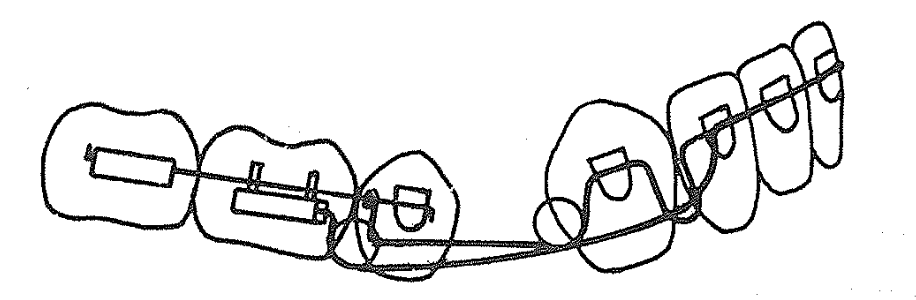
Deep bites are tricky—not just vertically, but also in the sagittal and transverse planes. But what if you could correct both anterior and posterior segments simultaneously with calibrated force? Enter the 0.016-inch distal extension, an appliance designed to erupt and rotate both halves of the arch in harmony.
🔩 Indications: When Should You Use This Appliance?
✅ Growth potential remains — you need an eruptive force.
✅ Second-order discrepancy: Incisors are higher than canines.
✅ Mild arch length deficiency: 2–3 mm per side.
✅ Deep curve of Spee requiring leveling.
✅ Extractions performed (usually 1st premolars).
🧰 Appliance Design: What’s It Made Of?
Component
Description
Base arch
0.018 × 0.025 SS with helices (or 0.017 × 0.025 TMA for flexibility)
Distal extension
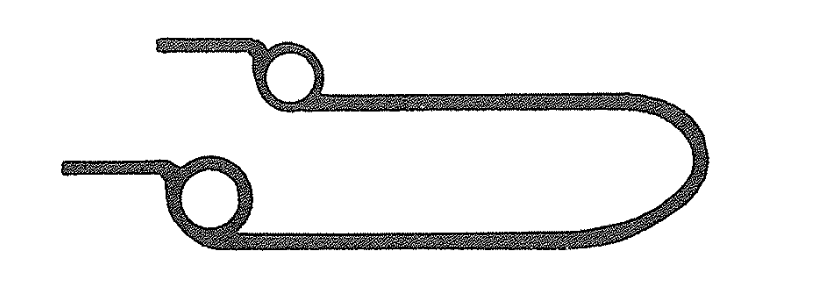
0.016-inch wire with: 1) Vertical loop mesial to canine, 2) Helix distal to canine
Lingual arch
0.036-inch wire to stabilize molars and maintain transverse control
Where does the distal extension go?
It may lie over the tie-wings of the second premolar bracket
OR hook over the buccal segment wire for stability
🔬 Biomechanics: Alpha + Beta Moment Logic
The beauty of this system lies in its dual-moment design:
Alpha moment = From the distal extension → anterior eruption and rotation (roots distal)
Beta moment = From the base arch → posterior eruption and rotation (roots mesial)
💡 Equal alpha and beta moments (A = B) → Balanced leveling of anterior and posterior segments. 💡 More alpha > beta → More anterior eruption. 💡 More beta > alpha → More posterior eruption.
💡 Clinical Scenario: Classic Use Case
👩⚕️ Patient:
13-year-old female
Deep curve of Spee
Class I extraction case (1st premolars removed)
Incisors slightly higher than canines
Treatment Strategy:
Use 0.016-inch distal extension with base arch + lingual arch
Activate helix distal to canine (preactivation bends)
Open the vertical loop mesial to canine by 2 mm for controlled canine eruption
Tie back the base arch anteriorly and posteriorly through helices
Expected Response:
Canines and lateral incisors erupt and rotate (roots distal)
Central incisors may not erupt, due to depressive force at midline (from base arch)
Buccal segments rotate with mesial root movement (flattening curve of Spee)
Canines nudge distally, helping resolve minor crowding from extraction space
📈 Smart Force Calibration:
Use a Dontrix gauge
Activate base arch to deliver 100g per side (midline 200g)
Adjust vertical loop and helices for fine control of eruption depth and direction
Goal: Flatten steep posterior occlusal plane while maintaining incisor position.
👨⚕️ Case:
15-year-old male
Deep overbite due to extruded second molars and upright first molars
Incisors already well-aligned, no need for anterior extrusion
🎯 Action:
Strong preactivation of base arch helices (high beta moment)
Minimal or no activation in distal extension (low alpha moment)
Anterior tie-back ensures incisor control
Lingual arch reinforces anchorage
🧠 Biomechanical Result:
Posterior teeth (especially molars) erupt and rotate
Incisors stay stable or even intrude slightly
Curve of Spee flattens mostly from the posterior end
💡 Takeaway: Boost beta moment when you want to rotate posterior segments without disturbing the incisors.
🔁 Quick Recap:
Situation
Dominant Moment
Effect
Want both anterior + posterior leveling
Alpha = Beta
Balanced eruption
Canines/laterals are high
Alpha > Beta
More anterior eruption
Molars need eruption
Beta > Alpha
More posterior eruption
🧠 Final Student Takeaway: Logic-Based Questions Before Using the Distal Extension
Is there a vertical difference between incisors and canines?
Do you want both anterior and posterior segments to level together?
Are extractions done and minimal arch space required?
Is the lingual arch in place to counter uncontrolled molar movement?
Have you pre-activated helices/loops to deliver precise alpha and beta moments?
🧪 Bonus Concept: Incisor Behavior
🔍 Incisors won’t erupt unless alpha moment overcomes the midline depressive force from the base arch. That’s why laterals and canines erupt more than centrals!








 Dentowesome
