Long-term stability of anterior open-bite treatment by intrusion of maxillary posterior teeth

Anterior open bite is one of the trickiest malocclusions we deal with in orthodontics. It’s not just about teeth — skeletal, dental, functional, and even habitual factors play a role.

🔹 Traditional Approaches

For decades, open bites in adults were often corrected by:

  • Extruding anterior teeth orthodontically (which works dentoalveolarly but doesn’t do much for facial esthetics in skeletal cases).
  • Orthognathic surgery (Le Fort I osteotomy, sometimes two-jaw surgery) to reposition the maxilla.

These surgical approaches improve facial esthetics but come with a catch — relapse.

  • Denison et al. found a 21% relapse at 1-year post-surgery.
  • Proffit et al. reported 7–12% overbite reduction within 3 years after Le Fort I surgery.

🔹 The Game Changer: Skeletal Anchorage

With the introduction of absolute anchorage (miniscrews, miniplates), things got exciting. Now, orthodontists could correct open bites without surgery, by intruding the posterior teeth and letting the mandible autorotate upward and forward.

  • Kuroda et al.: Skeletal anchorage makes open-bite treatment simpler than surgery.
  • Sugawara et al.: Used miniplates to intrude mandibular molars; reported ~30% relapse after 1 year.
  • Lee & Park: Miniscrew intrusion of maxillary molars → only 10.4% relapse in molars and 18.1% relapse in overbite at 1 year.

🛠️ How Was Intrusion Done?

Two different miniscrew protocols were used:

1️⃣ Buccal + Palatal Screws

  • Screws placed between roots of 2nd premolar–1st molar and 1st–2nd molar.
  • Intrusive force applied with elastomeric chains after 1–2 weeks.

2️⃣ Buccal Screws Only

  • Screws placed on buccal side at the same sites.
  • Rigid transpalatal arch (TPA) added to prevent buccal tipping.

🔹 Maxillary vs. Mandibular Intrusion

  • Umemori & Sugawara: Intruded mandibular molars → ~30% relapse in 1 year.
  • Current study (Baek et al.): Intruded maxillary molars, since excessive eruption in that region often drives open bite
  • ✅ Result: More fundamental correction compared to mandibular intrusion.

🔹 Measuring Stability Correctly

  • Past studies measured incisal overlap directly, but this can be misleading when the mandible rotates during treatment.
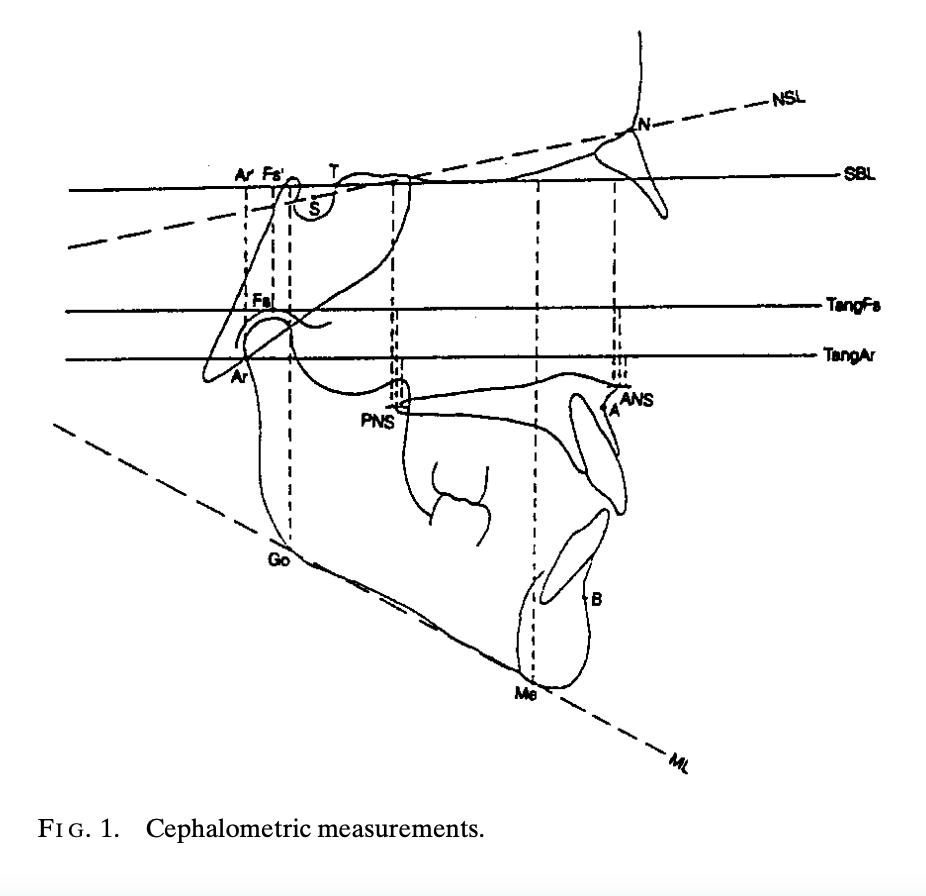
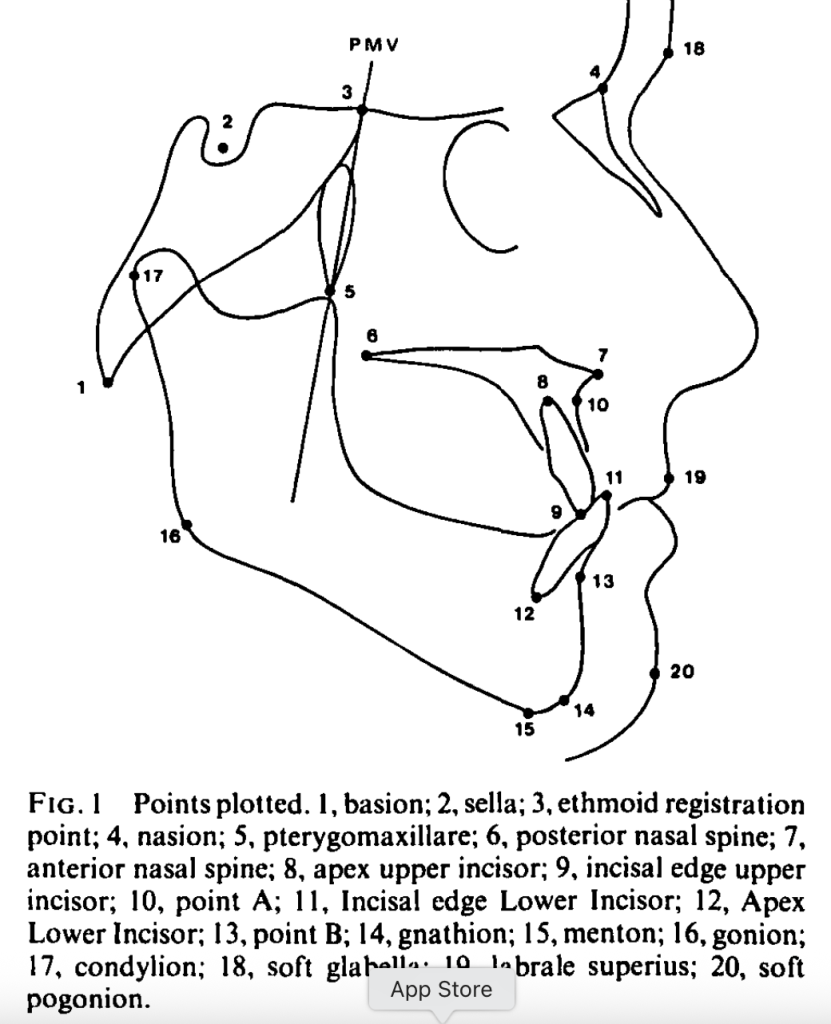
  • This study used new reference planes (HP & VP, based on SN line) to get more accurate and reproducible data.

🔹 Skeletal & Dental Changes Observed

  • During treatment:
    • Mandible rotated counterclockwise → bite closure.
    • Pogonion moved forward & upward.
    • Facial height decreased.
    • Some anterior extrusion also helped deepen overbite.
  • During retention:
    • Relapse → molar eruption, clockwise rotation, pogonion downward/backward.
    • BUT interestingly, maxillary incisors erupted slightly between year 1–3, which compensated for some relapse and deepened the bite again.

🔹 Relapse Pattern

  • Most relapse (>80%) happened in the first year.
  • After year 1, changes were minimal.
  • Relapse mechanisms resembled orthognathic surgery relapse: molar eruption + mandibular clockwise rotation.
  • Interpretation: It’s not just teeth—it’s also muscles & soft tissue adaptation trying to return to “old balance.”

🔹 Role of Retention & Soft Tissue

  • Tongue posture, perioral muscles, and habits play a huge role.
  • Myofunctional therapy after treatment improves stability.
  • Standard retainers (lingual + circumferential) aren’t enough for intruded molars — because intrusion is inherently less stable than tipping or mesiodistal movement.
  • Authors suggest an “active retainer”: clear retainer with buccal buttons that can be hooked to miniscrews with elastics to hold molars in place.

Tests of Significance (Research Methodology): Mindmap

Unlock the complexities of statistical analysis in clinical research with our detailed “Tests of Significance” mindmap! This structured visual guide distills everything you need to know about parametric and non-parametric tests, normal distribution, step-by-step procedures, and the essential criteria for choosing the right test.

TO DOWNLOAD THE MINDMAP:

A Cup of Coffee with Dr. Shivani Bhandari 

In this issue, Oral Pathologist Dr. Shivani Bhandari opens up about her inspiring path—from the first spark of ambition in her school days to navigating academic pressure, personal loss, and carving her own niche in the dental world.

💡 You’ll find:

  • Honest stories of resilience and motivation when life tests you the hardest.
  • Practical advice on balancing studies, hobbies, and responsibilities.
  • A refreshing reminder that dentistry is more than a profession—it’s a platform to innovate, teach, create, and inspire.

If you’re a dental student or young professional, this magazine isn’t just for reading—it’s for redefining what your future could look like.

👉 Dive in. Get inspired. Start shaping your own unique path in dentistry.

DOWNLOAD THE MAGAZINE HERE:

Vertical changes following orthodontic extraction treatment in skeletal open bite subjects

Managing skeletal anterior open bite (AOB) is one of the trickiest problems you’ll see in clinic. Decisions about which teeth to extract — or whether to extract at all — can change the vertical facial pattern, molar position, and ultimately whether the mandible rotates closed (helpful) or stays/re-rotates open (problematic). Understanding how extraction pattern, tooth movement, and growth stage interact helps you plan smarter treatments and set realistic expectations.

The study in one line

A prospective cephalometric study compared vertical/rotational changes in AOB patients treated with three extraction patterns: first premolars (E4)second premolars (E5), and first molars (E6) — and found that extraction choice (plus how posterior teeth move) influenced mandibular rotation. 

1. Extraction Choice & Mandibular Rotation

Extraction PatternSkeletal Open Bite InvolvementEffect on Mandibular Rotation
1st Premolars (E4)Anterior teeth onlyNo significant rotation.
2nd Premolars (E5)Extends to posterior teethClosing rotation
1st Molars (E6)Extends to posterior teethGreatest closing rotation

The logic behind those findings comes down to three biomechanical factors:

  1. Where the extraction space is (anterior vs. posterior in the arch)
  2. How molars move to close that space (translation vs. extrusion)
  3. How that movement interacts with mandibular rotation mechanics

2. Posterior Tooth Movement & Extrusion

  • E4: Greatest posterior tooth extrusion → prevents mandibular rotation.
    • The more teeth you move forward, the harder it is to prevent some extrusion of molars during protraction (especially without TADs or intrusion mechanics).
  • E5: Limited posterior extrusion → rotation occurs.
    • This shorter movement path makes vertical control easier — fewer teeth to drag along, less tendency for extrusion.
    • Reduced extrusion allows the posterior occlusal contacts to move out of the “palatomandibular wedge” and encourages mandibular closing rotation (SN–GoGn, SGn–NBa decrease).
  • E6: Large forward movement of molars with minimal extrusion → maximum rotation.
    • Posterior occlusal “block” is eliminated quickly, and molars protract mostly horizontally rather than extruding.
    • With posterior teeth moving forward and out of the wedge, the mandible is free to rotate up and forward the most.

3. Cephalometric Change Patterns

VariableE4E5E6
SN–GoGn↔ (no change)↓↓ (largest decrease)
SGn–NBa↑↑
ANS–Me / Na–Me↑↑ (largest increase)↑ (smallest)
Upper Molar–Palatal Plane↑↑
Lower Molar–Mand. Plane↑↑ (largest)

4. Clinical Tips

  • For AOB limited to anterior teeth: First premolar extraction may not help rotation—consider vertical control strategies.
    • Use gable bends, TADs for anchorage/vertical control, intrusion mechanics if needed.
    • Avoid mechanics or auxiliaries that encourage molar extrusion during space closure.
  • For AOB involving posterior teeth: Second premolar or first molar extraction preferred to facilitate mandibular closing rotation.
  • Minimize posterior tooth extrusion during protraction to enhance rotation.
  • Treat after peak pubertal growth spurt – less natural extrusion tendency — greater chance of controlled molar protraction and closing rotation.

5. Pearls for exams & case presentations

When presenting a case, include: vertical pattern, extent of AOB, growth indicators (hand–wrist/CS stage), extraction rationale, and how you’ll control vertical molar movement.

Don’t equate “extraction = guaranteed closing rotation.” The pattern of tooth movement (extrusion vs. translation) and growth stage are decisive. 

Spotify Episode Link: https://creators.spotify.com/pod/profile/dr-anisha-valli/episodes/Vertical-changes-following-orthodontic-extraction-treatment-in-skeletal-open-bite-subjects-e36qgc5

Sucking habits and facial hyperdivergency as risk factors for anterior open bite in the mixed dentition

1. Core Clinical Facts

  • Prevalence of AOB in mixed dentition: 17.7% (~1 in 5 orthodontic patients)
  • Major independent risk factors:
    1. Prolonged sucking habits (thumb/finger or dummy) beyond age 3
    2. Facial hyperdivergency (skeletal vertical excess)
  • Highest risk group: Patients with both prolonged sucking habits + hyperdivergent face
    • AOB prevalence 36.3% → ~4× higher than those without risk factors (9.1%)

2. Diagnostic Criteria

AOB Diagnosis: Overbite ≤ 0 mm, with all permanent incisors fully erupted.

Facial Hyperdivergency:

  • FMA ≥ 25°
  • S-Go / N-Me ≤ 0.62 (posterior:anterior facial height ratio)
  • ANS-Me / N-Me ≥ 0.55 (increased lower anterior facial height)

3. Clinical Takeaways

  • Mechanical factor (habit) + skeletal factor (hyperdivergency) = high AOB risk
  • Early habit cessation (before age 3) dramatically lowers risk
  • Skeletal vertical excess can worsen severity of AOB and affect treatment stability
  • Interceptive protocols:
    • Habit-breaking appliances (removable/fixed grids)
    • Growth modification to control vertical dimension (eg, high-pull headgear, bite blocks)

Nonnutritive Sucking Habits & Occlusal Effects in Mixed Dentition

🎯 3-5-7 Rule for Duration & Risk

  • Stop by 3 → Minimal risk
  • Stop after 5 → Moderate risk (AOB, PXB start appearing)
  • Stop after 7 → High risk (Multiple malocclusions likely)

🍼 Pacifier vs. 👍 Digit — Think “Short vs. Strong”

  • Pacifier = Short habit (≈14 mo), causes AOB + Class II if ≥4 yrs
  • Digit = Strong persistence (≈33 mo), causes AOB if ≥5 yrs

Risk by Habit Duration (Any Habit)

DurationAnterior Open BitePosterior Crossbite≥4 mm OverjetBilateral Class II≥1 Malocclusion
< 36 mo4%9%29%29%53%
36–59 mo12%18%28%29%51%
≥ 60 mo27%20%40%39%76%

Pacifier vs. Digit Habit Impact

FeaturePacifierDigit
Typical DurationShorter (mean ~14 mo)Longer (mean ~33 mo)
Strongest Malocclusion LinkAOB & Class II molarAOB (≥60 mo)
Arch Form ImpactNarrower maxillary arch; occasional PXBLess arch narrowing, but more vertical changes

Quick Statistics for Parent Communication

  • Digit ≥60 mo → 26% have AOB despite habit cessation.
  • Over 50% of mixed dentition children show ≥1 malocclusion.
  • AOB prevalence jumps from 4% (<36 mo) to 27% (≥60 mo).
  • Pacifier ≥48 mo → 54% have Class II molars.

Canine Bracket Guide for Substitution Cases

When a maxillary lateral incisor is missing, substituting the canine into its place can produce excellent esthetic and functional results — but only if torque control is done right. One of the most common errors? Inadequate palatal root torque in the relocated canine.

Why Torque Matters

The canine crown is bulkier, and without enough palatal root torque, its prominence can disrupt smile esthetics and compromise occlusion. The right bracket choice helps counteract this.

Bracket Options & Prescriptions (MBT*)

Bracket ChoiceTorque / TipKey AdvantagesNotes
Maxillary Central Incisor+17° torque / 4° tipMaximum palatal root torqueEnameloplasty needed; add up to +4° distal root tip
Maxillary Lateral Incisor+10° torque / 8° tipGood torque & tip control; easy placementEnameloplasty needed
Flipped Maxillary Canine+7° torque / 8° tipTorque & tip control without reshapingMay not give enough torque
Flipped Mandibular 2nd Premolar+17° torque / 2° tipMax torque without enameloplastyRemove bracket posts after bonding

*Modified for Roth or Damon prescriptions if needed.


Torque Tips

  • “1 to 5 Rule”: Every .001″ slot–wire play ≈ 5° torque loss
    • .017″×.025″ in .018″ slot → 5° loss
    • .019″×.025″ in .022″ slot → 10–15° loss
  • This is why an .018 slot system with .017×.025 wire tends to have better torque control than a .022 slot with .019×.025 wire, assuming same bracket prescription.
  • If you want to minimize torque loss, you either:
    • Use the largest possible wire for that slot
    • Or add auxiliary torque (e.g., torquing springs, step-out bends)
  • Labial step-out bend → adds palatal root torque + avoids traumatic contact.
  • Labial step-out bends shift the canine root palatally, improving torque and interproximal contact while minimizing occlusal interference.

Example 1: .017″ × .025″ wire in a .018″ slot

  • Slot height = 0.018″
  • Wire height = 0.017″
  • Difference (play) = 0.001″
  • Torque loss = 0.001″ × 5° = ≈ 5° loss

So even with a nearly full-size wire, you can’t get 100% torque expression — there’s some rotational freedom before the wire contacts the slot walls.

Example 2: .019″ × .025″ wire in a .022″ slot

  • Slot height = 0.022″
  • Wire height = 0.019″
  • Difference (play) = 0.003″
  • Torque loss = 0.003″ × 5° = ≈ 15° loss

Why the guide says 10–15° instead of exactly 15°:

  • Theoretical loss = 15° (from math)
  • In practice, clinical torque loss is often slightly less because:
    • Residual tip in the tooth means the wire contacts sooner than expected
    • Manufacturing tolerances (slots often oversized, wires slightly undersized or rounded)
    • The wire may seat differently under ligation forces

    Other Factors Influencing Torque

    • Archwire material (SS > TMA > NiTi for high torque)
    • Bracket material
    • Type of ligation
    • Interbracket distance
    • Tooth morphology & biology

    Clinical Pearls

    • Delay enameloplasty if unsure → choose flipped mandibular 2nd premolar for torque & base fit.
    • Canine extrusion improves gingival architecture but monitor occlusion.
    • For high torque (>24°), beta titanium is safer than SS for bends.
    • Beta titanium offers a balance between torque delivery and flexibility, making it preferable for large bends compared to the stiffness of stainless steel.

    📌 Reference: Kravitz ND, Miller S, Prakash A, Eapen JC. Canine Bracket Guide for Substitution Cases. J Clin Orthod. 2017;51(8):452-455.


    Evaluation of alveolar bone loss following rapid maxillary expansion (RME) using CBCT

    Rapid Maxillary Expansion (RME) is a time-tested solution for correcting maxillary constriction, improving arch length, and resolving posterior crossbites. But while the skeletal and dental benefits are well known, there’s an equally important consideration: its impact on the supporting alveolar bone.

    The forces generated during RME are substantial. They not only separate the midpalatal suture but also transmit stress to teeth and their supporting tissues.
    Consequences may include:

    • Buccal crown tipping
    • Crestal bone loss
    • Changes in buccal and palatal cortical bone thickness
    • Development of dehiscence and fenestrations

    Understanding these risks allows us to tailor treatment, improve patient outcomes, and safeguard periodontal health.

    Appliance & Protocol

    • Type: Hyrax-type tooth-borne expander
    • Activation: 2 turns/day until palatal cusps of maxillary posterior teeth contact buccal cusps of mandibular teeth
    • Retention: 3 months with expander in situ → replaced with transpalatal arch for another 3 months

    Key CBCT Findings

    ParameterImmediate Post-RMEAfter 6-Month Retention
    Buccal Cortical Bone Thickness (BCBT)Significant decrease in canines, premolars, and especially first molarsContinued decrease in most teeth
    Palatal Cortical Bone Thickness (PCBT)Slight increase (due to buccal tipping)Decrease toward baseline
    Buccal Alveolar Height (BAH)Significant reduction (crestal bone loss)No further change
    DehiscenceIncreased incidence post-RME (esp. buccal surfaces of 1st premolars & molars, canines)Further increase in some teeth
    FenestrationSlight decrease post-RMEMinimal further change

    Red Flags During RME

    • Sudden gingival recession on anchor teeth
    • Mobility in first molars/premolars
    • Soft tissue inflammation unresponsive to hygiene measures
    • Persistent discomfort or occlusal changes

    Tips to Minimize Bone Loss

    • Avoid over-activation (follow 0.25 mm × 2/day protocol)
    • Consider tissue-borne or hybrid expanders in high-risk cases
    • Maintain optimal oral hygiene (chlorhexidine rinse during activation phase)
    • Use minimally invasive retention appliances post-expansion

    Reference:
    Baysal A, Uysal T, Veli I, et al. Evaluation of alveolar bone loss following rapid maxillary expansion using cone-beam computed tomography. Korean J Orthod 2013;43(2):83–9

    Spotify Episode Link:
    https://creators.spotify.com/pod/profile/dr-anisha-valli/episodes/Evaluation-of-alveolar-bone-loss-following-rapid-maxillary-expansion-using-cone-beam-computed-tomography-e36n10v

    Youtube Video Link:
    https://youtu.be/jhNngR5s-1I?si=MqOZ4slL22G1-EDu

    Orthodontic forces and moments of three-bracket geometries

    Ever rebonded a canine bracket, only to see the lateral incisor intrude, the midline shift, and your occlusal plane do a little dance? 😅 Don’t worry—you’re not alone. These surprises aren’t just clinical quirks—they’re biomechanical consequences, and a recent study has finally given us a powerful tool to predict them.

    🧠 The Backstory: Burstone & Koenig’s Legacy

    Back in 1974, Burstone and Koenig introduced the idea of analyzing two-bracket geometries to simplify the chaos of indeterminate force systems. Their theory? If you break the arch into two-bracket segments, you can analyze and predict forces more accurately.

    But here’s the catch: until now, no one had really tested what happens when you add a third bracket.

    🔬 The 2025 Breakthrough: Kei et al. to the Rescue

    In this beautifully designed experimental study, Kei and team tested 36 different three-bracket geometries  using a custom-made orthodontic force jig and high-sensitivity transducers, and various archwires (NiTi, TMA, SS).

    Their setup mimicked real-world clinical brackets and angles. The goals?

    ✔️ Validate whether a three-bracket system behaves like two adjacent two-bracket systems
    ✔️ Understand how the third bracket (C) affects the system
    ✔️ Apply these insights to predictable clinical outcomes

    And guess what? The theory held true!

    Bracket angulations were varied systematically to replicate six classic geometries (Classes 1 to 6), and the impact of a third bracket (Bracket C) was studied.

    📊 Clinical Geometry Classifications

    Geometry ClassBracket A AngleBracket B AngleBracket C Angle
    Class 1.1–1.6+30°+30°+30° to –30°
    Class 2.1–2.6+15°+30°+30° to –30°
    Class 3.1–3.6+30°+30° to –30°
    Class 4.1–4.6–15°+30°+30° to –30°
    Class 5.1–5.6–22.5°+30°+30° to –30°
    Class 6.1–6.6–30°+30°+30° to –30°

    🧲 What You Need to Know (and Remember!)

    📌 Clinical Application Tips

    • 🌀 Bracket C primarily influences Bracket B – Consider when finishing or rebonding.
    • ⚖️ Unintended Effects: Uplighting one tooth may intrude/extrude or tip adjacent teeth.
    • 🎯 Lighter Wires = Less Side Effects: NiTi < TMA < SS in force magnitude.
      • 0.016 SS > Highest force and moment delivery
      • 0.020 NiTi (Supercable) > Lowest force, gentler on tissues
      • Using a lighter wire in finishing can prevent overcorrection and limit undesirable biomechanical effects.
    • 🧠 Use 3-bracket force maps (e.g., Class 3.3) to anticipate vertical and moment forces on neighboring teeth.

    ⚠️ Common Side Effects to Watch For

    Intended MovementPossible Side Effects
    Root uprighting of canine (Class 3.3)Intrusion of adjacent incisor, extrusion of premolar, midline shift
    Rebonding caninesOcclusal cant, open bite at lateral, heavy contact at premolar
    High forces (>250g)Risk of root resorption, supporting tissue damage


    🔑 Mnemonic Strategy to Remember Three-Bracket Geometries

    🌟 BASIC STRUCTURE

    Each geometry is labeled as Class X.Y, where:

    • X (1 to 6) = Refers to the Bracket A angle
    • Y (1 to 6) = Refers to the Bracket C angle
    • Bracket B is always fixed at +30°

    📐 ANGLE MAP

    ClassBracket A Angle (°)MnemonicTrend
    1+30°1 = HighMax angle (tip forward)
    2+15°2 = Half High
    33 = ZeroNeutral
    4–15°4 = FallStarts tipping back
    5–22.5°5 = Fall More
    6–30°6 = SinkMax tip back
    .YBracket C Angle (°)MnemonicTrend
    .1+30°1 = Copy BSame as Bracket B
    .2+15°2 = Half B
    .33 = Neutral
    .4–15°4 = Tip Back
    .5–22.5°5 = Tip More
    .6–30°6 = Opposite BOpposite angle

    🔁 PATTERN TRICK

    All 36 combinations follow this logic:

    • A is fixed per Class (gets more negative from Class 1 to 6)
    • C follows six steps from +30° to –30°
    • B is always +30°

    Think of it as:

    A changes row-wiseC changes column-wiseB is your reference anchor.


    🧠 MEMORY AID SENTENCE

    To recall the progression of angulations in each bracket:

    “Always B-fixed, A-falls down, C-steps down.”

    Where:

    • “B-fixed” = Bracket B always at +30°
    • “A-falls down” = A goes from +30 → –30 by Class (1 to 6)
    • “C-steps down” = C decreases from +30 → –30 across each class (.1 to .6)

    📌 EXAMPLE TO ILLUSTRATE

    Class 3.5 means:

    • A = 0° (Class 3)
    • B = +30° (Always)
    • C = –22.5° (Step .5)

    Interpretation: Neutral alignment at A, standard alignment at B, and backward tip at C.


    📝 FINAL THOUGHTS

    Orthodontics is as much about engineering as it is about esthetics. As a student, if you take the time to understand the mechanics behind wire-bracket interactions—especially in three-bracket systems—you’ll not only improve treatment outcomes but also develop the foresight to prevent complications before they arise.

    So, the next time you’re rebonding a bracket or adjusting a wire, ask yourself: Which geometry am I working with?
    That one question might save you (and your patient) from a lot of unexpected surprises.

    SPOTIFY EPISODE LINK: https://creators.spotify.com/pod/profile/dr-anisha-valli/episodes/Orthodontic-Forces-and-Moments-of-Three-Bracket-Geometries-e36gkfa

    Zygomaticomaxillary modifications in the horizontal plane induced by micro-implant-supported skeletal expander

    ✅ Clinical Device

    Maxillary Skeletal Expander (MSE)

    • Type: Micro-implant-supported expander (MARPE)
    • Anchorage: 4 bicortical miniscrews (palatal + nasal cortex)
    • Placement: Posterior palate
    • Expansion rate:
      • 2 turns/day until diastema
      • Then 1 turn/day
    • Retention: ≥ 3 months post-expansion

    📈 CBCT-Based Findings

    Linear Skeletal Changes

    ParameterMean Increase
    Anterior Inter-Maxillary Distance (AIMD)+2.76 mm
    Posterior Inter-Zygomatic Distance (PIZD)+2.40 mm
    Posterior Inter-Temporal Distance (PITD)Negligible

    Angular Changes

    ParameterMean Increase
    Zygomatic Process Angle (ZPA)Right: +1.7°  Left: +2.1°
    Zygomaticotemporal Angle (ZTA)Negligible

    📌 Key Biomechanical Concepts

    • Rotation Center:
      Near the proximal zygomatic process of temporal bone
      (more posterior/lateral than in tooth-borne expanders)
    • Movement Pattern:
      Lateral + Forward movement of maxilla + zygomaticomaxillary complex
    • Bone Bending:
      Occurs at zygomatic process of temporal bone (adaptive mechanism)

    🔬 Clinical Implications

    • Achieves parallel midpalatal suture opening
    • Disarticulates pterygopalatine suture
    • Minimal buccal tipping of molars
    • Suitable for late adolescent to adult patients (13.9–26.2 yrs in study)

    🧠 Quick Notes

    • Use CBCT before & after expansion to analyze changes
    • Avoid brackets/appliances until post-expansion imaging complete
    • Monitor miniscrew engagement in both cortices on initial scan

    📍 Source: Cantarella et al., Progress in Orthodontics, 2018
    🧪 IRB Approved Study | UCLA Orthodontic Clinic
    🔍 DOI: 10.1186/s40510-018-0240-2


    SPOTIFY LINK: https://open.spotify.com/episode/4T9qeiRFJ99mZ3gdHnOA4c?si=OuVPNWyKRsmoJjtXUrhyRA