


Written by -Sanjana Agrawal Dentowesome 2020
Source -Borley textbook
Written by -Sanjana Agrawal Dentowesome 2020
Source -Borley textbook

STUDY NOTES ⚕️
Glassgow Coma Score is used to assess the level of consciousness properly instead of using vague terms like semi-conscious, obtundant, etc.
Hence it is widely used thereby avoiding observer errors in the observation patients.
NEUROLOGICAL ASSESSMENT USING GLASSGOW COMA SCALE:
1️⃣ Eyes Open:
Spontaneously – 4
To speech – 3
To pain – 2
None – 1
2️⃣ Best Verbal Response:
Oriented – 5
Confused – 4
Inappropriate words – 3
Incomprehensible sounds – 2
None – 1
3️⃣ Best Motor Response:
Obeys commands – 6
Localises pain – 5
Withdrawal to pain – 4
Flexion to pain – 3
Extension to pain – 2 (due to raised intracranial pressure)
None – 1
~*~
⭐ Maximum score is 15.
⭐ Minimum score is 3.
⚠️ If a patient has a score of 7 or less than 7, then he/she is said to be in coma.
SOURCE: Manipal Manual of Surgery (3rd edition)
~Sunantha✍️
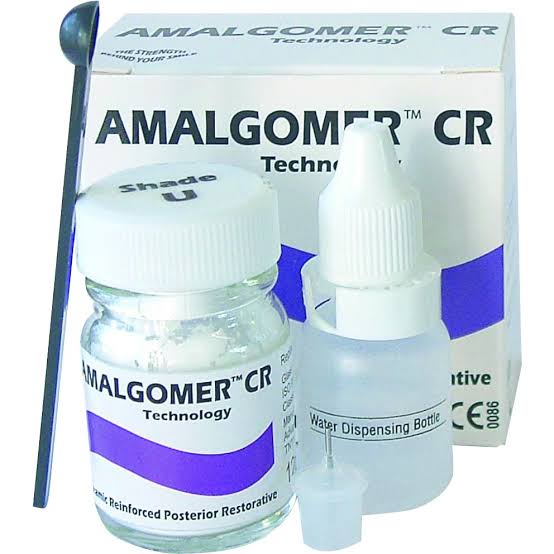
AMALGOMER Technology is the latest innovation in restorative dentistry. For the first time the strength of a classic amalgam restorative has been combined with the aesthetics and the many other advantages of Glass Ionomers.
In short AMALGOMER is the world’s first GIC to pass the ISO strength test requirements for amalgam (ISO1559:2001) as well as that of the GIC standard (ISO9917:1991).
Features:
Amalgomer CR High Strength Posterior GI
AMALGOMER CR High Strength Posterior GI Restorative offers a wide range of features:
1) Ceramic Reinforcement
2) Exceptionally low wear
3) High Radiopacity
4) Excellent for core build ups
5) High strength, exceeds 300MPa compressive strength
6) Universal tooth shade or white
7) Natural Adhesion to tooth structure
Amalgomer High Strength Anterior GI
AMALGOMER High Strength Anterior GI Restorative offers a wide range of features:
Amalgomer Light Cure Varnish
A light curable varnish for protection of AMALGOMER and AMALGOMER CR restorations. This protects the restoration against moisture. This can be used with any GI restorative.
Amalgomer Conditioner
Dentine conditioner for use prior to placing AMALGOMER and AMALGOMER CR restorations.
Amalgomer mixing spatulas
Flexible plastic glass ionomer mixing spatulas.
Dr Iswarya V
General Practitioner,
Trivandrum.
Reference : Amalgomer official product website

Role of Platelet – Rich Fibrin (PRF) in dentistry
It is a natural Fibrin-based biomaterial prepared from autologous blood and is clinically used to deliver growth factors in high concentration to the site having a bone defect or requiring augmentation.
It is introduced by Dr. Choukroun. et. Al, 2000. It is a second generation platelet concentrate that contains platelets and growth factors, prepared from self blood devoid of anticoagulant or other artificial modifiers.
Preparation
10ml of human blood is taken in a test-tube without any anticoagulant and is centrifuged in a tabletop centrifuge machine for 12 minutes at 2500RPM or 10 minutes at 3000RPM.
After centrifugation, the three components in the blood are localised in the test tube.
Fibrin clot is extracted from the test-tube with a pair of sterile forceps and PRF is obtained by removing the red clot from its lower end.
Applications
Advantages
Disadvantages
Contraindications
Should not be performed on patients with:
Dr Iswarya V
General Practitioner,
Trivandrum
Reference : Oxford Clinical Dentistry



Dr. Mehnaz Memon🖊
References: Davidson’s Principles and Practice of Medicine Textbook
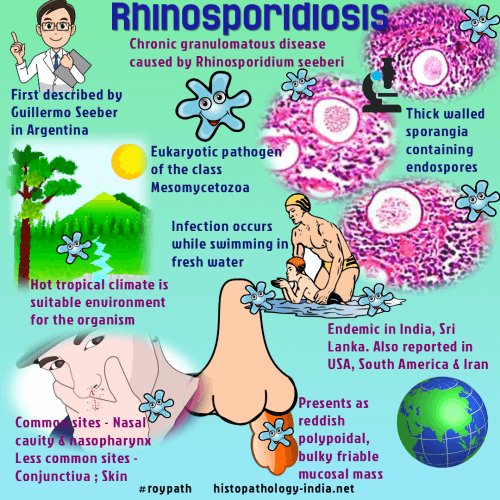
(i) Rhinosporidiosis is a chronic granulomatous disease characterised by formation of friable polyps, usually confined to the nose, mouth or eye.

(i) Causative agent is Rhinosporidium seeberi.
(iii) More than 80% cases are reported in India and Sri Lanka.
(iv) The mode of infection is not known but most infections occur in males who have frequent contact with stagnant water or aquatic life.
ORAL MANIFESTATIONS
•Oronasopharyngeal lesions appear as soft red polypoid growth which spread to pharynx and larynx.
• These lesions often contain mucoid discharge and are vascular.
LAB DIAGNOSIS
• The fungus has not been cultivated.
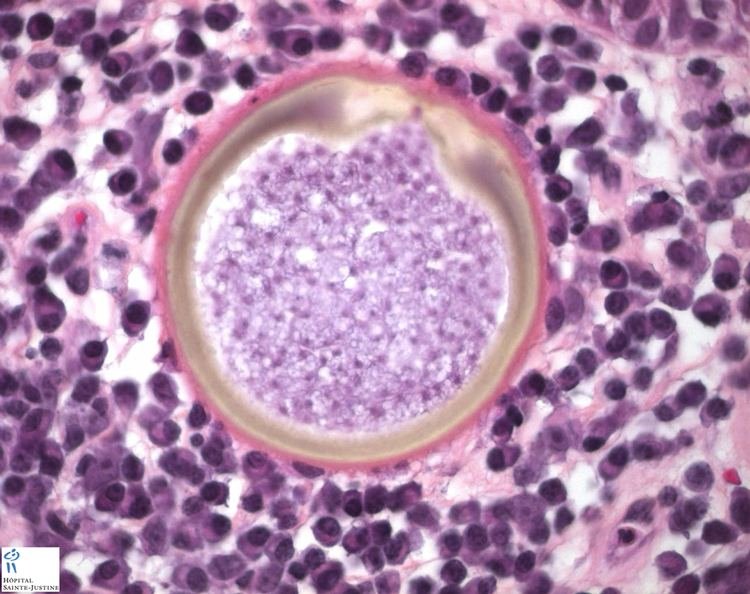
• Diagnosis depends on the demonstration of sporangia
•Tissue sections stained with H & E stain show large number of endospores within the sporangia embedded in a stroma of connective tissue and capillaries.
The sporangium (10-200 um) contains thousands of endospores (6-7 µm in diameter)

Source – textbook of microbiology for dental students c p baveja and Google images

Have you ever dreamt of having wonderful lips as you see in ads?
Are you worried about how your lips do appear?
YES. Find out the route to ‘pretty lips’ – Lip Fillers
Lips and eyes make up the important parts of face and determine to an extent, the beauty of an individual. Lips form a major aspect of cosmetic treatment.
Factors to consider for lip augmentation :
Injectable intradermal Fillers are commonly used for lip augmentation. These can be done fully in a single session. The procedure seem difficult and challenging but can be done in a safe, effective and as an in-office procedure by a skilled professional. It is advisable to consult a plastic surgeon before any cosmetic procedure.
There are many types of intradermal Fillers, the most common being products that contain substances similar to hyaluronic acid. Allergic reactions are unlikely as these are biocompatible.
Benefits:
Points to ponder:
Dr Iswarya V
General Practitioner,
Trivandrum

A wide range of viruses may cause liver inflammation (hepatitis) and several
are relevant to dentistry. Here, I describe the recognized family of hepatitis viruses A to G.
Hepatitis A virus (HAV)
The hepatitis A virus is:
Transmission
• Fecal-oral transmission.
• Endemic worldwide.
Diagnosis
• Demonstration of HAV antigen in feces.
• Serology: detection oflgM anti-HAV.
Clinical features
• The incubation period is 2-7 weeks.
Many infections are asymptomatic. Clinical disease is mild with few complications. There is no carrier state.
Prevention and Control
Good hygienic measures and sanitary disposal of excreta.
Passive immunization gives immediate protection for 3-6 months.
Active vaccination: the formalin-inactivated vaccine provides protection for up to 10 years.
HAV is not a major cross-infection hazard in dentistry but is a hazard if traveling, especially to the tropics.
Hepatitis B virus (HBV)
This highly infectious blood-borne virus poses a major cross-infection hazard
in surgery and dentistry:
• It is a member of the hepadnavirus family.
• The intact viral particle (Dane particle) has a double-shelled structure, with the outer hepatitis B surface antigen (HBsAg) coat surrounding the central hepatitis B core antigen (HBcAg), DNA, and DNA polymerase.
• Peripheral blood of infected patients also contains non-infective spherical and filamentous particles of HBV
Transmission
• HBV can be present in blood, saliva, cervical secretions, and semen.
• Spread is via the parenteral route, especially by intravenous drug use, but transmission by intimate contact and sexual activity also occur.
• Perinatal infection is important in certain parts of the world, for example east and southeast Asia.
• There is a large reservoir of unidentified carriers within the population.
• Infected patients may have up to 1010 Dane particles per ml of blood; as little as 0.0001 ml of blood may transmit the infection.
• HBV has been transmitted in dentistry, to patients and dental staff. Some have died from infection.
Diagnosis
• Serological.
• Initial screening is for HBsAg; if present, it indicates infection with HBV.
• Screen then for HBeAg. If present, the person is at high risk for transmission.
• A minority who are HBeAg negative can also transmit infection. Hepatitis B carriers produce HBsAg and, in high-risk carriers, HBeAg for many years.
• Development of anti-HBs, anti-Hbe, and anti-HBc antibodies is associated with recovery. The incubation period is 2-3 months duration. There are a number of possible outcomes of exposure to HBV:
• Subclinical infection (65%).
• Acute hepatitis B with full recovery (30%).
• Chronic carriage (up to 9% of adults): this gives a long-term risk of cirrhosis, liver failure, and hepatocellular carcinoma. Carriers remain infectious to others.
• Fatal fulminant hepatitis (1 %).
Prevention and Control
• Modifications to behavior.
• Adequate infection control procedures in clinical practice.
• Passive immunization: hyperimmune hepatitis B immunoglobulin is used following a single acute exposure in an unprotected individual.
• Active immunization. Hepatitis B vaccine consisys of20 mg ofHBsAg given intramuscularly at 0, l, and 6 months. Boosters have been recommended at 5-year intervals. All vaccinees should have their serum antibody level assessed after vaccination. High-risk carriage of HBV should be excluded in non-responders who are health care workers.
• Interferon may be effective in the treatment of chronic HBV infection.
Hepatitis C virus (HCV)
This blood-borne virus, discovered in 1989, is responsible for most cases of what was previously known as parenterally transmitted non-A, non-B hepatitis(NANBH). Is an enveloped RNA virus.
• Is related to animal pestiviruses and human flaviviruses.
• Has multiple genotypes.
• Cannot be grown in tissue culture.
Diagnosis
• Serological.
• Initial detection of HCV antibodies.
• Confirmation by PCR for HCV RNA.
Transmission
• The prevalence of HCV antibodies among UK blood donors is 0.1-0.3%.
• In recipients of blood products and among intravenous drug users the seroprevalence is high(> 80%).
• Parenteral transmission is the major route, especially in intravenous drug use.
• Sexual transmission is inefficient.
• Occupational transmission may be through needlestick injuries, though it is less infectious than HBV.
• Undefined routes: in a significant number ofHCV-infected individuals, the route of infection is unknown.
Clinical features
• The mean incubation period is 6-12 weeks.
• Acute disease is mild and often subclinical.
• Chronic disease is common (> 60%). These patients may develop longterm liver disease, including hepatocellular carcinoma. Some patients may develop oral disorders similar to Sjogren’s syndrome or lichen planus.
Prevention and Control
• Changes in behavior, e.g. needle exchange schemes for intravenous drug users.
• Screening of donated blood.
• Effective universal infection control in health care settings.
• No vaccine is available.
• Treatment of chronic carriers with interferon and ribavirin is effective in
about 40% of cases.
Hepatitis D virus (HDV)
• A defective, independently transmissible agent which requires hepatitis B virus for replication.
• In developed countries it is mainly a problem among intravenous drug users.
• The genome is single-stranded RNA.
• Transmission is primarily parenteral, either at the time of first infection with HBV (co-infection) or during a subsequent exposure in a patient already infected with HBV (superinfection).
• HDV increases the severity of HBV infection and fulminant hepatitis is common.
• HDV has been transmitted in dentistry, to patients and dental staff. Dental patients have died from infection.
Hepatitis B vaccination is protective.
Hepatitis E virus
This recently discovered virus causes the disease described previously as enterically transmitted non-A, non-B hepatitis:
• It is a spherical, non-enveloped, RNA virus.
• Transmission is via fecal!y contaminated drinking water.
• The incubation period is 2-9 weeks.
• It mainly affects young adults.
• Infection is usually self-limiting.
• There are no chronic carriers.
• Infection carries a high mortality (up to 20%) in pregnancy.
• It is not a major cross-infection risk in surgery.
Hepatitis G virus
• Hepatitis G is a flavivirus, first isolated in 1995 from a patient with chronic hepatitis.
• Seroprevalence studies show evidence of infection in 3% of blood donors in the United Kingdom, 18% of hemophiliacs, and 33% of intravenous drug users.
• Hepatic damage appears mild or absent and the virus is not considered an important pathogen.
• It is not a major cross-infection risk in surgery.
Dr Iswarya V
General Practitioner,
Trivandrum.
Reference : Oxford Clinical Dentistry