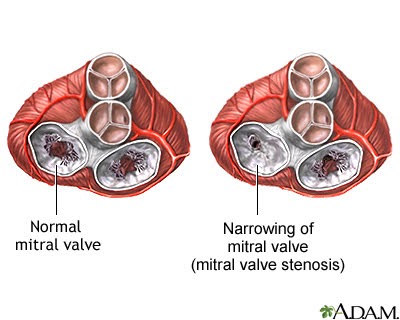
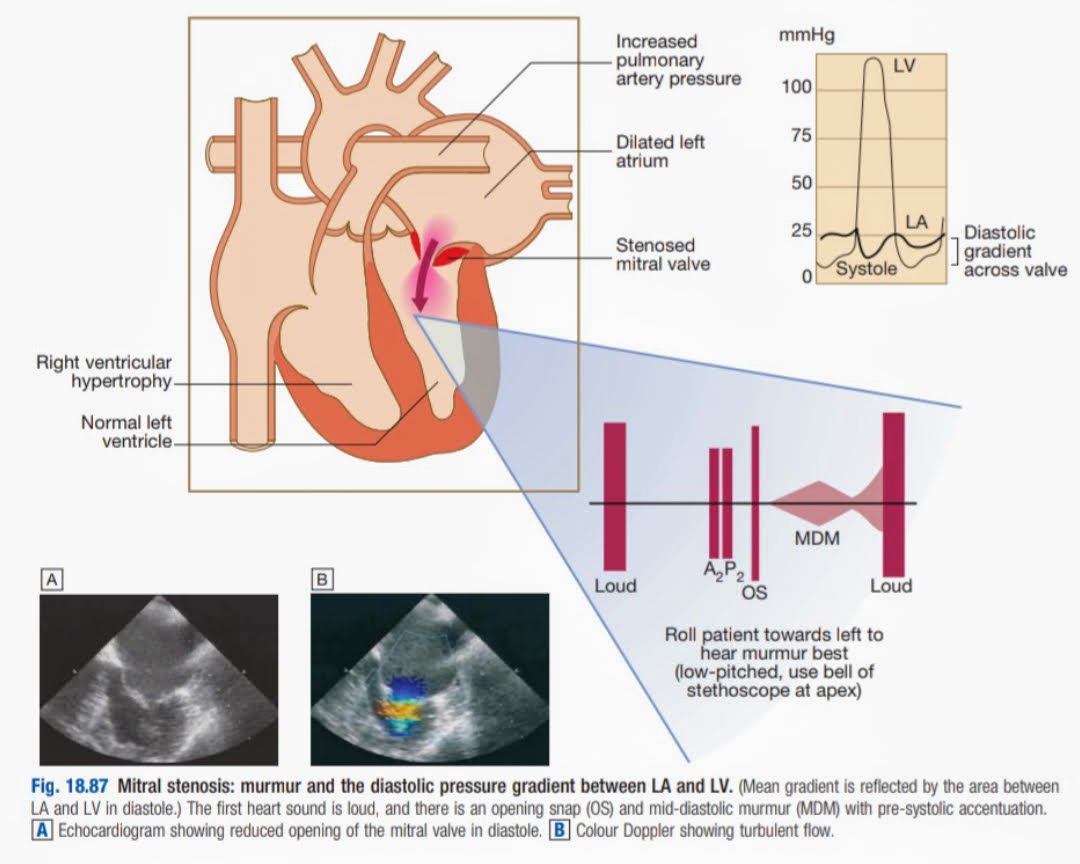
• The mitral valve apparatus is a funnel-shaped structure with its apex beat on the left ventricle. • Mitral Stenosis is the narrowing of the mitral valve of the heart. • Leads to complications due to the impairment of blood flow • More commonly seen in females. • Most Common cause : Rheumatic Heart Disease.
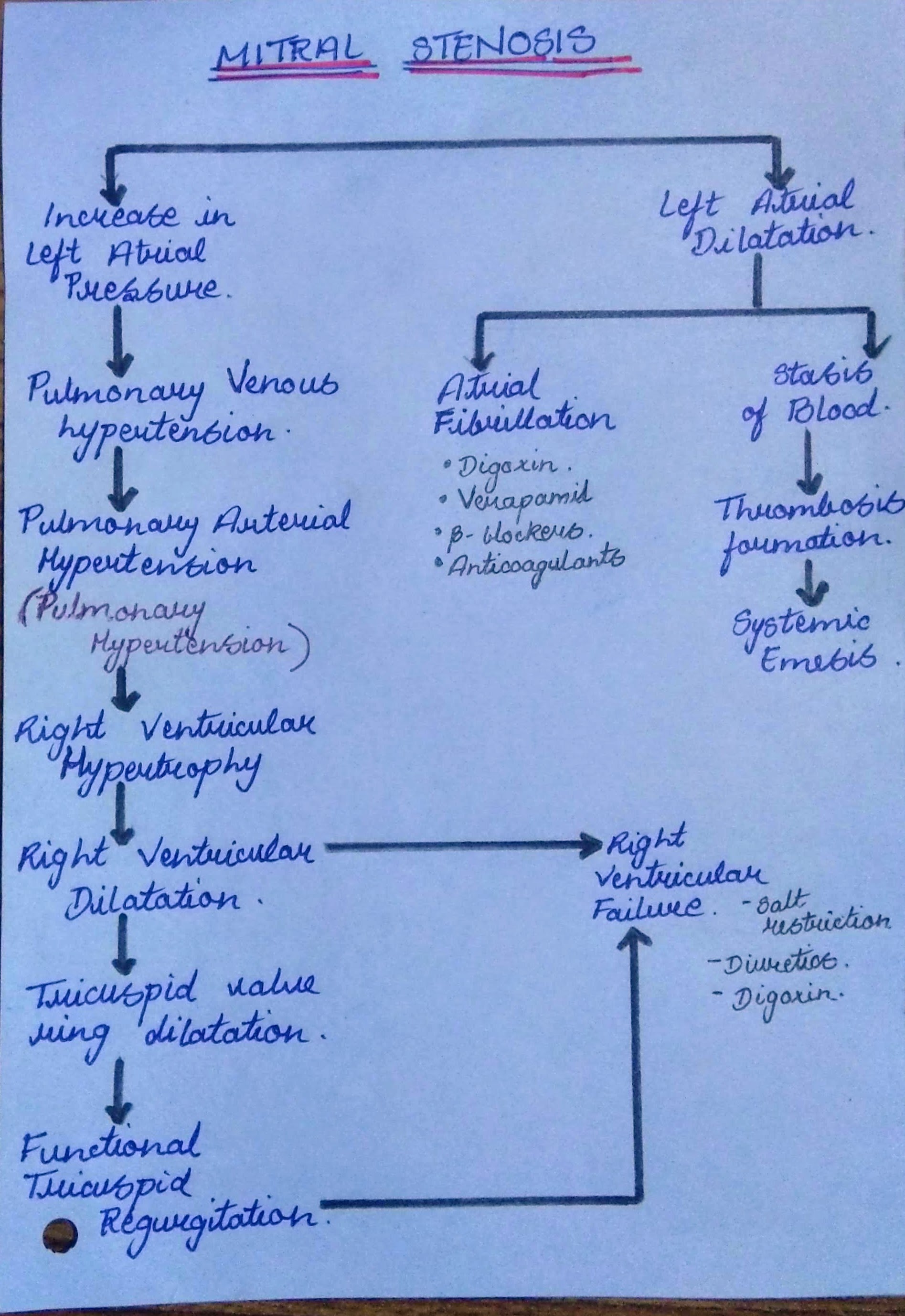
PATHOPHYSIOLOGY OF MITRAL STENOSIS ***Management of Atrial Fibrillation & RVF is written in bullet points for easier understanding
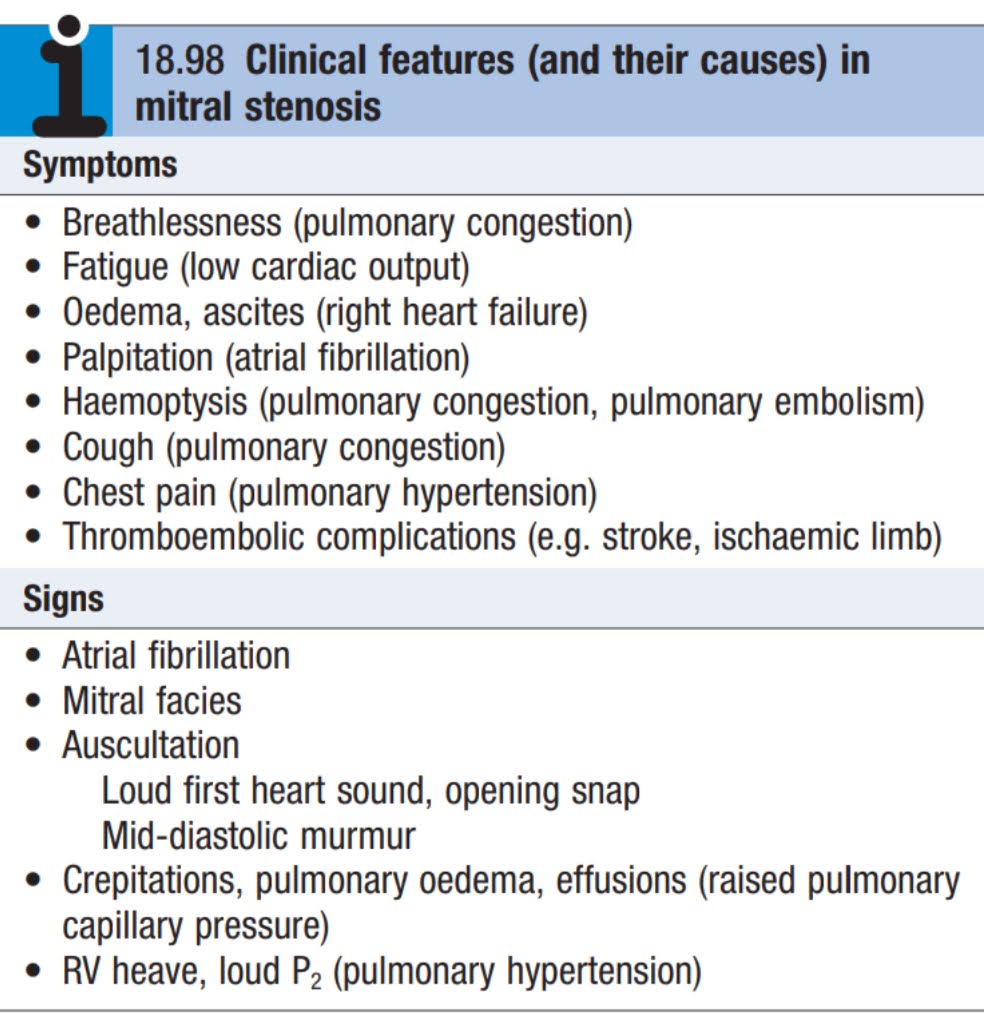
CLINICAL FEATURES: • Early presentation of Mitral stenosis include breathlessness on exertion and fatigue. • As stenosis progresses, patients are dyspnic on rest. • They have orthopnoea & paroxysmal nocturnal dyspnoea. • Acute pulmonary oedema may occur. • Haemoptysis: due to rupture of pulmonary-bronchial connection. • Edema of lower limbs. • Thromoembolic events like stroke, limb ischaemia • Winter bronchitis: Patient with myocardial infarction are prone to recurrent attacks of bronchitis, particularly during winters.
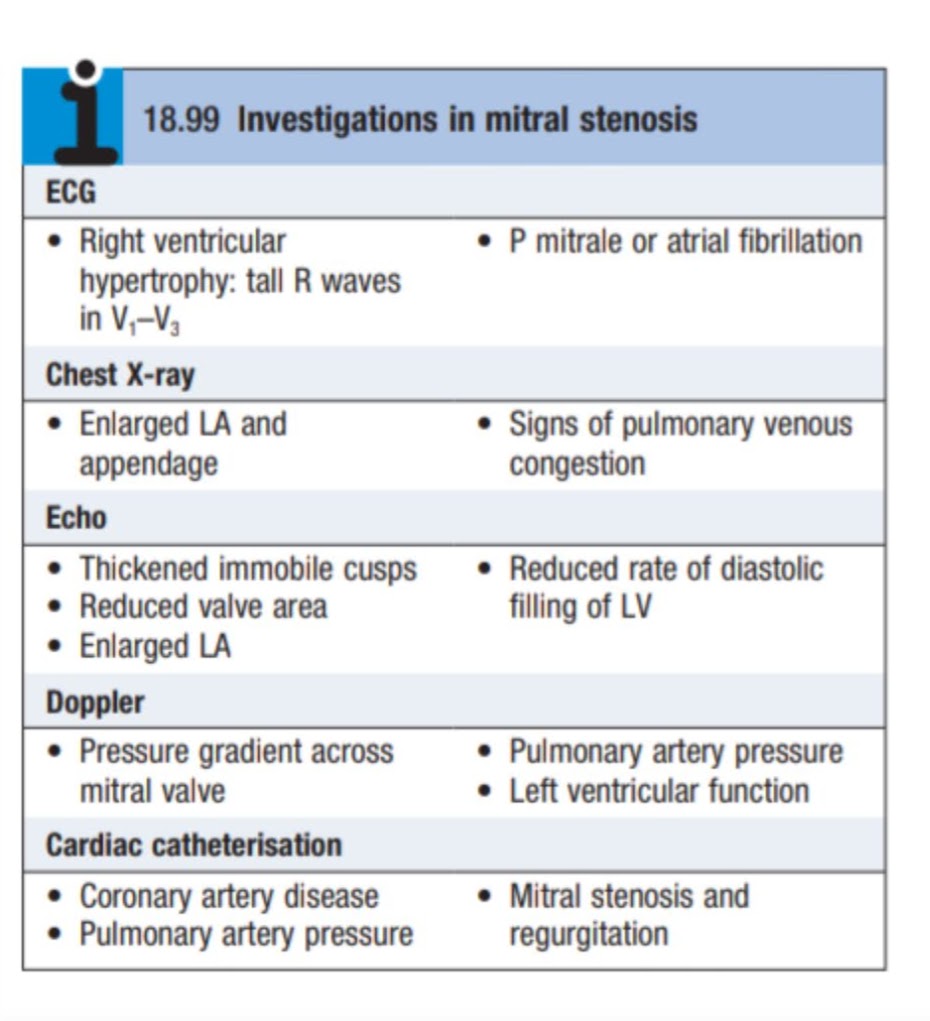
INVESTIGATIONS:
• ECG: May indicate left atrial(LA) enlargement, right ventricular hypertrophy and atrial fibrillation. • CHEST X-RAY: LA enlargement, pulmonary congestion. • ECHOCARDIOGRAPHY: Most sensitive & specific non-invasive methods to diagnose valvular disease.
May reveal structural abnormalities of the valve.
Size of cardiac chambers.
Pulmonary artery pressure.
Ventricular dysfunction & presence of thrombi.
CARDIAC CATHETERIZATION: Used to assess associated valvular lesions & to detect coronary artery disease.
4. Prophylaxis should be given to all patients to prevent rheumatic fever.
5. Prophylaxis for Infective Endocarditis should be given prior to the procedure.
SURGICAL MANAGEMENT:
MITRAL VALVECTOMY
Percutaneous Balloon Valvotomy:
Indicated when mitral valve is non-calcified &without regurgitation.
Procedure involves passing of a catheter across the valve & inflation of the balloon to dilate the orifice.
Open Valvotomy:
Carried out in patients where balloon valvotomy is not possible or in cases with restenosis(*means that a section of blocked artery that was opened up with angioplasty or a stent has become narrowed again)
In this procedure, the fusion of the valve is loosened, Ca(calcium) deposits and thrombi are removed.
2. MITRAL VALVE REPLACEMENT: o Mitral Valve is replaced when there is critical mitral stenosis(<1cm² of orifice size) o And/or there is an associated significant mitral regurgitation. o Replacement done,when mitral valve is severely distorted & calcified.
COMPLICATIONS: o Atrial fibrillation o Pulmonary Hypertension o Right Ventricular Failure o Systemic thromboembolism o Winter Bronchitis o Ortner’s Syndrome
REFERENCES:
Davidson’s Principle and Practise of Medicine
Medicine Prep Manual for Undergraduate, K George Mathew(4th Edition)
• ART :Is defined as a minimally invasive care approach in preventing dental caries and stopping its further progression. (Jo E. Frencken, 2012) • It consists of two components: sealing caries prone pits and fissures and restoring cavitated dentine lesions with sealant restorations. • American Academy of paediatric Dentistry (AAPD) defines ART as “a dental caries treatment procedure involving the removal of soft, demineralized tooth tissue using hand instrument alone, followed by restoration of the tooth with an adhesive restorative material, routinely glass ionomer”. • ART may be used to restore and prevent caries in young patients, uncooperative patients, or patients with special health care needs or when traditional cavity preparation and/or placement of traditional dental restorations are not feasible. • ART is based on modern knowledge about minimal intervention, minimal invasion and minimal cavity preparation for carious lesions. • It is a procedure based removing carious tooth tissues using hand instruments alone and restoring the cavity with an adhesive restorative material.
PRINCIPLES: The two main principles of ART are:
Removing carious tooth tissues using hand instruments only
Restoring the cavity with a restorative material that sticks to the tooth. The reasons for using hand instruments rather than electric rotating handpiecesare:
• The use of a biological approach, which requires minimal cavity preparation that conserves sound tooth tissues and causes less trauma to the teeth. • The low cost of hand instruments compared to electrically driven dental equipment, • The limited of pain that reduces the need for local anesthesia to a minimum and reduces psychological trauma to patients, • Simplified infection control. Hand instruments can easily be cleaned and sterilized after every patient.
Currently ART is performed using glass ionomer as the restorative material. The reasons for using glass ionomer are: • The Glass-ionomer sticks chemically to both enamel and dentine, the need to cut sound tooth tissue to prepare the cavity is reduced, • Fluoride is released from the restoration which will prevent and arrest caries and • It is rather similar to hard oral tissues and does not inflame the pulp or and does not inflame the pulp or gingiva
INDICATIONS: ART is carried out : • Only in small cavities (involving dentin). • In those cavities that are accessible to hand instruments. • Public Health programs • In cases when routine dental treatment cannot be performed because of a lack of facilities or accessibility to a dental clinic. • Can be used in schools as a community measure to control caries in a large number of children. • Can be used in both primary and permanent teeth.
CONTRAINDICATIONS: • There is presence of swelling (abscess) or fistula (opening from abscess to the oral cavity) near the carious tooth. • The pulp of the tooth is exposed. • Teeth have been painful for a long time and there may be chronic • Inflammation of the pulp, • There is an obvious carious cavity,but the opening is inaccessible to hand instruments • There are clear signs of a cavity, for example in a proximal surface, but the cavity cannot be entered from the proximal or the occlusal direction.
ADVANTAGES: • ART is a biological approach that requires minimal cavity preparation • It conserves sound tooth tissues and causes less trauma to teeth • As ART is painless the need for local anesthetics are reduced and so is the psychological trauma to patients. • Simplifies infection control as hand instruments can easily be cleaned and sterilized. • No electrically driven and expensive dental equipment needed which enables ART to be practiced in remote areas and in the field. • This technique is simple enough to train to train non- dental personnel or primary health care workers. • It is very cost effective. • As it is a friendly procedure, there great potentials for its use among children, fearful adults, physically and mentally handicapped and the elderly. • Makes restorable care more accessible for all the population groups.
ESSENTIAL INSTRUMENTS FOR ATRAUMATIC RESTORATIVE TREATMENT
MATERIALS: • ART is a treatment strategy that requires trained personnel and suitable materials for its success • ART is best performed using glass ionomer cement (GIC). • GIC (such as Fuji IX,GC Int) is a glass polyalkenoate cement that consists of calcium or strontium alumino-fluoro-silicate glass powder and water-soluble polymer. • Several factors led to the selection of GIC as a suitable material for ART. • These factors included its fluoride-releasing properties, its ability to bond to enamel and dentine, its pulpal biocompatibility, and its ease of manipulation. • The fluoride-release from GIC seems to be advantageous for ART Fluoride that is released from GIC makes the tooth structures (enamel and dentine) more resistant to acidic invasion by bacteria. • Fluoride can be released from glass ionomers for up to five years. • In addition, GIC acts as a reservoir for fluoride, as it takes up fluoride ions from topical fluoride This property of GIC means that the teeth treated with ART remain les susceptible to caries for long periods. A glass ionomer that in specifically designed for ART is available, which is termed a high-viscocity glass ionomer (such as Ketac Molar Easymix, 3M ESPE, Seefeld, Germany). It possesses a high powder-to-liquid ratio, with improved mechanical properties, including wear resistance, compressive strength, and marginal adaptability. A high-viscosity glass ionomer is the recommended type of glass ionomer for ART. A high viscosity glass ionomer is more durable than a low or medium-viscosity glass ionomer. Furthermore, a study performed in 2006 suggested that medium-viscosity glass ionomers should not be used in ART.
STEPS IN ART
SUCCESS RATE :
In 2001, a study was conducted in China regarding the success rate of ART performed on the primary teeth in various cavity designs 146). They found that, in 30 months of follow-up, the success rates were high for Class I and Class V restorations (79% and 70%, respectively). For Class II restorations, the success rate was found to be moderate. However, the success rates for both Class II and Class IV were found to be low .
Another study was performed in 2003 that showed that, in 24 months of follow-up, the success rate of ART performed in Class I cavities was high (89.6%). They also concluded that there was no significant difference in the success rate between ART and amalgam performed in Class I Cavities.
A meta-analysis was conducted in 2006 which addressed the success rates of ART in primary and permanent dentition. It concluded that, in 12 months of follow-up, the success rates of ART. made in the surfaces of single tooth and performed using high viscosity glass ionomer, were 95% and 97% for primary and permanent teeth, respectively.
Recently, a study was conducted in India addressing the success rate of ATR applied to one or two surfaces. They found that the success rate of ART was comparable to that of composite resins in 12 months of follow-up (89.7% for one surface and 88% for two surface restorations).
Regarding the method of the application of GIC in ART, a study was carried out in Brazil in 2016 which addressed the success rate of ART performed using a bilayer method 51. It concluded that the bilayer technique of ART increased the survival rate of proximal restorations in primary molars.
CONCLUSIONS: • Based on the available literature, we conclude that ATR is a suitable treatment approach for the management of dental caries in several conditions in both primary and permanent teeth. • ATR is used in cases where there are obstacles to reaching the dental care units • A high-viscosity glass ionomer performed better than low and medium-viscosity glass ionomers in ART. • Combining GIC with conditioner, as well as the use of the chemo-mechanical approach, improved the success rate of ART. • ATR is an acceptable strategy, with success rates comparable to the traditional treatment methods. REFERENCES: • Essentials of Public Health Dentistry, Soben Peter(6th Edition). • Atraumatic Restorative Treatment and Interim Therapeutic Restoration: A Review of the Literature(Dentist Journal). • Textbook of Preventive and Community Dentistry, Joseph John (3rd Edition).
Caused by Streptococcus pyogenes. B-hemolytic streptococci.
The disease begins as a streptococcal tonsillitis with pharyngitis in which the organisms elaborate an erythrogenic toxin that attacks the blood vessels and produces the characteristic skin rash.
The microorganism is present in the saliva/mucous spread by sneezing /coughing or direct contact with an infected person.
PATHOGENESIS
The rash is occurs by 3 endotoxins A,B & C:previously described as erythrogenic/scarlet fever toxins.
•It is suggested that development of scarlet fever may reflect a Hypersensitivity reaction required to exposure of skin.
CLINICAL FEATURES: • Scarlet fever is most common in children from the ages of 3 to 12 years. • The entry of microorganism occurs through the pharynx. • Incubation period :3-5days. • After this, the patient shows symptoms like severe pharyngitis & tonsillitis, chills, headache, abdominal pains and vomitting. • Also enlargement & tenderness of cervical lymph nodes is seen. • The diagnosis is not established until the characteristic – scarlet skin rash appears on the skin 2-3 days of illness. • This rash is prominent in the areas of skin folds, is a result of toxic injury to the epithelium. • Produces dilatation of small vessels and consequent hyperaemia. • Small papules of normal colour erupt giving a characteristic sandpaper texture to the skin. • Rash particularly in areas of skin fold is k/a Pastia lines. • Rash subsides after 6-7 days, followed by the desquamation of palms and soles. • Colour: Scarlet – Dusky Red
PASTIA LINES
ORAL MANIFESTATIONS: • Chief oral manifestation is referred to as stomatitis scarlatina. • Small punctuate red macules seen on hard palate, soft palate & uvula, k/a Forcheimmer Spots. • These are not diagnostic, as they may be present in other conditions like Rubella, Roseola & Infectious Mononucleosis • Palate and throat are often fiery red. • In early course of the disease, tongue exhibits white coating & the fungiform papillae are oedematous. • This phenomenon is k/a Strawberry tongue. • Coating is lost -the tip & lateral margins of tongue become deep red, glistening & smooth k/a Raspberry Tongue. • In severe cases, ulceration occurs on the buccal mucosa & palate, has been reported due to secondary infection.
DIAGNOSIS: • A culture of throat secretions may be used to confirm the diagnosis of streptococcal infection. • But this has been replaced by several methods of rapid detection of antigens that are specific for group A, B-hemolytic streptococci. • Failure to respond to appropriate antibiotics should alert the clinician that the detected strep tococci may represent an intercurrent carrier state. • Other causes of infection should be investigated. TREATMENT & PROGNOSIS: • Treatment of scarlet fever and the associated streptococcal pharyngitis is necessary to prevent the possibility of complications, such as peritonsillar or retropharyngeal abscess, sinusitis, or pneumonia. • Late complications are rare: Include otitis media, acute rheumatic fever, glomerulonephritis, arthralgia, meningitis, and hepatitis. • The treatment of choice is oral penicillin. • Erythromycin reserved for patients who are allergic to penicillin. • Ibuprofen can be used to reduce the fever and relieve the associated discomfort. • The fever and symptoms show dramatic improvement within 48 hours after the initiation of treatment. • With appropriate therapy, the prognosis is excellent.
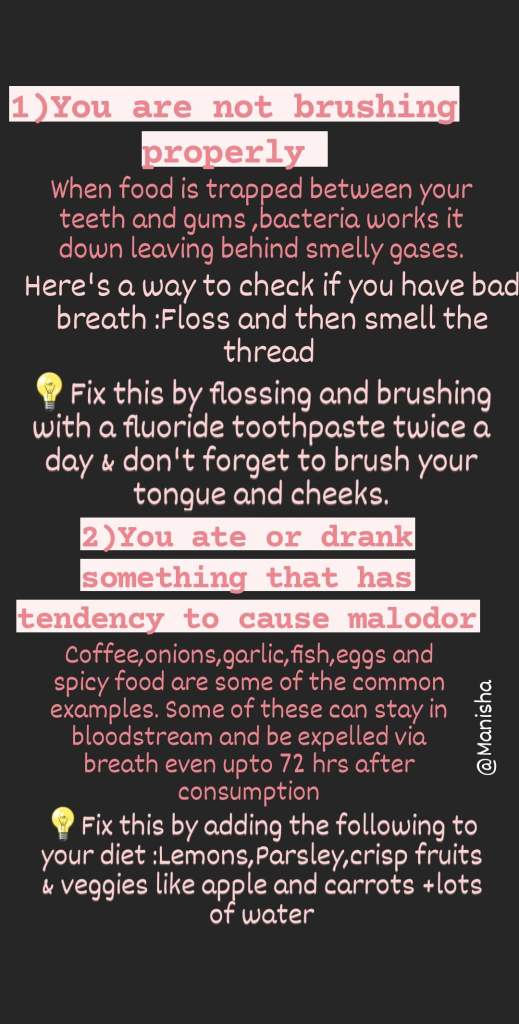
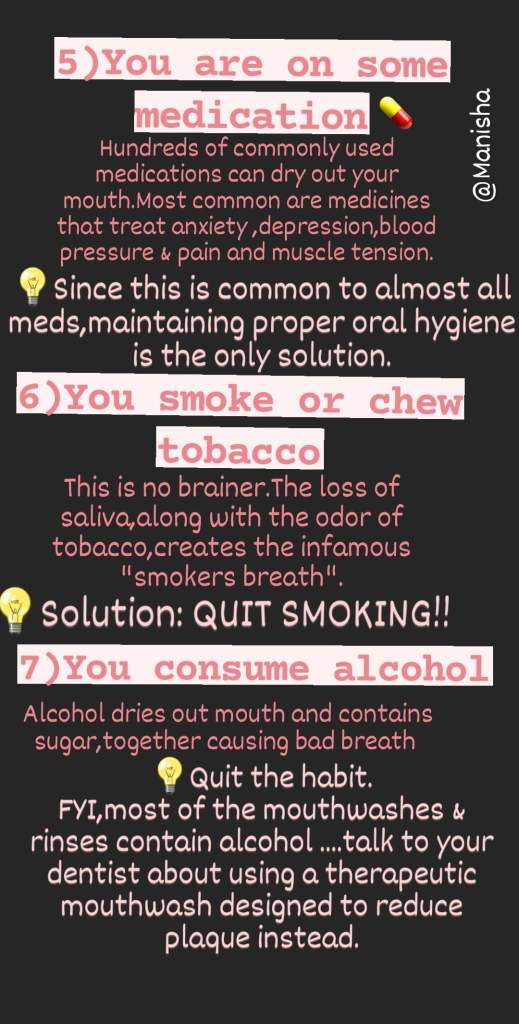
August 1st,NATIONAL ORAL HYGIENE DAY 🦷 A reminder that oral health is the door to overall health and reinforcing the fact that “Brush and floss ,before the loss.” Amidst the Covid era,where wearing a mask has become a part and parcel,many of us face the problem of “BAD BREATH” or halitosis and people often end up in temporary solutions without knowing the root cause. Here are some of the causes & remedy which might prove helpful.
Spirometer: measures an individual’s pulmonary functio
Allows you to record lung volume measurements – Generates a graph (spirogram) to analyze the efficiency of an individual’s lung function.
Here, we analyze the spirogram of an average adult male y-axis = volume (liters) → spirograms record air volume (between 0 – 6 liters) x-axis = time (seconds) → spirograms record over time.
Key Values and Spirogram Analysis:
Tidal volume (TV):
Volume of air inspired during quiet breathing → 0.5 liters
Inspiratory reserve volume (IRV):
Forced inhalation → 3.0 liters
Maximal (peak) inspiration
= 6.0 liters lung volume
Expiratory reserve volume (ERV):
The volume of forceful exhalation → 1.0 liter
Maximal expiration
= 1.5 liters lung volume
Residual volume (RV):
The volume of air still in the lungs after maximal expiration
Lung capacity = sum of two or more lung volumes
Vital capacity (VC): The difference between maximal inspiration and maximal expiration.
VC = TV + IRV + ERV
Total lung capacity (TLC): the total volume of air that the lungs can hold.
TLC = VC + RV
Inspiratory capacity (IC): the maximum volume of air that the lungs can inspire.
IC = IRV +TV
Functional residual capacity (FRC): the volume that remains in the lungs after a single quiet breath.
FRC = ERV + RV
Pulmonary Ventilation and Alveolar Gas Exchange:
Conducting portion:
Trachea → left, right bronchi → terminal bronchioles
Only air conduits, do not participate in gas exchange.
This is the anatomic dead space*
Gas exchange primarily occurs in the respiratory bronchioles and alveoli.
Healthy Lungs vs. Emphysema
Healthy lungs:
Physiologic dead space = anatomic dead space.
Emphysema:
Physiological dead space > anatomic dead space.
Lungs lose elasticity → insufficient recoil → air is trapped in lungs, unable to be exhaled
Air now part of the physiologic dead space *
Increase in RV (volume of air remaining in the lungs after maximal expiration)
Decrease in vital capacity.
Individuals have “barrel chest” → accommodates increased RV
Conducts air, and comprises: the nose, nasal cavity, pharynx, larynx, trachea, bronchi, and bronchioles.
No gas exchange occurs in these structures.
Terminal bronchiole terminates the conducting portion of the respiratory tract. The respiratory portion
Site of gas exchange, and comprises: the respiratory bronchioles, alveolar ducts, alveolar sacs, and alveoli.
Nose
Opens the respiratory system to the outside environment.
Nasal cavity
Its mucosal lining moistens, warms, and cleans the inhaled air.
Pharynx
Muscular tube that lies behind the nasal cavity, oral cavity, and larynx; it is open to them, and acts a conduit for air and food/liquid. Thus, it serves both the respiratory and digestive systems.
Esophagus
Continues posteriorly to carry food to the stomach.
Larynx
The cartilaginous structure that prevents food and liquid from entering the lower respiratory tract, and produces and modifies sounds (and is often referred to as the “voice box”).
Tracheobronchial tree
Collective term for trachea and its bronchial branches.
Trachea (the “windpipe”)
Descends through the neck to the thorax, and comprises C-shaped (vertically-stacked) cartilaginous rings.
Primary Bronchi
First divisions of tracheobronchial tree
Aka, main bronchi
Secondary bronchi
Serve lobes of the lungs
Aka, lobar bronchi
Tertiary bronchi
Serve lung segments, called bronchopulmonary segments.
Aka, segmental bronchi
With each successive division, the branches get narrower and the walls of the branches get thinner.
Bronchioles
Terminal bronchioles are last portion of conducting division.
Respiratory bronchioles
Beginning of respiratory division
Alveolar sacs
Comprise small out pockets called alveoli, which have specialized walls to facilitate gas exchange with surrounding pulmonary capillaries.
The hundreds of millions of alveoli within give the lungs a light, spongy texture.
Lungs
Right lung comprises three lobes (divisions) and the left lung has only two lobes.
The heart nestles into the medial aspect of the left lung, which makes it slightly smaller than the right.
HISTOLOGICAL FEATURES
Tracheal ring
Comprises thick layer of purple-staining hyaline cartilage, which is covered by perichondrium on both sides.
Lamina propria and submucosa; though not visible in our sample, the submucosa contains seromucous glands and blood vessels.
Mucosal folds, which are lined with pseudostratified epithelia.
Bronchi
Lumen is surrounded by mucosal pseudostratified epithelium.
Submucosal glands
Bundles of smooth muscle
Large plates of hyaline cartilage distinguish the larger bronchi.
Smaller tertiary bronchi
Characterized by highly fractured and thin pieces of hyaline cartilage.
Respiratory bronchioles
Thinner walls that lack cartilage and comprise simple cuboidal epithelial cells.
Alveolar outpockets arises directly from the respiratory bronchioles.
Club cells (formerly known as Clara cells), are cuboidal, non-ciliated cells in the bronchioles that secrete proteins.
Respiratory bronchiole gives rise to the alveolar ducts, which open to alveolar sacs.
Alveoli
Type I pneumocytes (aka, alveolar cells), which are squamous epithelial cells.
Type I cells provide a thin surface for easy gas exchange with nearby pulmonary capillaries, which we can identify by the presence of red blood cells in their lumens.
Type II pneumocytes, which are rounder and bulge into the alveolus.
Type II cells produce and secrete surfactant, which reduces surface tension and prevents alveolar collapse in exhalation; they also maintain and repair the alveolar wall.
Alveolar macrophages, aka, dust cells, fibroblasts, and mast cells are also present.
Clinical Correlation
Asthmatic airway:
Prolific goblet cells, lumen-obstructing mucous, and thickened basement membrane.
Allergic asthma is caused by hypersensitivity to allergens that trigger inflammatory responses, including mucous over-production, in the lungs and obstruct air flow.
Non-allergic asthma, on the other hand, is caused by pathological neural regulation of bronchiole diameter, and, therefore, air flow.












 Dentowesome