STEPS IN FABRICATION OF ADAMS CLASP

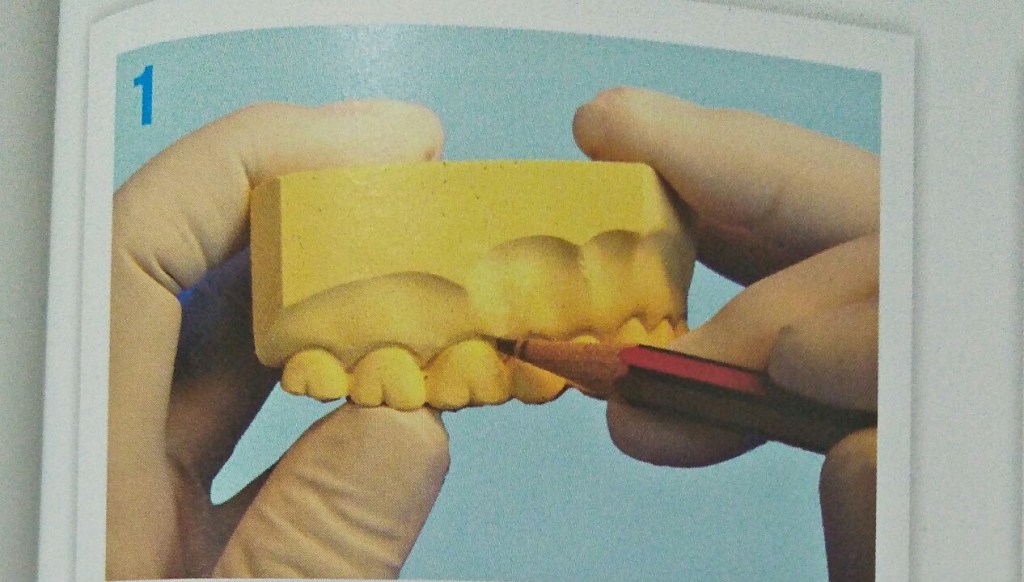
Mesial and distal undercuts of the molar are marked on the cast. This distance between these 2 marks would form the length of bridge of Adams.
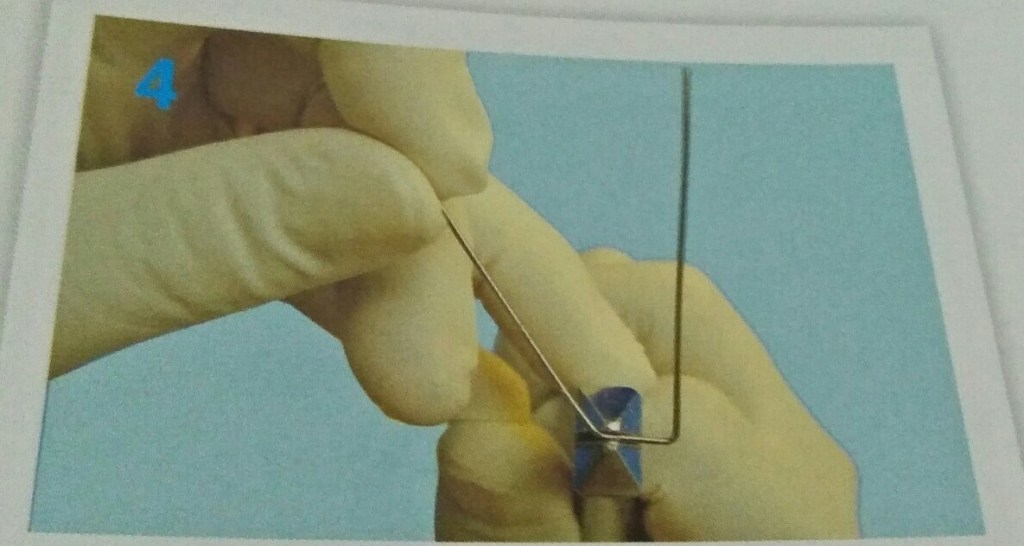
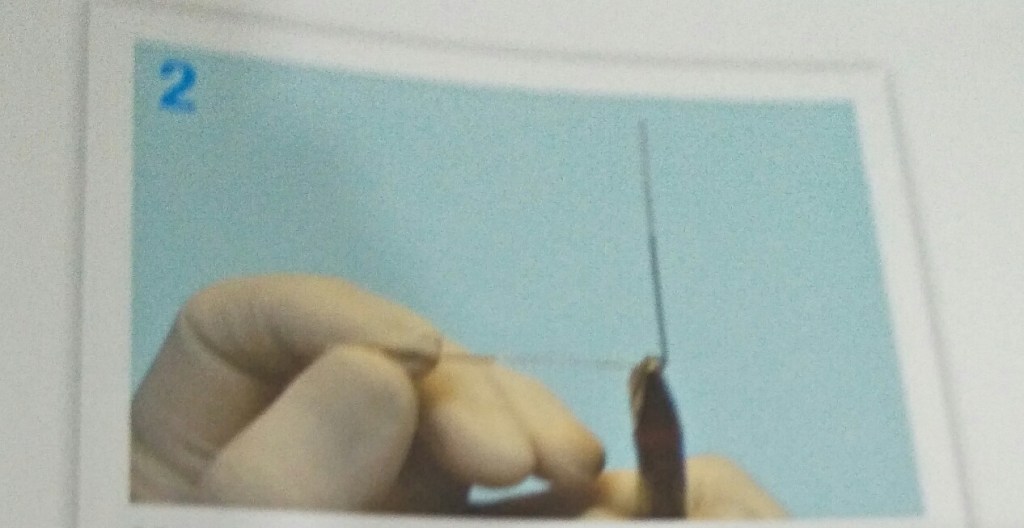
22 gauge hard round stainless steel wire is used. 90 degree bend is made.
Wire is placed on the model and distance between mesial and distal undercuts is marked on wire.
The other 90 degree is made thus forming bridge of adams clasp
Round beak of universal plier is placed on outer side close to bridge of adams
Wire bent around to form a “U” thus forming the arrowhead
Arrow head is squeezed between the two beaks of pliers to make it as narrow and pointed as possible.
Arrow head is given a 45 degree twist so that arrow head at angle of 45 degree to bridge of adams
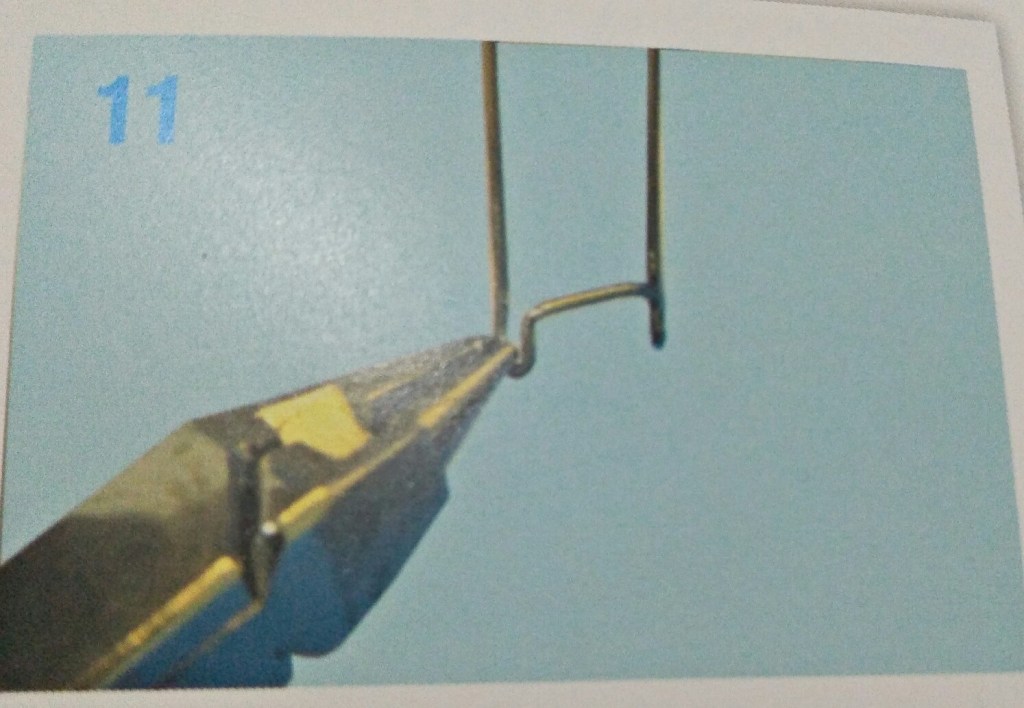
Outer arm of arrow head is given a 90 degree bend at a height that is half of arrow head. Done by placing round beak inside arrow head.
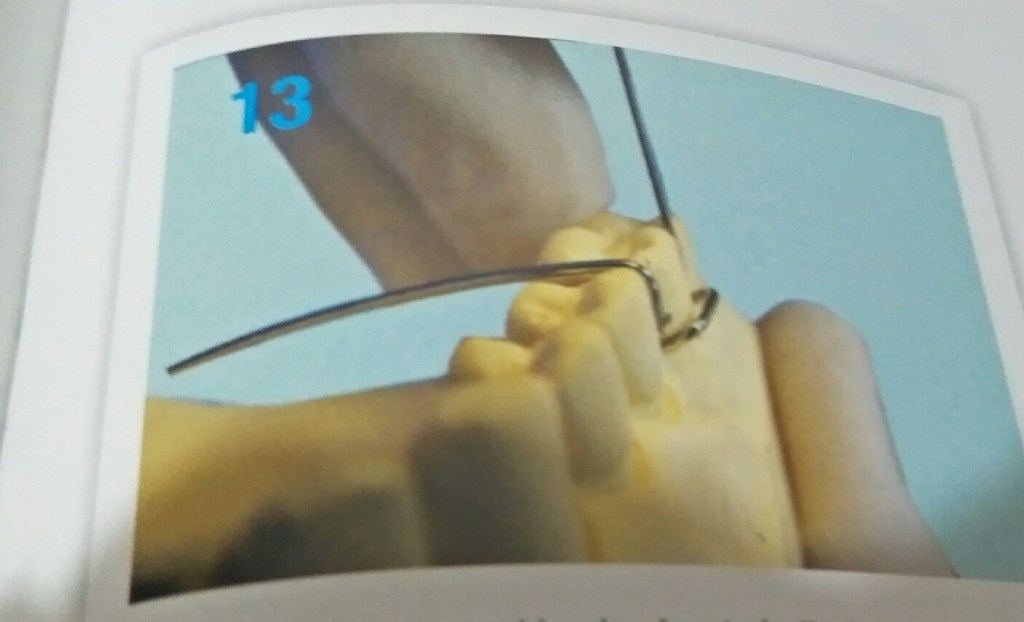
Other arrow head is also bent similarly so that the free end of wire rests in embrasure. Wire is bent down and adapted between teeth.
Place a mark beyond palatal side of contact area.
Palatal tag is bent down and is slightly kinked to form step over gingiva. Palatal wire is adapted to be parallel to the plaster.

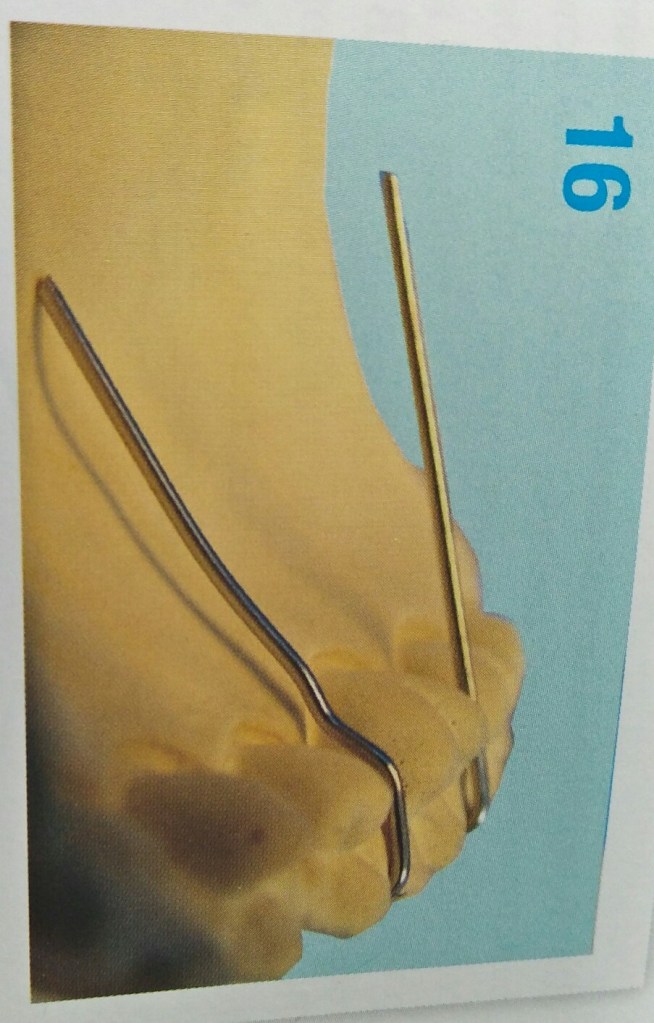
3 things to be noted after the clasp is placed on tooth:-

  • When viewed from occlusal aspect bridge is parallel to buccal aspect.
  • Bridge to be at 45 degree to long axis of tooth.
  • When viewed from buccal aspect parallel to occlusal surface.

Reference- bhalajhi ortho

TYPES OF EPILEPSY

EPILEPSY Defn.– Any disorder characterized by recurrent seizures due to underlying chronic disease.

So broadly there are 2 types of epilepsy:-

  • PARTIAL

Partial can be further divided into:-

  • Simple
  • Complex
  • GENERALIZED

Generalized can be divided into:-

  • Grand Mal Epilepsy
  • Petit Mal Epilepsy
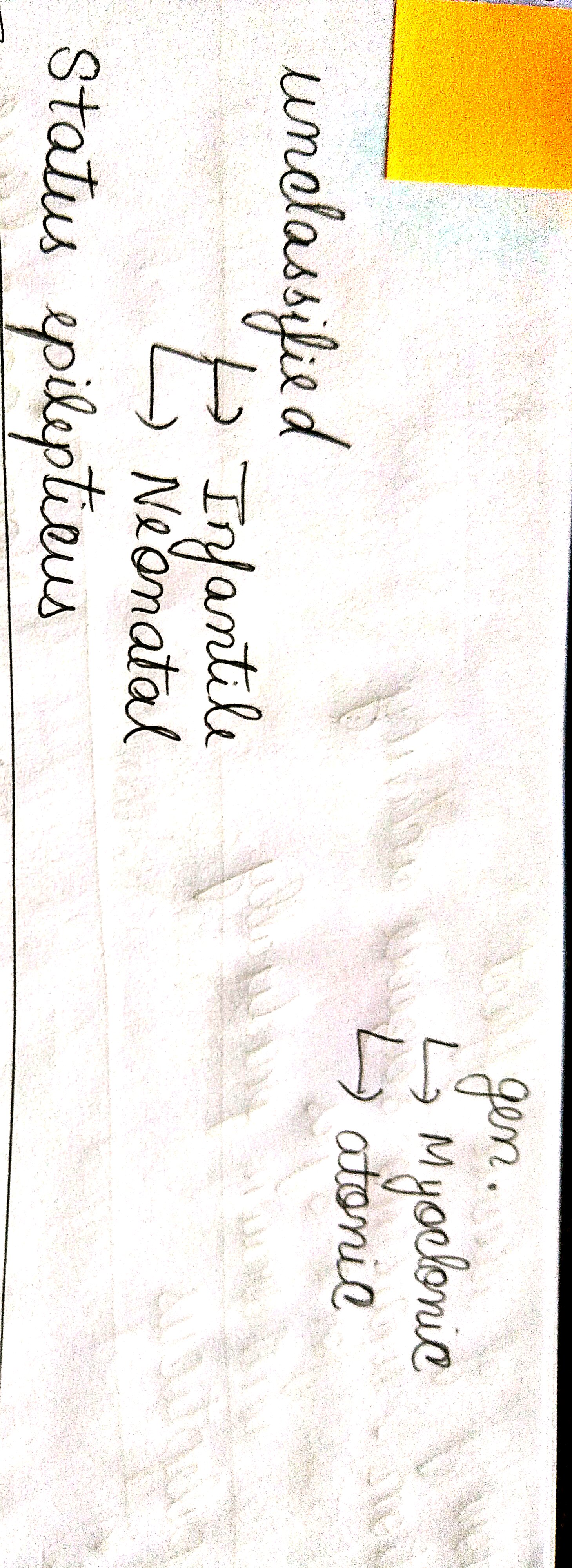
  • Myoclonic Epilepsy
  • Atonic Epilepsy

Reference-

A.K.Tripathi for general medicine 3rd edition

Dentowebinar by Dr. Sachin Junnarkar

The digital transmission of medical imaging, remote medical diagnosis, and evaluations, and video consultations with specialists have currently formed an integral part of the health care delivery system. With the pandemic restrictions and the entire working sector turning to technology, the healthcare sector has not been left behind as well.
Telemedicine is the practice of medicine using technology to deliver care at a distance.

We are honored to have with us Dr. Sachin Junnarkar who is going to take us into the world of telemedicine.

To register: https://docs.google.com/forms/d/e/1FAIpQLSdIvvJu1X-DGaDBKfQzt1RjU7phcAT2jimmvhhJgDHeDFcvFw/viewform?usp=sf_link

Tooth Dentowesome invites you to yet another exciting webinar on the topic “Telemedicine”.

Join and learn something new.

Day: Sunday
Date: 11th July 2021
Time: 7PM IST
Platform: YouTube Live

Regards,
Team Dentowesome

Interactive Session by Dr. Sagar Abichandani – Digital Dentistry

CAD/CAM; 3D Printing; Diagnodent; The Wand.

Don’t all these terms sound familiar to you?
And yet they seem to belong to a land far away?
Well, Tooth Dentowesome is going to bring out the Awesomeness in this exciting world of “Digital Dentistry”.

Presenting to all Dental Students, Gradutes, Practitioners and Enthusiasts- an interactive instagram live session with the dynamic Dr. Sagar Abichandani on the topic “Digital Dentistry”.

Date- 4th July
Time- 7PM

We are honored to have Dr. Sagar Abichandani on our platform and all the curious minds out there are welcome to ask their questions in what is going to be an exciting and knowledge-packed session.
Registration form: https://docs.google.com/forms/d/e/1FAIpQLSfYZPEpN6W-bqOKYs6RjHMyFjnxHXKESmofnVMPsRo3djfqaw/viewform?usp=sf_link

Instagram: https://www.instagram.com/tooth_dentowesome/?hl=en

See you all.

Organised by
Team Dentowesome.

Interactive Session by Dr. Sagar Abichandani – Digital Dentistry

CAD/CAM; 3D Printing; Diagnodent; The Wand.

Don’t all these terms sound familiar to you?
And yet they seem to belong to a land far away?
Well, Tooth Dentowesome is going to bring out the Awesomeness in this exciting world of “Digital Dentistry”.

Presenting to all Dental Students, Gradutes, Practitioners and Enthusiasts- an interactive instagram live session with the dynamic Dr. Sagar Abichandani on the topic “Digital Dentistry”.

Date- 4th July
Time- 7PM

We are honored to have Dr. Sagar Abichandani on our platform and all the curious minds out there are welcome to ask their questions in what is going to be an exciting and knowledge-packed session.

Registration form: https://docs.google.com/forms/d/e/1FAIpQLSfYZPEpN6W-bqOKYs6RjHMyFjnxHXKESmofnVMPsRo3djfqaw/viewform?usp=sf_link

Instagram: https://www.instagram.com/tooth_dentowesome/?hl=en

See you all.

Organised by
Team Dentowesome.

HAIRY TONGUE

INTRODUCTION

Black hairy tongue is a harmless temporary oral condition. It gives the tongue black and flurry appearance.
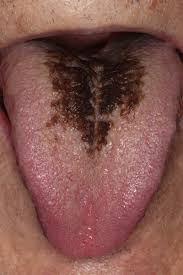
This is a condition of defective desquamation of the filiform papillae.

OTHER NAMES-

black tongue, lingua villosa nigra.

ETIOLOGY-

Usually unknown but below are some of the causes-

  • A soft diet: A lack of stimulation for abrasion to the surface of the tongue can prevent sufficient shedding of the papillae.
  • Poor oral hygiene: This can cause a buildup of bacteria or yeast, contributing to hairy tongue.
  • Certain substances: Tobacco use, as well as excessive consumption of alcohol, coffee or tea, for example.
  • Dehydration or dry mouth: Lack of moisture in the mouth can make a person more prone to having hairy tongue.
  • Certain medications: These include some treatments for stomach acid reflux.
  • Oral hygiene products: Certain types of mouthwash, such as those containing peroxide. 

CLINICAL FEATURES

Age: occurs at any age

Sex: No gender predilection is seen but seen mostly in males than in females.

Site: dorsal surface and the lateral surface of the tongue.

CLINICAL PRESENTATION

  • Usually Asymptmatic.
  • Patient may present black discoloration of the tongue, although the color may be brown, tan, green, yellow or white.
  • hairy or furry appearance of the tongue.
  • Altered taste or metallic taste in your mouth.
  • Bad breath (halitosis)
  • Gagging or tickling sensation, if the overgrowth of the papillae is excessive.

HISTOLOGIC FEATURES

Elongated filiform papillae with mild hyperkeratosis and occasional inflammatory cells

Debris accumulation among the papillae and candida pseudohyphae may be seen.

TREATMENT

Recommended to maintain a good oral hygiene, use of mouth wash, regular brushing