Traditional approach: Maxillary impaction (LeFort I) was standard for open-bite correction due to instability of early mandibular-only approaches.
Current advancement: Rigid internal fixation allows mandibular-only surgery using bilateral sagittal split osteotomy (BSSO) with counterclockwise rotation of the distal segment.
2️⃣ Surgical Concept
Step
Description
Presurgical orthodontics
Level maxillary arch via maxillary incisor extrusion → creates level occlusal plane for mandibular autorotation.
Osteotomy
Bilateral sagittal split osteotomy with counterclockwise rotation of mandibular distal segment.
Fixation
Rigid internal fixation using 4 screws per side.
Objective
Establish positive overbite/overjet with stable posterior occlusion.
3️⃣ Indications
Moderate anterior open bite (6–7 mm)
Patients where maxillary impaction undesirable (esthetic concerns, nasal morphology)
When cost or morbidity of double-jaw surgery is to be minimized
➡ Mandibular osteotomy shows equal or better long-term stability.
6️⃣ Key Clinical Pearls
Maintain stable incisor extrusion before surgery—no significant relapse noted.
Ensure level occlusal plane before rotation to prevent posterior open bite.
Rigid fixation is critical for stability.
Post-op orthodontic detailing essential for final intercuspation.
7️⃣ Limitations / Cautions
⚠ Not suitable for severe open bites (>7–8 mm) or complex vertical discrepancies. ⚠ Limited long-term data; ongoing follow-up advised. ⚠ Requires precise planning of occlusal plane leveling to prevent over-rotation.
8️⃣ Clinical Summary
Mandibular counterclockwise rotation via BSSO is a viable and stable alternative to maxillary impaction for moderate anterior open-bite correction, providing both esthetic and economic benefits.
1) Always clinically assess mandibular posture and function before deciding on a treatment plan. Static records like cephs or models don’t reveal functional disturbances.
2) Functional retroversion must be confirmed through both clinical and radiographic evaluations, supported by deprogramming splints to identify true mandibular position.
3) Functional appliance therapy is effective only when favorable growth potential exists. Evaluate skeletal maturity using Bjork’s structural signs and Schwarz analysis.
4) Overjet alone should not dictate functional treatment. Use molar relationship and skeletal base assessments as the true determinants for mandibular advancement.
5) Choose the functional or corrective appliance based on diagnostic needs—not habit or routine. Understand each appliance’s biomechanical goals before use.
6) Utilize Schwarz craniometry to evaluate maxillary and mandibular base adequacy. This helps judge whether a patient truly requires mandibular advancement or other skeletal correction.
7) Extreme incisor inclinations or unusual bite patterns often arise from environmental factors (e.g., thumb sucking, tongue habits), not inherent skeletal patterns.
8) Deep bites may develop from tongue or digit-sucking habits causing abnormal eruption paths. Correct these habits before addressing skeletal or dental compensation.
9) Always interpret subdivision or asymmetry cases with both dental and skeletal perspectives. Functional shifts, not just skeletal discrepancies, often drive asymmetries.
10) Prioritize correcting functional disturbances and establishing equilibrium before applying mechanical corrections or considering surgical interventions.
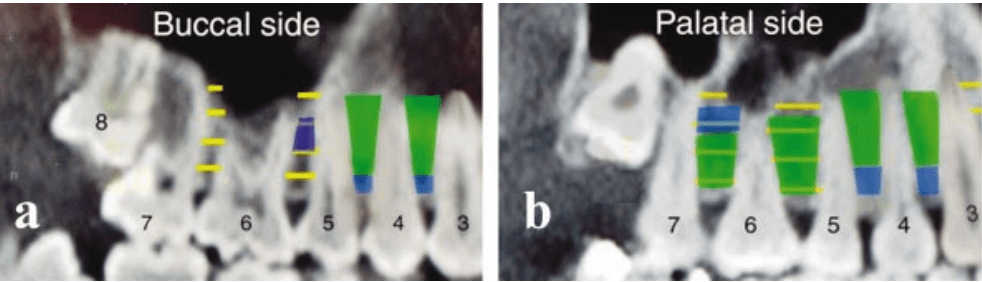
Interradicular anatomy limits where miniscrews can be placed without root proximity or sinus encroachment, making mesiodistal space the key parameter over buccolingual thickness.
Safe placement reduces root contact, improves primary stability, and avoids sinus and tuberosity pitfalls in the maxilla
📌 General Guidelines
Preferred screw diameter: 1.2–1.5 mm (safe clearance: ≥1 mm bone around screw).
Thread length: 6–8 mm, conical shape recommended.
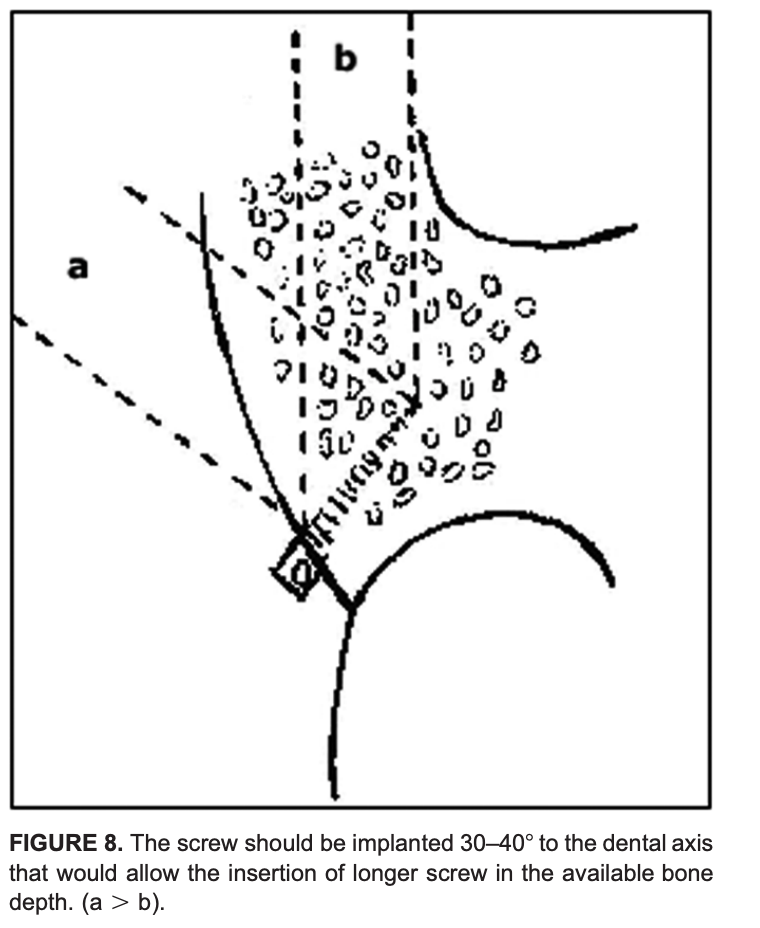
Insertion angle: 30–40° to long axis of tooth → more bone engagement, less root risk.
Avoid: Tuberosity, >8 mm above alveolar crest in maxilla (sinus risk), very close root proximity sites.
MAXILLA
Interradicular Site
Depth from Crest
Safety
Notes
6–5 (1st Molar–2nd PM, Palatal)
2–8 mm
🟢 SAFE
Best site
7–6 (2nd–1st Molar, Palatal)
2–5 mm
🟢 SAFE
Avoid >8 mm (sinus)
5–4 (2nd–1st PM)
5–11 mm
🟢 SAFE
Both buccal & palatal
4–3 (1st PM–Canine)
5–11 mm
🟢 SAFE
Both buccal & palatal
6–5 (Buccal)
5–8 mm
🟡 Limited
Narrow mesiodistal space
Tuberosity
Any
🔴 UNSAFE
Thin bone, sinus, 8s
Key maxillary insights 🦴
Palatal side offers more safe space than buccal, especially between 6–5 and 7–6 within 2–8 mm from the crest.
Avoid 8–11 mm apical to crest in posterior maxilla due to frequent sinus proximity; tuberosity is generally inadequate unless third molars are absent and bone is verified.
MANDIBLE
Interradicular Site
Depth from Crest
Safety
Notes
7–6 (2nd–1st Molar)
8–11 mm
🟢 SAFE
Best site
5–4 (2nd–1st PM)
All depths
🟢 SAFE
Consistently wide
6–5 (1st Molar–2nd PM)
11 mm
🟡 Limited
Shallow = risk
4–3 (1st PM–Canine)
11 mm
🟡 Limited
Safe only apically
4–3 (2–5 mm)
🔴 UNSAFE
Very close roots
Key mandibular insights 🦴
Safest sites: 7–6 and 5–4 across depths; 6–5 improves at deeper levels; 4–3 is tight and safer from 8–11 mm.
Buccolingual thickness is generous posteriorly, but mesiodistal spacing still dictates feasibility.
Depth logic mnemonic
“Two–to–Eight for Maxilla, Eight–to–Eleven for Mandible.”
Maxilla safer band: 2–8 mm near crest.
Mandible safer band: 8–11 mm deeper.
Diameter clearance mnemonic
“Diameter plus Double.”
Required mesiodistal space ≈ screw diameter + 2 mm total clearance.
Clinical decision pathway 🧠
Step 1: Select region by biomechanics; favor palatal 6–5 or 7–6 in maxilla and 7–6 or 5–4 in mandible.
Step 2: Choose depth band where mesiodistal space meets diameter + 2 mm clearance rule; avoid maxillary posterior >8 mm.
Step 3: Plan 30–40° insertion path with conical screw to maximize safe thread length and minimize root risk.
Step 4: Confirm with radiographic assessment in every case; population averages do not replace patient‑specific imaging.
Scenario 1: Maxillary site and depth
A 19-year-old with bilateral Class I crowding needs anterior retraction with absolute anchorage. Planned site: interradicular, maxillary right 6–5. Which depth window minimizes sinus risk while maximizing mesiodistal clearance?
A. 0–2 mm from crest B. 2–8 mm from crest C. 8–11 mm from crest D. >11 mm from crest
Answer: B Rationale: Palatal 6–5 offers the greatest mesiodistal space at 2–8 mm; posterior maxilla beyond ~8 mm risks sinus proximity and narrowing interradicular space. Takeaway: Choose 2–8 mm for maxillary posterior interradicular placement; avoid deep apical insertion due to sinus.
Scenario 2: Mandibular posterior preference
A 22-year-old requires lower incisor intrusion and posterior anchorage. Best interradicular site in the mandible for consistent mesiodistal space?
A. 4–3 at 2–5 mm B. 6–5 at 2–5 mm C. 5–4 across 2–11 mm D. 7–6 at 2–5 mm
Answer: C Rationale: 5–4 is reliably favorable across depths; 7–6 is safest deeper (8–11 mm), while 4–3 is tight near crest. Takeaway: Prefer 5–4 broadly; use 7–6 when inserting deeper (8–11 mm).
Scenario 3: Diameter and clearance rule
Planning a 1.5 mm conical miniscrew interradicularly. Minimum mesiodistal width to satisfy “diameter plus double” clearance?
A. 2.0 mm B. 2.5 mm C. 3.0 mm D. 3.5 mm
Answer: D Rationale: Approximate rule: screw diameter + 2.0 mm total clearance; 1.5 + 2.0 = 3.5 mm. Takeaway: For 1.5 mm screws, target ≥3.5 mm mesiodistal space.
Scenario 4: Angulation choice
A resident plans perpendicular insertion between maxillary 6–5 to maximize cortical engagement. What is the best correction?
A. Maintain perpendicular, use longer screw B. Angle 30–40° to the long axis to lengthen the safe path C. Shift to tuberosity to avoid roots D. Use 2.0 mm diameter to improve stability
Answer: B Rationale: 30–40° increases safe trans-cortical path and reduces early root proximity compared with perpendicular insertion. Takeaway: Favor 30–40° to the tooth axis in interradicular sites.
Scenario 5: Palatal posterior caution
During palatal placement near 7–6, the plan is to embed 10–12 mm for maximum stability. Best revision?
A. Maintain depth; palatal roots diverge widely B. Reduce to ~6–8 mm embedding to avoid buccal root convergence C. Switch to perpendicular insertion to stay central D. Increase diameter to 2.0 mm to improve purchase
Answer: B Rationale: Palatal roots allow space initially, but buccal roots converge; keep embedding around 6–8 mm with angulation. Takeaway: In palatal posterior, limit depth and use oblique path.
Scenario 6: Buccal 7–6 in the maxilla
A plan is made for buccal 7–6, 5 mm from crest, 1.5 mm screw. What is the primary risk?
A. Buccal plate perforation B. Infringement of the maxillary sinus at 5 mm C. Narrow mesiodistal interradicular clearance compared to palatal D. Insufficient buccopalatal cortical thickness
Answer: C Rationale: Buccal 7–6 has narrower mesiodistal space than palatal; clearance is the limiting factor. Takeaway: Mesiodistal width dictates feasibility more than buccolingual thickness.
Scenario 7: Immediate placement torque
In dense mandibular bone, a self-drilling miniscrew shows high insertion torque approaching fracture. Best intraoperative adjustment?
A. Increase hand torque to seat fully B. Switch to pre-drilling (pilot) to lower torsional stress C. Upsize to 2.0 mm diameter D. Angle perpendicular to reduce resistance
Answer: B Rationale: Pre-drilling reduces insertion torque and fracture risk in dense bone while preserving stability. Takeaway: Manage torque with pilot drilling in high-density bone.
Scenario 8: Root contact cue
During insertion, the driver suddenly stalls and higher force is needed; patient reports sharp sensitivity despite topical anesthesia. Next step?
A. Continue inserting to pass the tight spot B. Reverse 1–2 turns and redirect trajectory C. Switch to a longer screw D. Load immediately to test stability
Answer: B Rationale: Stall/sensitivity suggests PDL/root proximity; back out and redirect to avoid injury. Takeaway: Recognize tactile and patient cues of root contact; reposition immediately.
Scenario 9: Palatal anterior boundary
A miniscrew is planned at the second palatal rugae for retraction anchorage. What is the safer adjustment?
A. Move anteriorly for thicker cortical bone B. Place posteriorly at or behind the third palatal rugae C. Shift to infrazygomatic crest routinely D. Increase diameter to 2.0 mm for stability
Answer: B Rationale: Anterior palatal placements at/near second rugae risk root injury; safer zone is at/behind third rugae. Takeaway: Respect anterior palatal boundaries to avoid incisor root injury.
Scenario 10: Postoperative soft-tissue issues
A patient returns with mucosal overgrowth and peri-implant inflammation around a stable miniscrew. Best management?
A. Immediate removal of the miniscrew B. Debride, add a low-profile healing collar or spacer, reinforce hygiene, and consider chlorhexidine C. Load more heavily to reduce movement D. Ignore unless painful
Answer: B Rationale: Overgrowth and inflammation respond to local hygiene measures, soft-tissue management, and contour optimization; removal is not first-line if stable. Takeaway: Manage soft tissues proactively to maintain stability.
Scenario 11: Choosing between sites
Needing maxillary anchorage but palatal vault is shallow; CBCT shows limited palatal bone near 6–5. Best alternative?
A. Buccal 7–6 at 11 mm depth B. Buccal 6–5 at 5–8 mm depth with oblique angulation C. Tuberosity interradicular site D. Anterior palatal at second rugae
Answer: B Rationale: Buccal 6–5 mid-depth can be acceptable with careful angulation and clearance assessment; 11 mm posterior risks sinus. Takeaway: When palatal is limited, use buccal 6–5 at mid-depths with precise planning.
Scenario 12: Stability factor prioritization
Which factor most consistently correlates with miniscrew stability in interradicular sites?
A. Screw length alone B. Screw diameter and cortical thickness, plus soft-tissue health C. Patient age and sex D. Immediate loading is contraindicated
Answer: B Rationale: Diameter, cortical engagement, and inflammation control are key; length alone is less predictive, and immediate loading can be acceptable with good primary stability. Takeaway: Optimize diameter/site quality and soft-tissue health for stability.
Primary stability and safety for palatal TADs depend on two anatomic variables: overall bone depth (BD) to avoid nasal perforation and cortical bone thickness (CBT) to achieve adequate insertion torque and stability. BD and CBT vary systematically across the palate, so site choice—not just screw design—drives success and risk mitigation in everyday mechanics.
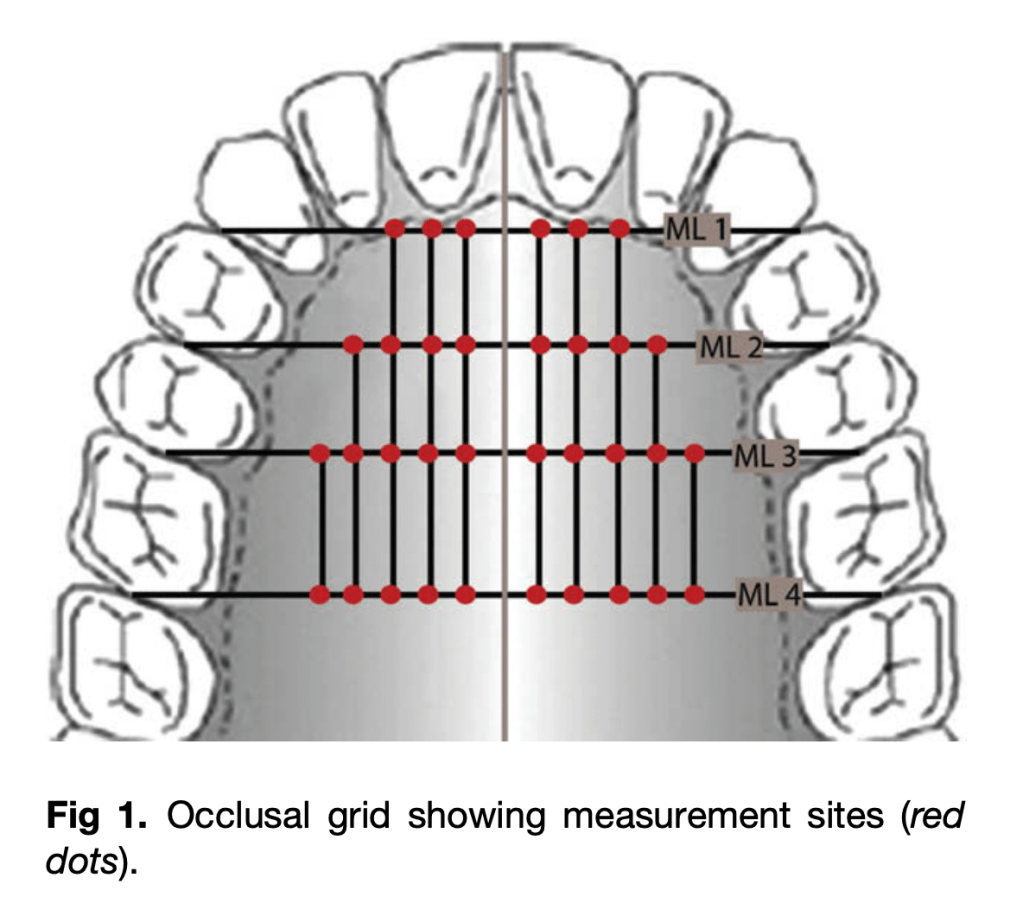
Measurement Levels (MLs)
ML1: Canine–1st premolar
ML2: 1st–2nd premolars
ML3: 2nd premolar–1st molar
ML4: 1st–2nd molars
Key Principles
Bone Depth (BD): Greatest in anterior palate, decreases posteriorly.
Cortical Bone Thickness (CBT): Highest anteriorly, decreases posteriorly.
Primary Stability: Requires CBT > 1 mm for acceptable success.
Safe Implant Length:
Anterior (ML1 & ML2): 6–8 mm implants generally safe.
Posterior (ML3 & ML4): Risk of nasal perforation if ≥6 mm fully seated.
Bone Depth (BD) – Mean values (mm)
Level (ML)
2 mm
4 mm
6 mm
8 mm
10 mm
Zone
ML 1
8.7
7.6
7.3
—
—
🟢
ML 2
8.7
8.0
7.5
8.2
—
🟢
ML 3
4.3
3.9
3.7
4.1
5.3
🟡
ML 4
2.7
2.0
1.6
1.6
2.4
🔴
Safe depth for ≥6 mm TAD is reliably found only at ML 1 & ML 2.
Cortical Bone Thickness (CBT) – Mean values (mm)
Level (ML)
Mean CBT (mm)
Range
Zone
ML 1
1.49
0.65–2.43
🟢
ML 2
1.14
0.13–1.97
🟢
ML 3
1.04
0.10–2.78
🟡
ML 4
1.00
0.30–2.04
🟡/🔴
≥1 mm cortical thickness recommended for stability.
Quick Placement Guide
🟢 Best sites: Paramedian ML 1 & ML 2 (safe, accessible, adequate BD + CBT)
🟡 Variable sites: ML 3 (borderline, confirm with CBCT; angle placement if used)
🔴 Avoid: ML 4 (thin bone, risk of perforation, thick soft tissue, vessels nearby)
⚠️ Anterior caution: Stay clear of incisive canal (midline → only parasagittal placement)
💡 Trick: Angulated placement ↑ available BD in posterior palate
MCQs
The most favorable default site for palatal miniscrew placement in adults is:
A. Midline at incisive papilla
B. Paramedian at premolar level (ML1–ML2)
C. Paramedian at molar level (ML4)
D. Far lateral palate near greater palatine foramen Answer: B Rationale: Anterior paramedian sites (premolar region) combine higher bone depth with thicker cortex and easier access, reducing perforation and stability risks.
Which pattern best describes palatal bone depth (BD) across adults?
A. Increases posteriorly and laterally
B. Decreases posteriorly and laterally
C. Constant across all levels
D. Highest at molar level Answer: B Rationale: BD trends highest anteriorly near the midline and declines toward posterior and lateral regions.
For reliable primary stability of orthodontic miniscrews, a practical cortical bone thickness (CBT) threshold is:
A. ~0.3 mm
B. ~0.7 mm
C. ~1.0 mm or more
D. >2.5 mm always required Answer: C Rationale: About 1.0 mm CBT supports favorable insertion torque and stability without excessive site trauma.
To reduce perforation risk for a posterior paramedian placement without CBCT, the most sensible tactic is:
A. Use longer screws (≥8 mm) and seat fully
B. Perpendicular insertion with full seating
C. Angulate insertion and/or accept partial seating
D. Shift to the midsagittal plane Answer: C Rationale: Angulation increases traversed bone; partial seating reduces unintended nasal entry when BD is borderline.
Regarding the incisive canal, safer placement strategy is:
A. Sagittal midline at ML1
B. Paramedian at ML1–ML2
C. Midline further posterior
D. Crossing incisive papilla intentionally Answer: B Rationale: Paramedian avoids nasopalatine canal while preserving favorable BD/CBT.
A key anatomic hazard in the posterolateral palate is the:
A. Lesser palatine artery
B. Greater palatine neurovascular bundle
C. Infraorbital nerve
D. Nasopalatine nerve Answer: B Rationale: The greater palatine bundle courses posterolaterally and must be respected.
During insertion, approaching the nasal floor is often signaled by:
A. Sudden loss of torque
B. Soft tissue blanching alone
C. Firm “stop” from dense nasal cortical plate
D. Immediate gingival bleeding Answer: C Rationale: The dense nasal cortex provides distinct tactile resistance with slow, controlled placement.
Typical mean BD at ML4 (molar-level paramedian) is:
A. >8 mm
B. 5–6 mm
C. 2–4 mm
D. <1 mm Answer: C Rationale: Posterior paramedian BD is often shallow, making fully seated 6 mm screws risky.
Adult left–right differences in palatal BD/CBT are generally:
A. Large and significant
B. Significant only in females
C. Small and not statistically significant
D. Left always greater than right Answer: C Rationale: Side differences are typically negligible compared to anterior–posterior patterns.
Immediate loading feasibility most closely relates to:
A. Soft tissue thickness
B. CBT and insertion torque
C. Screw head shape
D. Chronologic age alone Answer: B Rationale: Cortical thickness drives insertion torque, which underpins primary stability for loading.
A practical default screw length for anterior paramedian adult palate is:
A. 4 mm
B. 6 mm
C. 10 mm
D. 12 mm Answer: B Rationale: Around 6 mm balances safety and stability in typical anterior paramedian BD.
Completely seating a 6 mm screw at ML4 commonly:
A. Is always safe
B. Risks nasal perforation
C. Causes mucoceles routinely
D. Increases CBT Answer: B Rationale: Shallow posterior BD increases perforation risk with full seating.
Management of a small nasal perforation during palatal TAD placement generally involves:
A. Mandatory surgical closure
B. Immediate removal plus nasal packing in all cases
C. Conservative observation; most heal uneventfully
D. Systemic steroids Answer: C Rationale: Small perforations usually resolve; escalate only if symptomatic.
The midsagittal suture is often excluded from generalized site recommendations because:
A. CBCT artifacts dominate
B. High anatomic variability across adults
C. No cortical plate exists there
D. It cannot be measured Answer: B Rationale: Suture variability undermines generalized midline guidance.
The single strongest driver of miniscrew design/length selection is:
A. Aesthetics
B. Brand
C. Placement site (location)
D. Patient preference Answer: C Rationale: Local anatomy dictates diameter, length, and thread engagement strategy.
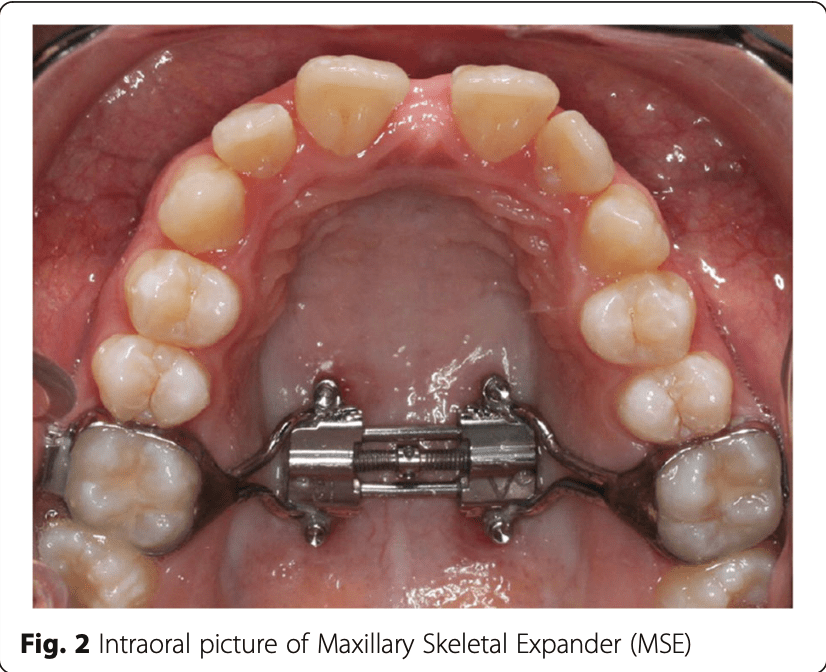
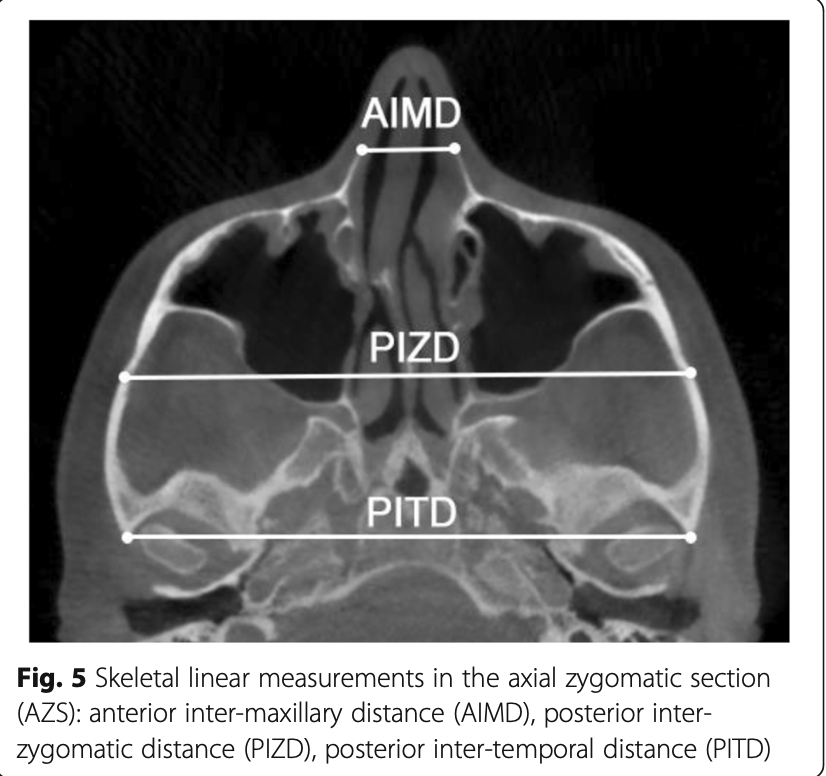
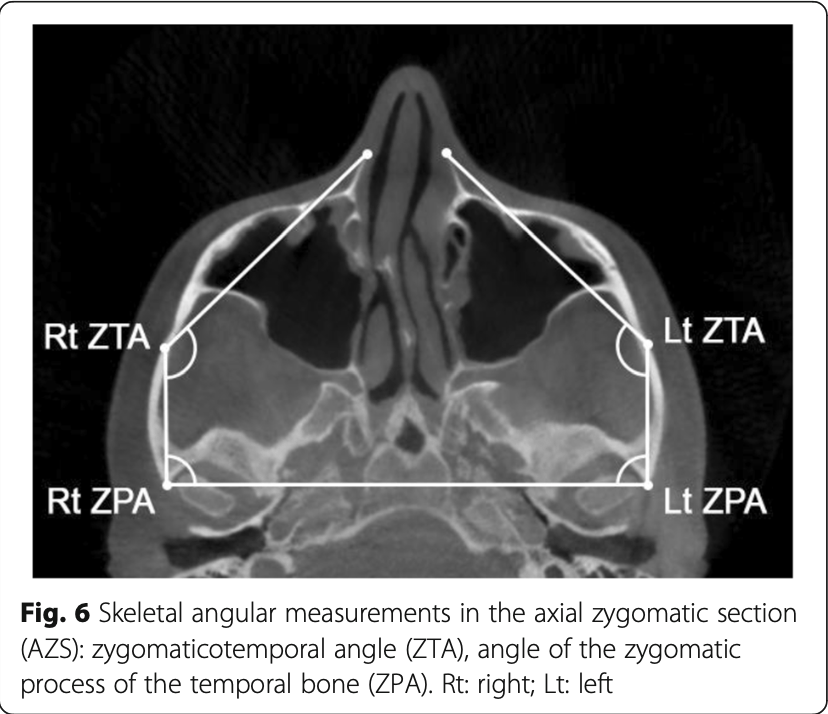
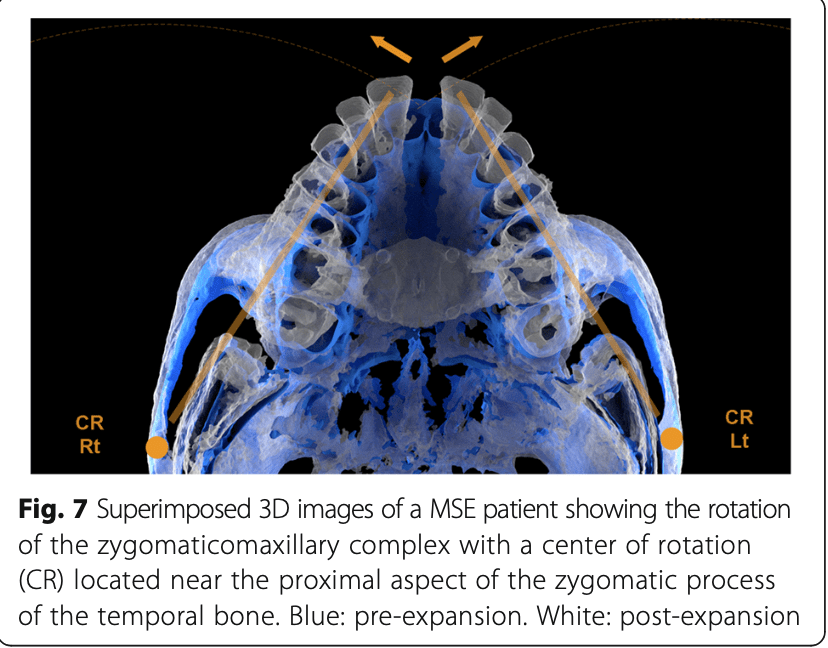
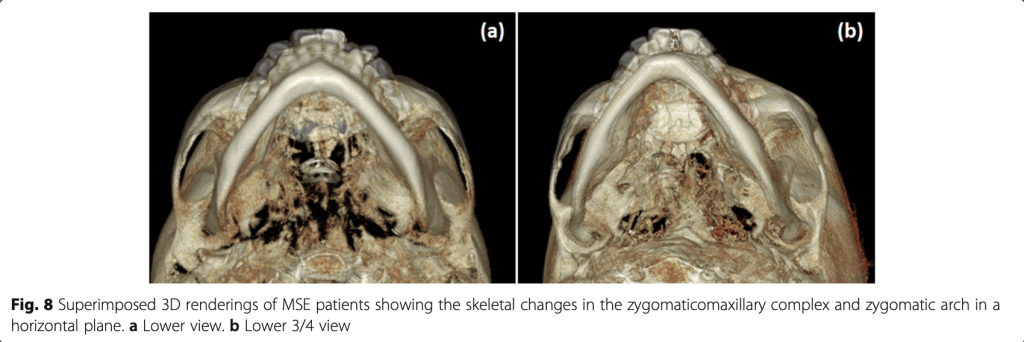
Micro‑implant‑supported maxillary skeletal expansion (MSE) applies orthopedic forces through palatal mini-implants to split the midpalatal suture, yet its soft‑tissue effects have been less clear than its skeletal outcomes
This study used 3D stereophotogrammetry to quantify facial soft‑tissue changes immediately after expansion and at one‑year retention, revealing significant, stable changes localized to the paranasal region, upper lip, and both cheeks.
🔹 Protocol
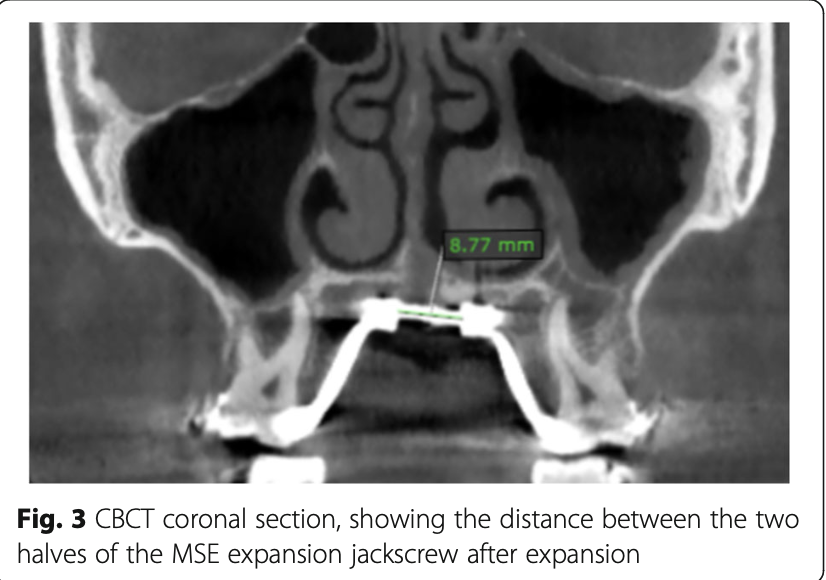
Appliance: MSE with 4 palatal mini-implants
Activation: 0.25 mm turns, 1–2/day (per Cantarella protocol)
Monitoring: Midline diastema + CBCT confirmation
🔹 Soft Tissue Effects (3D Analysis)
Paranasal area → mean displacement 1.3–1.5 mm
Cheeks → greater displacement (R: 2.4 mm, L: 2.9 mm)
Direction: forward + lateral (dominant anterior)
Stable at 1-year retention
🔹 Clinical Pearls
✅ Changes most visible around cheeks and paranasal areas ✅ Facial symmetry can vary → expansion often slightly asymmetric ✅ 3D scans are superior to 2D photos for monitoring changes ✅ No significant relapse after 1 year
🔹 Quick Comparison
Expander
Effect
Notes
Tooth-borne (Hyrax/Haas)
Dentoalveolar tipping
Risk of root resorption
Bone-borne (MSE)
True skeletal expansion
Stable soft tissue changes
Bottom line
MSE produces significant, forward‑lateral soft‑tissue enhancement centered on the paranasal/upper lip and cheeks, with the cheeks showing the largest and most clinically perceptible displacements that remain stable at one year
🎤 “So here’s the thing — most people pick a career because their parents told them to, or because they panicked after Class 12. But Dr. Akansha Kashyap? Nope. She picked dentistry like it was a love affair between science and art — and guess what? She got the gold medal to prove it. 🏅✨
She’s the kind of dentist who can fix your smile in the morning and sell you a handmade art piece in the evening. Honestly, if she wasn’t drilling cavities, she’d probably be designing album covers. 🎨🦷
In this interview, she spills about: 💡 How to juggle academics without losing your mind (or your hobbies) 🌟 Why mentors + creativity = survival kit in dentistry 🖊️ And a piece of advice so good, you’ll want to embroider it on your scrubs.
So… why are you still here? Go read the full interview — it’s like fluoride for your brain. 🧠💎
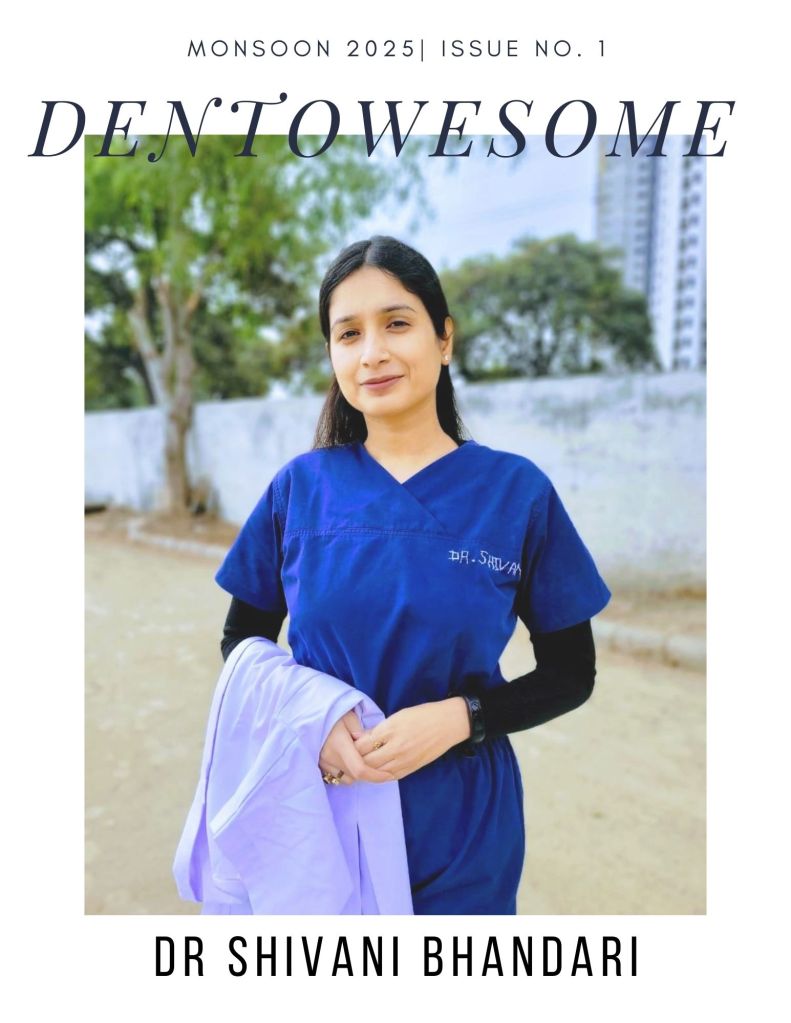
In this issue, Oral Pathologist Dr. Shivani Bhandari opens up about her inspiring path—from the first spark of ambition in her school days to navigating academic pressure, personal loss, and carving her own niche in the dental world.
💡 You’ll find:
Honest stories of resilience and motivation when life tests you the hardest.
Practical advice on balancing studies, hobbies, and responsibilities.
A refreshing reminder that dentistry is more than a profession—it’s a platform to innovate, teach, create, and inspire.
If you’re a dental student or young professional, this magazine isn’t just for reading—it’s for redefining what your future could look like.
👉 Dive in. Get inspired. Start shaping your own unique path in dentistry.





 Dentowesome