- used for mesiodistal tooth movement.
- Active arm is 12 mm and retentive tag is 3-5mm.
- Placed along long axis of the tooth which has to be moved.
- If tooth is to be moved mesially, direction of helix will be distal
- The finger spring is activated by moving the active arm towards the teeth intended to be moved. This is done as close to the coil as possible.
- Activation of upto 3 mm is considered
Author: Anisha Valli
Minor Surgical Procedures in Orthodontics
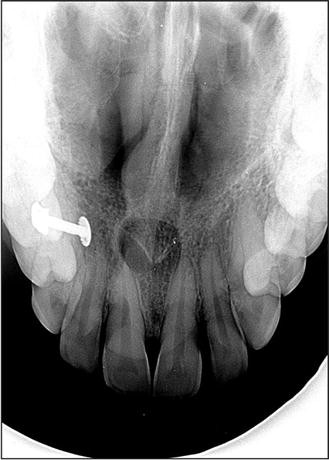
TREATMENT OF MIDLINE DISTEMA

- Causes
- Mesiodens
- High frenal attachment
- Tooth are procline
- Tooth material arch length discrepancy
- Midline pathology


- How to correct midline diastema?
- Composite restoration
- Finger springs = draw
- Fixed appliance = keychain
- Permanent retention


SERIAL EXTRACTION
Defined as correctly timed, planned removal of certain deciduous and permanent teeth in mixed dentition cases with dentoalveolar disproportion

- Introduced by KJELLGREN
- Father of SE = nance 1940
- RATIONALE
- Arch length deficiency as compared to the tooth material using Model analysis method
- Physiological tooth material = eg wilkinson extraction of 1st permanent molar
- FACTORS THAT PLAY ROLE IN CORRECTION OF CROWDING IN ANTERIOR SEGMENT
- Leeway space of nace
- Max = 1.8 mm
- Mand = 3.4 mm
- Tongue pressure
- Interdental spacing
- Incisal liability = amount of space available and required by permanent tooth
- Max = 7 mm
- Mand = 5mm
- Leeway space of nace
- INDICATIONS 2m
- Tooth material and arch length discrepancy of 10mm
- Class I malocclusion
- Absence of Spacing
- Midline shift
- Premature loss of primary canine
- CONTRAINDICATIONS 2m
- Class II and Class III malocclusion
- Anodontia
- Oligodontia
- Deep bite
- ADVANTAGES = Prevents fixed appliances and malocclusions in the pt
- DISADV =
- Long follow up = pt compliance
- Operator = highly trained
- Delay of permanent tooth
- DWELLS PROCEDURE
- Extraction of three teeth
- Primary canine = at age of 8-9 years
- Primary 1st molar = at age of 9-10 years
- 1st premolar
- Always bilateral extraction in the same arch
- If done unilateral = midline shift happens
- In the 1 st Step, the deciduous canines are extracted to create a space for alignment of the incisors. This step is carried out at 8-9 years of age.
- After 1 years, the deciduous 1st molars are extracted so that the eruption of 1st premolars is accelerated.
- This is followed by the extraction of the erupting 1 st premolar to permit the permanent canines to erupt in their place.
- Extraction of three teeth

- TWEED METHOD = D4C

- NANCE METHOD = D4C

- BOTH methods involve the extraction of the deciduous 1 st molars around 8 years of age. This is followed by the extraction of the 1 st premolar & the deciduous canines.
- MOYERS METHOD = based on intercanine width = BCD4
- Maxillary arch
- Boys = 10 years
- Girls = 9 years
- Mandibular arch
- Boys = 18 years
- Girls = 12 years
- Maxillary arch

Frontal Resorption and Undermining Resorption


Theories of Tooth Movement


ACTIVATOR
DEFINITION = Functional appliances are defined as ‘loose fitting or passive appliances which harness the natural forces of the orofacial musculature that are transmitted to the teeth and alveolar bone through the medium of appliance’.
ACTIVATOR 4m**
- Given by anderson and haul
- Also called as norwegian appliance or loose fitting appliance
- It doesn’t have any clasp to hold onto dentition normally
- Only one wire component = labial bow


Mechanism of action 2m
- Pt has to forcibly hold the appliance in its place aka maxilla as its loose appliance with no clasps
- This causes the pt to bring his mandible forward and keep mouth closed so the activator doesn’t fall down.
- When pt swallows = muscles get stretched, continous remodeling at TMJ and mandible stays in forward direction
- Mandible is staying forward due to a REFLEX – myotatic reflex = due to continuous stretch of muscles, kinetic energy is generated and transferred to maxillary and mandibular dentition and skeletal base. Leading to:
- Distal force on maxilla
- Mesial force in mandible
- Hence, condylar adaptation occurs
- ‘viscoelastic property’ = passive tension caused by stretching of muscles, soft tissue, tendinous tissue, etc. are responsible for the action
Indications 2m
- Class II division 1 malocclusion
- Class II division 2 malocclusion
- Class III malocclusion
- Class I open bite malocclusion
- Class I deep bite malocclusion
- As a preliminary treatment before major fixed appliance therapy to improve skeletal jaw relations
- For post treatment retention
- Children with lack of vertical development in lower facial height.

Contraindications
- Crowding
- Adult pt
- Too much proclination of lower anteriors
- Increased lower anterior facial height
Advantage
- pt can remove it
- oral hygiene is maintained
- no food restrictions
- chair side time is less
Disadvantage = pt compliance
TYPES of activator
- H activator
- Horizontally growing pt
- V activator
- Vertically growing pt
FABRICATION STEPS
- Take impression
- Bite registration = gives us an idea how much mandible needs to be displaced. U shaped wax is placed on the oral cavity and asked to bring it forward and the bite is also opened posteriorly.
- Articulation
- Wire elements
- Acrylization of appliance
- Trimming = to bring about certain movements of the dentition
MODIFICATIONS
BOW ACTIVATOR

- WUNDERER MODIFICATION = Given in class 3

- CYBERNATOR = similar to bionator = activator with reduced palatal acrylic

- PROPULSOR
- Cutout or palate free activator
- Karwetzky modification
- Herren modification
- Elastic open activator
- Kinetor by Stockfish
FLUORIDE VARNISHES
- Introduced by schmidt, 1964`
- There were made sticky = to be retained for a longer time on the teeth
- Caries reduction = 40-50%
- Advantage = they set when in contact with saliva.
- Hence, advantage = children and its individuals = isolation is difficult
- Duraphat
- Duraphat is the first fluoride varnish introduced in Germany.
- It is a viscous yellow material
- NaF containing 22,600 ppm in organic lacquer

- Fluor Protector
- Fluor protector is a clear polyurethane based product
- Contains 7000 ppm fluoride containing 0.7% F in polyurethane based lacquer

- Carex
- Carex is another fluoride varnish similar to duraphat
- contains lower fluoride concentration of 1.8% fluoride.

- Method of Application
- After prophylaxis the teeth are dried, not isolated with cotton as varnish sticks to cotton.
- A total of 0.3–0.5 ml of varnish equivalent to 6.9–11.5 mg fluoride is required to cover the full dentition.
- Using a single tufted brush = 1st applied on the lower arch followed by lower arch
- After application, pt is made to sit upright
- After application patient is made to sit with mouth open for 4 minutes before spitting
- Fluor Protector sets faster than duraphat.
- Patient is asked not to rinse or drink anything at all for one hour and not eat anything solid but take liquid and semi-solid till next morning.
EPIDEMIOLOGY OF DENTAL CARIES 9M*****
- Dental caries is defined as a chronic infectious disease which results from the demineralization of the inorganic portion and destruction of the organic portion of the tooth.
- Epidemiology of dental caries can be studied under the following heading: Host, agent and environment All these factors should react over a period of time for dental caries to occur.
- CARIES FORMATION
- Substrate (sugar) + microorganism (s.mutans in plaque) = lactic acid = causing demineralization
- Remineralization = fluoride, calcium, phosphate
- Fl = dentifrice
- Ca and PO4 = teeth and saliva
- HOST FACTORS
- TEETH
- 80% of caries occur on occlusal surfaces
- Lower incisors are the least affected teeth
- Malaligned rotated = bristles cannot reach and clean leading to increased caries
- Dentinogenesis and amelogenesis imperfecta = hypoplastic teeth and pitts = more prone to caries
- Caries is considered to be bilateral
- SALIVA
- COMPOSITION
- rich in calcium phosphate and fluoride = decrease in caries
- Rich in carbonate = increase in caries attack
- pH =
- unstimulated pH is slightly acidic
- High flow rate = pH increases
- pH of saliva = main is bicarbonate content
- Sialin, phosphate and ammonia = also determines pH of saliva
- QUANTITY
- Normal secretion = 700-800 ml/day
- Aplasia of glands and xerostomia = increase in rampant caries
- VISCOSITY
- Mucin responsible for viscous saliva
- Viscosity does not influence caries
- ANTIBACTERIAL PROPERTIES
- Lactoperoxidase = this prevents early microbial colonization of tooth
- Lysozyme = it is a positive enzyme that catalyzed the degradation of negatively charged peptidoglycans matrix of microbial cells
- Lactoferrin = iron binding protein = needed for microbial growth
- IgA = inhibits adherence and thereby prevents colonization on mucosal surfaces and teeth by organisms, facilitating their removal of swallowing
- COMPOSITION
- AGE = 3 peaks for caries development
- 4-8 years = manual dexterity is less
- 11 – 19 years = adolescents
- 55 – 65 years = root caries
- Gender = Reasons
- Early eruption of teeth
- More fondness of sweets
- Hormonal variations
- Morphological differences
- Familial hereditary
- Good or bad teeth seen in the family
- Morphology, occlusion, salivary flow
- Emotional disturbances
- Increase stress = decrease salivary flow = increased caries in oral hygiene is not followed
- Socio-economic status
- Low SES = increases decayed and increased missing
- High SES = increased filling
- Overall low SES = increase dental caries
- Reason = affordability for prevention and treatment
- Caries is considered as disease of poverty
- TIME FACTOR FOR DEVELOPMENT OF CARIES
- Peak susceptibility = 2-4 years after eruption
- TEETH
- Agent factors
- Diet
- Organisms = S.mutans = pioneer = acidogenic, aciouric, eat/consume sugar
- Extracellular = dextrans and fructans. Responsible for adhesion on tooth
- intracellular polysaccharide = glycogen
- Lactobacilli = secondary organisms, when caries have reached dentin. It kills all S.Mutans creates an environment of very low pH
- Veillonella = anti caries organism = consumes acid as food = produced by S.Mutans for demineralization
DIET OF DENTAL CARIES
- Diet = it is defined as type and amount of food eaten daily by an individual
- Nutrition = defined as seen of the processes by which an individual takes in and utilizes food
- Carbohydrates
- Organic compound containing carbon, hydrogen and oxygen
- Physical nature of diet = form, clearance, time, retention, oral hygiene
- Frequency of carbohydrate diet
- Types
- Monosaccharides = glucose, galactose, fructose
- Disaccharides = sucrose [ glucose+fructose]
- Polysaccharides = starch, glycogen
- Polyols of alcohol = xylitol, mannitol and sorbitol
Classification of sugars
Total sugars
- Intrinsic sugar
- Sugar molecules inside the cell
- Fruit and vegetable
- Extrinsic sugar
- Sugar molecules outsides the cell
- Milk sugar = found in dairy products = lactose
- Non milk sugar = honey, fruit juices, table sugar = responsible for the caries
PURIFICATION OF WATER at household 4m*
- Boiling:
- Very effective method of purification
- Boiled or rolled over for 10-20 mins
- Taste is slightly altered but harmless
- Care should be taken for vessels during storage as there is chance of contamination
- It kills bacteria spores, cysts, ova and also removes temporary hardness by removing carbon dioxide and precipitating calcium carbonate.
- Bleaching powder:
- It contains about 33% of “ active chlorine”
- It’s a unstable product
- To make it stable = excessive alum is added = chlorinated lime
- On exposure to environment leads to loss of active chlorine
- It should be stored in dark and dry place
- It gives pungent smell = hence not routinely used
- Chlorine solution:
- Prepared from 4 kgs bleaching powder in 20 liters of water
- 25% of activate chlorine
- But evaporates in the environement = stored in dark, dry and cold place
- High test hypochlorite
- Calcium compound containing 60 to 70% active chlorine.
- It is stable than bleaching powder and less deterioration
- Chlorine tablets
- Available readily in the market
- under various trade names like halazone tablets.
- Very economical = formulation used currently was developed by NEERI, nagpur
- 0.5 gm of chlorine tablet for 20 liters of water
- Iodine:
- It is used for emergency disinfection of water. Why?
- highly expensive
- physiological activity with respect to thyroid
- Two drops of 2% ethanol solution of iodine will be sufficient for one liter of clear water
- for a contact period of 20 to 30 min for effective disinfection.
- Remains active for longer time
- It is used for emergency disinfection of water. Why?
- Potassium permanganate:
- This was widely used,but now no longer recommended for water disinfection.
- Effective against vibrio cholera but not against other pathogens
- It also alters the color, taste and smell of water.
- Filtration:
- On a small scale, water can be purified by using THREE TYPES OF filters
- PASTEUR CHAMBERLAND FILTER = made up of percelian
- BERKEFELD FILTER = made up of kieselguhr or infusorial earth.
- KATADYN FILTERS = silver coating on filters = when bacteria touch silver- it dies due to oligodynamic effect
- Heart of the filter is = candle = ONCE PER WEEK
- Wash it under running water using hard brush followed by boiling = to remove impurities clogging the filters