Ortho case 2.12

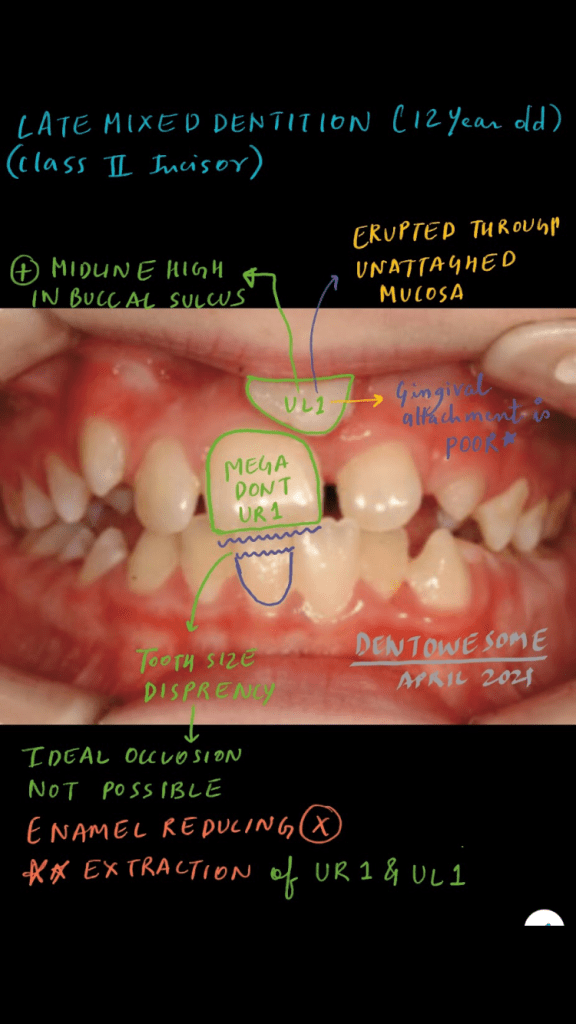
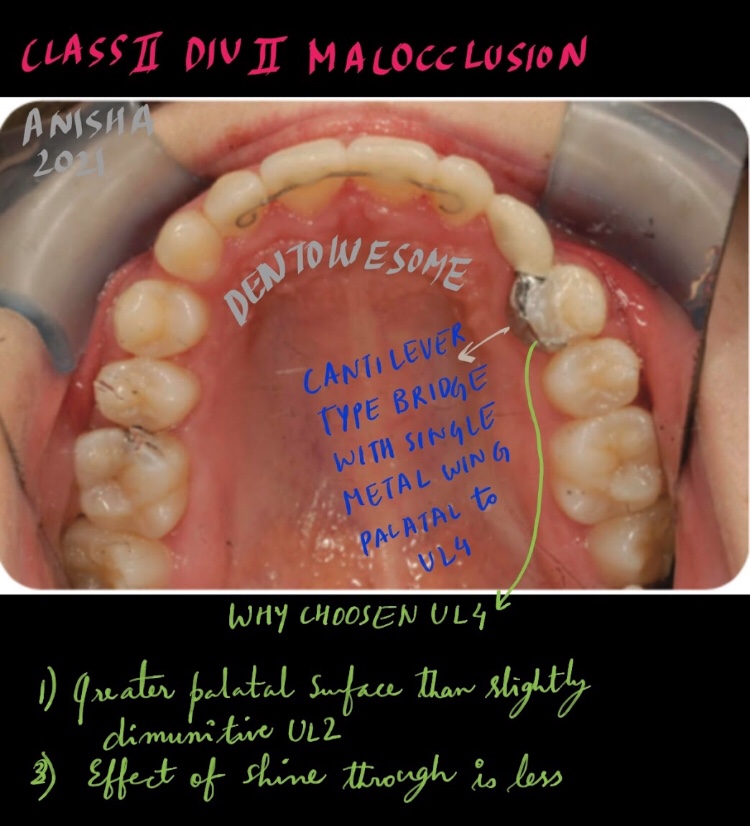
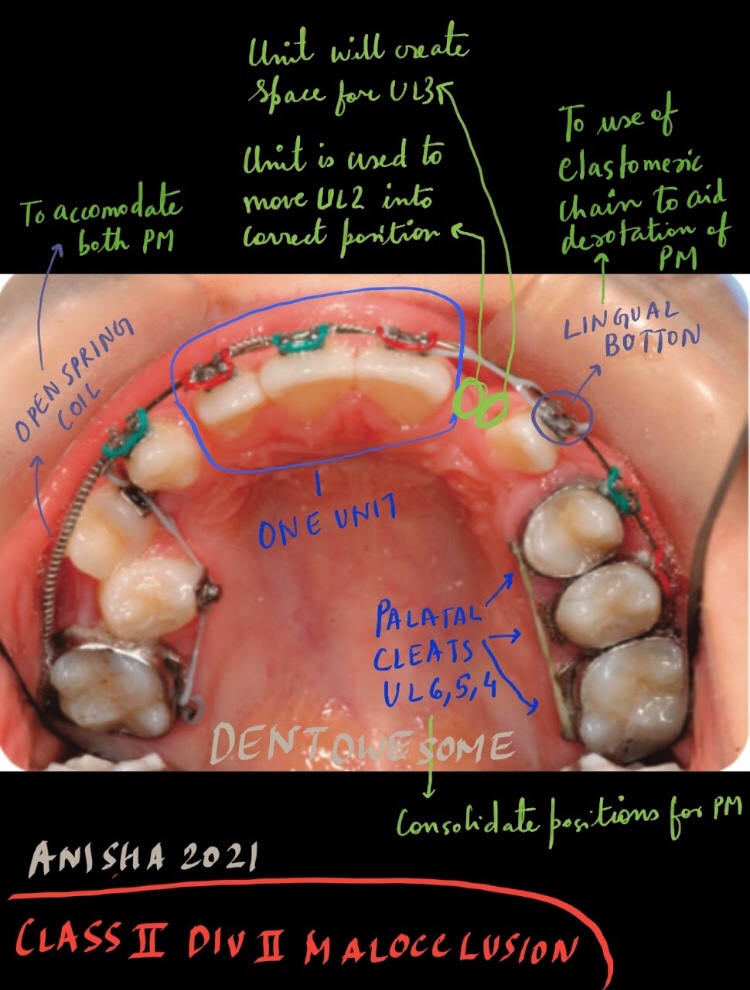
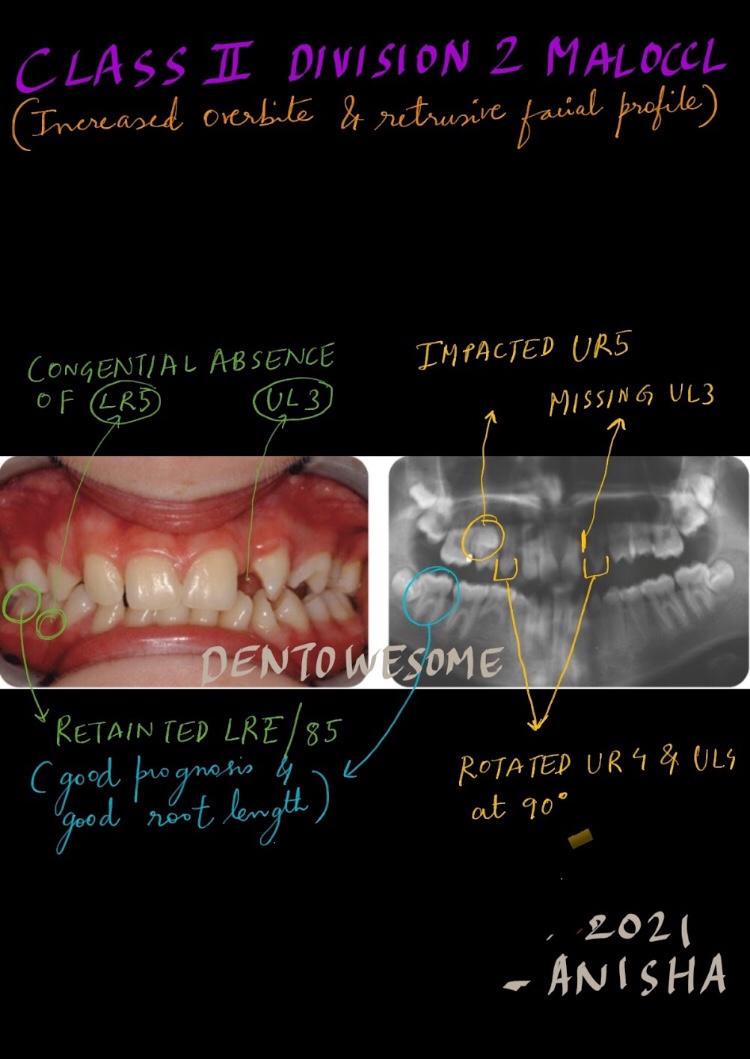
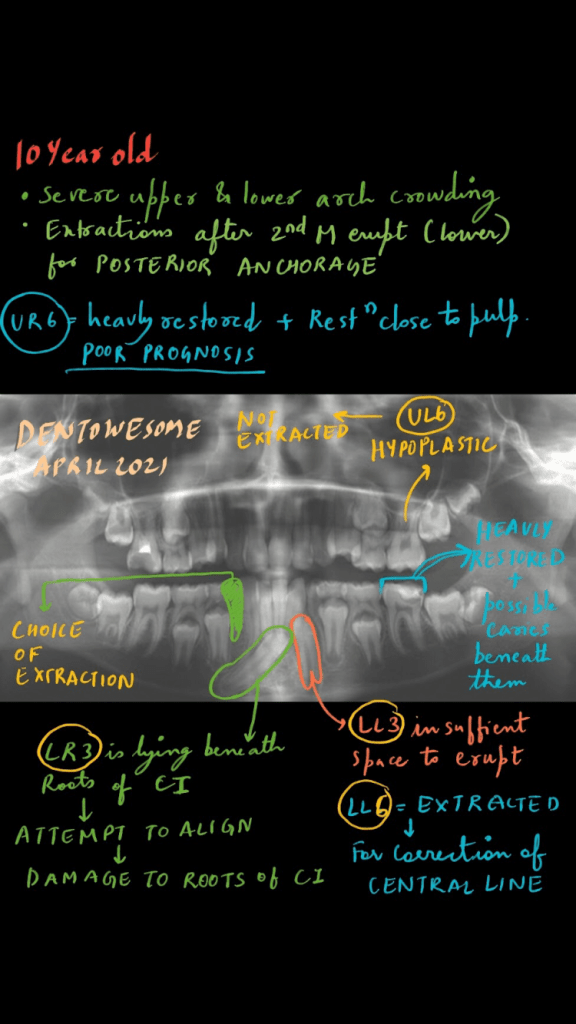
• Severe upper and lower arch crowding
• Buccally excluded UR3, impacted lower canines
• Ectopic and impacted LR3
• LR3 is excluded from the arch and ectopic in position, with its crown lying beneath the roots of the lower central incisors
• Potentially impacted LL3 due to insufficient space
• Heavily restored LL6 and UR6
• Hypoplastic UL6
• Upper and lower centre line shift to the right

How will you treat?

Link: https://drive.google.com/file/d/1UhHHaGLYLzzIeDnF_9qNTw6LrwXxbpWS/view?usp=drivesdk

RESEARCH ARTICLES RELATED TO THE PERIO CASE 7:

1) https://pubmed.ncbi.nlm.nih.gov/8832476/

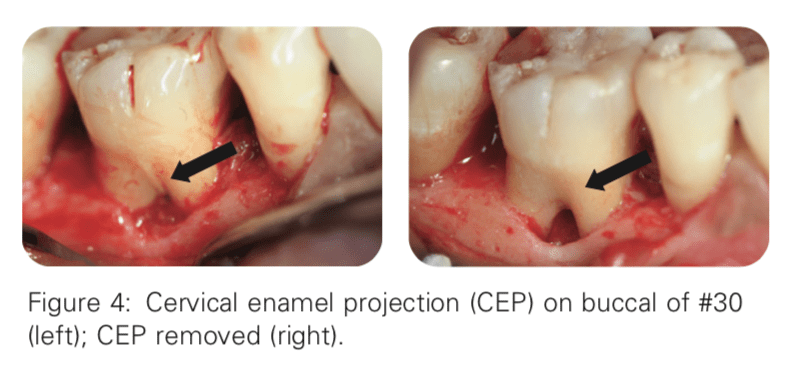
Masters and Hoskins reported that 90% of mandibular furcation invasions have CEPs

2) https://www.ncbi.nlm.nih.gov/pmc/articles/PMC2848791/

Bissada and Abdelmalek reported a 50% correlation between CEPs and furcation invasion

3) https://pubmed.ncbi.nlm.nih.gov/19518034/

The length of root trunk affects attachment loss The longer a given root trunk, the less likely a furcation will be predisposed to attachment loss. Teeth with Taurodontism usually have apically displaced furcation and longer root trunk length

4) https://pubmed.ncbi.nlm.nih.gov/13513891/

Intermediate bifurcation ridges are ridges spanning across the bifurcation of mandibular molars in the mesiodistal direction These ridges are present in 70–77% of the mandibular molars. Just like other anatomic structures, the presence of an intermediate bifurcation ridge may hinder effective plaque control and root preparation by both the patient and dentist

5) https://www.nature.com/articles/bdj.2007.1059

Buccal radicular grooves and palato-gingival grooves are developmental phenomena that affect mainly the maxillary anterior teeth. These grooves run on the roots in the coronal-apical direction Due to their anatomy, the grooves frequently provide a plaque-retentive area that is very difficult to instrument, making teeth with these developmental grooves more prone to attachment loss

Perio Case 7

A 47-year-old female presented with a chief complaint of: “My gums around one of the lower right teeth hurts.” The patient reported soreness and discomfort around tooth #30 from time to time, especially on the buccal side. On occasion, the patient experienced bleeding when brushing her teeth

LEARNING GOALS AND OBJECTIVES

􏱊 To be able to identify local anatomic factors that may contribute to periodontal disease

􏱊 To understand the anatomy of the furcation and root

􏱊 To be able to diagnose a furcation invasion using a furcation classification system

LINK: https://drive.google.com/file/d/1R3qBKH78nqyZ-3Fe4YkvMJjsSbcG9EXw/view?usp=sharing

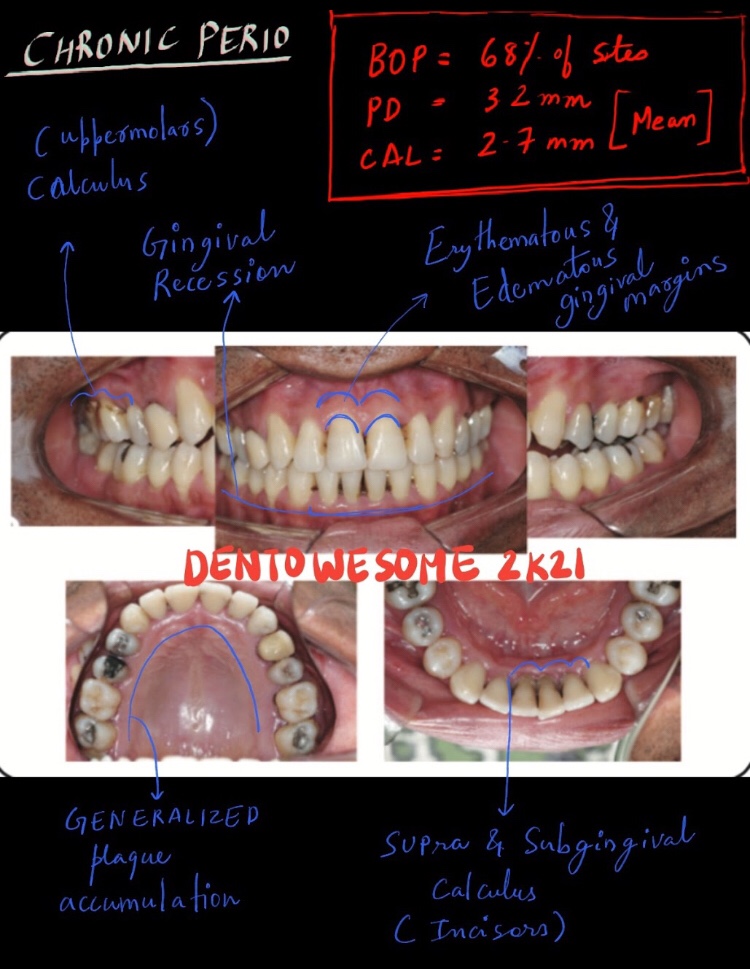
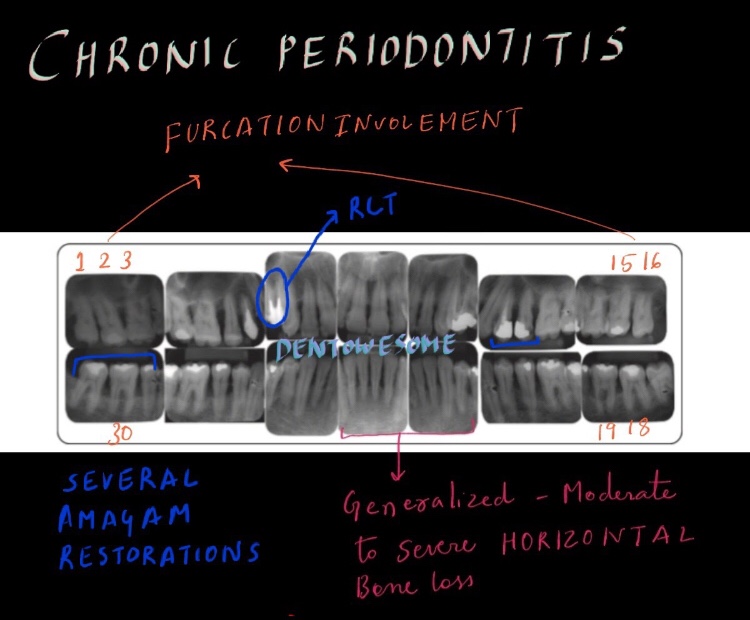
Perio Case 6

Link: https://drive.google.com/file/d/11de2DeD4_Xsh_PeNEW7sbP2l1J1mA5Ns/view?usp=drivesdk

LEARNING GOALS AND OBJECTIVES
􏰁 To be able to identify the clinical features and overall characteristics of chronic periodontitis
􏰁 To be able to list difficulties in the proper diagnosis of early chronic periodontitis
􏰁 To understand possible overlaps with the
diagnosis of aggressive periodontitis

􏰁 To know what clinical changes can be anticipated in the response of chronic
periodontitis to anti-infective therapy

Dentophysics (Part – 3)

Optical properties :

Colour : the colour of dental restorative materials is most commonly measured in reflected light using a colour measuring instrument or a visual method.

Colour measuring instruments

  • Spectrophotometers are amongst the most accurate, useful and flexible instruments for overall colour matching in dentistry. They measure the amount of light energy reflected from an object at 1-25 nm intervals along the visible spectrum
  • Colorimeters measure tristimulus (relating to values giving the amounts of the three colored lights red, green and blue that when combined additively produce a match for the colour being considered) values and filter light in red, green and blue areas of the visible spectrum.

Visual method : A popular system for the visual determination of colour is the Munsell colour system. A large set of colour tabs is used to determine the colour.

  • Value (lightness) is determined first by selection of a tab that most nearly corresponds with the lightness or darkness of the colour.
  • Chroma is determined next with tabs that are close to the measured value but are of increasing saturation of colour.
  • The hue of the colour is determined last by matching with colour tabs of the value and chroma already determined.

Transparence, translucence and opacity:

Opacity is the property of the materials that prevents the passage of light. Translucency is the property of substances that permits the passage of light but disperses the light, so objects cannot be seen through the material. Some translucent materials in dentistry are ceramics, resin composites and acrylics. Transparent materials allow the passage of light so little distortion takes place and objects may be clearly seen through them.

Teeth and oral tissue are translucent and allow passage of some of the incident light. In some individuals, the enamel may be translucent or in rare circumstances transparent.

Flourescence : It is the emission of luminous energy by a material when a beam of light is shone on it. The wavelength of the emitted light is usually longer than that of exciting radiation.

Generally, natural tooth structure also absorbs light of wavelengths which are too short to be visible to the human eye. The energy that the tooth absorbs is converted to light with larger wavelengths in which case the tooth actually becomes a light source. This phenomenon is called flourescence.

In UV light a natural tooth emits a weak whitish-blue flourescence. This should be taking into account when selecting restoratives. If restorative material do not offer this property, they will look dark in UV light and the restored tooth will stand out against the other teeth in the mouth eg. in some stage shows and discotheques.

Metamerism : The appearance of an object depends on the type of light by which the object is viewed. Objects that appear to be colour matched under one type of light may appear very different under another light source. This phenomenon is called metamerism. Hence, selecting a shade of tooth must be done under two different sources of light.

Radiological properties :

Radiopacity may be defined as the quality of a material to obstruct the passage of radiant energy, such as X rays. Thus the materials that inhibit the passage of electromagnetic radiation are called radiopaque. Those that allow radiation to pass more freely are called radiolucent.

Manufacturers add certain elements in many dental materials in order to make them radiopaque. Commonly used elements are heavy metal glasses and metal oxides (zirconium dioxide and ytterbium oxide). Pure polymers like acrylic resins and BISGMA are radiolucent. Composites, ceramics and metals are radiopaque, with metals showing the highest radiopacity. Within the tooth, enamel is more radiopaque than dentin. If the radiopacity of a material is too low, it will not be visible. Generally, a restorative material should have radiopacity slightly greater than that of enamel in order to present a contrast. Radiopacity increases with increase in thickness of a material. Aluminum is used as a standard to measure radiopacity.

Use of magnets in dentistry : they have been used for various applications in orthodontics and prosthodontics. They can be placed within prostheses without being obtrusive.

  • In orthodontics : their main use has been for tooth movement
  • In prosthodontics : they are primarily used as retentive aids in maxillofacial prosthesis and in tooth and implant supported.

source : craig’s and manapalli textbook of restorative materials
Biomechanics of edentulous state

What is biomechanics?

It’s the interaction between the biological environment and the mechanical device that is fixed or removable prosthesis is called as biomechanics.

• They are 2 types of forces that is horizontal and vertical.

• The forces are directed in the vertical direction to the long axis of the tooth. Forces transferred by vertical direction are during mastication, clenching and swallowing.

• The forces transferred by the vertical direction is much more than the horizontal direction.

• The forces transferred by horizontal direction are mainly by the tongue and by perioral musculature.

• The factors for edentulism are trauma, patient’s oral hygiene, ageing , attitude of the patient , diet and financial status.

• If the forces are directed obliquely then the bone remodelling takes place and bone deposition will occur.

• In natural dentition , masticatory forces will be transferred through the periodontal ligament to the bone. The arrangement fibres in periodontal ligament also plays a major role.

• The periodontal ligament acts like a cushion and distributes the masticatory forces.

• The tooth is supported by the periodonium. Hard tissues supporting are cementum and bone and soft tissues are PDL and lamina propria of gingiva covered by the epithelium.

• The load taken up by the natural dentition is 20 kg and that in complete denture wearers is 8 kg.

• The major difference between the natural dentition is the compressibility of PDL and in the complete denture patient the oral mucous membrane has less compressibility to deliver forces.

• Normal mastication – 30 sec. Act of deglutution – 18 sec.

• We swallow about 500 times in a day and masticate about 17 minutes approximately in a day.

Reference :- deepak nallaswamy