Understanding Herbst Appliance Mechanics: The Game-Changing Research Every Orthodontic Student Should Know 🦷⚙️

Hey future orthodontists! 👋 Ready to dive deep into one of the most fascinating pieces of research in functional orthodontics? Today we’re breaking down Voudouris et al.’s groundbreaking study on condyle-fossa modifications during Herbst treatment. This isn’t just another research paper – it’s a paradigm shift that changes how we understand functional appliances!

Why This Research Matters 🎯

For decades, we’ve been taught that functional appliances work through lateral pterygoid muscle hyperactivity. But what if that’s completely wrong? This study flips the script and introduces the revolutionary Growth Relativity Theory.

Study Overview 📊

Study ComponentDetails
Sample Size56 subjects total
Primate Subjects15 cynomolgus monkeys (Macaca fascicularis)
Human Subjects17 Herbst patients + 24 controls
Key Focus8 juvenile primates (24-36 months)
Treatment Duration6, 12, and 18 weeks
Activation Amount4-8mm progressive advancement

The Revolutionary Methodology 🔬

What made this study special? Three cutting-edge techniques that previous research lacked:

1. Permanent EMG Electrodes 📡

  • Old method: Temporary, transcutaneous electrodes
  • New method: Surgically implanted permanent electrodes
  • Muscles monitored: Superior and inferior lateral pterygoid, masseter, anterior digastric

2. Tetracycline Vital Staining 💡

  • Intravenous tetracycline injection every 6 weeks
  • Fluorescence microscopy with UV light
  • Result: Crystal-clear visualization of new bone formation

3. Computerized Histomorphometry 🖥️

  • Quantitative analysis of bone formation
  • Measured area and thickness of new bone
  • Statistical validation of results

The Shocking Results That Changed Everything 😱

What Everyone Expected vs. What Actually Happened

Traditional TheoryActual Findings
⬆️ Lateral pterygoid hyperactivity⬇️ DECREASED muscle activity
Muscle-driven growthViscoelastic tissue-driven growth
Unpredictable resultsConsistent, reproducible changes

Key Findings Summary 📈

  1. Super Class I Malocclusion Development: All experimental subjects developed severe Class I relationships
  2. Glenoid Fossa Remodeling: Forward and downward growth (opposite to natural backward growth)
  3. Condylar Growth Enhancement: Increased mandibular length in all subjects
  4. Muscle Activity Paradox: Growth occurred with DECREASED EMG activity

The Growth Relativity Theory Explained 🧠

Think of it like this: Imagine the retrodiskal tissues as a giant elastic band 🎸 stretched between the condyle and fossa.

Displaced Condyle ←→ [Stretched Retrodiskal Tissues] ←→ Glenoid Fossa
↓ ↓
Radiating Growth Radiating Growth

Clinical Scenario 💭

Patient: 14-year-old with severe Class II, mandibular retrognathism
Traditional thinking: “The Herbst will make the lateral pterygoid muscles work harder to grow the condyle”
Reality: The Herbst creates reciprocal stretch forces that stimulate bone formation through mechanical transduction, not muscle hyperactivity!

Treatment Contributions Breakdown 📊

The researchers found that achieving a 7mm change along the occlusal plane involved multiple factors:

Contributing FactorPercentage Contribution
Condylar Growth22-46%
Glenoid Fossa Modification6-32%
Maxillary ChangesVariable
Dental Changes~30%
Total Orthopedic Effect~70%
Total Orthodontic Effect~30%

Flowchart: Treatment Outcomes by Age

    Patient Age Assessment

┌─────────┴─────────┐
↓ ↓
Juvenile/Mixed Adolescent/Adult
Dentition Dentition
↓ ↓
High Condylar Limited Condylar
Growth Potential Growth Potential
↓ ↓
Significant Fossa Mainly Fossa
+ Condylar Changes Changes Only

Clinical Implications by Age 👶👦👨

Age GroupCondylar ResponseFossa ResponseClinical Recommendation
Juvenile (Mixed Dentition)High ✅High ✅Optimal treatment timing
AdolescentModerate ⚠️High ✅Good treatment timing
AdultLimited ❌Moderate ⚠️Consider alternatives

The Herbst-Block Design Innovation 🔧

Key design feature: 1.5mm posterior occlusal overlays

Why This Matters:

  • Vertical distraction of condyle from articular eminence
  • Prevents condylar resorption
  • Avoids TMJ compression
  • Optimizes stretch forces on retrodiskal tissues

Treatment Timeline and Bone Formation 📅

Progressive Changes Over Time

Time PointBone Formation AreaKey Observations
6 weeksEarly changesExtensive cartilage proliferation
12 weeks1.2mm averagePeak bone formation rate
18 weeksMaximum responseDoubled postglenoid spine thickness

Correlation: r = 0.95 between treatment time and bone formation! 📈

Clinical Decision-Making Flowchart 🗺️

  Class II Patient Evaluation

Age Assessment

┌─────────┴─────────┐
↓ ↓
Mixed Dentition Permanent Dentition
↓ ↓
Herbst with Consider Herbst vs
Occlusal Coverage Alternative Treatment
↓ ↓
Continuous Monitor for:
Activation - Condylar resorption
1-2mm every - Disk displacement
10-15 days - Relapse potential

Key Clinical Takeaways for Practice 💡

Do’s and Don’ts

✅ DO❌ DON’T
Use continuous activationRely on intermittent wear
Include occlusal coverageIgnore vertical dimension
Monitor for 6+ monthsExpect immediate results
Plan retention carefullyAssume permanent changes

Red Flags to Watch For 🚩

  1. Condylar resorption – prevented by proper vertical dimension
  2. TMJ pain – indicates excessive compression
  3. Rapid relapse – inadequate retention period
  4. Disk displacement – poor appliance design

The Retention Challenge 🔄

Critical Finding: Without adequate retention, positive condyle-fossa changes can relapse due to:

  • Return of anterior digastric muscle function
  • Perimandibular connective tissue pull
  • Natural tendency for condyle to seat posteriorly

Retention Protocol Recommendations:

  • Minimum 6 months active retention
  • Progressive reduction of appliance wear
  • Monitor muscle reattachment process
  • Long-term follow-up essential

Clinical Scenario Application 🎯

Case: 13-year-old female, Class II Division 1, severe mandibular retrognathism

Treatment Plan Based on Research:

  1. Herbst with occlusal coverage (NOT standard Herbst)
  2. Progressive activation 1.5mm every 2 weeks
  3. 12-week minimum treatment duration
  4. Expect 70% orthopedic response
  5. Plan extended retention phase

Expected Outcomes:

  • Forward fossa remodeling
  • Increased mandibular length
  • Super Class I result requiring finishing
  • Need for comprehensive retention protocol

Future Implications 🔮

This research suggests that functional appliances should be renamed “dentofacial orthopedic appliances” because they work through:

  • Viscoelastic tissue forces
  • Mechanical transduction
  • Growth modification, NOT muscle function

Study Limitations and Considerations ⚖️

Strengths:

  • Rigorous methodology with multiple validation techniques
  • Control groups and statistical analysis
  • Novel technological approaches

Limitations:

  • Animal model – translation to humans requires validation
  • Small sample size – justified but limits generalizability
  • Short-term follow-up – long-term stability unknown

Conclusion: Changing Clinical Practice 🎯

This groundbreaking research fundamentally changes how we understand functional appliances. The key shifts in thinking:

  1. From muscle hyperactivity → To tissue stretch forces
  2. From unpredictable results → To consistent orthopedic changes
  3. From simple tooth movement → To complex TMJ remodeling
  4. From empirical treatment → To evidence-based protocols

Memory Aid for Boards 📚

“VOUDOURIS RULES” 🧠

  • Viscoelastic forces drive change
  • Occlusal coverage prevents resorption
  • Undermining old muscle theories
  • Decreased EMG activity during growth
  • Orthopedic effects dominate (70%)
  • Underaged patients respond best
  • Retention critical for stability
  • Inferior-anterior fossa growth
  • Super Class I results expected

Questions for Self-Assessment 🤔

  1. What percentage of Herbst treatment effects are orthopedic vs orthodontic?
  2. Why does EMG activity decrease during successful treatment?
  3. What prevents condylar resorption in Herbst appliances?
  4. At what age is condylar growth potential highest?
  5. What is the Growth Relativity Theory?

Remember: This research doesn’t just change what we know about Herbst appliances – it revolutionizes our understanding of functional orthodontics entirely! 🚀

Keep studying, future orthodontists! The field is constantly evolving, and staying current with research like this will make you better clinicians. 📖✨
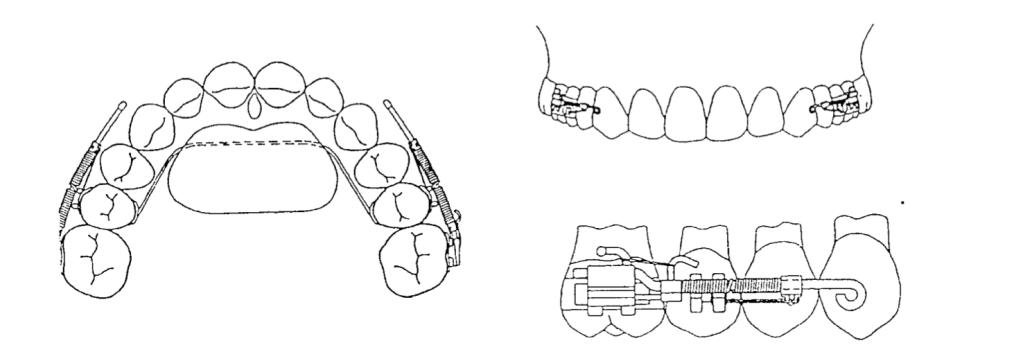
Evaluation of the Jones jig appliance for distal molar movement

What is the Jones Jig Appliance?

Orthodontic treatment often requires space creation to align teeth properly. One effective way to achieve this is through molar distalization—moving the upper first molars backward to make room for crowding or to correct bite discrepancies. Traditionally, orthodontists have relied on headgear, Class II elastics, and removable appliances, all of which require patient compliance (and we all know how reliable that is! 🙄).

But what if there was a more predictable, fixed alternative?

Enter the Jones Jig Appliance—a fixed, non-compliance-based distalizing appliance designed to move molars efficiently without relying on patient effort.

How Does the Jones Jig Work?

✔ Palatal Button – A 0.5-inch diameter acrylic button, anchored to the maxillary second premolars using a 0.036-inch stainless steel wire for stability.
✔ Jones Jig Arms – One arm fits into the 0.045-inch headgear tube, while the other fits into the slot of the first molar band.
✔ Nickel-Titanium Spring – A 0.040-inch coil spring delivers a controlled force of 70-75 g to push the molars backward.

Once the Jones Jig is cemented, it is activated by tying the activation loop with a 0.010-inch ligature off the bracket of the anchoring tooth. This ensures continuous force application.

The coils are then reactivated every 4 to 5 weeks until the desired molar movement is achieved.

Once activated, the appliance applies a gentle but continuous distal force on the upper first molars, moving them backward over time. The best part? Since it’s fixed, patients don’t have to remember to wear it, making treatment more reliable.

Advantages of the Jones Jig

✅ No Patient Compliance Needed – Unlike headgear, patients don’t have to wear or adjust it.
✅ Continuous Force Application – The coil spring ensures a steady force for predictable movement.
✅ Faster Treatment Time – Studies show that molars can be distalized in 4-6 months.

While the Jones Jig is highly effective, it does come with some considerations:
🔹 Molar Tipping – Instead of bodily movement, molars may tip distally, requiring additional mechanics for uprighting.
🔹 Anchorage Loss – The anterior teeth may shift forward slightly, which may need to be controlled with TADs (temporary anchorage devices) or a transpalatal arch (TPA).

Does the Eruption of Second Molars Affect Treatment?

When using the Jones Jig Appliance for molar distalization, orthodontists must consider various factors that can influence treatment outcomes. One key question is: Does the eruption of second molars impact molar movement and anchorage loss?

A study evaluating 72 patients explored this question by comparing cases with erupted vs. unerupted maxillary second molars to determine how they affected the type and amount of molar movement and anchorage loss.

Study Findings: Second Molar Eruption and Its Effects

Researchers divided the patients into two groups:

GroupCondition of Second MolarsKey Observations
Group 1 (28 patients)Unerupted second molars (below the cementoenamel junction of the first molar)Less anchorage loss in premolars and incisors, potentially more controlled molar movement.
Group 2 (44 patients)Erupted second molars (not banded or bonded)More anchorage loss observed, possibly due to resistance from the second molars.

The presence or absence of second molars plays a significant role in the effectiveness of molar distalization. Patients with unerupted second molars may experience better molar movement with less anchorage loss, while those with erupted second molars may require additional anchorage support. In cases with erupted second molars, additional anchorage reinforcement (e.g., TADs or a transpalatal arch) may be necessary to prevent undesired movement.

Study Findings: How Far Did Those Molars Go?

retrospective study of 72 patients using the Jones Jig showed:

Tooth MovementMean ChangeTipping AngleComparison to Other Appliances
Maxillary First Molar2.51 mm distal movement7.53° distal tipping
(meaning they didn’t just move—they leaned back like someone dodging responsibility. 😅)
Similar to Herbst, Wilson Mechanics, and Pendulum Appliance 📏
Maxillary Second Molar1.79 mm distal movement
(Not as much as the first molar, but still making progress! 🔄)
8.03° distal tipping
(tipped even more than first molars)
0.71 mm extrusion observed 📉
(suggests that second molars are like that one friend who always stands out in group photos. 📸)
OverjetIncreased 0.45 mm

If necessary, J-hook headgear or Class II elastics can help maintain anchorage.
2.21° incisor proclination

(much less than the 6° seen in other studies. So, while there’s some flaring, it’s not enough to make your patient look like Bugs Bunny. 🐰)
Less flaring than with Pendulum & Repelling Magnets 😎

Less than the 1.30 mm increase seen with the Pendulum appliance and the 1.60 mm increase with repelling magnets.
OverbiteDecreased 1.28 mmImproved vertical control compared to other appliances 📊

Anchorage Control: Because We Don’t Want Molar Tipping Running the Show

Distalizing molars is great, but uncontrolled tipping? Not so much. Here’s where anchorage control steps in like a responsible chaperone at a high school dance.

✅ Use a Nance holding arch, utility archwire, or stopped archwire to keep those molars in check.
✅ Short Class II elastics can help move the premolars and incisors back once the molars are in position.
✅ J-hook headgear can reinforce anchorage (for the brave souls who still prescribe it).

Molar Extrusion: Is It a Big Deal?

One concern with distalization is molar extrusion—but does the Jones Jig make teeth “float away”? Not really.

🔹 Jones Jig Patients:

  • Males: 3.17 ± 1.79 mm of extrusion
  • Females: 1.33 ± 1.38 mm of extrusion

🔹 Untreated Class I Patients (for comparison):

  • Males: 4.1 ± 3.1 mm
  • Females: 1.9 ± 2.2 mm

📌 Takeaway?
The extrusion in Jones Jig patients is within normal growth changes. So, unless your patient is trying to float their molars into the stratosphere, this isn’t a major concern. 🚀

Jones Jig vs. Headgear: Any Real Difference?

The study found no statistically significant differences between the Jones Jig group and a matched Headgear groupwhen evaluating:

✅ Maxillary first molar position
✅ Maxillary central incisor angulation
✅ Linear position of incisors
✅ Overjet & Overbite changes

So, if you’re an orthodontist who loves avoiding unnecessary patient lectures about compliance, the Jones Jig might be your new best friend. 🎉

Treatment Comparison: Who Wins?

Treatment ModalityPatient Compliance Needed?Molar Distalization (mm)Overjet Change (mm)Overbite Change (mm)
Jones Jig Appliance❌ No compliance needed2.51 mm+0.45 mm-1.28 mm
Cervical Headgear✅ Requires compliance 😬2.50 mm+0.40 mm-1.30 mm
Class II Elastics✅ Requires compliance 🙄Varies (depends on use)Greater risk of overjet increaseLess predictable molar control

📌 Takeaway?
The Jones Jig does everything headgear does—without the compliance drama. It’s like getting straight A’s without ever studying (if only life worked that way 😆).

Final Verdict: Is the Jones Jig Worth It?

✔ YES! If you want a fixed, predictable, non-compliance-dependent way to correct Class II malocclusions, the Jones Jig is a great choice.

✔ Same results as headgear—without the teenage rebellion.

✔ Minimal anchorage loss compared to other distalization appliances (no crazy overjet increase).

✔ Less annoying for patients = less annoying for you. 😆

Braces-Friendly Diet: Foods You Can Enjoy

So you’ve got the braces thing going on, huh? A journey to a stellar smile, no doubt! But let’s face it, chomping down on everything from apples to samosas can be a real drag with those metal friends attached. Fear not, fellow food enthusiasts, for this guide will turn you into a braces-wearing, balanced-diet boss!

Carbs: Your Chapatti and Rice BFFs

Lucky you! Most grains are soft and chew-friendly. Pile on the fluffy rice, indulge in those melt-in-your-mouth rotis (dunk ’em in dal for extra protein power!), and enjoy that breakfast bread (just maybe avoid the rock-hard baguettes for now). Discomfort? Mash those chapattis into a delightful curry and rice symphony – your taste buds and braces will thank you.

Dairy: Your Calcium Cavalry

Milk, yogurt, cheese – the holy trinity of strong teeth and happy braces! They’re soft, delicious, and pack a calcium punch. Bonus points for milkshakes (because, hello, who doesn’t love a good milkshake?), but go easy on the sugar. Think of yourself as a calcium crusader, venturing forth with every spoonful of yogurt!

Veggies: Your Mashed Marvels

Ah, vegetables – the dietary champions! Most Indian meals involve cooked veggies, which are a breeze for braces. Feeling a bit adventurous? Mash them up for extra comfort. Need a raw veggie fix? Grate those carrots or chop your salad into bite-sized pieces. Just remember, you’re not a superhero (yet!), so skip the superhero-sized bites.

Fruits: Your Juicy Jewels (with a Few Caveats)

Fruits – the colorful crew that adds sweetness to life! But with braces, things can get a little tricky. Apples? Unless you’re feeling like a dental daredevil, cut them up. Unripe pears and peaches? Give them a side-eye. Feeling extra tender after a wire change? Citrus fruits and berries are your new best friends. Remember, if all else fails, fruit juice is always a healthy option. Just a heads-up, though, chomping on icy-cold fruits might not be the most pleasant experience with all that metal in your mouth. Let your food warm up a bit for a friendlier feast.

Nuts & Seeds: Your Sneaky Saboteurs (But We Can Work With Them)

Okay, nuts and seeds – they’re delicious, nutritious, but a real challenge for braces. Here’s the deal: during your orthodontic adventure, swap those whole nuts for nut butters (think creamy peanut butter heaven!) or coarsely grind your favorite seeds. This way, you get the goodness without the potential for a braces breakdown.

Meat: Your Tender and Chopped Champs

Meat – the protein powerhouse! Unfortunately, it can be a bit fibrous and tough on braces. Here’s the golden rule: avoid gnawing on meat straight off the bone (think of your teeth, not your inner caveman). Tofu and cottage cheese are great protein alternatives, but if you must have meat, choose lean, tender cuts and chop them into bite-sized pieces.

The Absolute No-Nos: Your Braces’ Nightmares

Now, let’s talk about the foods that would make your braces weep. Gum (both sugary and sugarless) is a big no-no. Sticky candies? Forget about it. Hard foods like whole nuts (unless grinded), popcorn, corn on the cob, pizza crusts (sorry!), ice, and cookies are strictly off-limits. Think of them as villains in your quest for a perfect smile.

Remember: Consistency is key! Stick to this guide, embrace some creativity in the kitchen, and you’ll be a braces-wearing, balanced-diet pro in no time. Now go forth and conquer that delicious, nutritious world, one bite at a time (and maybe cut that bite in half)!