Soft-tissue management of labially positioned unerupted teeth

When orthodontists treat unerupted or impacted teeth (especially in the anterior region), several complications can occur:

  • Tooth devitalization (loss of vitality)
  • Re-exposure or uncovering after surgery
  • Ankylosis (tooth fused to bone)
  • External root resorption
  • Damage to adjacent teeth
  • Marginal bone loss
  • Gingival (gum) recession

➡️ These complications can prolong treatment, cause esthetic problems, and even lead to tooth loss.

Why These Problems Happen

Historically, clinicians focused on surgically exposing the tooth (“uncovering”) to bring it into the arch.
However, the soft tissue (gingiva) around the tooth was often not given enough attention.

Most early surgical techniques, such as “simple complete exposure,” focused only on getting to the tooth, without considering:

  • What kind of mucosa (attached gingiva vs. alveolar mucosa) covered it
  • How that tissue would behave once orthodontic movement began

Why Soft Tissue Type Matters

There are two main kinds of oral mucosa:

  1. Attached gingiva (masticatory mucosa):
    • Firm, tightly bound to bone
    • Designed to resist mechanical stress and prevent muscle pull on the gum margin
    • Ideal marginal tissue around a tooth
  2. Alveolar mucosa:
    • Movable, thin, and elastic
    • Poor at resisting muscle pull or inflammation
    • Not suitable as a marginal tissue

If a tooth is uncovered and surrounded only by alveolar mucosa, the tissue tends to get inflamed easily, which can lead to bone loss and gingival recession as the tooth is moved orthodontically.

What the Ideal Surgical Approach Should Do

Instead of just exposing the tooth, the surgical goal should be to:

  • Ensure that a band of attached gingiva surrounds the crown once the tooth is exposed.
  • Create a healthy, functional marginal tissue environment before starting tooth movement.

This provides several key advantages:

  1. Prevents the need for repeated dressings or barriers to keep the tooth exposed
  2. Allows faster and smoother tooth movement (no soft-tissue obstruction)
  3. Prevents gingival recession and bone loss during orthodontic traction

Why Inflammation Is a Risk Factor

Periodontal experience shows that tooth movement in the presence of inflammation is risky — it can accelerate bone loss.
Since alveolar mucosa is prone to inflammation, it’s unsafe to move a tooth unless it’s surrounded by healthy attached gingiva.

Thus, the uncovering procedure must integrate periodontal principles — ensuring that the final gingival condition supports tooth health and stability.

ORTHODONTIC CONSIDERATIONS BEFORE SURGERY

Why create space before uncovering the tooth?

There are two main reasons:

  1. For eruption and alignment:
    • If adequate space isn’t available in the arch, the unerupted tooth has no place to move into.
    • So, before any surgical exposure, orthodontic space creation ensures there’s enough room for the tooth to erupt or be moved into proper alignment.
  2. For surgical soft-tissue management:
    • The edentulous (toothless) space left in the arch is covered by attached gingiva, which can be used as a donor site.
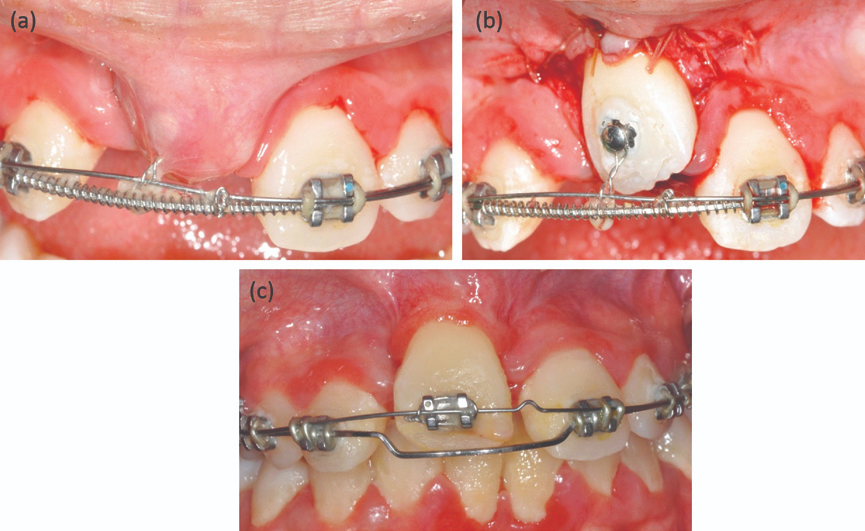
    • This tissue can then be repositioned apically or laterally as a partial-thickness flap to cover the exposed tooth crown after surgery — ensuring the presence of healthy, attached gingiva around the tooth.

SURGICAL PROCEDURE: STEP-BY-STEP LOGIC

Anesthesia and incision:

  • Local infiltration anesthesia is administered.
  • The surgeon makes an incision along the ridge in the edentulous area — where the impacted tooth lies beneath.

Determining incision design:

  • The height (incisogingival dimension) of the incision depends on how much attached gingiva is present on the adjacent teeth or its opposite tooth (antimere).
  • If there’s plenty of attached gingiva nearby, a larger flap can be created and repositioned.

Flap elevation and bone removal:

  • Vertical releasing incisions are made to free the attached gingiva.
  • Connective tissue over the unerupted tooth is gently removed.
  • Bone is removed only up to the height of contour of the crownnot beyond the cementoenamel junction (CEJ).

⚠️ Why stop at the CEJ?
Because this is the zone where the dentogingival attachment (junctional epithelium + connective tissue attachment) naturally forms.
If bone is removed beyond the CEJ, it can disrupt this zone and increase the risk of gingival recession — something confirmed in animal (monkey) studies.

PLACEMENT OF ATTACHED GINGIVA (THE GRAFT STEP)

Where and why to place it:

  • The graft (attached gingiva) is positioned to cover:
    • The CEJ, and
    • About 2–3 mm of the crown.

This positioning serves three biologic and mechanical purposes:

  1. Establishing stable attachment:
    • It helps form a healthy supra-alveolar connective tissue attachment between the tooth root (cementum) and alveolar bone.
    • This ensures periodontal stability and prevents bone loss.
  2. Creating a proper epithelial seal:
    • Masticatory mucosa (keratinized attached gingiva) provides a strong, protective epithelial barrier.
    • This seal prevents bacterial ingress and inflammation — something alveolar mucosa cannot achieve.
  3. Allowing safe tooth movement:
    • As the tooth is orthodontically pulled into the arch, tension develops in the gingiva.
    • If the gingiva is attached higher (more coronally), it can accommodate slight apical repositioning during movement without losing its protective role.
    • In simpler terms — the gum margin “moves with the tooth” instead of receding.

POST-SURGICAL STEPS

  • Sutures are placed on both sides (mesial and distal) to hold the graft stable over the tooth.
  • periodontal dressing is placed for 7–10 days to protect the surgical site and allow:
    • Reattachment of the tissue to the tooth
    • Epithelial healing over the area
  • Once the dressing is removed:
    • bonded orthodontic bracket is attached directly to the tooth.
    • Light orthodontic forces are applied immediately to begin eruption or alignment.

🔑 Light force is critical — it allows physiologic movement without jeopardizing the new soft tissue attachment.

Why This Method Works Better

The described surgical exposure technique (with attached gingiva placement) is particularly advantageous for teeth with delayed or retarded eruption.
It provides both biologic and mechanical benefits that improve eruption success and tissue health.

What Actually Delays Eruption: Bone or Soft Tissue?

  • Traditionally, it was thought that bone acts as the main physical barrier delaying eruption.
  • However, clinical and biologic observations show that this is not true unless the tooth is ankylosed (fused to bone).

👉 The rate of bone remodeling (turnover) is actually faster than the rate of remodeling in the overlying soft tissue.

➡️ Therefore, the soft tissue — not the bone — is often the main factor that slows eruption or impedes tooth movement.

Managing Long-Distance Tooth Movement

When a tooth has to travel a large distance to reach the arch:

  • The surrounding gingiva may begin to “bunch up” as the tooth moves.
  • In such cases, minor excision of excess tissue may be required to achieve:
    • Ideal gingival contour,
    • Correct tooth positioning,
    • Long-term posttreatment stability.

The key to managing delayed eruption lies not in removing more bone but in controlling and reconstructing the soft tissue environment.
Creating a zone of attached gingiva around the uncovered tooth transforms the biologic response, allowing stable eruption and long-term periodontal integrity.
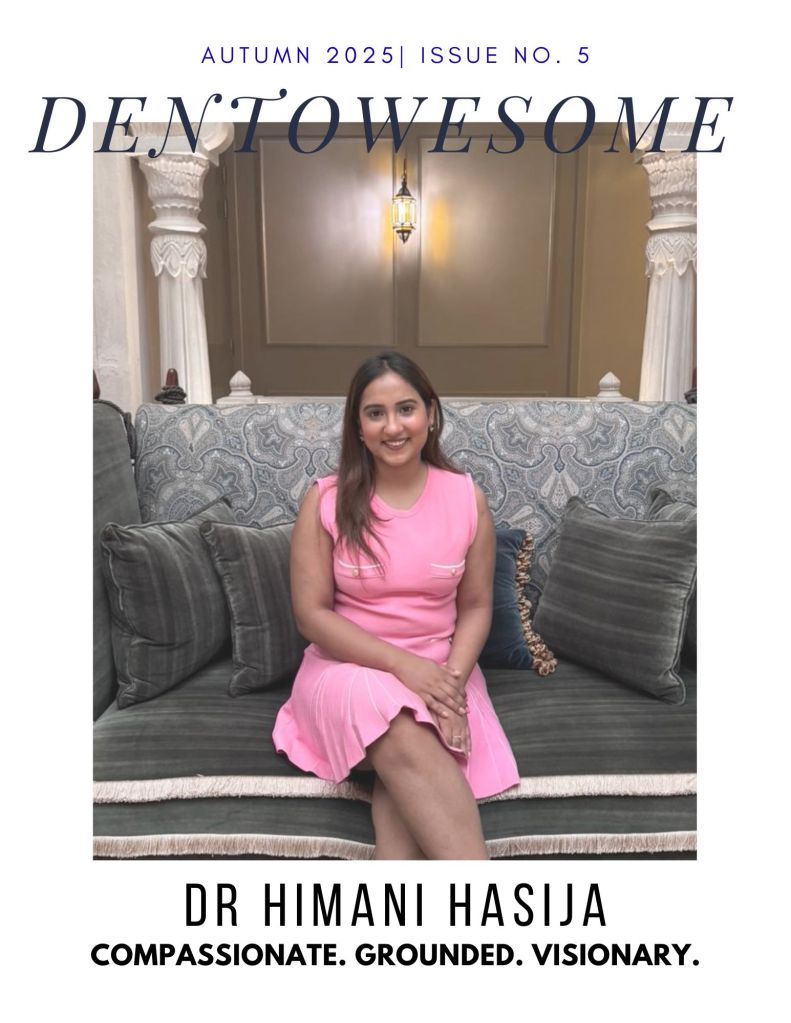
Cup Of Coffee With Dr Himani Hasaji

1. How did your journey in the dental profession begin, and what were the milestones that shaped it?

From the very beginning, I knew I didn’t just want to be a dentist — I wanted to be a holistic dentist. For me, that meant stepping into every kind of setup possible. I’ve worked in super glam, high-end clinics where patient detailing and experience matter the most, in fast-paced corporate chains where efficiency and systems rule, and in CGHS/government setups where limited resources challenge your creativity and compassion.

Each of these experiences shaped me in unique ways — teaching me empathy, precision, and adaptability — lessons I carry into my practice every single day.

2. What inspires you to stay passionate and committed to dentistry, even during challenging times?

People inspire me. Over the years, I’ve noticed a beautiful shift — patients today are genuinely curious about their smiles. They ask questions, they care about their oral health, and they’re invested in improving it. Seeing how a small change — sometimes as simple as aligning a tooth or improving a shade — can completely transform someone’s confidence is what keeps me going. And of course, dentistry allows me to be my own boss — a privilege that pushes me to stay committed and creative, even during tough days.

3. Who is your role model in dentistry, and how have they influenced your professional journey?

My biggest inspiration is Dr. Shruti from MAIDS. She’s done both her BDS and MDS there, and what amazes me most is her discipline. Even today — while managing family life and raising two kids — she studies for a few hours every single day. That level of dedication reminds me that dentistry isn’t a career you complete; it’s a lifelong learning journey.
I aspire to bring that same philosophy to my practice — to always stay updated so my patients receive care that’s rooted in both compassion and the latest science.

4. How do you balance academics, work, and personal interests?

For me, balance isn’t optional — it’s essential. Dentistry can be intense, so I make sure to pause and recharge when needed. I’ve even taken two-month breaks between jobs just to travel, rest, and reset before starting fresh. Some people might think that’s unconventional, but that balance fuels my best work.
When you’re happy and fulfilled outside the clinic, you naturally become a more patient, empathetic, and focused dentist inside it.

5. What advice would you give to dental students and young professionals?

The early stages can be tough — there’s little earning, lots of expenses, and often a sense of uncertainty. But don’t let that phase define you. Use that time to learn, document, and grow.
Keep updating your skills and build expertise in areas your peers might overlook. When you do that, you create your own niche — and patients will value that uniqueness.
Remember, confidence comes from competence. Keep learning, and everything else will follow.

💎 A Smile That Reflects a Life Well-Lived

Dr Himani Hasaji’s story is more than a professional journey — it’s a lesson in purpose, balance, and evolution. She’s not just crafting smiles; she’s crafting a philosophy that blends science, art, and humanity.

Cup Of Coffee With Dr Janhavi Bangar

From wax carvings to real-life artistry — Dr Janhavi Bangar’s journey through dentistry is a story of growth, grit, and genuine passion. In this candid interview, she opens up about the milestones that shaped her, the mentors who molded her mindset, and the balance between precision and play in her life as a young dentist.

Beginnings: Finding Meaning in Every Milestone

1️⃣ Can you share how your path in the dental profession began and the key milestones that shaped it?

Honestly, my path started a bit like a wax carving — rough at the edges but shaping into something meaningful. One of my earliest “wow” moments was assisting in an implant surgery. I remember thinking, “We literally put screws into bone and call it art — this is wild and fascinating!” Another turning point was getting 73% in my first year. It wasn’t just a grade; it was proof that I could actually be good at this. Then came the decision to pursue masters and later my internship at GDC Mumbai as an extern — that’s where it clicked: Yes, MDS is my road. Each of these milestones felt like building blocks, shaping not just my career, but also my confidence in it.

Passion That Persists: Finding Joy in Every Smile

2️⃣ What inspires you to stay passionate and committed to dentistry, even during challenging times?

For me, it’s simple — dentistry gives me the rare privilege of seeing the impact of my work almost instantly. A patient walks in hiding their smile, and after treatment, they walk out grinning ear to ear. That transformation, that joy — it’s addictive. It reminds me every day why I chose this. Sure, there are tough times — long hours, endless reading, sometimes frustrating cases — but then I remember what Dr. G.V. Black, the father of modern dentistry, once said: “The professional man has no right to be other than a continuous student.” So even when I’m tired, the idea that I’m constantly learning while helping someone regain their smile keeps me moving.

Mentorship and Inspiration: The People Behind the Progress

3️⃣ Who is your role model in the dental field and how has this person influenced your approach to patient care, academics, or professional growth?

It’s impossible to pick just one — every mentor I’ve had has shaped me in some way, like different teeth in the same arch, each serving its unique function.

  • Dr. Swati Pustake has been my guiding light. Her calmness in difficult situations taught me lessons that no textbook ever could.
  • Dr. Bikash Pattnaik inspires me daily with his combination of brilliance and humility — he’s living proof that academics, health, and fun can coexist beautifully.
  • Dr. Komal Majumdar and Dr. Moez are orators who can hold a room’s attention like no one else — they’ve shown me that communication is just as vital as clinical skill.

Together, they’ve shaped my philosophy: dentistry isn’t just about perfecting your hand skills — it’s about shaping your mindset, resilience, and ability to connect with people.

Balance Beyond the Clinic: Living Life Fully

4️⃣ Could you discuss the strategies you use to manage academic responsibilities alongside your personal interests or hobbies?

My strategy is simple: dentistry is a part of my life, not my entire life. On most days, I’m the dedicated student, clinician, and resident — working 12–13 hours if needed. But I’ve also promised myself that I won’t lose out on living. That one free day or Sunday, I make sure I really live — whether it’s brunch with friends, a trek, volleyball, painting, creating content, or even participating in college fests and fashion shows. After all, what’s the point of being a prosthodontist if you don’t know how to fix the “missing tooth” of fun in your own life? As the saying goes, “Don’t get so busy making a living that you forget to make a life.”

Words of Wisdom: Lessons for Aspiring Dentists

5️⃣ What advice would you give to current dental students and aspiring dentists?

My biggest advice is have clear intent, stronger than your luting cement. Dentistry is demanding, yes, but if your values are strong ,whether it’s honesty in studies, compassion in patient care, or integrity in friendships , you’ll stand strong no matter what. Patients can always sense genuine energy; if you’re invested in them, half the treatment is already successful.

And don’t forget to have fun along the way , pursue the things you’re passionate about outside dentistry too, because that joy will reflect in the kind of dentist you become. Like Dr. William Osler said: “The good physician treats the disease; the great physician treats the patient who has the disease.” I’d like to believe the same applies to us: “The good dentist restores the tooth; the great dentist restores the smile — and the person behind it.”

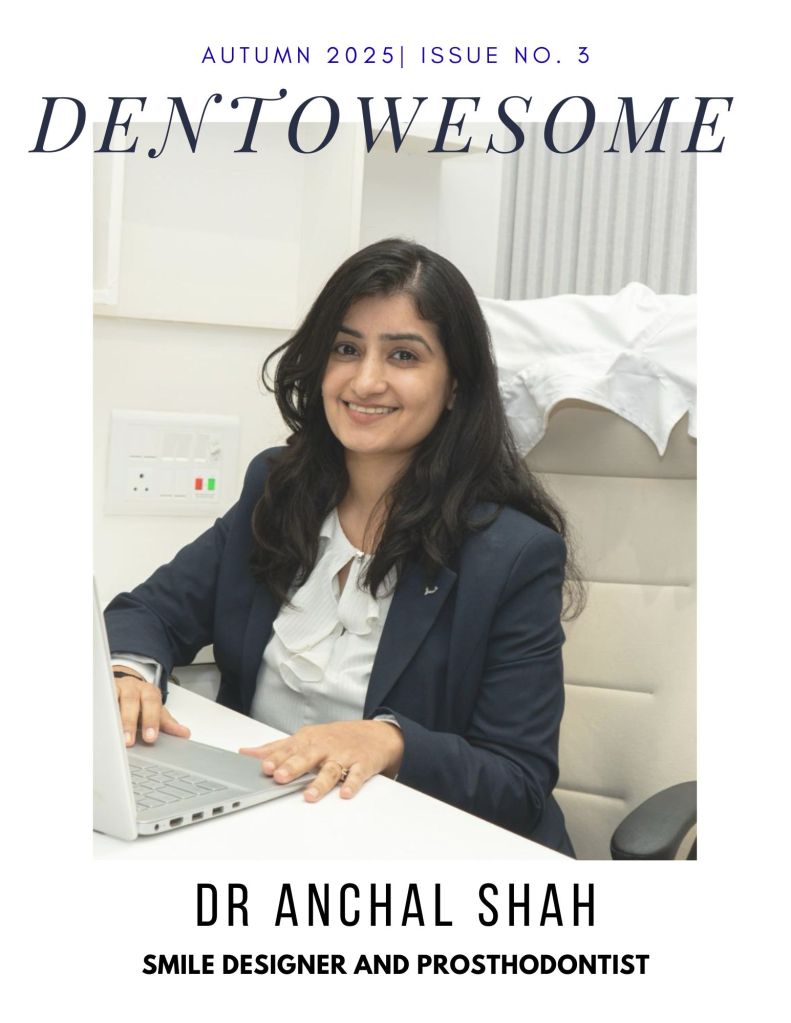
Cup Of Coffee with Dr Anchal Shah

Every smile has a story, and so does every dentist who crafts them. In this exclusive conversation, we sit down with Dr. Anchal Shah, Prosthodontist at Dr. Shah’s Smile Studio, to learn about her inspiring journey—from a childhood fascination with chocolates to rebuilding lives through maxillofacial prosthetics.

1) Can you share how your path in the dental profession began and the key milestones that shaped it?

✨ Childhood:
It’s funny how a simple love for chocolates led me toward a world I never imagined—dentistry. What began as curiosity slowly transformed into passion.

✨ BDS Days:
The first two years were honestly tough. I often felt lost, wondering why I was spending hours working on baseplates or burning my fingers. But once clinics began, everything changed. I discovered joy in the smallest things—making dentures, performing extractions, or the adrenaline rush of placing my first suture.

✨ The Big Leap:
I always dreamt of specializing in Prosthodontics. My first NEET MDS attempt didn’t work out, but I refused to give up. Taking a drop year was challenging, but it became one of the best decisions of my life. The effort paid off with AIR 66and admission to my dream college.

✨ Shaping My Purpose:
Training under legends in Maxillofacial Prosthodontics gave me a mission bigger than myself—helping oral cancer survivors regain not just their smile, but their confidence and dignity.

✨ Where I Am Today:
At Dr. Shah’s Smile Studio, I blend skill with compassion. My approach is holistic—every smile matters, every pain deserves care, and every patient’s story reminds me why I chose this path.

2) What inspires you to stay passionate and committed to dentistry, even during challenging times?

Dentistry, like life, isn’t always smooth. Some days are tough—when cases get complicated, outcomes don’t go as planned, or the weight of responsibility feels overwhelming.

On those days, I remind myself of two things:

🌱 How far I’ve come:
From a confused BDS student burning my fingers on a baseplate to securing AIR 66 and finding my calling in Prosthodontics—every struggle has shaped me.

💡 Why I started:
It was never just about teeth. It’s always been about people—their pain, their confidence, and their smiles. Watching a patient smile again after years is the kind of reward that keeps me going.

Every difficult moment becomes lighter when I remind myself of this:
👉 I didn’t come this far to give up. I came this far to make a difference

3) Who is your role model in the dental field and how has this person influenced your approach to patient care, academics, or professional growth?

I owe so much to my mentors.

• Dr. Rupal Shah, my postgraduate guide and Head of Department, taught me how much can be achieved with so little in hand. Her resourcefulness and patient-centered care continue to inspire my daily practice.

• Dr. P. C. Jacob, my mentor in oral cancer rehabilitation, showed me the power of perseverance and empathy in dealing with some of the most complex and emotionally demanding cases.

Their teachings shaped my outlook—not just as a clinician, but as a human being who believes in healing beyond treatment.

    4) Could you discuss the strategies you use to manage academic responsibilities alongside your personal interests or hobbies?

    Dentistry can easily consume your entire day, but I’ve learned that balance is key. Keeping my small passions alive keeps me grounded.

    For me, it’s listening to podcaststuning into music, or watching a good movie.
    Podcasts give me new perspectives, music uplifts my mood instantly, and movies help me pause and reset.

    Even 20–30 minutes a day can make a difference. You don’t need hours for hobbies—just intention.
    These little joys refill my energy, empathy, and creativity, helping me return to dentistry with a refreshed mind.

    Because while dentistry defines my work, my hobbies remind me who I am.

    5) What advice would you give to current dental students and aspiring dentists?

    Don’t rush to have it all figured out. It’s completely normal to feel lost in the beginning—to question your path, or to wonder why you’re spending endless hours perfecting a baseplate or bending wires.

    Trust the process. Those small, repetitive tasks are building your foundation—your patience, precision, and perseverance.

    Stay consistent. Stay curious. And don’t fear setbacks. One exam, one failure, or one tough day doesn’t define your journey—your persistence does.

    Most importantly, never forget why you started.
    Dentistry is not just about teeth—it’s about people, their confidence, and their smiles.

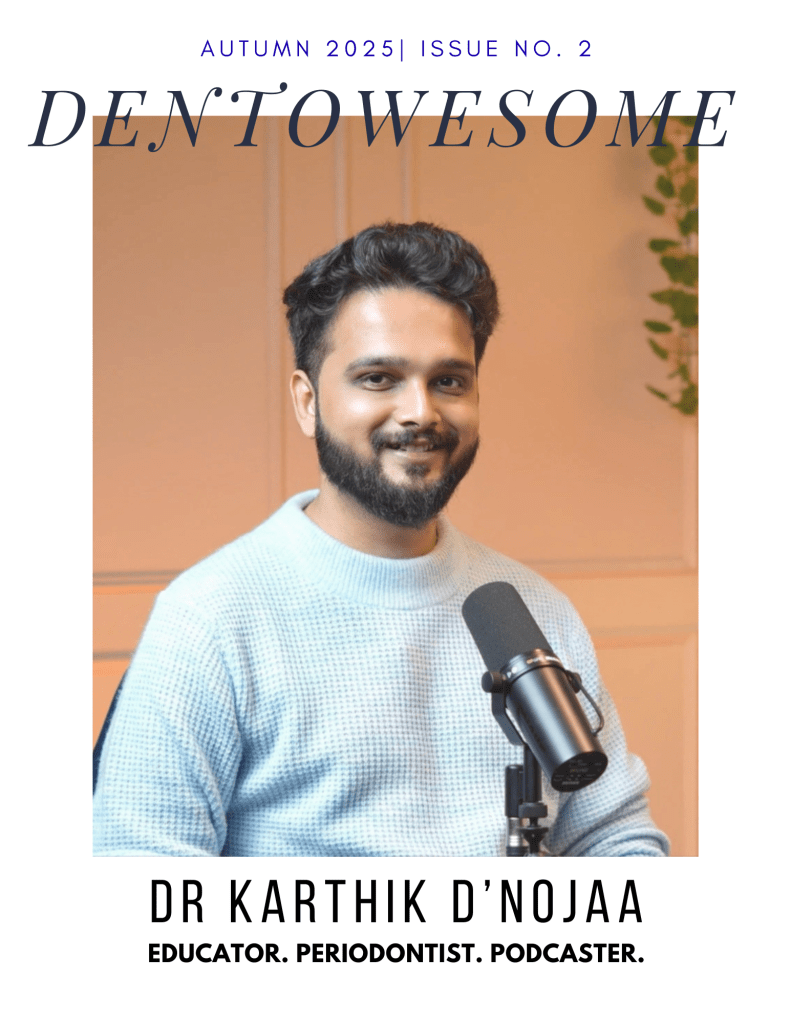
    Cup of Coffee with Dr Karthik D’nojaa

    🎙️ From Scalpel to Spotlight: A Candid Chat with Dr. Karthik

    MDS Periodontology | Educator | Host of the India’s Most Famous Dentist Podcast | Winner of the Golden Mic Award for Best Dental Podcast

    If you’ve scrolled through dental Instagram lately or tuned into any student-friendly podcast, chances are you’ve come across Dr. Karthik. Known for his calm voice, creative visuals, and deep conversations on the India’s Most Famous Dentist Podcast, he’s someone who makes dentistry feel a little less intimidating—and a lot more inspiring.

    We caught up with him to talk about his journey, his motivation, and his advice for the next generation of dentists.


    🦷 Q1. So, Dr. Karthik—where did it all begin? What pulled you into dentistry?

    I think I was always inclined toward the artistic side of things. Even before dentistry, I’ve had this natural urge to focus on precision and the smaller details – whether it was sketching, filmmaking, or editing. I’ve always believed that creativity and precision go hand in hand. Those who’ve seen my videos or podcast visuals probably notice that – my team and I put a lot of thought into how things look and feel, because I think dentistry is also an art form.

    So for me, it wasn’t a trickle-down choice or a backup plan. Dentistry – and especially periodontics matched that part of me that loves design, structure, and creating something that lasts. It gave me a space where art, science, and communication meet – and that’s what continues to drive me every day.

    I think I’ve always had this curiosity to understand how things work – especially the human body. During my early years, I could spend hours with anatomy, physiology, pharmacology, or medicine textbooks. They completely fed that curiosity of knowing how the body is designed and how it functions.

    But soon, I realized that knowing wasn’t enough – I had this restless urge to do something with that knowledge. I’m a very hands-on, high-energy person, so I naturally gravitated toward dentistry. The pre-clinical labs – wax patterns, tooth carvings, crown preparations – all of that gave me a creative outlet.

    Then came the clinical years – Conservative Dentistry, Prosthodontics, Periodontics, Oral Surgery, Orthodontics, Oral Medicine and Radiology, Pedodontics and Public health Dentistry – and that’s when I really found my rhythm. Periodontics especially connected deeply with me because it’s where precision meets biology. You can see what you’re working on, and every millimetre matters – it matched my personality perfectly.

    Over time, those experiences shaped how I approach not just treatment, but also communication whether it’s through my podcast, my content, or my work with students and clinicians. Each phase was a milestone that built both the clinician and the creator in me.


    💪 Q2. What keeps you going when the days get tough?

    I always start with history. When you stay connected to your roots, it gives you a deep sense of value for what you have today.

    If you look back, the pioneers of dentistry – the scientists, clinicians, researchers – they built this field with almost no resources. They worked for patient welfare, comfort, accessibility, and affordability, long before we had the kind of technology and conveniences we rely on now.

    That perspective really keeps me grounded. Whenever I go through a challenging phase, I remind myself – we are walking on a path that so many before us have built through pure dedication and passion. All we need to do is keep that spirit alive.

    In fact, this is something I often tell students: value what you have today, because it’s the result of decades of evolution. On my podcast, we’ve done a few episodes on the History of Dentistry -featuring experts and curators from dental museums, and even conversations on how dentistry was practiced in the 1950s compared to now. Those episodes truly help you appreciate how far we’ve come as a profession.

    So, whenever I feel tired or demotivated, revisiting that history – the legacy of our field – reignites my purpose. It reminds me that being part of dentistry itself is a privilege.


    🌟 Q3. Do you have a role model—or many?

    Well, for me, it’s hard to name just one person as a role model. I’ve been fortunate to meet and learn from so many incredible dentists throughout my journey.

    During my undergraduate days, I was very active in both curricular and extracurricular activities -which gave me the chance to interact with dentists who were doing outstanding work, nationally and internationally. Then in post-graduation, I think I must have attended over fifty national and international dental education programs. Each of those experiences connected me with mentors, clinicians, and researchers who were masters in their domains.

    So for me, keeping just one role model has always been difficult. I try to stay alert and absorb something valuable from everyone I meet – because sometimes a small line of advice from an experienced dentist can be worth more than what you find in textbooks.

    And on top of that, my podcast journey has been a huge source of learning. Every guest I’ve hosted – whether it’s Dr. Anuj Agarwal, Dr. Ashish Jain, Dr. Suresh Ludhwani, Dr. Moez Kahkiani, or someone like Dr. Sandesh Mayekar who’s contributed in all aspects – each of them has left a strong impression on me. I’ve learned a lot from their experiences, their perspectives, and even their attitude toward growth.

    So, rather than one role model, I’d say I have many – and collectively, they keep me grounded, curious, and inspired to do better every day.


    🎬 Q4. How do you juggle academics, practice, and content creation?

    Yes, it has been challenging – but not because of lack of time or multitasking. The real challenge often comes from the mindset around us. Many people assume that if you’re doing something beyond your main work – like pursuing hobbies, content creation, or any parallel interest – you’re somehow not focused on your core field.

    But that’s not true at all. That’s just a shallow perception. I genuinely believe that your hobbies and creative skills can strengthen your main profession, if you channel them in the right way. For me, filmmaking, editing, communication – all of these have actually helped me explain dentistry better and connect with people more effectively.

    I once asked a very well-known businessman of our country – whose discussion will soon be out on my page – about how he managed to stay focused amid so much noise. He gave a brilliant analogy. He said, ‘In your generation, you have noise-cancellation headphones. I naturally developed the ability to switch my ears on and off – to only listen to what truly matters.’ That line really stayed with me.

    And honestly, that’s the key. You have to learn to tune out the outer noise. Focus only on what adds value. Everyone has immense creativity, energy, and potential – it’s just the distractions that pull you back. If I have to put it as a strategy – I’d say: eat, sleep, do one thing for yourself, one for your family, and one for society – and repeat.


    🪥 Q5. What’s your advice for dental students and young clinicians?

    My advice would be simple – don’t just study dentistry, live it. Dentistry today isn’t only about clinical skills; it’s about how you think, how you communicate, and how you keep learning every single day. Be curious – not just about treatments, but about people. Understand your patients, listen to them, and value the privilege of being trusted with their health.

    Secondly, don’t compare your journey with others. Everyone’s timeline is different. Some people bloom early, some take time – and both are absolutely fine. What matters is that you stay consistent and keep improving your craft.

    Also, take your creative side seriously. Whether it’s content creation, design, research, or patient communication – your ideas and hobbies can actually strengthen the field if you channel them with purpose.

    And lastly, always remember – this profession was built on service and sincerity. So stay grounded, stay ethical, and contribute back in your own way.

    If I had to sum it up in one line,
    I’d say: Keep learning, stay curious, do good work – and life will give you more than you ever expected.

    And yes, I’d genuinely encourage students and young dentists to watch my show – the guests we’ve had share incredible insights that can really shape how you look at the profession. And feel free to connect with me if you ever want to discuss ideas, to learn, or just want to talk – I’m always happy to interact with passionate minds. Thank you.

    🎧 Before We Sign Off…

    Dr. Karthik’s journey reminds us that being a dentist isn’t only about perfect crowns or precise sutures—it’s about storytelling, service, and staying curious.

    If you’re ever in need of a dose of inspiration, tune in to his award-winning with India’s Most Famous Dentist (IMFD) Podcast—a space where students, clinicians, and even parents discover what the world of dentistry really looks like.


    🔗 Connect with Dr. Karthik

    📸 Instagram: [https://www.instagram.com/karthiktva?igsh=enhuZDBwY241cmFk]
    ▶️ YouTube: [www.youtube.com/@DrKarthikDnojaa]

    Understanding Herbst Appliance Mechanics: The Game-Changing Research Every Orthodontic Student Should Know 🦷⚙️

    Hey future orthodontists! 👋 Ready to dive deep into one of the most fascinating pieces of research in functional orthodontics? Today we’re breaking down Voudouris et al.’s groundbreaking study on condyle-fossa modifications during Herbst treatment. This isn’t just another research paper – it’s a paradigm shift that changes how we understand functional appliances!

    Why This Research Matters 🎯

    For decades, we’ve been taught that functional appliances work through lateral pterygoid muscle hyperactivity. But what if that’s completely wrong? This study flips the script and introduces the revolutionary Growth Relativity Theory.

    Study Overview 📊

    Study ComponentDetails
    Sample Size56 subjects total
    Primate Subjects15 cynomolgus monkeys (Macaca fascicularis)
    Human Subjects17 Herbst patients + 24 controls
    Key Focus8 juvenile primates (24-36 months)
    Treatment Duration6, 12, and 18 weeks
    Activation Amount4-8mm progressive advancement

    The Revolutionary Methodology 🔬

    What made this study special? Three cutting-edge techniques that previous research lacked:

    1. Permanent EMG Electrodes 📡

    • Old method: Temporary, transcutaneous electrodes
    • New method: Surgically implanted permanent electrodes
    • Muscles monitored: Superior and inferior lateral pterygoid, masseter, anterior digastric

    2. Tetracycline Vital Staining 💡

    • Intravenous tetracycline injection every 6 weeks
    • Fluorescence microscopy with UV light
    • Result: Crystal-clear visualization of new bone formation

    3. Computerized Histomorphometry 🖥️

    • Quantitative analysis of bone formation
    • Measured area and thickness of new bone
    • Statistical validation of results

    The Shocking Results That Changed Everything 😱

    What Everyone Expected vs. What Actually Happened

    Traditional TheoryActual Findings
    ⬆️ Lateral pterygoid hyperactivity⬇️ DECREASED muscle activity
    Muscle-driven growthViscoelastic tissue-driven growth
    Unpredictable resultsConsistent, reproducible changes

    Key Findings Summary 📈

    1. Super Class I Malocclusion Development: All experimental subjects developed severe Class I relationships
    2. Glenoid Fossa Remodeling: Forward and downward growth (opposite to natural backward growth)
    3. Condylar Growth Enhancement: Increased mandibular length in all subjects
    4. Muscle Activity Paradox: Growth occurred with DECREASED EMG activity

    The Growth Relativity Theory Explained 🧠

    Think of it like this: Imagine the retrodiskal tissues as a giant elastic band 🎸 stretched between the condyle and fossa.

    Displaced Condyle ←→ [Stretched Retrodiskal Tissues] ←→ Glenoid Fossa
    ↓ ↓
    Radiating Growth Radiating Growth

    Clinical Scenario 💭

    Patient: 14-year-old with severe Class II, mandibular retrognathism
    Traditional thinking: “The Herbst will make the lateral pterygoid muscles work harder to grow the condyle”
    Reality: The Herbst creates reciprocal stretch forces that stimulate bone formation through mechanical transduction, not muscle hyperactivity!

    Treatment Contributions Breakdown 📊

    The researchers found that achieving a 7mm change along the occlusal plane involved multiple factors:

    Contributing FactorPercentage Contribution
    Condylar Growth22-46%
    Glenoid Fossa Modification6-32%
    Maxillary ChangesVariable
    Dental Changes~30%
    Total Orthopedic Effect~70%
    Total Orthodontic Effect~30%

    Flowchart: Treatment Outcomes by Age

        Patient Age Assessment

    ┌─────────┴─────────┐
    ↓ ↓
    Juvenile/Mixed Adolescent/Adult
    Dentition Dentition
    ↓ ↓
    High Condylar Limited Condylar
    Growth Potential Growth Potential
    ↓ ↓
    Significant Fossa Mainly Fossa
    + Condylar Changes Changes Only

    Clinical Implications by Age 👶👦👨

    Age GroupCondylar ResponseFossa ResponseClinical Recommendation
    Juvenile (Mixed Dentition)High ✅High ✅Optimal treatment timing
    AdolescentModerate ⚠️High ✅Good treatment timing
    AdultLimited ❌Moderate ⚠️Consider alternatives

    The Herbst-Block Design Innovation 🔧

    Key design feature: 1.5mm posterior occlusal overlays

    Why This Matters:

    • Vertical distraction of condyle from articular eminence
    • Prevents condylar resorption
    • Avoids TMJ compression
    • Optimizes stretch forces on retrodiskal tissues

    Treatment Timeline and Bone Formation 📅

    Progressive Changes Over Time

    Time PointBone Formation AreaKey Observations
    6 weeksEarly changesExtensive cartilage proliferation
    12 weeks1.2mm averagePeak bone formation rate
    18 weeksMaximum responseDoubled postglenoid spine thickness

    Correlation: r = 0.95 between treatment time and bone formation! 📈

    Clinical Decision-Making Flowchart 🗺️

      Class II Patient Evaluation

    Age Assessment

    ┌─────────┴─────────┐
    ↓ ↓
    Mixed Dentition Permanent Dentition
    ↓ ↓
    Herbst with Consider Herbst vs
    Occlusal Coverage Alternative Treatment
    ↓ ↓
    Continuous Monitor for:
    Activation - Condylar resorption
    1-2mm every - Disk displacement
    10-15 days - Relapse potential

    Key Clinical Takeaways for Practice 💡

    Do’s and Don’ts

    ✅ DO❌ DON’T
    Use continuous activationRely on intermittent wear
    Include occlusal coverageIgnore vertical dimension
    Monitor for 6+ monthsExpect immediate results
    Plan retention carefullyAssume permanent changes

    Red Flags to Watch For 🚩

    1. Condylar resorption – prevented by proper vertical dimension
    2. TMJ pain – indicates excessive compression
    3. Rapid relapse – inadequate retention period
    4. Disk displacement – poor appliance design

    The Retention Challenge 🔄

    Critical Finding: Without adequate retention, positive condyle-fossa changes can relapse due to:

    • Return of anterior digastric muscle function
    • Perimandibular connective tissue pull
    • Natural tendency for condyle to seat posteriorly

    Retention Protocol Recommendations:

    • Minimum 6 months active retention
    • Progressive reduction of appliance wear
    • Monitor muscle reattachment process
    • Long-term follow-up essential

    Clinical Scenario Application 🎯

    Case: 13-year-old female, Class II Division 1, severe mandibular retrognathism

    Treatment Plan Based on Research:

    1. Herbst with occlusal coverage (NOT standard Herbst)
    2. Progressive activation 1.5mm every 2 weeks
    3. 12-week minimum treatment duration
    4. Expect 70% orthopedic response
    5. Plan extended retention phase

    Expected Outcomes:

    • Forward fossa remodeling
    • Increased mandibular length
    • Super Class I result requiring finishing
    • Need for comprehensive retention protocol

    Future Implications 🔮

    This research suggests that functional appliances should be renamed “dentofacial orthopedic appliances” because they work through:

    • Viscoelastic tissue forces
    • Mechanical transduction
    • Growth modification, NOT muscle function

    Study Limitations and Considerations ⚖️

    Strengths:

    • Rigorous methodology with multiple validation techniques
    • Control groups and statistical analysis
    • Novel technological approaches

    Limitations:

    • Animal model – translation to humans requires validation
    • Small sample size – justified but limits generalizability
    • Short-term follow-up – long-term stability unknown

    Conclusion: Changing Clinical Practice 🎯

    This groundbreaking research fundamentally changes how we understand functional appliances. The key shifts in thinking:

    1. From muscle hyperactivity → To tissue stretch forces
    2. From unpredictable results → To consistent orthopedic changes
    3. From simple tooth movement → To complex TMJ remodeling
    4. From empirical treatment → To evidence-based protocols

    Memory Aid for Boards 📚

    “VOUDOURIS RULES” 🧠

    • Viscoelastic forces drive change
    • Occlusal coverage prevents resorption
    • Undermining old muscle theories
    • Decreased EMG activity during growth
    • Orthopedic effects dominate (70%)
    • Underaged patients respond best
    • Retention critical for stability
    • Inferior-anterior fossa growth
    • Super Class I results expected

    Questions for Self-Assessment 🤔

    1. What percentage of Herbst treatment effects are orthopedic vs orthodontic?
    2. Why does EMG activity decrease during successful treatment?
    3. What prevents condylar resorption in Herbst appliances?
    4. At what age is condylar growth potential highest?
    5. What is the Growth Relativity Theory?

    Remember: This research doesn’t just change what we know about Herbst appliances – it revolutionizes our understanding of functional orthodontics entirely! 🚀

    Keep studying, future orthodontists! The field is constantly evolving, and staying current with research like this will make you better clinicians. 📖✨

    The effects of Le Fort I osteotomies on velopharyngeal and speech functions in cleft patients

    If you’ve ever had a conversation with an orthodontic or maxillofacial surgeon, you’ve probably heard the term “Le Fort I osteotomy” thrown around like it’s a casual brunch topic. But don’t worry—this isn’t some medieval torture technique (though patients might beg to differ post-op). It’s actually a routine and life-changing surgical procedure used to correct conditions like vertical maxillary excess, midface hypoplasia, and anterior open bite. Basically, it’s the orthodontic equivalent of upgrading from a flip phone to a smartphone—function meets aesthetics in the best way possible.

    As surgeons started routinely repositioning the maxilla in the late ’70s, they noticed something peculiar—some patients who had undergone cleft palate repairs started experiencing changes in their speech post-surgery. And not just a “my voice sounds weird on a voicemail” kind of change, but significant alterations that could be temporary or, in some cases, permanent. This led to an influx of studies trying to figure out exactly what was happening and why. Because let’s face it, no one signs up for surgery expecting to sound like they just inhaled helium for life.

    The Root of the Problem: It’s All About the Muscles (and Scars)

    Speech issues in cleft patients boil down to a mix of developmental malformations, scarring, and structural obstacles in the oral and pharyngeal regions. Picture a team of musicians where half the instruments are missing, and the rest are playing in the wrong key—yeah, not great for clear articulation. The muscles involved in lifting the soft palate (like the levator veli palatini) and their antagonists (like the palatoglossus) often develop improperly, leading to speech challenges. Add in post-surgical scar tissue, oronasal fistulas, and crossbites, and you have a recipe for some serious phonetic acrobatics.

    VPI: When Airflow Has a Mind of Its Own

    One of the biggest speech-related concerns in cleft patients is velopharyngeal insufficiency (VPI)—a fancy way of saying the velum (soft palate) and pharyngeal wall aren’t sealing off the nasopharynx properly during speech. This results in excess air escaping through the nose, making speech sound overly nasal, like someone permanently stuck in the middle of a bad cold. On the flip side, some patients with severe midface deficiency develop hyponasality, where the nasal passage is too blocked, making them sound like they have a clothespin on their nose.

    Then there are articulation defects, where certain consonants refuse to cooperate. Think of sibilants (like ‘s’ and ‘sh’), fricatives (like ‘f’ and ‘v’), and plosives (like ‘p’ and ‘b’) suddenly staging a rebellion. These errors can result from anatomical misalignment, making the production of crisp, clear sounds a daily challenge.

    So, What Does Surgery Actually Do to Speech?

    Studies have tried to pin down exactly how maxillary surgery impacts speech, but results have been all over the place—partly because speech is complicated and partly because patient samples have been small and assessment methods inconsistent. However, some trends are clear:

    • Maxillary advancement can improve speech for some patients by providing better tongue space and articulation.
    • Others may experience temporary speech regression as their muscles adjust to the new positioning.
    • For cleft patients with pre-existing VPI, surgery might actually worsen velopharyngeal function, requiring additional speech therapy or even secondary surgeries.

    📊 Study Breakdown: The Who, What, and How

    👥 Patients: The Speech Test Subjects

    Total Patients Enrolled80
    Patients with Complete Data54
    Gender Distribution37 Male, 17 Female
    Age Range at Surgery8 – 33 years

    💡 Fun Fact: Speech evaluations were taken anywhere from 3 months to 6 years post-op—because, let’s face it, speech takes its sweet time adjusting.

    🛠️ Surgery Types: The Maxillary Makeover

    Surgical ProcedurePatients (n=54)
    Le Fort I Advancement Only34
    Le Fort I + BSSO (Mandibular Setback)20

    💬 Translation: 34 patients got a one-way ticket to maxillary forward town, while 20 had their mandible set back to balance the whole look. 😁

    🗣️ Speech Evaluation: The Verbal Verdict

    To keep things scientific (but still understandable), speech was assessed using a system developed in 1979 by McWilliams and Phillips at the University of Pittsburgh. And yes, it’s been around longer than most of us.

    🔎 What Was Measured?

    1️⃣ Hypernasality (aka the unintentional nose filter)

    • Scored from 0 (normal) to 4 (severe hypernasality)

    2️⃣ Hyponasality (think: permanently stuffed nose sound)

    • Rated as: 0 = none, 2 = moderate/severe

    3️⃣ Articulation Errors 🎙️

    • Measured in sibilants, fricatives, and plosives (aka the sounds that make or break clear speech)

    4️⃣ Velopharyngeal Valve Function 🚪

    • Classified as:
      • 0 = Normal
      • 1-2 = Borderline competent
      • 3-6 = Borderline incompetent
      • 7+ = Incompetent (oops…)

    📉 Speech Score Breakdown

    Speech ScoreVP Valve Status
    0Normal 🟢
    1-2Borderline competent 🟡
    3-6Borderline incompetent 🟠
    7+Incompetent 🔴

    💡 The Big Question: Did the surgery help or hurt speech? Well…

    • Some patients improved 🎉
    • Some stayed the same 🤷‍♂️
    • And a few had new speech issues 🤦‍♀️

    📉 Speech at 3 Months Post-Surgery: The Plot Thickens

    The biggest shocker? A general decline in velopharyngeal competence. Before surgery, 42% of patients had normal VP function. Three months later? Just 18%! 🚨

    🔍 VP Mechanism Changes Post-Surgery

    VP StatusPre-Surgery (%)Post-Surgery (%)
    Competent 🟢42% (23)18% (10)
    Borderline Incompetent 🟡9% (5)22% (12)
    Complete VPI 🔴13% (7)20% (11)

    💬 Translation: Speech went from “I got this” to “Houston, we have a problem.” 🚀

    Overall speech scores? Worse. 😬

    • Pre-surgery average: 2.46
    • Post-surgery average: 4.24
    • And yes, it was statistically significant (P < .05).

    🎤 Articulation: A Silver Lining?

    Not all was lost! Articulation defects—like trouble with fricatives, plosives, and sibilants—actually improved slightly.

    Articulation DefectsPre-Surgery (%)Post-Surgery (%)
    Any Speech Defect84% (46)73% (40) ✅
    Errors Related to Anterior Dentition64% (35)47% (26) ✅

    💡 Moral of the story? If you’re struggling with anterior sounds before surgery, you might get a speech upgrade. But if your VP function is already on the edge… buckle up.

    🔄 Hypernasality vs. Hyponasality: The Great Speech Shuffle

    One of the quirks of Le Fort I advancement? Some patients swap speech issues like a game of Uno. 🎭

    Speech ConditionPre-Surgery (n)Post-Surgery (n)
    Hyponasality (Stuffed Nose Sound)188 ✅
    Mild Hypernasality (Nasal Twang)1016 ❌
    Moderate Hypernasality28 ❌
    Severe Hypernasality21 ✅

    🔄 So if you went in sounding blocked, there’s a chance you walked out with a bit too much air coming through instead!

    👥 Does the Type of Surgery Matter?

    Group 1: Le Fort I Only

    • Pre-surgery articulation defects: 88% 🗣️
    • Post-surgery: 74% ✅

    Group 2: Le Fort I + BSSO (Mandibular setback included)

    • Pre-surgery articulation defects: 75%
    • Post-surgery numbers cut off (sorry, suspense lovers!)

    👉 Moral of the story? It doesn’t seem to matter if you just advance the maxilla or combine it with a mandibular setback—speech still takes a hit!

    🔬 Pharyngeal Flaps: Helping or Hurting?

    18 patients had a pharyngeal flap before surgery. Here’s how they fared:

    • 9 got worse 😵
    • 8 stayed the same 🤷
    • 1 got better 🎉

    Not exactly an inspiring success rate.

    📖 The Great Speech Debate: Who Said What?

    Team “Maxillary Advancement Worsens VPI” 🚨

    • Schwartz & Gruner (1980s): 84% of cleft patients had worse velopharyngeal function at 4 months post-op. 😬
    • Mason et al. (1980): Cleft patients are at higher risk of hypernasality due to their unique anatomy.
    • Witzel (1990s): If you were borderline VPI before surgery, you’re at major risk afterward.

    🔎 Translation? If your velopharyngeal valve was iffy before surgery, it might throw in the towel afterward.

    Team “Speech Stays the Same (or Improves)!” 🎉

    • McCarthy et al. (1980s): No increase in VPI, but yes, articulation changed.
    • Dalston & Vig (1984): No articulation improvement (speech therapists, you can relax).
    • Witzel et al. (University of Pittsburgh, 1990s): Dental occlusion affects articulation, and correcting the bite can help!
    • Ruscello et al. (1990s): 85% of patients with pre-op articulation defects improved within 6 months.
    • Vallino (1987): 88.2% of patients saw speech improvements post-op.

    🔎 Translation? If your main issue is articulation errors from a bad bite, then surgery could be your speech therapist in disguise.

    Our 54-patient study found:
    1️⃣ More patients developed borderline incompetence or full-blown VPI post-op 🤦
    2️⃣ Reduced intraoral air pressure made sibilants, fricatives, and plosives harder to pronounce
    3️⃣ Velar closure during speech became incomplete, leading to nasal air leakage

    So, we’re leaning toward maxillary advancement potentially worsening VP function. But does this mean doom for all cleft patients? Not necessarily!

    🎭 The Balancing Act: Beauty vs. Speech?

    🦷 Pros of Le Fort I Advancement:
    ✅ Better bite & occlusion 🦷
    ✅ Improved articulation (for some) 🎤
    ✅ Aesthetically pleasing results ✨

    🚨 Cons of Le Fort I Advancement:
    ❌ Higher risk of hypernasality 🗣️
    ❌ VPI might worsen (especially in cleft patients) 😷
    ❌ Some sounds (like “s” and “p”) might become trickier

    🤔 So, Should We Be Worried?

    Not necessarily! Here’s what to consider:
    🔹 If your velopharyngeal function is already borderline, be cautious.
    🔹 If you have articulation issues from malocclusion, surgery might help!
    🔹 Speech therapy post-op can help retrain articulation and airflow.

    🎤 The Curious Case of Pharyngeal Flaps

    If you’re one of the lucky 18 who had a pharyngeal flap before maxillary advancement, congratulations! 🎉

    💡 Key Findings for Pharyngeal Flap Patients:
    👉 50% of them improved or retained their pre-surgical speech function.
    👉 67% were already in the “competent or borderline competent” speech category pre-op.
    👉 Hyponasality cases dropped. (Since advancing the maxilla opened things up.)

    🎯 Moral of the story? If you’re prone to VPI, a pharyngeal flap might be your best friend before Le Fort I surgery. But don’t rush into it post-op! Give it at least a year before considering further surgery.

    🤔 To Advance or Not to Advance?

    Maxillary advancement surgery is a balancing act—you win in aesthetics & occlusion but might lose a bit in speech function. 😵‍💫

    👑 Winners:
    ✔️ People with articulation errors from a bad bite (Your “s” sounds are about to get crisp! 🍏)
    ✔️ Those suffering from hyponasality (Breathing free at last! 😮‍💨)

    🚨 Potential Strugglers:
    ❌ Patients already borderline for VPI (Things might get worse. 🙈)
    ❌ Those at risk for hypernasality (Your voice might sound like it’s permanently in helium mode. 🎈)

    Le Fort I is like buying a new, expensive phone—better features, but you might drop a few calls (aka speech issues). 📱📉

    👂 Key Takeaways:
    1️⃣ Articulation = Likely to improve.
    2️⃣ Hypernasality = May get worse.
    3️⃣ VPI = Can be a concern, especially for cleft patients.
    4️⃣ Pharyngeal flaps = Might help, but timing is key!

    Long-term Follow-up After Maxillary Distraction Osteogenesis in Growing Children With Cleft Lip and Palate

    If bones could talk, they’d probably say, “Hey, stop pulling me!” But in the world of distraction osteogenesis (DO), that’s exactly what we do—intentionally stretch bone tissue to create new growth. Think of it as the orthodontic equivalent of a yoga instructor telling your jaw to lengthen and breathe.

    While orthognathic surgery has been the gold standard for skeletal corrections, DO has stepped in as the cool new kid, especially for cases that were once deemed untreatable. But is it really the superior method, or just a fancier way to move bones? Let’s break it down.

    Since its first craniofacial application by McCarthy et al. in 1992, DO has come a long way from being an experimental idea to a widely used technique for maxillary and mandibular expansion. But, like any orthodontic superhero, it comes with its strengths, weaknesses, and a history of trial-and-error that reads like a medical thriller.

    The Origins: From Soviet Leg Braces to Jawline Makeovers

    DO owes its roots (pun intended) to Ilizarov’s principles—a Russian orthopedic surgeon who figured out that bone can be stretched and tricked into regenerating. What started as a method for limb lengthening soon found its way into orthodontics when McCarthy et al. used it to lengthen hypoplastic mandibles in children.

    Once researchers saw potential in midface and maxillary distraction, it became a game-changer for patients with clefts and severe maxillary hypoplasia—especially when traditional orthognathic surgery wasn’t an ideal option.

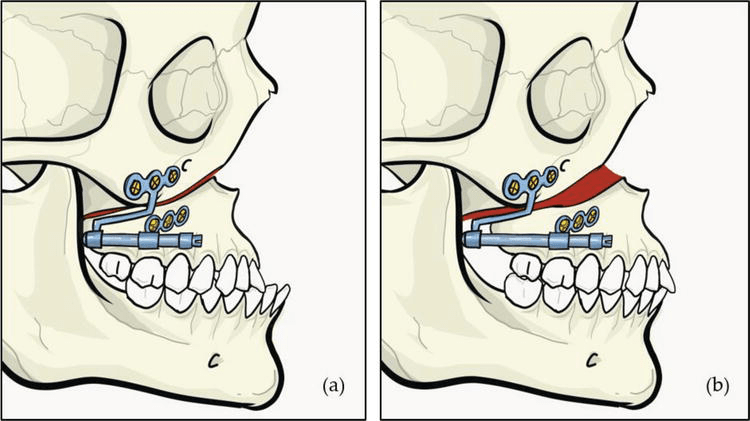
    With miniature distraction devicesrigid external distraction (RED) systems, and intraoral appliances, the orthodontic world saw an explosion (well, controlled expansion) of techniques:

    🔹 Cohen et al. (1997) – Introduced maxillary distraction in young children.
    🔹 Polley & Figueroa (1997) – Used the RED device to treat severe maxillary hypoplasia.
    🔹 Molina et al. (1998) – Tried a mix of facial masks and intraoral appliances for mixed dentition cases.

    So, Does It Work? The Numbers Speak!

    Swennen et al. (2001) reviewed 16 studies spanning 33 years (1966-1999) and found that maxillary advancements ranged from 1 mm to 17 mm. Not bad for a non-surgical approach, right?

    Well, not so fast—relapse was reported in 50.4% of cases. That’s like getting a six-pack after months of workouts only for it to disappear when you eat one slice of pizza.

    Rachmiel et al. (2005) reported stable results in 12 cleft patients after two years, showing that maxillary length (Condylion to A point) held its ground. But Krimmel et al. (2005) later threw a wrench into that optimism, noting a decrease in SNA and ANB angles just one year after distraction.

    Cheung & Chua (2006) conducted a meta-analysis of 26 studies (1966-2003) on 276 cleft patients, revealing:

    📌 Most maxillary advancements were between 5-9 mm.
    📌 External distractors (68.8%) were more common than internal distractors (2.17%) and facial masks (25.72%).
    📌 Maxillary relapse? 5.56% within two years—but only one study provided actual numbers.

    One thing is clear: distraction osteogenesis works, but long-term stability is still a mixed bag.

    The Study: Six Patients, One Mission—Expand That Maxilla!

    Meet our VIPs: six Chinese patients (3 boys, 3 girls, average age 10.5 years), all of whom had:
    ✔ Cleft lip and palate (two unilateral, four bilateral)
    ✔ Primary lip and palate repair in infancy
    ✔ Anteroposterior maxillary hypoplasia (aka, their upper jaw was slacking)
    ✔ Class III malocclusion with a negative overjet (translation: their lower teeth were winning a battle they shouldn’t even be fighting)

    These kids weren’t just getting braces—they were about to experience controlled bone expansion, courtesy of the Rigid External Distraction (RED) device.

    1️⃣ Pre-Orthodontic Preparation – Because even bone stretching needs a good warm-up.
    2️⃣ Complete High Le Fort I Osteotomy – A fancy way of saying, “Let’s surgically cut the upper jaw so we can move it.” where the maxilla was delicately detached with septal and pterygomaxillary disjunction. (Translation: we made it mobile but still attached—think of it as unlocking a door, not knocking it down.)
    3️⃣ RED Device Installation – Think of this as the orthodontic version of a headgear, but instead of just pushing teeth, it’s stretching the entire upper jaw.
    4️⃣ Latency Period (5 Days) – Let the jaw marinate before we start stretching it.
    5️⃣ Active Distraction (1 mm/day) – The screws on the RED device were adjusted daily to pull the maxilla forward. (It’s like a gym for your bones—except you don’t have to do the work; your jaw does.)
    6️⃣ Overcorrection Achieved! 🎉 – Because we know relapse is real, we stretched the maxilla a little extra to compensate for future setbacks.
    7️⃣ Consolidation (6-8 Weeks) – The RED device stayed put to let the new bone solidify.
    8️⃣ Device Removal & Orthodontics – After the expansion was done, the real party started: braces to fine-tune everything.

    The study wasn’t just about making kids look less Class III—it was about proving that DO actually works (and hopefully, stays that way). Here’s how they did it:

    📸 Lateral Cephalographs  were taken at four key points:
    🔹 T0 (Before Distraction) – “This is your jaw on cleft-induced hypoplasia.”
    🔹 T1 (Immediately After Distraction) – “Congratulations, your maxilla has entered the chat.”
    🔹 T2 (6 Months Later) – “Let’s see if your jaw likes its new position.”
    🔹 T3 (1+ Year Later) – “Did it stay put, or did it sneak back?”

    Instead of using simple before-and-after pictures (this isn’t a weight loss commercial), the researchers mapped out skeletal and dental landmark positions using a cranial base reference system.

    How, you ask?

    🔹 First, skeletal landmarks were pinpointed on the T0 cephalogram.
    🔹 Then, these landmarks were transferred onto T1, T2, and T3 cephalograms using a best-fit method—aligning surrounding bone structures and trabecular patterns (Huang & Ross, 1982).
    🔹 To keep things precise, an x-y coordinate system was created:

    Y-axis: A perpendicular line intersecting the X-axis at sella
    🔹 This coordinate system was then transferred onto each cephalogram for standardized measurements.

    X-axis: Drawn 7° below the sella-nasion plane

    Key Takeaways

    ✅ Overjet increased (yay, no more Class III woes!).
    ✅ Overbite decreased—except for our rebellious Case 5.
    ✅ Maxilla went forward (woo-hoo!) but then took a casual retreat backward over a year (boo!).
    ✅ Some vertical movement—first up, then down (the maxilla, not our enthusiasm).
    ✅ Teeth tagged along for the ride, moving anteriorly and inferiorly.
    ✅ Relapse? Oh yeah—about 9.6% at 6 months, increasing to 24.5% by a year.

    Evaluation of the Jones jig appliance for distal molar movement

    What is the Jones Jig Appliance?

    Orthodontic treatment often requires space creation to align teeth properly. One effective way to achieve this is through molar distalization—moving the upper first molars backward to make room for crowding or to correct bite discrepancies. Traditionally, orthodontists have relied on headgear, Class II elastics, and removable appliances, all of which require patient compliance (and we all know how reliable that is! 🙄).

    But what if there was a more predictable, fixed alternative?

    Enter the Jones Jig Appliance—a fixed, non-compliance-based distalizing appliance designed to move molars efficiently without relying on patient effort.

    How Does the Jones Jig Work?

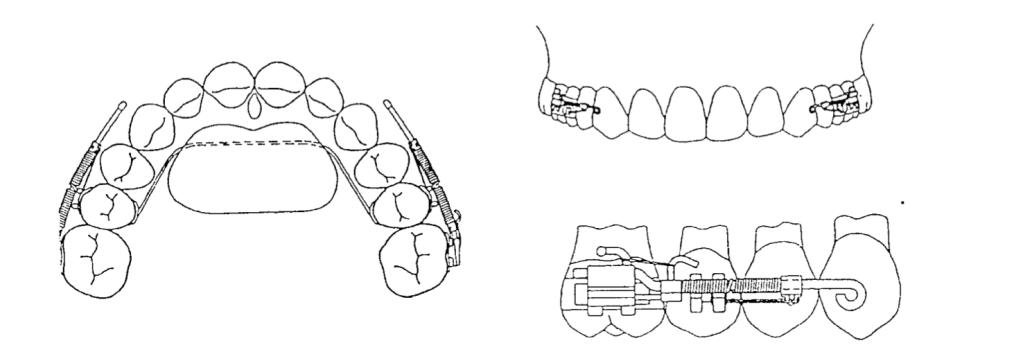
    ✔ Palatal Button – A 0.5-inch diameter acrylic button, anchored to the maxillary second premolars using a 0.036-inch stainless steel wire for stability.
    ✔ Jones Jig Arms – One arm fits into the 0.045-inch headgear tube, while the other fits into the slot of the first molar band.
    ✔ Nickel-Titanium Spring – A 0.040-inch coil spring delivers a controlled force of 70-75 g to push the molars backward.

    Once the Jones Jig is cemented, it is activated by tying the activation loop with a 0.010-inch ligature off the bracket of the anchoring tooth. This ensures continuous force application.

    The coils are then reactivated every 4 to 5 weeks until the desired molar movement is achieved.

    Once activated, the appliance applies a gentle but continuous distal force on the upper first molars, moving them backward over time. The best part? Since it’s fixed, patients don’t have to remember to wear it, making treatment more reliable.

    Advantages of the Jones Jig

    ✅ No Patient Compliance Needed – Unlike headgear, patients don’t have to wear or adjust it.
    ✅ Continuous Force Application – The coil spring ensures a steady force for predictable movement.
    ✅ Faster Treatment Time – Studies show that molars can be distalized in 4-6 months.

    While the Jones Jig is highly effective, it does come with some considerations:
    🔹 Molar Tipping – Instead of bodily movement, molars may tip distally, requiring additional mechanics for uprighting.
    🔹 Anchorage Loss – The anterior teeth may shift forward slightly, which may need to be controlled with TADs (temporary anchorage devices) or a transpalatal arch (TPA).

    Does the Eruption of Second Molars Affect Treatment?

    When using the Jones Jig Appliance for molar distalization, orthodontists must consider various factors that can influence treatment outcomes. One key question is: Does the eruption of second molars impact molar movement and anchorage loss?

    A study evaluating 72 patients explored this question by comparing cases with erupted vs. unerupted maxillary second molars to determine how they affected the type and amount of molar movement and anchorage loss.

    Study Findings: Second Molar Eruption and Its Effects

    Researchers divided the patients into two groups:

    GroupCondition of Second MolarsKey Observations
    Group 1 (28 patients)Unerupted second molars (below the cementoenamel junction of the first molar)Less anchorage loss in premolars and incisors, potentially more controlled molar movement.
    Group 2 (44 patients)Erupted second molars (not banded or bonded)More anchorage loss observed, possibly due to resistance from the second molars.

    The presence or absence of second molars plays a significant role in the effectiveness of molar distalization. Patients with unerupted second molars may experience better molar movement with less anchorage loss, while those with erupted second molars may require additional anchorage support. In cases with erupted second molars, additional anchorage reinforcement (e.g., TADs or a transpalatal arch) may be necessary to prevent undesired movement.

    Study Findings: How Far Did Those Molars Go?

    retrospective study of 72 patients using the Jones Jig showed:

    Tooth MovementMean ChangeTipping AngleComparison to Other Appliances
    Maxillary First Molar2.51 mm distal movement7.53° distal tipping
    (meaning they didn’t just move—they leaned back like someone dodging responsibility. 😅)
    Similar to Herbst, Wilson Mechanics, and Pendulum Appliance 📏
    Maxillary Second Molar1.79 mm distal movement
    (Not as much as the first molar, but still making progress! 🔄)
    8.03° distal tipping
    (tipped even more than first molars)
    0.71 mm extrusion observed 📉
    (suggests that second molars are like that one friend who always stands out in group photos. 📸)
    OverjetIncreased 0.45 mm

    If necessary, J-hook headgear or Class II elastics can help maintain anchorage.
    2.21° incisor proclination

    (much less than the 6° seen in other studies. So, while there’s some flaring, it’s not enough to make your patient look like Bugs Bunny. 🐰)
    Less flaring than with Pendulum & Repelling Magnets 😎

    Less than the 1.30 mm increase seen with the Pendulum appliance and the 1.60 mm increase with repelling magnets.
    OverbiteDecreased 1.28 mmImproved vertical control compared to other appliances 📊

    Anchorage Control: Because We Don’t Want Molar Tipping Running the Show

    Distalizing molars is great, but uncontrolled tipping? Not so much. Here’s where anchorage control steps in like a responsible chaperone at a high school dance.

    ✅ Use a Nance holding arch, utility archwire, or stopped archwire to keep those molars in check.
    ✅ Short Class II elastics can help move the premolars and incisors back once the molars are in position.
    ✅ J-hook headgear can reinforce anchorage (for the brave souls who still prescribe it).

    Molar Extrusion: Is It a Big Deal?

    One concern with distalization is molar extrusion—but does the Jones Jig make teeth “float away”? Not really.

    🔹 Jones Jig Patients:

    • Males: 3.17 ± 1.79 mm of extrusion
    • Females: 1.33 ± 1.38 mm of extrusion

    🔹 Untreated Class I Patients (for comparison):

    • Males: 4.1 ± 3.1 mm
    • Females: 1.9 ± 2.2 mm

    📌 Takeaway?
    The extrusion in Jones Jig patients is within normal growth changes. So, unless your patient is trying to float their molars into the stratosphere, this isn’t a major concern. 🚀

    Jones Jig vs. Headgear: Any Real Difference?

    The study found no statistically significant differences between the Jones Jig group and a matched Headgear groupwhen evaluating:

    ✅ Maxillary first molar position
    ✅ Maxillary central incisor angulation
    ✅ Linear position of incisors
    ✅ Overjet & Overbite changes

    So, if you’re an orthodontist who loves avoiding unnecessary patient lectures about compliance, the Jones Jig might be your new best friend. 🎉

    Treatment Comparison: Who Wins?

    Treatment ModalityPatient Compliance Needed?Molar Distalization (mm)Overjet Change (mm)Overbite Change (mm)
    Jones Jig Appliance❌ No compliance needed2.51 mm+0.45 mm-1.28 mm
    Cervical Headgear✅ Requires compliance 😬2.50 mm+0.40 mm-1.30 mm
    Class II Elastics✅ Requires compliance 🙄Varies (depends on use)Greater risk of overjet increaseLess predictable molar control

    📌 Takeaway?
    The Jones Jig does everything headgear does—without the compliance drama. It’s like getting straight A’s without ever studying (if only life worked that way 😆).

    Final Verdict: Is the Jones Jig Worth It?

    ✔ YES! If you want a fixed, predictable, non-compliance-dependent way to correct Class II malocclusions, the Jones Jig is a great choice.

    ✔ Same results as headgear—without the teenage rebellion.

    ✔ Minimal anchorage loss compared to other distalization appliances (no crazy overjet increase).

    ✔ Less annoying for patients = less annoying for you. 😆

    Effects of different vectors of forces applied by combined headgear

    Class II malocclusions are a common orthodontic challenge, often requiring precise management of maxillary dentition to achieve ideal outcomes. Extraoral forces, such as those applied via headgear, have long been used to either distalize upper molars or restrict their forward migration. Understanding the physics behind these forces and their application is key to maximizing treatment efficacy and minimizing undesirable side effects.

    Orthodontic forces can be represented as vectors, which help visualize the direction and magnitude of applied forces. When multiple forces converge on a tooth, a resultant vector can be calculated. This resultant vector can then be resolved into components parallel and perpendicular to the tooth axis, allowing for precise analysis of force magnitudes in these directions. This fundamental principle of physics underpins the design and application of combined headgear, which uses cervical and high-pull vectors to achieve targeted outcomes.

    One of the critical considerations in orthodontic treatment is the direction of applied forces. Studies show that molars tipped back during distalization tend to relapse quickly unless occlusal forces act to upright them. For bodily movement of upper molars, force must be applied through the center of resistance. Cervical headgear, which applies forces below the center of resistance, can cause extrusion of upper molars and an undesirable opening of the mandible. Conversely, occipital traction—preferred for patients with open bite tendencies—is less effective in altering maxillary structures anteroposteriorly.

    Addressing Challenges with Combined Headgear

    The limitations of traditional cervical and high-pull headgear in treating Class II malocclusions with high mandibular plane angles necessitate alternative approaches. Combined headgear, which integrates forces from both cervical and high-pull vectors, offers a promising solution. By optimizing the resultant force vector, combined headgear can:

    • Minimize molar extrusion.
    • Reduce the likelihood of mandibular plane angle alterations.
    • Improve anteroposterior control of maxillary structures.

    Evidence Supporting Combined Headgear

    Research highlights the potential of combined headgear to address the shortcomings of single-vector approaches. For instance, bending the outer arms of cervical headgear downward by 15° has been shown to reduce extrusion. Moreover, studies by Baumrind and colleagues suggest that mandibular plane angle remains stable when combined headgear is used, likely due to the balanced application of forces.

    This study examined three treatment groups, each using a different force ratio: 1:1, 2:1, and 1:2.

    Treatment GroupForce Adjustment (High-Pull : Cervical)Inner Bow ExpansionWear TimeTreatment Duration
    1:1150 gm per side : 150 gm per sideNot expanded20 hours/day2 to 9 months
    2:1200 gm per side : 100 gm per sideNot expanded20 hours/day3 to 7 months
    1:2100 gm per side : 200 gm per sideNot expanded20 hours/day2 to 7 months

    The goal? To understand how these variations impact the displacement of the maxilla and mandible, molar positioning, and even occlusal plane inclination. Here’s what they found.

    Changes Through the Treatment

    Parameter1:1 Treatment Group2:1 Treatment Group1:2 Treatment Group
    ANB AngleSignificant decreaseSignificant decreaseSignificant decrease
    SNB AngleSignificant increaseSignificant increaseNo significant change
    SN/GoGnNo significant changeSignificant decreaseNo significant change
    SN/OPNo significant changeSignificant increaseSignificant decrease
    Upper Molar/ANS-PNS (Angle)No significant changeNo significant changeSignificant decrease
    Upper Molar/ANS-PNS (mm)Significant decreaseSignificant decreaseSignificant increase
    Lower Molar MP (mm)Significant increaseNo significant changeNo significant change

    Maxillary and Mandibular Displacement

    In the third treatment group, with a 1:2 force ratio, the maxilla was displaced backward. Interestingly, this aligns with findings from previous studies by O’Reilly and Boecler, who observed similar effects with cervical headgear. However, the mandible’s forward growth remained consistent across all groups, resulting in no significant differences in the ANB angle. This reinforces the idea that headgear’s primary role is in influencing the maxilla rather than the mandible.

    Upper Molar Movement

    Now, let’s talk molars. Superimposition analyses showed that the upper first molar was distalized by 3.6 to 4.0 millimeters across all groups. This distalization played a significant role in correcting molar relationships. However, the type of headgear affected how these molars moved. For example, high-pull headgear resulted in greater horizontal displacement, as noted by Baumrind et al., while cervical headgear tended to cause more vertical changes.

    Occlusal Plane Inclination

    One fascinating finding was the tipping of the upper molars. In the third group, there was a significant decrease in angulation and a mesial displacement of the molar apex. This aligns with Baumrind’s observations and highlights how force direction can influence tooth movement. Meanwhile, Badell’s study on combined headgear treatments showed a notable distal tipping, which was less pronounced in other groups.

    Vertical changes were also noteworthy. In the 1:2 group, the downward force component caused molar extrusion, a pattern commonly seen with cervical headgear. Conversely, the 1:1 and 2:1 groups showed molar intrusion, consistent with high-pull headgear studies. This difference in vertical displacement also impacted the occlusal plane. The second group, with a 2:1 force ratio, showed a significant increase in occlusal plane inclination, mirroring findings from Badell and Watson.

    Mandibular Plane Angle (MP)

    Beyond the teeth, headgear also influences skeletal structures. The mandibular plane angle—a key indicator of vertical facial growth—remained largely unchanged in the 1:2 group, likely due to a modest increase in ramus height. However, the second group showed a significant decrease in the SN/Go-Gn angle, suggesting a more pronounced impact on vertical growth patterns.hames et al. and Badell, highlighting the interplay between force systems and vertical growth patterns.

    Intercanine Width

    And finally, let’s touch on intercanine width. Mitani and Brodie’s research showed an increase in this variable with cervical headgear, and this study confirmed those findings. The third group, with the greatest distalization, exhibited the most significant increase in intercanine width, highlighting the interplay between molar movement and arch expansion.

    So, what’s the takeaway? Headgear therapy is a versatile and effective tool, but its outcomes depend heavily on the force system used. From molar distalization to occlusal plane changes, every detail matters. This study not only builds on decades of research but also underscores the importance of tailoring treatment to individual patient needs.