Let’s dive into one of orthodontics’ eternal debates — how extraction patterns affect relapse in Class II malocclusion cases. Or, as some call it, “Should we yank two teeth, four teeth, or none at all — and will the molars stay where we put them?”
So here’s the punchline first — long-term stability doesn’t seem to care that much about the number of premolars you extract. Shocking, I know. Whether you go with two maxillary premolars or a full four-premolar extraction, the occlusal stability is pretty much the same.
Now, that’s not a green light to start extracting premolars like you’re harvesting crops — but it is a nice reminder that there’s no rigid extraction formula tied to relapse.
Here’s something else to chew on: There’s no solid evidence that finishing Class II cases with Class I molar relationships gives you better long-term outcomes. Yeah — you heard that right. You’re not legally or biologically bound to force every molar into Class I just to impress your ortho mentors or keep your cephs symmetrical.
In fact, a case-control study showed that treating a Class II case by extracting two maxillary premolars and finishing with a Class II molar relationship was actually more efficient than trying to wrestle the entire molar segment into Class I. So not only is it okay — it might actually save you time and effort.
And later studies backed it up: Whether you end with Class I molars or Class II molars, the long-term occlusal results are basically the same. That’s right. The molars don’t seem to care as long as the rest of the arch is harmonious, the bite is functional, and the patient stops chewing ice with their canines.
So to sum it all up: Extraction pattern? Choose based on case needs, not relapse paranoia. Class I molar finish? Nice, but not mandatory. Long-term stability? Not dependent on textbook-perfect molar positioning.
Bottom line? Orthodontics isn’t always about achieving the prettiest occlusal photo — it’s about functional, stable results that stick around longer than your patient’s post-treatment whitening.
You’ve got options, Class II warriors. Choose wisely — but don’t stress if the molars decide to stay Class II. Stability won’t judge you.
What do you do when a lateral incisor is missing from birth (congenitally)?
You’ve got three main options:
Option
Description
Pros
Cons
🦷 Space Closure
Canine takes the lateral’s place
No prosthetic needed
Canine isn’t a perfect aesthetic match
🧱 Resin-Bonded Bridge
A minimally invasive bridge
Saves adjacent teeth
53% survival in 10.5 yrs, may fall off
🛠️ Implant
Place a single-tooth implant
Long-term, tooth-friendly
Timing is tricky, needs bone support
📚 STUDY GOAL:
To find out: When is the best time to start orthodontic space opening if the goal is to place a single-tooth implant later?
👥 THE PATIENT CREW:
14 Caucasian teenagers (9 girls 👧, 5 boys 👦)
26 missing lateral incisors
All treated at University Hospital Carl Gustav Carus, Dresden (That’s in Germany 🇩🇪, folks!)
🦴 THE BONE CHRONICLES: T1 ➡️ T2 ➡️ T3
Timeline Translation:
Time Point
Age (Mean ± SD)
What’s Happening
T1
13.02 ± 1.49 yrs
Start of ortho treatment 👩⚕️
T2
15.55 ± 1.38 yrs
End of ortho treatment 🎉
T3
18.67 ± 2.83 yrs
Implant placement time 🔩🦷
📉 Bone Loss Over Time (Yikes!):
Time
Bone Deficiency (mm²)
Significance vs T1
T1
0.26 ± 0.69
–
T2
1.92 ± 1.54
✅ P = .044
T3
3.77 ± 3.07
✅ P = .028
👀 Observation: The longer you wait, the more bone disappears. So don’t dilly-dally with space opening if you’re planning an implant!
🕰️ EARLY vs. LATE TREATMENT – Who Wins?
Group
T1 Deficiency
T2 Deficiency
T3 Deficiency
Early Starters ⏰
0.44 mm²
2.05 mm²
2.61 mm² ✅
Late Starters 😴
0.00 mm²
1.78 mm²
4.93 mm² ❌
🏆 Winner: Early treatment group – less bone loss at implant time!
📐 Incisor Inclination Drama
Ortho mechanics led to incisor proclination during space opening. Let’s break it down:
Time
Inclination Angle (°)
Change
Start (T1)
22.1° ± 6.9
–
End (T2)
31.5° ± 7.2
+9.4°
⚠️ Why it matters: The implant angle needs to match the natural inclination of the incisors. Planning is 🔑!
🧪 IMPLANT PLACEMENT: A MINI MANUAL
Ideal implant size: 3.75 mm shaft, 4 mm collar (But minis like 3.0 mm are also used!)
Safe distance: At least 1 mm between implant and neighboring roots.
Required bone support: 6 mm × 12 mm = 72 mm² implant surface.
Gingival trick: Lateral incisor gingival margin is 1 mm higher than central incisor—so the implant must be placed 1 mm below the central’s margin.
🧠 Pro Tip: Use cephs and stone casts to assess inclination and bone volume before diving in!
📉 Alveolar Ridge Loss: When Bone Gets Ghosted
Here’s the tea ☕:
Once a tooth is missing (especially in the front upper jaw), the bone and soft tissue in that area start shrinking—kind of like a deflated balloon 🎈.
Researchers noticed something wild 😳:
🕒 Time Point
% Ridge Deficiency
T1 (Start of ortho treatment)
0.4%
T2 (End of ortho)
2.7%
T3 (Time of implant)
5.2%
👉 14x increase from T1 to T3! Yikes!
But wait…
The late treatment group had less bone loss at T2. But then they lost more bone by T3 compared to the early group. 🤔
Translation: It’s not just about when you start ortho—it’s about how the bone behaves later, and spoiler alert: it’s moody.
🧬 Blame It on Your Genes
There’s a strong genetic component to how much ridge loss happens—some people lose more, some less.
🔬 Why the variability?
Growth factors (hello, biology!) 📈
Differences in how people’s bones respond after treatment
Timing of canine eruption and extraction of baby teeth
🐶 Canines to the Rescue
If you remove the primary lateral, the canine erupts into that space. But if you remove the primary canine too early → 🥴 buccolingual resorption (bye bye, bone).
👉 Pro Tip: Only extract the baby canine just before you move the permanent one distally. This way, the root stretches the PDL and… 💥 Builds Bone Like a Boss 💪
📏 Kokich vs. This Study: A Bone-Off!
Study
What they found
Kokich (20 pts)
Less than 1% bone loss up to 4 years later 😇
This study
Up to 5.2% loss at implant time 😱
Why the difference? This study measured surface area (6–12 mm region), not just distances. Also, they only looked at maxillary cases, not mandibular or premolars. Apples vs. oranges… or molars vs. incisors 🧐🍊
📣 Final Orthodontic Pro Tips 🎓
🎯 1. Late is great (sometimes)
Starting treatment later (around age 16.5) = less time for ridge to disappear before implant.
But don’t be too late or you’ll miss the growth train 🛤️
📐 2. Watch those incisor angles!
Mean incisor proclination at T2 = 31.5° 😮
Standard = 22.1° → so 9.4° extra
Over-proclination = thin bone = implant trouble (think 👻 bone and 😬 visible crown margins)
📏 3. Don’t ignore root spacing!
Just because crowns look good doesn’t mean roots are happy 😬
Use wire bending or bracket repositioning to create that root party room 🎉🦷🦷🦷
🧠 Growth Matters: Don’t Jump the Implant Gun!
Since implants don’t move (hello, ankylosis 😑), don’t place them before facial growth is done.
📸 Take a ceph → wait 6 months → take another If Nasion to Menton doesn’t change = 💡 Growth done!
🧠 TL;DR for Ortho Ninjas 🥷
Takeaway
Why It Matters
Ridge loss is real!
And it gets worse with time ⏳
Canine movement = bone creation
But only if timed right 🕒
Late treatment can be helpful
Less waiting time till implant 🚀
Incisor proclination can hurt you
Implant survival needs a strong cervical bone base 🧱
Roots matter too!
Not just crown position 😅
So remember ortho fam: You’re not just aligning teeth—you’re sculpting bone for the future 💀➡️🦷✨
Hey tooth warriors! 🦷💥 Today, we’re diving into the world of Class II malocclusion—aka when the upper jaw says, “I’m moving ahead,” and the lower jaw whispers, “Wait for me!” 😅
This condition happens when there’s a mismatch in jaw positioning—either the lower jaw is shy (mandibular retrusion)or the upper jaw is a bit too bold (maxillary prognathism). But spoiler alert: most of the time, it’s the mandible lagging behind. 🐢
🎯 GROWING PATIENTS = GROWING OPPORTUNITIES
If your patient’s still growing (yay puberty! 🎉), you’ve got options to guide those jaws like a dental GPS:
Functional appliances = Tell the mandible, “Come on buddy, time to move forward.” 🦷➡️
Headgear = Tap the brakes on that upper jaw growth. 🛑👃
👉 These options work best before the growth spurt ends, so early detection is key!
👄 REMOVABLE VS. FIXED APPLIANCES – THE BATTLE BEGINS ⚔️
We’ve got two major contenders:
1. Twin Block (Removable Champ)
Invented by Clark (nope, not Superman 🦸).
Worn like retainers—you can pop them in and out. 😬
Works like a charm when patients actually wear them (compliance alert 🚨).
Great for boosting mandibular growth and improving jaw harmony. 🎵
2. AdvanSync2® (Fixed Fighter)
A glow-up of the classic Herbst appliance.
Created by the Dischinger duo in 2008 (dental bros! 👨🔬👨🔬).
Cemented on molars (yep, no backing out now 😅).
Works full-time (24/7 hustle 😤) with telescopic rods to push that mandible forward.
Bonus: You can slap on braces while using it! 💪
Wait… what happened to the original Herbst?
Well, it kinda had a bad rep:
Bulky 🙄
Cheek-poking parts 😵
Maintenance nightmare 🪛
So, enter AdvanSync2®—smaller, sleeker, and less ouch-y! 🙌
🤓 WHY THIS STUDY MATTERS:
Most past studies compared AdvanSync2® with other fixed appliances. But let’s face it—compliance with removable appliances is like relying on a teenager to do chores 🧹 (sometimes it happens, sometimes… not so much).
👉 That’s why this study asks: “What really happens when we compare Twin Block (removable) to AdvanSync2® (fixed)?”
They measured:
Skeletal changes (how the jaws move 🦴)
Dentoalveolar changes (what the teeth and surrounding structures do 🦷)
Soft tissue effects (how the face changes 😮)
And just to keep things scientific (and dramatic), they had a null hypothesis: “No difference between the two.”
But are they really that similar? 🤔
🧪 Study Design Recap:
This was a retrospective study (no time machines, just old records), comparing 10–15 year olds at CVMI stages 2–4 (hello puberty 👋). No control group here because, ethically, you can’t just not treat a kid who needs help 😬.
👉 Group I: Twin Blockers (Avg age 12.1) 👉 Group II: AdvanSync2® gang (Avg age 12.8)
Perfect timing—just around the growth spurt, which, as Baccetti says, is the sweet spot for jaw growth magic! ✨
🧠 Cranial Base Variables
Both groups showed a little reshaping action up at the top:
Translation? 👇 Both appliances helped bring the mandible forward relative to the cranial base—a win for both sides! 🙌
🦴 Maxillary Skeletal Variables
The whole idea here is to chill out maxillary growth (aka the “headgear effect” 😤🛑).
Twin Block: Co-Pt A increased a bit (+2.15 mm) due to normal growth or orthopedic stimulation, but SNA dropped slightly (−0.52°).
AdvanSync2®: Also showed some changes, but surprisingly, not a major maxillary growth restriction this time!
📚 PS: Other studies hyped up AdvanSync2® as a maxilla tamer… not quite here. 🤷♀️
😮💨 Mandibular Skeletal Variables – The Main Event!
Here’s where things get really spicy 🌶️
✅ Twin Block Results:
Co-Gn (mandibular length): +2.87 mm
SNB (mandible angle): +1.59°
Pog-N perpendicular: +0.84 mm
💬 Verdict: A decent push forward, but not groundbreaking.
✅ AdvanSync2® Results:
Co-Gn: A whopping +5.34 mm 📏
SNB: +3.11° 🎯
Pog-N perpendicular: +3.69 mm
Ar-Go (ramus length): +1.89 mm
😱 That’s some serious forward growth, folks!
📣 AdvanSync2® went full beast mode, proving why fixed appliances are often preferred when compliance is shaky. No “oops, I forgot to wear it today” moments here! 😅
You know it’s serious when we start talking ANB angle and Wits appraisal—that’s dental code for “How far is that lower jaw lagging behind?” 🏃♂️💨
📉 ANB Angle + Wits = Both Took a Dive
Twin Block: 🟢 ANB dropped by −2.11° 🟢 Wits dropped by −3.09 mm
AdvanSync2®: 🔵 ANB dropped even more – −2.88° 🔵 Wits dropped more too – −4.04 mm
🎯 Translation: Both appliances moved the lower jaw forward, reducing the gap between upper and lower jaws. But hey, AdvanSync2® had a slight edge—probably thanks to that all-day, everyday action. 💪
🔍 Maxillary–Mandibular Differential (aka Who Grew More?)
Twin Block: +0.94 mm
AdvanSync2®: +2.39 mm
Why the difference? The mandible had a growth spurt, thanks to being pushed forward like a coach yelling, “Get in the game!” 🗣️🏈
💬 It’s not just growth, it’s functional ortho magic! ✨ The telescopic mechanism of AdvanSync2® = more forward jaw movement + better skeletal change. Boom. ✅
📏 Vertical Skeletal Variables – Are We Growing Up… or Just Forward?
Heads up! 📐 Let’s look at how the face stretched vertically during treatment. (Because yes, your face can grow “taller,” too!)
Variable
Twin Block
AdvanSync2®
What It Means 😅
Na-Me (ant. facial height)
+0.63 mm
+2.82 mm
You got taller. Sort of. 🧍♂️
S-Go (post. facial height)
+1.02 mm
+1.73 mm
Back of the face grew, too! 🧠➡️🦷
ANS-Me (lower face)
+0.96 mm
+2.13 mm
Hello, chin drop! 🪞
Mandibular plane angle
+0.89°
+1.12°
Slight clockwise jaw rotation 🔁
👉 So both appliances caused the lower face to elongate and the jaw to rotate a bit downward and forward. Why? That sneaky posterior bite block in the Twin Block lifts the bite, guiding the growth downward. AdvanSync2® does similar things, just without being removable. 🛠️
Interdental and Soft Tissue Shenanigans
(Or in ortho-speak: “Did we fix the bite, and does the face care?”)
We’re wrapping up our headgear-free saga with the final act: interdental movements, soft tissue glow-ups, and what this all means for your future ortho plans. Let’s bite in! 🍴
🦷 Interdental Variables – Where the Teeth Party Happens 🎉
✅ Twin Block Group:
U1-L1 angle (interincisal): Dropped by −2.51° = incisors tipped toward each other 📉
Overjet: Reduced by −5.29 mm 😲
Overbite: Down by −1.48 mm
Molar correction: A solid +4.21 mm
💬 Why? Because Twin Block tends to retrocline upper incisors and procline lowers. The bite evens out as the jaws come together and molars do a sweet lil’ shift—maxillary molars move back, mandibular molars step forward like a bold dance move. 💃🕺
✅ AdvanSync2® Group:
U1-L1 angle: Went up by +2.97°, though not significantly = incisors slightly angled apart 📐
Overjet: Reduced by −4.60 mm
Overbite: Also decreased −2.27 mm
Molar correction: A powerful −5.18 mm
💬 So AdvanSync2® corrected molar position and bite depth quite well—just like Twin Block—but didn’t tweak those incisors as much. It’s a fixed appliance, so it works around the clock 🕒, giving it an edge with molar shifts and bite correction even when patients forget they’re wearing it. 😉
🦷 Moral of the story: If your patient has big overjet and deep overbite—either appliance is your pal. But if you need more precise incisor control, Twin Block might give you the edge (assuming they wear it 🤞).
👄 Soft Tissue Changes – The Face-Off (Literally) 🤳
Time to find out: Did these appliances do the orthodontic equivalent of contouring?
✅ Twin Block:
Upper lip to E-plane: Moved back −1.04 mm (that’s subtle retraction)
Lower lip: Nudged forward +0.59 mm (barely noticeable)
Nasolabial angle: Slightly up +2.09°
➡️ Basically: Minor lip shifts, mostly due to how the upper incisors moved back. Nothing major—think more like a light Instagram filter than a full makeover. 😅
✅ AdvanSync2®:
Upper lip to E-plane: Also retracted −1.68 mm
Lower lip: Slightly forward +1.32 mm
Nasolabial angle:+3.12° (again, mild)
💬 Bottom line? Not a dramatic change here either. Some studies say AdvanSync2® can puff out the lower lip, but in this study: changes weren’t significant.
📸 Takeaway: Don’t promise your patients a new selfie look—these appliances fix bites, not faces. 😄
🧪 Final Diagnosis: Who Wins the Ortho Crown? 👑
✅ Both Twin Block and AdvanSync2®:
Correct overjet and molar relationship beautifully
Promote mandibular growth
Deliver mild soft-tissue and vertical skeletal changes
🏆 AdvanSync2® stands out for:
More effective mandibular length gain
Greater SNB increase (hello forward jaw!)
No worries about compliance because… they can’t take it out 😏
🤝 Twin Block shines for:
More controlled incisor movement
Still effective—but requires that magical thing called “patient cooperation” 🙃
Alright, future tooth wizards, let’s talk moments—no, not “romantic sunset” moments, but the kind that makes teeth twirl like ballet dancers! 🩰
1. Moment Basics: The “Push & Spin” Effect
Imagine your patient’s tooth is a stubborn door. If you push close to the hinges (aka the Center of Resistance, C Res), the door barely spins but slides sideways (translational effect). Push far from the hinges? The door swings open dramatically (rotational effect).
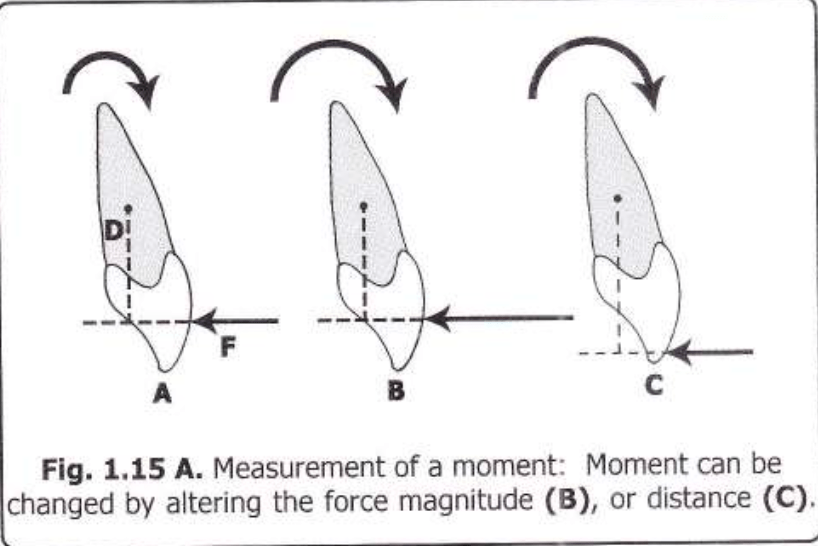
Moment Formula: Moment (M) = Force (F) × Perpendicular Distance (d) Units: gm-mm (like saying, “I bench-press 1000 gm-mm of torque!” 💪).
Diagram Alert! Check out Fig 1.15—it’s the OG of “force vs. distance” drama.
2. Clockwise or Anti-Clockwise? Let’s Settle This!
To predict the direction:
Follow the line of action of the force.
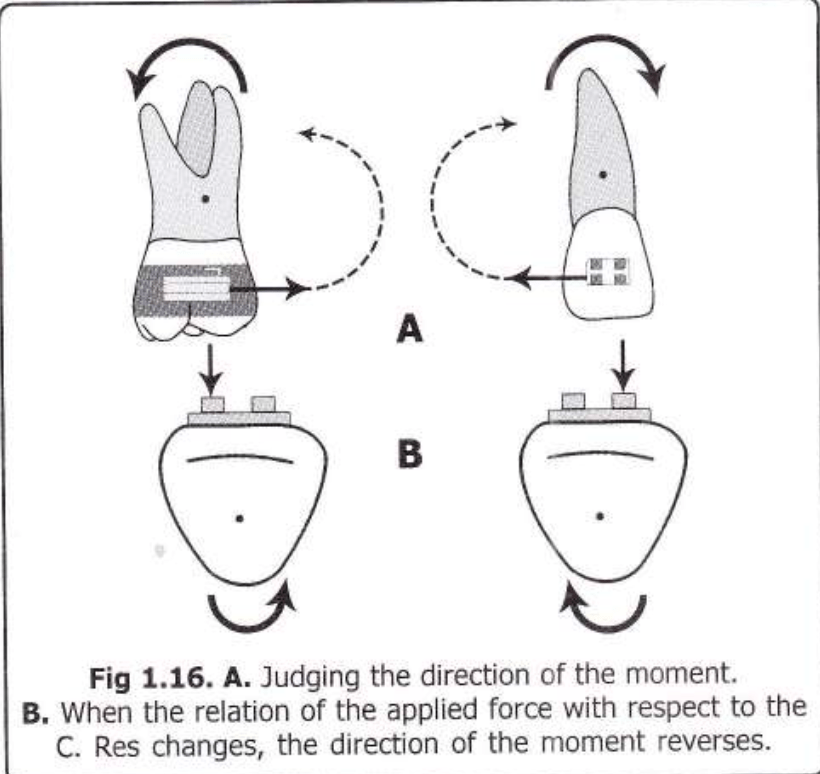
If it “wraps around” the C Res like a hug, you’ll see if it’s clockwise (👆) or anti-clockwise (👇).
Pro Tip: Flip the force’s direction or shift it to the other side of C Res, and the moment flips too! (Fig 1.16 demonstrates this ✨spicy✨ reversal).
3. Force Couples: The Pure Rotation Party!
Ever seen two kids spinning a merry-go-round? That’s a force couple—two equal, opposite forces not on the same line.
Example: Your ortho pliers applying a twist to a wire.
Math Magic: Total Moment = Force × Distance *between* the forces (No matter where you apply the couple—it’s a free vector, like that one friend who’s always down to party anywhere 🎉).
Diagram Time!Fig 1.17 shows a couple causing pure rotation (teeth spinning like a TikTok
trend).
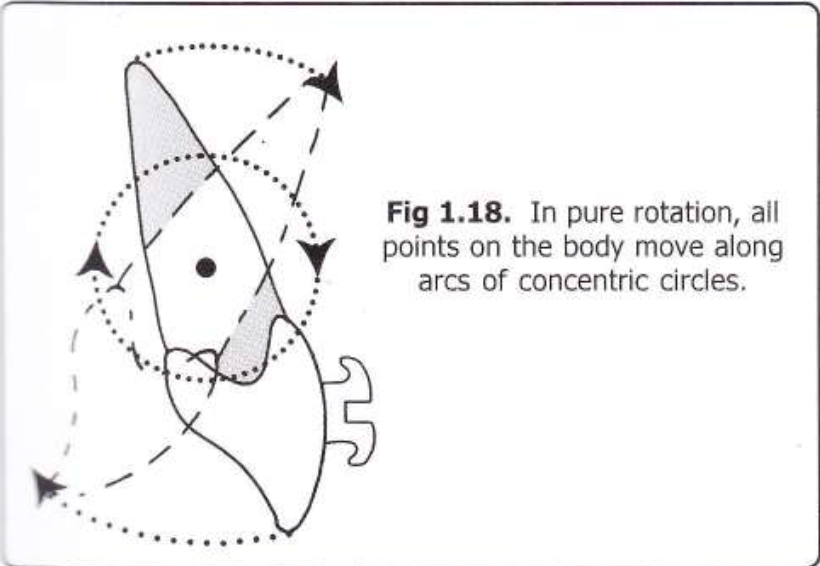
Fig 1.18? Pure concentric circles—no translation, just vibes.
4. Real-Life Ortho Examples
Single Force (Mf): If you push a bracket off-center, the tooth both tilts and moves (like trying to nudge a cat off the couch—it’ll squirm and hiss).
Couple (Mc): Use a closing loop in your archwire. The loop creates two forces, rotating the tooth without sliding it sideways—pure spin! Example: 100gm forces 10mm apart = 1000 gm-mm moment (💃 Cue the tooth tango!).
5. Why This Matters
Bracket Positioning: Closer to C Res = more translation (good for intruding/extruding).
Loops & Springs: Couples = pure rotation (perfect for derotating that snaggletooth).
Fun Fact: Couples are “free vectors”—apply them anywhere on the tooth, and the moment stays the same. It’s like gossip in dental school—it spreads everywhere but the effect is identical. 😜
Let’s start with a word that sounds like it belongs in a Harry Potter spellbook: DILACERATION.
Imagine this: a developing tooth is growing peacefully like a tiny plant underground, and then BAM 💥—a trauma happens (like your toddler faceplanting on a coffee table), and the tooth takes a detour.
That detour results in the tooth bending its root like it’s doing a deep downward dog. 🧘♂️ This abnormal bend or curve in the root or crown is what we call dilaceration.
👶 How Does Trauma Cause Dilaceration?
📌 Let’s break it down like a dance move:
Age of Injury
Where’s the Permanent Tooth Germ?
Result of Trauma
2–3 years
Palatal & superior to primary root
Crown gets pushed up; root curves later
4–5 years
Shifts labially, closer to resorbing primary root
Oblique force causes root to start forming in a new angle
💡 Key Point: The force direction matters more than how strong the trauma was. Even a little bump from a sippy cup can cause drama for that developing tooth. 😵💫
🔬 Dr. Walia et al. (2016) explain that trauma gets transmitted via the primary incisor’s apex to the Hertwig’s Epithelial Root Sheath of the developing permanent tooth. This damages its root-forming potential and leads to—you guessed it—root yoga (aka dilaceration). 🧘♀️
🚫 When Central Incisors Don’t Erupt: Why?
An unerupted maxillary central incisor is rare, but when it happens—it’s a BIG deal for the child and the parents (cue the panic: “My baby’s smile is ruined! 😱”).
👶 Since most patients are young, long-term prosthetics aren’t ideal. And orthodontists love keeping natural teeth (like Pokémon—you gotta catch ’em all! 😄).
🎯 Does Spontaneous Eruption Happen?
Short answer: sometimes… 🤷♀️
Studies say after removing the blockage (like a supernumerary), autonomous eruption happens in only 54–78% of cases. But even then, you might have to wait 3 years ⏳—and the alignment still might not be great.
Traditionally, many opted for surgical repositioning or extraction. But now, thanks to the brave hearts of ortho pioneers (👩🔬🧑🔬), more case reports show orthodontic-surgical approaches are possible—even successful!
🧪 Yet, data is limited. Some studies report 100% success, but… the samples are not always clear if they were cherry-picked.
Stage
Name
Duration
Notes
T1
Leveling + Space Opening
~5 months
Brackets + wires party begins 🎉
T2
Traction
~9 months
Pull that bad boy down! ⛓️
T3
Finishing
~8 months
Align, torque, upright — orthodontic polish time ✨
🎯Factors That Really Mattered
1️⃣ Etiology
Biggest game-changer! Dilacerated incisors = longer treatment, more chance of failure. 🚩
Obstructive impactions fared much better (P = 0.02)
2️⃣ Initial Height
Higher up the tooth, longer the rescue mission (especially T2 stage). ⏳
3️⃣ Age
Older = longer finishing time (T3). Teen angst, but in tooth form.
This “loose connective tissue” isn’t just chilling—it’s DIRECTING THE SHOW. Here’s the tea:
Bone Resorption: Follicles send out signals like “Hey osteoclasts, wreck this bone!” to carve a path for the tooth. Think of it as a tiny demolition crew. 💥
Deciduous Tooth Roots: They also dissolve baby teeth roots. RIP, milk teeth—you served us well. 🍼⚰️
No Follicle? No Eruption. It’s like trying to launch a rocket without fuel. 🚀🙅♂️
Fun fact: If follicles throw a tantrum, you get eruption disturbances. Cue the ortho panic. 🆘
The Maxillary Canine: Ortho’s Problem Child 🦸♀️🦷
Ah, the upper canine—the Beyoncé of teeth (fierce, essential, but sometimes diva). When it decides to stay buried, you’ve got an impacted canine on your hands.
Prevalence: 1-1.8% of people. More common in palatal positions (85%!). Ethnicity matters—some groups get hit harder. 🌍📊
Gender Wars: Most studies say females > males, but Israeli data says it’s a tie. Canines don’t care about your gender norms. ✨⚧️
📌 Subject Selection: Not Random, But Relevant!
Before diving into imaging techniques, let’s address a key factor: selection bias. 📌 The kids in this study weren’t randomly picked—they were referred due to high risk of resorption from ectopic maxillary canines.
Does this affect the results? 🤔 ➡️ Maybe, but not by much! The findings remain clinically relevant, though they might not be 100% applicable to a general school population.
🦷 Assessing the Dental Follicle: The Imaging Dilemma
So, how do we normally assess a follicle?
✔️ Clinical examination—Good for basics, but we need more. ✔️ Intraoral films—Useful, but might not show the full picture. ✔️ Conventional panoramic & full-mouth X-rays—Can sometimes fail at visualizing the true relationship between the ectopic canine and adjacent roots.
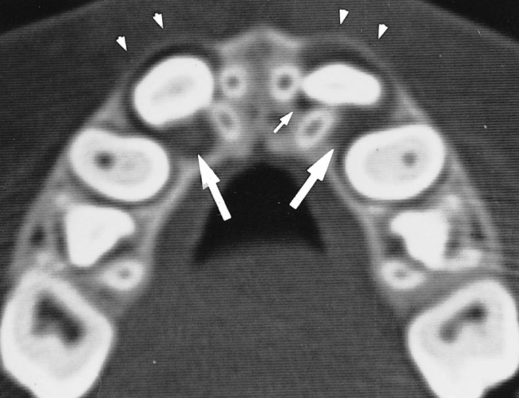
👉 Enter CBCT! This game-changer allows us to study the follicle in 3D, revealing its true shape, width, and relationship to other teeth.
⚠️ Radiation & Cost: Is CBCT Worth It?
CBCT is not all sunshine and rainbows. 🌦️ It comes with: ❌ Higher radiation exposure (2 to 8 times more than panoramic/conventional films). ❌ Increased cost.
But before you toss out your CBCT scanner, consider this:
✅ It provides a clearer, more accurate diagnosis, especially in high-risk resorption cases. ✅ The clinical benefits outweigh the risks, especially when determining treatment prognosis for ectopic canines.
📊 What Did CBCT Reveal About Follicle Width?
By analyzing scan by scan, we found:
✔️ Follicle width ranged from 0.5 mm to 7 mm. ✔️ Mean width: 2.9 mm (Confidence Interval: 2.7–3.2 mm). ✔️ Some follicles were 2 to 3 times wider than normal, indicating cystic transformation! 🦠
👉 In other words, big follicle = possible cystic changes, making CBCT invaluable for early intervention.
🦷 Cystic or Degenerative Changes in Dental Follicles
📌 Fact: During tooth eruption, dental follicles can undergo cystic or degenerative changes. 📌 Key Concern: Some wide follicles in this study had cystic degeneration, but they didn’t cause deviation in adjacent teeth—a usual warning sign.
👀 Why does this matter? ➡️ If a dental follicle undergoes cystic degeneration, it may turn into a dentigerous cyst—which is most common with maxillary canines.
🤔 Can We Reliably Detect Cystic Transformation?
🔍 Intraoral Films: ❌ Cannot reliably differentiate between a cyst and normal eruption-related changes.
🔍 CT Scans (Including CBCT): ❌ Even with CBCT, we still can’t reliably distinguish a physiologically enlarged follicle from one undergoing cystic transformation.
👆 Why? Because both might appear as enlarged follicles, and the distinction is only clear histologically.
👉 BUT WAIT! Do we always need to worry?
🛑 When Should We Be Concerned?
✅ Normally erupting canines? No big deal! As the tooth erupts, both the normal follicle and any cystic follicle will self-destruct when the crown reaches the gingiva. 🚀 ✅ Ectopically positioned or embedded canines? ⚠️ These require monitoring during growth because they behave differently.
📌 Risk of Dentigerous Cysts in Impacted Teeth:
1 in 150 unerupted teeth may develop a dentigerous cyst (Mourshed & Toller).
Risk increases after age 20, especially for impacted third molars.
📍 Canine Position & Follicle Width: What We Know
🔹 Buccally & Apically Displaced Canines 🟢 ✅ Have wider follicles than normally positioned canines. ✅ More space → More follicle expansion!
🔹 Lingually Displaced Canines 🔵
🔹 Normally Positioned Canines 🟡 ✅ Follicle width is about the same for both groups.
💡 What Does This Tell Us?
🦴 Hard tissue barriers—like adjacent incisor roots or a thick cortical bone layer (lingual to the alveolar process)—may restrict follicular expansion. 🦷 In contrast, thin cortical bone and spongeous bone allow the follicle to expand more freely.
📌 Key Takeaway: Follicle size is not random—it’s influenced by local bone density & space availability.
🔍 Follicle Shape & Jaw Bone Structure
📸 CBCT Scans Reveal an Interesting Pattern:
🟠 Loosely spongeous bone + spacious jaws → Follicle adapts a spherical shape 🔵
🔺 Limited space for expansion → Follicle takes on an irregular shape 🟠
🧐 Surprisingly, this hasn’t been reported before in literature!
🔬 Histological Findings (A.K.A. What’s Inside the Follicle?)
A total of 17 dental follicles underwent histological analysis, and here’s what was found: ✅ Loose connective tissue matrix—kind of like an unorganized dental construction site. ✅ Fragments of reduced enamel epithelium—because teeth love to shed layers. ✅ PMN cells (polymorphonuclear leukocytes)—a fancy way of saying “immune cells lurking around.” ✅ Microcysts or full cystic degeneration in 4 cases—a follicle’s way of saying, “I need space!”
⚠️ Do Enlarged Follicles Increase Root Resorption Risk?
👶 A Common Practice: To prevent ectopic eruption, orthodontists often extract deciduous canines if the permanent canines have enlarged follicles. Why? 🔹 Some believe widened follicles may: 1️⃣ Cause deviations in adjacent permanent roots. 2️⃣ Induce root resorption in neighboring incisors.
🔬 What This Study Says: ❌ No evidence confirms that widened dental follicles cause adjacent incisor root displacement. ❓ Root resorption risk remains unclear—this hasn’t been thoroughly investigated.
💡 Do Wide Follicles Push Teeth Around?
🔎 A common assumption is that large dental follicles could push adjacent teeth out of alignment. 📊 Reality Check: This study found that: ✅ Follicles expanded into spongeous bone → sometimes causing the alveolar cortex to bulge ✅ ❌ But they did NOT interfere with or deviate adjacent teeth!
👀 What actually caused root deviations? ➡️ Ectopically positioned canines exerting eruptive forces, NOT the follicles themselves!
📌 Do Sex, Age, or Eruption Stage Affect Follicle Size?
🟢 Nope! This study found NO significant relationships between:
Follicle width & sex
Follicle width & age
Follicle width & canine eruption stage
🚀 Surprising Find: No difference in follicle size was found between canines still in the bone crypt and those nearing eruption—unlike past radiographic studies. 📸
🔬 What Else Affects Follicle Size?
📊 Regression Analysis Says… 📉 The R² values suggest there are still unknown factors influencing follicle width. What could they be? 🤔
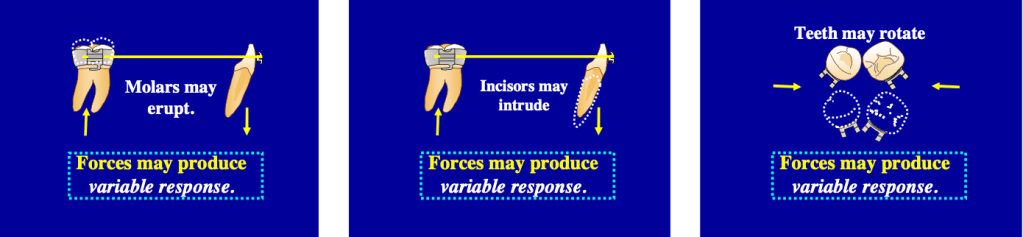
Non-Parallel Forces: Frenemies fighting 😤. Example: One spring pushing up, another pulling down = tooth confusion 🤯.
Golden Rule: If forces don’t cancel out, anchorage saves the day (aka, anchor teeth = the gym buddy spotting you 🏋️♀️). No anchorage? Congrats, you just moved ALL the teeth… and maybe the patient’s face. 😱
Why Grams > Newtons 📏🍔
“Orthos don’t do rocket science… unless it’s molar rockets.”
Science: Force = mass × acceleration (F=ma). But teeth move slowly, so acceleration ≈ Netflix binge speed 🐌.
Ortho Hack: Ignore physics class. Use grams (mass) instead. 1 Newton ≈ 100g (or “the weight of a hamster” 🐹).
Parallel Forces: The “Double Trouble” Technique
“Two pushes > one push. Basic math.”
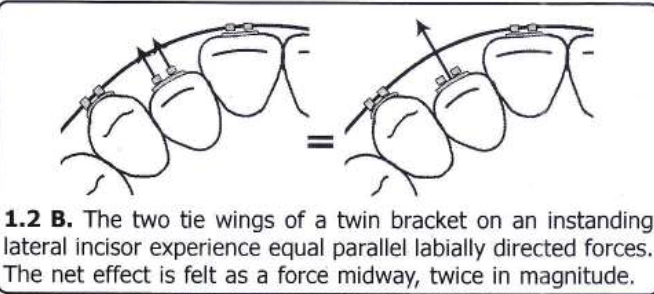
Scenario: Twin edgewise brackets on a tooth (like a twin-engine plane ✈️).
Science: Two equal, parallel forces in the same direction = combined force acting at the midpoint.
Example: Pushing a tooth labially from both tie wings = net force at the center (💥).
Why Care? Twin brackets = double the power without drama.
Force Couples: The Tooth Rotator 9000 🔄
“Push one side, pull the other. Chaos ensues.”
Force Couple: Two equal, parallel, but opposite forces (non-colinear).
Example: Rotating a tooth → one tie wing gets pushed, the other pulled (like twisting a jar lid 🍯).
Pro Tip: If forces are colinear (same line), they cancel out. Boring. Non-colinear = tooth spins like a Beyblade.
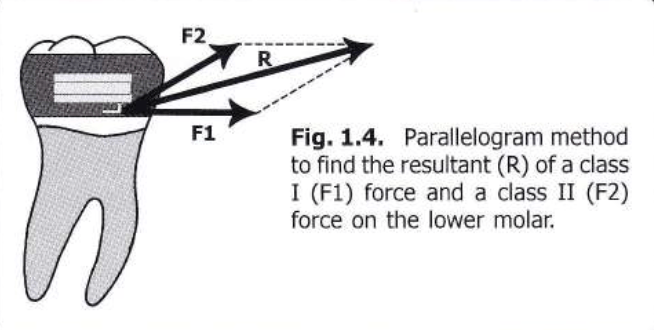
Non-Parallel Forces: The Parallelogram Party 📐🎉
“Forces going wild? Draw a parallelogram!”
Resultant Force: The diagonal of the parallelogram tells you where the tooth will move.
Example: Class I + Class II forces on a molar → diagonal = tooth’s escape route 🏃♂️.
Law of Transmissibility: Slide forces along their line of action to make them meet (like sliding DMs to your crush 💌).
Breaking Down Forces: The “What’s the Damage?” Move 🔍
“One force, two effects. Ortho magic!”
Resolving Forces: Split a single force into horizontal (retraction) and vertical (extrusion) components.
Example: Class II elastic → 70% retraction 😬, 30% extrusion 🦷.
Pro Hack: Use right angles for easy math (thanks, rectangles! 📏).
Multiple Forces: The Ortho Jenga Game 🧩
“Combine forces like a DJ mixes beats.”
Combine two forces → find the resultant.
Combine that resultant with the third force.
Repeat until you’ve tamed all forces.
Real Life: Headgear + distalizing spring = controlled chaos 🤯.
What’s the Big Deal with C.Res?
“It’s the GPS for moving teeth. Miss it, and you’re lost.”
C.Res = Tooth’s Boss: Imagine it’s the puppet master 🧙♂️ pulling strings. Where you apply force relative to C.Res decides if the tooth tips, intrudes, or does a cha-cha slide 💃.
Not the Center of Mass!
Center of Mass: For free bodies (like a tooth flying through space 🚀).
C.Res: For teeth stuck in bone (thanks, PDL! 🦴). Think of it as the tooth’s “democratic leader” swayed by bone, gums, and angry collagen fibers.
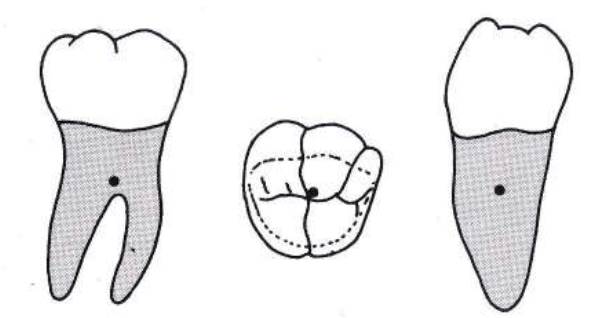
Where is C.Res Hiding? 🕵️♂️
Depends on the tooth’s roots and drama level:
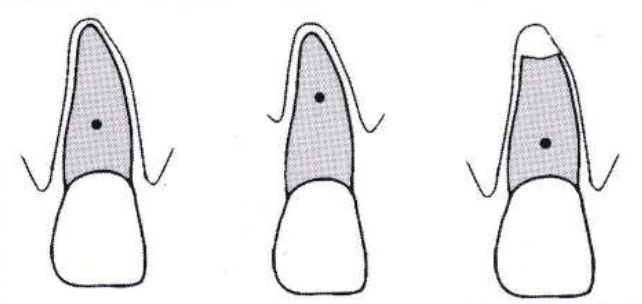
Single-rooted teeth (incisors/canines):
Location: Between alveolar crest & root apex.
Debate Alert: Some say 50% root length 🎯, others 25-33%
Hey future tooth architects! 🦷⚒️ Let’s dive into the ~controversy~ that’s been brewing longer than your morning coffee: En Masse Retraction vs. Two-Step Retraction. Think of it as the orthodontic version of “Avengers: Endgame” – everyone has strong opinions, and the stakes are high (literally, for your anchorage). Let’s break it down.
The Great Extraction Debate: A Century-Old Tug-of-War ⚔️
For over 100 years, orthodontists have wrestled with extraction decisions 🦷💥. While modern clinicians have found a middle ground, space closure mechanics remain critical. Two methods dominate: 1️⃣ Sliding mechanics (frictional: think power chains and elastics). 2️⃣ Closing loops (frictionless: bendy wires doing the work).
With pre-adjusted edgewise appliances (thank you, Dr. Andrews! 🙌), sliding mechanics took over—no more endless wire bends! But which sliding technique reigns supreme? Let’s compar
En Masse Retraction: The “All-In” Approach 🚀
“Retract all six anteriors at once!”
Pros:
⏳ Faster treatment time (one phase vs. two).
🔧 Simplified mechanics (fewer wire changes).
🎯 Potentially better anterior control (if anchorage is solid).
Cons:
⚓ Higher anchorage loss risk (more strain on molars).
📉 Root resorption? (Heavy forces on multiple teeth at once).
Two-Step Retraction: The “Divide & Conquer” Strategy 🛠️
“First canines, then incisors!”
Pros:
⚓ Better anchorage preservation (smaller active unit = less strain).
Headgear = relies on patient compliance → 3 mm molar creep steals retraction space!
Space Allocation:
En Masse: All extraction space (e.g., ~7-8 mm) goes to incisor retraction.
Two-Step: Molars hog 3 mm → incisors only get ~6.3 mm.
Group 2: En Masse/Miniscrews vs. Two-Step/Conventional
Meta-Analysis of 5 Studies:
Metric
En Masse/Miniscrews
Two-Step/Conventional
Std. Mean Difference
P-value
Incisor Retraction (UI)
Slightly more (🔝)
Slightly less
-0.38 mm (CI: -0.70–-0.06)
<0.05 ✅
Molar Movement (U6)
Molars distalized (🦷↩️)
Molars moved mesially 1.5–3.2 mm (🔴)
-2.55 mm (CI: -2.99–-2.11)
<0.001 💥
Treatment Time
Mixed results: 1 study said 4.7 months faster 🏎️; others found no difference 🐢
Why such a massive difference in molar movement?
En masse + miniscrews: Absolute anchorage → molars distalize slightly (friction from sliding mechanics? 🤔).
Two-step + conventional: Molars creep mesially, stealing 2.5 mm of space → clinically HUGE(affects occlusion, profiles!).
Group 3: En Masse/Headgear vs. Two-Step/Headgear
Metric
En Masse/Headgear
Two-Step/Headgear
P-value
Incisor Retraction (UI)
5.7 mm (SD 2.0)
5.7 mm (SD 2.4)
NS 😑
Molar Movement (U6)
4.1 mm (SD 2.0)
4.5 mm (SD 2.2)
NS 😑
Treatment Time
2.5 years vs. 2.6 years
No difference 🕒
NS 😑
Takeaway: When both use headgear, no difference in outcomes. Anchorage type > retraction method!
Group 4: En Masse/Conventional vs. Two-Step/Conventional
Metric
En Masse/Conventional
Two-Step/Conventional
P-value
Space Closure Time
5.8 months (SD 1.4) �🚀
7.9 months (SD 1.8) 🐢
<0.001 💥
Root Resorption (UI)
0.42 mm vs. 0.45 mm
No difference 🦴
NS 😑
Takeaway: Even with conventional anchorage, en masse is faster—but root resorption risks are equal.
The Root Resorption Lowdown 🌱
No significant differences in RR between methods in ANY group.
Maxillary incisors: ~0.4–0.6 mm resorption (similar across the board).
Surprise! Force distribution (en masse vs. two-step) doesn’t spike RR risks.
Bias Alert & Sensitivity Analysis 🚨
Risk of Bias: Excluded low-quality studies (RCTs with high bias + non-randomized trials).
Heterogeneity Tests: Used I², Tau², chi-squared. Results held firm after sensitivity checks.
But… Small study numbers in Groups 1,3,4 ➔ interpret with caution!
Clinical Pearls for the Elite 🎓
1️⃣ Miniscrews + En Masse = Anchorage MVP
Less molar movement (-2.55 mm!), solid incisor retraction. 2️⃣ Two-Step Needs Strong Anchorage
Conventional anchorage? Molars creep forward 1.5–3.2 mm 😬 3️⃣ Time Crunch? Go En Masse
Saves ~2 months in Group 4 (even without miniscrews!). 4️⃣ Root Resorption? Chill.
No method is riskier. Focus on force control, not mechanics.
Final Verdict 🏁
Factor
En Masse
Two-Step
Anchorage Loss
🟢🟢 (with miniscrews!)
🔴🔴 (conventional)
Treatment Speed
🏎️ Faster
🐢 Slower
Simplicity
🟢 Fewer steps
🔴 More adjustments
So… Match the method to your anchorage strategy! Miniscrews + en masse = modern efficiency. 🚀
Anchorage Loss: En Masse vs. Two-Step Retraction
Anchorage loss = unwanted mesial movement of posterior teeth (like the upper first molar, U6) when retracting anterior teeth. It’s a big deal because losing anchorage can sabotage treatment goals (think: compromised profiles or bite issues 😬).
🧪 The Methods Compared
En Masse Retraction + Miniscrews
Retract all 6 anterior teeth at once.
Reinforce anchorage with miniscrews (absolute anchorage).
Two-Step Retraction + Conventional Anchorage
Retract canines first, then incisors.
Use traditional methods (e.g., Nance button, transpalatal arch).
📊 Key Findings from 7 Studies
Comparison Group
Anchorage Loss (En Masse)
Anchorage Loss (Two-Step)
Key Takeaway
Group 1🧩
0.7 mm (U6 movement)
Higher loss
Movement likely happened before miniscrew placement (during leveling).
Group 2🚀
Anchorage GAIN 😱
Significant loss
NiTi coils + friction from wires distalized U6!SMD: -2.55 mm (💥 Clinically huge!).
Group 3🎭
-0.36 mm (NS difference)
Similar loss
Data inconsistency? “Intratechnique variability” might skew results.
🤔 Why the Differences?
En Masse Wins 🏆:
Miniscrews = absolute anchorage.
Friction from sliding mechanics can even distalize molars (Davoody et al.).
NiTi coils kept working post-contact, pushing molars distally (smart! 🧠).
Two-Step Struggles 😥:
Prolonged treatment phases = more time for molar drift.
Conventional anchorage (e.g., Nance) can’t compete with miniscrews.
💡 Clinical Pearls
Max Anchorage Cases: En masse + miniscrews is king 👑 (saves ~2.5 mm space!).
Two-Step Isn’t Dead: Use it if you need canine-first retraction (e.g., severely crowded incisors).
Timing Matters: Place miniscrews early to avoid molar movement during leveling! ⏰
📊 Amount of Retraction: En Masse vs. Two-Step
🔍 Key Findings from the Studies
Out of 7 studies:
5/7 studies found NO significant difference in retraction between en masse and two-step methods.
2/7 studies (Liu et al. and Saleh et al.) reported more incisor retraction in the en masse group.
Wait, why the discrepancy? 🤔 Both “outlier” studies focused on Class II cases with overjet >5 mm 🏋️♂️, while others looked at bimaxillary proclination or milder Class II cases. Big overjets = more space for incisors to move!
📉 Data Synthesis: Stats vs. Clinical Reality
Metric
Result (Std. Mean Difference)
Significance
Retraction Amount
-0.38 mm
Statistically significant
Clinical Impact
❌ Not clinically meaningful
(Less than 0.5 mm!)
Why such a tiny difference?
The measurement (UI tip to SV line) mixes bodily movement + tipping 🌀, not pure retraction.
Archwire type and operator mechanics varied across studies (e.g., sliding vs. loop mechanics).
🤯 The Paradox: Anchorage Loss ≠ More Retraction?
Earlier studies showed 2.5 mm less anchorage loss with en masse/miniscrews. But why didn’t that translate to more incisor retraction?
Bimaxillary proclination cases: Extraction space is used to upright incisors (not retract them). Think: “Tipping correction > AP movement.” 📐
Lower arch control: Upper incisor retraction is limited by the position of the lower incisors. If the lower arch isn’t retracted, the upper can’t go wild! 🛑
🦷 Case Type Matters!
Case Type
Retraction Potential
Why?
Severe Class II (Overjet >5 mm)
✅ Higher retraction
Space is used for AP correction.
Bimaxillary Proclination
❌ Limited retraction
Space prioritizes uprighting, not retraction.
💡 Clinical Takeaways
Overjet >5 mm? En masse might give slightly more retraction. 🎯
Bimaxillary proclination? Focus on incisor inclination, not just AP position. 🔄
Hey future ortho experts! Let’s dive into a study that’s all about why timing matters in treating skeletal discrepancies. Spoiler: Early intervention can be a game-changer!
🚨 Why Bother with Early Treatment?
Traditional orthodontic correction (think braces alone) often fails to improve facial aesthetics in patients with major skeletal discrepancies (like severe Class II). Worse, it might even worsen the profile! 😱 The solution? Target the skeleton early—during mixed dentition—to harness growth and guide jaw development.
📚 Study Snapshot
Patients
28 Italian kids (12 boys, 16 girls) in early mixed dentition (DS2 stage).
Common issues: Increased overjet, distal molar relationship, varying vertical bites (open to deep), and lip incompetence.
Appliance Design
Custom maxillary splint with full tooth coverage (except incisors for aesthetics).
Kloehn facebow attached to molar tubes for high-pull headgear (45° upward/backward force, 400–500g/side).
Bite plate adjusted for occlusal contact or bite opening.
Extras: Tongue grid for open bites, “circum-arch” elastics for incisor retroclination.
Wear Time
Nightly + daytime use (10–18 hrs/day for 6–18 months). Compliance was key! Non-responders (no change in 6 weeks) were excluded.
Using cephalometric analysis (Björk’s superimposition method), the study revealed:
Hey future tooth whisperers! 👋 Let’s talk about Class II malocclusions—the “overjet squad” that keeps orthodontists up at night. 😴💤 You know, those cases where the upper jaw’s like, “I’m the star of the show!” and the mandible’s just… crickets. 🦗 The big debate: Do we treat these kids early with growth mods, or wait and let fate (or braces + surgery) decide? Let’s dive into this UNC study that’s spilling the tea. ☕
The Drama Unfolds � Class II malocclusions aren’t just a “teeth problem”—most have skeletal beef (maxilla vs. mandible). The study asked: Can we actually tweak jaw growth with early treatment, or are we just moving teeth around? 🤔 And does it even matter if we start when they’re 8 vs. 16? 🧒➡️👩🔬
Spoiler: Past studies were kinda sus. 🚨 Small samples, no control groups, and retrospective data (aka “let’s cherry-pick success stories”). This study? They went full NASA—prospective design, control group, and actual stats. 📈✨
The Contenders 🥊 They tested TWO EARLY TREATMENT APPROACHES:
Headgear: The OG “let’s hold back that maxilla” move. (Bonus: Makes kids look like they’re prepping for a Back to the Future sequel. 🚗⚡)
Functional Appliances: The “fake it till you make it” approach (Herbst, Twin Block—anything to nudge the mandible forward). 🦾
VS. Control Group: The “wait-and-see” squad. (Basically, the kids who got to binge Netflix while others had headgear selfies. 📸😅)
The Big Questions ❓ Skeletal Change or Just Tooth Yoga? 🧘♀️ Are we actually changing jaw growth, or just tipping teeth?
Which Appliance Wins? 🏆 Headgear vs. Functional—who’s the MVP?
Is Early Treatment Worth It? Or should we just chill until all the adult teeth arrive? 🦷🎉
The Big Picture 📊 ANOVA says: “Most of these numbers matter… except when they don’t.”
Statistically Significant: ANB angle, mandibular length, overjet—all lit up like a Christmas tree 🎄 (p < 0.01).
Not So Much: Maxillary length, Pog-NP, incisor angulation… crickets 🦗. Translation: You can’t fix everything, folks.
Gender? Nope. 🚫👦👧 Boys and girls reacted the same. No “boys grow more” myths here—equality wins! 🙌
Treatment Groups: The Good, The Bad, The Ugly 😎
1. Headgear Crew 🎯 Mission: “Restrain the maxilla!”
But… 20% of these kids grew less than the control group. 🥴 Why you gotta be like that, mandible?
3. Control Group 🍿
Mission: “Exist and vibe.”
Results: ANB angle improved naturally in most kids (🪄 growth magic!). Overjet? 50% got worse, 50% got better. It’s a coin flip! 💰
Spicy Take 🌶️
Early treatment works… kinda. It’s like using a GPS to reroute growth—sometimes it takes the detour, sometimes it ignores you and hits traffic. 🚦🗺️
Should you do it?
Pros: Might dodge extractions/surgery later.
Cons: Growth’s a fickle beast. No guarantees.
Verdict: Treat early if you’ve got a super cooperative patient (and parent). Otherwise… pray? 🙏
Let’s unpack this spicy discussion section—where UNC researchers throw shade at past studies, question everything we thought we knew, and basically say: “Growth modification? Hold our coffee.” ☕
The US vs. Europe Smackdown 🌍 USA: Headgear Nation 🇺🇸 – “Let’s hold back that maxilla!”
Europe: Functional Appliance Fanatics 🇪🇺 – “Mandible, grow forward or else!” But does either actually work long-term? UNC says: “Kinda… but also… maybe not?” 🤷♂️
Why RCTs Are the GOAT 🐐 (And Why Ortho Hates Them) Randomized Clinical Trials (RCTs) = the gold standard for proving if treatments work. But ortho trials are like:
Ethical Drama: “Is it cool to randomize kids to headgear vs. no treatment?” 😬
Time Sucks: Tracking patients from age 8 to 18? Orthodontists age faster than their patients. ⌛👵
Growth’s Plot Twist: Even if early treatment works, will puberty undo it? 🌱➡️🌳
Key Quote: “Enthusiastic treatment reports have no controls. Well-controlled reports have no enthusiasm.”
Variability was WILD: Some kids’ jaws fixed themselves (control group flexing 💪). Others said, “Nope, I’m here to sabotage your data.” 😈
Small Effects: Mean changes were tiny vs. natural growth chaos. Statistically significant ≠ clinically life-changing. 📉
Phase 2 Mystery: Will these early changes last? Or will puberty hit like a dumpster fire? 🔥 UNC’s like: “Stay tuned for Season 2!” 🍿
Shade Alert: Why Past Studies Are Sus 🕶️ Retrospective Bias: Old studies only included “success stories” (headgear kids who didn’t yeet their appliances out the window). 🪟🚫
Publication Bias: Journals only publish “positive” results. Negative data? Straight to the shredder. 🗑️
Same Data, Multiple Papers: Researchers recycling their one good sample like it’s a TikTok trend. ♻️
Bottom Line: We’ve been overhyping growth modification because bad science told us to. 😒
The Big Questions Still Unanswered ❓ Does Early Treatment Even Matter? If you treat at 8 vs. 12, does it change the endgame? Or are we just giving kids extra years of headgear memes? 🤡
Cost vs. Benefit: Is 2+ years of early treatment worth avoiding maybe one extraction later? 💸
Growth’s Plot Armor: Can we ever beat natural growth variability? Or are we just along for the ride? 🎢
Ortho Student Takeaway 🎓 RCTs = Painful But Necessary. They’re the only way to avoid “bro science” in ortho. 🧪
Growth Modification ≠ Guaranteed. It’s a gentle nudge, not a cure. Manage expectations (yours and the parents’). 🙏
Control Groups Are Heroes. Without them, we’re all just guessing. Shoutout to the kids who raw-dogged their Class II. 🙌
Final Thought: Treating Class II is like herding cats. 🐱🐾 You can try, but sometimes the cats win. Stay humble, future orthodontists. 😂







 Dentowesome