Understanding and Managing Angle’s Class I Malocclusion in Clinical Practice

Angle’s Class I malocclusion is one of the most common types of dental misalignment encountered in clinical practice. It refers to a situation where the upper and lower teeth are generally aligned, but various issues such as crowding, spacing, bidental protrusion, vertical problems (deep bite or open bite), and transverse issues (crossbite or scissor bite) can arise. The good news is that these issues are typically easier to treat compared to more complex malocclusions, giving patients a higher chance of successful outcomes.

The Role of Growth in Achieving Class I Malocclusion

It’s important to understand that many of us begin with a skeletal Class II pattern during early development. With favorable growth, the individual’s skeletal structure may gradually transition into a skeletal Class I relationship. For example, a patient presenting with a mild facial convexity in mixed dentition can often be expected to develop a straighter profile as they continue to grow. This process occurs as growth in all three spatial planes—vertical, transverse, and sagittal—happens synchronously, ultimately resulting in a Class I skeletal configuration.

As this growth progresses, the facial profile becomes less convex, giving the appearance of a more balanced, harmonious face. Therefore, many orthodontic cases that are deemed successful are a combination of favorable natural growth and orthodontic intervention.

Focus on Intraarch Alignment and Interarch Occlusion

In patients with Angle’s Class I malocclusion, the anteroposterior skeletal relationship is normal. The primary goal of orthodontic treatment in these cases is to focus on correcting intraarch alignment and interarch occlusal relations. Treatment options vary depending on the individual case and may include:

  • Extractions: Often used to create space when necessary.
  • Non-extraction approaches: These can include slenderization (reducing the size of teeth), expansion (widening the dental arch), distalization (moving the back teeth backwards), derotation (correcting the rotation of posterior teeth), and proclination (moving retroclined anterior teeth forward).

Managing Specific Class I Malocclusion Issues

Crowding and Spacing: Spacing issues in the dental arch can occur for various reasons, such as hypodontia (missing teeth) or microdontia (abnormally small teeth). Hypodontia often affects the maxillary lateral incisors and mandibular premolars. In these cases, the orthodontist must decide whether to open space for prosthetic replacements or to close the space orthodontically. On the other hand, microdontia can be managed through space redistribution and the aesthetic build-up of smaller teeth.

Bidental Protrusion: Bidental protrusion is another common concern seen in patients with a Class I skeletal base. This condition can often be efficiently managed with premolar extractions, which help reduce the protrusion and bring the teeth into better alignment.

Vertical and Transverse Problems: While Class I malocclusion is generally associated with a normal anteroposterior skeletal relationship, vertical (deep bite or open bite) and transverse issues (crossbite or scissor bite) may still be present. These concerns are often addressed in subsequent stages of orthodontic treatment.

Conclusion

Angle’s Class I malocclusion is a frequent and treatable condition seen in orthodontic practice. The successful outcomes often stem from a combination of natural growth and targeted orthodontic interventions. Whether addressing crowding, spacing, bidental protrusion, or vertical and transverse problems, orthodontists can employ various techniques such as extractions, slenderization, expansion, and more to achieve optimal results. Understanding the underlying growth patterns and employing the right treatment plan is key to ensuring that patients achieve a balanced, functional, and aesthetically pleasing smile.
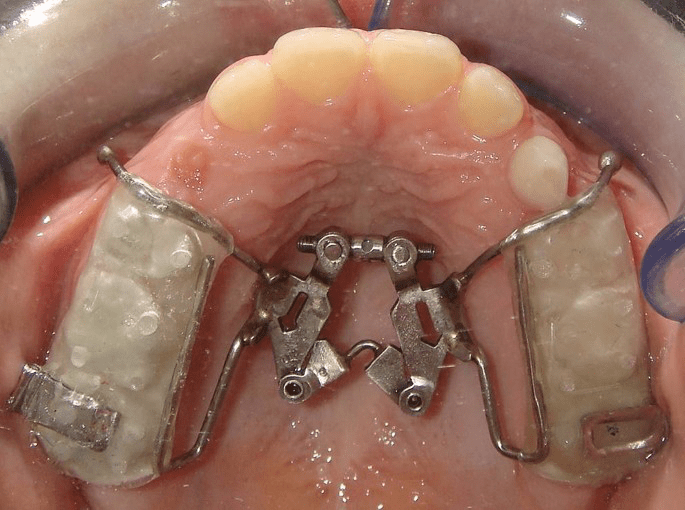
Alt-RAMEC Explained: Maxillary Expansion Technique

Class III Malocclusion and Maxillary Retrusion

  • Causes: Class III malocclusions can arise from mandibular protrusion, maxillary retrusion, or both.
  • Studies on Maxillary Retrusion: Various studies report the contribution of maxillary retrusion to Class III malocclusions in individuals with normal mandibles, with percentages ranging between 19.5% and 37%.
  • Treatment Focus: This recognition has led to introducing treatments like the orthopedic facemask for maxillary protraction.

Alternate Rapid Maxillary Expansion and Constriction (Alt-RAMEC)

  • Protocol: Expands and contracts the maxilla alternately (1 mm/day for a week each, repeated for 7–9 weeks) using a two-hinged rapid maxillary expander.
  • Rationale: Mimics the rocking mechanism in tooth extraction, disarticulating circum-maxillary sutures without over-expansion.

Alt-RAMEC Protocol Details

  1. Activation Phase:
    • The expansion screw was turned twice daily at a rate of 0.20 mm per turn.
    • This phase lasted for 1 week, ensuring the maxilla was progressively expanded.
  2. Deactivation Phase:
    • The screw was then turned twice daily in reverse at a rate of 0.20 mm per turn.
    • This phase also lasted for 1 week, gradually constricting the maxilla back.
  3. Repetition:
    • The activation and deactivation sequence was repeated for a second cycle.
    • After each week-long activation or deactivation phase, the patients were examined to monitor proper opening or closing of the screw, ensuring precision in the procedure.
  4. Post-Protocol Guidance:
    • Following the completion of the Alt-RAMEC cycles, patients were instructed to wear the Reverse Headgear (RH). This is a common adjunct in orthopedic facemask therapy designed to enhance maxillary protraction after the suture disarticulation achieved by Alt-RAMEC.

Results of Alt-RAMEC

  • Comparison with RPE:
    • Alt-RAMEC: Achieved an average anterior movement of point A by 5.8 mm in cleft patients over 9 weeks.
    • RPE: Achieved only 2.6 mm movement after 1 week.
    • Suture Opening: Experimental studies confirmed that Alt-RAMEC opens circum-maxillary sutures more extensively than 1 week of RPE.

Clinical Implications

ParameterA/D-RPE GroupRPE GroupComparison with Previous Studies
Maxillary Advancement (Point A)4.13 mm (T3)2.33 mm (T3)Greater movement in A/D-RPE group, similar to Liou and Tsai (2005) findings.
Anterior Movement of Point ASignificant difference (greater in A/D-RPE)Observed, but lesser than A/D-RPELiou and Tsai (2005), Merwin et al. (1997), Kapust et al. (1998), Sung & Baik (1998) showed comparable results to RPE group.
Mandibular RotationPosterior rotation observedPosterior rotation observedConsistent with previous studies (Merwin et al., 1997; Kapust et al., 1998).
Anterior Face Height IncreaseObservedObservedFindings align with previous studies.
Maxillary Plane AngleDecrease of 1.53 degrees (T3)Decrease observedA/D-RPE showed significant decrease, consistent with previous studies.
SNA Angle IncreaseSignificant difference (greater in A/D-RPE)ObservedA/D-RPE resulted in more significant SNA angle increase compared to RPE group.
ANB Angle IncreaseSignificant difference (greater in A/D-RPE)ObservedA/D-RPE showed more significant increase in ANB angle.
Overjet CorrectionGreater correction in A/D-RPE92.5% skeletal, 7.5% incisor tippingA/D-RPE showed a higher skeletal contribution (93%) vs. RPE (92.5%).
Skeletal vs. Dental Contribution to Overjet93% skeletal, 7% dental92.5% skeletal, 7.5% dentalA/D-RPE showed a higher skeletal contribution (57.9% maxillary, 35.1% mandibular).
Soft Tissue Profile ChangesMore pronounced in A/D-RPE (upper lip anterior, lower lip posterior)Observed (less pronounced)Profile improvement observed in both groups; A/D-RPE showed more pronounced soft tissue changes.
RH Usage During Treatment16-18 hours/day (initial 6 months), 12 hours/day (2nd 6 months), 6 hours/day (passive phase)Varied by study, typically used for 14 hours/daySimilar to recommendations of Saadia and Torres (2000) and others (Macdonald et al., 1999).
RelapseNo significant relapse observedNo significant relapse observedConsistent with previous studies (Macdonald et al., 1999; Vaughn et al., 2005).

Burning Palate and Chest Pain: Connecting Oral Health to Systemic Risk

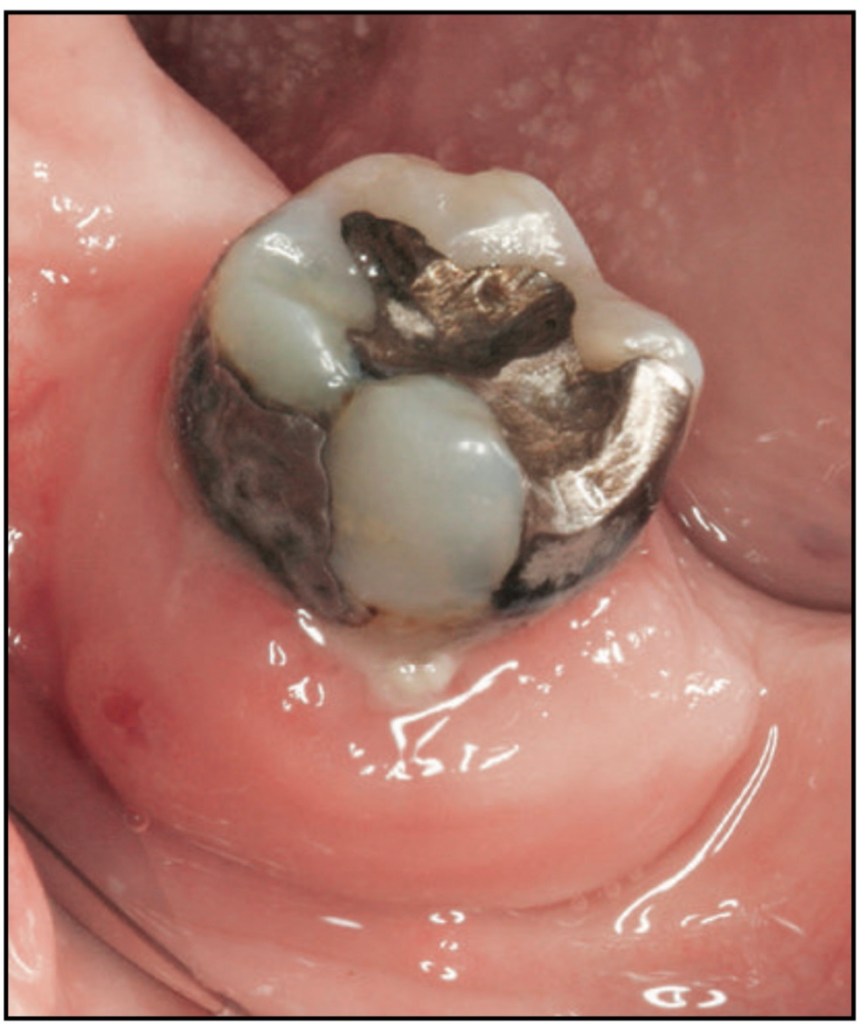
Clinical view of the patient’s palate. Burning Mouth Syndrome or Something More? A Case of Dual Diagnosis

An 80-year-old patient presents to the office with a chief complaint of a continuous burning feeling on his palate. Upon examination you find that the patient is extremely sensitive.When you finish your examination, the patient complains of sudden chest pain. He starts to sweat and has labored breathing.

Q: What is your diagnosis of the patient?

  • Medical: There are a number of possibilities for the patient to have chest pain and labored breathing. The patient might be experiencing an acute myocardial infarction, hyperventilation, or angina pectoris.
  • Dental: The patient has a Candida species infection, which is a gingival disease of fungal origin. It is also known as atrophic (erythematous) candidiasis.

Q: How will you manage the patient if he is having a myo-cardial infarction?

  1. Stop the dental procedure
  2. Administer oxygen to the patient at 4 to 6 liters per minute
  3. Call emergency medical services (EMS) immediately.
  4. Administer nitroglycerin from the emergency kit (if pain continues, most likely not angina)
  5. Administer aspirin (fibrinolytic properties):
    Give the patient 325 mg of non-enteric-coated aspirin to chew if they have no contraindications (e.g., allergies or bleeding disorders)
  6. Monitor vital signs
  7. Keep the patient in a comfortable seated position to minimize strain on the heart.
  8. Manage the patient’s pain with opioids (morphine) or nitrous oxide

Q: What is your approach to treating the dental condition of this patient?

First treat the condition with a topical antifungal (eg, nystatin or clotrimazole troches) applied to the tissue side of the denture four to six times a day for 2 to 3 weeks. If the fungal infection persists,treat the patient with 100 mg fluconazole daily.

@dr.mehnaz


REFERENCESPERIODONTAL REVIEW : A STUDY GUIDE / DEBORAH TERMEIE.

Decoding Oral Malodor: Managing a Mandibular Molar Abscess in a Medically Complex Patient

When Bad Breath Signals Trouble: A Case of Mandibular Molar Abscess

The patient is a 65-year-old man complaining of oral malodor. His dentist referred him to you to access the mandibular right second molar because of swelling, pus, and soreness. When he sits in your chair, he seems disoriented and irritable.When you look in his mouth, you find generalized inflammation of the gingiva and an abscess on the buccal aspect of the mandibular right second molar with suppuration. Charting demonstrates an 8-mm facial pocket and 6-mm palatal and interproximal pockets.

Q: What is your diagnosis of the patient?

Medical:

There are a number of reasons for the patient to appear dazed and irritable:

  • Hypoglycemia or hyperglycemia
  • Alcohol or drug overdose
  • Hyperthyroidism or hypothyroidism
  • Cerebrovascular incident

Dental:

  • The patient may have diabetes mellitus–associated gingivitis related to the endocrine system, under the heading of gingival diseases modified by systemic diseases, which is a subcategory of dental plaque–induced gingival diseases.
  • The patient has a periodontal abscess, which is a subclassification of abscesses of the periodontium.

Q: What could have led to the abscess formation?

  • Diabetes: According to Bjelland et al,18 multiple periodontal abscesses may result from uncontrolled hyperglycemia. Rees19 listed multiple or recurrent periodontal abscesses among the possible indications of undiagnosed or poorly controlled diabetes mellitus.
  • The abscess may also be caused by a preexisting periodontal pocket in association with bacteria at the depth of the pocket.
  • A foreign body can also cause a periodontal abscess.

Q: How will you treat the periodontal abscess?

  • I would ask the patient if he has seen his physician recently and whether he knows his hemoglobin A1c levels to determine if the abscess may be associated with diabetes (only his medical doctor can make that diagnosis).
  • An incision at a 90-degree angle to the long axis of the tooth will drain the exudate.Without removal of the cause (foreign body, bacteria, or calculus), the abscess will recur. If this is not possible, extraction might be necessary.
  • Antibiotics and analgesics should be prescribed. A follow-up with a dentist is also needed.
  • Saline Rinse: Advise warm saline rinses to reduce discomfort and promote healing.

Dentowesome | @dr.mehnaz


References: Periodontal review : a study guide / Deborah Termeie.

Soft tissue profile changes from 5 to 45 years of age

Total Facial Convexity

  1. What is the general trend observed in total facial convexity with age?
    • A. It remains constant.
    • B. It decreases.
    • C. It increases.
    • D. It fluctuates.
    • Answer: C. It increases.
  2. What is the primary factor contributing to the increase in total facial convexity?
    • A. Increased prominence of the chin.
    • B. Decreased prominence of the nose.
    • C. Increased prominence of the nasal tip.
    • D. Decreased prominence of the lips.
    • Answer: C. Increased prominence of the nasal tip.
  3. How does total facial convexity change in late adulthood?
    • A. It continues to increase.
    • B. It remains stable.
    • C. It decreases slightly.
    • D. It fluctuates significantly.
    • Answer: C. It decreases slightly.

Facial Convexity Excluding the Nose

  1. What is the general trend observed in facial convexity excluding the nose after 6 years of age?
    • A. Significant increase
    • B. Significant decrease
    • C. Relative stability
    • D. Significant fluctuation
    • Answer: C. Relative stability
  2. Are there significant gender differences in the trends of facial convexity change?
    • A. Yes, males show a greater increase than females.
    • B. Yes, females show a greater decrease than males.
    • C. No significant gender differences were observed.
    • D. The data is insufficient to determine gender differences.
    • Answer: C. No significant gender differences were observed.

Holdaway’s Soft Tissue Angle

  1. What is the ideal range for Holdaway’s soft tissue angle with a normal ANB angle?
    • A. 1° to 3°
    • B. 5° to 7°
    • C. 7° to 9°
    • D. 9° to 11°
    • Answer: C. 7° to 9°
  2. How does Holdaway’s soft tissue angle change with age?
    • A. It remains constant.
    • B. It increases.
    • C. It decreases.
    • D. It fluctuates significantly.
    • Answer: C. It decreases.
  3. What is the relationship between ANB angle and Holdaway’s soft tissue angle?
    • A. They are inversely proportional.
    • B. They are directly proportional.
    • C. They are unrelated.
    • D. The relationship is complex and varies.
    • Answer: B. They are directly proportional.

Upper Lip Position

  1. What is Ricketts’ ideal position of the upper lip relative to the esthetic line in adult females?
    • A. 2.0 mm posterior
    • B. 4.0 mm posterior
    • C. 2.0 mm anterior
    • D. 4.0 mm anterior
    • Answer: B. 4.0 mm posterior
  2. How does the position of the upper lip relative to the esthetic line change with age?
  • A. It becomes more retrusive.
  • B. It becomes more protrusive.
  • C. It remains constant.
  • D. It fluctuates significantly.
  • Answer: A. It becomes more retrusive.

Lower Lip Position

  1. What is the ideal position of the lower lip relative to the esthetic line in adult males?
  • A. 2.0 mm posterior
  • B. 2.8 mm posterior
  • C. 3.8 mm posterior
  • D. 4.0 mm posterior
  • Answer: C. 3.8 mm posterior
  1. How does the position of the lower lip relative to the esthetic line change with age?
  • A. It becomes more protrusive.
  • B. It becomes more retrusive.
  • C. It remains relatively stable.
  • D. It fluctuates significantly.
  • Answer: B. It becomes more retrusive.

Age-Related Changes and Treatment Planning

  1. Why is it important to consider age-related changes in the soft tissue profile when planning orthodontic treatment?
  • A. To avoid overtreatment
  • B. To avoid undertreatment
  • C. To make informed extraction decisions
  • D. All of the above
  • Answer: D. All of the above.
  1. What is the primary reason why orthodontists should not treat adolescent patients according to adult standards?
  • A. Adolescent facial growth is unpredictable.
  • B. Adolescent patients are more prone to relapse.
  • C. Adult standards may lead to an over-retrusive upper lip in adolescents.
  • D. Adult standards may lead to an over-protrusive upper lip in adolescents.
  • Answer: C. Adult standards may lead to an over-retrusive upper lip in adolescents.

MCQs on Historical Theories of Orthodontic Tooth Movement

Question 1:

Which theory proposed that bone bending was responsible for orthodontic tooth movement?

  • A. Piezo-electric forces theory
  • B. Pressure-tension hypothesis
  • C. Bone bending theory
  • D. Mechanotransduction theory

Answer: C. Bone bending theory

Question 2:

What was the main flaw in the pressure-tension hypothesis?

  • A. It assumed a closed system for the periodontal ligament.
  • B. It did not consider the role of osteoblasts and osteoclasts.
  • C. It failed to account for the electrical effects in bone.
  • D. It disregarded the influence of cytokines and growth factors.

Answer: A. It assumed a closed system for the periodontal ligament.

Question 3:

Which theory suggested that electrical effects in bone were responsible for orthodontic tooth movement?

  • A. Piezo-electric forces theory
  • B. Pressure-tension hypothesis
  • C. Bone bending theory
  • D. Mechanotransduction theory

Answer: A. Piezo-electric forces theory

Question 4:

According to Meikle’s overview, what is the primary mechanism underlying orthodontic tooth movement?

  • A. Bone bending
  • B. Electrical effects
  • C. Mechanotransduction
  • D. Pressure-tension

Answer: C. Mechanotransduction

Question 5:

Which of the following theories have been largely discounted by contemporary research?

  • A. Bone bending and pressure-tension hypothesis
  • B. Piezo-electric forces theory
  • C. Mechanotransduction theory
  • D. All of the above

Answer: A. Bone bending and pressure-tension hypothesis

Historical Theories of Orthodontic Tooth Movement

Bone Bending Theory:

  • Pressure applied to teeth bends the bone.
  • This bending triggers bone resorption and deposition, similar to what happens in long bones.

Pressure-Tension Hypothesis:

  • Forces applied to teeth are transmitted through the periodontal ligament to the bone.
  • Differential pressures in the periodontal ligament cause bone remodeling.
  • This theory has been largely dismissed due to the hydrostatic nature of the periodontal ligament.

Piezoelectric Forces Theory:

  • Bending bone generates electrical charges (piezoelectric and streaming potentials).
  • These electrical charges were thought to be responsible for bone remodeling.
  • However, it’s now believed that these electrical effects are a secondary phenomenon and not the primary cause of bone remodeling.

Contemporary Understanding:

  • Orthodontic tooth movement is a complex biological process.
  • Mechanical forces applied to teeth trigger a series of cellular responses.
  • Osteoblasts, the bone-forming cells, play a crucial role in this process.
  • They respond to mechanical stimuli by producing signaling molecules (cytokines).
  • These signaling molecules influence the behavior of other cells involved in bone remodeling.

Braces-Friendly Diet: Foods You Can Enjoy

So you’ve got the braces thing going on, huh? A journey to a stellar smile, no doubt! But let’s face it, chomping down on everything from apples to samosas can be a real drag with those metal friends attached. Fear not, fellow food enthusiasts, for this guide will turn you into a braces-wearing, balanced-diet boss!

Carbs: Your Chapatti and Rice BFFs

Lucky you! Most grains are soft and chew-friendly. Pile on the fluffy rice, indulge in those melt-in-your-mouth rotis (dunk ’em in dal for extra protein power!), and enjoy that breakfast bread (just maybe avoid the rock-hard baguettes for now). Discomfort? Mash those chapattis into a delightful curry and rice symphony – your taste buds and braces will thank you.

Dairy: Your Calcium Cavalry

Milk, yogurt, cheese – the holy trinity of strong teeth and happy braces! They’re soft, delicious, and pack a calcium punch. Bonus points for milkshakes (because, hello, who doesn’t love a good milkshake?), but go easy on the sugar. Think of yourself as a calcium crusader, venturing forth with every spoonful of yogurt!

Veggies: Your Mashed Marvels

Ah, vegetables – the dietary champions! Most Indian meals involve cooked veggies, which are a breeze for braces. Feeling a bit adventurous? Mash them up for extra comfort. Need a raw veggie fix? Grate those carrots or chop your salad into bite-sized pieces. Just remember, you’re not a superhero (yet!), so skip the superhero-sized bites.

Fruits: Your Juicy Jewels (with a Few Caveats)

Fruits – the colorful crew that adds sweetness to life! But with braces, things can get a little tricky. Apples? Unless you’re feeling like a dental daredevil, cut them up. Unripe pears and peaches? Give them a side-eye. Feeling extra tender after a wire change? Citrus fruits and berries are your new best friends. Remember, if all else fails, fruit juice is always a healthy option. Just a heads-up, though, chomping on icy-cold fruits might not be the most pleasant experience with all that metal in your mouth. Let your food warm up a bit for a friendlier feast.

Nuts & Seeds: Your Sneaky Saboteurs (But We Can Work With Them)

Okay, nuts and seeds – they’re delicious, nutritious, but a real challenge for braces. Here’s the deal: during your orthodontic adventure, swap those whole nuts for nut butters (think creamy peanut butter heaven!) or coarsely grind your favorite seeds. This way, you get the goodness without the potential for a braces breakdown.

Meat: Your Tender and Chopped Champs

Meat – the protein powerhouse! Unfortunately, it can be a bit fibrous and tough on braces. Here’s the golden rule: avoid gnawing on meat straight off the bone (think of your teeth, not your inner caveman). Tofu and cottage cheese are great protein alternatives, but if you must have meat, choose lean, tender cuts and chop them into bite-sized pieces.

The Absolute No-Nos: Your Braces’ Nightmares

Now, let’s talk about the foods that would make your braces weep. Gum (both sugary and sugarless) is a big no-no. Sticky candies? Forget about it. Hard foods like whole nuts (unless grinded), popcorn, corn on the cob, pizza crusts (sorry!), ice, and cookies are strictly off-limits. Think of them as villains in your quest for a perfect smile.

Remember: Consistency is key! Stick to this guide, embrace some creativity in the kitchen, and you’ll be a braces-wearing, balanced-diet pro in no time. Now go forth and conquer that delicious, nutritious world, one bite at a time (and maybe cut that bite in half)!

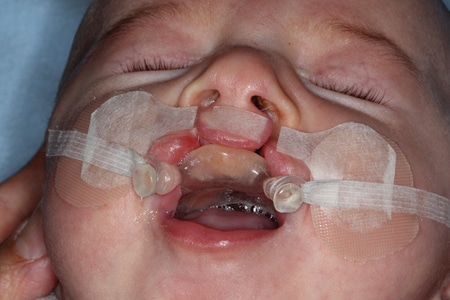
MCQs – Presurgical Nasoalveolar Molding (PNAM)

Single-Best Answer Questions

  1. The primary goal of presurgical nasoalveolar molding (PNAM) is to:
    • A. Improve facial aesthetics
    • B. Reduce the severity of the cleft
    • C. Prepare the patient for surgery
    • D. All of the above
  2. PNAM involves the use of:
    • A. A surgical plate
    • B. A molding device
    • C. A orthodontic appliance
    • D. All of the above
  3. The NAM plate is primarily used to:
    • A. Stimulate maxillary growth
    • B. Improve nasal symmetry
    • C. Correct the cleft lip
    • D. All of the above
  4. Lip massage and lip taping are recommended to:
    • A. Reduce scar tissue
    • B. Improve facial muscle function
    • C. Increase tissue elasticity
    • D. All of the above

Multiple-Choice Questions

  1. Which of the following are benefits of PNAM?
    • A. Reduced cleft stigma
    • B. Improved nasal and lip appearance
    • C. Improved maxillary growth
    • D. All of the above
  2. What are the potential challenges associated with PNAM?
    • A. Patient discomfort
    • B. Difficulty with feeding
    • C. Skin irritation
    • D. All of the above
  3. Which of the following factors may influence the effectiveness of PNAM?
    • A. Severity of the cleft
    • B. Timing of initiation
    • C. Patient compliance
    • D. All of the above

True or False Questions

  1. PNAM is a relatively new technique.
  2. The NAM plate is a permanent device.
  3. Lip massage and lip taping are only effective in the short term.
  4. PNAM can help to reduce the need for future surgeries.
  5. The long-term effects of PNAM on dental arch development are well-established.

Answers to MCQs on Presurgical Procedure for Cleft Patients

Single-Best Answer Questions

  1. B. Reduce the severity of the cleft
  2. D. All of the above
  3. A. Stimulate maxillary growth
  4. C. Increase tissue elasticity

Multiple-Choice Questions

  1. D. All of the above
  2. D. All of the above
  3. D. All of the above

True or False Questions

  1. True
  2. False
  3. False
  4. True
  5. False

MCQs on Preliminary Surgical Procedures for Cleft Patients

Single-Best Answer Questions

  1. The most common surgical procedures for cleft patients include:
    • A. Cheiloplasty, palatoplasty, and rhinoplasty
    • B. Cheiloplasty, palatoplasty, and alveolar bone grafting
    • C. Palatoplasty, rhinoplasty, and alveolar bone grafting
    • D. Cheiloplasty, rhinoplasty, and orthognathic surgery
  2. The C-flap technique is a modification of:
    • A. Millard rotation-advancement flap
    • B. Fischer’s technique
    • C. Intravelar veloplasty
    • D. Furlow palatoplasty
  3. The primary goal of postoperative care after lip surgery in cleft patients is:
    • A. To prevent infection
    • B. To promote wound healing
    • C. To improve facial aesthetics
    • D. To correct speech problems
  4. Laser therapy is used in scar management after lip surgery to:
    • A. Reduce scar tissue
    • B. Improve skin texture
    • C. Enhance wound healing
    • D. All of the above

Multiple-Choice Questions

  1. Which of the following factors influence the timing of lip and palatal repair in cleft patients?
    • A. Severity of the cleft
    • B. Patient’s age
    • C. Surgeon’s preference
    • D. All of the above
  2. What are the potential complications associated with lip surgery in cleft patients?
    • A. Dehiscence
    • B. Notching
    • C. Fistula formation
    • D. All of the above
  3. Which of the following techniques can be used for palatal repair in cleft patients?
    • A. Furlow palatoplasty
    • B. Veau-Duhamel palatoplasty
    • C. Intravelar veloplasty
    • D. All of the above

True or False Questions

  1. Lip and palatal repair are always performed simultaneously in cleft patients.
  2. The C-flap technique is a traditional method for lip repair.
  3. Postoperative massage is recommended to reduce scar tissue in cleft patients.
  4. Laser therapy is a new and experimental approach to scar management.
  5. Silicone gel can be used to help prevent scar contracture in cleft patients.

Answers to MCQs on Preliminary Surgical Procedures for Cleft Patients

Single-Best Answer Questions

  1. B. Cheiloplasty, palatoplasty, and alveolar bone grafting
  2. A. Millard rotation-advancement flap
  3. B. To promote wound healing
  4. D. All of the above

Multiple-Choice Questions

  1. D. All of the above
  2. D. All of the above
  3. D. All of the above

True or False Questions

  1. False
  2. False
  3. True
  4. False
  5. True