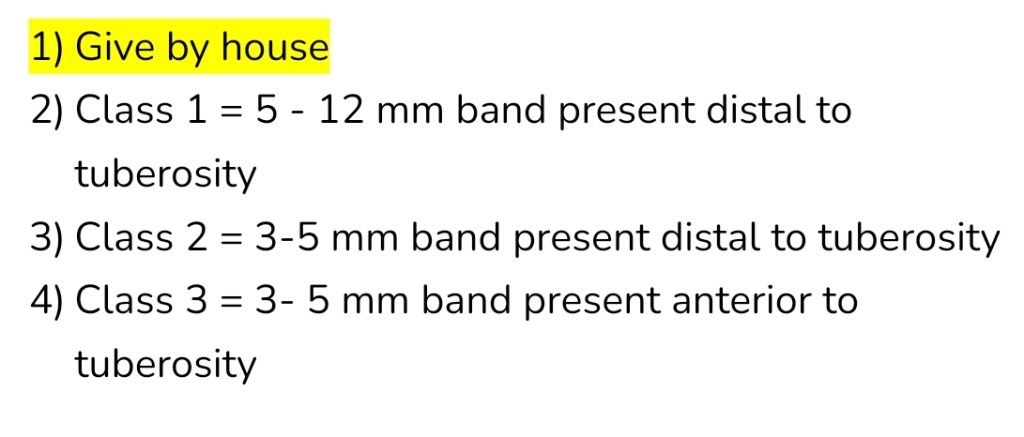
PALATAL THROAT FORM 2m*
Wical and swoope
Based on location of mental foramen
If mental foramen is at
Lower 1/3rd = mild or normal resorption
Middle 1/3rd = moderate amount of resorption
Upper 1/3rd = severe resorption
LIQUIDS- useful when-
GELS-

🎯 Decision making processes in patient management

🎯 What can dentists do to protect themselves and patients?
#protips:
1. How to wear and remove your mask?
Wearing a mask is mandatory for the clinician and support staff, the N95 has become a necessity. The most important requirement is to avoid touching the surfaces of the mask, if at all it is required to touch it for the first time, make sure it is with sterile gloves.
2. How to re-use N95?
We all know that the surgical masks should be disposed after each use. However these days it’s necessary for and supporting staff to use N95. Since the N95 is more expensive than the masks we wear on a regular basis, to dispose after each use may not be very economical.
So here’s how you can store your N95 if it is not soiled, you can label each box/bag with the name of the doctor who it belongs to and the days (as shown in the image below) and use it accordingly.

3. Are you wearing your mask right?
It is advisable to wear the mask before wearing the head cap so that the ears are completely covered, if the mask is worn over the head cap the elastic that goes behind the ear may tug on the cap and expose your ears.
4. A small tip on which masks you can avoid and/or wear in your clinics?
Nowadays a variety of masks are available, right from single to ten layers. Cloth masks are not surgically approved to be worn by a clinician based on its filteration capacity, and it is advisable not to use a single or two ply mask. The least you need is a two, 3 ply surgical mask worn one on top of the other.
The preferred choice always would be an N95 over which you can wear a 3 ply mask so that your N95 is protected from any splatter or aerosol and can be reused.
5. Are you using cloth masks while working at your clinics?
The four layer cloth masks are not scientifically proven for clinical use, these are good for general use, but not suitable for clinical use as there are no studies that have proven their effectiveness in clinical use.
6. Select the mask that fits you well!
Make sure the nose clip is fit well. Blow air to check if there is any leakage of air, the rim should be perfectly sealed. Poorly fit N95 can drastically reduce the filteration capacity to 30%. It is always better to wear your mask in front of a mirror.
7. Is it advisable to wear masks with filters?
The filter in the mask is a feel good factor for getting fresh air inside, but in conditions, where there is an active virus around it is advisable not to use, especially in clinical conditions.
8. Wearing a mask may cause a lot of symptoms right from the marks from the mask which is a sign that your mask has a good seal, to sweating, breathlessness, dizziness, increased heart rate and blood pressure, fatigue and increased CO2 saturation.
We recommend clinicians to start working with lesser number of hours and increase the work time gradually till you get accustomed to the new conditions.
9. Are masks with shields effective for use in clinical practice?
They are not scientifically proven because of the lack of fit and are not recommended for clinical practice.
10. Which shield are you using?
Shields have been proven to have adequate protection when worn over the N95, it acts as a second line of defence and avoid any splatter or aerosols on the exposed part of the face. Hence its strongly recommended to incorporate a shield while practicing by the clinicians. Pick the one that best suits your needs!
Its best to have separate shields for everyone working in the clinic, label the shields and use 4-5 times and disinfect the shields in between uses with a disinfectant.
11. Wearing protective glasses in such times is very important, for the clinician and the supporting staff. Make sure to have different glasses for each person. The glasses should seal the area around the eyes and protect them from any aerosols. A good fit ensures tight seal and no fogging, in addition check the quality to see the visibility too.
12. Are you providing your patients with protective eyewear?
It is of utmost importance to provide your patients with protective eyewear too. There are various kind of eyewear available that can be given to the patient depending on the treatment being carried out. Store the glasses in a box or ziplock bag after disinfection in between uses.
13. Are you washing your hands thoroughly?

14. WASH YOUR HANDS!
Earlier considered as a luxury, these days using sensor based soaps/sanitizer dispensers and automatic taps are better, more safe in these times and quite affordable as well. If the installation of automatic taps and soap dispensers is not possible, we recommend taps which have push buttons that can be used with the non-dominant part of the hands. For sanitizers use dispensers which have foot pedals to avoid contact.
15. Virtual Care:

Its best to make sure first a TELECONSULTATION is done and then the patient is called in only if absolutely necessary. Level 1 includes consultation and planning if treatment of level 2 or 3 is required. Teleconsultation is also known as level 0 treatment. Make sure to check with the patient before giving an appointment if they have or had any symptoms in the past 10-15 days.
16. The New Normal:
If there is a chance to space your appointments it is a good idea, it would be better to donn and doff after each patient and go back to scrubs specially when you are performing procedures involving aerosols. The idea being if you are in a PPE the whole day you may end up touching surfaces that could be avoided. Once exposed to the patient you must assume that there is some microbial or viral load on your PPE. Therefore to reuse your PPE through the day donning and doffing with inter-spacing between appointments would be an intelligent idea.
17. Are you disposing your PPE the right way?
At the end of the day or whenever you deem fit to dispose the PPE follow a protocol in such a way that you don’t end up touching the front surfaces of the PPE which may have been exposed to aerosols. Pull through the sleeves catching the inner surface and then roll inside out always with a pair of gloves and dispose the PPE.
18. Four main chemicals will make all the difference

19. Hypochlorous acid:
HOCl is the most effective disinfectant in the chlorine family and has been proven to be more efficient than NaOCl. HOCl’s lack of electrical charge allows it to penetrate the protective lipid membrane of an organism and quickly inactivate the viral protein. Hypochlorous acid is also known as electrolyzed water is considered by the FDA to be “the form of free available chlorine that has the highest bactericidal activity against a broad range of microbes” including MRSA, M.Tuberculosis, E.coli, Corona virus and many more.
The management practice of the operating area should be quite similar to what happens with other patients affected by infectious and highly contagious diseases. As often as possible, the staff should work at an adequate distance from patients; furthermore, handpieces must be equipped with anti-reflux devices to avoid contaminations, improving the risk of cross-infections.
Dentists should take strict personal protection measures and avoid or minimize operations that can produce droplets or aerosols. The 4-handed technique is beneficial for controlling infection. The use of saliva ejectors with low or high volume can reduce the production of droplets and aerosols.
The operatory may be contaminated with micro-aerosols that can stay in air for upto 15 minutes, make sure to open the windows in the operatory to facilitate air circulation before you take the next patient.

It is crucial for dentists to refine preventive strategies to avoid the COVID-19 infection by focusing on patient placement, hand hygiene and all personal protective equipment (PPE)
Due to the characteristics of dental settings, the risk of cross-infections may be high between dental practitioners and patients. Due to the unique characteristics of dental procedures where a large number of droplets and aerosols could be generated, the standard protective measures in daily clinical work are not effective enough to prevent the spread of COVID-19, especially when patients are in the incubation period, are unaware they are infected or choose to conceal their infection.
Dentowesome | @drmehnaz🖊
A number of tooth brushing techniques have achieved acceptance by the dental profession. Each technique has been designed to achieve a definite goal. Hence, no procedure can be described as the best. Depending on the individual cases, the techniques of tooth brushing may have to be altered to achieve the maximum beneficial effect.
It is the most widely accepted and most effective method for the removal of dental plaque present adjacent to and directly underneath the gingival margin.
The bristles are placed 45 degrees angle to the gingiva and moved in small circular motions.
Strokes are repeated 20 times. 3 teeth at a time.
On the lingual aspect of anterior teeth,the brush is inserted vertically and the neck of the brush is pressed into the gingival sulci and proximal surfaces at a 45 degree angle.
The bristles are then activated.
Occlusal surfaces are cleaning by pressing the bristles firming against the pits and fissures and then activating the bristles.
This technique combines the vibratory and circular movements of the bass technique with the sweeping motion of the roll technique. The toothbrush is held in a way that the bristles are at 45 degrees to the gingiva. Bristles are gently vibrated by moving the brush handle in a back and forth motion. The bristles are then swept over the sides of the teeth towards their occlusal surfaces in a single motion.
The bristles are pointed apically with an oblique angle to the long axis of the tooth
The bristles are positioned partly on the cervical aspect of teeth and partly on the adjacent gingiva.
The bristles are activated by short back and forth motions and simultaneously moved in a coronal direction.
20 strokes are applied and procedure is repeated systematically on adjacent teeth.
The child is asked to stretch his/her arms such that they are parallel to the floor.
The child is then asked to make big circles using the whole arm to draw circles in the air.
The circles are reduced in diameter until very small circles are made in front of the mouth.
The child is now ready to make circles on the teeth with the toothbrush making sure that the teeth and gums are covered.
The bristles of the toothbrush are placed at 90 degree angle to the facial surfaces of the teeth.
With the teeth edge to edge, place the brush with the filaments against the teeth at right angles to the long axis of the teeth.
Brush vigoursly without great pressure with a stroke that is mostly up and down on the tooth surfaces with just a slight rotation or circular movement after striking the gingival margin with force.
Enough pressure is used.it is not intended that the upper and lower teeth shall be brushed in the same series of strokes.
The teeth are placed edge to edge to keep the brush slipping over the occlusal or incisal surfaces.
Most convenient and effective for small children with deciduous teeth.
Interdental spaces of the permanent teeth of adults are not properly cleaned.
a soft/medium multi-tufted tooth brush is indicated for this technique. Bristles are placed at an angle of 45 degrees to the gingiva with the bristles directed coronally. The bristles are activated by mild vibratory strokes with the bristle ends lying interproximally.
Massage and stimulation for marginal and interdental gingiva.
This method of brushing requires vigorous horizontal, vertical and circular motions.it is the virtual free style of the brushing scene.
This method of brushing is also known as the rolling stroke method or ADA method or the sweep method.it works fairly well for patients with anatomically normal gingival tissues.
The bristles are placed at a 45 degree angle. The toothbrush is slightly rolled across the tooth surface toward the occlusal surfaces. This technique requires some flexibility around the wrist.
Provides gingival massage and stimulation.
The physiologic method was described by smith and advocated later by bell. It was based on the principle that the toothbrush should follow the physiologic pathway that is followed by food when it traverses over the tissues during mastication.
Bristles are pointed incisally or occlusally and then moved along and over the tooth surfaces and gingiva. The motion is gentle sweeping from incisal or occlusal surfaces over to facial surfaces and progressing towards and over the gingiva. It is almost an attempt to duplicate natures self-cleansing and gingival stimulation mechanism during mastication of food.
Interdental spaces and sulcular areas of teeth are not properly cleaned.
 Dentowesome