Kennedy classification of Partially Edentulous Arch

  • CLASS I: Bilateral edentulous areas located posterior to the remaining natural teeth
  • CLASS II: A unilateral edentulous area located posterior to the remaining natural teeth
  • CLASS III: A unilateral edentulous area with natural teeth remaining both anterior and posterior to it
  • CLASS IV: A single, but bilateral (crossing the midline), edentulous area located anterior to the remaining natural teeth

There are two more Classes added to Kennedy’s classification which are – 

  • Class V: An edentulous area bound by teeth anteriorly and posteriorly, but where the anterior tooth is not suitable to be used as an abutment. 
  • Class VI: An edentulous situation where the bounded teeth are capable of total support of the prosthesis.

POSTED 

Applegate’s Rule

The Kennedy classification would be difficult to apply to every situation without certain rules for application. Applegate has provided the following eight rules governing the application of the Kennedy method.

RULE 1: Classification should follow rather than precede any extractions of teeth that might alter the original classification.

RULE 2: If a third molar is missing and not to be replaced, it is not considered in the classification.

RULE 3: If a third molar is present and is to be used as an abutment, it is considered in the classification.

RULE 4: If a second molar is missing and is not to be replaced, it is not considered in the classification (for example, if the opposing second molar is likewise missing and is not to be replaced).

RULE 5: The most posterior edentulous area (or areas) always determines the classification.

RULE 6: Edentulous areas other than those determining the classification are referred to as modifications and are designated by their number.

RULE 7: The extent of the modification is not considered, only the number of additional edentulous areas.

RULE 8: There can be no modification areas in Class IV arches. (Another edentulous area lying posterior to the “single bilateral area crossing the midline” would instead determine the classification).

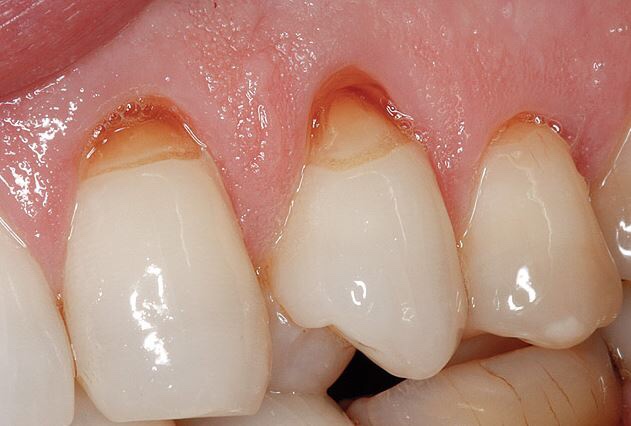
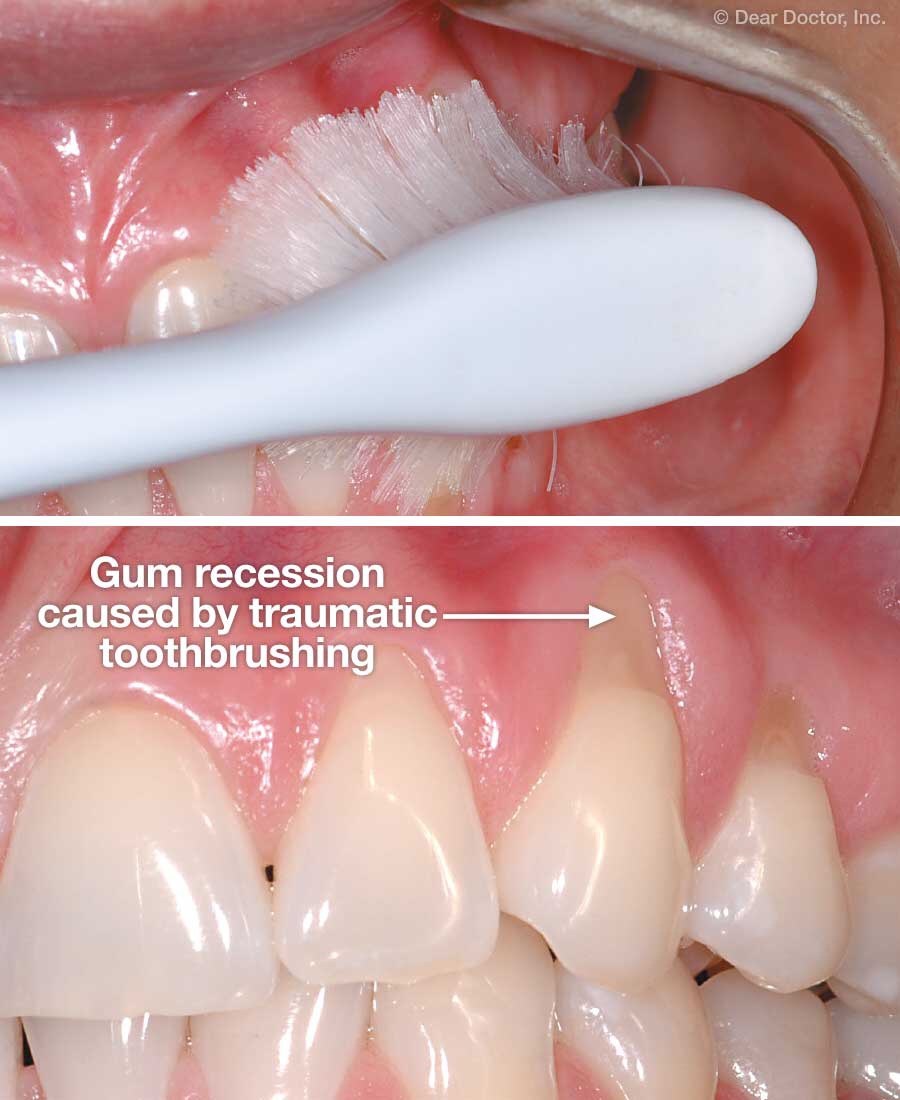
Abrasion

In simple words, Abrasion is loss of tooth structure due to foreign substances , like heavy brushing, hard bristels. Abrasion occours in the cervical region of tooth

Etiology

  • Faulty oral hygiene practice
    • Horizontal brushing
    • Excessive forces
  • Quality of toothbrush
  • pH and amount of dentifrice used
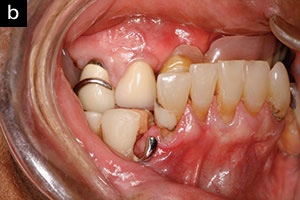
  • Ill-fitting clasps of partial dentures cause localised abrasion lesions
  • Fiction from toothpicks and interproximal brushes
  • Tobacco Chewing

Treatment

We need to take careful consideration of aetiology and progression of the condition. That means, correct diagnosis is the prerequisite for the management of the lesion.

  • If the lesion is localized and not interfering with the physiological function of the stomatognathic system = It may be restored
  • If the abrasion is generalized and substantial = the habit should be discontinued and controlled
  • If teeth are sensitive = use Flouride application
  • If it’s class V lesion = Restoration with GIC
  • If lesion involves a none conscious area in the posterior teeth = use metallic restorationon

Erosion

In simple words, Erosion is a chemical reaction, it happens mostly on the lingual aspect of the teeth.

Aetiology

  • Alcohol
  • Soft drinks
  • Citrus containing drinks
  • Yoghurt based food
  • Iron tablets
  • Chlorine from swimming pool
  • Working in an acid environment
  • Oesophagal reflux disease

How does it look? It looks like a broad saucer shape %

  • lesions appear grooves, wedge-shaped or irregular
  • Highly polished surfaces are produced
  • Hypersensitivity in dentin exposed lesion
  • In some cases, caries can occur due to loss of enamel

Treatment

  • Early Diagnosis- may stop the progress of erosion
  • Dietary analysis:
    • Finish the meal with mil or cheese- neutralize pH of the oral cavity
    • Delay toothbrush by 20 to 60 mins after a meal in the night
    • Avoid holding and swishing of drink in mouth in the mouth
  • Patient with GERD
  • Materials that aid in remineralization and decrease sensitivity.
    • Fluoride mouth rinses
    • Varnishes
    • Desensitizing agents
  • Dentin Bonding Agent- application to exposed dentin.

Maintence

  • Nightguards like splints
  • Oral hygiene monitoring
  • Monitor tooth surface loss using intramural landmarks and die stone impression during the first visit of the patient.

Chronic Periodontitis

What is periodontium?

It involves all supporting structures which is composed of:

  • gingiva
  • alveolar mucosa
  • cementum
  • periodontal ligament
  • alveolar bone
  • Slowly progressive disease
  • It occurs in response to plaque and calculus.
  • It progresses aggressively in patients with
    • diabetes: type I
    • Smoking habits: more attachment loss and bone loss, more furcation involved, and deeper pockets.
    • Thyroid condition
    • It can occur in childhood and adolescence also

What is pocket?

It is pathological deepened cervical gingiva. We can observe that junctional epithelium (attachment of gingival structure) is broken down or detached from coral end. This causes deepened sulcus. Hence, Plaque and calculus are deposited.

Clinical Features

  • Gingival Inflammation is present
  • We can see pocket formation
    • Slight: 1-2mm
    • Moderate: 3-4 mm
    • Severe: 5 mm or more
  • Loss of attachment (recession)
  • Presence of inflammatory swelling
  • Colour ranges from pale red to magenta
  • Loss of stippling
  • Blunted or rolled gingival margin
  • Blunt or flattened interdental papilla
  • All the signs of inflammatory may not always be present
  • May bleed on probing the pocket
  • Increased gingival fluid exudation
  • Purulent exudate may be present
  • Signs of inflammatory may be masked because of fibrotic changes
  • Horizontal and Vertical bone loss
  • Progressive increase in the mobility of teeth involved due to bone loss

How do you differentiate periodontitis and gingivitis?

It’s simple, in giginvitis, you can observe no bone loss and mobility whereas, in periodontitis, you can observe mobility, deep pockets and recession.

Differential Diagnosis

  • Age of patient
  • Rate of disease progression
  • Familial nature of the aggressive disease
  • Can be correlated with the amount of plaque and calculus present

How to calculate whether chronic periodontitis is generalised or localised based on number of teeth?

Rules:

Generalised – when >30% of teeth show attachment loss

Localised- when <30% of teeth show attachment loss

Let’s consider two type of patents.

In patient A, the number of teeth is 32.

We calculate 30% of total teeth, which means 10 teeth are affected by periodontitis. This denotes patient has the generalized condition.

If 7 teeth have recession and pockets, that’s is less than 10. The patient had localized condition.

In patient B, the total number of teeth is 28

We calculate 30% of 28 teeth, which means 8 teeth are affected. This denotes patient has a generalized condition.

If 6 teeth have recession and pockets, that’s is less than 8. The patient had localized condition.

Symptoms

  • Usually painless due to absence of receptors
  • Sometimes, localised dull pain radiating deep into the jaw during brushing
  • Sensitivity to hot and cold or both due to exposure of root dentin. The sensation will be tingling
  • Food lodgement in the areas of bone loss cause discomfort
  • Due to food accumulation, patients feel itchness in the gingiva. They try to remove it using a toothpick.

Disease Progression

  • Slow rate- depends on the post immunity but ageing or disease factors or diabetes play a role in the rate.
  • Onset can occur at any time in the presence of calculus and plaque at site-specific surfaces.
  • It is more evident in the mid-30s due to accumulative effect.
  • Some areas progress at a faster rate or slower rate.
  • Faster Rate- due to more accumulation of plaque and short conical roots such as anteriors

Infective Endocarditis and it’s Types

Defination

In simple words, It’s a microbial infection of heart valves or lining of endocardium.

The microbial organism can be bacteria or parasite or fungus or rickettsia or chlamydia.

Let’s check out different types!

  1. Subacute Bacterial Endocarditis
  2. Acute Infective Endocarditis
  3. Post Operative Endocarditis
  4. Right Sided Endocarditis

What’s Subacute Endocarditis?

  • It is caused by relevantly low virulence organisms like streptococcus viridan
  • It mainly effects
    • damaged heart valves
    • MacCallum plaque which is irregular thickness usually found in the left atrium in patients with rheumatic fever
    • Also, Low pressure areas of heart
  • What are the Characteristics Features? It’s simple 4 points 🙂
    • Formation of vegetation
    • Emboli formation
    • Mycotic aneurism
    • Valvular Regurgitation

What is Acute Infective Endocarditis?

  • It is caused by high virulence organism like staph. aureus
  • It effects both normal and damaged valves
  • Doc, you need to be careful cause clinical course can be fatal if untreated within 6 weeks!!
  • What are the Clinical features? How is it different from subacute?
    • Valve destruction is greater
    • Abscess formation is common
    • Valve cusp perforation can also occur

What is Post-operative Endocarditis?

  • As the name indicates, during cardiac surgery, the patient develops infective endocarditis
  • What is a prosthetic valve? It’s an artificial valve replacing the mitral or aortic valve
  • It mainly affects the prosthetic valves, especially aortic valve
  • Source of infection- staph epidermis
  • Generally, within 3-60 days of a health care facility admission, the nosocomial infections will cause endocarditis
  • It accounts for 20% of Infectious Endocarditis. So, provide clean facilities in hospital, doc.
  • Typically, it is associated with invasive procedures like dental procedures and intravenous access.

What is Right-sided Endocarditis?

  • Who is mainly affected? Intravenous drug addicts
  • It is caused when they share a syringe with other people during drug abuse
  • Source of infection: staph aureus and candida present on the surface of the skin
  • So, the microorganisms enters into the body through veins during drug abuse.
  • The right side of the heart is affected, especially tricuspid valve.
  • Larger bloodborne particulate matter in IV drug abusers typically deposits on the tricuspid valve.
  • Remember, tricuspid valve is rarely involved in other causes of Bacterial Endocarditis
  • Generally, the clinical course will be subacute or chronic or insidius.

Infective Endocarditis- Etiology

  1. Causative Organisms
  2. Predisposing Procedures
  3. Predisposing Conditions

Let’s read about causative organisms that cause endocarditis

  1. Less Virulent: Streptococcus
    • virdans
    • mitis
    • bovis
  2. Highly Virulent
    • Staphylococcus aureus
    • Gonorrhoea
    • Pseudomonas
    • Streptococcus pneumonia
  3. Coagulase-negative staphylococci
  4. Gram-Negative HACEK
    • Haemophilus
    • Actinobacillus
    • Cardiobacterium
    • Eikenalla
    • Kingella
  5. Bartonella (responsible for the high number of culture-negative endocarditis cases)
  6. Fungus, moulds, yeasts- cause endocarditis in immunosuppressive patients.

Let’s read about predisposing procedures!

  • Respiratory infection
  • Obstetric delivery
  • Dental procedures (including routine tooth cleaning)
  • Genitourinary procedures
  • Skin infections
  • Prosthetic Valve Recipient
  • Cardiac Surgery
  • Biliary duct surgery
  • Cystic surgery in females

Let’s talk about predisposing conditions

  • High-Risk Group
    • Prosthetic valves
    • Surgically constructed AV shunts
    • Complex valve surgery
  • Moderate Risk Group
    • Mitral valve collapse
    • Mitral regurgitation
    • Hypertrophic myocardiopathy
  • Low-Risk Group
    • Coronary atrial bypass
    • Intracardial placement

Infective Endocarditis- Pathophysiology

What are the sites where the infection can occur? Cause these are areas of the nidus where the infection can occur!

  • Normal cardiac endothelium
  • Damaged valves
  • Mitral valve and aortic valve are most likely to be involved
  • Surgically constructed AV shunts
  • Prosthetic valves

Imagine, a breach in the endothelium caused by

  • Turbulent flow (e.g. valvular stenosis or valvular regurgitation) or
  • Intravascular device-related injury (e.g. catheters)

After the breach, the platelets and WBC’s aggregate near injured endothelium like soldiers and give rise to the thrombus.

If dental procedures or any surgery takes place after thrombi formation, chances of transitent bacterium to colonize the thrombi is more.

Hence, immune system will be form fibrin meshwork on bacteria to seal it.

So, thrombus + bacteria + fibrin = is called vegetation

When vegetation is dislodged, it may go anywhere in the body.

  • It can form embolus
  • Since, it contains bacteria, it’s septicaemia in nature
  • It contains foreign particles too, hence immunogenic in nature