Pharmacology 4th Ed: Tara V Shanbhag, Smita Shenoy
Pharmacology 4th Ed: Tara V Shanbhag, Smita Shenoy

Pharmacology 4th Ed: Tara V Shanbhag, Smita Shenoy
Pharmacology 4th Ed: Tara V Shanbhag, Smita Shenoy
Pharmacology 4th Ed: Tara V Shanbhag, Smita Shenoy
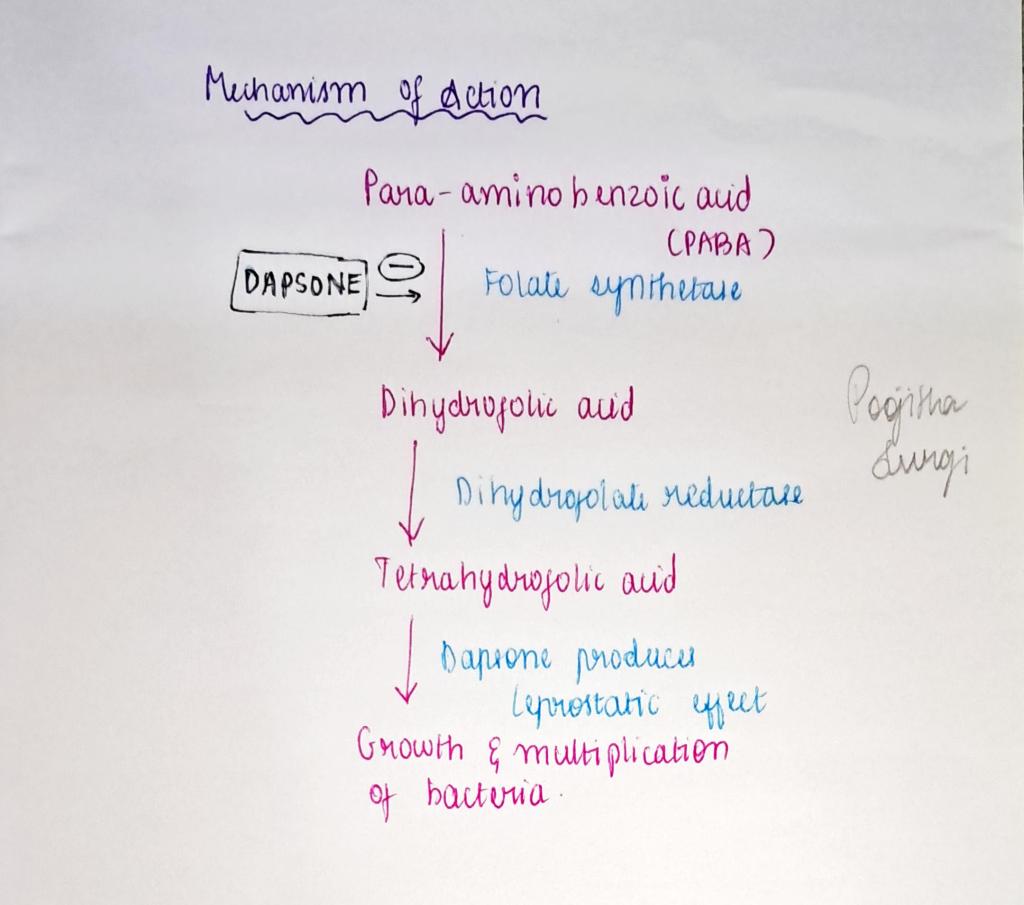
It is a sulphone, oldest and cheapest ; most widely used for leprosy
MECHANISM OF ACTION
ADVERSE EFFECTS
Dose related hemolytic anemia in G6PD deficiency,
OTHERS: Anorexia, Nausea, Vomiting, Fever, Headache, Allergic dermatitis, Itching, Peripheral neuropathy, Methaemoglobin
Exacerbation of lesions- ‘ sulphone syndrome‘:- fever, dermatitis, pruritis, lymphadenopathy, methaemoglobinaemia, anemia, hepatitis
PHARMACOKINETICS
🟡 Given orally
🟡 almost completely absorbed from gut
🟡 bound to plasma proteins
🟡 widely distributed in in body and concentrated in infected skin, muscle, liver, kidney
🟡 partly secreted in bile and undergoes enterohepatic cycling
🟡 metabolized by acetylation and metabolites are excreted in urine
Reference:
Pharmacology 4th Ed: Tara V Shanbhag, Smita Shenoy

REFERENCE:
Pharmacology 4th Ed: Tara V Shanbhag, Smita Shenoy
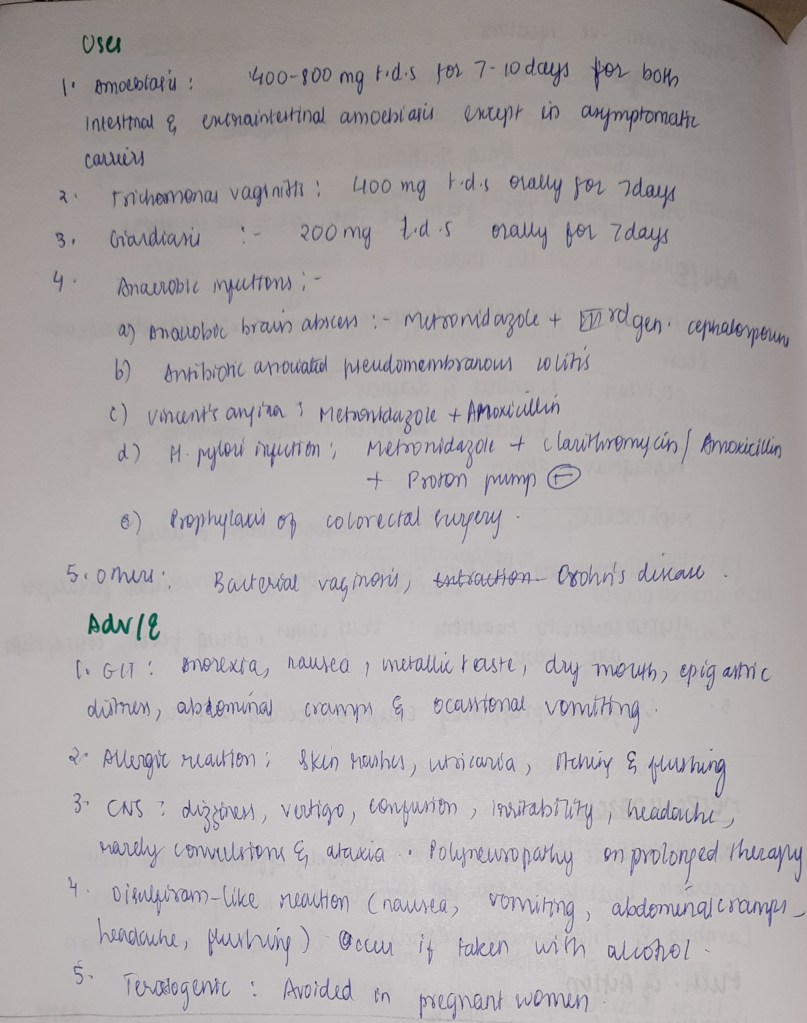
Pharmacology 4th Ed: Tara V Shanbhag, Smita Shenoy
Bactericidal, aminoglycoside antibiotic; available for parenteral and topical administration.

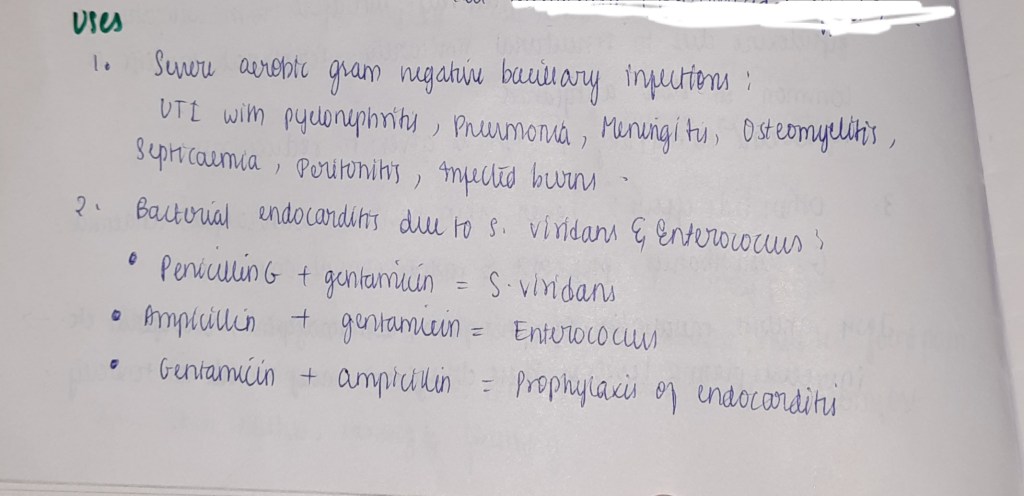
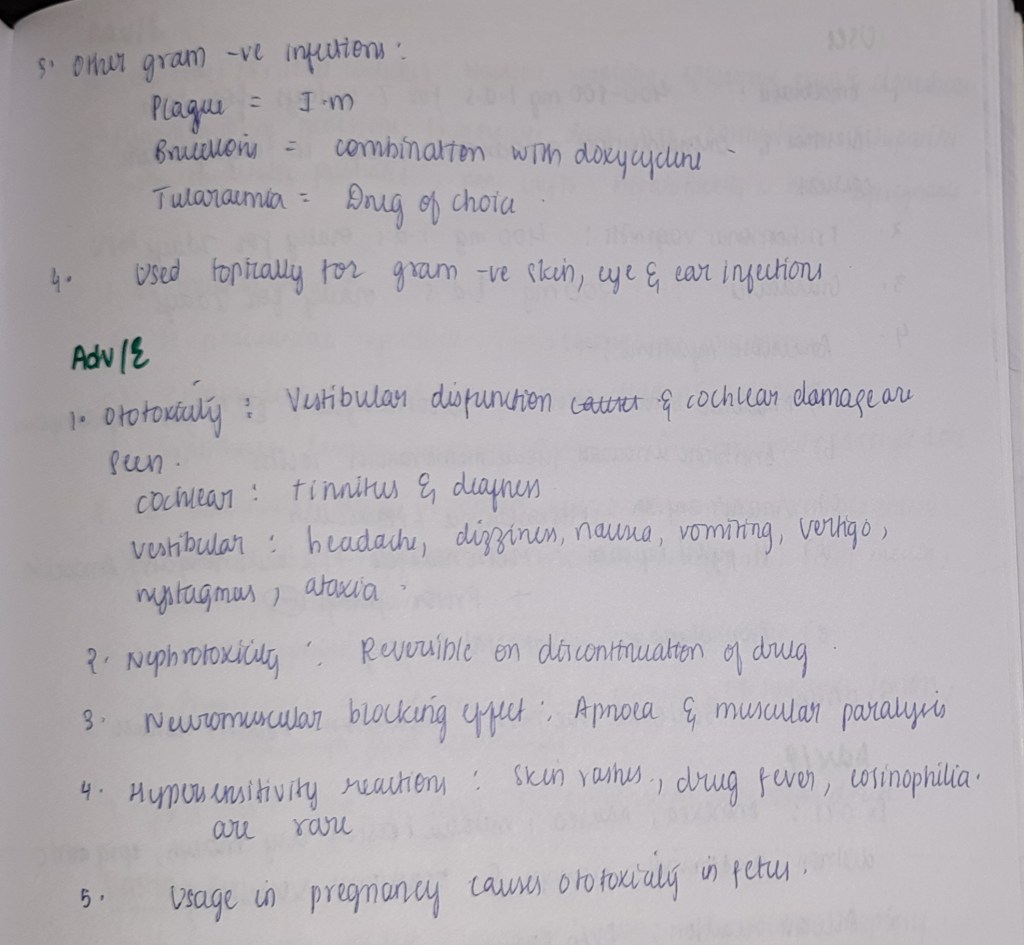
Pharmacology 4th Ed: Tara V Shanbhag, Smita Shenoy
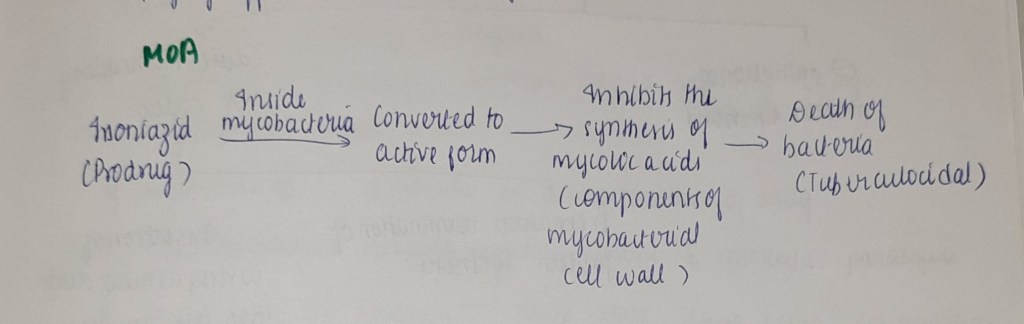
Isonicotinic acid hydrazide (INH)
Highly effective and most widely used antitubercular agent.
MoA
Uses
First- line drug for treatment of TB. Used for chemo prophylaxis of TB.
Adv. E
Pyridoxine 10mg/day + INH is given to reduce risk
3. Other side effects : Fever, skin rashes, arthralgia, anemia, GI disturbances, psychosis and rarely convulsions.
INH inhibits metabolism of pheytoin, carbamazepine, warfarin etc. ➡️ increases plasma levels of these drugs ➡️ may result in toxicity.
REFERENCE:
Pharmacology 4th Ed: Tara V Shanbhag, Smita Shenoy
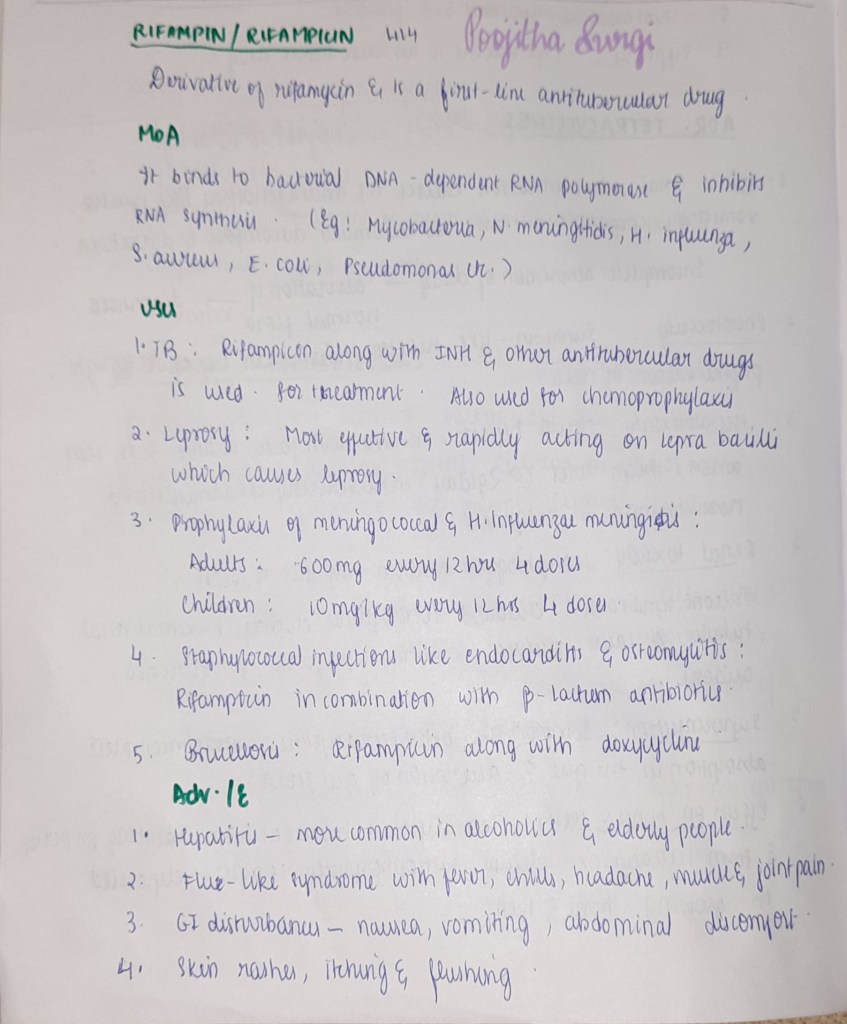
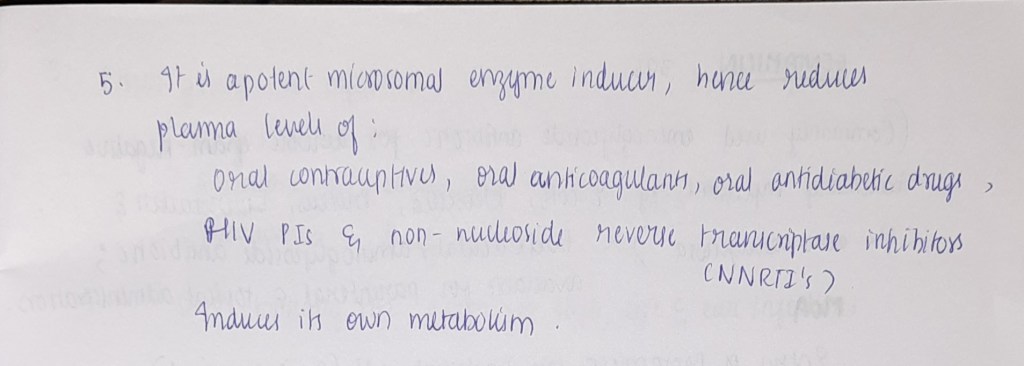
Pharmacology 4th Ed – Tara V Shanbhag, Smita Shenoy
 Dentowesome