SIDE EFFECTS OF ANTI HYPERTENSIVE DRUGS

The objective of antihypertensive therapy is to reduce the incidence of adverse cardiovascular events, particularly CAD stroke and heart failures.

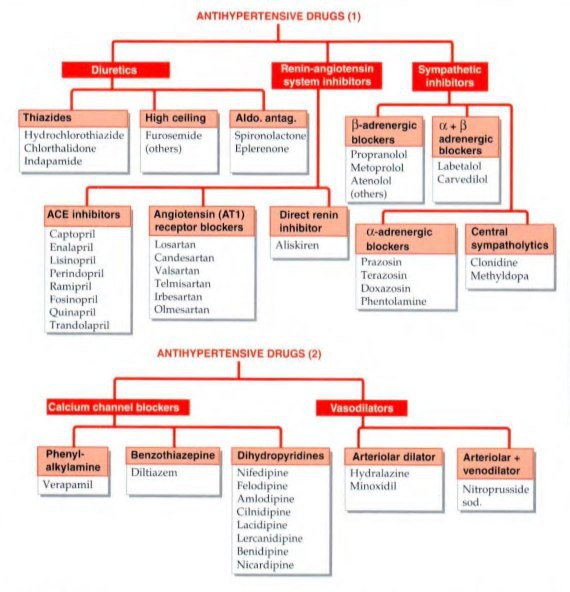
Here , we discuss some side effects of the Major drugs which is mainly prescribed for the treatment:-

The choice of antihypertensive therapy is initially indicated by the patient’s age and ethnic background.

Comorbid conditions also have an influence on initial drug selection,for example:-

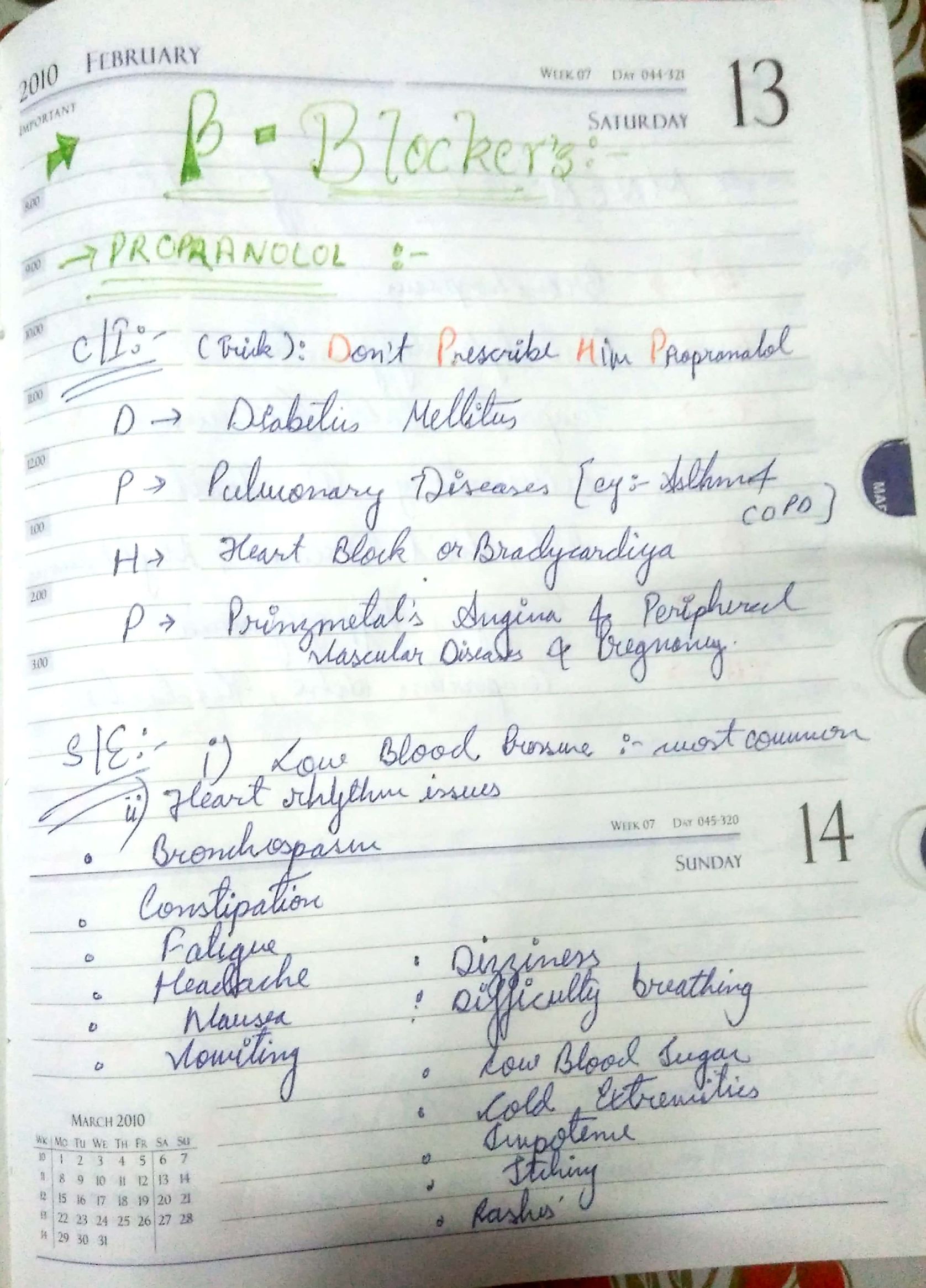
•beta blocker might be the most appropriate treatment for a pateint with angina.

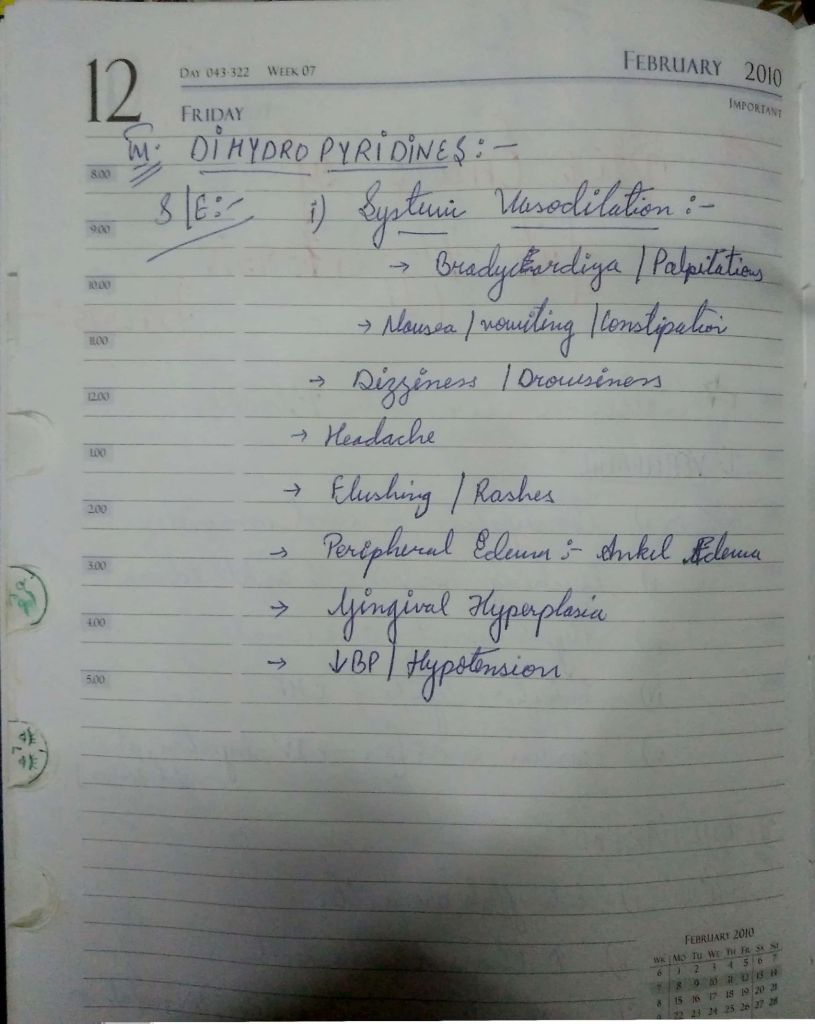
•Thiazides diuretics and dihydropyridines calcium channel blockers antagonists are the most suitable drugs for treatment in older people.

Thank you,

Regards,

KRITI Naja Jain 🙂

REference:-

  1. KDT 8th e
  2. Davidson 23rd e
  3. YouTube video

Hypertension: Treatments

Overview

  • Antihypertensives aim to reduce cardiac output and/or total peripheral resistance.
    – For a review of how cardiac output and total peripheral resistance, please see our tutorial on hypertension pathophysiology.
  • Lowering blood pressure in hypertensive patients reduces their risk of cardiovascular disease and cerebrovascular events.
    – Recent guidelines recommend a target blood pressure of less than 130/80 mmHg.
  • The following lifestyle modifications are typically suggested:
    – Changes in diet, increased physical activity, stress reduction, smoking and alcohol cessation or reduction, and weight loss.
    – DASH:
    Dietary changes to reduce hypertension are encapsulated by the Dietary Approaches to Stop Hypertension (DASH) plan, which recommends reductions in sodium and emphasizes whole grains, fruits, vegetables, low-fat dairy, fish, poultry, and legumes, nuts, and seeds.
  • In many individuals, however, lifestyle modifications are inadequate or even inappropriate for reducing blood pressure; these patients will need antihypertensive medications.
  • Initial treatment may rely on a single medication, depending on the stage of hypertension.
  • However, many patients ultimately require two or more drugs with complementary actions to reach their target blood pressure.
  • Individuals vary in their responses to antihypertensive medications, and that specific recommendations are made for some populations.
    – For example, African Americans, the elderly, and patients with certain medical conditions may respond differently to an antihypertensive drug than the rest of the populations.
  • Resistant hypertension is when an individual’s blood pressure remains elevated above the target goal, despite concurrently using three or more antihypertensive medications, including a diuretic.

Thiazide and thiazide-like diuretics

  • These drugs act on the distal convoluted tubule of the nephron to prohibit sodium and water reabsorption; sodium and water are excreted in the urine, so blood volume and blood pressure are reduced.
    – Often a first line choice, particularly in salt-sensitive individuals
    – They are associated with hypokalemia.
  • Chronic use causes vasodilation, which also contributes to reduction in blood pressure; the exact mechanism by which these diuretics cause vasodilation is uncertain.

Renin-Angiotensin System

Two drugs that block the actions of angiotensin II, which is a powerful vasoconstrictor that also triggers the release of other blood pressure mediators, including aldosterone.

  • Briefly illustrate the renin-angiotensin system:
    – The liver releases angiotensinogen.
    – The kidneys release renin, which transforms angiotensinogen to angiotensin I.
    – Then, as angiotensin I circulates in the blood, especially in the pulmonary blood, it encounters angiotensin-converting enzyme (ACE), which is released from vascular endothelial cells.
    – Angiotensin converting enzyme, as its name suggests, converts angiotensin I to angiotensin II.
    – Angiotensin II binds with arterial receptors and induces vasoconstriction.

Angiotensin-converting enzyme inhibitors

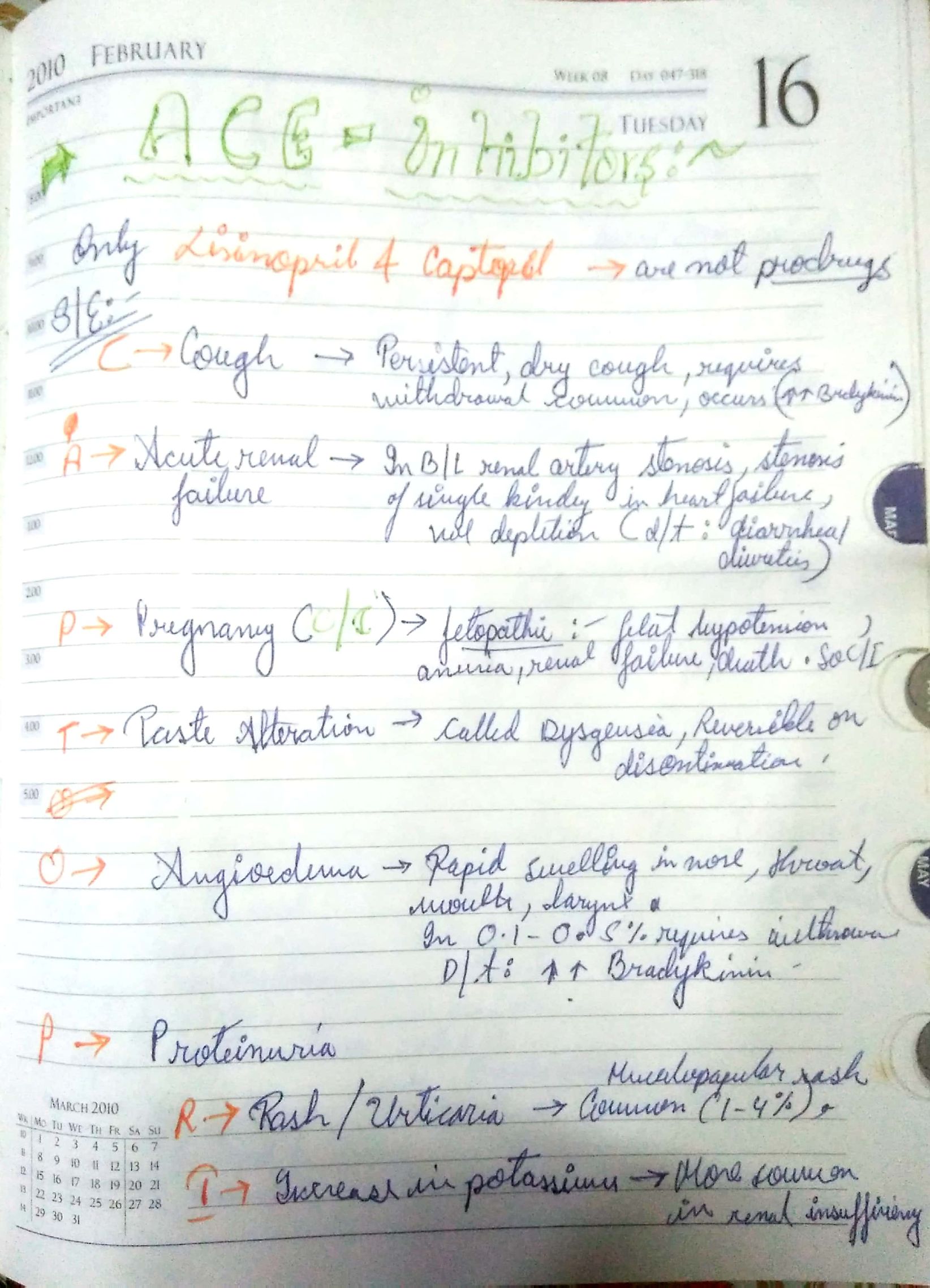
  • ACE inhibitors prohibit the formation of angiotensin II by blocking the actions of angiotensin-converting enzyme.
  • First-line drugs.
  • Can cause hyperkalemia.
  • Angiotensin II also breaks down bradykinin, which is an important vasodilator; thus, angiotensin-converting enzyme inhibitors effectively increase bradykinin levels, which ultimately enhances vasodilation.
    – Increased bradykinin is associated with cough and angioedema.

Angiotensin-receptor blockers

  • Block the arterial receptors for angiotensin II.
  • Like ACE inhibitors, they prevent angiotensin II from increasing blood pressure.
  • Also like ACE inhibitors, they are associated with hyperkalemia.
  • However, since they don’t prohibit the formation of angiotensin II, they don’t effect bradykinin, so patients don’t experience cough and angioedema.

Three “blockers” that act directly on the heart and/or vasculature.

Calcium channel blockers prevent calcium binding:

  • In the heart, receptors are located at the sinoatrial and atrioventricular nodes, as well as in the cardiac tissue; thus, calcium channel blockers reduce conduction velocity, contractility, and heart rate.
  • In the vasculature, prevention of calcium blocking reduces vasoconstriction.
  • Calcium channels are considered a first line treatment, particularly for African Americans, in whom other antihypertensive drugs are often less effective.
  • Calcium channel blockers are associated with swelling in the lower extremities, rash, flushing, and dizziness.

Beta blockers prevent norepinephrine and epinephrine binding

  • In the heart, like calcium channel blockers
  • Third generation beta blockers also produce vasodilation.
  • Beta blockers block renin secretion from the kidney, which blocks the formation of angiotensin II and elevates bradykinin levels.
  • Commonly reported side effects include fatigue, cold hands/feet, depression, sleep disturbances, and erectile dysfunction.
  • Furthermore, some beta blockers can trigger bronchospasm in patients with asthma and chronic obstructive pulmonary disease.

Alpha blockers prevent norepinephrine from binding

  • In the vasculature, this reduces vasoconstriction.
  • Orthostatic hypotension is common, particularly in the elderly.

Medical Suffixes💊

  • dipine: Calcium channel blockers
  • caine: Local Anesthetics
  • dine: Anti-ulcer agents(H2 receptor blockers)
  • done: Opioid Analgesics
  • ide: Oral hypoglycemics
  • pam: Anti-anxiety agents (Benzodiazepins)
  • mycin: Antibiotics
  • oxacin: Fluoroquinolones
  • mide: Diuretics
  • ium: Neuromuscular blockers
  • olol: Beta blockers
  • pine: Calcium channel blockers
  • pril: ACE inhibitors (remember of APRIL)
  • one: Steroids
  • statin: antihyperlipidemics
  • vir: anti-virals

Source: KD Tripathi textbook

Rifamcyin

It’s easy to say that if DNA or RNA synthesis is inhibited, a cell won’t be able to get anything done at all!

So, inhibiting nucleic acid synthesis sounds like a great strategy for an antibiotic.

And luckily for us, the enzymes that carry out DNA and RNA synthesis are different enough between eukaryotic and prokaryotic cells that selective toxicity can be achieved.

  • The rifamycins are a family of antibiotics that inhibit bacterial RNA polymerase.
  • the antibiotic molecule is thought to bind to the polymerase in such a way that it creates a wall that prevents the chain of RNA from elongating.
  • Rifamycins are bactericidal antibiotics.
  • In the presence of rifamycins, bacteria can’t transcribe any genes that they need to carry out their normal functions, so they die.

Rifamycins are broad-spectrum antibiotics, meaning they’re effective against many types of bacteria, including

  • Gram-negative,
  • Gram-positive, and
  • obligate intracellular bacteria.

There are two main reasons for this.

First, the rifamycin molecule can penetrate well into cells and tissues.

  • This means that, unlike some antibiotics that can’t cross certain types of bacterial cell walls.
  • The rifamycins can almost always get in and gain access to their target enzyme.

And second, enzyme’s structure is similar enough that the rifamycins can bind well to their target in diverse types of bacteria.

And how do the rifamycins achieve selective toxicity?

After all, our cells need RNA polymerases too! Luckily for us, rifamycins do not bind to eukaryotic RNA polymerases, so our own cells can continue to transcribe genes normally even when we are taking these antibiotics.

Uses

A major use of rifampin is in the treatment of mycobacterial diseases, such as tuberculosis and leprosy.

  • Since mycobacteria are obligate intracellular bacteria, they live within host cells, where they’re protected against many antibiotics that can’t get inside.
  • Rifamycins can penetrate well into cells and tissues, so they’re a good first choice for mycobacterial infections.

However, as with any antibiotic, there are bacteria that are resistant to the rifamycins.

The most common way for bacteria to become resistant to rifamycins is to acquire mutations that alter the structure of the RNA polymerase in such a way that rifamycins can’t bind to it as well.