Papillon–Lefèvre syndrome

Muhad Noorman P – Dentowesome 2020

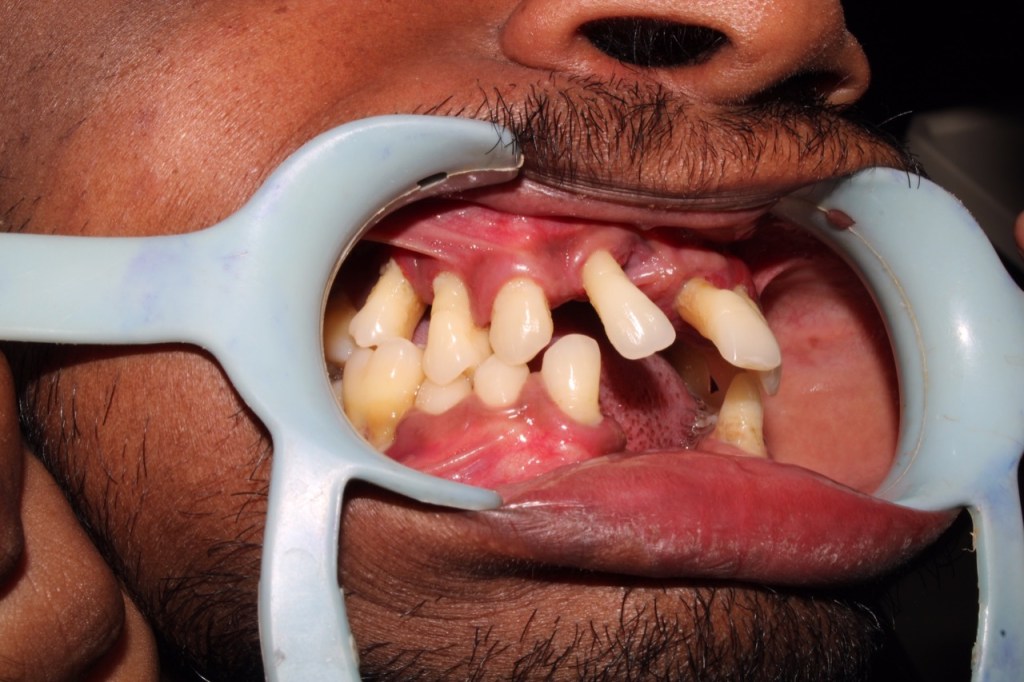
Papillon–Lefèvre syndrome (PLS) is a rare autosomal recessive disorder, characterized by diffuse palmoplantar keratoderma (hyperkeratosis) and precocious aggressive periodontitis, leading to premature loss of deciduous and permanent dentition at a very young age. Various etiopathogenic factors are associated with the syndrome, like immunologic alterations, genetic mutations, and the role of bacteria. Dentists play a significant role in the diagnosis and management of PLS as there are characteristic manifestations like periodontal destruction at an early age and an early eruption of permanent teeth. Here, we are presenting an elaborate review of PLS, its etiopathogenesis, clinical presentation, and management options.

Genetic studies of patients with Papillon-Lefèvre syndrome have mapped the major gene locus to chromosome 11q14-q21 and revealed mutation and loss of function of the cathepsin C gene. This gene is important in the structural growth and development of the skin and is critical for appropriate immune response of myeloid and lymphoid cells. Researchers believe that the loss of appropriate function of the cathepsin C gene results in an altered immune response to infection. In addition, the altered gene may affect the integrity of the junctional epithelium surrounding the tooth.

A closely related disease, Haim-Munk syndrome, also exhibits palmoplantar keratosis, progressive periodontal disease, recurrent skin infections, and several skeletal malformations. In this syndrome, the skin manifestations are more severe and the periodontal disease is milder. Studies have demonstrated that Haim-Munk syndrome and many examples of prepubertal periodontitis also exhibit mutation of the cathepsin C gene and represent allelic variants of the mutated gene responsible for Papillon-Lefèvre syndrome.
References: Shafer’s Textbook of Oral 9th edition

Photo credits: Dr Karthikeyan,PG final year Periodontics,Saveetha dental College, Chennai

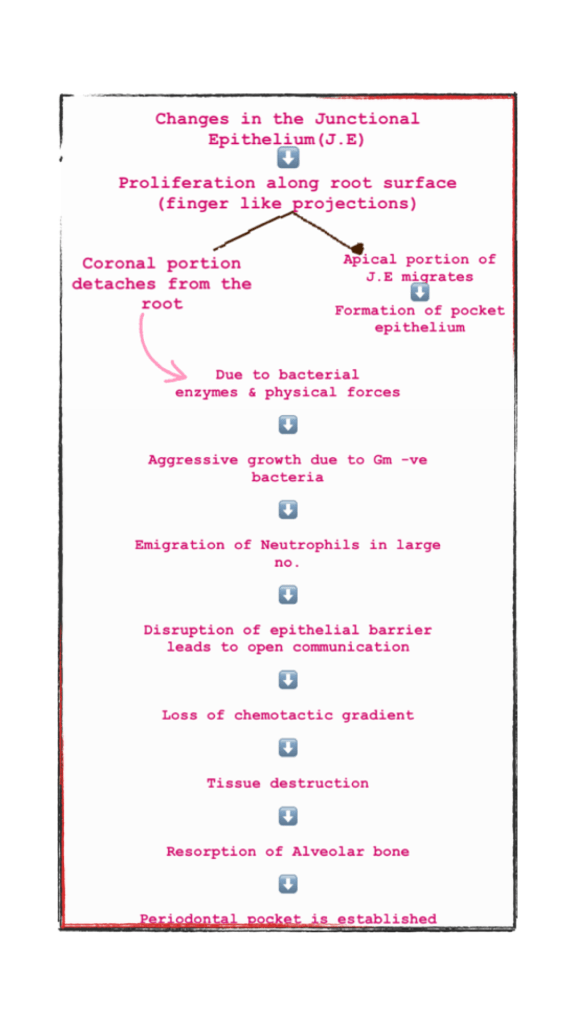
PATHOGENESIS OF POCKET FORMATION

👉🏻 The initial lesion in the development of periodontitis is the inflammation of gingiva following bacterial challenge.

  1. Formation of bacterial colony
  2. Infammatory process
  3. Migration of neutrophils
  4. Tissue destruction
  5. Activation of Neutrophils
  6. Pocket formation

PERIODONTAL POCKET TYPES:

• Bacterial cells in dental plaque

Infammatory changes in the Connective Tissue wall of the gingival sulcus

⬇️

The cellular & fluid inflammatory exudate causes degeneration of Connective tissue & gingival fibres

⬇️

Just apical to Junctional epithelium, collagen fibres are destroyed

⬇️

Infammatory cells + edema

• Mechanisms associated with collagen loss:

  1. Collagenase enzyme secreted by fibroblasts, PMN & macrophages degrade collagen & other matrix molecules into small peptides – MMP’s
  2. Fibroblasts phagocytize collagen fibres by extending cytoplasmic processes to the ligament-cementum interface.

👉🏻 Apical cells of junctional epithelium proliferate along the root, Coronal portion of J.E detaches from the root & is invaded by PMN’s (60%)


Dr. Mehnaz Memon🖊

STAGES OF GINGIVITIS

Gingivitis is defined as an inflammation which is confined to the tissues of the marginal gingiva . It is an observable alteration in tissues associated with changes in vascular permeability and dilation often accompanied with the infiltration of leukocytes into the affected tissues .

The sequence of events cumulating in the clinically apparent gingivitis is categorized into

  • STAGE 1: Initial lesion
  • STAGE 2 : Early lesion
  • STAGE 3 : Established lesion
  • STAGE 4 : Advanced lesion

STAGE 1 : THE INITIAL LESION ( 2- 4days ):

  1. VASCULAR CHANGES : Classic vasculitis sub adjacent to junctional epithelium, dilated capillaries , increased blood flow
  2. MICROSCOPIC CHANGES : Presence of leukocytes, loss of perivascular collagen and presence of serum proteins changes in the coronal most position of junctional epithelium .
  3. CLINICAL CHANGES : Exudation of fluids from the gingival sulcus , sub clinical gingivitis .

STAGE 2 : EARLY LESION (4-7 DAYS ):

  1. VASCULAR CHANGES : Vascular proliferation
  2. MICROSCOPIC CHANGES : Rete pegs formation in junctional epithelium , presence of lymphocytes , loss of collagen is increased , fibroblasts show cytoplasmic alterations .
  3. CLINICAL CHANGES : Bleeding on probing, erythematous gingiva.

STAGE 3 : ESTABLISHES LESION ( 14-21 DAYS ) :

  1. VASCULAR CHANGES : Same as early lesion with blood stasis.
  2. MICROSCOPIC CHANGES: Proliferation , apical migration and lateral extension of junctional epithelium, atrophic areas , plasma cells are predominant , further loss of collagen, increased enzyme levels of acid and alkaline phosphatase.
  3. CLINICAL CHANGES : Changes are seen in color, surface texture and consistency , bluish hue around the reddened gingiva , gingiva appears to be moderately to severely inflamed .

STAGE 4 : THE ADVANCED LESION :

  1. VASCULAR CHANGES: Same as early and established lesions. characterized by the invasion of the lesion to the underlying alveolar bone .
  2. MICROSCOPIC CHANGES: Persistence of features seen in established lesion, extension of inflammation into deeper structures including alveolar bone and periodontal ligament , presence of all types of inflammatory cells , conversion of bone marrow into fibrous tissues.
  3. CLINICAL CHANGES :Formation of periodontal pocket and its associated changes.

REFERENCES: ESSENTIALS OF PERIODONTOLGY SHANTIPRIYA REDDY 5TH EDITION

ORAL MALODOR

INTRODUCTION:

Halitosis – or chronic bad breath – is something that mints, mouthwash or a good brushing can’t solve. Unlike “morning breath” or a strong smell that lingers after a tuna sandwich, halitosis remains for an extended amount of time and may be a sign of something more serious. 

CLASSIFICATION :

  1. BASED ON ETIOLOGY :
  • Local factors of pathological origin : poor oral hygiene , extensive caries, periodontal disease , cysts , tumors .
  • Local factors of non pathological origin : stagnation of saliva associated with food debris , dentures, excessive smoking .
  • Systemic factors of pathological origin : diabetes mellitus, liver failure, lung abscess , tuberculosis .
  • Systemic factors of non pathological origin : diet like garlic , onion , meat , excessive alcohol consumption.
  • Xerostomia :conditions like sjogren’s syndrome, radiation therapy.

2. BASED ON PATIENT’S CRITERIA :

  • Genuine halitosis
  • Pseudo halitosis
  • Halitophobia

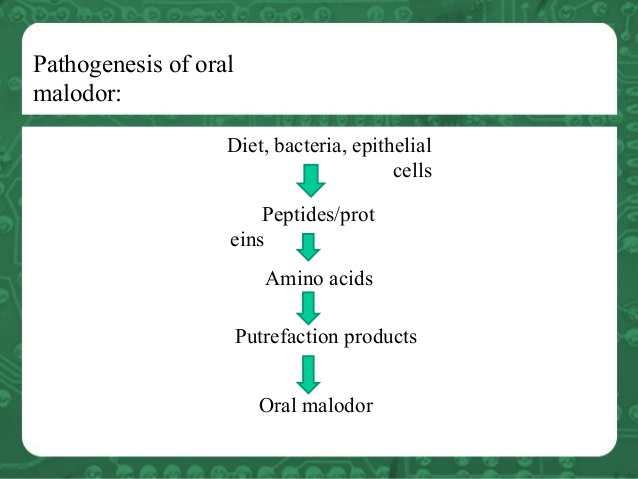
PATHOGENSIS OF MALODOR :

ETIOLOGY :

  1. Physiological halitosis
  • mouth breathing
  • medications
  • aging and poor dental hygiene
  • fasting / starvation
  • tobacco
  • foods like onion , garlic and alcohol

2. Pathological halitosis:

  • periodontal infection
  • stomatitis
  • xerostomia
  • faulty restorations
  • unclean dentures
  • oral cancers
  • candidiasis
  • nasal infections
  • GERD
  • bronchitis, pneumonia
  • diabetes mellitus
  • renal failure
  • fever

DIAGNOSIS :

  1. Review of medical , dental , personal history
  2. Clinical examination : tongue coating, mouth breathing , xerostomia
  3. Complete periodontal examination
  4. Measurement of malodor : gas chromatography . halimeters, BANA test , chemiluminescence , diamond probe

TREATMENT :

  • Brush your teeth after you eat.
  • Floss at least once a day.
  • Brush your tongue.
  • Clean dentures or dental appliances. .
  • Avoid dry mouth.
  • Adjust your diet. .
  • Regularly get a new toothbrush.
  • Schedule regular dental checkups.
  • Regular use of halita solution which reduces the levels of volatile sulfur compounds .

References: Essentials of clinical periodontology . Shantipirya reddy 5th edition