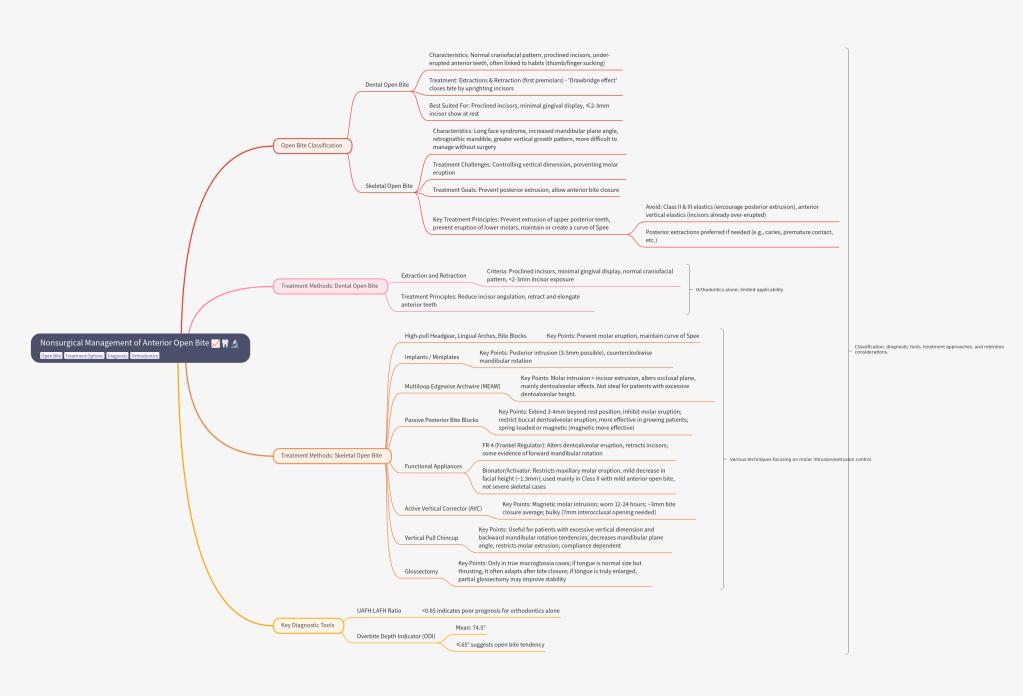
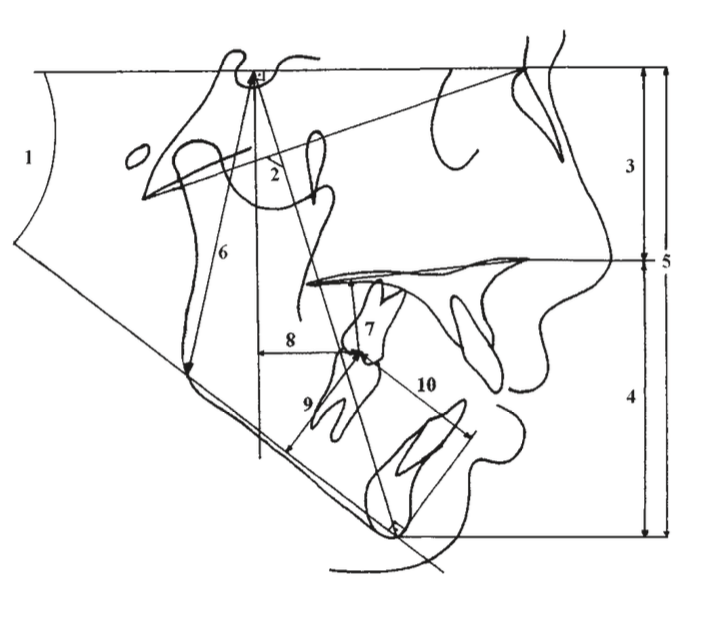
Sucking habits and facial hyperdivergency as risk factors for anterior open bite in the mixed dentition

1. Core Clinical Facts

  • Prevalence of AOB in mixed dentition: 17.7% (~1 in 5 orthodontic patients)
  • Major independent risk factors:
    1. Prolonged sucking habits (thumb/finger or dummy) beyond age 3
    2. Facial hyperdivergency (skeletal vertical excess)
  • Highest risk group: Patients with both prolonged sucking habits + hyperdivergent face
    • AOB prevalence 36.3% → ~4× higher than those without risk factors (9.1%)

2. Diagnostic Criteria

AOB Diagnosis: Overbite ≤ 0 mm, with all permanent incisors fully erupted.

Facial Hyperdivergency:

  • FMA ≥ 25°
  • S-Go / N-Me ≤ 0.62 (posterior:anterior facial height ratio)
  • ANS-Me / N-Me ≥ 0.55 (increased lower anterior facial height)

3. Clinical Takeaways

  • Mechanical factor (habit) + skeletal factor (hyperdivergency) = high AOB risk
  • Early habit cessation (before age 3) dramatically lowers risk
  • Skeletal vertical excess can worsen severity of AOB and affect treatment stability
  • Interceptive protocols:
    • Habit-breaking appliances (removable/fixed grids)
    • Growth modification to control vertical dimension (eg, high-pull headgear, bite blocks)

Canine Bracket Guide for Substitution Cases

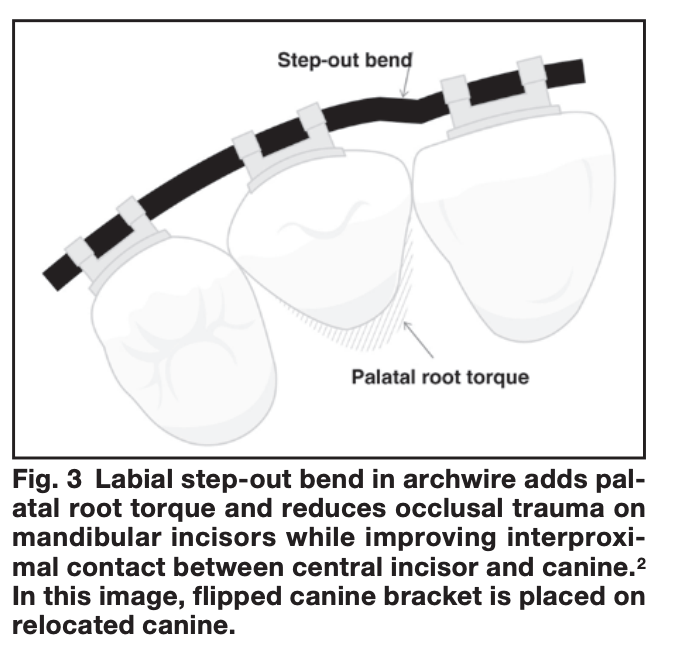
When a maxillary lateral incisor is missing, substituting the canine into its place can produce excellent esthetic and functional results — but only if torque control is done right. One of the most common errors? Inadequate palatal root torque in the relocated canine.

Why Torque Matters

The canine crown is bulkier, and without enough palatal root torque, its prominence can disrupt smile esthetics and compromise occlusion. The right bracket choice helps counteract this.

Bracket Options & Prescriptions (MBT*)

Bracket ChoiceTorque / TipKey AdvantagesNotes
Maxillary Central Incisor+17° torque / 4° tipMaximum palatal root torqueEnameloplasty needed; add up to +4° distal root tip
Maxillary Lateral Incisor+10° torque / 8° tipGood torque & tip control; easy placementEnameloplasty needed
Flipped Maxillary Canine+7° torque / 8° tipTorque & tip control without reshapingMay not give enough torque
Flipped Mandibular 2nd Premolar+17° torque / 2° tipMax torque without enameloplastyRemove bracket posts after bonding

*Modified for Roth or Damon prescriptions if needed.


Torque Tips

  • “1 to 5 Rule”: Every .001″ slot–wire play ≈ 5° torque loss
    • .017″×.025″ in .018″ slot → 5° loss
    • .019″×.025″ in .022″ slot → 10–15° loss
  • This is why an .018 slot system with .017×.025 wire tends to have better torque control than a .022 slot with .019×.025 wire, assuming same bracket prescription.
  • If you want to minimize torque loss, you either:
    • Use the largest possible wire for that slot
    • Or add auxiliary torque (e.g., torquing springs, step-out bends)
  • Labial step-out bend → adds palatal root torque + avoids traumatic contact.
  • Labial step-out bends shift the canine root palatally, improving torque and interproximal contact while minimizing occlusal interference.

Example 1: .017″ × .025″ wire in a .018″ slot

  • Slot height = 0.018″
  • Wire height = 0.017″
  • Difference (play) = 0.001″
  • Torque loss = 0.001″ × 5° = ≈ 5° loss

So even with a nearly full-size wire, you can’t get 100% torque expression — there’s some rotational freedom before the wire contacts the slot walls.

Example 2: .019″ × .025″ wire in a .022″ slot

  • Slot height = 0.022″
  • Wire height = 0.019″
  • Difference (play) = 0.003″
  • Torque loss = 0.003″ × 5° = ≈ 15° loss

Why the guide says 10–15° instead of exactly 15°:

  • Theoretical loss = 15° (from math)
  • In practice, clinical torque loss is often slightly less because:
    • Residual tip in the tooth means the wire contacts sooner than expected
    • Manufacturing tolerances (slots often oversized, wires slightly undersized or rounded)
    • The wire may seat differently under ligation forces

    Other Factors Influencing Torque

    • Archwire material (SS > TMA > NiTi for high torque)
    • Bracket material
    • Type of ligation
    • Interbracket distance
    • Tooth morphology & biology

    Clinical Pearls

    • Delay enameloplasty if unsure → choose flipped mandibular 2nd premolar for torque & base fit.
    • Canine extrusion improves gingival architecture but monitor occlusion.
    • For high torque (>24°), beta titanium is safer than SS for bends.
    • Beta titanium offers a balance between torque delivery and flexibility, making it preferable for large bends compared to the stiffness of stainless steel.

    📌 Reference: Kravitz ND, Miller S, Prakash A, Eapen JC. Canine Bracket Guide for Substitution Cases. J Clin Orthod. 2017;51(8):452-455.


    Evaluation of alveolar bone loss following rapid maxillary expansion (RME) using CBCT

    Rapid Maxillary Expansion (RME) is a time-tested solution for correcting maxillary constriction, improving arch length, and resolving posterior crossbites. But while the skeletal and dental benefits are well known, there’s an equally important consideration: its impact on the supporting alveolar bone.

    The forces generated during RME are substantial. They not only separate the midpalatal suture but also transmit stress to teeth and their supporting tissues.
    Consequences may include:

    • Buccal crown tipping
    • Crestal bone loss
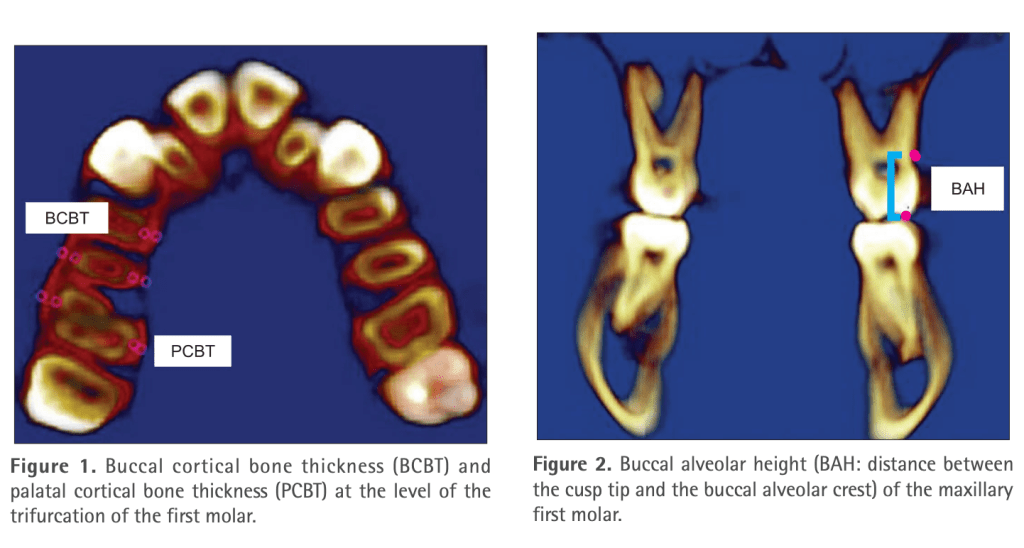
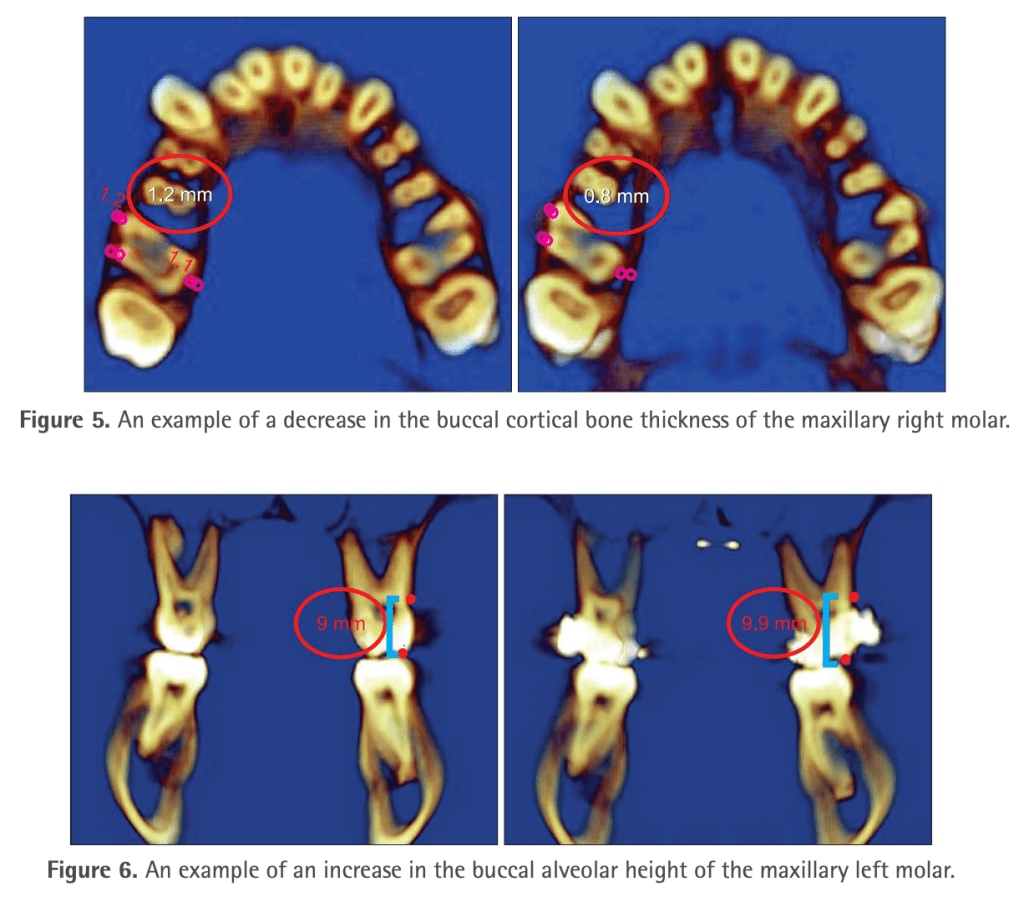
    • Changes in buccal and palatal cortical bone thickness
    • Development of dehiscence and fenestrations

    Understanding these risks allows us to tailor treatment, improve patient outcomes, and safeguard periodontal health.

    Appliance & Protocol

    • Type: Hyrax-type tooth-borne expander
    • Activation: 2 turns/day until palatal cusps of maxillary posterior teeth contact buccal cusps of mandibular teeth
    • Retention: 3 months with expander in situ → replaced with transpalatal arch for another 3 months

    Key CBCT Findings

    ParameterImmediate Post-RMEAfter 6-Month Retention
    Buccal Cortical Bone Thickness (BCBT)Significant decrease in canines, premolars, and especially first molarsContinued decrease in most teeth
    Palatal Cortical Bone Thickness (PCBT)Slight increase (due to buccal tipping)Decrease toward baseline
    Buccal Alveolar Height (BAH)Significant reduction (crestal bone loss)No further change
    DehiscenceIncreased incidence post-RME (esp. buccal surfaces of 1st premolars & molars, canines)Further increase in some teeth
    FenestrationSlight decrease post-RMEMinimal further change

    Red Flags During RME

    • Sudden gingival recession on anchor teeth
    • Mobility in first molars/premolars
    • Soft tissue inflammation unresponsive to hygiene measures
    • Persistent discomfort or occlusal changes

    Tips to Minimize Bone Loss

    • Avoid over-activation (follow 0.25 mm × 2/day protocol)
    • Consider tissue-borne or hybrid expanders in high-risk cases
    • Maintain optimal oral hygiene (chlorhexidine rinse during activation phase)
    • Use minimally invasive retention appliances post-expansion

    Reference:
    Baysal A, Uysal T, Veli I, et al. Evaluation of alveolar bone loss following rapid maxillary expansion using cone-beam computed tomography. Korean J Orthod 2013;43(2):83–9

    Spotify Episode Link:
    https://creators.spotify.com/pod/profile/dr-anisha-valli/episodes/Evaluation-of-alveolar-bone-loss-following-rapid-maxillary-expansion-using-cone-beam-computed-tomography-e36n10v

    Youtube Video Link:
    https://youtu.be/jhNngR5s-1I?si=MqOZ4slL22G1-EDu

    Orthodontic forces and moments of three-bracket geometries

    Ever rebonded a canine bracket, only to see the lateral incisor intrude, the midline shift, and your occlusal plane do a little dance? 😅 Don’t worry—you’re not alone. These surprises aren’t just clinical quirks—they’re biomechanical consequences, and a recent study has finally given us a powerful tool to predict them.

    🧠 The Backstory: Burstone & Koenig’s Legacy

    Back in 1974, Burstone and Koenig introduced the idea of analyzing two-bracket geometries to simplify the chaos of indeterminate force systems. Their theory? If you break the arch into two-bracket segments, you can analyze and predict forces more accurately.

    But here’s the catch: until now, no one had really tested what happens when you add a third bracket.

    🔬 The 2025 Breakthrough: Kei et al. to the Rescue

    In this beautifully designed experimental study, Kei and team tested 36 different three-bracket geometries  using a custom-made orthodontic force jig and high-sensitivity transducers, and various archwires (NiTi, TMA, SS).

    Their setup mimicked real-world clinical brackets and angles. The goals?

    ✔️ Validate whether a three-bracket system behaves like two adjacent two-bracket systems
    ✔️ Understand how the third bracket (C) affects the system
    ✔️ Apply these insights to predictable clinical outcomes

    And guess what? The theory held true!

    Bracket angulations were varied systematically to replicate six classic geometries (Classes 1 to 6), and the impact of a third bracket (Bracket C) was studied.

    📊 Clinical Geometry Classifications

    Geometry ClassBracket A AngleBracket B AngleBracket C Angle
    Class 1.1–1.6+30°+30°+30° to –30°
    Class 2.1–2.6+15°+30°+30° to –30°
    Class 3.1–3.6+30°+30° to –30°
    Class 4.1–4.6–15°+30°+30° to –30°
    Class 5.1–5.6–22.5°+30°+30° to –30°
    Class 6.1–6.6–30°+30°+30° to –30°

    🧲 What You Need to Know (and Remember!)

    📌 Clinical Application Tips

    • 🌀 Bracket C primarily influences Bracket B – Consider when finishing or rebonding.
    • ⚖️ Unintended Effects: Uplighting one tooth may intrude/extrude or tip adjacent teeth.
    • 🎯 Lighter Wires = Less Side Effects: NiTi < TMA < SS in force magnitude.
      • 0.016 SS > Highest force and moment delivery
      • 0.020 NiTi (Supercable) > Lowest force, gentler on tissues
      • Using a lighter wire in finishing can prevent overcorrection and limit undesirable biomechanical effects.
    • 🧠 Use 3-bracket force maps (e.g., Class 3.3) to anticipate vertical and moment forces on neighboring teeth.

    ⚠️ Common Side Effects to Watch For

    Intended MovementPossible Side Effects
    Root uprighting of canine (Class 3.3)Intrusion of adjacent incisor, extrusion of premolar, midline shift
    Rebonding caninesOcclusal cant, open bite at lateral, heavy contact at premolar
    High forces (>250g)Risk of root resorption, supporting tissue damage


    🔑 Mnemonic Strategy to Remember Three-Bracket Geometries

    🌟 BASIC STRUCTURE

    Each geometry is labeled as Class X.Y, where:

    • X (1 to 6) = Refers to the Bracket A angle
    • Y (1 to 6) = Refers to the Bracket C angle
    • Bracket B is always fixed at +30°

    📐 ANGLE MAP

    ClassBracket A Angle (°)MnemonicTrend
    1+30°1 = HighMax angle (tip forward)
    2+15°2 = Half High
    33 = ZeroNeutral
    4–15°4 = FallStarts tipping back
    5–22.5°5 = Fall More
    6–30°6 = SinkMax tip back
    .YBracket C Angle (°)MnemonicTrend
    .1+30°1 = Copy BSame as Bracket B
    .2+15°2 = Half B
    .33 = Neutral
    .4–15°4 = Tip Back
    .5–22.5°5 = Tip More
    .6–30°6 = Opposite BOpposite angle

    🔁 PATTERN TRICK

    All 36 combinations follow this logic:

    • A is fixed per Class (gets more negative from Class 1 to 6)
    • C follows six steps from +30° to –30°
    • B is always +30°

    Think of it as:

    A changes row-wiseC changes column-wiseB is your reference anchor.


    🧠 MEMORY AID SENTENCE

    To recall the progression of angulations in each bracket:

    “Always B-fixed, A-falls down, C-steps down.”

    Where:

    • “B-fixed” = Bracket B always at +30°
    • “A-falls down” = A goes from +30 → –30 by Class (1 to 6)
    • “C-steps down” = C decreases from +30 → –30 across each class (.1 to .6)

    📌 EXAMPLE TO ILLUSTRATE

    Class 3.5 means:

    • A = 0° (Class 3)
    • B = +30° (Always)
    • C = –22.5° (Step .5)

    Interpretation: Neutral alignment at A, standard alignment at B, and backward tip at C.


    📝 FINAL THOUGHTS

    Orthodontics is as much about engineering as it is about esthetics. As a student, if you take the time to understand the mechanics behind wire-bracket interactions—especially in three-bracket systems—you’ll not only improve treatment outcomes but also develop the foresight to prevent complications before they arise.

    So, the next time you’re rebonding a bracket or adjusting a wire, ask yourself: Which geometry am I working with?
    That one question might save you (and your patient) from a lot of unexpected surprises.

    SPOTIFY EPISODE LINK: https://creators.spotify.com/pod/profile/dr-anisha-valli/episodes/Orthodontic-Forces-and-Moments-of-Three-Bracket-Geometries-e36gkfa

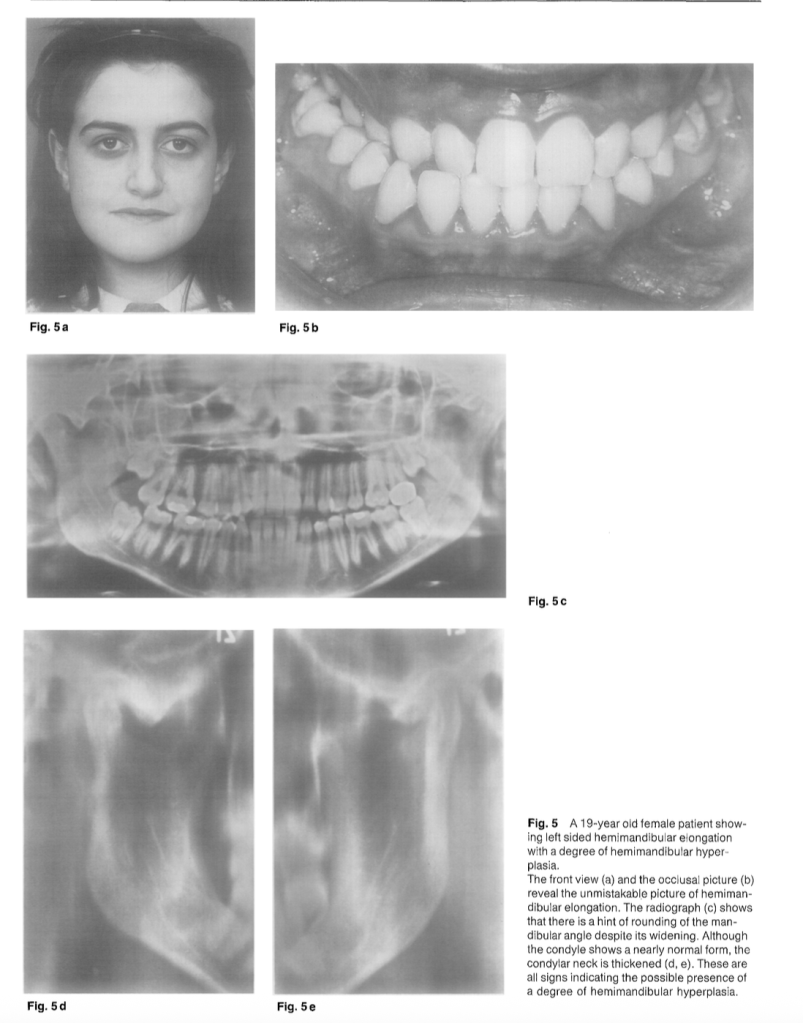
    Hemimandibular hyperplasia (H.H.) and Hemimandibular elongation (H.E.)

    🔍 1. Distinguishing H.H. vs H.E. — Clinical & Radiographic

    FeatureHemimandibular Hyperplasia (H.H.)Hemimandibular Elongation (H.E.)
    Growth DirectionVerticalHorizontal
    Chin PositionNot significantly displacedDisplaced to unaffected side
    Facial AsymmetryVertical facial height increased on one sideHorizontal deviation of mandible and chin
    OcclusionTilted occlusal plane, possible open bite on affected sideCrossbite on unaffected side, straight occlusal plane
    Radiographic FindingsEnlarged condyle + condylar neck, thick trabeculae, mandibular canal displaced downwardCondyle often normal, elongated mandibular body, obtuse angle
    Symphysis InvolvementEnds exactly at midlineAlso terminates at midline
    MaxillaMay follow mandibular downward growthMaxilla usually normal
    Midline DeviationMay show mild dental midline deviationMidline shifted to unaffected side

    ⚙️ 2. Pathophysiological Mechanism of Unilateral Mandibular Overgrowth

    • Growth originates in the fibrocartilaginous layer of the condyle.
    • Two distinct growth regulators hypothesized:
      • One stimulates vertical (bulk) growth → H.H.
      • One stimulates horizontal (length) growth → H.E.
    • Stimulus could be focal or diffuse, explaining pure vs hybrid presentations.
    • Growth usually begins between ages 5–8, often progressing through puberty.

    🧬 3. Histological Distinctions & Diagnostic Relevance

    Hemimandibular HyperplasiaHemimandibular Elongation
    Cartilage LayerDiffuse thickened fibrocartilage across condyleLocalized (cuneiform) hyperplasia centrally
    Osteoblast ActivityWidespread bone formation and remodelingFocal ossification within center of condyle
    VascularityHigh, with active osteoclastic/osteoblastic zonesLess prominent, but active centrally
    InterpretationSuggests global condylar overactivitySuggests directional mandibular displacement

    Implication:
    Early recognition of histological subtype can guide timing of high condylectomy and prevent secondary maxillary changes.

    ⚠️ 4. Hybrid & Combined Forms: Diagnostic & Treatment Challenges

    • Hybrid Form: H.H. + H.E. on one side → grotesque asymmetry, both height and length changes, often tilted occlusal plane + midline shift.
    • Combined Form: H.H. on one side + H.E. on the other → complex occlusion, facial rotation, and treatment planning.
    • Diagnostic Pitfall: Unilateral hypoplasia of the opposite side can simulate elongation on the normal side (pseudo-H.E.)

    Why It Matters: Treatment plans require asymmetric surgical corrections (e.g., unilateral sagittal split, condylectomy, leveling osteotomies).

    ⛽ 5. Condyle as a Growth Center — The “Pacemaker” Hypothesis

    • The fibrocartilaginous layer of the condyle has intrinsic growth potential.
    • Condylar resection (high condylectomy) halts H.H. and H.E. — proof of condyle-driven growth.
    • Functional stimuli (mandibular movements) and condylar growth factors complement each other.
    • Growth control can persist even after condylar resection if function is restored (e.g., post-TMJ ankylosis surgery).
    • Thus, condyle = “growth regulator”, influencing not only normal but abnormal skeletal morphology.

    📇 Laminated Reference Card: H.H. vs H.E.

    Chairside Quick Reference

    Clinical CriteriaH.H.H.E.
    GrowthVerticalHorizontal
    CondyleEnlarged, irregularNormal or slightly enlarged
    Condylar NeckThickened, elongatedSlender or normal
    Mandibular CanalDisplaced downwardNormal position
    Occlusal PlaneTilted, open bite possibleCrossbite on opposite side
    Chin DeviationMinimalTo unaffected side
    Maxillary CompensationDownward growth on affected sideNone
    Radiograph TipLook for vertical ramus elongation, bowed inferior borderLook for extended horizontal body, obtuse angle

    🧬 Histology Tip:

    • H.H. = Diffuse hyperplasia
    • H.E. = Cuneiform central hyperactivity

    🩻 Radiographic Sign:

    • H.H. = Rounded angle, mandibular canal displacement, thick trabeculae
    • H.E. = Oblique angle, elongated body, normal trabeculae

    SPOTIFY PODCAST LINK: https://open.spotify.com/episode/5DYWP1mioPvtgt2NQ6ccl3?si=ojHcZmrgSCKGLFvK734ffg

    PDF link: Check the link below!

    Facial soft tissue response to anterior segmental osteotomies: A systematic review

    🔍 Overview

    • Procedure: ASO corrects bimaxillary dentoalveolar protrusion, primarily in Asian populations.
    • Goal: Predict soft tissue (ST) changes from hard tissue (HT) movements.
    • Method: Systematic review of 11 studies (199 patients; lateral cephalometry used in all).

    📈 Common Soft Tissue Changes

    RegionChange
    Upper lip (Ls)Retrusion: −0.9 to −7.25 mm
    Vertical change: −2.4 mm to +1.2 mm
    Lower lip (Li)Retrusion: −1.1 to −8.36 mm
    Vertical change: +0.92 to +2.6 mm
    Nasolabial angleIncreased by +8.9° to +18.8° (except mandibular-only ASO = slight decrease)
    Interlabial gapReduced (improved lip competence)
    Nasal tip (Pn)Minimal or variable changes (−0.5 mm to +0.4 mm)
    Philtrum lengthIncreased by ~3% (PARK et al.)
    Lip widthDecreased by ~6% (PARK et al.)

    🔄 Soft Tissue:Hard Tissue (ST:HT) Ratios

    LandmarkRatio
    Upper lip retraction33–67% of maxillary incisor setback
    Lower lip retraction67–89% of mandibular incisor setback
    A’ to A (soft vs hard tissue A point)~63%
    B’ to B~81% (LEW et al.)

    Clinical Considerations

    • Greater effect on labial prominence than nasal or chin structures.
    • Nasolabial angle mostly affected by upper lip retraction—not nasal tip.
    • Genial and nasal landmarks remain relatively stable.
    • Lip competence improves (reduced interlabial gap).
    • Be cautious with patients with obtuse nasolabial angle—ASO may exaggerate nasal tip prominence.

    🔵 MCQ 1: Predictive Analysis

    A 24-year-old female patient with bimaxillary dentoalveolar protrusion is scheduled for bimaxillary anterior segmental osteotomy (ASO). If the maxillary incisor segment is planned for a 6 mm posterior movement, what is the most likely range of upper lip retraction based on systematic review evidence?

    A. 1–2 mm
    B. 3–4 mm
    C. 4–6 mm
    D. 5–7 mm

    ✅ Answer: C. 4–6 mm
    Explanation: The upper lip typically retracts 33–67% of the hard tissue incisor movement. For a 6 mm setback, soft tissue movement would be approximately 2–4 mm (though some cases may show more).

    🔵 MCQ 2: Clinical Decision-Making

    A patient undergoing ASO shows an obtuse nasolabial angle preoperatively. What is the most appropriate surgical consideration to prevent worsening facial esthetics?

    A. Proceed with ASO alone
    B. Perform rhinoplasty simultaneously
    C. Opt for mandibular setback only
    D. Combine ASO with subnasal augmentation

    ✅ Answer: B. Perform rhinoplasty simultaneously
    Explanation: ASO increases the nasolabial angle. In a patient with an already obtuse nasolabial angle, this can make the nose appear more prominent. Rhinoplasty may help balance facial esthetics.

    🔵 MCQ 3: Application in Treatment Planning

    Which of the following ST landmarks consistently showed minimal movement following ASO, making them less predictable targets for esthetic changes?

    A. Labrale superius (Ls)
    B. Subnasale (Sn)
    C. Pronasale (Pn)
    D. Labrale inferius (Li)

    ✅ Answer: C. Pronasale (Pn)
    Explanation: Multiple studies showed minimal to no horizontal or vertical movement of the nasal tip (pronasale), suggesting limited nasal ST change from ASO alone.

    Functional genioplasty in growing patients

    🎯 You’re an orthodontic student wondering: “When should a genioplasty be done? What’s the deal with remodeling? Does age really matter?”
    Here’s your answer – all decoded from the Angle Orthodontist (2015) paper by Chamberland, Proffit, and Chamberland — in a crisp, clinical, and structured format. 💡📐

    🦴 Wait… What’s This Fancy “Functional Genioplasty”?

    Back in 1957, two legends—Trauner and Obwegeser—decided the chin needed a glow-up and introduced the inferior border osteotomy of the mandible. 💥 Boom! Chin augmentation was born—not just to make selfies better but to actually help patients functionally. That’s what we call a win-win. 🙌

    🪛 More Than Just A Pretty Face: Why Move the Chin?

    Let’s break it down:

    • Got a patient with a horizontal deficiency (aka retruded chin)?
    • Or maybe some vertical excess (think long lower face)?

    With functional genioplasty, you can move that chin forward and upward—like giving it a motivational speech. 📈😎

    And guess what? It’s not just cosmetic. Precious and Delaire (yes, they sound like a law firm, but they’re ortho legends) coined this combo the “functional genioplasty” because it:

    • 💋 Improves lip function
    • 😌 Helps achieve lip competence at rest
    • 💪 Reduces lip pressure on lower incisors (bye-bye proclination problems!)

    🔍 Study Recap:

    • 54 patients underwent forward-upward genioplasty.
    • Divided into 3 age groups (<15, 15–19, >19 years).
    • Followed over 2 years to assess bone remodelingsymphysis changes, and post-surgical stability.
    • Compared to a control group that refused surgery.

    📊 What This Study Wanted to Figure Out (And Why You Should Care)

    This particular study wasn’t just chin-wagging for fun—it had serious ortho goals:

    1. Understand how the chin bone remodels after genioplasty (Does it behave or act out? 🧐)
    2. Track post-surgical stability in both growing and nongrowing patients (Spoiler: not all chins like to stay put! 👀)
    🔬 Parameter👶 <15 yrs (Group 1)🧑 15–19 yrs (Group 2)🧔 >19 yrs (Group 3)🧍 Control Group💡 Clinical Significance
    Bone Remodeling✅ Most remodeling⚠️ Moderate❌ Least❌ NoneYounger = better regenerative potential
    Inferior Border Notch↓ 1.2 mm(Sig.)↓ 0.6 mm (Sig.)↓ 0.3 mm (NS)No changeEarly surgery improves contour smoothing
    Apposition at B Point0.7–1.0 mmSameSame-0.4 mm (Resorption)Positive changes across all surgical groups
    Symphysis Thickness↑ Significantly↑ Moderate↑ Slight↓ Thin over timeChin strengthens structurally post-surgery
    Facial Alveolar Bone Support🆙 Enhanced⚠️ Moderate⚠️ Moderate❌ DeterioratesImproves incisor stability in younger patients
    Lingual Bone Apposition✅ Prominent⚠️ Moderate⚠️ Slight❌ AbsentLong-term gain in chin bulk = aesthetic & functional support
    Mandibular Growth↔ Not affected↔ Not affected↔ Not affectedNatural progressionNo hindrance to growth post-genioplasty
    Relapse (Pg Position)❌ Minimal❌ Minimal❌ MinimalGenioplasty remains highly stable, even in growing patients
    Surgical Limitations✅ Canines erupted✅ Canines erupted✅ Canines eruptedNADon’t operate before mandibular canines erupt (~12–13 yrs)

    🧑‍⚕️ Scenario 1: Meet Aarav, Age 13 — Class II with a Retruded Chin

    You’re finishing Aarav’s orthodontic treatment. He has:

    • retruded chin
    • Lip incompetence at rest
    • Mild lower incisor proclination (thanks to elastics and arch expansion)

    Your options:

    1. Retract lower incisors? Risk: bone dehiscence, relapse.
    2. Advance the chin (Functional Genioplasty)? Potential benefits:
      • 🦴 More bone formation (especially at the inferior border)
      • 💪 Improved lip competence
      • 🎯 Enhanced incisor stability

    🔬 What the study shows:

    • Aarav’s age (<15) puts him in Group 1 — the best bone response!
    • Greater remodeling = smoother chin contours, stronger symphysis
    • Plus, no negative effect on mandibular growth was found.

    🧓 Scenario 2: Nikhil, Age 23 — Same Malocclusion, Same Chin Deficiency

    Nikhil finishes treatment with a similar skeletal profile as Aarav. You suggest genioplasty.

    🧬 What the data shows:

    • Adults (Group 3) had less remodeling.
    • That notch at the osteotomy cut? Barely remodels in adults.
    • Symphysis thickness improves less (only ~1 mm vs. 3+ mm in younger patients)
    • No evidence of harm, but less biological benefit.

    Clinical Insight: Functional genioplasty is safe at any age, but biologically more rewarding when done before age 15.


    🦷 Scenario 3: Reena, Age 15, Refuses Surgery

    She has:

    • Facial convexity
    • Lip strain
    • Thin symphysis
    • Minor chin deficiency

    She opts out of genioplasty. You compare her 2-year follow-up with someone who had surgery.

    📊 Study Control Group Data:

    • No bone gain. In fact, symphysis got thinner.
    • Bone resorption at B point occurred naturally.
    • Lip incompetence persisted.
    • Lower incisors still looked proclined.

    🧠 Conclusion: Without genioplasty, facial convexity and esthetic imbalance remain. Growth alone won’t fix chin deficiency.


    🦴 Remodeling Magic: What’s Happening to the Bone?

    Functional genioplasty in adolescents causes:

    • Bone apposition at B point (above the chin) – smoothing out facial profile
    • New alveolar bone formation facial to lower incisors – supports tooth roots, reduces relapse risk
    • Lingual bone formation – adds symphysis thickness = stronger chin structure

    And all this happens without any bone grafts (unlike some other studies).


    ❓ Skeletal vs. Chronologic Age?

    Good question!

    The study used chronologic age instead of skeletal age (like cervical vertebral maturation) because:

    • It’s simplerradiation-free, and surprisingly more accurate in predicting pubertal growth spurts.
    • It also aligned with prior landmark studies (e.g., Martinez).

    🚫 What About Growth Inhibition?

    Fear: Early surgery could mess with mandibular growth.

    📉 Study results: NO negative effect seen.

    • Growth at the chin remained normal.
    • Mandibular plane angle changes were the same in surgical and control groups.
    • Vertical growth of the lower face continued normally in younger patients.

    🧪 Verdict: Genioplasty doesn’t stunt mandibular growth—you’re good to go if permanent teeth have erupted (especially canines around 12–13 yrs).


    🔧 Fixation Type: Wire vs Screws?

    91% of patients in this study had wire fixation—and it worked beautifully. 💪

    • Stable results.
    • Minimal relapse.
    • Cost-effective!

    So don’t feel pressured to use fancy plates or bone screws unless you’re combining with other osteotomies.


    📉 Relapse? Myth Busted.

    📍 Previous studies said young patients may relapse more.
    📍 This study says: Nope!

    • Pg (pogonion) changes were maintained.
    • No significant relapse.
    • Functional genioplasty = super stable (one of the most stable orthognathic procedures out there).

    ✨ Real-Life Application:

    As an ortho student or resident, when you see a patient with:

    • Class II profile
    • Lip incompetence
    • Proclined lower incisors
    • Thin symphysis
    • Low self-esteem due to facial esthetics…

    Think beyond elastics and IPR. Functional genioplasty could be the missing piece for long-term stability, function, and confidence.

    🦷👨‍⚕️ Remember: You’re not just aligning teeth—you’re shaping faces and futures.

    Next time the chin looks shy, help it step up—literally! 😄

    Piggyback archwires

    Hey ortho enthusiasts! 👋
    You’ve probably heard the legend: nickel-titanium (NiTi) archwires are the magic wands of orthodontics. Pop them in, tie up those wild teeth, and—voilà!—straight smiles for everyone. But is it really that simple? Let’s dig deeper.

    The Superpowers of NiTi Archwires

    Nickel-titanium wires are like the superheroes of the archwire world:

    • Super Flexible: They can be bent out of shape and still bounce back.
    • Shape Memory: They “remember” their original shape and gently coax teeth into alignment.

    They also got two personalities:

    • Martensitic phase (soft, bendy 🤸‍♀️) — activated in cold 🍦
    • Austenitic phase (strong, springy 💪) — activated in heat ☕
      So, every time your patient eats an ice cream and sips a hot coffee, the wire is having an identity crisis. 😅

    This thermo-active property gives them the ability to keep applying light continuous forces over a range of tooth movements — and that’s a blessing for alignment! 🙌

    So, what’s the catch? 🤔

    Imagine you’re almost done with alignment, but there’s that one stubborn tooth (or maybe two) still out of place. The rest are lined up like a well-behaved marching band, but this one’s doing its own thing. 🕺

    1. Losing Space You Worked Hard to Gain

    • Result? Space closes up again—like your hard work just vanished! 😱
    • You’ve created space for the rebel tooth using stiffer wires and maybe some springs.
    • If you switch back to a super-flexible NiTi wire to pull in that last tooth, the wire might not hold the space.

    2. Vertical Problems: Intrusion and Spreading

    • Trying to engage a partially erupted tooth? The wire might push down (intrude) or spread the neighboring teeth.
    • If your patient has a normal or shallow overbite, this can mess up the bite and cause occlusal issues.
    • (Deep overbite? You might get away with it—but don’t push your luck! 😅)

    3. Arch Form Distortion

    • Flexible wires are great, but if you force them to pick up a tooth way out of line, they can distort the whole arch.
    • Imagine pulling a bungee cord from the middle — the arch becomes a mess!

    So, What’s the Solution? 🛠️

    Don’t just rely on flexible NiTi wires for those last tough teeth!
    Instead, use a combination approach:

    1. Start smart with round NiTi – Great for general alignment.
    2. Progress to rectangular NiTi → rectangular SS – This gives control over torque and arch form.
    3. Use auxiliaries smartly – Compressed coil springs, lacebacks, etc., to gain space for stubborn teeth.
    4. DO NOT go back to floppy NiTi wires 😵 if you’ve already moved up to SS wires. That’s like going from a steel sword to a rubber noodle in battle ⚔️🍝.
      Step/ComponentDescriptionWhy?
      Base Archwire0.018 high-tensile stainless steel wire formed to the desired arch form.Provides rigidity to maintain arch form and prevent distortion in horizontal & vertical planes.
      Space Creation (Optional)Compressed NiTi push coil can be placed on the base wire to create space for misaligned teeth.Allows controlled space gain without losing arch form stability.
      Piggyback Archwire0.014 NiTi wire cut to length, including two teeth on either side of the displaced tooth.Flexible and elastic, used specifically to align the displaced tooth without affecting the whole arch.
      Partial Ligation (Localising Modules)Piggyback wire is ligated only on one wing of brackets adjacent to displaced tooth initially.Keeps wire in place but allows sliding movement for gradual alignment.
      Full EngagementOnce positioned, piggyback wire is fully ligated on all four wings of the displaced tooth’s bracket.Ensures the tooth is fully engaged for effective alignment.
      Base Archwire PlacementBase wire placed on top of piggyback wire; ligated on all teeth except those with localising modules.Maintains arch form while piggyback wire does its job underneath.
      Removing Localising ModulesLocalising modules removed after base wire is slightly lifted; replaced with full ligation modules.Frees piggyback wire to slide smoothly while keeping everything stable.
      Final Alignment & Wire RemovalAfter alignment, piggyback wire is removed; displaced tooth fully ligated to base wire.Simplifies final stages and allows progression to regular archwires.
      Alternative MethodUse full-sized rectangular wire instead of base + space coil wire.More rigidity and no need to bend wire; but requires displaced tooth to be very close for engagement.

      SPOTIFY PODCAST LINK: https://open.spotify.com/episode/0sUI6FVwql0HnCjgeie8pM?si=zZCtSBq0Qd6GasGiaWFlDg