CLINICAL EXAMINATION OF DENTIN HYPERSENSITIVITY

  1. Evidence of dentin exposure (gingival recession, loss of enamel)
  2. Sensitivity or pain on tactile examination of suspected teeth
  3. Evaporative stimulus: Suspected tooth is isolated using cotton rolls. If a momentary blast of air from air/water syringe causes sensitivity. It can confirm DH
  4. percussion sensitivity
  5. Pain lingering after the stimulus is removed
  6. Vitality tests to rule out pulpal involvement
  7. Radiographic examination to check for caries, pulpal or periodontal involvement
  8. Signs of fractured, leaky or poor restorative margins.

Reference: Clinical operative dentistry-principles and practice : Ramya Raghu, Raghu Srinivasan

CASE HISTORY 👩‍⚕️🦷

CASE HISTORY

“It is defined as planned professional conversation that enables the patient to communicate his/her symptoms, fears and feelings so as to obtain an insight into the nature of patient’s illness” 🤒

It includes the following sequence;

🔰Personal information: name, age, sex(M/F), occupation, address with contact no., O.P no. are noted.

It is recorded to create a rapport with the patient. To assess their socio-economic status, age-related risk factors.

🔰Chief complaint: It ascertains the principle reason as to why the patient is seeking medical attention.

Complaint is recorded verbatim in patient’s own words: symptoms,onset,duration, previous treatments, history of illness.

🔰Dental history: Helps in reviewing patient’s risk status and past dental experiences. It’ll add info. about patient’s current dental problems.

🔰Medical history: Helps identify conditions that could alter, complicate, or contraindicate proposed dental procedures. Following may be detected:

🔸️Communicable diseases: herpes simplex,chicken pox, mumps, tuberculosis etc. Should be questioned about contact with hepatitis B, HIV.

🔸️Allergies and drug history: Drug allergies ( local anesthetics like novocaine, analgesics, antibiotics)

Also certain medications 💊 can alter the treatment:

Ex:- Antiepileptic drugs – gingival enlargement

🔸️Systemic health: Cardiac abnormalities:- risk of bacterial endocarditis following dental procedures.

In such cases, prophylactic antibiotic cover is given.

Diseases of respiratory system:- may be on bronchodilators, antihistamines or steroid therapy. May interfere with anesthetic management.

Diseases of endocrine, neurological, hematological, infectious, reproductive, gastric, renal, liver, autoimmune, psychiatric should be noted.

🔸️Aging: In geriatric group, medications and illness can alter oral physiology, maintenance of hygiene and treatment plan.

🔰Social review: Helps to identify patient’s attitudes, expectations and motivation for dental treatment.

🔰Family and personal history:

Gives an overview of patient’s lifestyle.

▪️Habits like chewing tobacco, quicklime, areca nut, pan masala, gutka, chronic alcoholism, chronic smoking etc.

▪️A detailed history of immediate family of the patient, with their age, general health, medical ailments, cause and age at the time of death of any deceased member is recorded. A family history of epilepsy, cardiac disorders, diabetes, bleeding disorders and tuberculosis is of particular importance.

Sometimes, dentist is the first person to recognize any disease in a patient 🌻

Are Dental Caries Reversible?

Manjusha Madkaiker

ARE DENTAL CARIES REVERSIBLE?

Dental caries is a multifactorial irreversible microbial disease of the calcified tissues of the teeth, which is characterized by demineralization of the inorganic portion and destruction of the organic substance of the tooth, which often leads to cavitation. Dental caries is one of mankind’s ancient and longest disease associated with the oral profession. Everyday around 2.3 billion people are affected by dental caries.

But since the late 20th century with new advancement in technologies there is slow but gradual progress in the development of the vaccine .1972, a caries vaccine was said to be in animal testing in England.

DISEASE ETIOLOGY- A CHANGING TREND

1. Acidogenic theory – this theory was proposed by WD Miller in the year 1881 which states the combined effect of acid and oral microbes leads to the decalcification of tooth structure .This theory was incidentally evolved, and according to this theory the microbes in the oral cavity metabolize the dietary starch and lead to production of organic acids that hence dissolves the tooth structure .

2.Proteolytic Theory – Proposed by Pincus in the year 1949 which states that the proteolytic breakdown of dental cuticle is the first step in the various process. He proposed that Nasmyth’s membrane and enamel proteins are mucoprotein which are acted upon by the sulphates enzyme of the bacilli and yield sulphuric acid, this acid combines with the calcium of hydroxyapatite crystals and thus destroy the inorganic components of the enamel.

3.Protelysis-Chelation theory – Proposed by Schatz in the year 1955. Chelation is the process which leads to the formation of covalent bonds which leads to poorly dissociated and/or weakly ionised compound .Therefore dental caries are considered as the bacterial destruction of organic components of enamel and the breakdown products of these organic components to have chelating properties and thus dissolving the minerals in the enamel even at the neutral/alkaline pH.

HYPOTHESIS ON THE DEVELOPMENT OF DENTAL CARIES

1. Nonspecific plaque hypothesis

In the end of 19th century the cause of dental infection was said to be due to non-specific overgrowth of all bacteria in dental plaque this was called as the nonspecific plaque hypothesis given by Black in 1884 and Miller 1890. This hypothesis was proposed irrespective of the virulence of the bacteria.

So, the best way of disease prevention in the 19th century was non-specific mechanical removal of as much plaque as possible by e.g., tooth brushing or tooth picking.

The new advancements in the 20th century lead to to isolate and identify bacteria led which resulted in the abandoning of the NSPH. But mechanical plaque removal remained the most efficient way of preventing disease.

2.Specific plaque hypothesis

This hypothesis proposed by that the use of antibiotics against specific bacterial species could cure and prevent caries. However, results even today, are not very promising, the antibiotics reduced the abundance of cariogenic bacteria but failed to eliminate them thus as soon as the treatment was stopped, abundance increased while a long period of treatment leads to antibiotic resistance.

3.Ecological plaque hypothesis

4.Keystone pathogen hypothesis.

CARIES ICEBERG

1. On top i.e. the floating iceberg represents the clinical cases.

2. The submerged portion represents the carriers.

3. The part in the waterline represents the apparent and unapparent cases.

4. And at the tip are the ones with multiple health problems.

THE VACCINE

Vaccines are an immunobiological substance designed to produce specific protection against a given disease. It stimulates the production of a protective antibody and other immune mechanisms. Vaccines are prepared from live, inactivated or killed organisms, and toxoids.

Immune response is divided Into

1. Primary response

2. Secondary response (booster response)

Although development of a vaccine for started around 30 years back, but no success was achieved due various reasons.

But the formation of dental caries can be prevented or the progression can be slowed by the use of fluoride, use of sugarless products and sealants, and increased access to dental care have had a significant impact on the amount of disease in people. Many of these approaches can be broadly effective. Hence the dental caries can be reversible to a certain extend. However, economic, behavioural, or cultural barriers have continued the epidemic of dental disease.

Integrating the caries vaccine after its development into public health programs could be beneficial in bring dental caries to a minimal level.


ProTaper Rotary File System

Developed in 2001 by- Dr. Cliff Ruddle, Dr. Pierre Machtou, Dr. John West, in cooperation with Dentsply Maillefer.

This system has 3 shaping and 5 finishing files.

Shaping files:-

  • Sx: 19/0.035
  • S1: 17/0.02
  • S2: 20/0.04

Finishing files:-

  • F1: 20/0.07
  • F2: 25/0.08
  • F3: 30/0.09
  • F4: 40/0.06
  • F5: 50/0.06

The cross section of all these files is convex triangular.

1.) Sx- Auxilliary shaping ProTaper file

  • No identification ring
  • Shorter in length: 19mm
  • Allows the shaping of coronal aspects of root canal and relocation of canal orifices in the direction of overhanging dentine area resulting in straight line access.

2.) S1, S2- Shaping ProTaper files

  • Purple and white identification rings respectively.
  • S1- to prepare the coronal one-third.
  • S2- to prepare the middle one-thirs.

3.) F1,F2,F3- Finishing ProTaper files

  • Yellow, red and blue identification rings respectively.
  • Each file has a fixed taper for the first 3mm and then a decreasing taper from D4 to D16. This:
    • Ensures continuous flexibility withing the file.
    • Avoids too large diameter at the shaft area of the instrument.
    • Reduces the potential for dangerous taper lock.
    • Enhances the strength of the file.

4.) F4,F5- Finishing ProTaper files:

  • Help in the apical preparation of larger canals.
  • F4 has 2 black rings and F5 has 2 yellow rings.
  • The body of both the files has a progressively decreasing taper and hence ensures excellent flexibility.

Types Of Caries

• Clinical Classification of Caries:

1️⃣ According to Anatomical Site –

  • Pit & fissure caries
  • Smooth Surface Caries
  • Cervical
  • Root caries

2️⃣ According to rate of caries progression –

  • Acute dental caries
  • Chronic dental caries

3️⃣ According to nature of attack-

  • Primary
  • Secondary

4️⃣ Based on chronology –

  • Infancy caries
  • Adolescent caries

A. Pit & Fissure Caries:

https://dentowesome.wordpress.com/2020/05/11/pit-fissure-caries/

B. Smooth surface caries:

  • On proximal surface of teeth or gingival 3rd of buccal & lingual preceded by formation of plaque.
  • Early while chalky spot – decalcification of enamel.

C. Linear Enamel Caries:

  • Atypical form
  • Found in primary dentition
  • Gross destruction of labial surface of incisor teeth

https://dentowesome.wordpress.com/2020/05/07/dental-caries/

D. Root caries:

  • Soft progressive lesion that is found everywhere on root surface that has least connective tissue attachment & is exposed to oral enviornment.
  • Older age group & gingival recession

E. Acute Dentinal Caries:

  • Rapid clinical course
  • Early pulp involvement
  • Initial lesion is small, while rapid spread of process at DEJ & diffuse involvement of dentin produce large internal excavation.

F. Rampant Caries:

Sudden, rapid & almost uncontrolled destruction of teeth affecting surface that are relatively caries free.

G. Nursing bottle caries (Baby bottle syndrome)

Affect deciduous teeth due to prolonged use of nursing bottle containing milk, sugar or honey.

💬 What is 👶 bottle decay? What causes it and how to prevent it? 👇🏻

H. Chronic dental caries: (Slower progress)

I. Recurrent caries: (Presence of leaky margins)

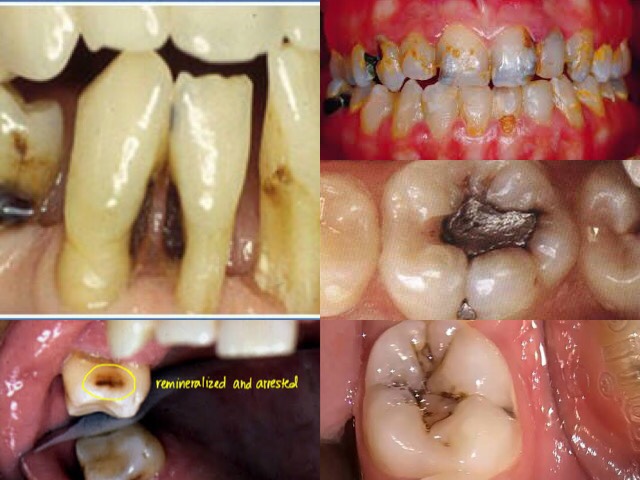
J. Arrested caries:

  • No tendency of future progression, caries become static.
  • Brown pigmentation in the hard tissue.

Dentowesome|@drmehnaz🖊


Image Source: Google.com

Selection of NSAID

Mild/Moderate Pain• Paracetemol
• Low dose Ibuprofen
Post op. or short lasting pain• Ketorolac, diclofenac
Musculoskeletal pain• Paracetemol
• Ibuprofen, naproxen, ketoprofen
RA,AS,Acute gout, Acute Rh. fever• Naproxen, piroxicam
• Indomethacin, high dose aspirin
GI irritation• Paracetemol
• Cox-2 inhibitors
H/O HS reaction to NSAIDs• Paracetemol/
• Cox-2 inhibitors
Paediatric pt.• Paracetemol, Ibuprofen & naproxen
Pregnancy• Paracetemol
Selection of NSAID

Dentowesome 2020|@drmehnaz 🖊

Ozone Therapy for the Treatment of Caries

HealOzone (KaVo Dental, Biberach, Germany)

Dental caries is caused by bacteria, and as ozone will kill certain bacteria,many studies have investigated whether ozone is effective in arresting the progression of caries. No serious side effects to the treatment have been reported.

Advocates of this treatment modality recommend ozone as a disinfectant gas to eliminate bacteria from occlusal caries (up to 2mm in depth), root carious lesions, and pit and fissure lesions, often with the absence of further operative treatment. The carious lesion is encouraged to remineralize over 4 weeks using fluoride and mineral mouthwashes, toothpaste, and sprays.

Baysan and Lynch (2004) found that ozone application for 10–20s eliminated most of the microorganisms found in primary root caries lesions. Ozone can reduce the numbers of S. mutans and S. sobrinus on saliva-coated glass beads in vitro (Baysan et al. 2000). However, the role that this disinfection process can play in the long-term reversal of previously active carious lesions is controversial.

Rickard et al. (2004) analyzed the available published literature and concluded that “given the high risk of bias in the available studies and lack of consistency between different outcome measures, there is no reliable evidence that application of ozone gas to the surface of decayed teeth stops or reverses the decay process.” Further research is necessary

With the HealOzone system (KaVo Dental, Biberach, Germany), ozone gas is delivered via a special handpiece that fits over and bathes the tooth. HealOzone (KaVo Dental, Biberach, Germany) delivers ozone gas, which
disinfects the tooth. The minimally carious lesion is encouraged to remineralize over a period of 4 weeks using fluoride and mineral mouthwashes, toothpaste and sprays.

Dr. Iswarya. V, BDS

Reference : Operative Dentistry – Hugh Devlin

CARISOLV

Carisolv

Carisolv is a chemomechanical method of removing dental caries that is minimally invasive. First of all a fluid is mixed consisting of a cocktail of amino acids and 0.5% sodium hypochlorite, and is applied to the dentin. The amino acids and hypochlorite form high-pH chloramines (pH 12), which react with the denatured collagen in the carious dentin, allowing it to be removed more easily. The softened dentin is removed
by scraping the surface with special hand instruments.


This technique requires longer clinic time than similar cavity preparation employing conventional bur removal. However, because
only soft carious dentin is affected and not normal dentin, the need for anesthesia is reduced, which is a major advantage in
dental-phobic patients, children, and special needs patients.

The technique is useful for the removal of root or coronal caries where access is easily
obtained, but requires repeated application of the solution over the caries.

Use of Carisolv Gel may be an inefficient method of removing caries at the enamel-dentin junction. Carious dentin may go unnoticed beneath the overhanging enamel because ideal access may require extensive preparation with a rotary bur. However, in this region, conventional removal of caries with a bur can be demanding, even when using magnifying loops.

Kidd et al. (1989) showed that demineralized dentin remained at the enamel-dentin junction in 57% of cavities that had originally been assessed as caries-free using conventional visual and tactile means. Some bacteria will remain at the enamel-dentin junction whatever approach is adopted therefore stained, hard dentin should be left alone in this area and no attempt should be made to remove it.

Carisolv Gel removes the smear layer and has no adverse effect on the bond strength of adhesive materials to dentin. Should Carisolv come into contact with exposed pulp tissue, no toxic effect should be expected.

Clinical Studies

Young et al. (2001) found no adverse effects with Carisolv when it was left in contact with rat pulp tissue.

Bulut et al. (2004) exposed the pulp chambers of 40 human first premolars with class V cavities and applied either Carisolv or sterile saline solution for 10min. The cavities were restored with a compomer filling material and the teeth extracted after either 1 week or 1 month. No adverse histologic effects due to Carisolv were observed.

Dr. Iswarya V

Reference : Operative Dentistry – Hugh Devlin