Developed in 2001 by- Dr. Cliff Ruddle, Dr. Pierre Machtou, Dr. John West, in cooperation with Dentsply Maillefer.
This system has 3 shaping and 5 finishing files.
Shaping files:-
Sx: 19/0.035
S1: 17/0.02
S2: 20/0.04
Finishing files:-
F1: 20/0.07
F2: 25/0.08
F3: 30/0.09
F4: 40/0.06
F5: 50/0.06
The cross section of all these files is convex triangular.
1.) Sx- Auxilliary shaping ProTaper file
No identification ring
Shorter in length: 19mm
Allows the shaping of coronal aspects of root canal and relocation of canal orifices in the direction of overhanging dentine area resulting in straight line access.
2.) S1, S2- Shaping ProTaper files
Purple and white identification rings respectively.
S1- to prepare the coronal one-third.
S2- to prepare the middle one-thirs.
3.) F1,F2,F3- Finishing ProTaper files
Yellow, red and blue identification rings respectively.
Each file has a fixed taper for the first 3mm and then a decreasing taper from D4 to D16. This:
Ensures continuous flexibility withing the file.
Avoids too large diameter at the shaft area of the instrument.
Reduces the potential for dangerous taper lock.
Enhances the strength of the file.
4.) F4,F5- Finishing ProTaper files:
Help in the apical preparation of larger canals.
F4 has 2 black rings and F5 has 2 yellow rings.
The body of both the files has a progressively decreasing taper and hence ensures excellent flexibility.
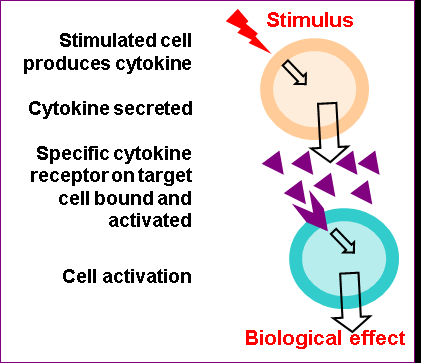
Cytokines are soluble protiens/polypeptides, produces by a variety of hematopoetic and non hematopoetic cell types. They are responsible for the regulation of immunological, inflammatory and reparative host responses.
Cytokines tend to bind to high affinity receptors and the target cells and mediate their effects. Specific cytokines mediate specific reactions.
Reference: Arvind Arora
Cytokines basically mediate immune response. But some cytokines are also pro inflammatory.
These are:-
Il-1, TNF alpha and IL-6.
IL-1 is the most important pro inflammatory cytokine.
Anti inflammatory cytokines are involved in the resolution of inflammation. These include:
IL-4, IL-10 IL-13 and TGF beta.
IL-4 has mainly anti-inflammatory properties with some pro-inflammatory properties.
T- cells are among the two important cells of the adaptive immune system (others are B- Cells). T-cells arise in the bone marrow and mature in the thymus.
T- cells constitute 60-70% of the circulating peripheral lymphocytes.
T- cells categories:-
1.) Helper or Inducer T-cells:
60% of T- cells are helper T- cells. They have CD4 surface marker and are MHC II restricted. Types of CD4 helper cells are:
A) Effector cells- TH1, TH2 and TH17 cells. The TH1 cells are activated by IFN- gamma and themselves produce IL-2, IFN-gamma and IL-12. They are the primary cells involved in delayed hypersensitivity, cell mediated immunity, macrophage activation and killing of intracellular microbes. TH2 cells are activated by IL4 and themselves produce IL4, IL5, IL6 and IL13. They produce all antibodies except for IgG2b and also provide defence against helminthic parasites. TH17 cells are powerful recruiters of neutrophils and monocytes to play a role in severe inflammatory diseases.
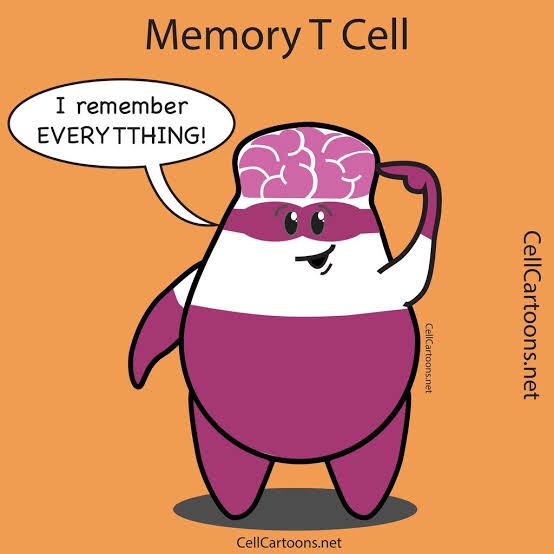
B) Memory cells- They retain the antigenic affinity of previously activated T-cells and are used in a second immune response.
2.) Cytotoxic T-cells:
30% of the total T-cells. They have CD8 surface marker and MHC I restricted. They kill amd lyse target cells which include tumour cells, virus infected cells and allograft.
THE RATIO OF CD4:CD8 T-cell is normally 2:1.
3.) Suppressor T-cells:
They have CD8 surface marker and are MHC I restricted. They are responsible for down regulation of the immune response.
T–CELL RECEPTOR (TCR)
TCR is a molecule found on the T-cell which is responsible for recognising the antigen bound to MHC molecule. It is a heterodomer made up of an alpha and a beta chain. The presence of TCR gene rearrangements demonstrated by molecular analysis is a marker of T-cell lineage.









 Dentowesome