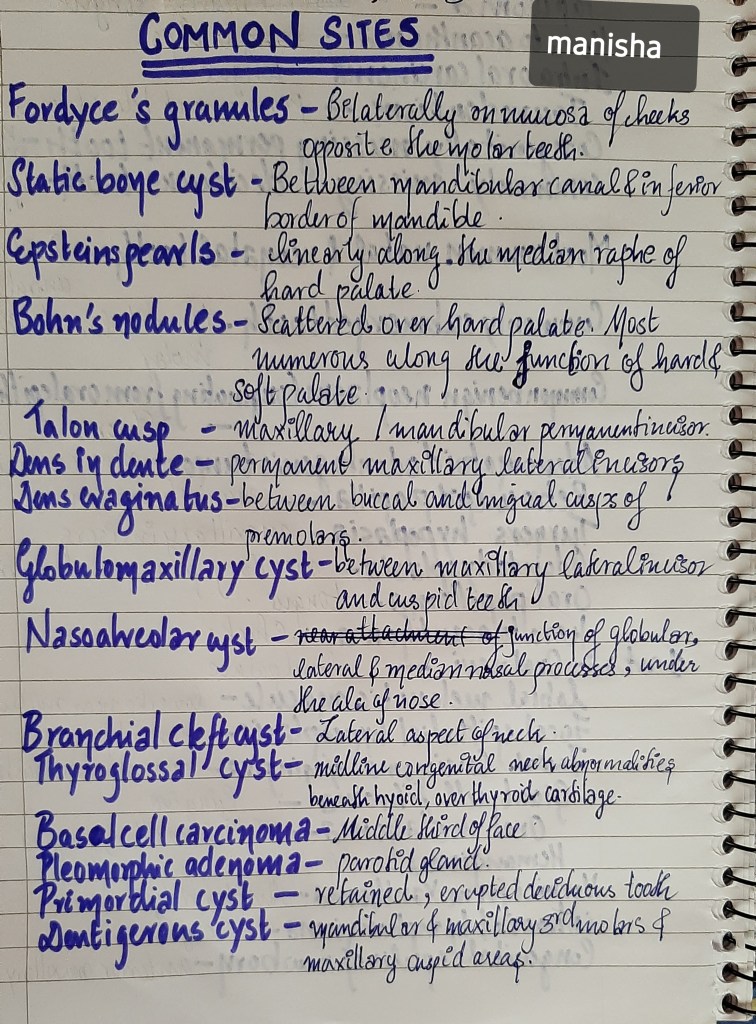
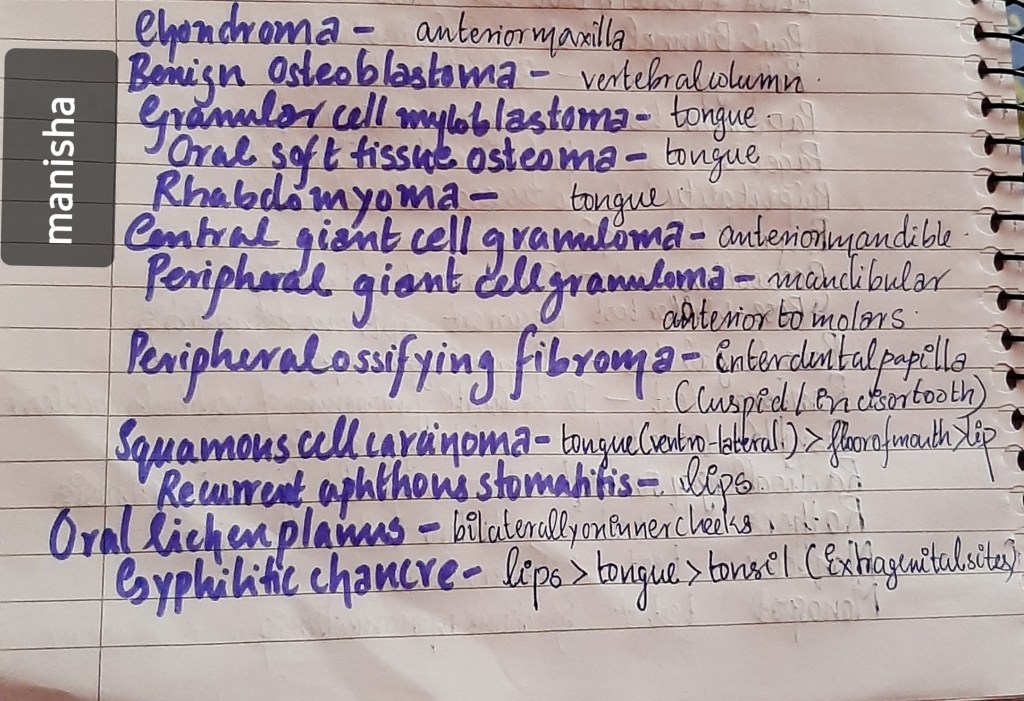
Correct and early diagnosis of a lesion / abnormality in the oral cavity is very crucial as these could be vital indicators to some of the underlying systemic diseases or other chronic conditions. Most of the oral conditions show a peculiar pattern of occurrence only on specific sites.Hence,knowledge of these common sites can help to some extent in proper identification, differentiation from other similar conditions and treatment planning.A few of such conditions and findings has been mentionedhere.
Sources:Shafers textbook of oral pathology ,burkets oral medicine ,www.aurametrix.weebly.com
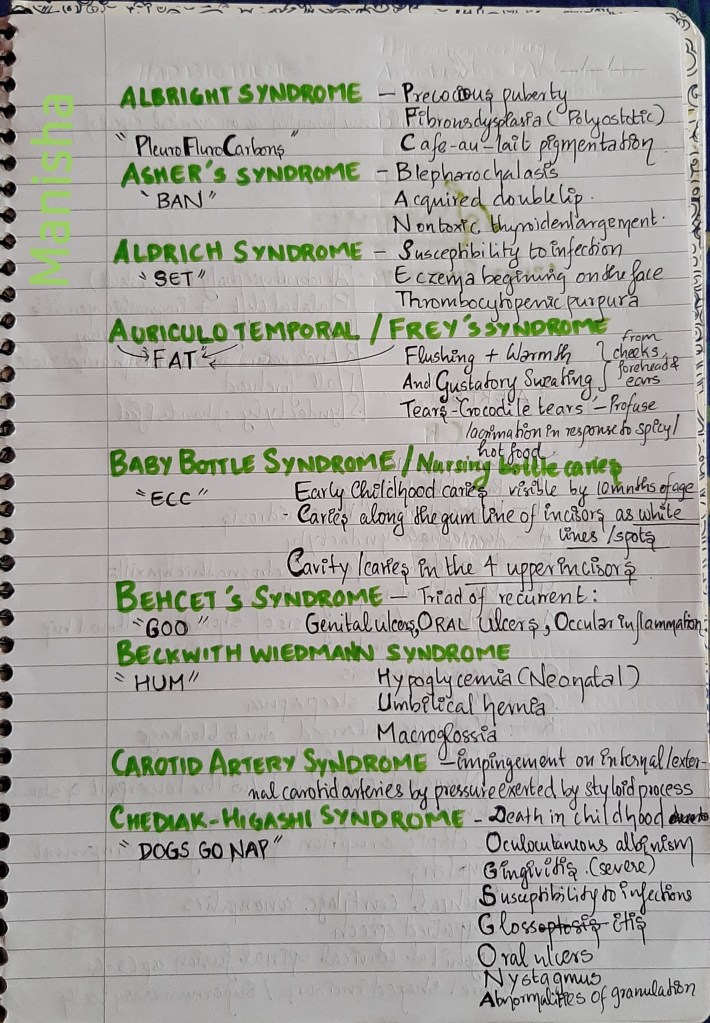
A continuation of the previous post on syndromes and easy short forms to remember the key features. Hope you find it helpful. Sources: Shafers textbook of oral pathology,www.rxpg.com,instagram–@_dentistars_,@dental_exams,www.medinaz.com
Syndromes are defined as combination of medical signs & symptoms that together represent a disease process .
As mentioned above, being a set of features ,most of us might have a tough timetrying to mug up all of the characteristics pertaining to a syndromewhich are often confusingtoo.
So here’s a humble attempt to make it easy .How??…..Short forms/mnemonics ofcourse!
Some of these are already familiar to you & for the rest -the author of this post holds patent 🙂 .Only some of the important syndromes pertaining to dentistry have been discussed here.Hope you would find it helpful.
Sources :Shafers textbook of oral pathology,Instagram -_dentistars_,dental_exams,www.cartoonstock.com
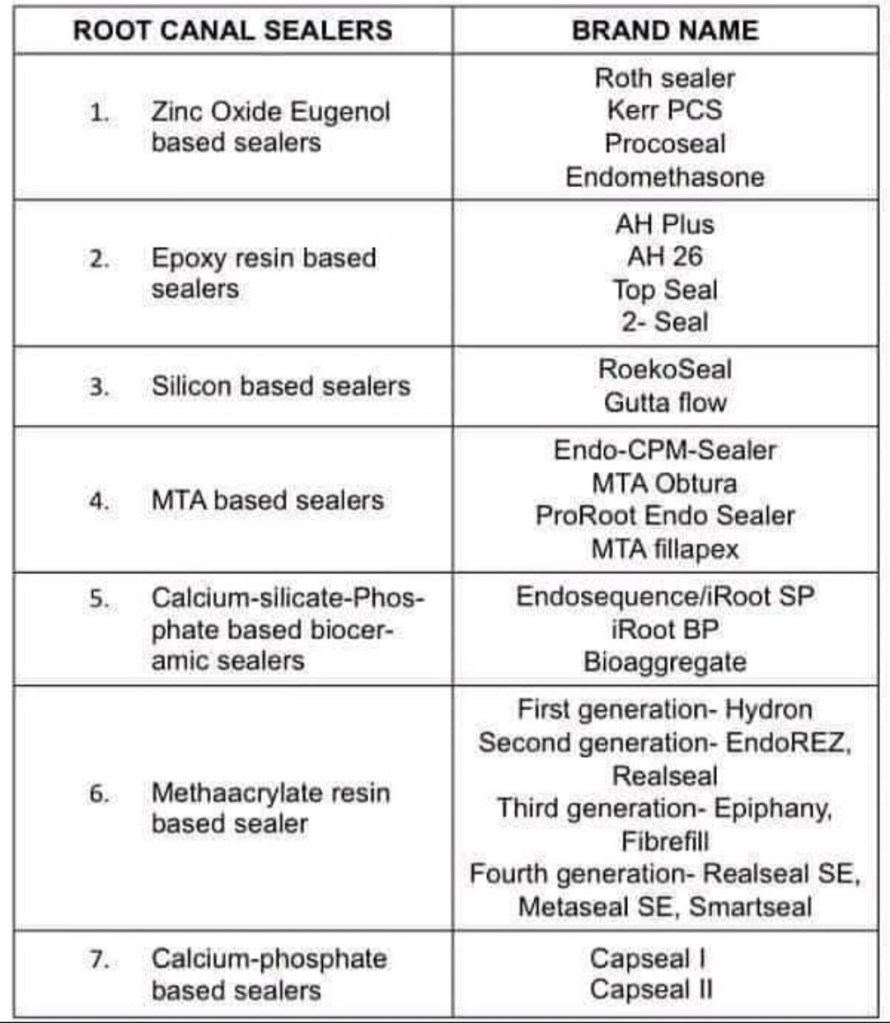
These are used in conjugation with semi solid or solid obturating materials to establish an adequate seal of root canal system.This is a brief note on the various root canal sealers ,composition ,salient features and brand names of some sealers which would prove helpful in clinical setup.
Classification :(according to Grossman)
1)ZnOE based sealers:
i. Grossman’s Formula
ii. Roth’s 801
iii. Tubliseal
iv. Wachs Sealer
2)CaOH based sealers:
i. Sealapex
ii. Apexit
3)Glass ionomer based sealers:
4)Resin based sealers:
i. AH Plus
ii. AH 26
iii. Epiphany
iv. Diaket
ZnOE based sealer-
Composition:
Base ingredient of powder -ZnOE,
Liquid usually consists -Eugenol alone or in combination with other liquids such as Canada balsam.
Features:
.Hardens in 2 hours approx at 37 degree celsius & under 100% relative humidity.
.Setting time in canal is less.(10-30 mins).
. Tissue tolerance is satisfactory with little inflammation & no inhibition of repair.
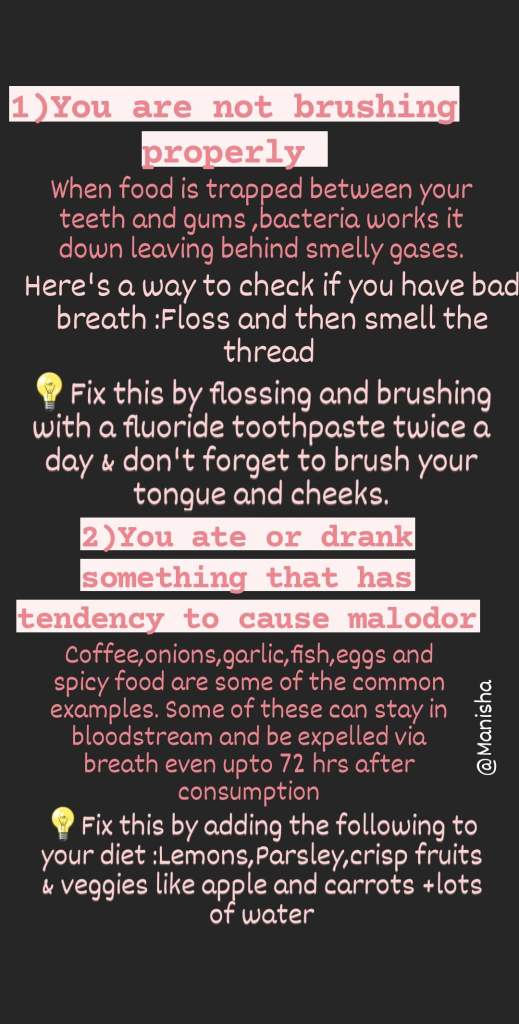
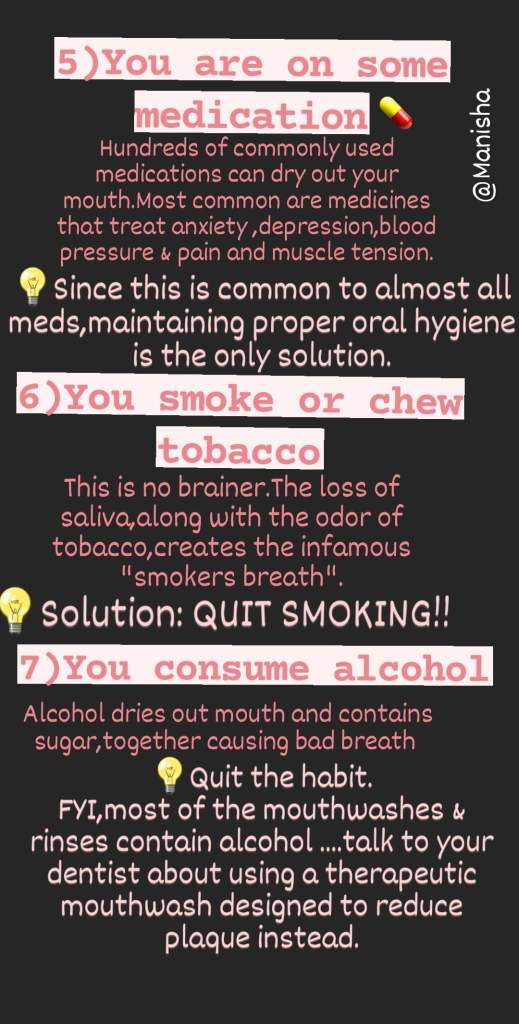
August 1st,NATIONAL ORAL HYGIENE DAY 🦷 A reminder that oral health is the door to overall health and reinforcing the fact that “Brush and floss ,before the loss.” Amidst the Covid era,where wearing a mask has become a part and parcel,many of us face the problem of “BAD BREATH” or halitosis and people often end up in temporary solutions without knowing the root cause. Here are some of the causes & remedy which might prove helpful.
– current approach in dentistry in Covid state Amidst the pandemic state with the high transmissibility of the disease through air & droplets and considering that routine dental procedures usually generate aerosols; alterations to dental treatment is of prime concern to maintain a healthy environment for patient & dental team.Here is where the approach of […]
Sources: Slideshare-Minimal invasive dentistry by Nabeela Basha , Minimal intervention dentistry by Dr.Nagamaheswari, Sturdvent’s South Asian edition,Clinical operative dentistry principles & practice by Ramya Raghu,textbook of preventive and community dentistry by SS Hiremath
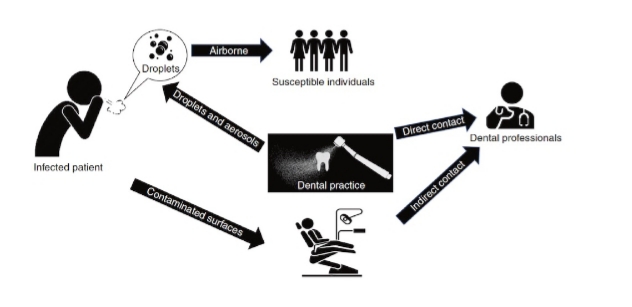
Amidst the pandemic state with the high transmissibility of the disease through air & droplets and considering that routine dental procedures usually generate aerosols; alterations to dental treatment is of prime concern to maintain a healthy environment for patient & dental team.Here is where the approach of performing minimally invasive dental treatment becomes crucial.
Risks of infection – Human-to-human transmission
What is minimal intervention dentistry?
Minimal intervention dentistry( MID) is a conservative philosophy of professional care concerned with first occurrence,early detection & earliest possible cure of caries at a micro level ; followed by minimally invasive and patient friendly treatment to repair irreversible damage caused by dental caries.
Goals & Principles:
.Early diagnosis of dental caries
.Assessment of individual caries risk
.Disease control by remineralisation of incipient carious lesions.
.Repair rather than replacement of defective restorations
.Minimal invasive treatment
.Periodic follow up.
Caries diagnosis:
Includes early diagnosis & caries risk assessment
Early diagnostic aidsFactors relevant in caries risk assessment
Procedures:
Non invasive procedures: Biological approach
Remineralising agents
Minimal invasive treatments:
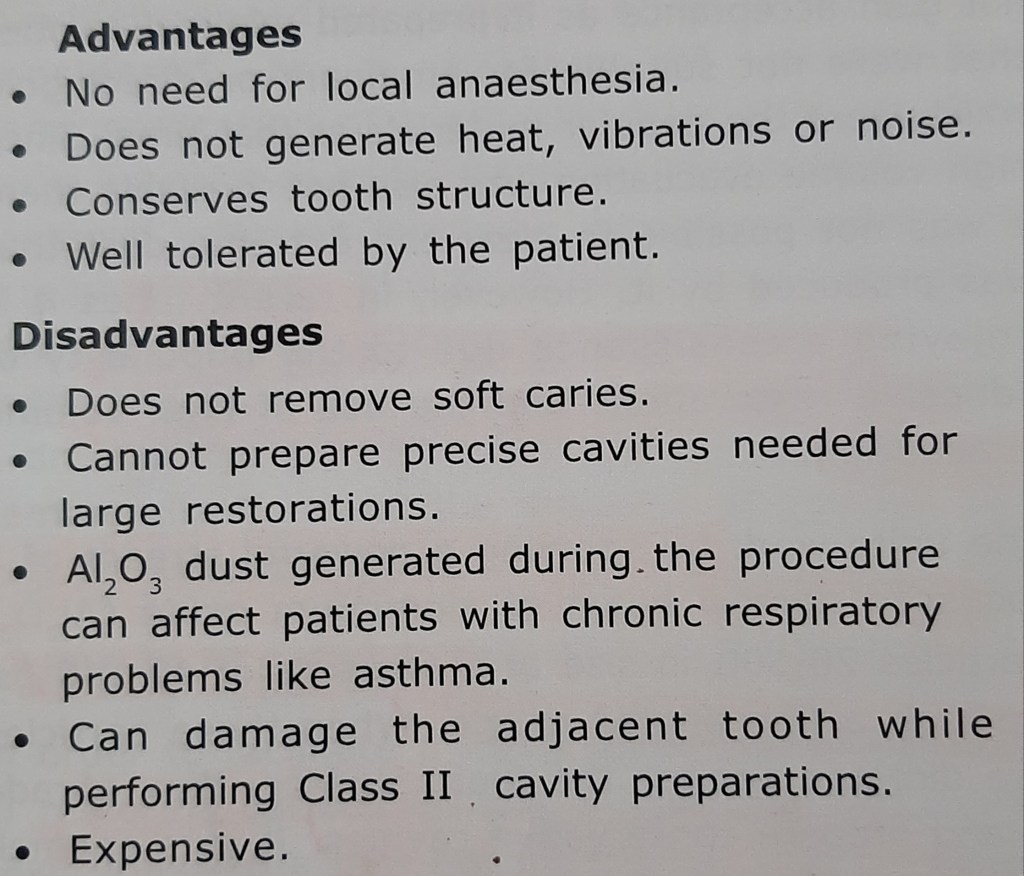
1)Air abrasion
Indications-
.for abrading the surface of old composites prior to new restoration ; minimal class I & class II preparations for composites ; for abrading ceramic or cast restorations for bonding ; for widening pits & fissures for sealants.
2) Sono Abrasion
Indications-
.opening pits & fissures for sealant restorations ; minimal preparation of incipient class II cavities
3) Chemicomechanical Caries Removal (CMC)
Carisolv – 2 syringe system ,one containing NaOCl & other with 3 amino acids (glutamic acid,leucine ,lysine); carboxymethylcellulose gel;NaCl,NaOH;Erythrosine.The contents are mixed together to form a pink gel which is applied onto carious dentin and left in place for 30 seconds to allow it to soften & degrade the infected dentin.
Advantages – relatively painless, removes only carious dentin, no vibrations,better substrate for adhesive bonding
Disadvantages- expensive, time consuming
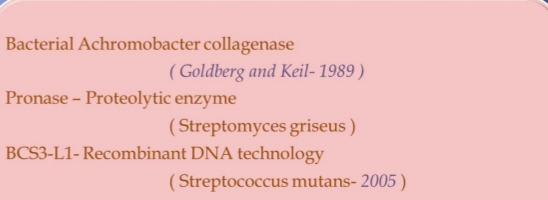
4)Enzymes
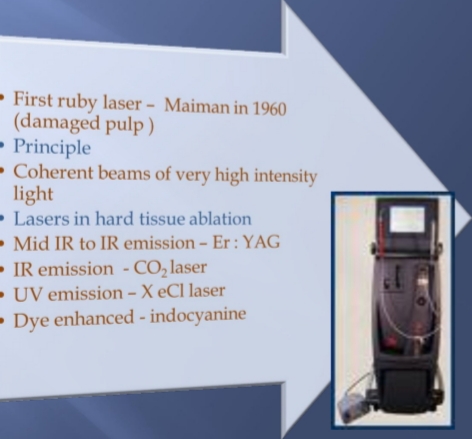
5)Laser
2 commonly developed lasers-
.Er:Cr:YSGG(2780 nm)- Erbium,Chromium,Yttrium,Scandium,Gallium,Garnet laser – works by agonizing water droplets as they travel towards the target tissue.
.Er:YAG(2940nm)-Erbium,Yttrium,Scadium,Aluminum,Garnet laser – uses pulses of light energy to micro vaporize water within the target tissues.
6)Ozone
Caries treatment with ozone – based on Niche environment theory .Ozone kit consists of portable apparatus & disposable silicon cups. Follow up 3-6 months.
Disadvantages – can cause porosities or abrade tooth surface ,in case of heavy exposure.
Other techniques (in brief):
7)Atraumatic restorative treatment (ART)
8)Rotary instruments
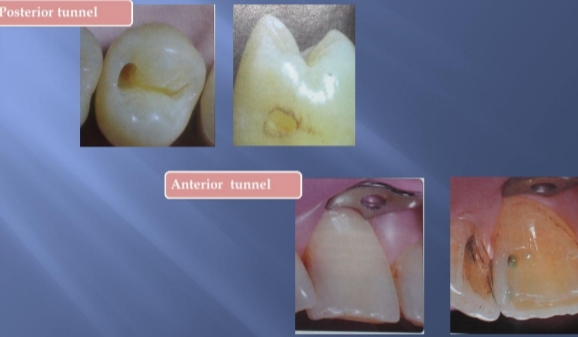
Cavity designs for minimal tooth preparation:
According to the new classification based on site,size & severity of lesion,following are the designs –
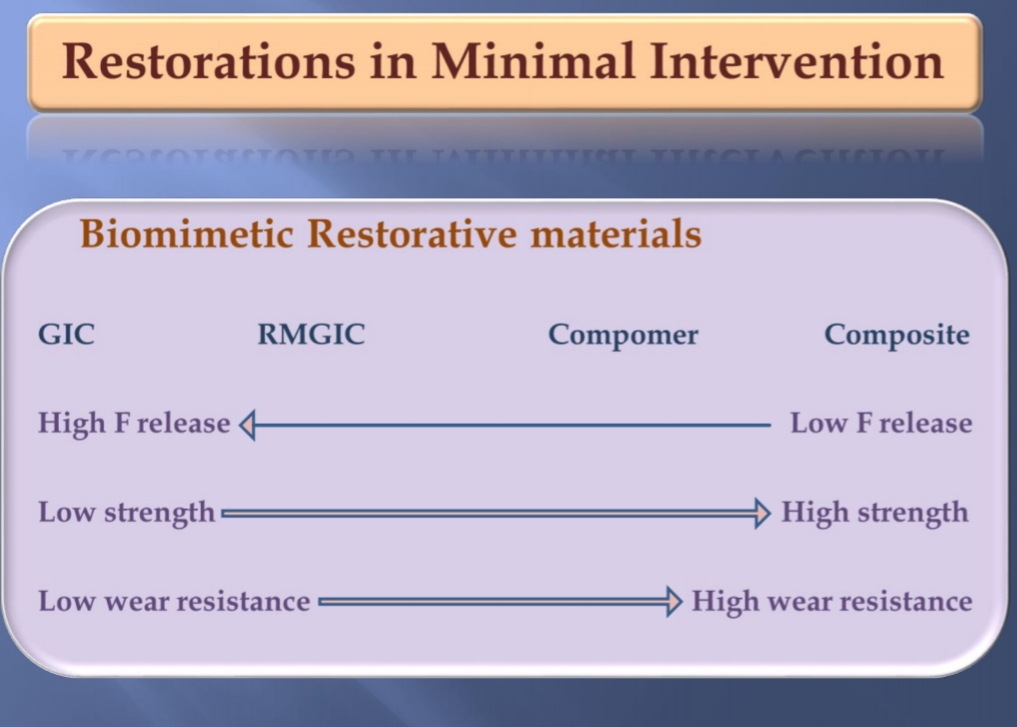
Restorative materials used in minimal invasive dentistry :
Conclusion:
Minimal intervention techniques cause less tooth destruction than conventional techniques,thus increasing the long term survival of teeth ,also cause less discomfort to the patient and ensure healing of the disease not only the symptoms. With a reduction in chair side time and simplified techniques there is lesser chances of exposure of the dentist to aerosol contamination,thus maintaining which is the need of the hour.


















 Dentowesome