APERT SYNDROME

🔖 Acrocephalosyndactyly. The condition is autosomal dominant i.e, one copy (out of 2) of the defective gene is sufficient to cause the abnormality in the offspring.

🔹Characteristics:

  • Craniosynostosis (premature fusion of the skull bones)
  • Craniofacial anomalies
  • Syndactyly (Fusion of fingers and toes)

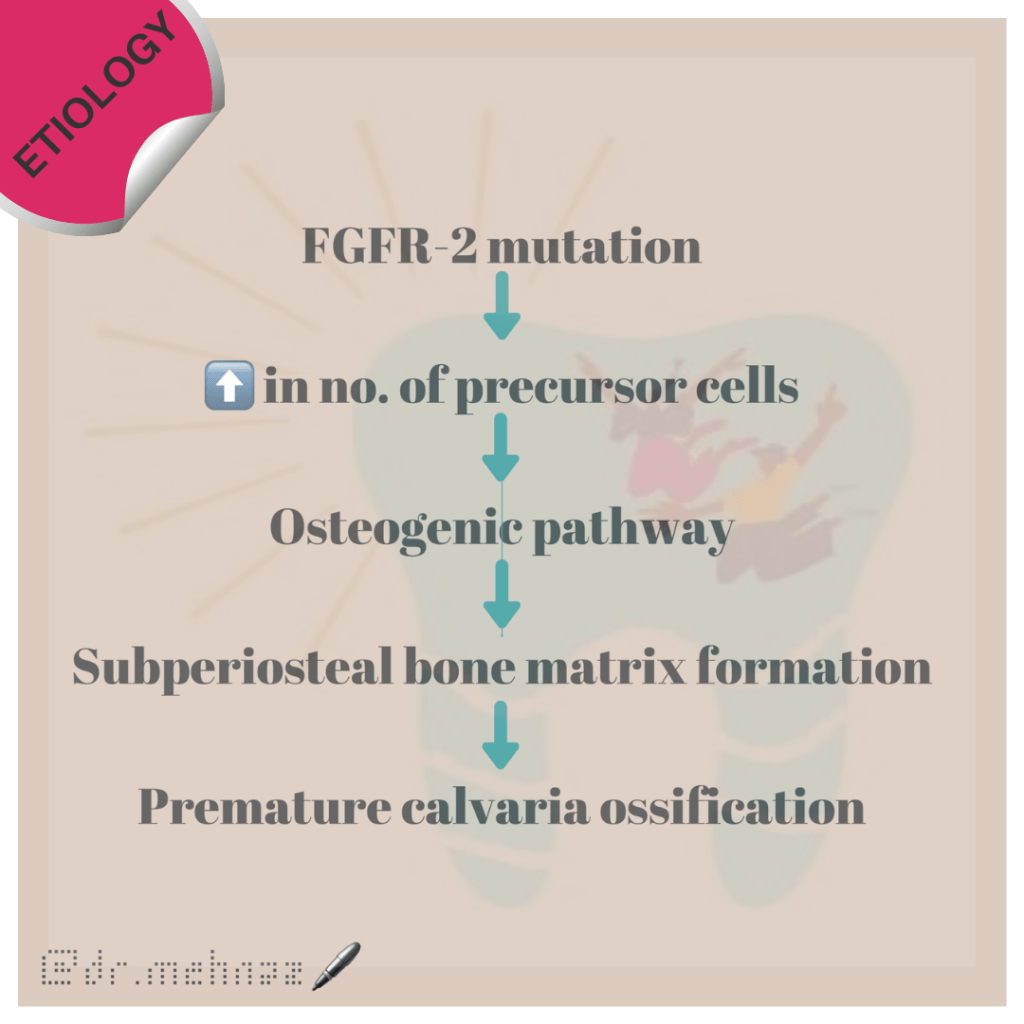
🔹Etiology:
🔹What are the Symptoms and Signs of Apert Syndrome?

The various clinical features include:

  1. Asians affected
  2. Acrocephaly, Brachycephaly, flat occiput & prominent forehead.
  3. Late closing fontanels
  4. Low set ears, hearing loss
  5. Eyes: Down slanting of palpebral fissures, Widely spaced eyes(Hypertelorism), Shallow orbits, Abnormally bulging eyes (Exophthalmos)
  6. Nose: Depressed Nasal bridge, short, wide with bulbous tip, Parrot beaked appearance, Atresia
  7. Jaw:
  • Prominent Mandible
  • Maxillary hypoplasia
  • Drooping angles of mouth
  • High arched palate
  • Bifid uvula
  • Cleft palate
  • Crowded upper teeth
  • Malocclusion
  • Delayed & ectopic eruption
  • Shovel shaped incisors
  • Supernumerary teeth
  • V-shaped maxillary dental arch
  • Bulging alveolar ridges

8. Partial to complete fusion of digits: 2-4th digits – MITTEN HANDS & SOCK FEET; Sole – supinated

9. Intelligence – Normal

10. ⬆️ intracranial pressure – optic atrophy, papilledema

11. Hyperhidrosis

12. Cardiovascular system: Atrial Septal defect, Ventricular septal defect, Patent ductus Arteriosus

🔹How do you Treat Apert Syndrome?

Standard Therapies

The treatment of Apert syndrome aims at addressing the specific symptoms that may be present in the particular individual. Treatment is usually symptomatic and supportive.

  • Craniosynostosis and associated hydrocephalus in some cases may give rise to an abnormally increased pressure within the skull (intracranial pressure) and on the brain. In these cases, early surgery (within 2 to 4 months after birth) becomes necessary to correct the defects in the skull and facial bones.
  • Insertion of a tube (shunt) to drain excess cerebrospinal fluid (CSF) away from the brain and into another part of the body like the abdomen where the CSF can be absorbed can be done to relieve associated hydrocephalus (fluid accumulation in the brain).
  • Early repair and reconstructive surgery may also be done in some infants with Apert syndrome to address craniofacial abnormalities.
  • Other defects such as those of heart, eye and ear defects may also need correction.

Dr. Mehnaz Memon🖊


References:

  1. https://www.medindia.net/amp/patientinfo/apert-syndrome.htm
  2. Shafer’s textbook of Oral Pathology – 7th Ed.
DENTINOGENESIS IMPERFECTA

🔹 Introduction:

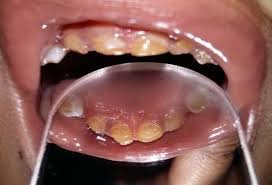
Clinical picture showing dentinogenesis imperfecta involving maxillary teeth

👉🏻 The affected teeth (both dentitions) are grey to yellow brown with broad crowns and constriction at cervical area resulting in tulip shape.

👉🏻 The enamel is easily broken, exposure of dentin ➡️ accelerated attrition.

👉🏻 Normal non-mineralized pulp chambers and canals

👉🏻 This condition is inherited in an autosomal dominant pattern, as a result of mutations on chromosome 4q21, in the dentine sialophosphoprotein gene (DSPP).

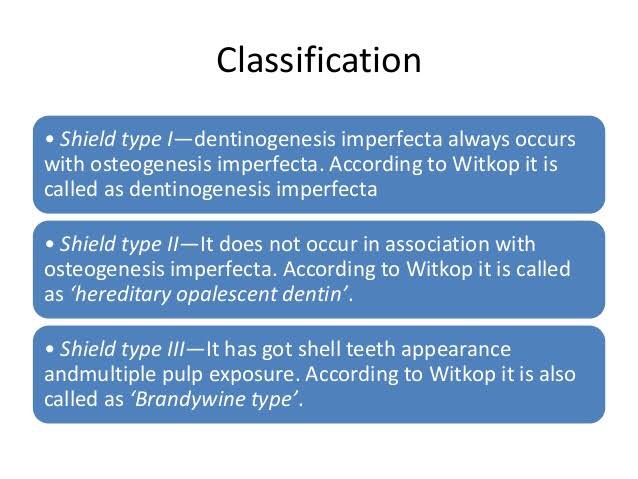
🔹Classification:

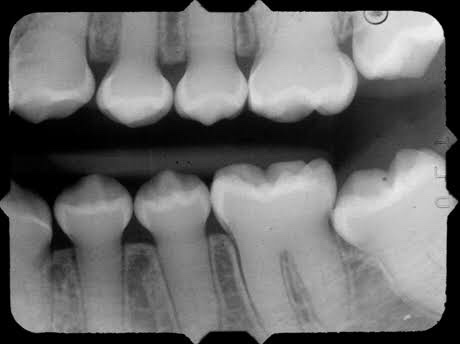
🔹Radiographic Features:

🔹Histopathological Features:

👉🏻 Mesodermal disturbance.

👉🏻 Dentin composed of irregular tubules with large areas of unclassified matrix. The tubules are larger in diameter & less numerous.

👉🏻 Odontoblasts – dentinal matrix not layed properly & they are entrapped within this matrix.

CHEMICAL FEATURES:
• Increased water content (60 times the normal)
• Decreased inorganic content

🔹Treatment: Cast Metal crowns & Jacket crowns

Dr. Mehnaz Memon🖊


References:

  1. Shafer’sTextbook Of Oral Pathology (7th Ed)
  2. Image Source: International Journal of Medicine Research; Dr G’s Toothpix; Google

SYNCOPE

Vasovagal Syncope

Common faint
🔹Predisposing factors:
  • Hot/crowded enviornment
  • Fatique
  • Pain
  • Prolonged standing
  • Hunger, emotional
🔹Pathophysiology:

Prolonged standing

⬇️

⬇️ filling of Ventricle

⬇️

Venous pooling

⬇️

⬆️ sympathetic activation

⬇️

contraction of Ventricle

⬇️

Stimulation of Myocardial mechanoreceptors & vagal afferent fibers

⬇️

Vasodilation & Bradycardia

⬇️

Hypotension & Syncope

🔹Management:
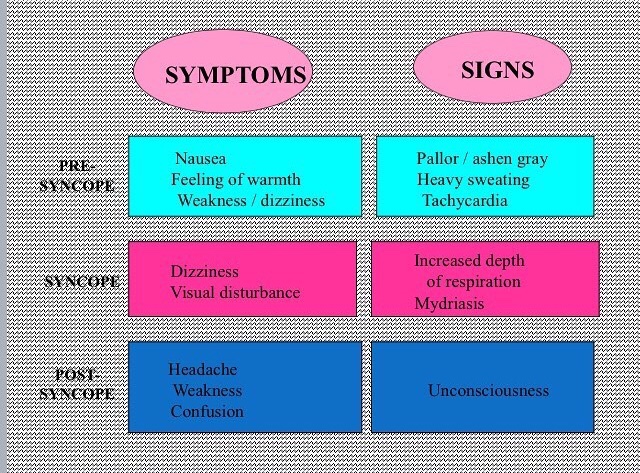
Presyncope
•Stop the procedure
•Patient placed supine with legs slightly elevated
•Muscular movements, aids the return of blood from periphery
•If thought necessary, oxygen may be administered, using full-face mask or nasal hood.
•An ammonia ampule may be crushed and held under patient’s nose.
•Postponement of dental procedure.
Dr. Mehnaz Memon🖊

References: Practical medicine guide by PJ Mehta; Internet

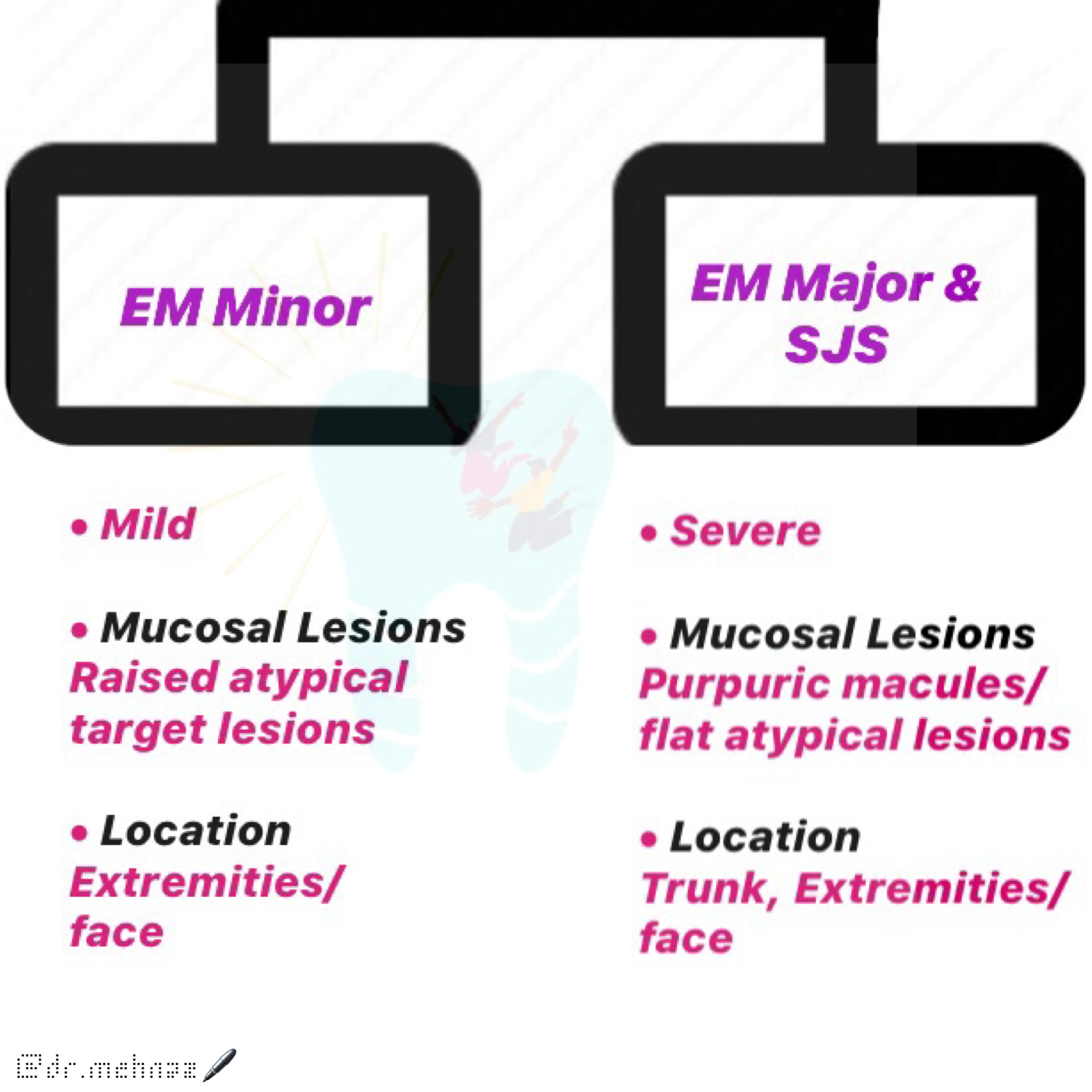
ERYTHEMA MULTIFORME (STEVEN’S JOHNSON’S SYNDROME)

➡️ A acute self limiting Dermatitis

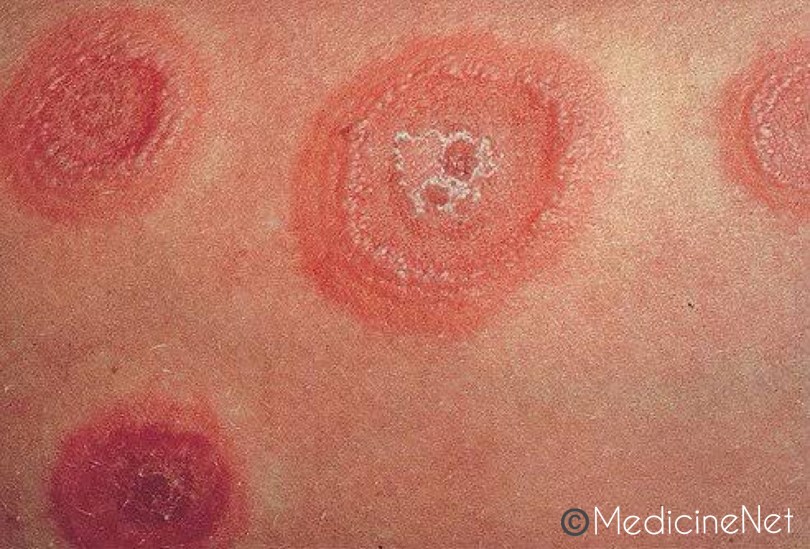
➡️ Clinical eruptions – Iris/target lesions

🔹Etiology:

  • Drug usage (Sulfa Drugs)
  • Infectious agents
  • Herpetic Etiology – Erythema multiforme major (55%); Erythema multiforme minor (100%)
  • Mycoplasma infection

🔹Clinical Features:

©️MedicineNet
  • Prevalance: 2-4th decade of life
  • M>F
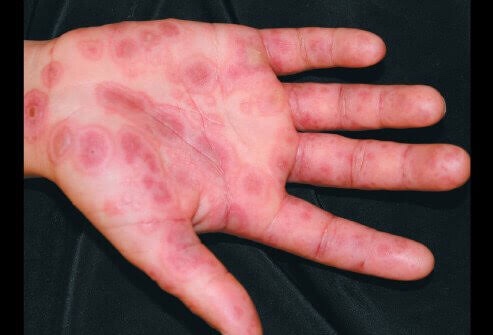
  • Occurrence of asymptomatic, vividly erythematous discrete macules, papules or vesicles & bullae in symmetrical pattern over hands, arms, foot, legs, face, Neck.
  • Concentric ring like appearance of lesions in hands, wrist, ankles 👇🏻
  1. Target
  2. Iris
  3. Bull’s eye
  • Lesions appear rapidly in a day/two. Persist for days to weeks & then fade & clear off. Recur after years.
  • Oral lesions – Hyperemic macules, papules/vesicles become eroded/ulcerated & bleed freely.

🔹STEVEN’S JOHNSON’S SYNDROME (Muco-cutaneous ocular disease)

  • Bullous form of Erythema Multiforme
  • Involves skin, oral cavity, eyes & genitalia
  • Fever, malaise, photophobia
  • Cutaneous lesions – Haemorrhagic vesicles/bullae
  • Oral lesions – painful, mastication impossible
  • Vesicles/bullae rupture and leave surface with thick white/yellow exudate
  • Erosions on pharynx
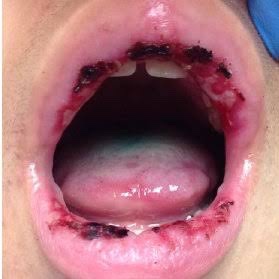
  • Lips – painful, upceration with bloody crusting..👇🏻
©️ResearchGate
  • Eye Lesions:
  1. Photophobia
  2. Conjunctivitis
  3. Corneal ulceration
  4. Panopthalmitis
  5. Keratoconjunctivitis Sicca
  6. Blindness due to bacterial infection
  • Genital: Non-specific urethritis, balanitis, vaginal ulcers
  • Other: Tracheobronchial ulceration, Pneumonia

🔹Histopathological Features:

©️SlideShare
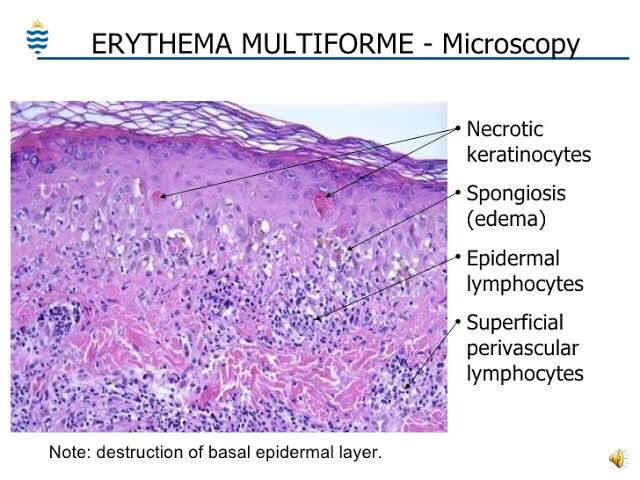
  • Lesions exhibit intracellular edema of spinous layer of epithelium & edema of superficial connective tissue – subepidermal vesicle.
  • Zone of severe liquefaction degeneration in upper layers of epithelium, intraepithelial vesicle formation & absence of basal membrane.
  • Dilatation of superficial capillaries & lymphatic vessels in the connective tissue.
  • Lymphocytes, Neutrophils & Eosinophilic infilteration.

🔹Differential Diagnosis:

  • Aphthous stomatitis
  • Contact stomatitis
  • ANUG
  • Pemphigus
  • Bullous lichen planus
  • Dermatitis herpetiformis
  • Herpes Zoster
  • Chicken pox
  • Toxic epidermal Necrolysis

⬇️

Scalding burn (bullous drug eruption)

🔹Treatment:

➡️ Eliminate the cause, drug withdrawal & treat infections after culture tests.

Symptomatic –

  • Antihistamins
  • Analgesics
  • Mouthwash
  • Oral antacids
  • 0.05% chlorhexidine – bathing
  • Corticosteroids therapy: Patients with infection-induced erythema multiforme do worse when steroids are given.

Dr. Mehnaz Memon🖊


References: Shafer’sTextbook Of Oral Pathology

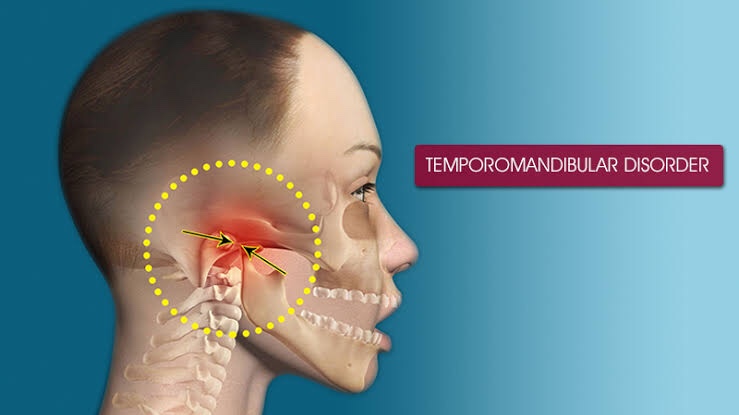
TEMPOROMANDIBULAR DISORERS(TMD)

TMD: They are the most common cause of facial pain after toothache.

🔹 Classification:

  1. TMD secondary to Myofacial pain dysfunction syndrome(MPDS)
  2. TMD secondary to true articular disease

🔹Etiology:

1) MPDS –

  • Malocclusion
  • Jaw clenching
  • Bruxism
  • Personality disorders
  • Stress & Anxiety
  • Increased pain sensitivity

2) Articular disease –

  • Disk displacement disorder
  • Degenerative joint disorders
  • Rheumatoid Arthritis, Ankylosis
  • Dislocation
  • Infection
  • Neoplasia

🔹Clinical Features:

➡️ The clinical manifestations in MPDS :

  • Pain without destructive changes of TMJ on radiograph
  • Tenderness
  • Spasm of Masticatory Muscles (Temporalis, Masseter, Lateral & Medial pterygoids)
  • Muscle hyperactivity & dysfunction due to malocclusion

➡️ Age: Young women (20-40 years); M:F – 1:4

➡️ 4 cardinal signs & symptoms of the syndrome:

  1. Pain (Periauricular, with chewing & radiate to head)
  2. Muscle tenderness
  3. Clicking/popping noise in TMJ
  4. Limitation of jaw motion

➡️ Pain: Dull type

  • unilateral/bilateral in MPDS
  • unilateral in articular origin except Rheumatoid Arthritis

➡️ Symptoms:

  • Otalgia
  • Neck pain
  • Shoulder pain
  • Dizziness

🔹Radiograph shows👇🏻

  • Erosion
  • Bony sclerosis
  • Osteophytes
  • Condylar-glenoid fossa remodelling

CT Scan – Material injected into joint cavity.

MRI – Articular pathology

Surgical – Traumatic TMD

Arthroscopy – Internal TMJ derangements

🔹Lab Diagnosis:

  1. Blood count to rule out any infection
  2. Rheumatoid Arthritis – Rheumatoid factor, ESR, Anti-nuclear antibody
  3. Gout – Uric acid levels

🔹Differential Diagnosis:

  1. Clustre/Migraine headache
  2. Temporal/Giant cell arteritis
  3. Post herpetic neuralgia
  4. Trigeminal Neuralgia
  5. Middle ear infections

🔹Treatment options for TMD:

• Self-care practices & conservative approach, surgical (last option)

Basic treatments include –

  1. Apply moist heat or cold packs
  2. Eat soft foods, Do not chew gum
  3. Take medications – To avoid muscle pain and swelling; NSAID’s (Aspirin, Ibuprofen), Muscle relaxants (who clench teeth), Anti-anxiety drugs, Anti-depressants
  4. Use of night guards & splints
  5. Undergo corrective dental treatments
  6. Avoid extreme jaw movements

• Conservative –

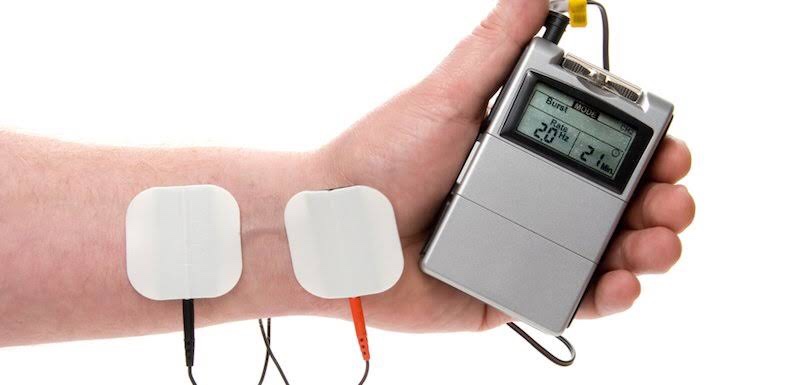
Transcutaneous electrical nerve stimulation (TENS) is a method of pain relief involving the use of a mild electrical current.
  • TENS
  • Ultrasound
  • Trigger point injections
  • Radiowave therapy

Dr. Mehnaz Memon🖊


References:

  1. https://www.nhs.uk/conditions/transcutaneous-electrical-nerve-stimulation-tens/
  2. https://www.epainassist.com/sports-injuries/head-and-face-injuries/tmd
  3. Image Source: Google
  4. Shafer’sTextbook Of Oral Pathology; Ghoms Oral Medicine

OEDEMA: PATHOGENESIS & TYPES

👉🏻Definition & Types:

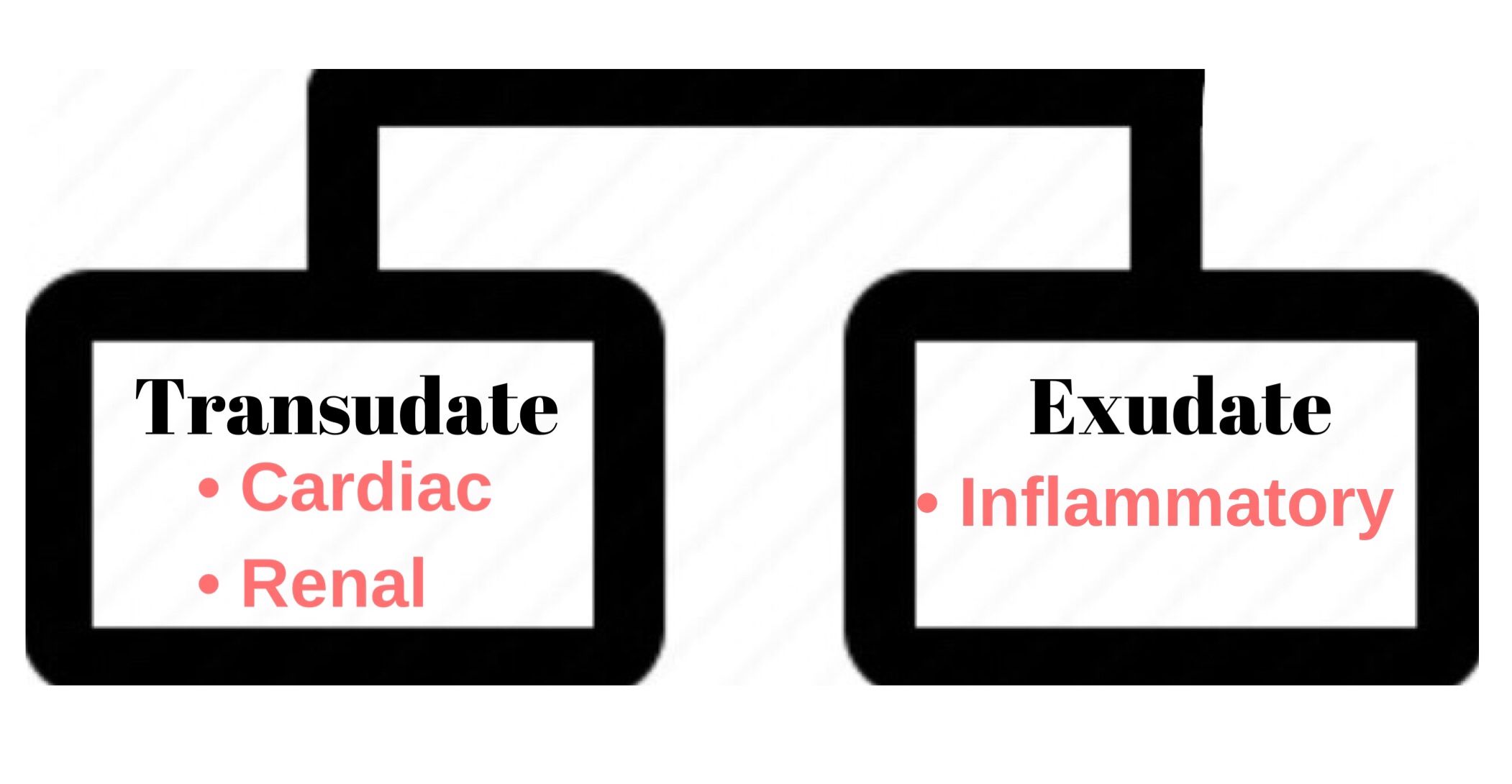
🔹OEDEMA〰️Swelling. Abnormal/excessive accumulation of free fluid in the interstitial tissue spaces & serous cavities.

🔹Accumulation of fluid (abnormally) inside the cell is intracellular edema/hydropic degeneration.

🔹Accumulation in body cavities:

  • Peritoneal Cavity – Ascitis
  • Pleural Cavity – Hydrothorax (T.B)
  • Pericardial cavity – Hydropericardium
TYPES OF OEDEMA👆🏻

🔹PITTING & NON-PITTING EDEMA:

Source: Healthline

➡️ When interstitial fluid volume increases, most of the fluid becomes free that is not bound to proteoglycan meshwork. This type of edema is called pitting edema because when this area is pressed with finger, fluid gets displaced producing depression or a pit as seen in SUBCUTANEOUS TISSUES.

➡️ Edema also develops due to swelling of the cells/clotting of interstitial fluid in the presence of fibrinogen. This is called Non-pitting/solid edema because its hard & a pit is not formed by pressing.

  • e.g. – Myxodema
  • – Elephantiasis

Oedema Fluid

🔹 Pathogenesis of Edema:

➡️ Causative mechanisms that produce edema are:

  1. ⬇️ Plasma oncotic pressure
  2. ⬆️ capillary hydrostatic pressure
  3. Lymphatic obstruction
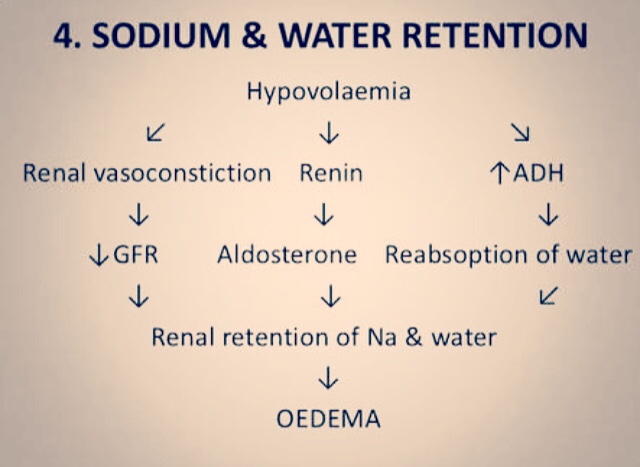
  4. Sodium & Water retention
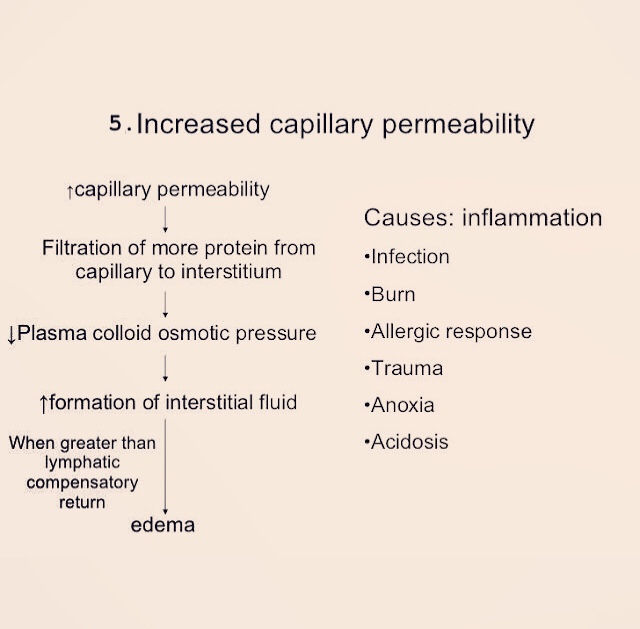
  5. ⬆️ capillary permeability
  6. Tissue factors

These mechanisms interfere with normal fluid balance of plasma, interstitial fluid & lymph flow.

  • It is exerted by total amount of plasma proteins that tend to draw fluid into the vessels normally.
  • A fall in the total plasma protein level (<5g/dl), results in lowering of plasma oncotic pressure in a way that it can no longer counteract the effect of hydrostatic pressure of blood.
  • Therefore, increased outward movement of fluid from capillary wall & decreased inward movement of fluid from the interstitial space causing edema.
Fluid pressure and colloid osmotic pressure forces operate at the capillary membrane, tending to move fluid either outward or inward through the membrane pores
Pathogenesis of oedema in hypoalbuminaemia. The normal balance of hydrostatic and oncotic pressures is such that there is net movement of fluid out of the capillaries at their arteriolar ends and net movement in at their venular ends (indicated here by arrows). Oedema can thus be due to an increase in capillary hydrostatic pressure, a decrease in plasma oncotic pressure or an increase in capillary permeability.

There are many possible causes of hypoalbuminaemia; a combination of which may be implicated in individual cases. For example, to list few of them👇🏻

  • Oedema of renal disease (Nephrotic syndrome, Acute glomerulonephritis)
  • Ascitis of liver disease e.g. in Cirrhosis.
  • Protein losing enteropathy
  • Malnutrition

➡️ Fluid from capillary wall to interstitial space by counteracting the force of plasma oncotic pressure.

➡️ Edema results when hydrostatic pressure at Venular end of capillary wall(12mmHg) becomes more than the plasma oncotic pressure, resulting in no reabsorption of fluid at the Venular end.

  • Example, edema of Cardiac disease – Congestive cardiac failure, constrictive pericarditis
  • Cirrhosis of liver
  • Passive congestion – e.g. mechanical obstruction due to thrombosis of veins of lower legs, varicosities, pressure by pregnant uterus, tumours etc.
  • Postural edema e.g. ⬆️ Venous pressure (Edema of feet & ankle)

➡️ Lymphoedema is caused due to obstruction of lymphatic channels causing localized edema.

  • e.g. removal of axillary lymph nodes in radical mastectomy for carcinoma of breast cancers.
  • Rupturing of main lymphatic channel causing chylothorax & chylous ascitis

– Inflammation of Lymphaties:

  • Filariasis (infection with Wuchereria Bancrofti) – Chronic lymphoedema of scrotum & legs

– Abnormal development of lymphatic channels:

  • Milroy’s disease/hereditary lymphoedema
  • Edema comfined to one or both lower limbs.
Source: Slideshare
Source: Slideshare

Forces acting in the interstitial space –

1. Oncotic Pressure

⬇️

⬆️ Vascular permeability & inadequate removal of proteins by lymphatics

⬇️

Elevation

2. Tissue Tension

⬇️

Lowered (e.g. loose subcutaneous tissues of eyelids & external genitalia)


Dr. Mehnaz Memon🖊

References: Textbook of Pathology, Harsh Mohan; Internet; https://basicmedicalkey.com/plasma-proteins-and-enzymes/

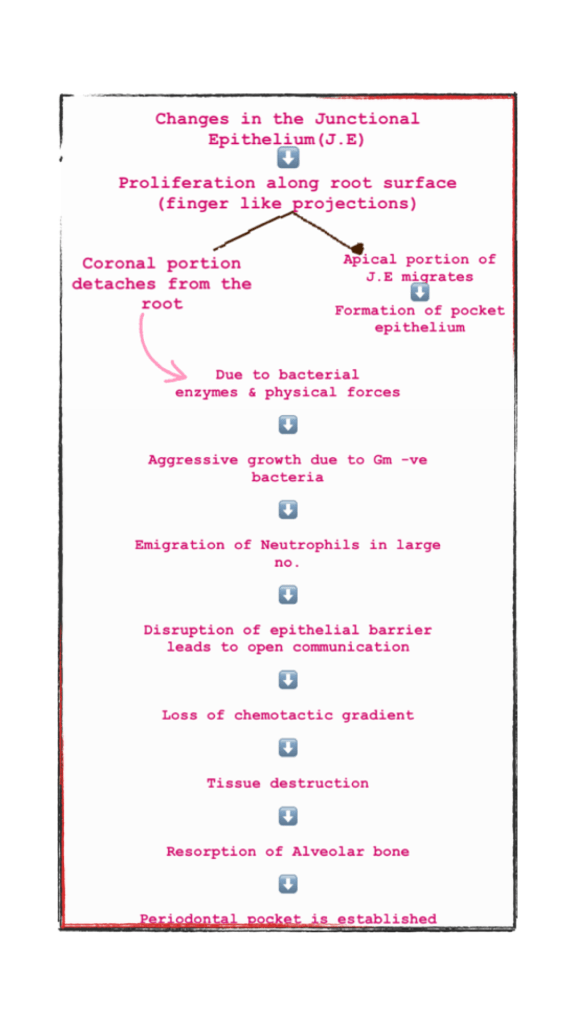
PATHOGENESIS OF POCKET FORMATION

👉🏻 The initial lesion in the development of periodontitis is the inflammation of gingiva following bacterial challenge.

  1. Formation of bacterial colony
  2. Infammatory process
  3. Migration of neutrophils
  4. Tissue destruction
  5. Activation of Neutrophils
  6. Pocket formation

PERIODONTAL POCKET TYPES:

• Bacterial cells in dental plaque

Infammatory changes in the Connective Tissue wall of the gingival sulcus

⬇️

The cellular & fluid inflammatory exudate causes degeneration of Connective tissue & gingival fibres

⬇️

Just apical to Junctional epithelium, collagen fibres are destroyed

⬇️

Infammatory cells + edema

• Mechanisms associated with collagen loss:

  1. Collagenase enzyme secreted by fibroblasts, PMN & macrophages degrade collagen & other matrix molecules into small peptides – MMP’s
  2. Fibroblasts phagocytize collagen fibres by extending cytoplasmic processes to the ligament-cementum interface.

👉🏻 Apical cells of junctional epithelium proliferate along the root, Coronal portion of J.E detaches from the root & is invaded by PMN’s (60%)


Dr. Mehnaz Memon🖊