DISLOCATION OF CONDYLES/LUXATION OF TMJ

Image source: SlideShare

Let’s first understand the terms Luxation, Subluxation & Habitual Dislocation👇🏻

  • Luxation of joint refers to complete dislocation – Non self reducing.
  • Subluxation is partial dislocation or Self-reducing.
  • Repeated anterior dislocation & self reduction leads to Habitual/Recurrent dislocation.

➡️ Condylar dislocations can be divided into Anterior (Luxation/Subluxation), Cranial & Posterior Dislocations.

Etiology:

  1. Fracture of condyle (due to acute trauma)
  2. Stretching of capsule of TMJ
  3. Yawning/mouth opened too widely (during extraction/ Tonsillectomy/ Endoscopy)

Clinical Features:

  1. Sudden locking & immobilization of jaw when the mouth is open. Hence mouth cannot be closed and patient becomes panicky.
  2. Spasmodic contractions of Temporal, internal pterygoid & masseter muscle with protrusion of jaw.
  3. Severe pain, excessive salivation & depression of skin around preauricular area
  4. Eating/talking – impossible.

Treatment:

  1. Relaxation of Muscles – Inferior & superior pressure of thumbs in mandibular molar area.
  2. General anesthesia
  3. Tiring the masticatory muscles: Cupping the chin in palm of hand & applying pressure 5-10 min.
  4. Recurrent Dislocation – Alter the ligament, bony musculature.
  5. Repositioning Dislocated Temperomandibular Joint..Do watch till the end! (Video credits: Youtube channel-The General Medicine)👇🏻

https://www.instagram.com/tv/Bz-qZqunJtF/?igshid=24valy01dqya

Read More »

Amelogenesis Imperfecta

➡️ Represents a group of hereditary defects of enamel unassociated with any other generalized defects. It is entirely an ectodermal disturbance, since the mesodermal components of the teeth are basically normal.

➡️ Otherwise known as…

  • AI
  • Hereditary enamel dysplasia
  • Hereditary brown enamel
  • Hereditary brown opalescent teeth
AI can be inherited as an X-linked Autosomal Recessive or Autosomal Dominant condition

Prevalence: 1 in 700 to 1 in 15,000

Etiology:

  • Dental enamel is a highly mineralized tissue with over 95% of the volume occupied by unusually large, organized structures called the hydroxyapatite crystals.
  • The formation of these is controlled in Ameloblasts through the interaction of a no. of organic matrix molecules that include –
MMP20 (Matrix Metallopeptidase 20)
DSPP (Dentin sialophosphoprotein)

Develoment of Enamel:

➡️ 3 stages:

  1. Formative – deposition of organic matrix
  2. Calcification – Matrix mineralization
  3. Maturation – Crystallites enlarge & mature

Types of AI classification (Witkop and Sauk)

Based on clinical, histological & genetic criteria:

🔹 TYPE I HYPOPLASTIC

  • Pitted Autosomal dominant
  • Local Autosomal dominant
  • Local Autosomal Recessive
  • Smooth Autosomal dominant
  • Smooth, X-linked dominant
  • Rough Autosomal dominant
  • Enamel agenesis, Autosomal Recessive

🔹 TYPE II HYPOMATURATION

  • Diffuse Pigmented, Autosomal Recessive
  • Hypomaturation
  • Snow-capped teeth, X-linked
  • Autosomal Dominant

🔹 TYPE III HYPOCALCIFICATION

  • Diffuse Autosomal dominant
  • Diffuse Autosomal Recessive

🔹 TYPE IV COMBINATION TYPE

  • Hypomaturation – Hypoplastic with taurodontism
  • Hypomaturation – Hypoplastic with taurodontism, Autosomal Dominant
  • Hypoplastic – Hypomaturation with taurodontism, Autosomal Dominant

Clinical Features:

1) Hypoplastic – Enamel not formed to full normal thickness.

2) Hypomaturation –

  • The enamel can be pierced by an explorer point under firm pressure.
  • Can be lost by chipping away from the underlying normal appearing dentin.
  • Teeth normal in shape but exhibit a mottled, opaque white, brown-yellow discoloration.
  • Snow capped pattern – Zone of white opaque enamel on the incisal or occlusal third of crown.

3) Hypocalcified

  • The enamel is so soft that it can be removed by a prophylaxis instrument.
  • Yellow, brown or orange on eruption. Stained brown to black with time.
  • Rapid calculus apposition.
  • Coronal enamel lost with function except for the cervical portion which is mineralized better.
  • Autosomal Recessive – More severe.

Other Features:

  • Both dentition affected
  • Crown – Yellow to dark brown
  • Enamel might have numerous parallel vertical wrinkles or grooves.
  • Open Contact points.
  • Occlusal & incisal edges frequently abraded.

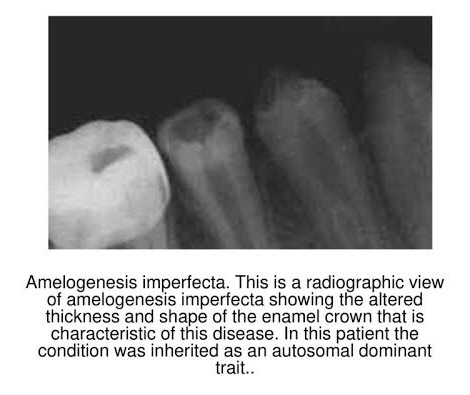
Radiographic Features:

Source: SlidePlayer
  • The enamel may appear totally absent.
  • When present may appear as a thin layer, chiefly over tip of cusps & on inter-proximal surfaces.
  • In some cases, calcification is so much affected that enamel and dentin seem to have the same radio density, making differentiation b/w the two difficult.

Histological Features:

  1. Hypoplastic: Disturbance in the differentiation/viability of Ameloblasts. Defect in matrix formation.
  2. Hypomaturation: Alteration in enamel rod & rod sheath structures.
  3. Hypocalcified: Defects of matrix structure & of mineral deposition.

Management:

  • Sealants/bonding
  • Prosthetic reconstruction

References: Shafer’sTextbook Of Oral Pathology; Internet

Nutrition, Diet & Dental Caries

  • Nutritional effects – systemically
  • Dietary effects – Locally

Vitamin D :-

➡️ Vit. D along with Parathyroid hormones & calcitonin play primary roles in regulating the concentration of Calcium & inorganic phosphate in plasma & ECF and in controlling mineralization of bones & teeth.

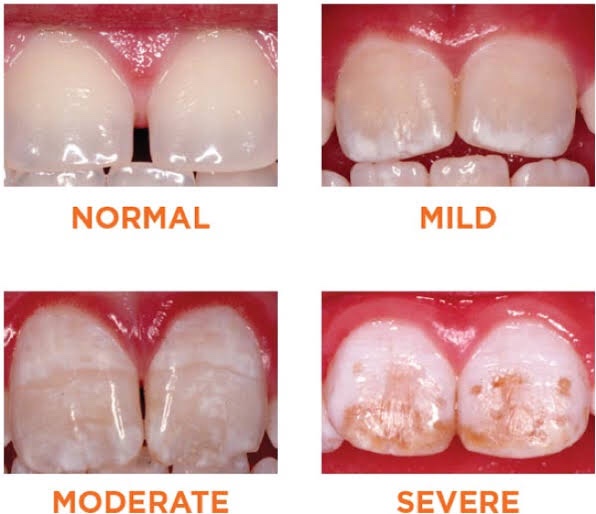
➡️ Quantitive defect in enamel tissue from metabolic injury to Ameloblasts – ENAMEL HYPOPLASIA

Source: Google
  • Clinical Significance: Roughened surface with discrete pitting / circumferential band like irregularities which post eruptively acquire a yellow brown stain.

Carbohydrate intolerance & Dental Caries:

➡️ Intolerance occurs because of deficiency of a specific enzyme involved in metabolism of sugar.

Hereditary fructose intolerance: (Froesch,1959)

  • Inborn error of fructose metabolism transmitted by an autosomal recessive gene.
  • Episodes of pallor, nausea, vomitting, coma & convulsions following ingestion of fruit containing fructose/cane sugar.
  • ⬇️ Dental caries.

Diet Modification:

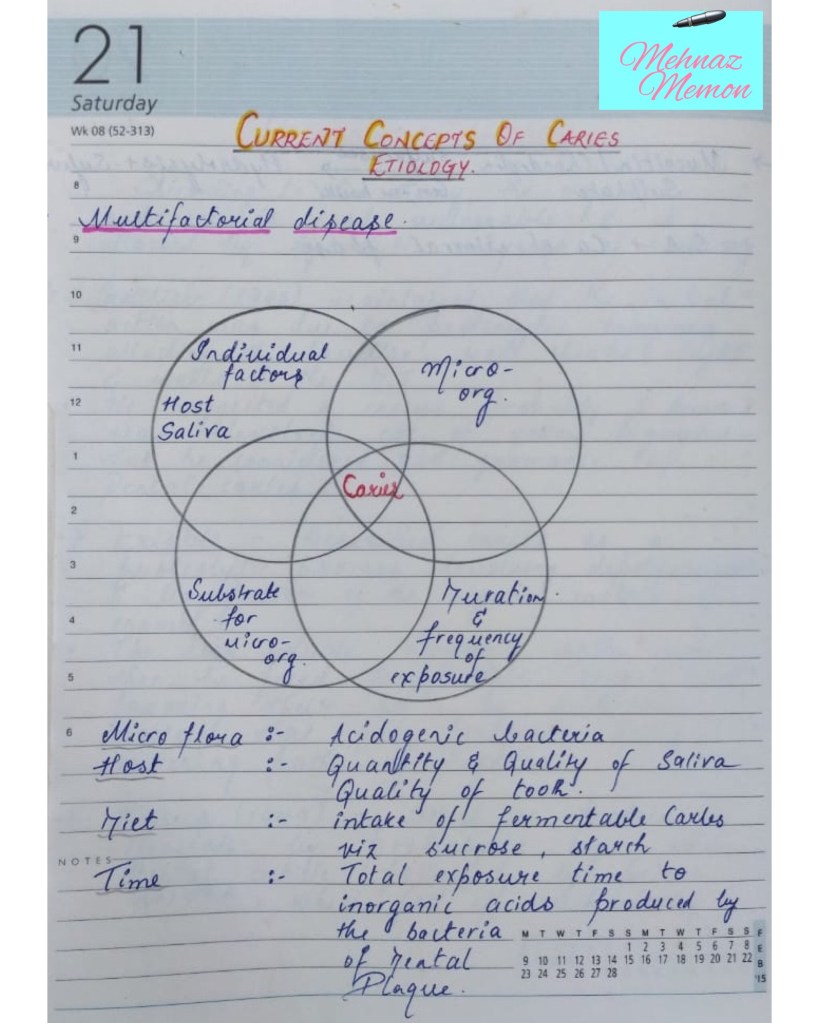
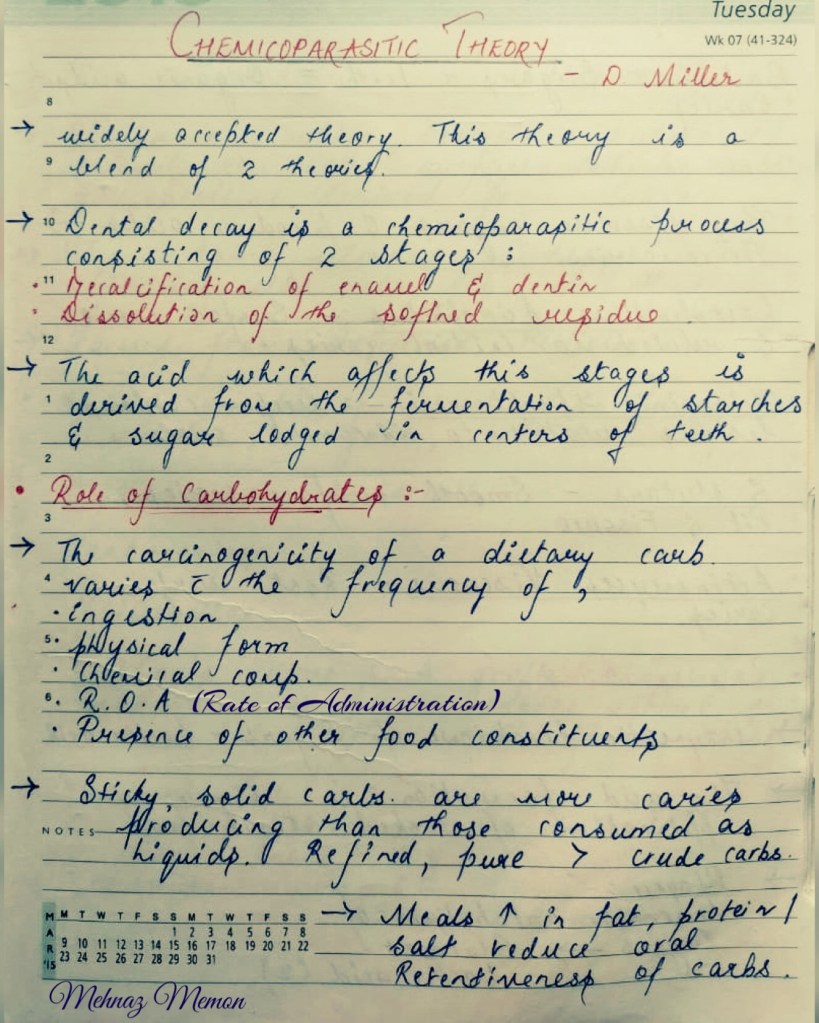
➡️ Dietary sucrose has 2 effects on plaque:

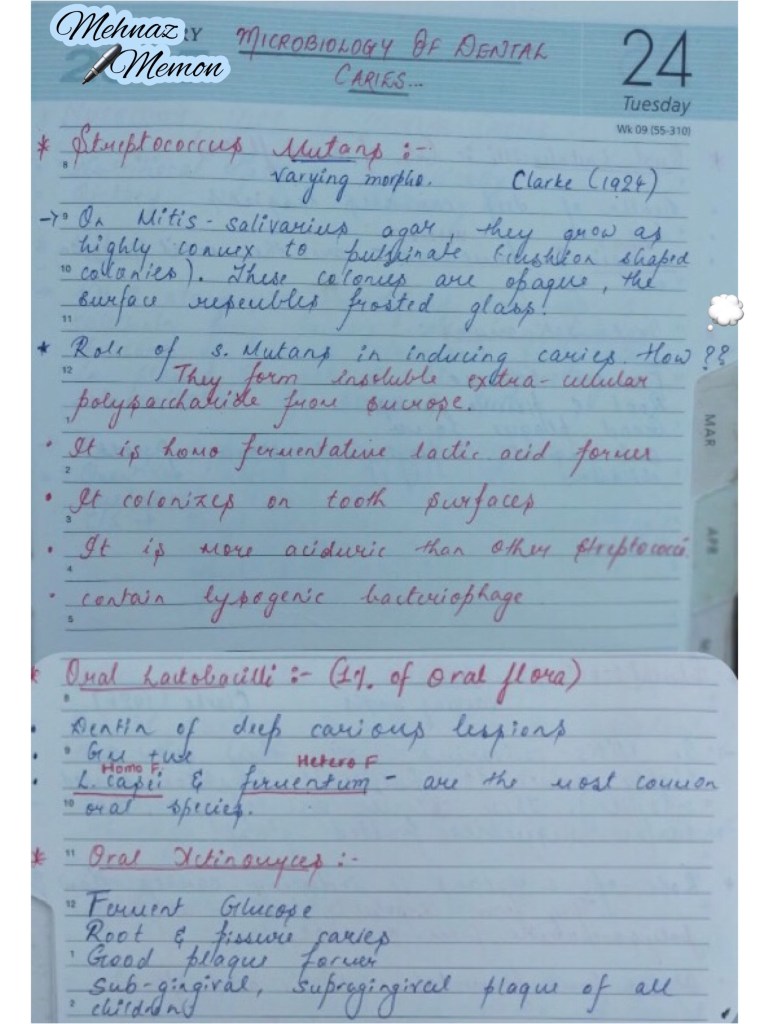
  1. Frequent ingestion – S. Mutans colonization ⬆️
  2. Mature plaque exposed to sucrose metabolizes to organic acids – ⬇️ pH

Dietary Measures:

Source: mfine
  1. No. of meals + snacks as low as possible.
  2. Sugars – eliminated; Active chewing foods ➡️ desirable
  3. Fermentable Carbs.
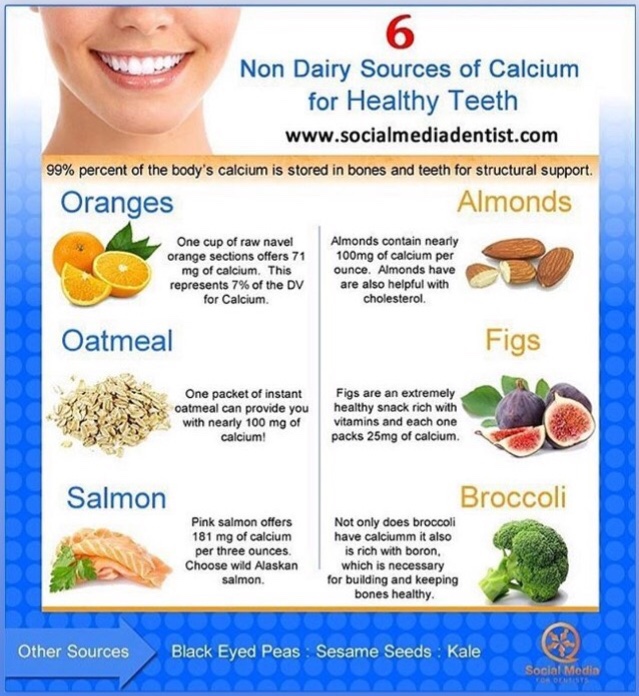
  4. Flouride, Calcium, Phosphate, fats & proteins – in diet.
  5. Sugar substitutes – ⬇️ acid formation.

Adequacy of Diet:

Source: mfine
  1. Fats, oils, sweets – use sparingly.
  2. Milk, yogurt, cheese group: 2-3 servings
  3. Vegetable group: 3-5 servings
  4. Fruit group: 2-4 servings
  5. Meat, fish, eggs, nuts: 2-3 servings
  6. Bread, Rice, Pasta, Cereal: 6-11 servings.

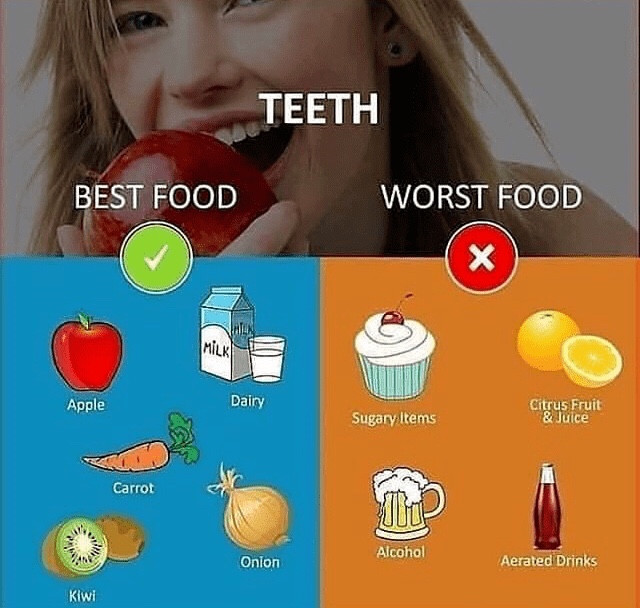
Anti-cariogenic foods:

Source: Foodsmix
  1. Milk – least cariogenic
  2. Cheese – casein phosphatase
  3. Fibrous foods
  4. Tea
  5. Chewing gum – Salivary stimulant
  6. Xylitol👇🏻
  • Bacteriostatic
  • ⬆️ salivary flow
  • ⬆️ concentration of Amino acids & NH3 – Neutralize plaque acids.
  • Prevents S. Mutans binding to sucrose.

➡️ Dietary and nutrition education appropriate for dental settings are an essential component of guidelines or standards of practice that determine successful management of dental caries and the patient’s quality of life accross time.

Nutrition, Diet & Dental Caries:
Dr. Mehnaz Memon

References: Practical manual guide by CM Marya, Internet

Pit & Fissure Caries

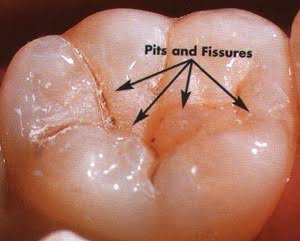
➡️ Morphology of Fissures:

Based on morphological alphabetical description of shape – 4 types:

  1. V + U (Self-cleansing)
  2. U
  3. K

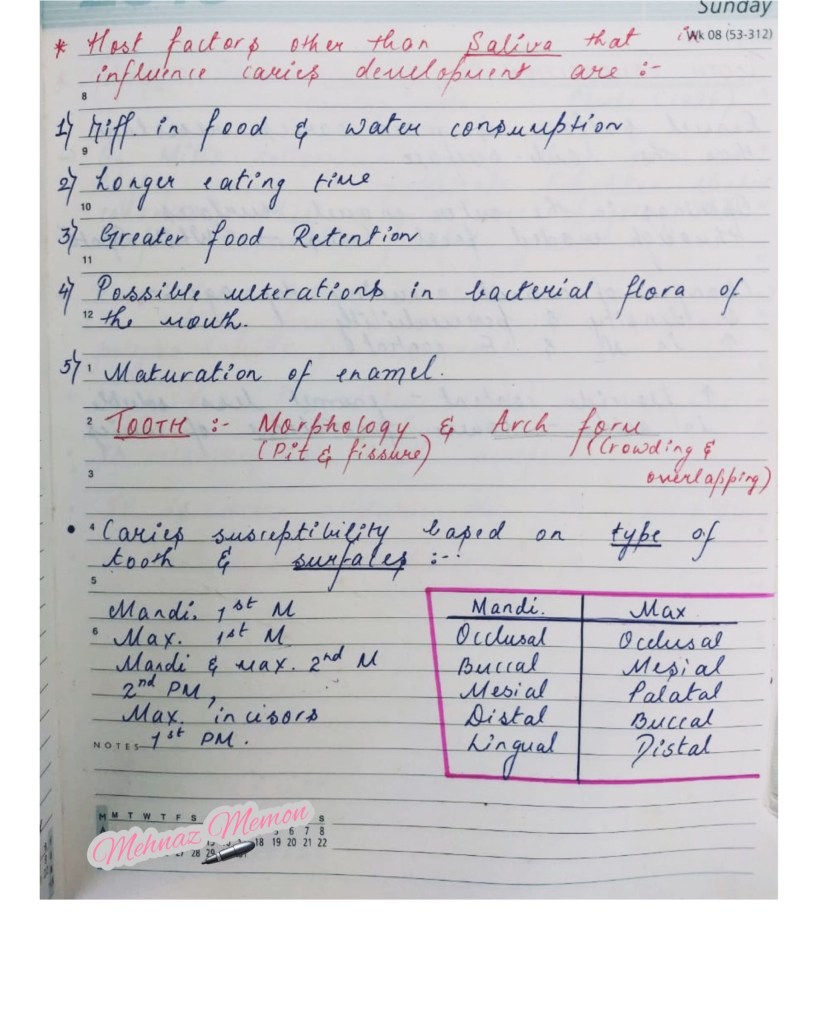
Note: Pit & fissure with high steep walls & narrow bases are more prone to caries.(Developmental faults)

Occlusal fissures: Deep invagination of enamel, described as broad/narrow funnels, constricted hour glasses, multiple invaginations with inverted Y-shaped divisions & irregularly shaped.

Deep and narrow Pit & Fissure

⬇️

Retention of food debris & microbes

⬇️

Fermentation of food by microbes

⬇️

Formation of Acid

⬇️

Caries

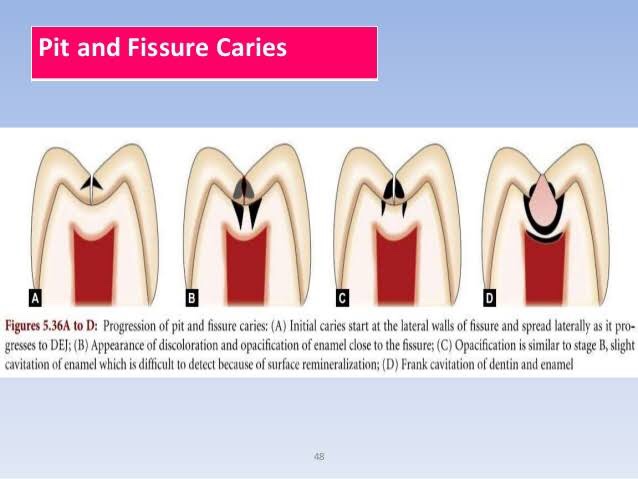
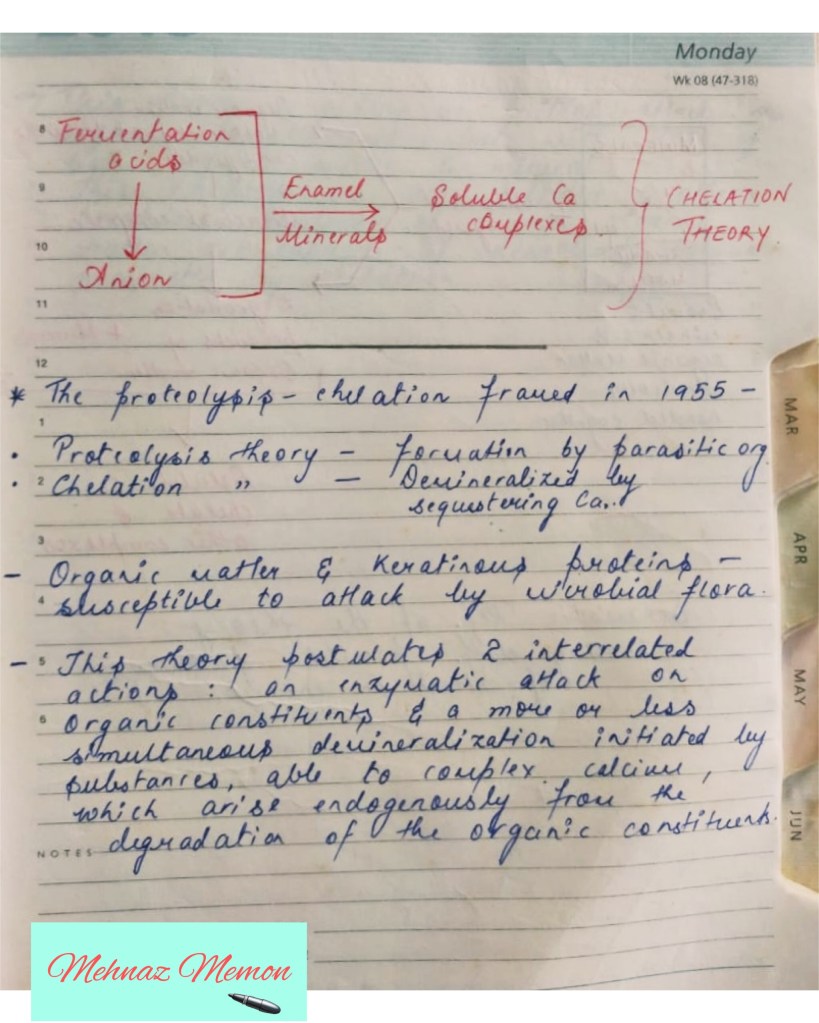
➡️ The lesions develops from attack on their walls.

  • Cross section: Inverted “V” (A narrow entrance & wider involvement closer to DEJ)
  • Therefore, Greater no. of Dentinal Tubules are involved.
  • Early dentin involvement – When enamel at bottom of Pit & fissure is thin.

Caries when occur at Pit & Fissure follow direction of ENAMEL RODS

ENAMEL LAMELLAE – Initiation of Caries

The Initial Carious lesion of Enamel:-

• Clinical View:

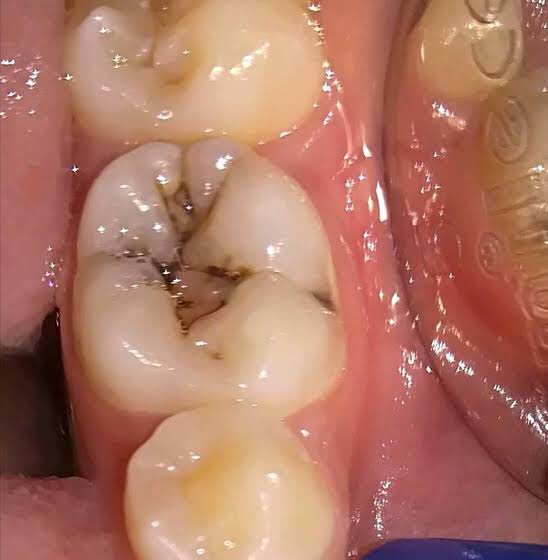
  • Visual Changes – Chalkiness, yellow/brown/black discoloration.
  • Soft & ‘catch’ a fine explorer point.
  • Enamel bordering them is opaque bluish white & undermined ➡️ Lateral spread of caries at DEJ
  • Sign on stained tooth (Brown P/F)
  • Newly erupted teeth – underlying decay; Older: Arrested lesion

References: Wheeler’s Textbook, Google images