Complications of Local Anesthesia

🔷 Local Complications:

  • Needle breakage
  • Persistant anesthesia or paresthesia
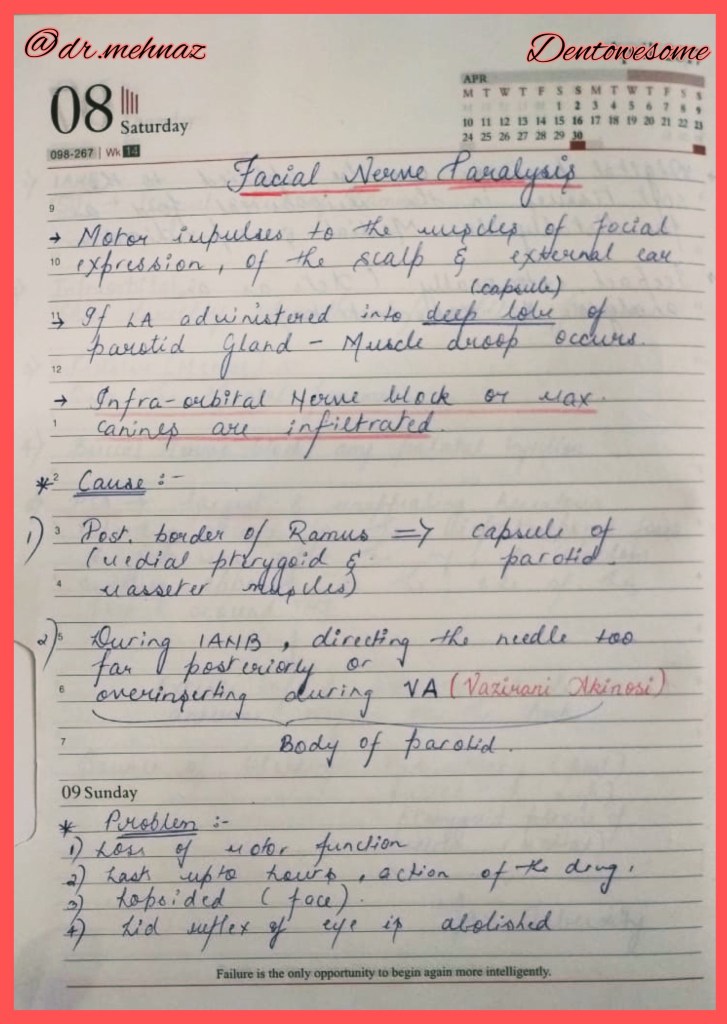
  • Facial Nerve Paralysis
  • Trismus
  • Soft-tissue injury
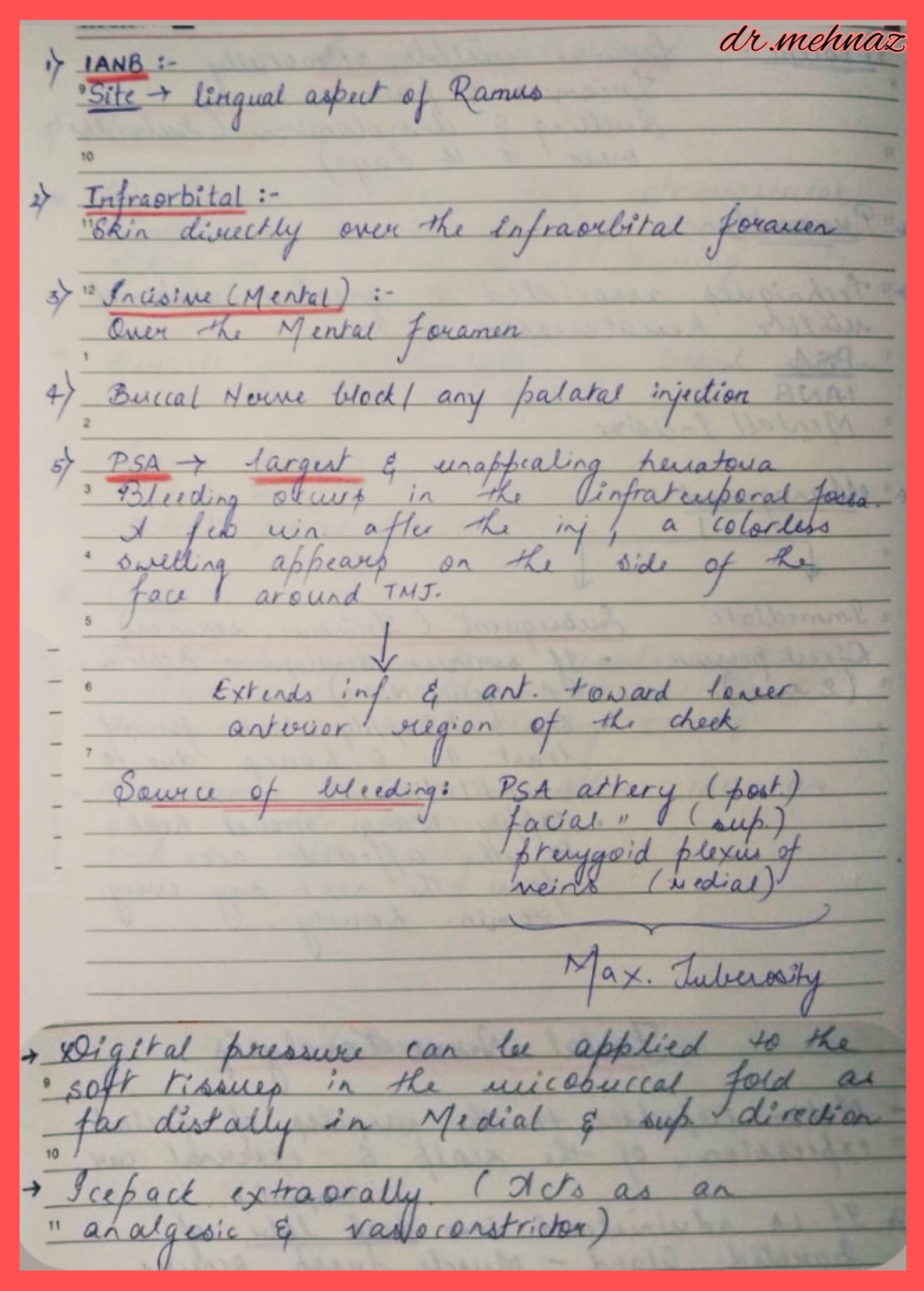
  • Hematoma
  • Pain on injection
  • Burning on injection
  • Infection
  • Edema
  • Sloughing of tissues
  • Post-anesthetic intraoral lesions

🔷 Systemic Complications:

  • Vasodepressor syncope
  • Over dosage (toxic reaction)
  • Allergy
  • Psychogenic reactions

Clinical Tip💡

👉🏻Several preventive measures can be followed:📝

1) Select a local anesthetic with a duration of action that is appropriate for the length of the planned procedure.

2) Advise the patient and accompanying adult about the possibility of injury if the patient bites, sucks or chews on the lips, tongue and cheek. They should delay eating and avoid hot drinks until the effects of the anesthesia are totally dissipated.

3) Reinforce the warning with patient stickers and by placing a cotton roll or rolled up gauze (“Bite on the ghost”) in the mucobuccal fold if anesthesia symptoms persist.

4) The management of soft tissue trauma involves reassuring the patient and parent (it’s okay if the tissue turns white), allowing up to a week for the injury to heal, and lubricating the area with petroleum jelly or antibiotic ointment to prevent drying, cracking and pain.

References: Internet; Handbook of LA, 6e by Stanley F Malamed


Dr. Mehnaz Memon🖊
Inferior Alveolar Nerve Block (IANB)


➡️ The inferior alveolar nerve along with its 2 terminal branches – the mental and incisive nerves innervates the mandibular teeth as well as the buccal soft tissue anterior to 1st molars. This also provides anesthesia to the lip and chin on the side of injection.

➡️ Buccal Nerve – Buccal mucosa and cheek from 3rd molars to 1st molar.

➡️ Structures/Landmarks:

  1. Coronoid Notch
  2. Internal Oblique Line
  3. Lingula
  4. Pterygomandibular raphe
  5. Retromolar triangle
  6. Retromolar fossa
  7. Mandibular fossa
  8. Posterior border of ramus
  9. Occlusal plane

➡️ A plane passing through the deepest portion of coronoid notch parallel to occlusal plane will pass just over the lingualar notch. This determines the height of injection.

➡️ The internal oblique line serves as the attachment for deep tendon of temporalis muscle is important as it determines the AP point of injection.

➡️ Also the distance from internal oblique line to lingula is 9-11 mm in most adults provides the clinician a reference of depth of needle penetration.

➡️ The finger is placed to the depth of coronoid notch to determine vertical height of injection.

➡️ The barrel of the syringe is positioned from opposite the premolar region parallel to occlusal plane with the needle at the predetermined height.

➡️ Posterior to Internal Oblique line and anterior to lingula – contact of the needle.


▪️Clinical Tip👇🏻

References: Internet; Handbook of LA, 6e by Stanley F Malamed; MONHEIMS LOCAL ANESTHESIA AND PAIN CONTROL IN DENTAL PRACTICE 7ED

ANN ARBOR STAGING

Stage I: Involvement of single lymph node/extra lymphatic site

Stage II: Involvement of 2 or more lymph node regions or an extra-lymphatic site & lymph node region on the same side of diaphragm.

Stage III: Involvement of lymph node region on both the sides or without extra-lymphatic involvement/involvement of spleen or both.

Stage IV: Diffuse involvement of one or more extra-lymphatic tissues e.g. liver or bone marrow.

References: Textbook of Pathology, Harsh Mohan


Dr. Mehnaz Memon🖊

BURKITT’S LYMPHOMA

🌏 African Jaw Lymphoma

🌏 The endemic form is linked to malaria and to the Epstein-Barr virus (EBV), a common virus that also causes glandular fever.

🌏 A tumour peculiar to children of central Africa was reported by Denis Burkitt in 1950. It is a lymphoreticular cell malignancy.

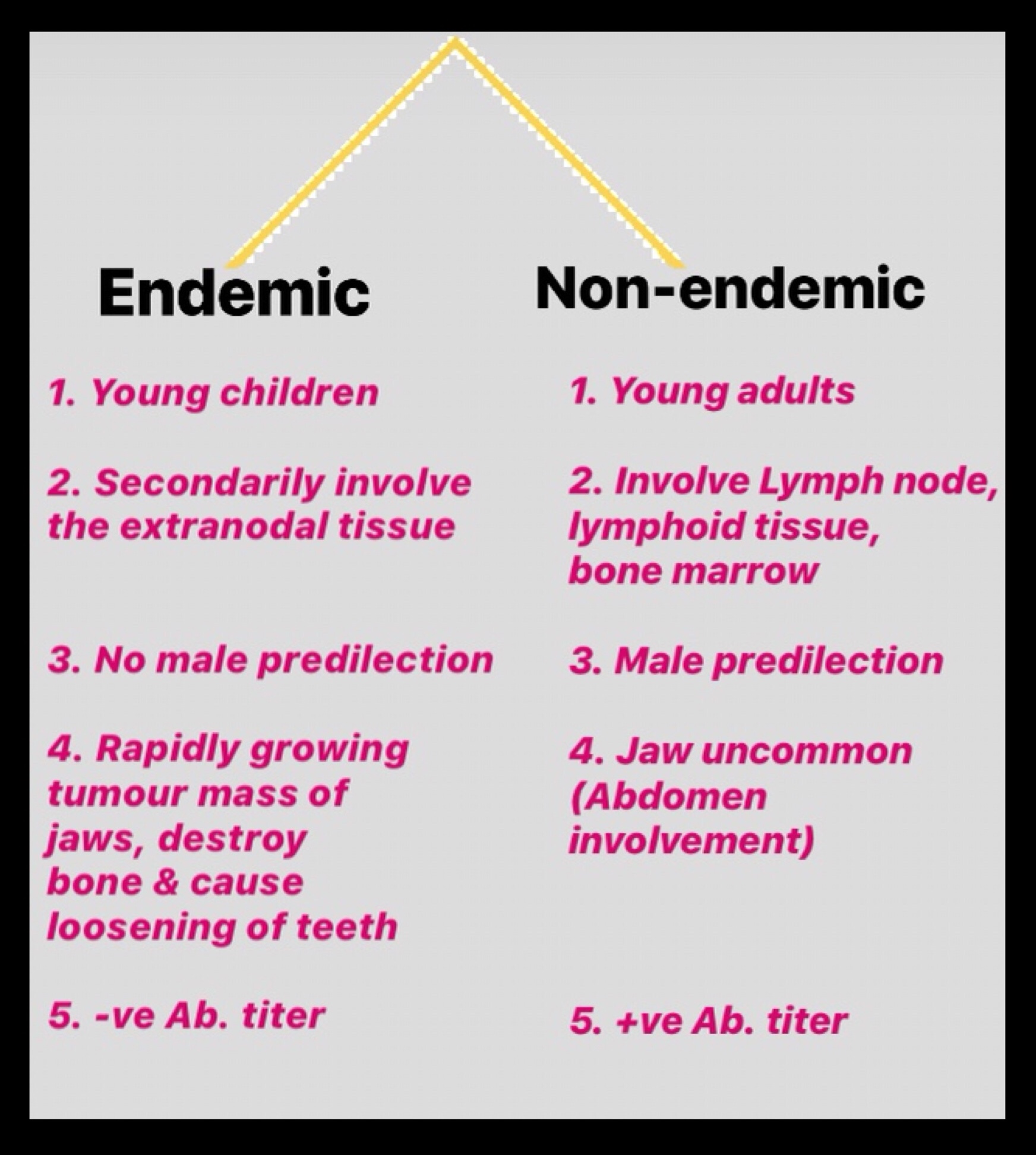
▪️It is a high grade B-cell neoplasm & has 2 major forms:

🔷 Clinical Features:

1. Age – between 6 & 9 years

2. Sex – M:F – 2:1

3. Site: In African form (Endemic),

  • Maxilla > Mandible
  • Spreads to floor of orbit
  • Molar area
  • More than one quadrant is involved

American form (Non-endemic) – Oral: only 1 quadrant involved. Other: Mainly involves Abdomen.

4. Onset & progress – fast growth with tumor doubling time of <24 hours.

5. Symptoms –

  • Swelling of jaws, abdomen & paraplegia
  • Loosening of teeth
  • Abdominal tumors
  • Bowel obstruction

6. Sign – Lymphadenopathy (Non-tender)

🔷 Oral Manifestations:

  • Gingiva and mucosa – swollen, ulcerated, necrotic
  • Facial asymmetry
  • Teeth are pushed out of their sockets

🔷 Radiographic Features:

🔷 Histological Features:

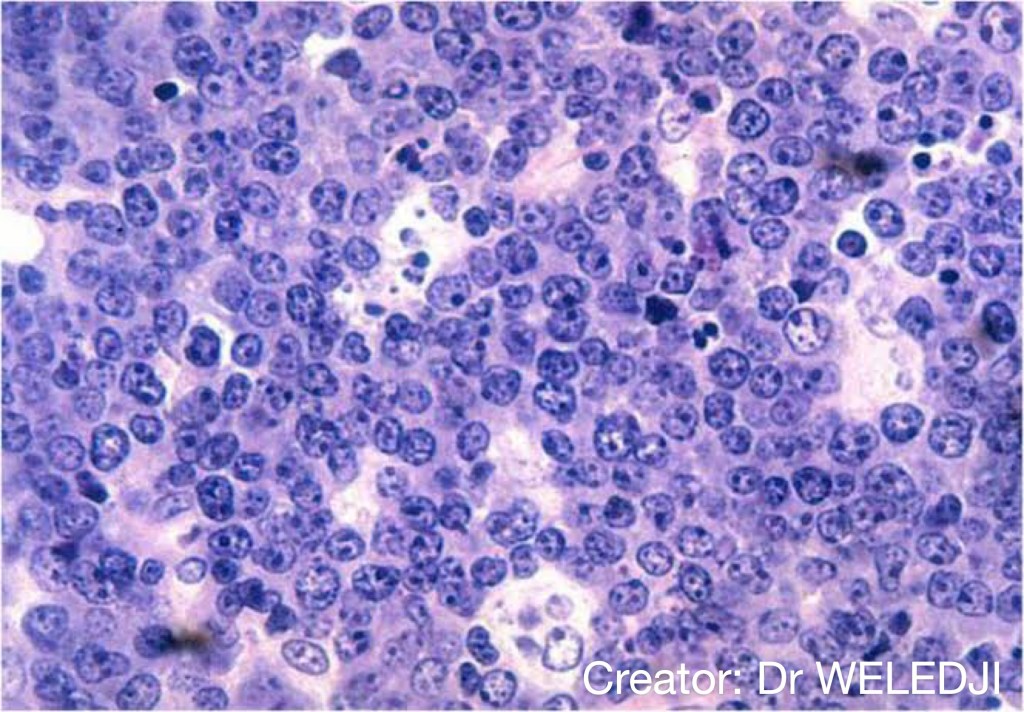
1. Monoclonal proliferation of B-lymphocytes characterized by small non-cleaved cells.

2. Burkitt cells are homogenous in size & shape with –

  • round to oval nuclei
  • coarse chromatin
  • Multiple nucleoli
  • Basophilic vacuolated cytoplasm with neutral fat

🔷 Differential Diagnosis:

  • Non-hodgkins lymphoma
  • Cherubism
  • Osteosarcoma

🔷 Treatment: Intrathecal Chemotherapy

References: Shafer’sTextbook Of Oral Pathology


Dr. Mehnaz Memon🖊


Ann Arbor Staging System for Lymphoma: https://dentowesome.wordpress.com/2020/06/15/ann-arbor-staging/

GHOST CELLS (SHADOW CELLS)

🔷 Introduction:

Ghost cells are altered epithelial cells characterized by the loss of Nuclei with presence of basic cell outline.

➡️ Lesions showing Ghost cells:-
  1. COC & dentinogenic ghost cell tumour
  2. Odontomas
  3. Ameloblastomas (Pituitary)
  4. Ameloblastic fibro-odontoma
  5. Ameloblastic Odontoma
▪️Characteristic Features:
  • Ghost cell change occurs due to coagulative Necrosis or a form of Normal/aberrant keratinization of odontogenic epithelium.
  • Masses of ghost cells may fuse to form large sheets of amorphous, acellular material.
  • Calcifications with them is common.
  • Appear as basophilic granules- ⬆️ in size & no. – form extensive masses of calcified material.
  • Areas of eosinophilic matrix material represent dysplastic dentin(dentinoid) present adjacent to epithelial component.
  • Ghost cell contain –
  1. Nuclear Remnants
  2. Remnants of cytoplasmic organelles
  3. Numerous tonofilaments
  • Ghost cell differ from normal keratotic squames – they are larger, vacuolated & remnants of nuclear membrane are more prominent.
  • This may be due to intracellular edema & presence of dilated degenerated membranous organelles.
  • Ghost cells are immuno-reactive for Amelogenin (enamel protein).

References: Shafer’sTextbook Of Oral Pathology


Dr. Mehnaz Memon🖊