CLINICAL CONSIDERATION OF ENAMEL, DENTIN AND CEMENTUM

🔹Enamel:

➡️ The periapical expressions of pathologic Amelogenesis are hypoplasia, which is manifested by pitting, furrowing or even total absence of enamel & hypocalcification in the form of opaque or chalky areas on normally contoured enamel surfaces.

➡️ It is caused by systemic, local or hereditary factors

➡️ An example of systemic type of calcification of the enamel is so called Mottled Enamel

➡️ High flouride content in water – deficiency to calcify

➡️ The discoloration of the teeth from administration of tetracyclins during childhood is very common clinical problem

🔹 Dentin:

➡️ Dentin sensitivity of pain is exlained by hydrodynamic theory, the alteration of the fluid & cellular contents ending in contact with these cells.

➡️ Erosion of peritubular dentin & smear plug removal accounts for dentin hypersensitivity caused by agents like acidic soft drinks.

➡️ The rapid penetration & spread of caries in the dentin is the result of the tubule system in the dentin

➡️ Electron microscope of carious dentin show regions of massive bacterial invasion of dentinal tubules.

➡️ Smear layer consist of cut dentin surface which occludes the tubules & reduces permeability. Also prevents adhesion of restorative materials to dentin. Therefore this layer is removed by etching.

🔹 Cementum:

➡️ Cementum is more resistant to resorption than bone. It is for this reason orthodontic tooth movement is made possible.

➡️ Cementum resorption can occur after trauma or excessive occlusal forces. After resorption has ceased the damage usually is repaired either by formation of acellular/cellular cementum or alternate formation of both.

➡️ In most cases of repair there is tendency to re-establish the former outline of the root surface. This is called anatomic repair.

➡️ It is only a thin layer of cementum is deposited on the surface of resorption, the root outline is not reconstructed & a baylike recess remains. This is termed functional repair.

➡️ Hypercementosis – secondary to periapical infammation or extensive occlusal stress. Extraction of such tooth may necessitate the removal of bone.

Source: Internet


Dentowesome 2020 @dr.mehnaz

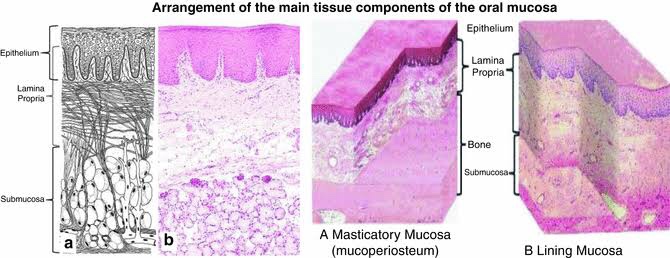
ORAL MUCOSA

🔹Classification:

3 major types:

  1. Masticatory Mucosa (Gingiva & hard palate)
  2. Lining or reflecting Mucosa (Lip, Cheek, floor of mouth)
  3. Specialized Mucosa (Dorsum of tongue, taste buds)

🔹Functions:

  1. Defence: Oral Mucosa is impermeable to bacterial toxins. Also secretes antibodies.
  2. Lubrication: Secretion of salivary glands keep the oral cavity moist which helps in speech and mastication.
  3. Sensory: Sensitive to touch, pressure, pain & temperature.
  4. Protection: Protects deeper tissues from mechanical forces resulting from mastication & from abrasive nature of food stuff.

🔹Keratinized Epithelium:

Image source: SpringerLink

➡️ Contains 4 layers starting from the bottom:

▪️Stratum Basale:

  • Single layer of cuboidal cells
  • They synthesize DNA & undergo Mitosis

▪️Stratum Spinosum:

  • Layer is irregularly polyhedral & larger than basal cells

▪️Stratum Granulosum:

  • Layer contains flatter & wider cells
  • Larger than spinous cells

▪️Stratum Corneum:

  • Made up of keratinized squamous which are larger & flatter than granular cells

🔹Keratinized Areas:

  • Masticatory Mucosa
  • Vermilion border of lip

🔹Non-Keratinized Areas:

  • Lining Mucosa
  • Specialized Mucosa

References: Orban’s Oral Histology


Dentowesome 2020 @dr.mehnaz
PALATAL AND ALVEOLAR CYSTS OF NEWBORN

  • Dental lamina cyst of Newborn
  • Gingival cyst of Newborn
  • Epstein’s pearls, Bohn’s nodules

Dental lamina cyst of newborn are multiple, occasionally solitary, superficial raised nodules on edentulous alveolar ridges of infants that resolve without treatment; derived from rests of dental lamina & consisting of keratin producing epithelial lining.

Cystic keratin filled nodules; derived from epithelial remnants entrapped along line of fusion, usually seen at midpalatine raphe.

Keratin filled cysts scattered over the palate at the junction of hard and soft palate; derived from palatal salivary gland structures.

🔹Introduction:

  • A special form of odontogenic cyst – 80% of the infants.
  • Gingival cyst is M/E similar to epidermoid cyst.
  • It develops after 4 week in utero.
  • Palatal Cyst arises from epithelial remnants in stroma after fusion of palatal processes usually at posterior midline of hard palate.

🔹Clinical Features:

➡️ Gingival Cyst:

  1. They are multiple, superficial raised nodules on edentulous alveolar ridge of infants that resolve without treatment.
  2. They are localized in corium below the surface epithelium.
  3. Those found in anterior portion of jaw are displaced lingually & in posterior portion are found occlusal to crown of molars.
  4. They are asymptomatic and do not produce any discomfort to the infant.
  5. These are small discrete, white swellings, blanched from internal pressure.

➡️ Palatal Cyst:

  1. They are Multiple (<6), 1-4mm in size & yellow-white in color. Sessile mucosal papules of posterior hard palate.
  2. They are larger & less numerous than gingival cyst. Both are so superficial that several may be ruptured at the time of examination.

🔹 Histopathological Features:

  • Thin, stratified squamous epithelium – produce keratin.
  • Fibrovascular connective tissue stroma without inflammatory infilterate.
  • Cystic lumen filled with degenerated keratin, formed into concentric layers/onion rings.
  • Epithelium lacks Rete processes.
  • Dystrophic calcification & Hyaline bodies seen.

🔹Treatment:

Generally self limiting, (within 3 months) no treatment is required in most of the cases. If baby is having feeding difficulties, complete excision of the cyst can be done.

References: Shafer’s Textbook of Oral Pathology 7th Edition


Dr. Mehnaz Memon🖊

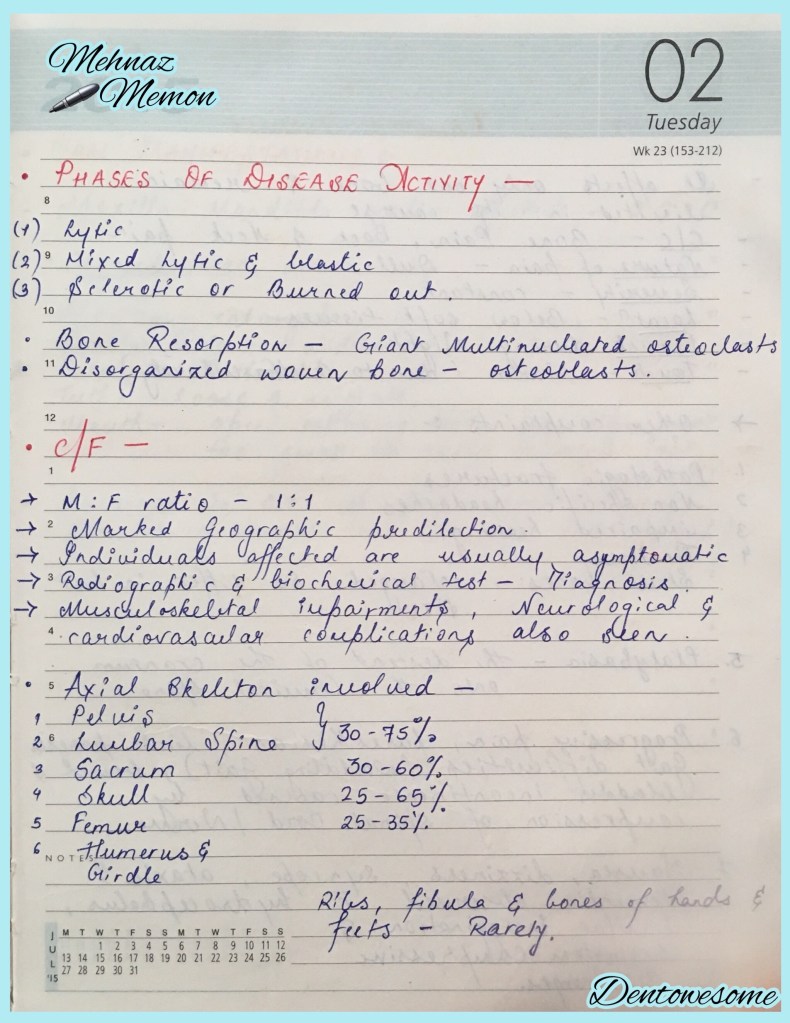
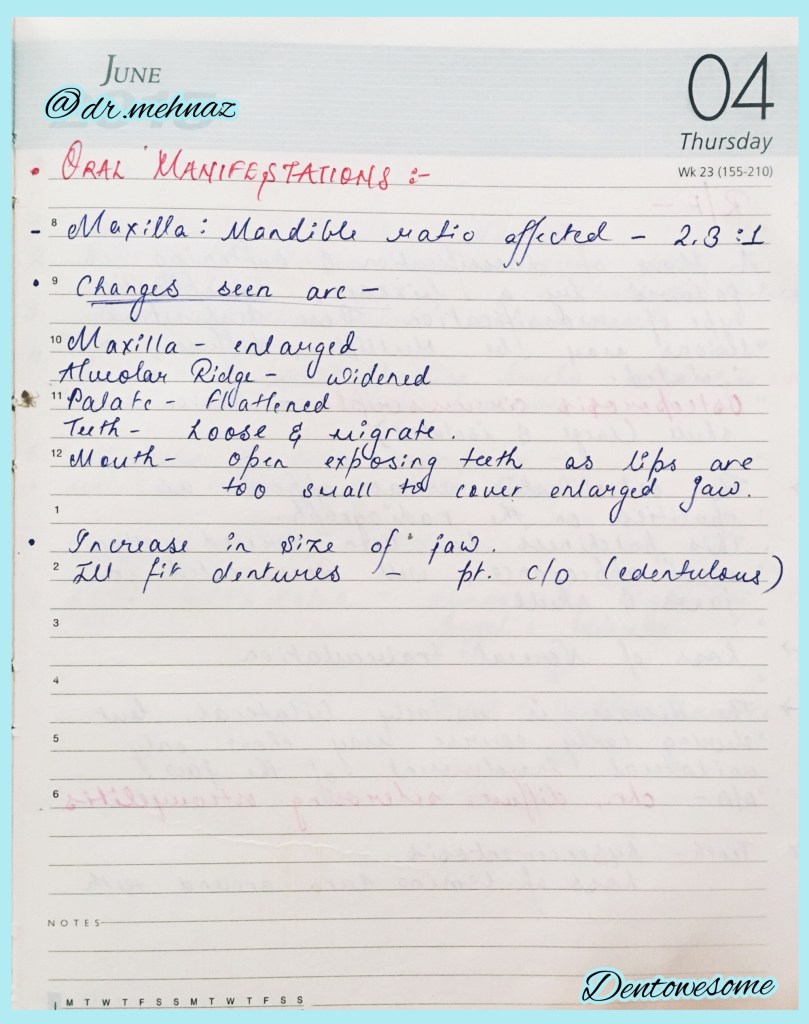
PAGET’S DISEASE

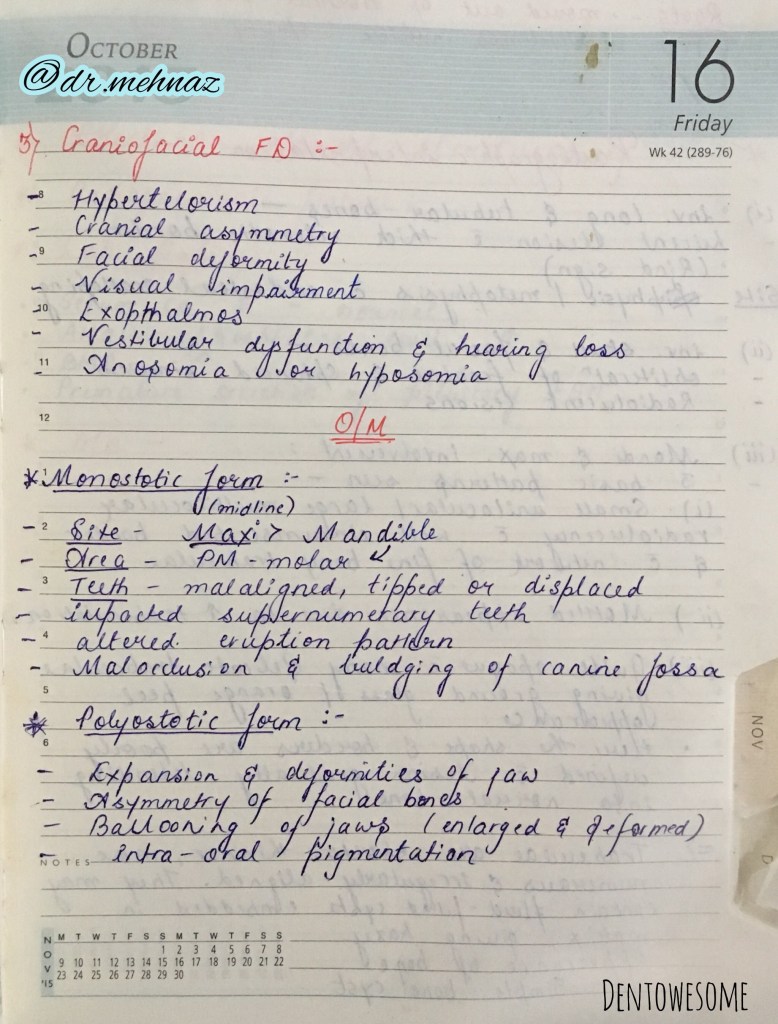
Introduction & Etiology👆🏻
Clinical Features & Phases of PDB..👆🏻
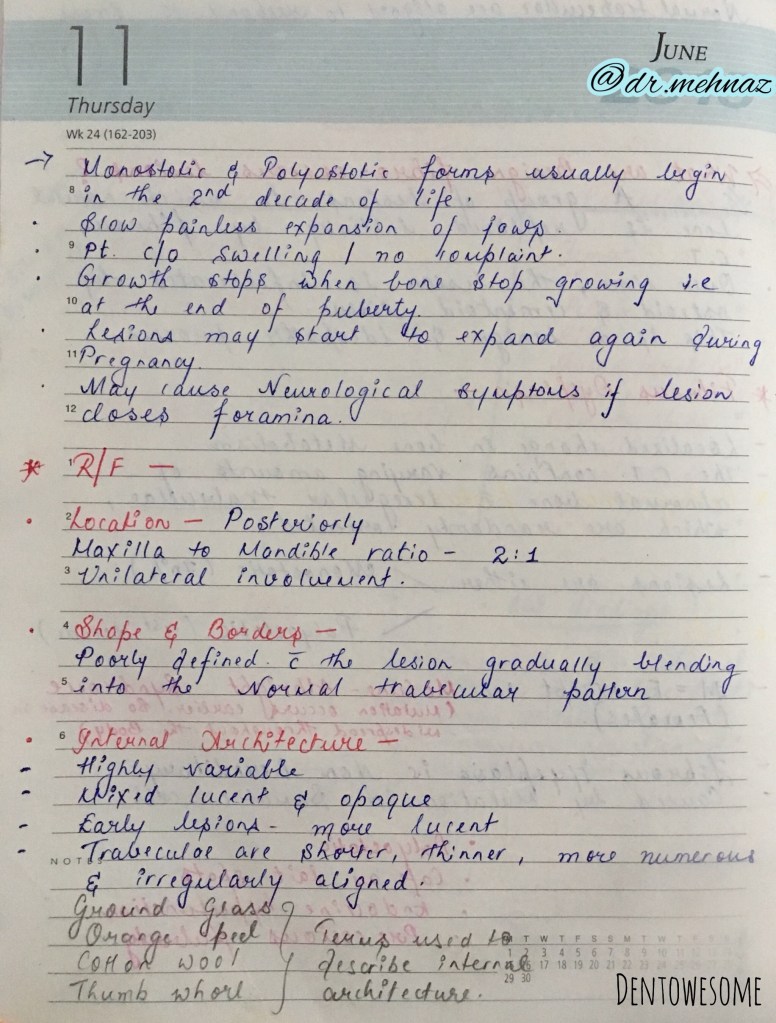
Clinical Features contd…👆🏻
O/M of PDB..👆🏻
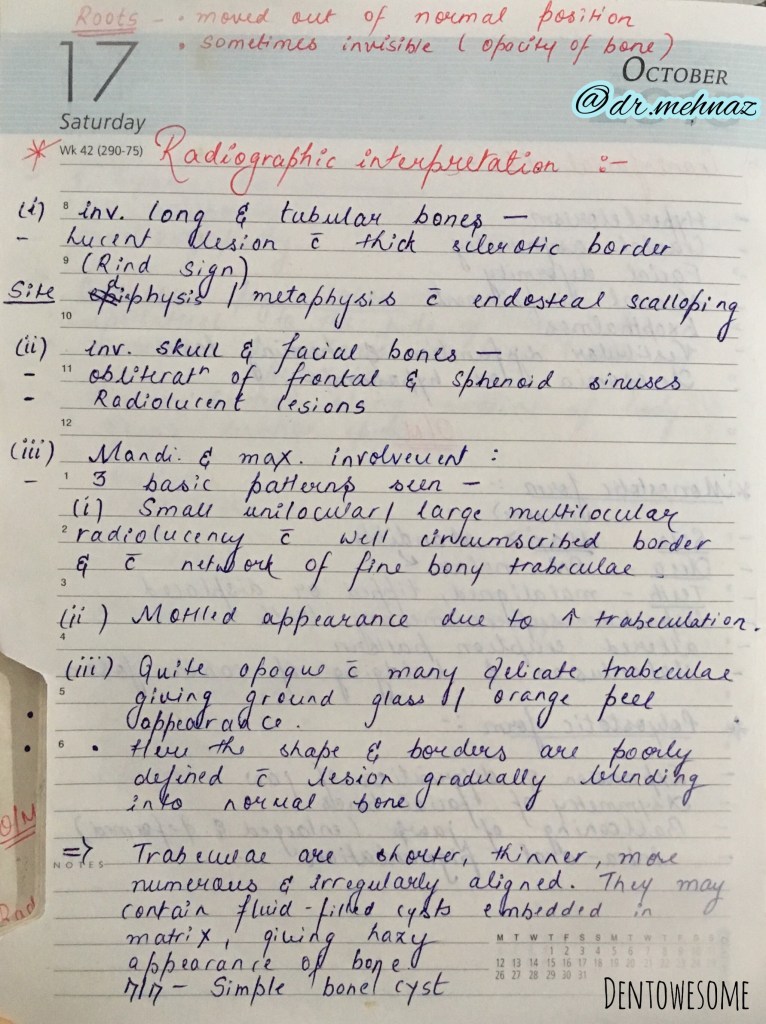
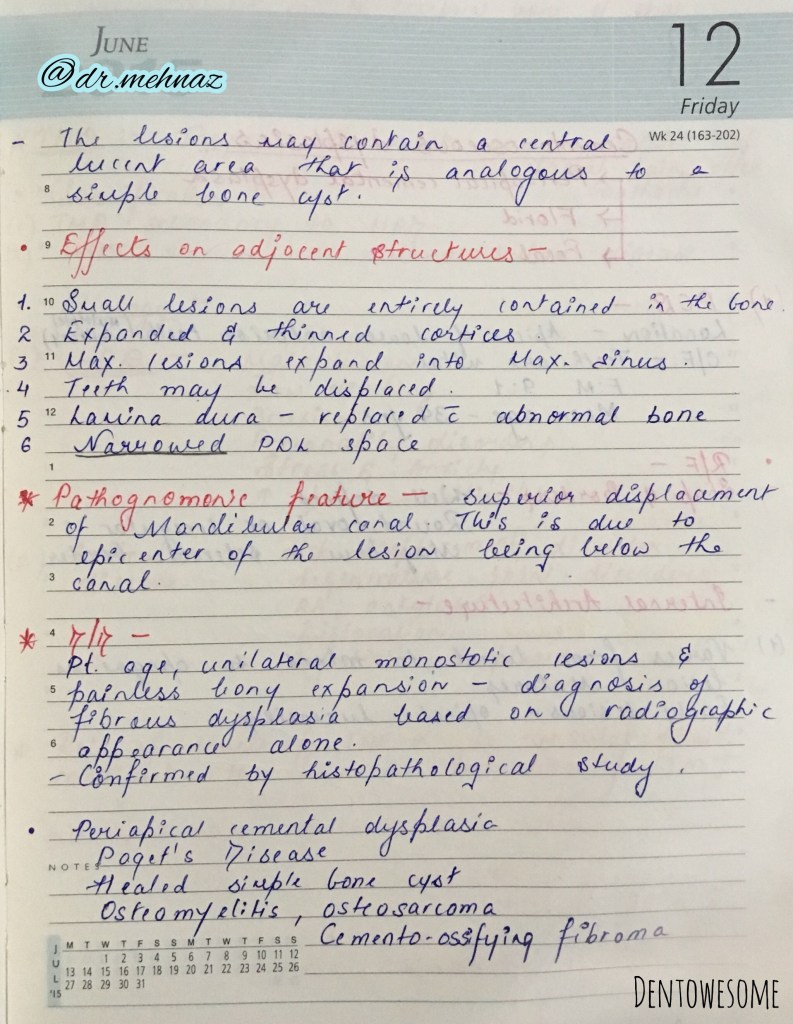
Radiographic Features of PDB..👆🏻
Histological Features of PDB…👆🏻
Lab. Findings & Treatment of PDB..👆🏻

References: Shafer’s Textbook of Oral Pathology 7th Edition


Dr. Mehnaz Memon🖊

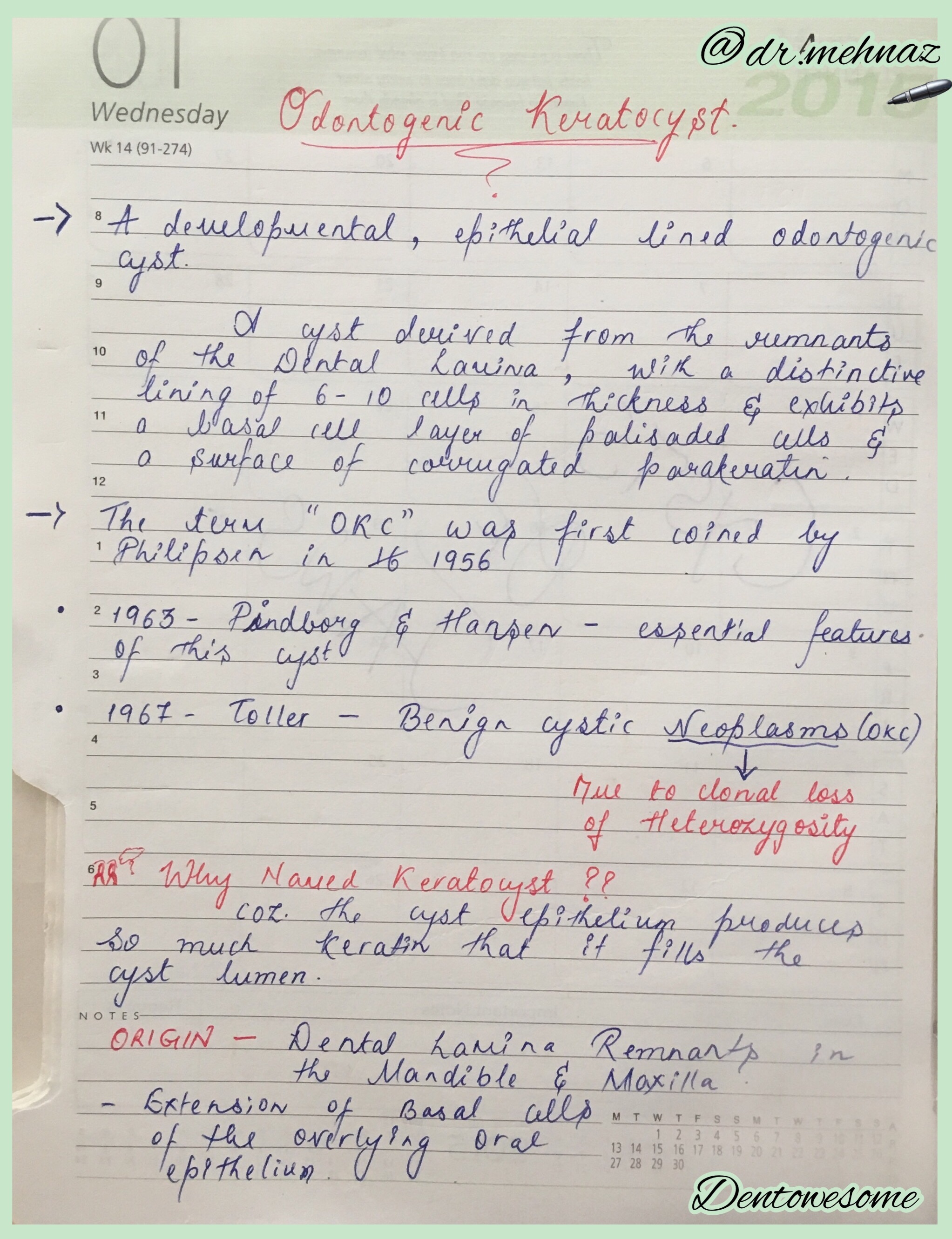
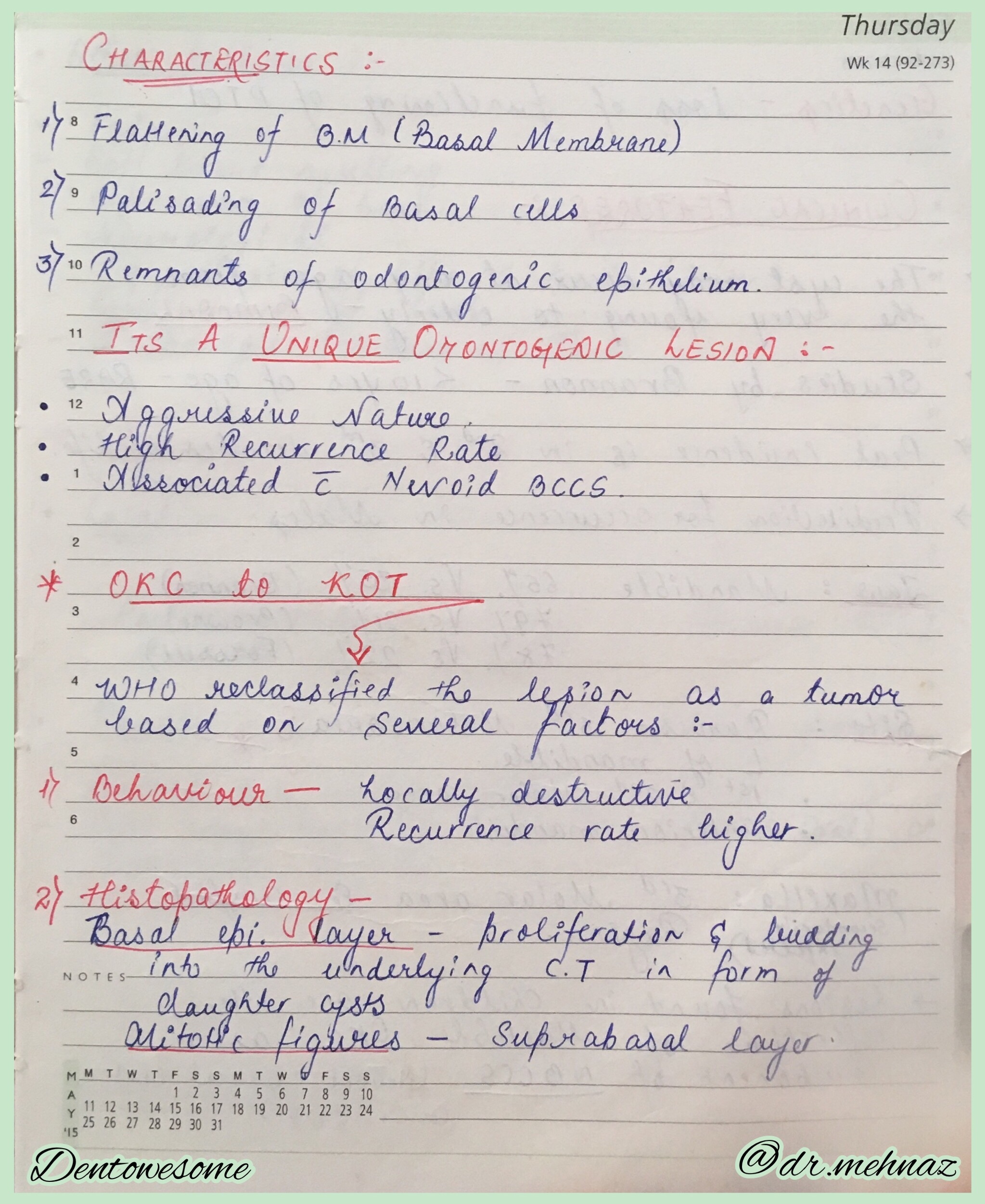
TRAUMATIC CYST/PSEUDO CYST

  • Solitary Bone Cyst
  • Hemorrhagic Cyst
  • Extravasation Cyst

🔷 Etiology: Trauma Hemorrhage Theory

Origin from traumatic injury

⬇️

Intramedullary Hemorrhage

⬇️

Clots break down and leave empty space within bone

🔷 Clinical Features:

  • Age: 18 years
  • Sex: Male predominance
  • Site: Posterior region of mandible ( More common). Also due to presence of hemopoietic marrow – incisor region also reported.
  • In majority of cases, pulp of involved teeth is vital.
  • Cavity contains Sero-sanguinous fluid, shreds of necrotic blood clot, fragments of Connective tissue.

🔷 Radiographic Features:

  • Smoothly outlined radiolucent area of variable size, sometimes with thin sclerotic borders. (D/D – Lingual salivary gland depression of mandible)
  • However the latter lesion is usually located below the mandibular canal, whereas Traumatic Cyst usually lies above it.

🔷 Histological Features:

  • Bone cyst lined by thin Connective tissue membrane.
  • On outer surface of cortical plate – Osteophytic Reaction

🔷 Treatment and prognosis:

➡️ Surgical exploration is often undertaken. The bony cavity is scraped to generate bleeding, which is considered the treatment of choice for this condition. Other methods of treatment have been tried, such as packing the curetted cavity with autologous blood, autologous bone, and hydroxyapatite. Exploration surgery usually leads to healing. Recurrence is rare.

References: Shafer’s Textbook of Oral Pathology 7th Edition, Internet


Dr. Mehnaz Memon🖊