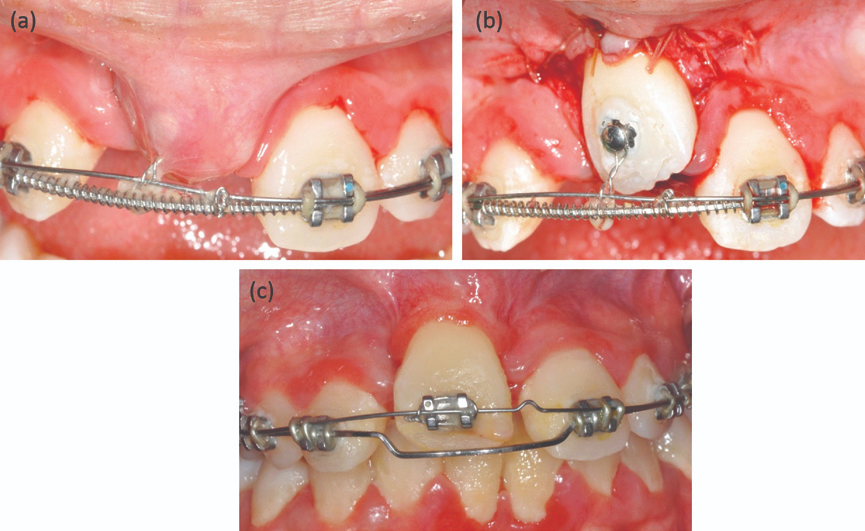
Soft-tissue management of labially positioned unerupted teeth

When orthodontists treat unerupted or impacted teeth (especially in the anterior region), several complications can occur:

  • Tooth devitalization (loss of vitality)
  • Re-exposure or uncovering after surgery
  • Ankylosis (tooth fused to bone)
  • External root resorption
  • Damage to adjacent teeth
  • Marginal bone loss
  • Gingival (gum) recession

➡️ These complications can prolong treatment, cause esthetic problems, and even lead to tooth loss.

Why These Problems Happen

Historically, clinicians focused on surgically exposing the tooth (“uncovering”) to bring it into the arch.
However, the soft tissue (gingiva) around the tooth was often not given enough attention.

Most early surgical techniques, such as “simple complete exposure,” focused only on getting to the tooth, without considering:

  • What kind of mucosa (attached gingiva vs. alveolar mucosa) covered it
  • How that tissue would behave once orthodontic movement began

Why Soft Tissue Type Matters

There are two main kinds of oral mucosa:

  1. Attached gingiva (masticatory mucosa):
    • Firm, tightly bound to bone
    • Designed to resist mechanical stress and prevent muscle pull on the gum margin
    • Ideal marginal tissue around a tooth
  2. Alveolar mucosa:
    • Movable, thin, and elastic
    • Poor at resisting muscle pull or inflammation
    • Not suitable as a marginal tissue

If a tooth is uncovered and surrounded only by alveolar mucosa, the tissue tends to get inflamed easily, which can lead to bone loss and gingival recession as the tooth is moved orthodontically.

What the Ideal Surgical Approach Should Do

Instead of just exposing the tooth, the surgical goal should be to:

  • Ensure that a band of attached gingiva surrounds the crown once the tooth is exposed.
  • Create a healthy, functional marginal tissue environment before starting tooth movement.

This provides several key advantages:

  1. Prevents the need for repeated dressings or barriers to keep the tooth exposed
  2. Allows faster and smoother tooth movement (no soft-tissue obstruction)
  3. Prevents gingival recession and bone loss during orthodontic traction

Why Inflammation Is a Risk Factor

Periodontal experience shows that tooth movement in the presence of inflammation is risky — it can accelerate bone loss.
Since alveolar mucosa is prone to inflammation, it’s unsafe to move a tooth unless it’s surrounded by healthy attached gingiva.

Thus, the uncovering procedure must integrate periodontal principles — ensuring that the final gingival condition supports tooth health and stability.

ORTHODONTIC CONSIDERATIONS BEFORE SURGERY

Why create space before uncovering the tooth?

There are two main reasons:

  1. For eruption and alignment:
    • If adequate space isn’t available in the arch, the unerupted tooth has no place to move into.
    • So, before any surgical exposure, orthodontic space creation ensures there’s enough room for the tooth to erupt or be moved into proper alignment.
  2. For surgical soft-tissue management:
    • The edentulous (toothless) space left in the arch is covered by attached gingiva, which can be used as a donor site.
    • This tissue can then be repositioned apically or laterally as a partial-thickness flap to cover the exposed tooth crown after surgery — ensuring the presence of healthy, attached gingiva around the tooth.

SURGICAL PROCEDURE: STEP-BY-STEP LOGIC

Anesthesia and incision:

  • Local infiltration anesthesia is administered.
  • The surgeon makes an incision along the ridge in the edentulous area — where the impacted tooth lies beneath.

Determining incision design:

  • The height (incisogingival dimension) of the incision depends on how much attached gingiva is present on the adjacent teeth or its opposite tooth (antimere).
  • If there’s plenty of attached gingiva nearby, a larger flap can be created and repositioned.

Flap elevation and bone removal:

  • Vertical releasing incisions are made to free the attached gingiva.
  • Connective tissue over the unerupted tooth is gently removed.
  • Bone is removed only up to the height of contour of the crownnot beyond the cementoenamel junction (CEJ).

⚠️ Why stop at the CEJ?
Because this is the zone where the dentogingival attachment (junctional epithelium + connective tissue attachment) naturally forms.
If bone is removed beyond the CEJ, it can disrupt this zone and increase the risk of gingival recession — something confirmed in animal (monkey) studies.

PLACEMENT OF ATTACHED GINGIVA (THE GRAFT STEP)

Where and why to place it:

  • The graft (attached gingiva) is positioned to cover:
    • The CEJ, and
    • About 2–3 mm of the crown.

This positioning serves three biologic and mechanical purposes:

  1. Establishing stable attachment:
    • It helps form a healthy supra-alveolar connective tissue attachment between the tooth root (cementum) and alveolar bone.
    • This ensures periodontal stability and prevents bone loss.
  2. Creating a proper epithelial seal:
    • Masticatory mucosa (keratinized attached gingiva) provides a strong, protective epithelial barrier.
    • This seal prevents bacterial ingress and inflammation — something alveolar mucosa cannot achieve.
  3. Allowing safe tooth movement:
    • As the tooth is orthodontically pulled into the arch, tension develops in the gingiva.
    • If the gingiva is attached higher (more coronally), it can accommodate slight apical repositioning during movement without losing its protective role.
    • In simpler terms — the gum margin “moves with the tooth” instead of receding.

POST-SURGICAL STEPS

  • Sutures are placed on both sides (mesial and distal) to hold the graft stable over the tooth.
  • periodontal dressing is placed for 7–10 days to protect the surgical site and allow:
    • Reattachment of the tissue to the tooth
    • Epithelial healing over the area
  • Once the dressing is removed:
    • bonded orthodontic bracket is attached directly to the tooth.
    • Light orthodontic forces are applied immediately to begin eruption or alignment.

🔑 Light force is critical — it allows physiologic movement without jeopardizing the new soft tissue attachment.

Why This Method Works Better

The described surgical exposure technique (with attached gingiva placement) is particularly advantageous for teeth with delayed or retarded eruption.
It provides both biologic and mechanical benefits that improve eruption success and tissue health.

What Actually Delays Eruption: Bone or Soft Tissue?

  • Traditionally, it was thought that bone acts as the main physical barrier delaying eruption.
  • However, clinical and biologic observations show that this is not true unless the tooth is ankylosed (fused to bone).

👉 The rate of bone remodeling (turnover) is actually faster than the rate of remodeling in the overlying soft tissue.

➡️ Therefore, the soft tissue — not the bone — is often the main factor that slows eruption or impedes tooth movement.

Managing Long-Distance Tooth Movement

When a tooth has to travel a large distance to reach the arch:

  • The surrounding gingiva may begin to “bunch up” as the tooth moves.
  • In such cases, minor excision of excess tissue may be required to achieve:
    • Ideal gingival contour,
    • Correct tooth positioning,
    • Long-term posttreatment stability.

The key to managing delayed eruption lies not in removing more bone but in controlling and reconstructing the soft tissue environment.
Creating a zone of attached gingiva around the uncovered tooth transforms the biologic response, allowing stable eruption and long-term periodontal integrity.
Cup Of Coffee with Dr Anchal Shah

Every smile has a story, and so does every dentist who crafts them. In this exclusive conversation, we sit down with Dr. Anchal Shah, Prosthodontist at Dr. Shah’s Smile Studio, to learn about her inspiring journey—from a childhood fascination with chocolates to rebuilding lives through maxillofacial prosthetics.

1) Can you share how your path in the dental profession began and the key milestones that shaped it?

✨ Childhood:
It’s funny how a simple love for chocolates led me toward a world I never imagined—dentistry. What began as curiosity slowly transformed into passion.

✨ BDS Days:
The first two years were honestly tough. I often felt lost, wondering why I was spending hours working on baseplates or burning my fingers. But once clinics began, everything changed. I discovered joy in the smallest things—making dentures, performing extractions, or the adrenaline rush of placing my first suture.

✨ The Big Leap:
I always dreamt of specializing in Prosthodontics. My first NEET MDS attempt didn’t work out, but I refused to give up. Taking a drop year was challenging, but it became one of the best decisions of my life. The effort paid off with AIR 66and admission to my dream college.

✨ Shaping My Purpose:
Training under legends in Maxillofacial Prosthodontics gave me a mission bigger than myself—helping oral cancer survivors regain not just their smile, but their confidence and dignity.

✨ Where I Am Today:
At Dr. Shah’s Smile Studio, I blend skill with compassion. My approach is holistic—every smile matters, every pain deserves care, and every patient’s story reminds me why I chose this path.

2) What inspires you to stay passionate and committed to dentistry, even during challenging times?

Dentistry, like life, isn’t always smooth. Some days are tough—when cases get complicated, outcomes don’t go as planned, or the weight of responsibility feels overwhelming.

On those days, I remind myself of two things:

🌱 How far I’ve come:
From a confused BDS student burning my fingers on a baseplate to securing AIR 66 and finding my calling in Prosthodontics—every struggle has shaped me.

💡 Why I started:
It was never just about teeth. It’s always been about people—their pain, their confidence, and their smiles. Watching a patient smile again after years is the kind of reward that keeps me going.

Every difficult moment becomes lighter when I remind myself of this:
👉 I didn’t come this far to give up. I came this far to make a difference

3) Who is your role model in the dental field and how has this person influenced your approach to patient care, academics, or professional growth?

I owe so much to my mentors.

• Dr. Rupal Shah, my postgraduate guide and Head of Department, taught me how much can be achieved with so little in hand. Her resourcefulness and patient-centered care continue to inspire my daily practice.

• Dr. P. C. Jacob, my mentor in oral cancer rehabilitation, showed me the power of perseverance and empathy in dealing with some of the most complex and emotionally demanding cases.

Their teachings shaped my outlook—not just as a clinician, but as a human being who believes in healing beyond treatment.

    4) Could you discuss the strategies you use to manage academic responsibilities alongside your personal interests or hobbies?

    Dentistry can easily consume your entire day, but I’ve learned that balance is key. Keeping my small passions alive keeps me grounded.

    For me, it’s listening to podcaststuning into music, or watching a good movie.
    Podcasts give me new perspectives, music uplifts my mood instantly, and movies help me pause and reset.

    Even 20–30 minutes a day can make a difference. You don’t need hours for hobbies—just intention.
    These little joys refill my energy, empathy, and creativity, helping me return to dentistry with a refreshed mind.

    Because while dentistry defines my work, my hobbies remind me who I am.

    5) What advice would you give to current dental students and aspiring dentists?

    Don’t rush to have it all figured out. It’s completely normal to feel lost in the beginning—to question your path, or to wonder why you’re spending endless hours perfecting a baseplate or bending wires.

    Trust the process. Those small, repetitive tasks are building your foundation—your patience, precision, and perseverance.

    Stay consistent. Stay curious. And don’t fear setbacks. One exam, one failure, or one tough day doesn’t define your journey—your persistence does.

    Most importantly, never forget why you started.
    Dentistry is not just about teeth—it’s about people, their confidence, and their smiles.

    The effects of Le Fort I osteotomies on velopharyngeal and speech functions in cleft patients

    If you’ve ever had a conversation with an orthodontic or maxillofacial surgeon, you’ve probably heard the term “Le Fort I osteotomy” thrown around like it’s a casual brunch topic. But don’t worry—this isn’t some medieval torture technique (though patients might beg to differ post-op). It’s actually a routine and life-changing surgical procedure used to correct conditions like vertical maxillary excess, midface hypoplasia, and anterior open bite. Basically, it’s the orthodontic equivalent of upgrading from a flip phone to a smartphone—function meets aesthetics in the best way possible.

    As surgeons started routinely repositioning the maxilla in the late ’70s, they noticed something peculiar—some patients who had undergone cleft palate repairs started experiencing changes in their speech post-surgery. And not just a “my voice sounds weird on a voicemail” kind of change, but significant alterations that could be temporary or, in some cases, permanent. This led to an influx of studies trying to figure out exactly what was happening and why. Because let’s face it, no one signs up for surgery expecting to sound like they just inhaled helium for life.

    The Root of the Problem: It’s All About the Muscles (and Scars)

    Speech issues in cleft patients boil down to a mix of developmental malformations, scarring, and structural obstacles in the oral and pharyngeal regions. Picture a team of musicians where half the instruments are missing, and the rest are playing in the wrong key—yeah, not great for clear articulation. The muscles involved in lifting the soft palate (like the levator veli palatini) and their antagonists (like the palatoglossus) often develop improperly, leading to speech challenges. Add in post-surgical scar tissue, oronasal fistulas, and crossbites, and you have a recipe for some serious phonetic acrobatics.

    VPI: When Airflow Has a Mind of Its Own

    One of the biggest speech-related concerns in cleft patients is velopharyngeal insufficiency (VPI)—a fancy way of saying the velum (soft palate) and pharyngeal wall aren’t sealing off the nasopharynx properly during speech. This results in excess air escaping through the nose, making speech sound overly nasal, like someone permanently stuck in the middle of a bad cold. On the flip side, some patients with severe midface deficiency develop hyponasality, where the nasal passage is too blocked, making them sound like they have a clothespin on their nose.

    Then there are articulation defects, where certain consonants refuse to cooperate. Think of sibilants (like ‘s’ and ‘sh’), fricatives (like ‘f’ and ‘v’), and plosives (like ‘p’ and ‘b’) suddenly staging a rebellion. These errors can result from anatomical misalignment, making the production of crisp, clear sounds a daily challenge.

    So, What Does Surgery Actually Do to Speech?

    Studies have tried to pin down exactly how maxillary surgery impacts speech, but results have been all over the place—partly because speech is complicated and partly because patient samples have been small and assessment methods inconsistent. However, some trends are clear:

    • Maxillary advancement can improve speech for some patients by providing better tongue space and articulation.
    • Others may experience temporary speech regression as their muscles adjust to the new positioning.
    • For cleft patients with pre-existing VPI, surgery might actually worsen velopharyngeal function, requiring additional speech therapy or even secondary surgeries.

    📊 Study Breakdown: The Who, What, and How

    👥 Patients: The Speech Test Subjects

    Total Patients Enrolled80
    Patients with Complete Data54
    Gender Distribution37 Male, 17 Female
    Age Range at Surgery8 – 33 years

    💡 Fun Fact: Speech evaluations were taken anywhere from 3 months to 6 years post-op—because, let’s face it, speech takes its sweet time adjusting.

    🛠️ Surgery Types: The Maxillary Makeover

    Surgical ProcedurePatients (n=54)
    Le Fort I Advancement Only34
    Le Fort I + BSSO (Mandibular Setback)20

    💬 Translation: 34 patients got a one-way ticket to maxillary forward town, while 20 had their mandible set back to balance the whole look. 😁

    🗣️ Speech Evaluation: The Verbal Verdict

    To keep things scientific (but still understandable), speech was assessed using a system developed in 1979 by McWilliams and Phillips at the University of Pittsburgh. And yes, it’s been around longer than most of us.

    🔎 What Was Measured?

    1️⃣ Hypernasality (aka the unintentional nose filter)

    • Scored from 0 (normal) to 4 (severe hypernasality)

    2️⃣ Hyponasality (think: permanently stuffed nose sound)

    • Rated as: 0 = none, 2 = moderate/severe

    3️⃣ Articulation Errors 🎙️

    • Measured in sibilants, fricatives, and plosives (aka the sounds that make or break clear speech)

    4️⃣ Velopharyngeal Valve Function 🚪

    • Classified as:
      • 0 = Normal
      • 1-2 = Borderline competent
      • 3-6 = Borderline incompetent
      • 7+ = Incompetent (oops…)

    📉 Speech Score Breakdown

    Speech ScoreVP Valve Status
    0Normal 🟢
    1-2Borderline competent 🟡
    3-6Borderline incompetent 🟠
    7+Incompetent 🔴

    💡 The Big Question: Did the surgery help or hurt speech? Well…

    • Some patients improved 🎉
    • Some stayed the same 🤷‍♂️
    • And a few had new speech issues 🤦‍♀️

    📉 Speech at 3 Months Post-Surgery: The Plot Thickens

    The biggest shocker? A general decline in velopharyngeal competence. Before surgery, 42% of patients had normal VP function. Three months later? Just 18%! 🚨

    🔍 VP Mechanism Changes Post-Surgery

    VP StatusPre-Surgery (%)Post-Surgery (%)
    Competent 🟢42% (23)18% (10)
    Borderline Incompetent 🟡9% (5)22% (12)
    Complete VPI 🔴13% (7)20% (11)

    💬 Translation: Speech went from “I got this” to “Houston, we have a problem.” 🚀

    Overall speech scores? Worse. 😬

    • Pre-surgery average: 2.46
    • Post-surgery average: 4.24
    • And yes, it was statistically significant (P < .05).

    🎤 Articulation: A Silver Lining?

    Not all was lost! Articulation defects—like trouble with fricatives, plosives, and sibilants—actually improved slightly.

    Articulation DefectsPre-Surgery (%)Post-Surgery (%)
    Any Speech Defect84% (46)73% (40) ✅
    Errors Related to Anterior Dentition64% (35)47% (26) ✅

    💡 Moral of the story? If you’re struggling with anterior sounds before surgery, you might get a speech upgrade. But if your VP function is already on the edge… buckle up.

    🔄 Hypernasality vs. Hyponasality: The Great Speech Shuffle

    One of the quirks of Le Fort I advancement? Some patients swap speech issues like a game of Uno. 🎭

    Speech ConditionPre-Surgery (n)Post-Surgery (n)
    Hyponasality (Stuffed Nose Sound)188 ✅
    Mild Hypernasality (Nasal Twang)1016 ❌
    Moderate Hypernasality28 ❌
    Severe Hypernasality21 ✅

    🔄 So if you went in sounding blocked, there’s a chance you walked out with a bit too much air coming through instead!

    👥 Does the Type of Surgery Matter?

    Group 1: Le Fort I Only

    • Pre-surgery articulation defects: 88% 🗣️
    • Post-surgery: 74% ✅

    Group 2: Le Fort I + BSSO (Mandibular setback included)

    • Pre-surgery articulation defects: 75%
    • Post-surgery numbers cut off (sorry, suspense lovers!)

    👉 Moral of the story? It doesn’t seem to matter if you just advance the maxilla or combine it with a mandibular setback—speech still takes a hit!

    🔬 Pharyngeal Flaps: Helping or Hurting?

    18 patients had a pharyngeal flap before surgery. Here’s how they fared:

    • 9 got worse 😵
    • 8 stayed the same 🤷
    • 1 got better 🎉

    Not exactly an inspiring success rate.

    📖 The Great Speech Debate: Who Said What?

    Team “Maxillary Advancement Worsens VPI” 🚨

    • Schwartz & Gruner (1980s): 84% of cleft patients had worse velopharyngeal function at 4 months post-op. 😬
    • Mason et al. (1980): Cleft patients are at higher risk of hypernasality due to their unique anatomy.
    • Witzel (1990s): If you were borderline VPI before surgery, you’re at major risk afterward.

    🔎 Translation? If your velopharyngeal valve was iffy before surgery, it might throw in the towel afterward.

    Team “Speech Stays the Same (or Improves)!” 🎉

    • McCarthy et al. (1980s): No increase in VPI, but yes, articulation changed.
    • Dalston & Vig (1984): No articulation improvement (speech therapists, you can relax).
    • Witzel et al. (University of Pittsburgh, 1990s): Dental occlusion affects articulation, and correcting the bite can help!
    • Ruscello et al. (1990s): 85% of patients with pre-op articulation defects improved within 6 months.
    • Vallino (1987): 88.2% of patients saw speech improvements post-op.

    🔎 Translation? If your main issue is articulation errors from a bad bite, then surgery could be your speech therapist in disguise.

    Our 54-patient study found:
    1️⃣ More patients developed borderline incompetence or full-blown VPI post-op 🤦
    2️⃣ Reduced intraoral air pressure made sibilants, fricatives, and plosives harder to pronounce
    3️⃣ Velar closure during speech became incomplete, leading to nasal air leakage

    So, we’re leaning toward maxillary advancement potentially worsening VP function. But does this mean doom for all cleft patients? Not necessarily!

    🎭 The Balancing Act: Beauty vs. Speech?

    🦷 Pros of Le Fort I Advancement:
    ✅ Better bite & occlusion 🦷
    ✅ Improved articulation (for some) 🎤
    ✅ Aesthetically pleasing results ✨

    🚨 Cons of Le Fort I Advancement:
    ❌ Higher risk of hypernasality 🗣️
    ❌ VPI might worsen (especially in cleft patients) 😷
    ❌ Some sounds (like “s” and “p”) might become trickier

    🤔 So, Should We Be Worried?

    Not necessarily! Here’s what to consider:
    🔹 If your velopharyngeal function is already borderline, be cautious.
    🔹 If you have articulation issues from malocclusion, surgery might help!
    🔹 Speech therapy post-op can help retrain articulation and airflow.

    🎤 The Curious Case of Pharyngeal Flaps

    If you’re one of the lucky 18 who had a pharyngeal flap before maxillary advancement, congratulations! 🎉

    💡 Key Findings for Pharyngeal Flap Patients:
    👉 50% of them improved or retained their pre-surgical speech function.
    👉 67% were already in the “competent or borderline competent” speech category pre-op.
    👉 Hyponasality cases dropped. (Since advancing the maxilla opened things up.)

    🎯 Moral of the story? If you’re prone to VPI, a pharyngeal flap might be your best friend before Le Fort I surgery. But don’t rush into it post-op! Give it at least a year before considering further surgery.

    🤔 To Advance or Not to Advance?

    Maxillary advancement surgery is a balancing act—you win in aesthetics & occlusion but might lose a bit in speech function. 😵‍💫

    👑 Winners:
    ✔️ People with articulation errors from a bad bite (Your “s” sounds are about to get crisp! 🍏)
    ✔️ Those suffering from hyponasality (Breathing free at last! 😮‍💨)

    🚨 Potential Strugglers:
    ❌ Patients already borderline for VPI (Things might get worse. 🙈)
    ❌ Those at risk for hypernasality (Your voice might sound like it’s permanently in helium mode. 🎈)

    Le Fort I is like buying a new, expensive phone—better features, but you might drop a few calls (aka speech issues). 📱📉

    👂 Key Takeaways:
    1️⃣ Articulation = Likely to improve.
    2️⃣ Hypernasality = May get worse.
    3️⃣ VPI = Can be a concern, especially for cleft patients.
    4️⃣ Pharyngeal flaps = Might help, but timing is key!

    Long-term Follow-up After Maxillary Distraction Osteogenesis in Growing Children With Cleft Lip and Palate

    If bones could talk, they’d probably say, “Hey, stop pulling me!” But in the world of distraction osteogenesis (DO), that’s exactly what we do—intentionally stretch bone tissue to create new growth. Think of it as the orthodontic equivalent of a yoga instructor telling your jaw to lengthen and breathe.

    While orthognathic surgery has been the gold standard for skeletal corrections, DO has stepped in as the cool new kid, especially for cases that were once deemed untreatable. But is it really the superior method, or just a fancier way to move bones? Let’s break it down.

    Since its first craniofacial application by McCarthy et al. in 1992, DO has come a long way from being an experimental idea to a widely used technique for maxillary and mandibular expansion. But, like any orthodontic superhero, it comes with its strengths, weaknesses, and a history of trial-and-error that reads like a medical thriller.

    The Origins: From Soviet Leg Braces to Jawline Makeovers

    DO owes its roots (pun intended) to Ilizarov’s principles—a Russian orthopedic surgeon who figured out that bone can be stretched and tricked into regenerating. What started as a method for limb lengthening soon found its way into orthodontics when McCarthy et al. used it to lengthen hypoplastic mandibles in children.

    Once researchers saw potential in midface and maxillary distraction, it became a game-changer for patients with clefts and severe maxillary hypoplasia—especially when traditional orthognathic surgery wasn’t an ideal option.

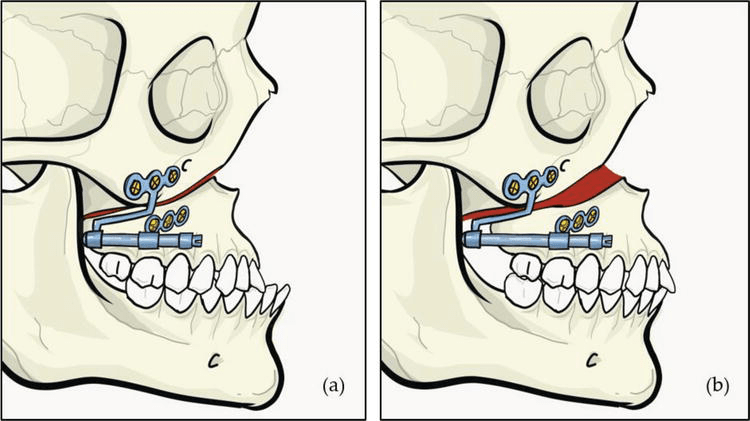
    With miniature distraction devicesrigid external distraction (RED) systems, and intraoral appliances, the orthodontic world saw an explosion (well, controlled expansion) of techniques:

    🔹 Cohen et al. (1997) – Introduced maxillary distraction in young children.
    🔹 Polley & Figueroa (1997) – Used the RED device to treat severe maxillary hypoplasia.
    🔹 Molina et al. (1998) – Tried a mix of facial masks and intraoral appliances for mixed dentition cases.

    So, Does It Work? The Numbers Speak!

    Swennen et al. (2001) reviewed 16 studies spanning 33 years (1966-1999) and found that maxillary advancements ranged from 1 mm to 17 mm. Not bad for a non-surgical approach, right?

    Well, not so fast—relapse was reported in 50.4% of cases. That’s like getting a six-pack after months of workouts only for it to disappear when you eat one slice of pizza.

    Rachmiel et al. (2005) reported stable results in 12 cleft patients after two years, showing that maxillary length (Condylion to A point) held its ground. But Krimmel et al. (2005) later threw a wrench into that optimism, noting a decrease in SNA and ANB angles just one year after distraction.

    Cheung & Chua (2006) conducted a meta-analysis of 26 studies (1966-2003) on 276 cleft patients, revealing:

    📌 Most maxillary advancements were between 5-9 mm.
    📌 External distractors (68.8%) were more common than internal distractors (2.17%) and facial masks (25.72%).
    📌 Maxillary relapse? 5.56% within two years—but only one study provided actual numbers.

    One thing is clear: distraction osteogenesis works, but long-term stability is still a mixed bag.

    The Study: Six Patients, One Mission—Expand That Maxilla!

    Meet our VIPs: six Chinese patients (3 boys, 3 girls, average age 10.5 years), all of whom had:
    ✔ Cleft lip and palate (two unilateral, four bilateral)
    ✔ Primary lip and palate repair in infancy
    ✔ Anteroposterior maxillary hypoplasia (aka, their upper jaw was slacking)
    ✔ Class III malocclusion with a negative overjet (translation: their lower teeth were winning a battle they shouldn’t even be fighting)

    These kids weren’t just getting braces—they were about to experience controlled bone expansion, courtesy of the Rigid External Distraction (RED) device.

    1️⃣ Pre-Orthodontic Preparation – Because even bone stretching needs a good warm-up.
    2️⃣ Complete High Le Fort I Osteotomy – A fancy way of saying, “Let’s surgically cut the upper jaw so we can move it.” where the maxilla was delicately detached with septal and pterygomaxillary disjunction. (Translation: we made it mobile but still attached—think of it as unlocking a door, not knocking it down.)
    3️⃣ RED Device Installation – Think of this as the orthodontic version of a headgear, but instead of just pushing teeth, it’s stretching the entire upper jaw.
    4️⃣ Latency Period (5 Days) – Let the jaw marinate before we start stretching it.
    5️⃣ Active Distraction (1 mm/day) – The screws on the RED device were adjusted daily to pull the maxilla forward. (It’s like a gym for your bones—except you don’t have to do the work; your jaw does.)
    6️⃣ Overcorrection Achieved! 🎉 – Because we know relapse is real, we stretched the maxilla a little extra to compensate for future setbacks.
    7️⃣ Consolidation (6-8 Weeks) – The RED device stayed put to let the new bone solidify.
    8️⃣ Device Removal & Orthodontics – After the expansion was done, the real party started: braces to fine-tune everything.

    The study wasn’t just about making kids look less Class III—it was about proving that DO actually works (and hopefully, stays that way). Here’s how they did it:

    📸 Lateral Cephalographs  were taken at four key points:
    🔹 T0 (Before Distraction) – “This is your jaw on cleft-induced hypoplasia.”
    🔹 T1 (Immediately After Distraction) – “Congratulations, your maxilla has entered the chat.”
    🔹 T2 (6 Months Later) – “Let’s see if your jaw likes its new position.”
    🔹 T3 (1+ Year Later) – “Did it stay put, or did it sneak back?”

    Instead of using simple before-and-after pictures (this isn’t a weight loss commercial), the researchers mapped out skeletal and dental landmark positions using a cranial base reference system.

    How, you ask?

    🔹 First, skeletal landmarks were pinpointed on the T0 cephalogram.
    🔹 Then, these landmarks were transferred onto T1, T2, and T3 cephalograms using a best-fit method—aligning surrounding bone structures and trabecular patterns (Huang & Ross, 1982).
    🔹 To keep things precise, an x-y coordinate system was created:

    Y-axis: A perpendicular line intersecting the X-axis at sella
    🔹 This coordinate system was then transferred onto each cephalogram for standardized measurements.

    X-axis: Drawn 7° below the sella-nasion plane

    Key Takeaways

    ✅ Overjet increased (yay, no more Class III woes!).
    ✅ Overbite decreased—except for our rebellious Case 5.
    ✅ Maxilla went forward (woo-hoo!) but then took a casual retreat backward over a year (boo!).
    ✅ Some vertical movement—first up, then down (the maxilla, not our enthusiasm).
    ✅ Teeth tagged along for the ride, moving anteriorly and inferiorly.
    ✅ Relapse? Oh yeah—about 9.6% at 6 months, increasing to 24.5% by a year.

    Effective Early Correction of Posterior Cross-Bites by Quad-Helix or Removable Appliances

    Early Correction of Posterior Cross-Bites

    • Advocated to:
      • Direct erupting teeth into normal positions.
      • Eliminate premature occlusal contacts.
      • Promote beneficial dentoskeletal changes during growth periods (Bell, 1982).
    • Posterior cross-bites develop early and are not self-correcting (Moyers & Jay, 1959; Thilander et al., 1984).

    Orthodontic Response to Expansion

    • Initial response completed within a week (Storey, 1973; Cotton, 1978; Hicks, 1978).
    • Subsequent movements occur as compressed buccal alveolar plate resorbs at the root-periodontal interface due to continued force (Storey, 1973).

    Orthopaedic Effects of Expansion

    • Sufficient transverse forces can overcome bioelastic strength of sutural elements, causing:
      • Orthopaedic separation of maxillary segments (Storey, 1973; Chaconas & de Alba y Levy, 1977; Cotton, 1978; Hicks, 1978).
      • Palatal segment repositioning continues until force is reduced below sutural tensile strength.
    • Stabilization involves reorganization and remodeling of sutural connective and osseous tissues (Storey, 1973; Ekstrom et al., 1977).

    Increased Maxillary Arch Width

    • Linked to orthodontic and/or orthopaedic effects of expansion (Ficarelli, 1978; Moyers, 1984).
    • Initial changes involve lateral tipping of posterior maxillary teeth due to compression and stretching of periodontal and palatal soft tissues.

    Midpalatal Sutural Opening and Maxillary Displacement

    • Expansion leads to:
      • Downward and forward displacement of the maxilla with bite opening (Haas, 1961).
      • Downward and backward rotation of the mandible, increasing the vertical dimension of the lower face (Haas, 1970).
    • Subsequent recovery of mandibular posture noted in most cases (Wertz, 1970).

    Rate of Expansion and Dental Arch Width Increase

    • Rapid Maxillary Expansion (Krebs, 1959, 1964):
      • Subjects aged 8–19 years showed an average dental arch increase of 6.0 mm (range: 0.5–10.3 mm).
      • Skeletal changes accounted for:
        • ~50% of the arch width increase in 8–12-year-olds.
        • ~33% of the increase in 13–19-year-olds.
    • Slow Maxillary Expansion (Hicks, 1978):
      • Subjects aged 10–15 years showed a dental arch width increase of 3.8–8.7 mm.
      • Skeletal response ranged from 16–30%, with lower skeletal response in older patients.
      • Buccal tipping of molars and skeletal segments contributed to arch width increase.
      • Asymmetrical angular changes between left and right molars and maxillary segments were observed.

    Removable Plates and Sutural Growth (Skieller, 1964):

    • In subjects aged 6–14 years:
      • 20% of dental arch widening was attributed to sutural growth.
      • Sutural growth rate during expansion was significantly greater than during follow-up, indicating stimulated growth during expansion.

    Removable Plates and Sutural Growth (Skieller, 1964):

    • Study on 20 subjects aged 6–14 years:
      • 20% of dental arch widening was attributed to sutural growth.
      • Growth rate at the mid-palatal suture was significantly higher during expansion compared to the follow-up period.
      • Suggests that sutural growth is stimulated during the expansion period.

    Histologic Findings in Slow Expansion Procedures:

    • Sutural separation occurs at a controlled rate, maintaining tissue integrity during maxillary repositioning and remodeling (Storey, 1973; Ekstrom et al., 1977; Cotton, 1978).

    Relapse Tendency During Post-Retention Period:

    • Relapse potential is reduced in slow expansion procedures due to:
      • Maintenance of sutural integrity.
      • Reduced stress loads within tissues (Storey, 1973; Cotton, 1978; Mossaz-Joelson & Mossaz, 1989).

    Relapse Rates with Slow Maxillary Expansion (Hicks, 1978):

    • Relapse amount varies based on retention type:
      • Fixed retention: 10–23%.
      • Removable retention: 22–25%.
      • No retention: 45%.

    Managing Relapse Potential:

    • Over-expansion during active treatment.
    • Prolonging the retention period to stabilize results.
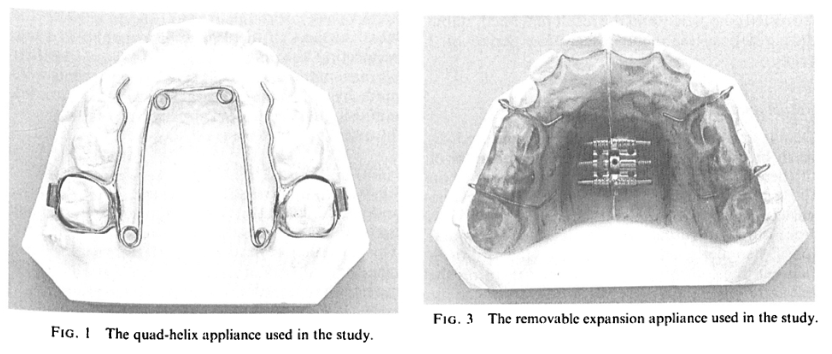
    Measurement/FactorQuad-Helix GroupRemovable Appliance GroupExplanation/Findings
    Intercanine Width IncreaseSmaller increaseSmaller increaseQuad-helix arm did not touch canines until molar region expanded
    Width Between First Permanent MolarsGreater increaseGreater increaseQuad-helix group showed more expansion in molar regions
    Deciduous Molar Width IncreaseGreater increaseSmaller increaseQuad-helix expansion involved torque movements, removable appliance involved tipping
    Mandibular Interarch DimensionsSmall changesSmall changesNo predictable pattern of change, maxillary expansion altered occlusion forces
    Maxillary Arch Length (Expansion Period)IncreaseIncreaseBoth groups showed increase in arch length during expansion
    Maxillary Arch Length (Retention/Post-Retention Period)Gradual decreaseGradual decreaseSmall net increase after retention and post-retention periods
    Frontal Cephalometric Ratios (Active Treatment)Significant increaseSignificant increase, but less than quad-helixMaxillary intermolar width increased more in quad-helix group
    Molar Tipping (Active Treatment)Minimal tippingHigh degree of buccal tippingRemovable appliance showed more molar tipping
    Active Treatment Time101 days (average)115 days (average)Quad-helix had shorter active treatment time, but patients were observed less frequently
    Retention Time3 months3 monthsSame retention time for both groups
    Skeletal Expansion (Basal Expansion)Small basal expansionSmall basal expansionMinimal basal expansion observed in both groups
    Orthopedic Movement of ExpansionMinimal sutural growthMinimal sutural growthSmall amount of basal expansion, similar to previous studies (Skieller, 1964; Hicks, 1978)