Cup Of Coffee with Dr Anchal Shah

Every smile has a story, and so does every dentist who crafts them. In this exclusive conversation, we sit down with Dr. Anchal Shah, Prosthodontist at Dr. Shah’s Smile Studio, to learn about her inspiring journey—from a childhood fascination with chocolates to rebuilding lives through maxillofacial prosthetics.
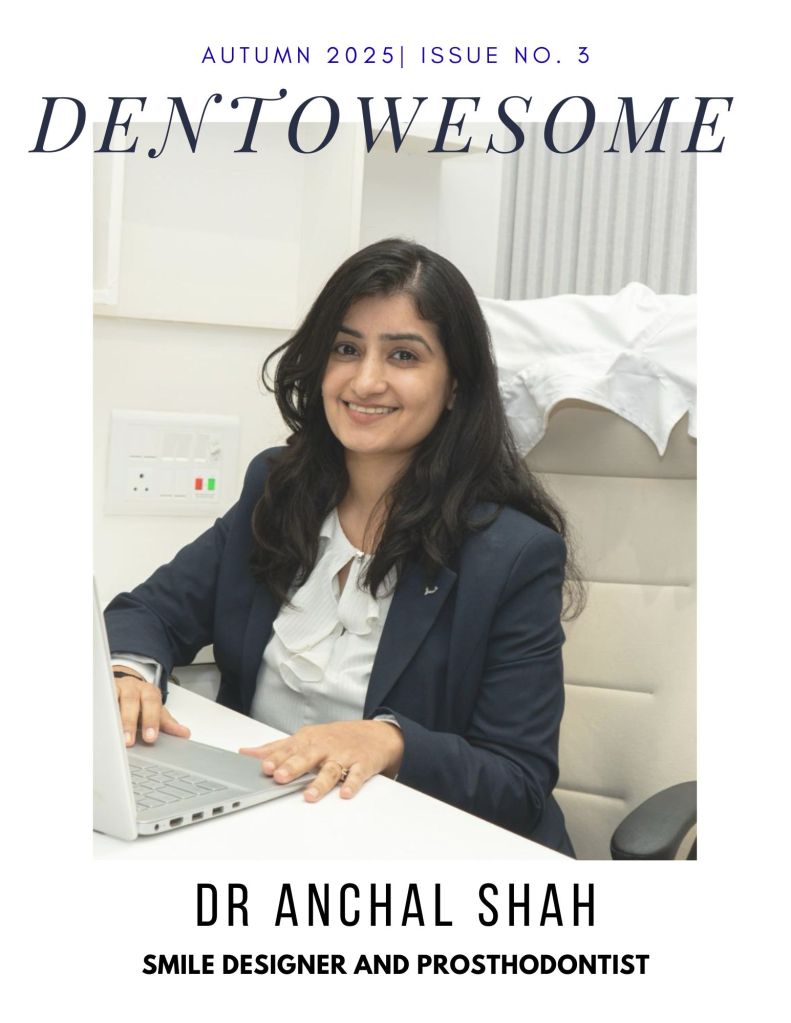
1) Can you share how your path in the dental profession began and the key milestones that shaped it?

✨ Childhood:
It’s funny how a simple love for chocolates led me toward a world I never imagined—dentistry. What began as curiosity slowly transformed into passion.

✨ BDS Days:
The first two years were honestly tough. I often felt lost, wondering why I was spending hours working on baseplates or burning my fingers. But once clinics began, everything changed. I discovered joy in the smallest things—making dentures, performing extractions, or the adrenaline rush of placing my first suture.

✨ The Big Leap:
I always dreamt of specializing in Prosthodontics. My first NEET MDS attempt didn’t work out, but I refused to give up. Taking a drop year was challenging, but it became one of the best decisions of my life. The effort paid off with AIR 66and admission to my dream college.

✨ Shaping My Purpose:
Training under legends in Maxillofacial Prosthodontics gave me a mission bigger than myself—helping oral cancer survivors regain not just their smile, but their confidence and dignity.

✨ Where I Am Today:
At Dr. Shah’s Smile Studio, I blend skill with compassion. My approach is holistic—every smile matters, every pain deserves care, and every patient’s story reminds me why I chose this path.

2) What inspires you to stay passionate and committed to dentistry, even during challenging times?

Dentistry, like life, isn’t always smooth. Some days are tough—when cases get complicated, outcomes don’t go as planned, or the weight of responsibility feels overwhelming.

On those days, I remind myself of two things:

🌱 How far I’ve come:
From a confused BDS student burning my fingers on a baseplate to securing AIR 66 and finding my calling in Prosthodontics—every struggle has shaped me.

💡 Why I started:
It was never just about teeth. It’s always been about people—their pain, their confidence, and their smiles. Watching a patient smile again after years is the kind of reward that keeps me going.

Every difficult moment becomes lighter when I remind myself of this:
👉 I didn’t come this far to give up. I came this far to make a difference
3) Who is your role model in the dental field and how has this person influenced your approach to patient care, academics, or professional growth?

I owe so much to my mentors.

• Dr. Rupal Shah, my postgraduate guide and Head of Department, taught me how much can be achieved with so little in hand. Her resourcefulness and patient-centered care continue to inspire my daily practice.

• Dr. P. C. Jacob, my mentor in oral cancer rehabilitation, showed me the power of perseverance and empathy in dealing with some of the most complex and emotionally demanding cases.

Their teachings shaped my outlook—not just as a clinician, but as a human being who believes in healing beyond treatment.

    4) Could you discuss the strategies you use to manage academic responsibilities alongside your personal interests or hobbies?

    Dentistry can easily consume your entire day, but I’ve learned that balance is key. Keeping my small passions alive keeps me grounded.

    For me, it’s listening to podcaststuning into music, or watching a good movie.
    Podcasts give me new perspectives, music uplifts my mood instantly, and movies help me pause and reset.

    Even 20–30 minutes a day can make a difference. You don’t need hours for hobbies—just intention.
    These little joys refill my energy, empathy, and creativity, helping me return to dentistry with a refreshed mind.

    Because while dentistry defines my work, my hobbies remind me who I am.

    5) What advice would you give to current dental students and aspiring dentists?

    Don’t rush to have it all figured out. It’s completely normal to feel lost in the beginning—to question your path, or to wonder why you’re spending endless hours perfecting a baseplate or bending wires.

    Trust the process. Those small, repetitive tasks are building your foundation—your patience, precision, and perseverance.

    Stay consistent. Stay curious. And don’t fear setbacks. One exam, one failure, or one tough day doesn’t define your journey—your persistence does.

    Most importantly, never forget why you started.
    Dentistry is not just about teeth—it’s about people, their confidence, and their smiles.
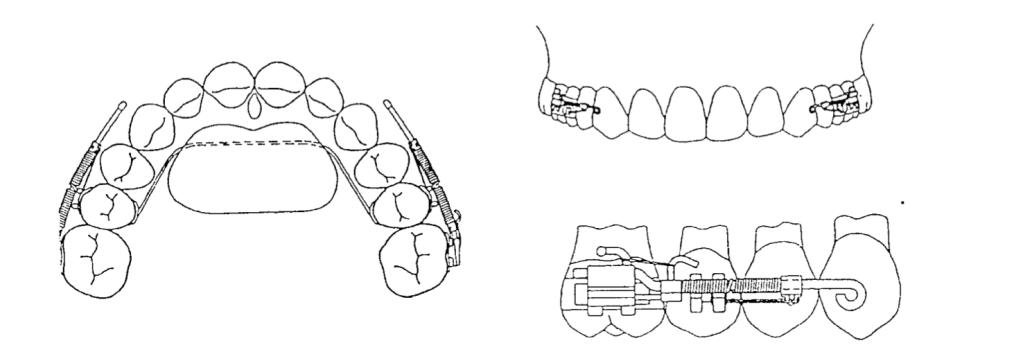
    Evaluation of the Jones jig appliance for distal molar movement

    What is the Jones Jig Appliance?

    Orthodontic treatment often requires space creation to align teeth properly. One effective way to achieve this is through molar distalization—moving the upper first molars backward to make room for crowding or to correct bite discrepancies. Traditionally, orthodontists have relied on headgear, Class II elastics, and removable appliances, all of which require patient compliance (and we all know how reliable that is! 🙄).

    But what if there was a more predictable, fixed alternative?

    Enter the Jones Jig Appliance—a fixed, non-compliance-based distalizing appliance designed to move molars efficiently without relying on patient effort.

    How Does the Jones Jig Work?

    ✔ Palatal Button – A 0.5-inch diameter acrylic button, anchored to the maxillary second premolars using a 0.036-inch stainless steel wire for stability.
    ✔ Jones Jig Arms – One arm fits into the 0.045-inch headgear tube, while the other fits into the slot of the first molar band.
    ✔ Nickel-Titanium Spring – A 0.040-inch coil spring delivers a controlled force of 70-75 g to push the molars backward.

    Once the Jones Jig is cemented, it is activated by tying the activation loop with a 0.010-inch ligature off the bracket of the anchoring tooth. This ensures continuous force application.

    The coils are then reactivated every 4 to 5 weeks until the desired molar movement is achieved.

    Once activated, the appliance applies a gentle but continuous distal force on the upper first molars, moving them backward over time. The best part? Since it’s fixed, patients don’t have to remember to wear it, making treatment more reliable.

    Advantages of the Jones Jig

    ✅ No Patient Compliance Needed – Unlike headgear, patients don’t have to wear or adjust it.
    ✅ Continuous Force Application – The coil spring ensures a steady force for predictable movement.
    ✅ Faster Treatment Time – Studies show that molars can be distalized in 4-6 months.

    While the Jones Jig is highly effective, it does come with some considerations:
    🔹 Molar Tipping – Instead of bodily movement, molars may tip distally, requiring additional mechanics for uprighting.
    🔹 Anchorage Loss – The anterior teeth may shift forward slightly, which may need to be controlled with TADs (temporary anchorage devices) or a transpalatal arch (TPA).

    Does the Eruption of Second Molars Affect Treatment?

    When using the Jones Jig Appliance for molar distalization, orthodontists must consider various factors that can influence treatment outcomes. One key question is: Does the eruption of second molars impact molar movement and anchorage loss?

    A study evaluating 72 patients explored this question by comparing cases with erupted vs. unerupted maxillary second molars to determine how they affected the type and amount of molar movement and anchorage loss.

    Study Findings: Second Molar Eruption and Its Effects

    Researchers divided the patients into two groups:

    GroupCondition of Second MolarsKey Observations
    Group 1 (28 patients)Unerupted second molars (below the cementoenamel junction of the first molar)Less anchorage loss in premolars and incisors, potentially more controlled molar movement.
    Group 2 (44 patients)Erupted second molars (not banded or bonded)More anchorage loss observed, possibly due to resistance from the second molars.

    The presence or absence of second molars plays a significant role in the effectiveness of molar distalization. Patients with unerupted second molars may experience better molar movement with less anchorage loss, while those with erupted second molars may require additional anchorage support. In cases with erupted second molars, additional anchorage reinforcement (e.g., TADs or a transpalatal arch) may be necessary to prevent undesired movement.

    Study Findings: How Far Did Those Molars Go?

    retrospective study of 72 patients using the Jones Jig showed:

    Tooth MovementMean ChangeTipping AngleComparison to Other Appliances
    Maxillary First Molar2.51 mm distal movement7.53° distal tipping
    (meaning they didn’t just move—they leaned back like someone dodging responsibility. 😅)
    Similar to Herbst, Wilson Mechanics, and Pendulum Appliance 📏
    Maxillary Second Molar1.79 mm distal movement
    (Not as much as the first molar, but still making progress! 🔄)
    8.03° distal tipping
    (tipped even more than first molars)
    0.71 mm extrusion observed 📉
    (suggests that second molars are like that one friend who always stands out in group photos. 📸)
    OverjetIncreased 0.45 mm

    If necessary, J-hook headgear or Class II elastics can help maintain anchorage.
    2.21° incisor proclination

    (much less than the 6° seen in other studies. So, while there’s some flaring, it’s not enough to make your patient look like Bugs Bunny. 🐰)
    Less flaring than with Pendulum & Repelling Magnets 😎

    Less than the 1.30 mm increase seen with the Pendulum appliance and the 1.60 mm increase with repelling magnets.
    OverbiteDecreased 1.28 mmImproved vertical control compared to other appliances 📊

    Anchorage Control: Because We Don’t Want Molar Tipping Running the Show

    Distalizing molars is great, but uncontrolled tipping? Not so much. Here’s where anchorage control steps in like a responsible chaperone at a high school dance.

    ✅ Use a Nance holding arch, utility archwire, or stopped archwire to keep those molars in check.
    ✅ Short Class II elastics can help move the premolars and incisors back once the molars are in position.
    ✅ J-hook headgear can reinforce anchorage (for the brave souls who still prescribe it).

    Molar Extrusion: Is It a Big Deal?

    One concern with distalization is molar extrusion—but does the Jones Jig make teeth “float away”? Not really.

    🔹 Jones Jig Patients:

    • Males: 3.17 ± 1.79 mm of extrusion
    • Females: 1.33 ± 1.38 mm of extrusion

    🔹 Untreated Class I Patients (for comparison):

    • Males: 4.1 ± 3.1 mm
    • Females: 1.9 ± 2.2 mm

    📌 Takeaway?
    The extrusion in Jones Jig patients is within normal growth changes. So, unless your patient is trying to float their molars into the stratosphere, this isn’t a major concern. 🚀

    Jones Jig vs. Headgear: Any Real Difference?

    The study found no statistically significant differences between the Jones Jig group and a matched Headgear groupwhen evaluating:

    ✅ Maxillary first molar position
    ✅ Maxillary central incisor angulation
    ✅ Linear position of incisors
    ✅ Overjet & Overbite changes

    So, if you’re an orthodontist who loves avoiding unnecessary patient lectures about compliance, the Jones Jig might be your new best friend. 🎉

    Treatment Comparison: Who Wins?

    Treatment ModalityPatient Compliance Needed?Molar Distalization (mm)Overjet Change (mm)Overbite Change (mm)
    Jones Jig Appliance❌ No compliance needed2.51 mm+0.45 mm-1.28 mm
    Cervical Headgear✅ Requires compliance 😬2.50 mm+0.40 mm-1.30 mm
    Class II Elastics✅ Requires compliance 🙄Varies (depends on use)Greater risk of overjet increaseLess predictable molar control

    📌 Takeaway?
    The Jones Jig does everything headgear does—without the compliance drama. It’s like getting straight A’s without ever studying (if only life worked that way 😆).

    Final Verdict: Is the Jones Jig Worth It?

    ✔ YES! If you want a fixed, predictable, non-compliance-dependent way to correct Class II malocclusions, the Jones Jig is a great choice.

    ✔ Same results as headgear—without the teenage rebellion.

    ✔ Minimal anchorage loss compared to other distalization appliances (no crazy overjet increase).

    ✔ Less annoying for patients = less annoying for you. 😆

    Soft tissue profile changes from 5 to 45 years of age

    Total Facial Convexity

    1. What is the general trend observed in total facial convexity with age?
      • A. It remains constant.
      • B. It decreases.
      • C. It increases.
      • D. It fluctuates.
      • Answer: C. It increases.
    2. What is the primary factor contributing to the increase in total facial convexity?
      • A. Increased prominence of the chin.
      • B. Decreased prominence of the nose.
      • C. Increased prominence of the nasal tip.
      • D. Decreased prominence of the lips.
      • Answer: C. Increased prominence of the nasal tip.
    3. How does total facial convexity change in late adulthood?
      • A. It continues to increase.
      • B. It remains stable.
      • C. It decreases slightly.
      • D. It fluctuates significantly.
      • Answer: C. It decreases slightly.

    Facial Convexity Excluding the Nose

    1. What is the general trend observed in facial convexity excluding the nose after 6 years of age?
      • A. Significant increase
      • B. Significant decrease
      • C. Relative stability
      • D. Significant fluctuation
      • Answer: C. Relative stability
    2. Are there significant gender differences in the trends of facial convexity change?
      • A. Yes, males show a greater increase than females.
      • B. Yes, females show a greater decrease than males.
      • C. No significant gender differences were observed.
      • D. The data is insufficient to determine gender differences.
      • Answer: C. No significant gender differences were observed.

    Holdaway’s Soft Tissue Angle

    1. What is the ideal range for Holdaway’s soft tissue angle with a normal ANB angle?
      • A. 1° to 3°
      • B. 5° to 7°
      • C. 7° to 9°
      • D. 9° to 11°
      • Answer: C. 7° to 9°
    2. How does Holdaway’s soft tissue angle change with age?
      • A. It remains constant.
      • B. It increases.
      • C. It decreases.
      • D. It fluctuates significantly.
      • Answer: C. It decreases.
    3. What is the relationship between ANB angle and Holdaway’s soft tissue angle?
      • A. They are inversely proportional.
      • B. They are directly proportional.
      • C. They are unrelated.
      • D. The relationship is complex and varies.
      • Answer: B. They are directly proportional.

    Upper Lip Position

    1. What is Ricketts’ ideal position of the upper lip relative to the esthetic line in adult females?
      • A. 2.0 mm posterior
      • B. 4.0 mm posterior
      • C. 2.0 mm anterior
      • D. 4.0 mm anterior
      • Answer: B. 4.0 mm posterior
    2. How does the position of the upper lip relative to the esthetic line change with age?
    • A. It becomes more retrusive.
    • B. It becomes more protrusive.
    • C. It remains constant.
    • D. It fluctuates significantly.
    • Answer: A. It becomes more retrusive.

    Lower Lip Position

    1. What is the ideal position of the lower lip relative to the esthetic line in adult males?
    • A. 2.0 mm posterior
    • B. 2.8 mm posterior
    • C. 3.8 mm posterior
    • D. 4.0 mm posterior
    • Answer: C. 3.8 mm posterior
    1. How does the position of the lower lip relative to the esthetic line change with age?
    • A. It becomes more protrusive.
    • B. It becomes more retrusive.
    • C. It remains relatively stable.
    • D. It fluctuates significantly.
    • Answer: B. It becomes more retrusive.

    Age-Related Changes and Treatment Planning

    1. Why is it important to consider age-related changes in the soft tissue profile when planning orthodontic treatment?
    • A. To avoid overtreatment
    • B. To avoid undertreatment
    • C. To make informed extraction decisions
    • D. All of the above
    • Answer: D. All of the above.
    1. What is the primary reason why orthodontists should not treat adolescent patients according to adult standards?
    • A. Adolescent facial growth is unpredictable.
    • B. Adolescent patients are more prone to relapse.
    • C. Adult standards may lead to an over-retrusive upper lip in adolescents.
    • D. Adult standards may lead to an over-protrusive upper lip in adolescents.
    • Answer: C. Adult standards may lead to an over-retrusive upper lip in adolescents.