Malaria (Features of P.falciparum infection)

P.falciparum infection

🤒Clinical Features:

This is the most dangerous of the malarias and patients are either ‘killed or cured’. The onset is often insidious, with malaise, headache and vomiting. Cough and mild diarrhoea are also common. The fever has no particular pattern.

🦗Neurological

  • Coma
  • Hypoglycaemia
  • Seizures
  • Cranial nerve palsies
  • Opisthotonus (a type of abnormal posture where the back becomes extremely arched due to muscle spasms)
Disconjugate gaze due to cranial nerve palsy

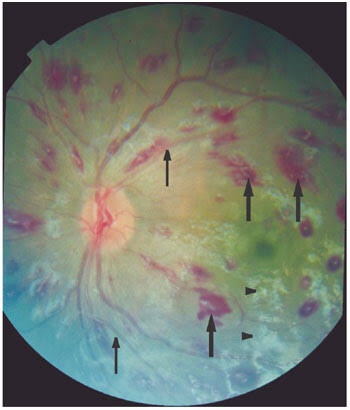
🦗Optic fundi

Malaria Retinopathy with Roth’s spots

🦗Respiratory

  • Pulmonary edema
  • Secondary bacterial pneumonia

🦗Cardiovascular

  • Shock
  • Cardiac failure (‘algid malaria’)
  • Dysrhythmias with Quinine

🦗Renal

  • Acute renal failure
  • Severe haemolysis results in haemoglobinuria (black water fever)

🦗Abdomen

  • Hepatic dysfunction & haemolysis lead to Jaundice
  • Tender liver edge with hepatitis
  • Pain in left upper quadrant with splenomegaly

🦗Blood

  • Parasitaemia
  • Anaemia – Normocytic Normochromic
  • Thrombocytopenia
  • Coagulopathy
Ring form in RBC

Dentowesome 2020

@dr.mehnaz🖊


References: Davidson’s Principles and Practice of Medicine Textbook; Image source: ResearchGate, Quizlet
Antimalarial drugs

What is malaria ?

•Malaria is a life-threatening disease.

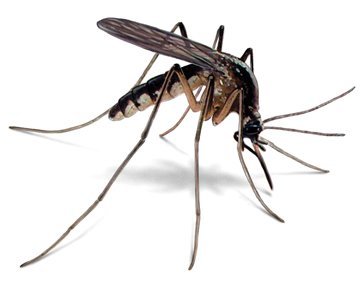
• It’s typically transmitted through the bite of an infected Anopheles mosquito.

Female anopheles mosquito

•Infected mosquitoes carry the Plasmodium parasite.

•When this mosquito bites you, the parasite is released into your bloodstream.

•Once the parasites are inside your body, they travel to the liver, where they mature. After several days, the mature parasites enter the bloodstream and begin to infect red blood cells.

•Within 48 to 72 hours, the parasites inside the red blood cells multiply, causing the infected cells to burst open.

•The parasites continue to infect red blood cells, resulting in symptoms that occur in cycles that last two to three days at a time.

AREAS WHERE MALARIA IS FOUND –

Malaria is typically found in tropical and subtropical climates where the parasites can live.

Life cycle of malaria

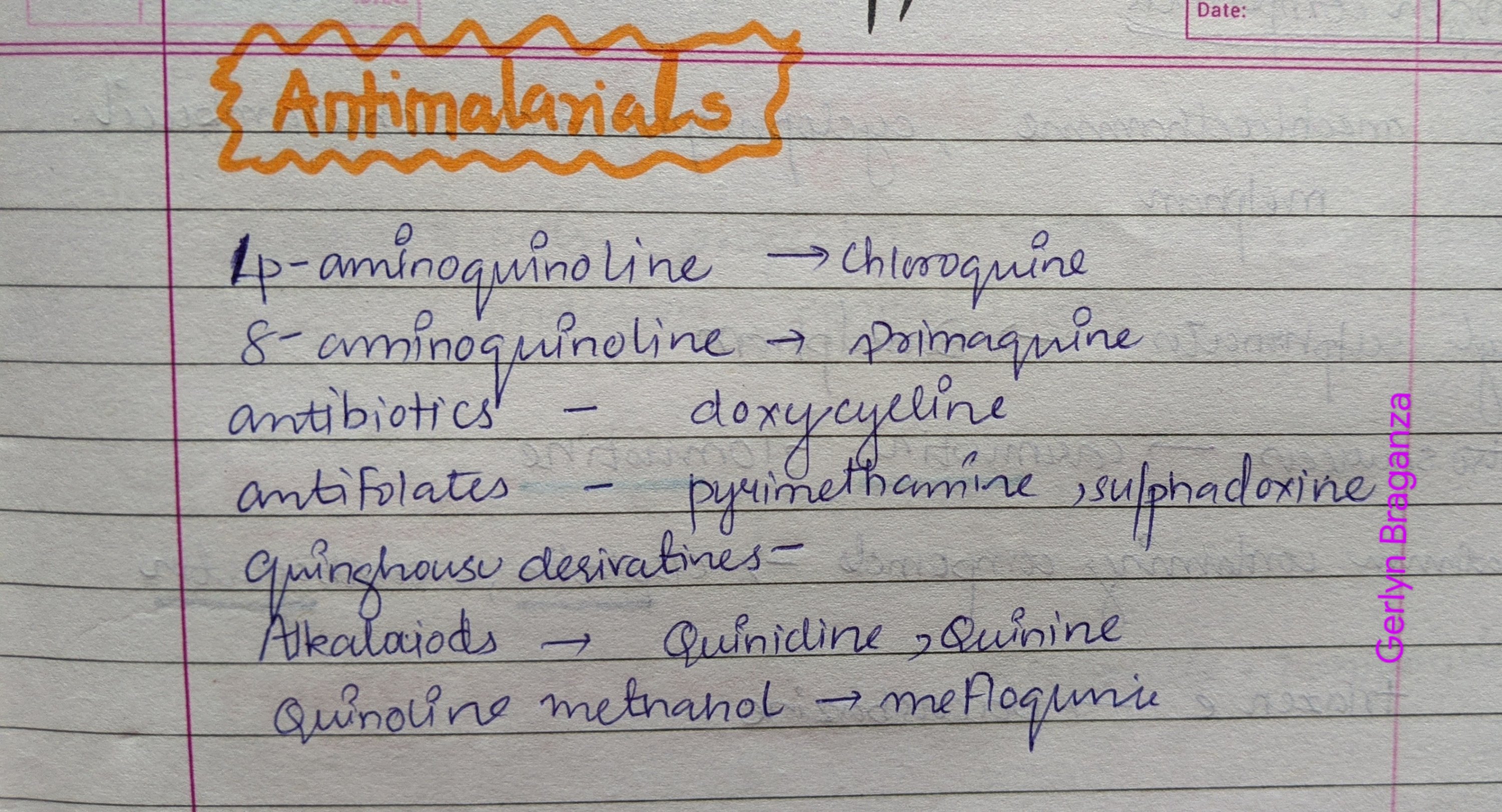
Drugs used in malaria

Source – 1.textbook of pharmacology for dental students tara shanbhag

2. Healthline

3 pinterest and Google images