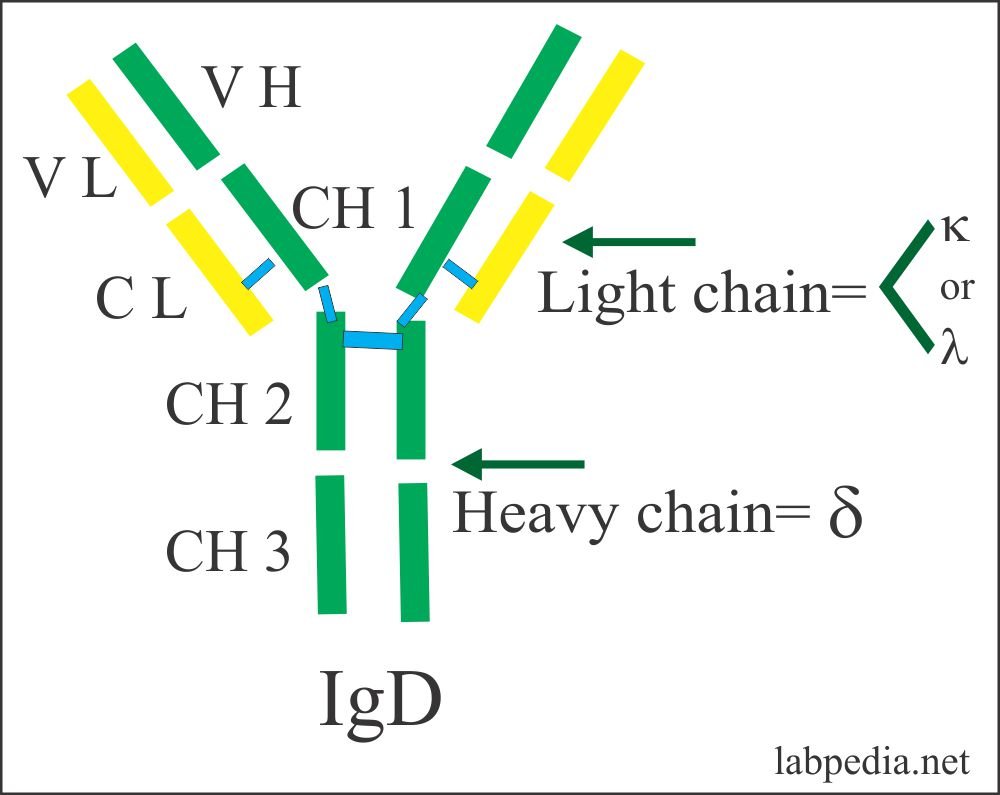
IgD and IgE

1. Immunoglobulin D( IgD)

(i) IgD resembles IgG structurally.

(ii) IgD is present in a concentration of 3 mg per 100 ml in serum. It is mostly intravascular in distribution.

(iii) Molecular weight is 180000 (7S monomer).

(iv) Half life is about three days.
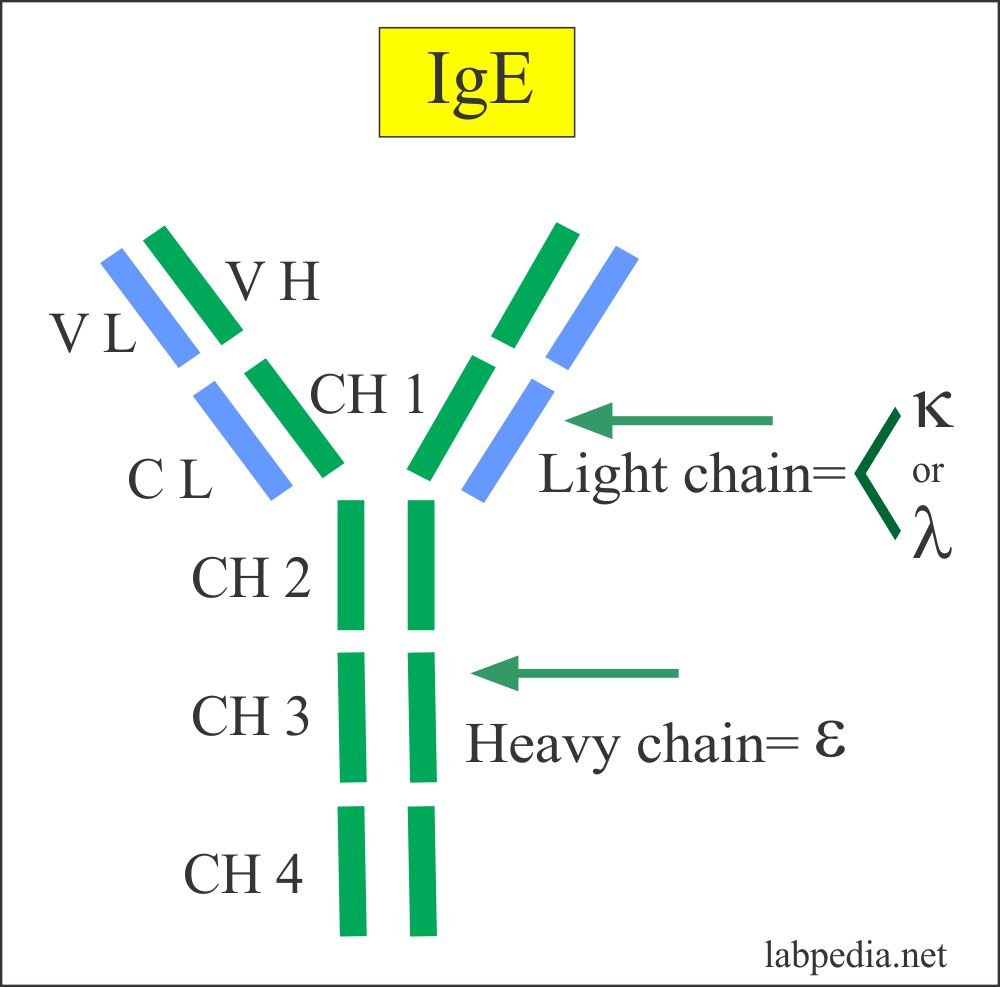
2. Immunoglobulin E (IgE)

(i) IgE is mainly produced in the linings of respiratory and intestinal tracts. It is mostly distributed extravascularly.

(ii) It is also referred to as reagins.

(iii) Molecular weight is 190000 (8 S molecule).

(iv) Half life is 2-3 days.

(v) It resembles IgG in structure.

(vi) It is heat labile whereas other immuno-globulins are heat stable.

(vii) It has affinity for surface of tissue cells, particularly mast cells of the same species (homocytotropism).

(viii) IgE mediates type I hypersensitivity (atopic) reaction. This is responsible for asthma, hay fever and eczema.

(ix) It cannot cross the placental barrier.

(x) IgE is responsible for anaphylactic type of reaction.
Source- textbook of microbiology for dental students c p baveja and Google images
IgM

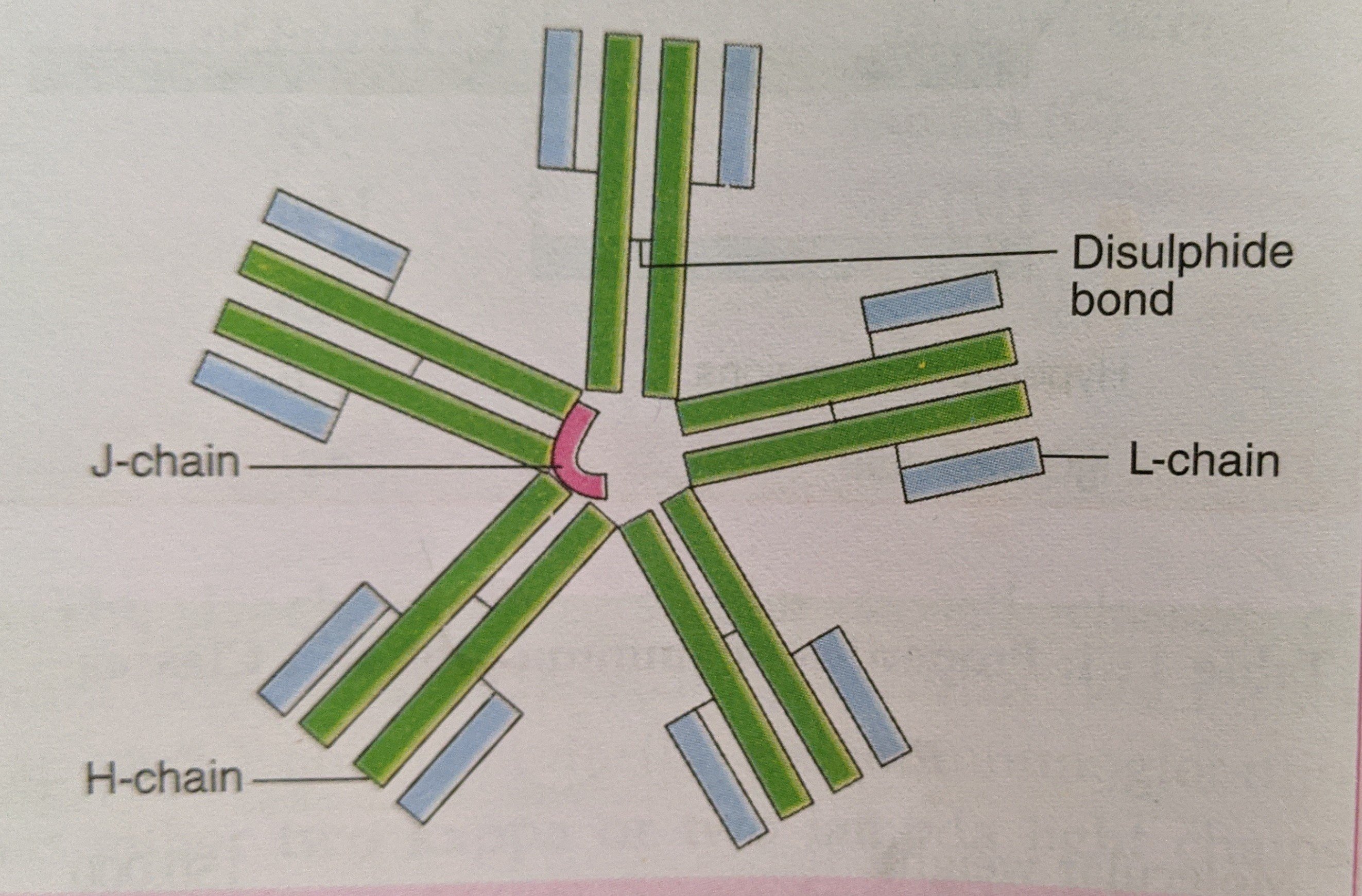
Immunoglobulin M (IgM)

(i) IgM is a pentamer consisting of 5 immuno globulin subunits and one molecule of J chain, which joins the Fc region of the basic subunits.

(ii) It constitutes about 5-8 percent of total serum immunoglobulins. The normal level in serum is 0.5-2 mg/ml.

(iii) Half life is about five days.

(iv) It is heavy molecule (19S) with a molecular weight 900,000 to 1000000 hence also called the ‘millionaire molecule‘.

(v) IgM is mainly distributed intravascularly (80%).

(vi) It is the earliest synthesised immunoglobulin by foetus.

(vii) It appears early in response to infection before IgG.

IgM antibodies are short lived, and disappear earlier than IgG. Hence, its presence in serum indicates recent infection

(viii) It can not cross the placenta, presence of IgM antibody in serum of newborn indicates congenital infection.

(ix) It is very effective antibody in agglutination and complement fixation. It is more efficient than IgG in these reactions.

(x) IgM provides protection against blood invasion by microorganisms.

Source – textbook of microbiology for dental students c p baveja

IgG

  • Immunoglobulin G ( IgG)

(i) IgG is the major serum immunoglobulin (about 80% of the total amount). The normal serum concentration is about 8-16 mg/ml.

(ii) Molecular weight is 150,000 (7S)

(iii) Half life is about 23 days (longest amongst all the immunoglobulins).

(iv) It is the only immunoglobulin that is transport through placenta and provides natural passive immunity to newborn.

(v) It is distributed equally between extravascular and intravascular compartments.

(vi) IgG appears late but persists for longer period. It appears after the initial immune response which is IgM in nature.

(vii) It participates in precipitation, complement fixation and neutralization of toxin and viruses.

(viii) It is protective against those microorganisms which are active in the blood and tissues.

Source – textbook of microbiology C P Baveja

IgA

Immunoglobulin A (IgA)

(i) IgA is the second major serum immunoglobulin (about 10-13% of serum normal serum immunoglobulins). The concentration is 0.6 – 4.2 mg/ml.

(ii) Half life is about 6 – 8 days.

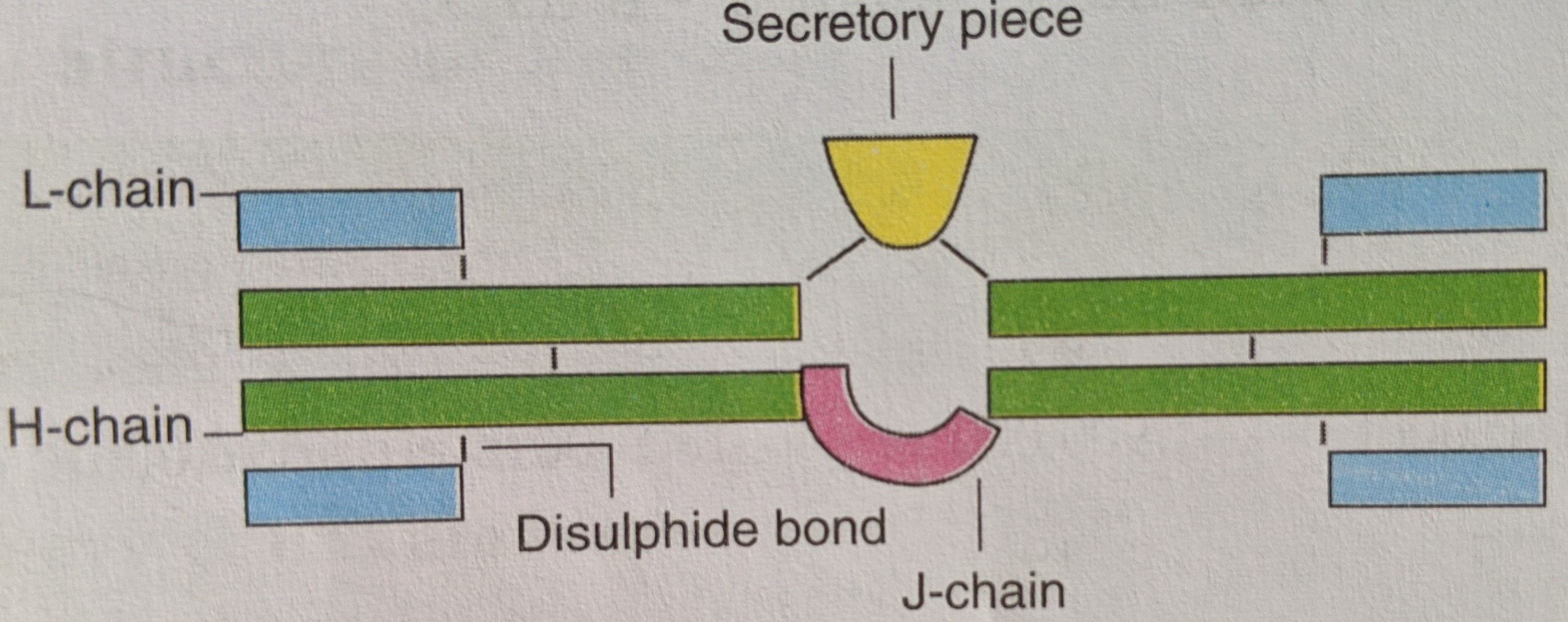
(iii) IgA occurs in two forms, serum IgA and secretory IgA.

(iv) Serum IgA is a monomeric 7S molecule (MW 160,000)

while IgA found on mucosal surfaces and in secretions (secretory IgA, MW 400,000) is a dimer formed by two monomer units joined together by a glycoprotein named J chain ( J for joining).

(v) Secretory IgA contains another polypeptide called the secretory piece or secretory component.

The S piece is believed to protect IgA from denaturation by bacterial proteases in sites such as the intestinal mucosa which is rich in bacterial flora.

(vi) IgA is the principle immunoglobulin present in secretions such as milk, saliva, tears, sweat, nasal fluids, colostrum and in secretions of respiratory, intestinal and genital systems.

It protects the mucous membranes against microorganisms.

(vii) IgA is mainly synthesised locally by plasma cells and little is derived from serum.

Source – textbook of microbiology C P Baveja