Immunoglobulin A (IgA)
(i) IgA is the second major serum immunoglobulin (about 10-13% of serum normal serum immunoglobulins). The concentration is 0.6 – 4.2 mg/ml.
(ii) Half life is about 6 – 8 days.
(iii) IgA occurs in two forms, serum IgA and secretory IgA.
(iv) Serum IgA is a monomeric 7S molecule (MW 160,000)
while IgA found on mucosal surfaces and in secretions (secretory IgA, MW 400,000) is a dimer formed by two monomer units joined together by a glycoprotein named J chain ( J for joining).
(v) Secretory IgA contains another polypeptide called the secretory piece or secretory component.
The S piece is believed to protect IgA from denaturation by bacterial proteases in sites such as the intestinal mucosa which is rich in bacterial flora.
(vi) IgA is the principle immunoglobulin present in secretions such as milk, saliva, tears, sweat, nasal fluids, colostrum and in secretions of respiratory, intestinal and genital systems.
It protects the mucous membranes against microorganisms.
(vii) IgA is mainly synthesised locally by plasma cells and little is derived from serum.
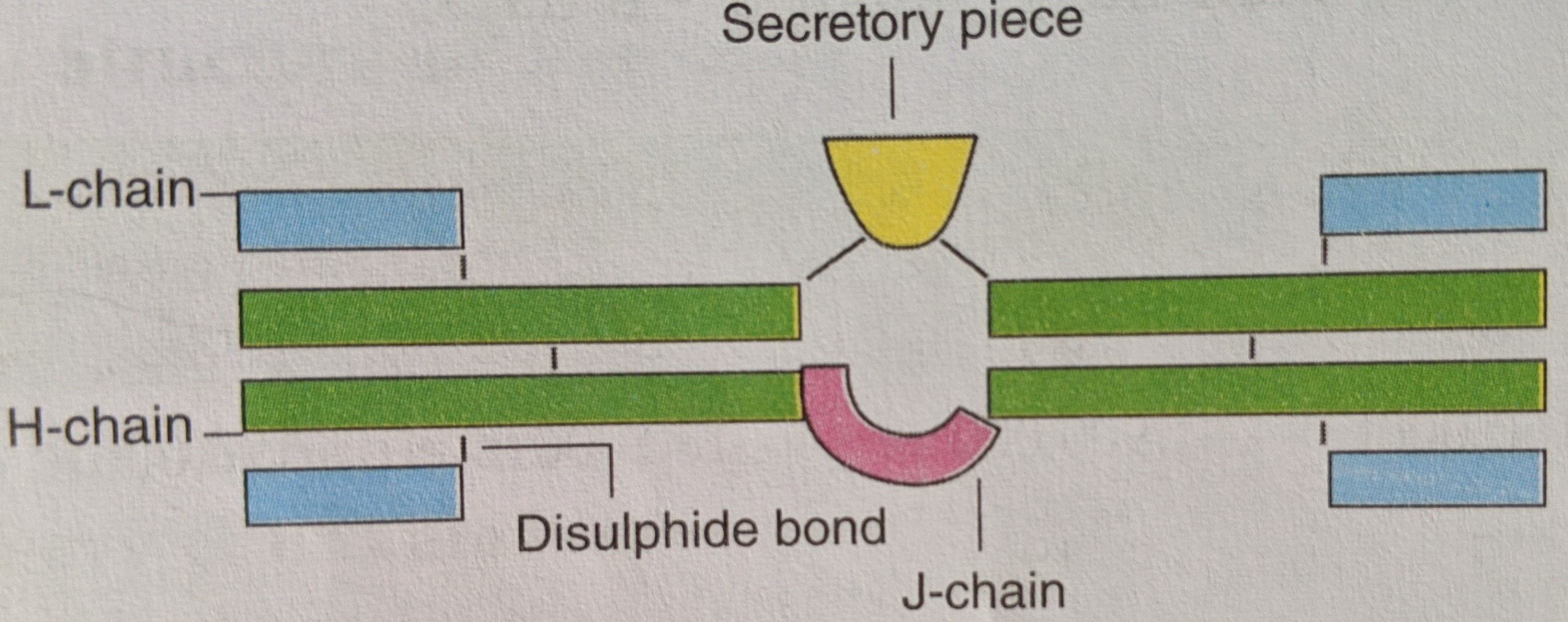
Source – textbook of microbiology C P Baveja
 Dentowesome