Promote beneficial dentoskeletal changes during growth periods (Bell, 1982).
Posterior cross-bites develop early and are not self-correcting (Moyers & Jay, 1959; Thilander et al., 1984).
Orthodontic Response to Expansion
Initial response completed within a week (Storey, 1973; Cotton, 1978; Hicks, 1978).
Subsequent movements occur as compressed buccal alveolar plate resorbs at the root-periodontal interface due to continued force (Storey, 1973).
Orthopaedic Effects of Expansion
Sufficient transverse forces can overcome bioelastic strength of sutural elements, causing:
Orthopaedic separation of maxillary segments (Storey, 1973; Chaconas & de Alba y Levy, 1977; Cotton, 1978; Hicks, 1978).
Palatal segment repositioning continues until force is reduced below sutural tensile strength.
Stabilization involves reorganization and remodeling of sutural connective and osseous tissues (Storey, 1973; Ekstrom et al., 1977).
Increased Maxillary Arch Width
Linked to orthodontic and/or orthopaedic effects of expansion (Ficarelli, 1978; Moyers, 1984).
Initial changes involve lateral tipping of posterior maxillary teeth due to compression and stretching of periodontal and palatal soft tissues.
Midpalatal Sutural Opening and Maxillary Displacement
Expansion leads to:
Downward and forward displacement of the maxilla with bite opening (Haas, 1961).
Downward and backward rotation of the mandible, increasing the vertical dimension of the lower face (Haas, 1970).
Subsequent recovery of mandibular posture noted in most cases (Wertz, 1970).
Rate of Expansion and Dental Arch Width Increase
Rapid Maxillary Expansion (Krebs, 1959, 1964):
Subjects aged 8–19 years showed an average dental arch increase of 6.0 mm (range: 0.5–10.3 mm).
Skeletal changes accounted for:
~50% of the arch width increase in 8–12-year-olds.
~33% of the increase in 13–19-year-olds.
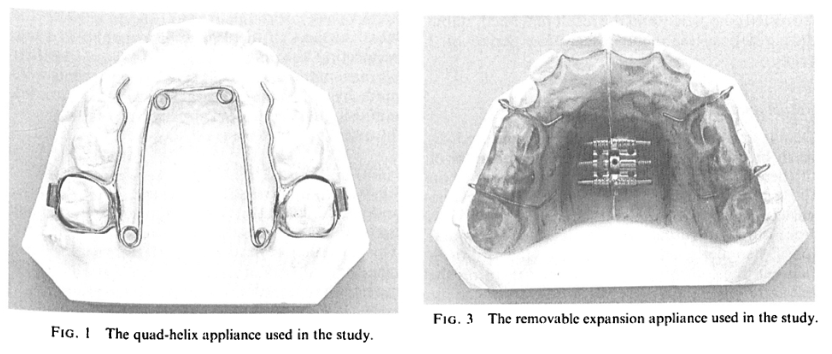
Slow Maxillary Expansion (Hicks, 1978):
Subjects aged 10–15 years showed a dental arch width increase of 3.8–8.7 mm.
Skeletal response ranged from 16–30%, with lower skeletal response in older patients.
Buccal tipping of molars and skeletal segments contributed to arch width increase.
Asymmetrical angular changes between left and right molars and maxillary segments were observed.
Removable Plates and Sutural Growth (Skieller, 1964):
In subjects aged 6–14 years:
20% of dental arch widening was attributed to sutural growth.
Sutural growth rate during expansion was significantly greater than during follow-up, indicating stimulated growth during expansion.
Removable Plates and Sutural Growth (Skieller, 1964):
Study on 20 subjects aged 6–14 years:
20% of dental arch widening was attributed to sutural growth.
Growth rate at the mid-palatal suture was significantly higher during expansion compared to the follow-up period.
Suggests that sutural growth is stimulated during the expansion period.
Histologic Findings in Slow Expansion Procedures:
Sutural separation occurs at a controlled rate, maintaining tissue integrity during maxillary repositioning and remodeling (Storey, 1973; Ekstrom et al., 1977; Cotton, 1978).
Relapse Tendency During Post-Retention Period:
Relapse potential is reduced in slow expansion procedures due to:
 Dentowesome