
Tobacco is the leading preventable cause of death in the world and is the only consumer product that kills when used as intended by its manufacturers ;which may become deadly for non-smokers also.
FACTS & FIGURES:
- Tobacco causes 1 in 10 adult deaths worldwide,nearly 5 million deaths a year or one death every 6.5 seconds,killing 50% of regular users.
- Total global smoking prevalence is 29%;47.5% men & 10.3% women.
- By 2030,70% of deaths in the world is attributable to tobacco.
- It’s a known or probable cause of about 25 diseases.
- Smokeless tobacco causes oral cancer,especially in lips,tongue,mouth and throat area.
- Breathing Environmental Tobacco Smoke(ETS) (i.e .side stream,exhaled smoke from cigarettes,cigars and pipes)causes serious health problems & aggravates allergies and increase the severity of symptoms in children & adolescents, with asthma and heart diseases.
- People who start using tobacco early have more difficulty in quitting,are more likely to be heavy smokers and if young people donot begin to use tobacco before the age of 20,they are unlikely to start the habit.
- The World Bank estimated that smoking prevention is among the most effective of all health interventions.
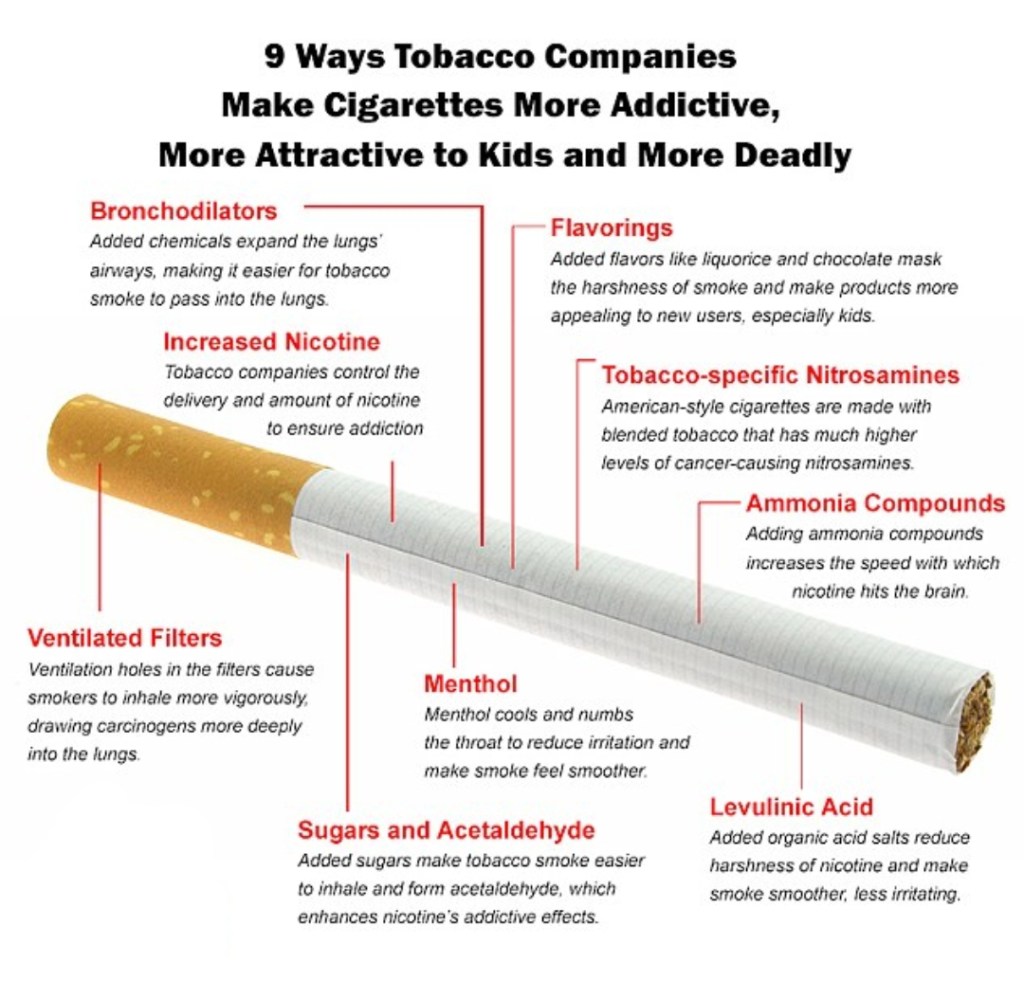
EFFECTS OF NICOTINE :
- Electroencephalographic desynchronisation.
- Increased circulating levels of catecholamines, vasopressin, growth hormone,adenocorticotropic hormone,cortisol,prolactin,and beta-endorphin.
- Increased metabolic rate
- Lipolysis,increased free fatty acids.
- Heart rate acceleration, nicotine can increase the heart rate by 10-15 beats/min.
- Cutaneous & coronary vasoconstriction
- Increased cardiac output & blood pressure by 5-10 mm Hg
- Skeletal muscle relaxation
- Nicotine can induce pathogenic changes to the endothelium associated with atherosclerotic process.
- Halitosis,staining of teeth and soft tissues(smokers melanosis),drying of mouth.
‘Nicotine itself is not carcinogenic unless it undergoes nitrosation to form nitrosamines(during tobacco curing & combustion).’

HOW TO ASSESS TOBACCO DEPENDENCE?
A question-answer session with the individual would be very helpful ….

THE 5 A’S :
- ASK- health care professionals / dentists should ask the patient about his or her tobacco intake habits which includes the questions discussed above,during every visit.
- ADVICE-health care professional / dentists should continually advice patient to quit the habit thereby emphasizing the importance of the issue.
- ASSESS- patients readiness & motivation to quit the habit must be assessed- cause this is a ‘major lifestyle change & requires preparation, readiness & several failed attempts’.
- ASSIST-health care professionals/ dentists should assist those individuals who are motivated- by informing,suggesting and prescribing a pharmacological cessation aids ( nicotine replacement therapy ) and providing or referring the patient to counseling ( individual, group or over telephone ) and behavioral therapies and support services where available.
- Lastly,ARRANGE-follow up services are often critical & the dentists can help the patient be tobacco free by providing services like advising availability of national hotlines,support from non-smoking friends or colleagues,or community based support groups.

Lastly ,dentists play a major role in helping a patient quit smoking because we might be the first to detect an abnormality( be it a small stain or an abnormal mass ) in the oral cavity during routine examination. Do your part ,every small step counts……
Sources- S.S Hiremath textbook of preventive and community dentistry ,www.alhambraesd.org ,www.tobaccofreekids.org






 Dentowesome