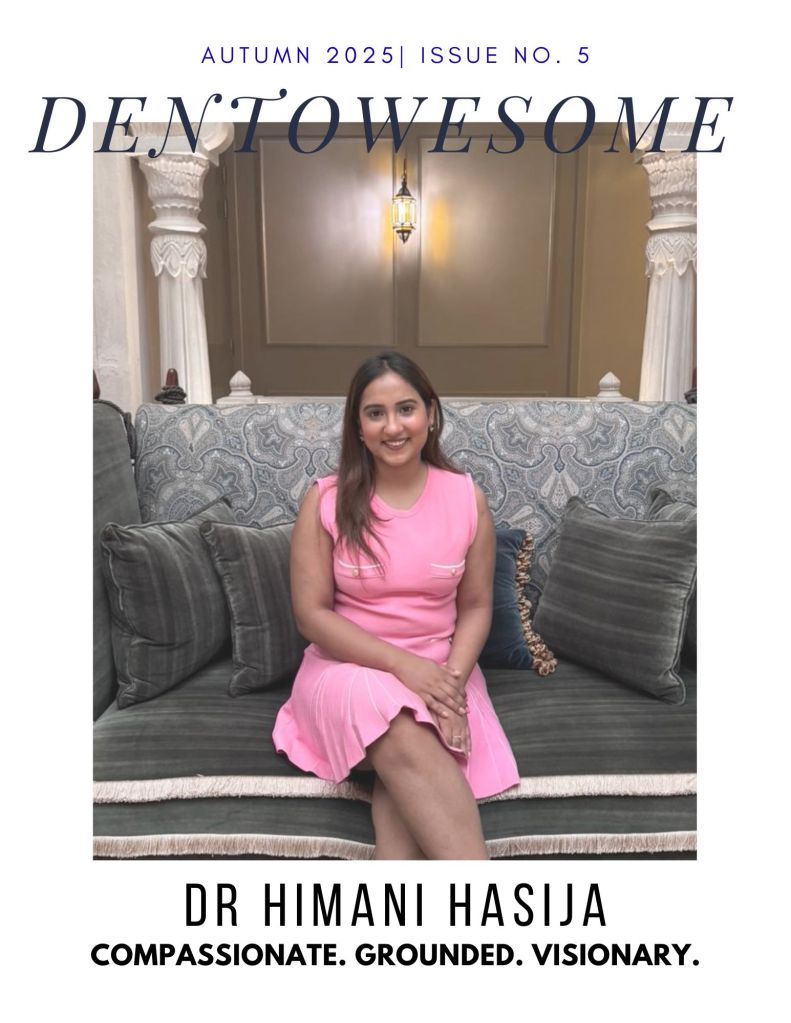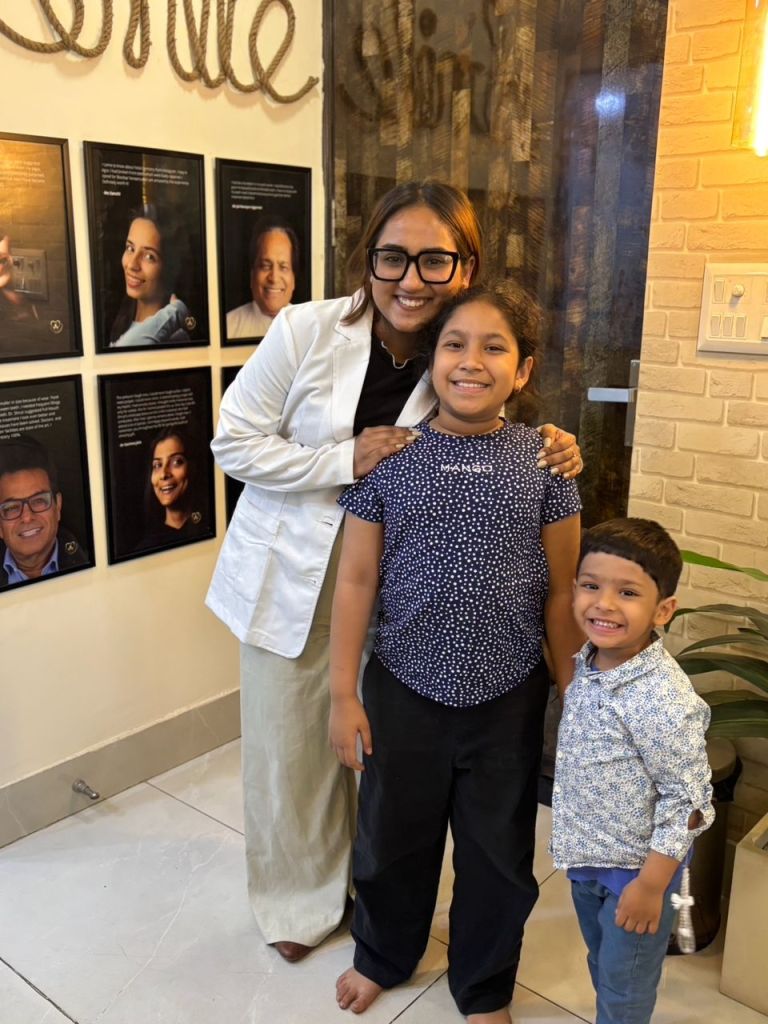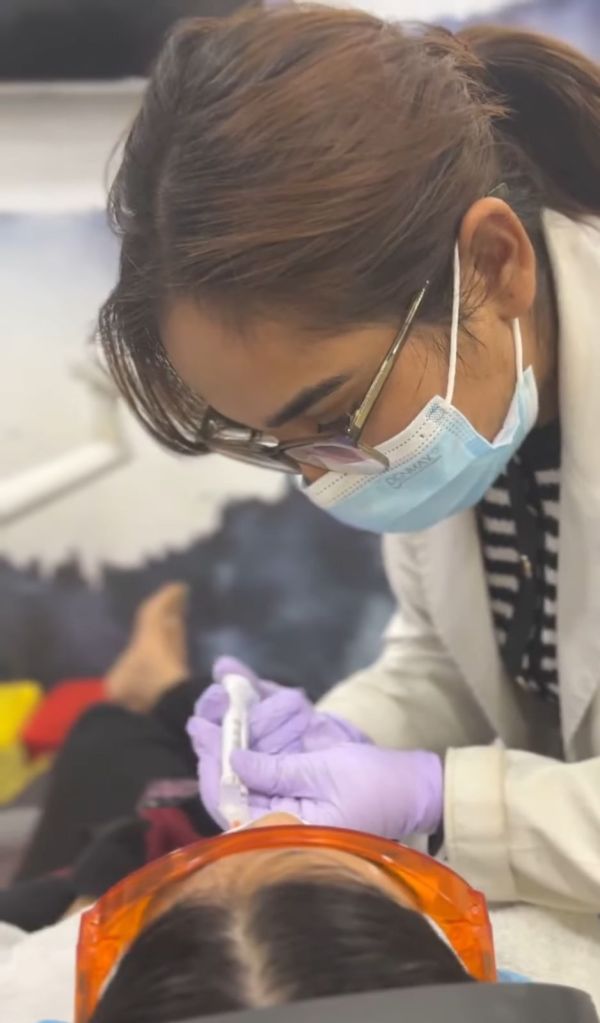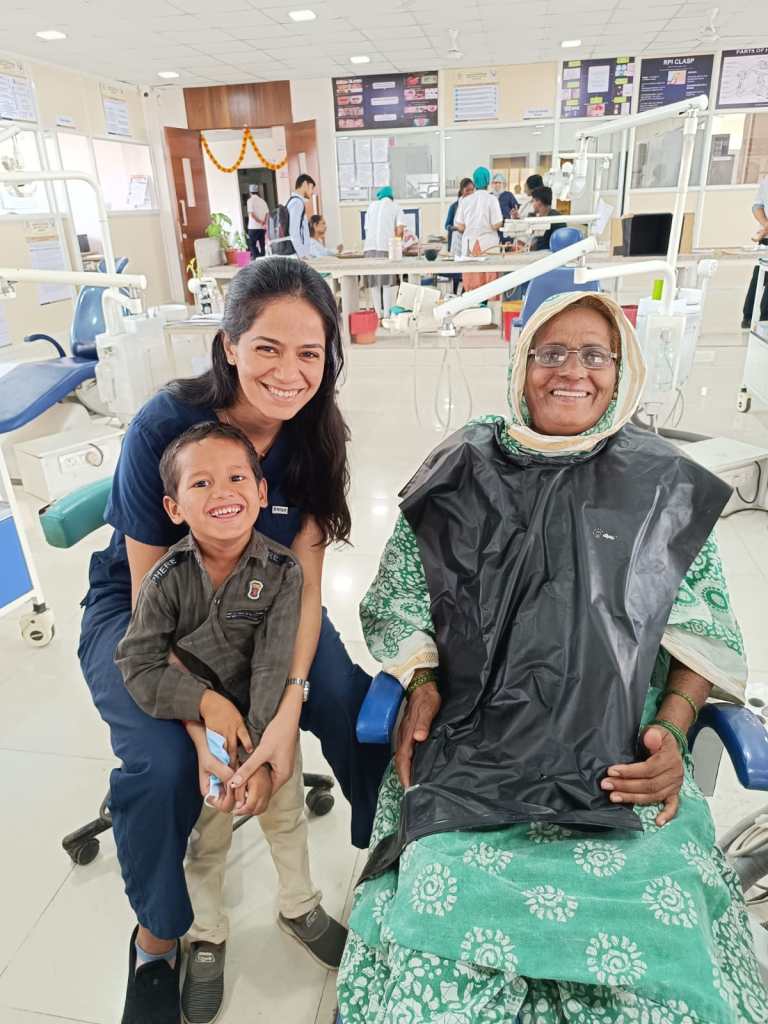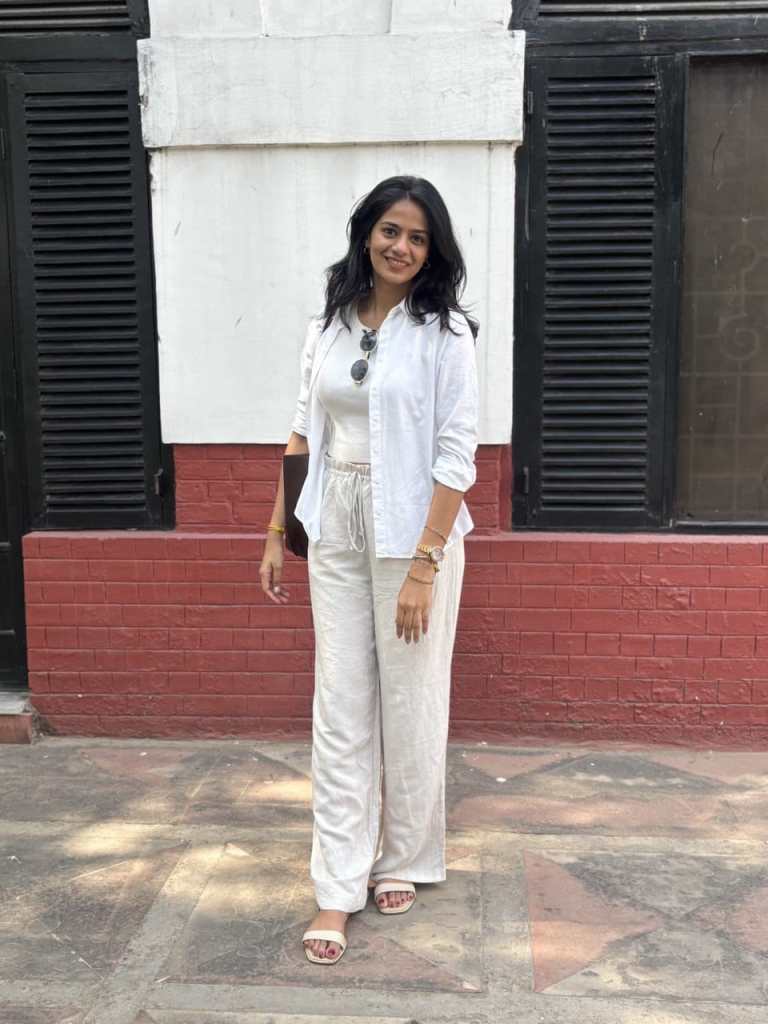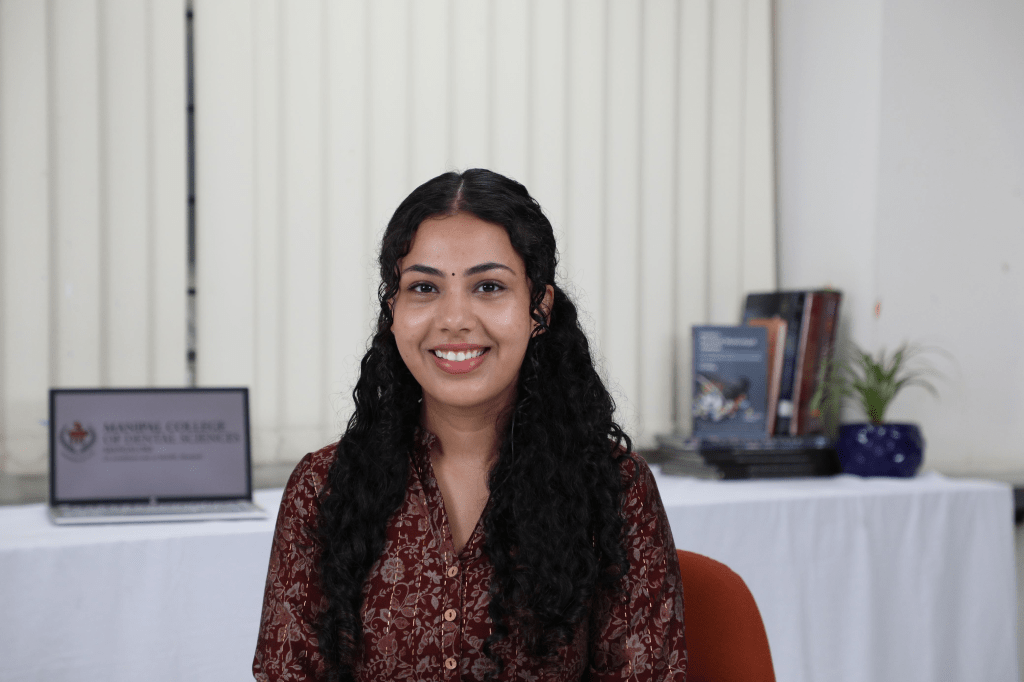
Cup Of Coffee With Dr Himani Hasaji

1. How did your journey in the dental profession begin, and what were the milestones that shaped it?

From the very beginning, I knew I didn’t just want to be a dentist — I wanted to be a holistic dentist. For me, that meant stepping into every kind of setup possible. I’ve worked in super glam, high-end clinics where patient detailing and experience matter the most, in fast-paced corporate chains where efficiency and systems rule, and in CGHS/government setups where limited resources challenge your creativity and compassion.

Each of these experiences shaped me in unique ways — teaching me empathy, precision, and adaptability — lessons I carry into my practice every single day.

2. What inspires you to stay passionate and committed to dentistry, even during challenging times?

People inspire me. Over the years, I’ve noticed a beautiful shift — patients today are genuinely curious about their smiles. They ask questions, they care about their oral health, and they’re invested in improving it. Seeing how a small change — sometimes as simple as aligning a tooth or improving a shade — can completely transform someone’s confidence is what keeps me going. And of course, dentistry allows me to be my own boss — a privilege that pushes me to stay committed and creative, even during tough days.

3. Who is your role model in dentistry, and how have they influenced your professional journey?

My biggest inspiration is Dr. Shruti from MAIDS. She’s done both her BDS and MDS there, and what amazes me most is her discipline. Even today — while managing family life and raising two kids — she studies for a few hours every single day. That level of dedication reminds me that dentistry isn’t a career you complete; it’s a lifelong learning journey.
I aspire to bring that same philosophy to my practice — to always stay updated so my patients receive care that’s rooted in both compassion and the latest science.

4. How do you balance academics, work, and personal interests?

For me, balance isn’t optional — it’s essential. Dentistry can be intense, so I make sure to pause and recharge when needed. I’ve even taken two-month breaks between jobs just to travel, rest, and reset before starting fresh. Some people might think that’s unconventional, but that balance fuels my best work.
When you’re happy and fulfilled outside the clinic, you naturally become a more patient, empathetic, and focused dentist inside it.

5. What advice would you give to dental students and young professionals?

The early stages can be tough — there’s little earning, lots of expenses, and often a sense of uncertainty. But don’t let that phase define you. Use that time to learn, document, and grow.
Keep updating your skills and build expertise in areas your peers might overlook. When you do that, you create your own niche — and patients will value that uniqueness.
Remember, confidence comes from competence. Keep learning, and everything else will follow.

💎 A Smile That Reflects a Life Well-Lived

Dr Himani Hasaji’s story is more than a professional journey — it’s a lesson in purpose, balance, and evolution. She’s not just crafting smiles; she’s crafting a philosophy that blends science, art, and humanity.

Cup Of Coffee With Dr Janhavi Bangar

From wax carvings to real-life artistry — Dr Janhavi Bangar’s journey through dentistry is a story of growth, grit, and genuine passion. In this candid interview, she opens up about the milestones that shaped her, the mentors who molded her mindset, and the balance between precision and play in her life as a young dentist.

Beginnings: Finding Meaning in Every Milestone

1️⃣ Can you share how your path in the dental profession began and the key milestones that shaped it?

Honestly, my path started a bit like a wax carving — rough at the edges but shaping into something meaningful. One of my earliest “wow” moments was assisting in an implant surgery. I remember thinking, “We literally put screws into bone and call it art — this is wild and fascinating!” Another turning point was getting 73% in my first year. It wasn’t just a grade; it was proof that I could actually be good at this. Then came the decision to pursue masters and later my internship at GDC Mumbai as an extern — that’s where it clicked: Yes, MDS is my road. Each of these milestones felt like building blocks, shaping not just my career, but also my confidence in it.

Passion That Persists: Finding Joy in Every Smile

2️⃣ What inspires you to stay passionate and committed to dentistry, even during challenging times?

For me, it’s simple — dentistry gives me the rare privilege of seeing the impact of my work almost instantly. A patient walks in hiding their smile, and after treatment, they walk out grinning ear to ear. That transformation, that joy — it’s addictive. It reminds me every day why I chose this. Sure, there are tough times — long hours, endless reading, sometimes frustrating cases — but then I remember what Dr. G.V. Black, the father of modern dentistry, once said: “The professional man has no right to be other than a continuous student.” So even when I’m tired, the idea that I’m constantly learning while helping someone regain their smile keeps me moving.

Mentorship and Inspiration: The People Behind the Progress

3️⃣ Who is your role model in the dental field and how has this person influenced your approach to patient care, academics, or professional growth?

It’s impossible to pick just one — every mentor I’ve had has shaped me in some way, like different teeth in the same arch, each serving its unique function.

  • Dr. Swati Pustake has been my guiding light. Her calmness in difficult situations taught me lessons that no textbook ever could.
  • Dr. Bikash Pattnaik inspires me daily with his combination of brilliance and humility — he’s living proof that academics, health, and fun can coexist beautifully.
  • Dr. Komal Majumdar and Dr. Moez are orators who can hold a room’s attention like no one else — they’ve shown me that communication is just as vital as clinical skill.

Together, they’ve shaped my philosophy: dentistry isn’t just about perfecting your hand skills — it’s about shaping your mindset, resilience, and ability to connect with people.

Balance Beyond the Clinic: Living Life Fully

4️⃣ Could you discuss the strategies you use to manage academic responsibilities alongside your personal interests or hobbies?

My strategy is simple: dentistry is a part of my life, not my entire life. On most days, I’m the dedicated student, clinician, and resident — working 12–13 hours if needed. But I’ve also promised myself that I won’t lose out on living. That one free day or Sunday, I make sure I really live — whether it’s brunch with friends, a trek, volleyball, painting, creating content, or even participating in college fests and fashion shows. After all, what’s the point of being a prosthodontist if you don’t know how to fix the “missing tooth” of fun in your own life? As the saying goes, “Don’t get so busy making a living that you forget to make a life.”

Words of Wisdom: Lessons for Aspiring Dentists

5️⃣ What advice would you give to current dental students and aspiring dentists?

My biggest advice is have clear intent, stronger than your luting cement. Dentistry is demanding, yes, but if your values are strong ,whether it’s honesty in studies, compassion in patient care, or integrity in friendships , you’ll stand strong no matter what. Patients can always sense genuine energy; if you’re invested in them, half the treatment is already successful.

And don’t forget to have fun along the way , pursue the things you’re passionate about outside dentistry too, because that joy will reflect in the kind of dentist you become. Like Dr. William Osler said: “The good physician treats the disease; the great physician treats the patient who has the disease.” I’d like to believe the same applies to us: “The good dentist restores the tooth; the great dentist restores the smile — and the person behind it.”

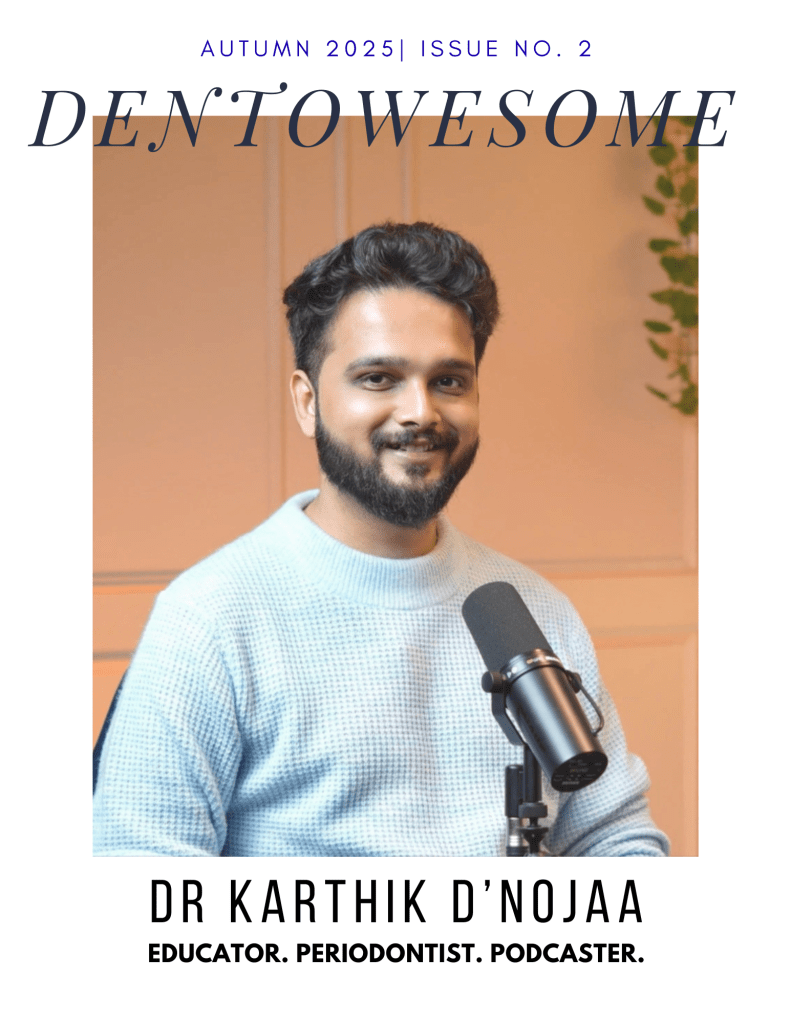
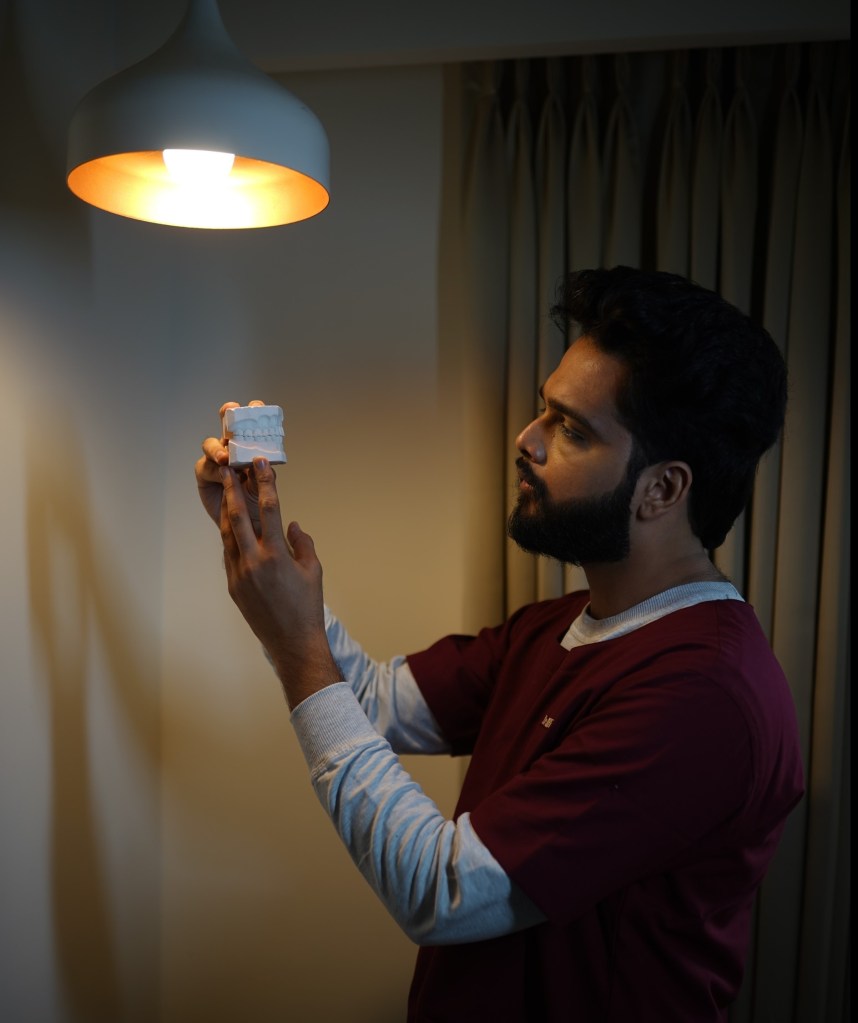
Cup of Coffee with Dr Karthik D’nojaa

🎙️ From Scalpel to Spotlight: A Candid Chat with Dr. Karthik

MDS Periodontology | Educator | Host of the India’s Most Famous Dentist Podcast | Winner of the Golden Mic Award for Best Dental Podcast

If you’ve scrolled through dental Instagram lately or tuned into any student-friendly podcast, chances are you’ve come across Dr. Karthik. Known for his calm voice, creative visuals, and deep conversations on the India’s Most Famous Dentist Podcast, he’s someone who makes dentistry feel a little less intimidating—and a lot more inspiring.

We caught up with him to talk about his journey, his motivation, and his advice for the next generation of dentists.


🦷 Q1. So, Dr. Karthik—where did it all begin? What pulled you into dentistry?

I think I was always inclined toward the artistic side of things. Even before dentistry, I’ve had this natural urge to focus on precision and the smaller details – whether it was sketching, filmmaking, or editing. I’ve always believed that creativity and precision go hand in hand. Those who’ve seen my videos or podcast visuals probably notice that – my team and I put a lot of thought into how things look and feel, because I think dentistry is also an art form.

So for me, it wasn’t a trickle-down choice or a backup plan. Dentistry – and especially periodontics matched that part of me that loves design, structure, and creating something that lasts. It gave me a space where art, science, and communication meet – and that’s what continues to drive me every day.

I think I’ve always had this curiosity to understand how things work – especially the human body. During my early years, I could spend hours with anatomy, physiology, pharmacology, or medicine textbooks. They completely fed that curiosity of knowing how the body is designed and how it functions.

But soon, I realized that knowing wasn’t enough – I had this restless urge to do something with that knowledge. I’m a very hands-on, high-energy person, so I naturally gravitated toward dentistry. The pre-clinical labs – wax patterns, tooth carvings, crown preparations – all of that gave me a creative outlet.

Then came the clinical years – Conservative Dentistry, Prosthodontics, Periodontics, Oral Surgery, Orthodontics, Oral Medicine and Radiology, Pedodontics and Public health Dentistry – and that’s when I really found my rhythm. Periodontics especially connected deeply with me because it’s where precision meets biology. You can see what you’re working on, and every millimetre matters – it matched my personality perfectly.

Over time, those experiences shaped how I approach not just treatment, but also communication whether it’s through my podcast, my content, or my work with students and clinicians. Each phase was a milestone that built both the clinician and the creator in me.


💪 Q2. What keeps you going when the days get tough?

I always start with history. When you stay connected to your roots, it gives you a deep sense of value for what you have today.

If you look back, the pioneers of dentistry – the scientists, clinicians, researchers – they built this field with almost no resources. They worked for patient welfare, comfort, accessibility, and affordability, long before we had the kind of technology and conveniences we rely on now.

That perspective really keeps me grounded. Whenever I go through a challenging phase, I remind myself – we are walking on a path that so many before us have built through pure dedication and passion. All we need to do is keep that spirit alive.

In fact, this is something I often tell students: value what you have today, because it’s the result of decades of evolution. On my podcast, we’ve done a few episodes on the History of Dentistry -featuring experts and curators from dental museums, and even conversations on how dentistry was practiced in the 1950s compared to now. Those episodes truly help you appreciate how far we’ve come as a profession.

So, whenever I feel tired or demotivated, revisiting that history – the legacy of our field – reignites my purpose. It reminds me that being part of dentistry itself is a privilege.


🌟 Q3. Do you have a role model—or many?

Well, for me, it’s hard to name just one person as a role model. I’ve been fortunate to meet and learn from so many incredible dentists throughout my journey.

During my undergraduate days, I was very active in both curricular and extracurricular activities -which gave me the chance to interact with dentists who were doing outstanding work, nationally and internationally. Then in post-graduation, I think I must have attended over fifty national and international dental education programs. Each of those experiences connected me with mentors, clinicians, and researchers who were masters in their domains.

So for me, keeping just one role model has always been difficult. I try to stay alert and absorb something valuable from everyone I meet – because sometimes a small line of advice from an experienced dentist can be worth more than what you find in textbooks.

And on top of that, my podcast journey has been a huge source of learning. Every guest I’ve hosted – whether it’s Dr. Anuj Agarwal, Dr. Ashish Jain, Dr. Suresh Ludhwani, Dr. Moez Kahkiani, or someone like Dr. Sandesh Mayekar who’s contributed in all aspects – each of them has left a strong impression on me. I’ve learned a lot from their experiences, their perspectives, and even their attitude toward growth.

So, rather than one role model, I’d say I have many – and collectively, they keep me grounded, curious, and inspired to do better every day.


🎬 Q4. How do you juggle academics, practice, and content creation?

Yes, it has been challenging – but not because of lack of time or multitasking. The real challenge often comes from the mindset around us. Many people assume that if you’re doing something beyond your main work – like pursuing hobbies, content creation, or any parallel interest – you’re somehow not focused on your core field.

But that’s not true at all. That’s just a shallow perception. I genuinely believe that your hobbies and creative skills can strengthen your main profession, if you channel them in the right way. For me, filmmaking, editing, communication – all of these have actually helped me explain dentistry better and connect with people more effectively.

I once asked a very well-known businessman of our country – whose discussion will soon be out on my page – about how he managed to stay focused amid so much noise. He gave a brilliant analogy. He said, ‘In your generation, you have noise-cancellation headphones. I naturally developed the ability to switch my ears on and off – to only listen to what truly matters.’ That line really stayed with me.

And honestly, that’s the key. You have to learn to tune out the outer noise. Focus only on what adds value. Everyone has immense creativity, energy, and potential – it’s just the distractions that pull you back. If I have to put it as a strategy – I’d say: eat, sleep, do one thing for yourself, one for your family, and one for society – and repeat.


🪥 Q5. What’s your advice for dental students and young clinicians?

My advice would be simple – don’t just study dentistry, live it. Dentistry today isn’t only about clinical skills; it’s about how you think, how you communicate, and how you keep learning every single day. Be curious – not just about treatments, but about people. Understand your patients, listen to them, and value the privilege of being trusted with their health.

Secondly, don’t compare your journey with others. Everyone’s timeline is different. Some people bloom early, some take time – and both are absolutely fine. What matters is that you stay consistent and keep improving your craft.

Also, take your creative side seriously. Whether it’s content creation, design, research, or patient communication – your ideas and hobbies can actually strengthen the field if you channel them with purpose.

And lastly, always remember – this profession was built on service and sincerity. So stay grounded, stay ethical, and contribute back in your own way.

If I had to sum it up in one line,
I’d say: Keep learning, stay curious, do good work – and life will give you more than you ever expected.

And yes, I’d genuinely encourage students and young dentists to watch my show – the guests we’ve had share incredible insights that can really shape how you look at the profession. And feel free to connect with me if you ever want to discuss ideas, to learn, or just want to talk – I’m always happy to interact with passionate minds. Thank you.

🎧 Before We Sign Off…

Dr. Karthik’s journey reminds us that being a dentist isn’t only about perfect crowns or precise sutures—it’s about storytelling, service, and staying curious.

If you’re ever in need of a dose of inspiration, tune in to his award-winning with India’s Most Famous Dentist (IMFD) Podcast—a space where students, clinicians, and even parents discover what the world of dentistry really looks like.


🔗 Connect with Dr. Karthik

📸 Instagram: [https://www.instagram.com/karthiktva?igsh=enhuZDBwY241cmFk]
▶️ YouTube: [www.youtube.com/@DrKarthikDnojaa]

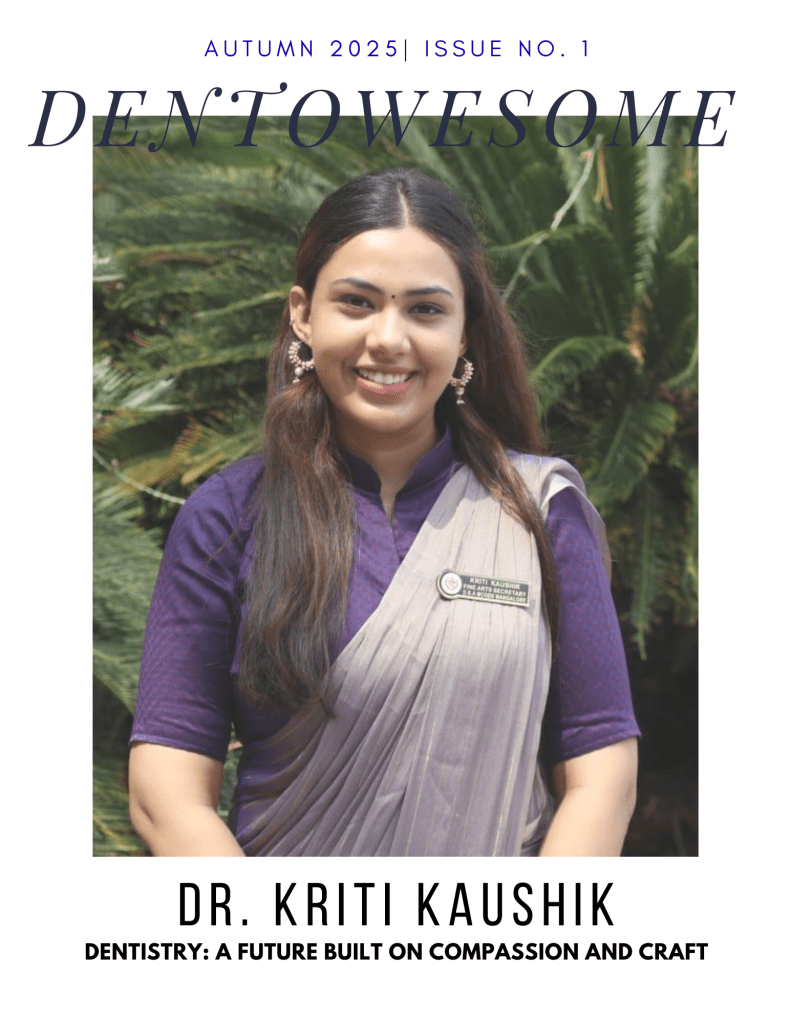
Cup Of Coffee with Dr. Kriti Kaushik


A candid interview about finding passion, purpose, and artistry in dentistry

The journey from aspiring doctor to dedicated dentist isn’t always straightforward. For this young prosthodontist, it was a path of discovery that revealed how art, science, and compassion can merge into a fulfilling career. We sat down to discuss her transformation from a hesitant dental student to a passionate professional who sees every patient as an opportunity to restore not just smiles, but confidence.


Finding Your Path: When Plans Change

Q: You’ve mentioned that you always wanted to be a doctor. How did you end up choosing dentistry, and what was that transition like?

I always wanted to be a doctor since childhood. After clearing NEET, I got into MCODS, Mangalore. I’ll be honest—at first, I wasn’t very happy about choosing dentistry. But over time, I realized its benefits. It offers a good work-life balance and the perfect mix of art and science, which suited me because I’ve always been into art. Now, I see dentistry as more than a career—it’s my way to combine creativity with helping people.


Defining Moments: The Making of a Prosthodontist

Q: What were the key experiences during your education that shaped your decision to specialize in prosthodontics?

Several moments really shaped my journey. Becoming the Fine Arts Secretary of my college boosted my creativity and leadership skills in ways I hadn’t expected. My internship year was transformative—gaining real patient experience changed everything for me. Publishing research articles and attending workshops expanded my horizons, but most importantly, it was the constant motivation from my professors to push myself that led me to choose prosthodontics.


The Heart of Practice: What Drives You

Q: Dentistry can be demanding. What keeps you passionate, especially during challenging times?

What keeps me passionate, even during challenging times, is seeing the change I can bring to a patient’s life. Sometimes it’s not just about relieving pain—it’s about restoring their confidence. That moment when a patient looks in the mirror, smiles, and you can see their whole expression change—that’s priceless. The satisfaction of knowing I played a part in that transformation keeps me motivated to give my best, no matter how difficult the day gets.


Lessons from a Mentor: The True Measure of Success

Q: Who has been your biggest inspiration in the field?

My role model is my professor, Dr. Shobha. She may not be a big name online, but to me, she represents everything a true dentist should be. She’s an outstanding prosthodontist, but what really inspires me is her kindness, her patience with students, and her uncompromising work ethics. No matter how busy she is, she treats every patient with the same level of care and attention. Seeing her passion for dentistry and the respect she earns from patients and colleagues has taught me that success in this field isn’t just about skill—it’s about heart. That’s the kind of dentist I aspire to be.


Balancing Act: Life Beyond the Clinic

Q: How do you manage to balance the demands of your profession with personal interests and wellbeing?

Time management is the key for me. I start by prioritizing tasks based on deadlines and importance, so my academic work is completed without last-minute stress. During busy periods, I break larger tasks into smaller, achievable goals, which helps me stay consistent. I also make sure to set aside time for my hobbies like painting and cooking because they give me a creative break and keep me mentally fresh. Balancing the two not only helps me stay productive but also keeps me motivated and happy in the long run.


Words of Wisdom: Advice for Aspiring Dentists

Q: What advice would you give to students who are just beginning their journey in dentistry?

Don’t overthink or compare your journey with others. Give yourself time to grow, prioritize your health, and keep learning every day. Dentistry is constantly evolving, so staying curious and open to new skills will always keep you ahead. And remember, dentistry is the future—there are endless opportunities if you’re willing to work for them.


As our conversation draws to a close, it’s clear that this young professional embodies the future of dentistry: technically skilled, artistically minded, and deeply compassionate. Her journey reminds us that the path to finding one’s calling isn’t always linear, but with the right mindset and mentors, it can lead to a career that transforms lives—both the patients’ and one’s own.

Cup of Coffee with Dr.Khushal Makhija

“Dentistry is saturated,” they said.
“Pick MBBS,” they said.
But Dr. Khushal Makhija? He looked at that mountain called Dentistry and thought—why not climb Everest instead? 🏔️✨

Armed with a NEET rank most would trade for, he still chose the drill over the stethoscope. And thank God he did—because his idea of success isn’t just fillings and crowns, it’s making sure no patient ever leaves the chair unsatisfied.

And here’s the kicker: in a world where most see limits, he sees opportunity. While others sigh at saturation, he smirks—because that’s just fewer people to compete with on his way to the top two percent.

Trust me, this is one interview you don’t want to skip. If you’ve ever wondered “Is dentistry really worth it?”—here’s your answer, served with grit, wit, and a little sparkle.

👉 Read the full interview in Dentowesome Monsoon 2025 | Issue No. 3 — 

Recalibrating Dental Education: Passion for Profession and Compassion for Patients – An Interview with Prof (Dr.) Ghanta Sunil

In this exclusive interview, we sat down with Prof (Dr.) Ghanta Sunil — a passionate academician and curriculum reform advocate — to talk about the urgent need to upgrade the dental curriculum. With decades of experience, an eye on the future, and feet firmly grounded in educational values, Dr. Ghanta Sunil breaks down what’s missing, what must change, and how the next generation of dentists can be better prepared for a complex and compassionate future.

Q1: Why do you think there should be a upgradation of curriculum in the field of dentistry?

The contemporary curriculum is a synergetic contribution of many teachers and thinkers through their unwavering commitment and radiant receptivity towards dentistry. We are grateful for the intuitive insights and inspirational wisdom that is evident through their incisive, instructive and informative teaching that will be respected, remembered and revered for days to come and years to go.

However, it is important that we accept, analyze and acknowledge the compounding pace of changing trends in the field of science, technology, research, development, innovation and entrepreneurship, along with the professional paradigm shift in the areas of patient expectation, parent aspirations, public perceptions, pupils transformation, human and moral values, ethical consideration and legal implications in the field of medical and allied sciences.

Considering the above it is important and inevitable that we should involve, evolve, adapt and integrate new methods and methodologies, newer modes and modalities, latest techniques and technologies, thus recalibrating dentistry as an enduring classic with a rarified stature.

Q2: What do you mean by pupils transformation in your list of paradigm shift and can you explain its relevance in your recalibration concept?

The transgenerational transformative transition driven by the man-machine complex has transcended from biologic and organic evolution (biceps to neurons) to mechanical and inorganic revolution (hardware-software) leading to Transhumanisation. This mechanical and inorganic revolution is going to be a million times faster than its predecessor for which we need to plan and prepare our students for a complex interconnected future while nurturing their holistic growth.

Q3: What are the guides and constructs that you think that the comprehensive standardized syllabus should be based on?

The constructs of the course and curriculum should be both descriptive in its content and prescriptive in application within the analytical and dialectical framework of the regulatory body. It should be patient centered, and student mentored in spheres of personal, personality and professional development. The comprehensive standardized syllabus should be guided by a holistic integrated set of principles that are priceless and techniques that are tested and timeless. It is important to balance the magical dialect of preserving the core principles, but at the same time stimulating progress by enriching faculty teaching skills and enhancing student learning cognitive abilities that are patient centered. The importance of human touch, humility, empathy and patience should be inculcated as an interwoven fabric while designing, developing, creating and curating the course and curriculum which makes it less materialistic and more humanistic/alluristic.  By weaving these constructs we can create a robust, adaptable and compassionate educational framework that prepares students for complexities of modern practices.

Q4: Who do you think should be involved in the curriculum development to bring out a comprehensive standardized syllabus?

A curriculum is a culmination of subject content, educational strategies and environment, learning outcomes and opportunities along with assessments. Hence to ensure its effectiveness and relevance it is essential to involve stakeholders to contribute their insights and inputs at different levels of the system based on their areas of experience and expertise. The collaborative approach should take into account the future needs of both community and the profession. The stakeholders are:

  • Policy makers – Government, University, Institution
  • Professors
  • Pupils
  • Parents
  • Private practitioner
  • Public innovators and entrepreneurs

Q5: What are the core areas that should be addressed in developing a comprehensive standardized syllabus?

The core of the curriculum design should be conceptualized on “entrustable professional activity” which is a culmination of several competences that the student/clinician should achieve to transcend this therapeutical proficiency (preclinical) into clinical procedural proficiency, transforming them from a novice into an expert.

  • Establishing gap analysis in the existing system.
  • Deciphering and Deconstructing the gap analysis.
  • Curriculum redesign based on the analyzed and assimilated gap analysis.
  • Implementation of training protocols based on the designed curriculum.
  • Inculcating multi model elements (Faculty Development Program, Continuing Dental Education) in order to increase the familiarity between the trainee- trainer-technique-technology-method-methodology-mode and modality complex interface, thus helping to translate the true therapeutic proficiency of the student/clinician into procedural performance (preclinical to clinical skills).
  • Assessment methods and Validation tools.
  • Feedback and sustainability.
  • The curriculum can effectively bridge the gap between theoretical knowledge and practical skills, fostering the development of competent healthcare professions.

Q6. How do you envisage the final success of a new comprehensive standardized syllabus for the dental profession?

  • Patient centric
  • Student centric
  • Teacher centric

Patient centric: The patient centric success of the new curriculum can be reflected in improvised evaluation and outcomes in patient care and enhanced safety due to

  • Precision in the procedural planning
  • Perfection in execution of professional procedures
  • Accuracy and predictability in treatment outcomes
  • Reduced treatment time
  • Reduced scope of procedural errors
  • Safer and faster post-operative recovery

Student centric: The student centric parameter to assess the success of the comprehensive standardized syllabus should be based on the evaluation of their Intellect, attitude and skills in different spheres of overall student development. Bringing an insight into students: –

  • Personal development
  • Personality development
  • Professional development

Giving an insight to the students that it is “better to make mistakes than fake perfection” thus making them revered doctors, responsible citizens and respectable humans.

Teacher centric:

  • Professional enrichment through Faculty development programs.
  • To demarcate the role of the teachers, responsibilities of the parents and duties of the students.
  • To make the students themselves involved in the internal self-assessment process through professional assessment and validation tools.
  • To enhance and create a platform to promote Implementation Research, Innovation and Entrepreneurship abilities through multiple incentivized opportunities making them role models for their peer group and the students alike.

Q7: Do you think the present system is not good?

Although remembering, respecting and revering our teachers for their incisive, instructive, informative and memorable teachings, we need to accept, analyze and acknowledge the changing trends and times making it inevitable and important to let the conventional methods take guiding roles.

Any curriculum should have its basics very strong for which we need to preserve the core and stimulate progress keeping in pace with the advances in science, technology, research, development, innovation.

While welcoming the transgenerational transformation transition involving interface of that will help the man-machine complex bring about innovative, productive and sustainable solutions in the area.

Thank you for reading our interview with Dr. Ghanta Sunil. We’re excited to continue the conversation live soon, where we’ll delve even deeper into the topics discussed and share fresh insights. Be sure to stay tuned for the upcoming installment — you won’t want to miss what’s next.