ABRASION

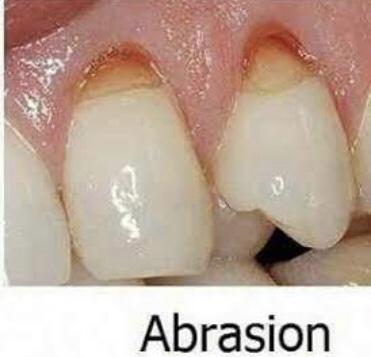
Abrasion is the pathological wearing away of tooth substance through some abnormal mechanical process. Abrasion usually occurs on the facial surface of the crown and the exposed root surfaces of teeth, but under certain circumstances it may be seen elsewhere such as on incisal or on proximal surfaces.

  1. Etiology
    • Abrasivedentifrices—useofabrasivedentifricescanleadto abrasion of the incisal surface.
    • Habitual—Habitualpipesmokermaydevelopabrasion on the incisal edges of lower and upper anterior teeth. In some cases habitual opening of bobby pins may lead to abrasion.
    • Horizontal tooth brushing—horizontal tooth brushing may lead to abrasion of the cervical area of teeth.
    • Occupational—itoccurswhenobjectsandinstrumentare habitually held between the teeth by people during working. Holding nails or pins between teeth e.g. in carpenters, shoemakers or tailors.
    • Dentalflossortoothpicksinjury—improperuseofdental floss and tooth picks.
    • Ritual abrasion—it is mainly seen in Africa.Clinical featuresTooth brush injury
      • Sites—itusuallyoccursonexposedsurfacesofrootsofteeth. It is more commonly seen on left side of right handed persons and vice versa.

• Mechanism—it occurs due to back and forth movement of brush with heavy pressure causing bristles to assume wedge shaped arrangement between crown and root.

• Appearance—in horizontal brushing there is usually a ‘V’ shaped or ‘wedge’ shaped ditch on the root at cementoenamel junction . It is limited coronally by enamel.

• Symptoms—patient develops sensitivity as dentin becomes exposed.

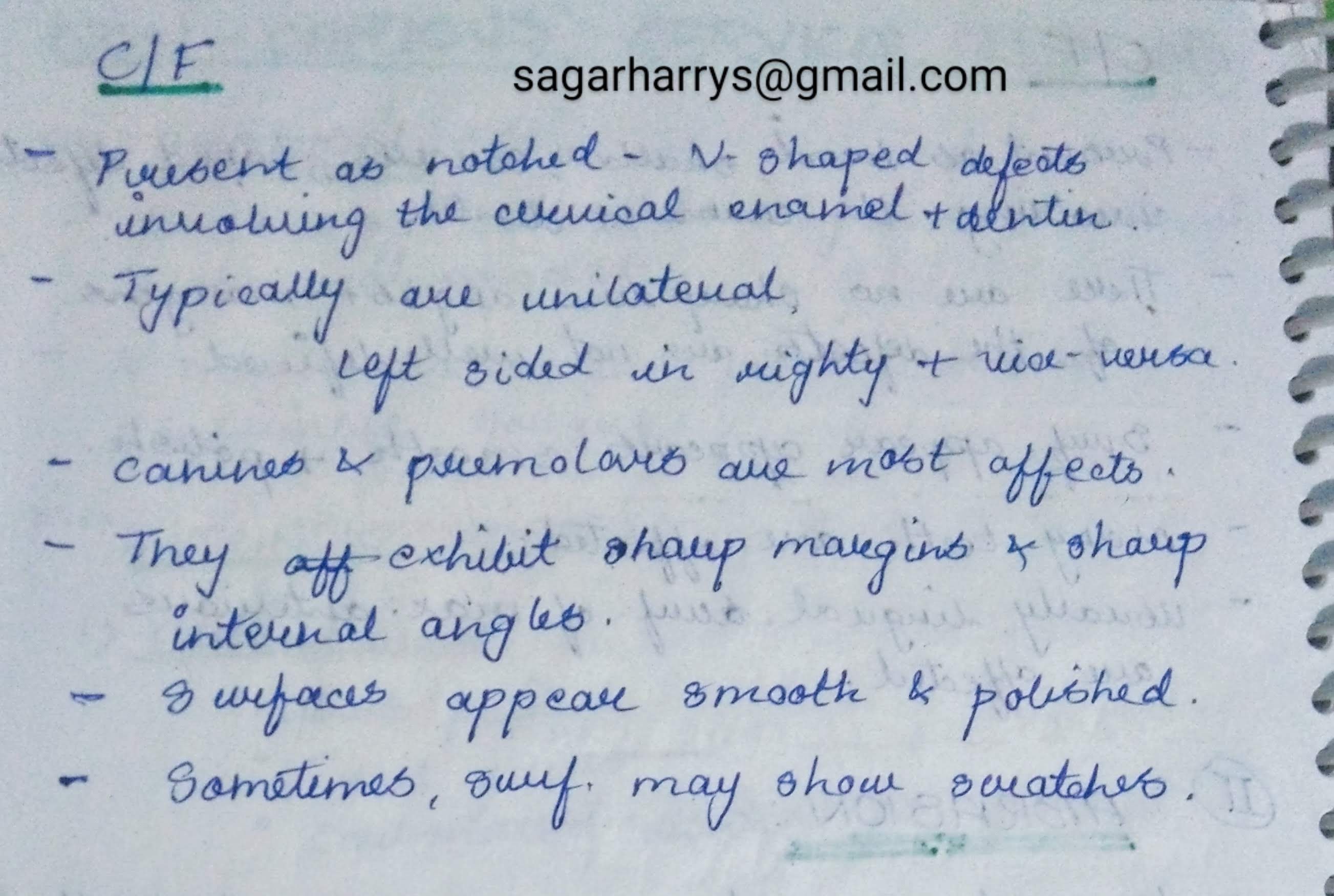
• Signs—the angle formed in the depth of the lesion as well as that of enamel edge is a sharp one. Cervical lesions caused purely by abrasion have sharply defined margins and a smooth, hard surface. The lesion may become more rounded and shallow, if there is an element of erosion present.

• Dentinal features—exposed dentin appears highly polished  Exposure of dentinal tubules and consequent irritation of the odontoblastic processes stimulates secondary dentin formation which is sufficient to protect the pulp from clinical exposure.

Dental floss or tooth pick injury
• Site—Cervical portion of proximal surfaces ,just above the gingival margin, is affected. Grooves on distal surface are deeper than on mesial surface

Radiographic features

Tooth brush injury

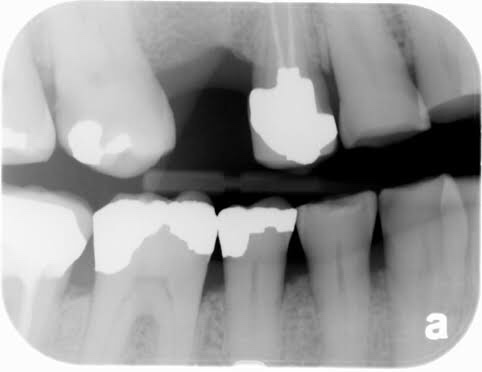
  • Location—radiolucent defect at the cervical level of teeth.
  • Shape—well defined semilunar shape ,with borders of increasing density.
  • Pulp—pulp chamber may be partially or fully sclerosed in severely affected teeth.Dental floss injury
    • Appearance—narrow semilunar grooves in theinterproximal surfaces of teeth near cervical area.
  • Management

• Modified teeth cleaning habits—modification of teeth cleaning habits will be indicated.

• Removal of cause—elimination of causative agent should be carried out.

• Restoration—restoration should be done for esthetics purpose and to prevent further tooth wear.

REFERENCE- ANIL GHOM TEXTBOOK OF ORAL MEDICINE [2nd ed]
ATTRITION

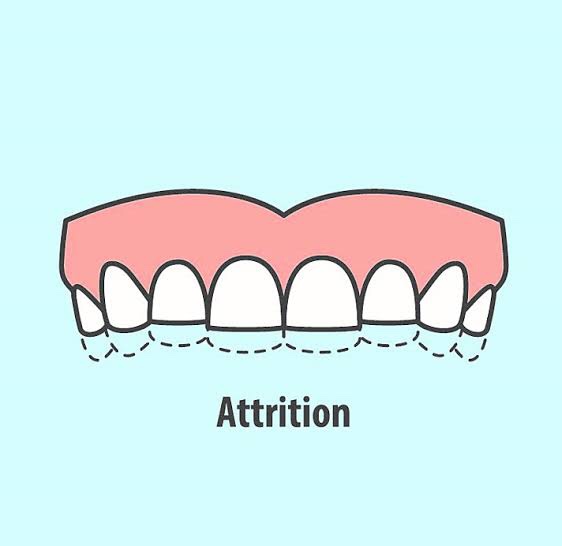
  1. It is the physiologic wearing away of teeth because of tooth- to-tooth contact, as in mastication. It plays an important physiological role as it helps to maintain an advantageous crown-root ratio and gains intercoronal space of 1 cm, which facilitates third molar eruption. Attrition can be considered pathological when it cause functional, esthetics and dental sensitivity problems.

Types

• Physiological attrition—attrition which occurs due to normal aging process, due to mastication.

• Pathological attrition—it occurs due to certain abnor- malities in occlusion, chewing pattern or due to some structural defects in teeth.

Etiological factors for pathological attrition

• Abnormal occlusion
• Developmental—malocclusion and crowning of teeth, may lead to traumatic contact during chewing, which may lead to more tooth wear.
• Acquired—due to extraction of teeth. Extraction causes increased occlusal load on the remaining teeth, as the chewing force for the individual remains constant.

• Premature contact in case of edge-to-edge contact,pathological attrition can also occur.
• Abnormal chewing habits parafunctional chewing habit like bruxism and chronic persistent chewing of coarse and abrasive food or other substances like tobacco.
• Occupation in certain occupations, workers are exposed to an atmosphere of abrasive dust and cannot avoid it getting into mouth.
• Structural defect in defects like amelogenesis imperfecta and dentinogenesis imperfecta, hardness of enamel and dentin is reduced and such teeth become more prone to attrition.

Clinical features

• Sex—men usually exhibit more severe attrition than women due to greater masticatory forces.

• Sites—it may be seen in deciduous as well as permanent dentition. It occurs only on occlusal, incisal and proximal surfaces of teeth. Severe attrition is seldomly seen in primary teeth, as they are not retained for any great period. Palabal cusps of maxillary teeth and buccal cusps of mandibular posterior teeth show most wear.

• Appearance – the first clinical manifestation of attrition is the appearance of small polished facet on a cusp tip or ridge and slight flattening of an incisal edge.

Physiologic attrition

  • Physiological tooth surface loss results in a reduction, in both vertical tooth height and horizontal tooth width .Physiological attrition showing wearing of the occlusal surface of the molar teeth.
  • Contact points—due to slight mobility of teeth in their socket (which is a manifestation of resiliency of periodontal ligament) similar facets occur at contact points.
  • Color of teeth when the dentin gets exposed, it generally becomes discolored i.e. brown in color.
  • Signs—there is gradual reduction in cusp height and consequent flattening of occlusal inclined plane. There is shortening of the length of dental arch, due to reduction in the mesiodistal diameter of teeth. Secondary dentin deposition occurs.

• Pathologicalattrition

Severe tooth loss—in pathological attrition severe tooth loss is seen .

Dentoalveolar compensation—if attrition affecting the occlusal surfaces of teeth has occurred, then reduction in occlusal face height (vertical dimension of occlusion) and increase in the freeway space could be anticipated. This may be further complicated by forward posturing of mandible. It is often observed, however, that despite overall tooth surface loss, the freeway space and the resting facial height appear to remain unaltered primarily because of dentoalveolar compensation. This is important with respect to patient assessment. If restoration of worn teeth is being planned then the extent of dentoalveolar compen- sation would appear to determine the dentist’s strategy; defining the need to carry out measures such as crown lengthening, to ensure the same vertical dimension of occlusion and freeway space.

Radiographic features

• Crown—smoothwearingofincisalandocclusalsurfaces of involved teeth is evident by shortened crown image

• Pulp—sclerosisofpulpchamberandcanalsisseendue to deposition of secondary dentin which narrows the pulp canals.

• Periodontal ligament—widening of periodontal ligament space and hypercementosis.

• Alveolar bone—some loss of alveolar bone.

Management

  • Modifying factors—treatment of patient depends upon degree of wear relative to the age of patient, etiology, symptoms and patient’s desire.
  • Habit breaking appliance—the provision of one of three different sorts of splints could be considered. A soft bite guard can help in breaking a bruxist habit or simply will protect the teeth during the bruxist habit. A localized occlusal interference splint is designed to break the bruxist habit and can be worn easily during the day. A stabilization splint reduces bruxism by providing an ideal occlusion: it also enables the clinician to locate and record centric relation. In case of bruxism, use of night guards may be effective in reducing attrition.
  • Correctivemethod—correctionofmalocclusion,stoppage of tobacco chewing habit and restriction of diet to non coarse food are useful in avoiding attrition.
  • Managementofsensitivityandesthetics—non-cariousloss of tooth tissue may require treatment for sensitivity, esthetics, function and space loss in the vertical dimension.

REFERENCE- ANIL GHOM TEXTBOOK OF ORAL MEDICINE [2nd ed]

Internal Vs. External Resorption

What are internal and external resorption and the causes?

🔅The American Association of Endodontics defines resorption as, “a condition associated with either physiologic or a pathologic process resulting in a loss of dentin, cementum, and/or bone. Vital tissue is necessary for either external or internal resorption to occur.”

🔅By this definition, internal resorption is “a defect of the internal aspect of the root following necrosis of odontoblasts as a result of chronic inflammation and bacterial invasion of the pulp tissue.”

🔅External resorption is “resorption initiated in the periodontium and initially affecting the external surfaces of the tooth—may be further classified as surface, inflammatory, or replacement, or by location as cervical, lateral, or apical; may or may not invade the dental pulpal space.”

Difference between Internal Resorption Vs. External Resorption

Histology:

Clinical Case:

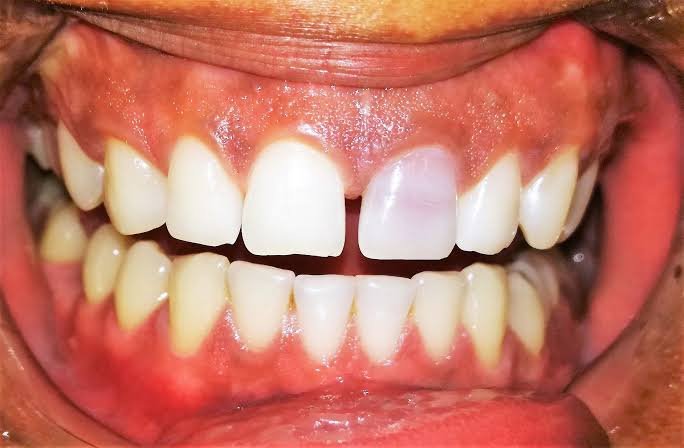
It may present initially as a pink-hued area on the crown of the tooth; the hyperplastic, vascular pulp tissue filling in the resorbed areas. This condition is referred to as a pink tooth of Mummery.
External Inflammatory lesion

Dr. Mehnaz Memon🖊


References:

  1. https://www.byendo-cupertino.com
  2. https://www.dentistryiq.com
  3. Image Source: Google

HYDROGEN PEROXIDE

Written by : Dr. Urusa I Inamdar

It is used as a whitening agent in dentistry . It is available in concentration between 5 and 35% .

It is classified into organic and inorganic .

They are strong oxidizers and can be considered as the products of hydrogen peroxide (H2O2) when hydrogen atoms are substituted with metals or with organic radicals .

Mechanism of action

H2O2 has a low molecular weight and hence can penetrate dentin and release oxygen that breaks down the double bond of inorganic and organic compounds inside the tubule .

Properties

  • Clear , colourless , odorless liquid , stored in lightproof amber bottles .
  • It is unstable and should be kept away from heat .
  • It should be stored in sealed refrigerated containers .
  • It has ischemic effect on skin and mucous membrane which causes burn . It is especially painful if it comes in contact with nail bed or the soft tissue under the fingernail .

About 1-2 ml amount is required for bleaching operation .

Discard the remaining solution , once treatment has been completed .

Hydrogen peroxide concentrations ranging from 3-7.5 % are used for home bleach .

It can be used alone or mixed with sodium perborate into a paste for use in the walking bleach technique .

Reference

  • Grossman’s Endodontic Practice
  • Google.com

INTERNAL RESORPTION

Written by : Dr. Urusa I Inamdar

Definition

Condition associated with either a physiologic or a pathologic process resulting in loss of dentin , cementum or bone .

An idiopathic , slow or fast progressive resorptive process occurring in the dentin of the pulp chamber or in the root canals of the teeth .

Cause

Cause is not known , but such patients have a history of trauma .

Symptoms

In root : it is asymptomatic

In crown : manifested as a reddish area called pink spot . This reddish area represents the granulation tissue showing through the resorbed area of the crown .

Diagnosis

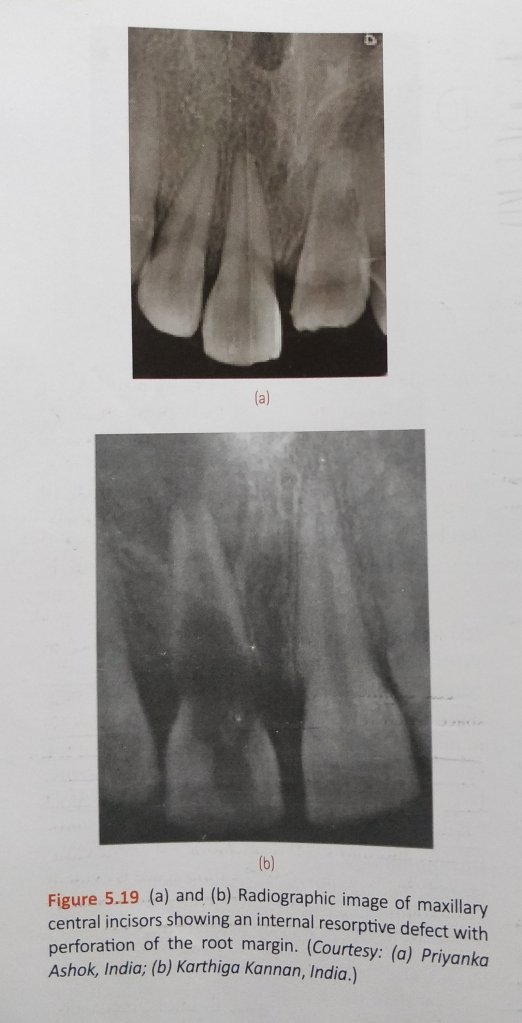
Diagnosed during routine radiographic examination . The appearance of the pink spot occurs late in the resorptive process . The radiograph usually shows a change in the appearance of the wall in the root canal or pulp chamber , with a round or ovoid radiolucent area .

Treatment

Extirpation of the pulp .

Routine endodontic treatment is indicated , but obturation of the defect requires a special effort , preferably with a plasticized gutta – percha method . In many patients , the condition is unobserved as it is painless , until the root is perforated . In such cases , mineral trioxide aggregate (MTA) is recommended to repair the defect . When repair has been completed , the canal with its defect is obturated with plasticized gutta – percha .

Prognosis

The prognosis is best before perforation of the root or crown occurs .

Reference

  • Grossman’s Endodontic Practice (13th edition)
  • Dental notes
  • Google.com

Sandwich Technique

So what is this sandwich technique? Is it associated with the edible sandwiches ?

Easy Corn Sandwich | Dassana's Veg Recipes

No!

In fact it is associated with a technique in dentistry. So it looks something like this . Lets see what,why, and how is it used !

Open-sandwich technique. | Download Scientific Diagram
  • Composite doesn’t bind to the dentin in an adequate manner
  • So during polymerization there maybe a gap created
  • This gap is created if the margin is near the dentin

How can the bonding be improved ?

  • By placing a layer of Glass Ionomer Cement (GIC) between the composite restoration and the dentin.
  • The GIC bonds to dentin by chemical adhesion
  • And resin bonds mechanically to porosities
  • Crazing is seen on the surface of GIC
JaypeeDigital | eBook Reader
GIC between dentin and composite
Effects of etching and adhesive applications on the bond strength ...
Surface micromorphological changes of glass ionomer following ...
crazing on gic

GIC can be etched with phosphoric acid which helps in retention.

37% Phosphoric Acid Gel – Dental Shivam

Indications –

  • In class 2 composite restoration
  • Lesions where one or more margins are in dentin (cervical lesions)
Class II Composites
class 2 composite restoration
Abfraction cervical lesions | Dental, Dental problems, Cervical
cervical lesions

Procedure

Sandwich technique restoration step by step - YouTube
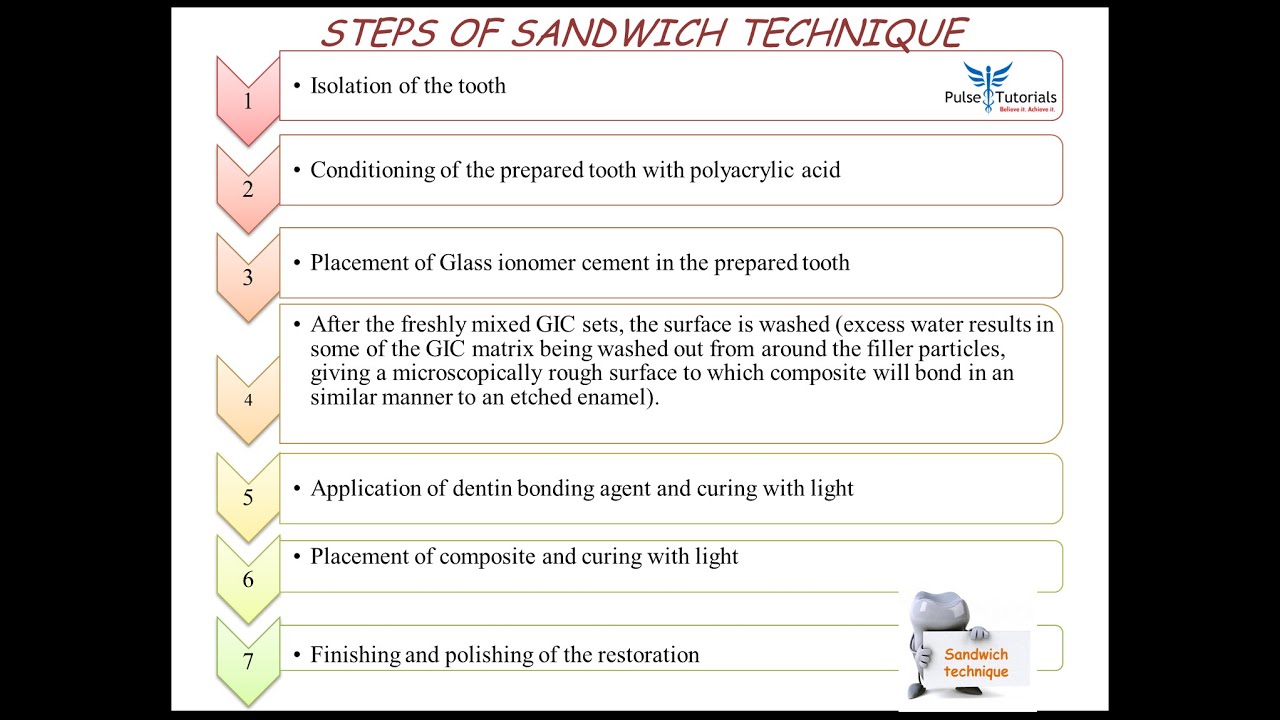
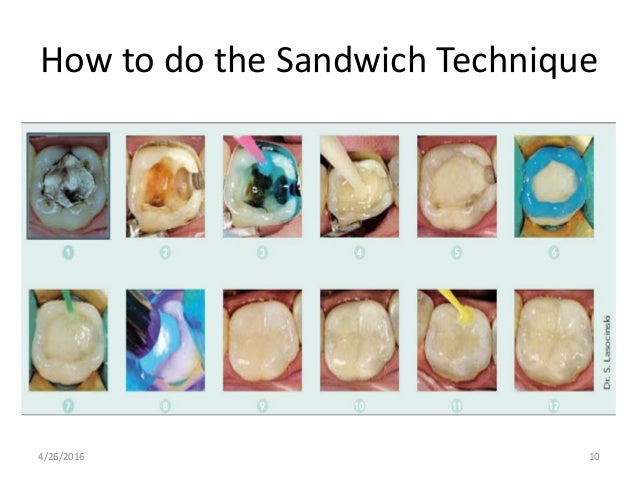
Sandwich technique

source – textbook of dental materials (manapallil), philips, slide share and google images

INGLE’S RADIOGRAPHIC METHOD OF WORKING LENGTH DETERMINATION

Written by : Dr. Urusa I Inamdar

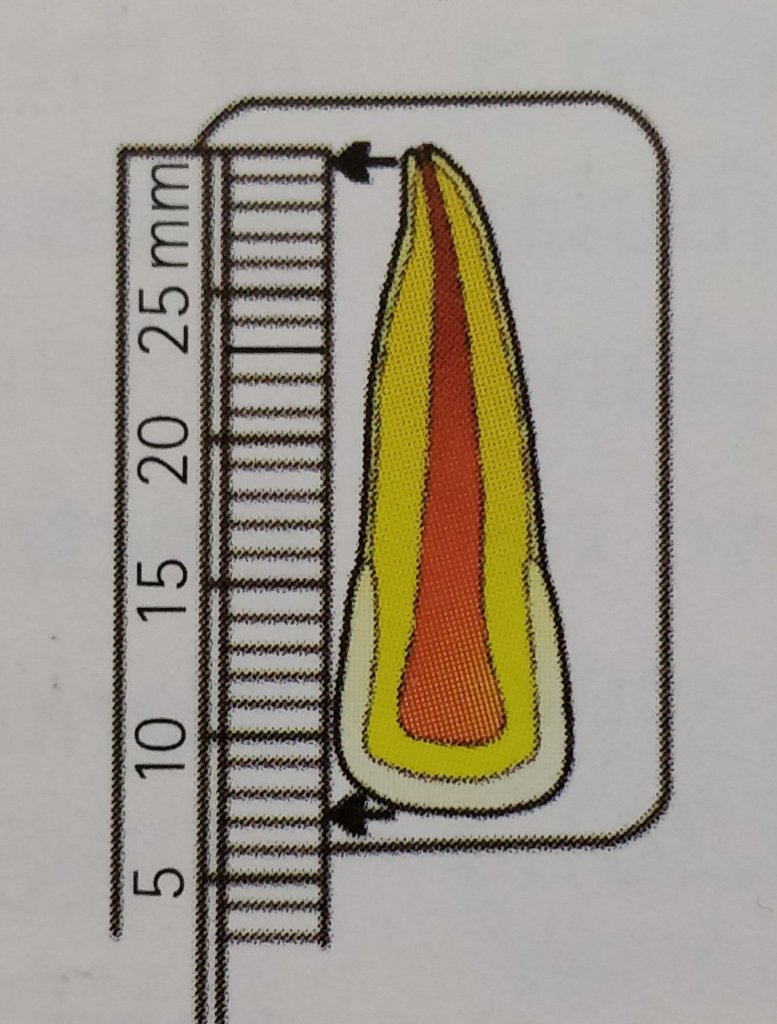
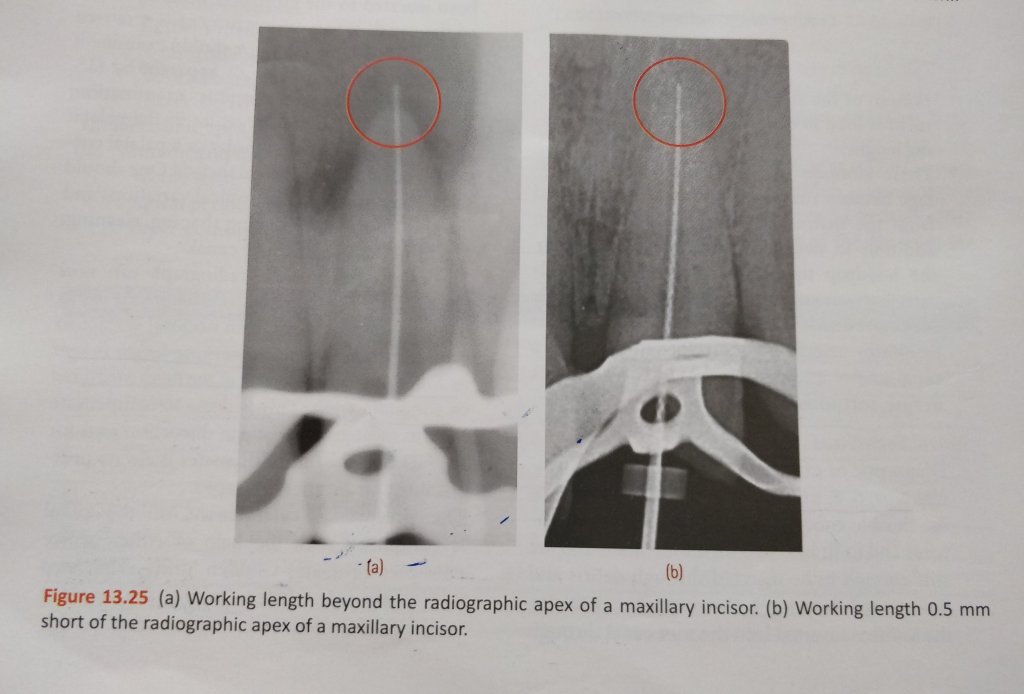
Diagnostic radiograph of tooth used to estimate the working length by measuring the tooth from a stable occlusal reference point till radiographic apex

Subtract atleast 1 mm from this length as minor constriction is present short of the anatomic apex and compensation for radiographic image distortion.

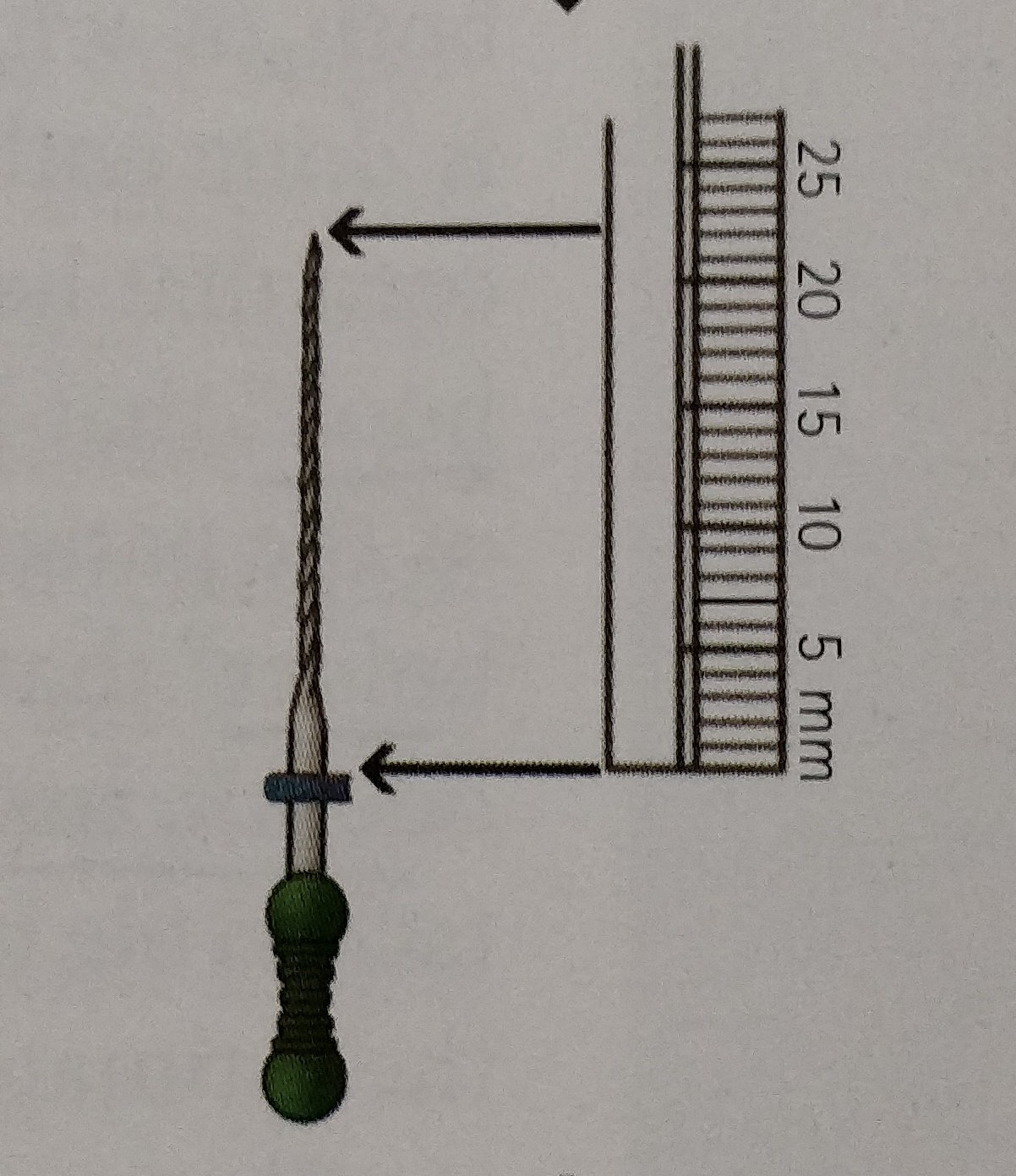
This measurement is transferred to a diagnostic instrument with a silicon stop then placed in the root canal and working length radiograph is taken.

Now measure the difference between the end of the instrument and radiographic apex of the root , on the radiograph.

Tip of the instrument ends 0.5 mm – 1 mm from the radiographic root apex – working length established .

  • Short of the radiographic apex by more than 1.0 mm – then add this value to the earlier estimated length and adjust the stopper on diagnostic instrument accordingly.
  • Beyond the radiographic apex – reduce this value from the earlier estimated length and adjust the stopper on diagnostic instrument.

Retake the working length radiograph .

Weine’s modification:

  • If periapical bone resorption is evident in a radiograph , the working length should be reduced 1.5 mm short of the radiographic apex as the apical constriction would have been destroyed by the resorption .
  • If apical root resorption is seen , the working length is reduced to 2 mm short of the radiographic apex , in such an event , an apical stop is created short of the radiographic apex to prevent overinstrumentation and subsequent overfilling of the root canal .

https://youtu.be/fcKelPcZzds

Reference:

  • Grossman’s Endodontic Practice (13th edition)
  • Dental notes
  • Youtube.com

NON -CARIOUS CERVICAL LESIONS:

TYPES OF NON-CARIOUS CERVICAL LESION
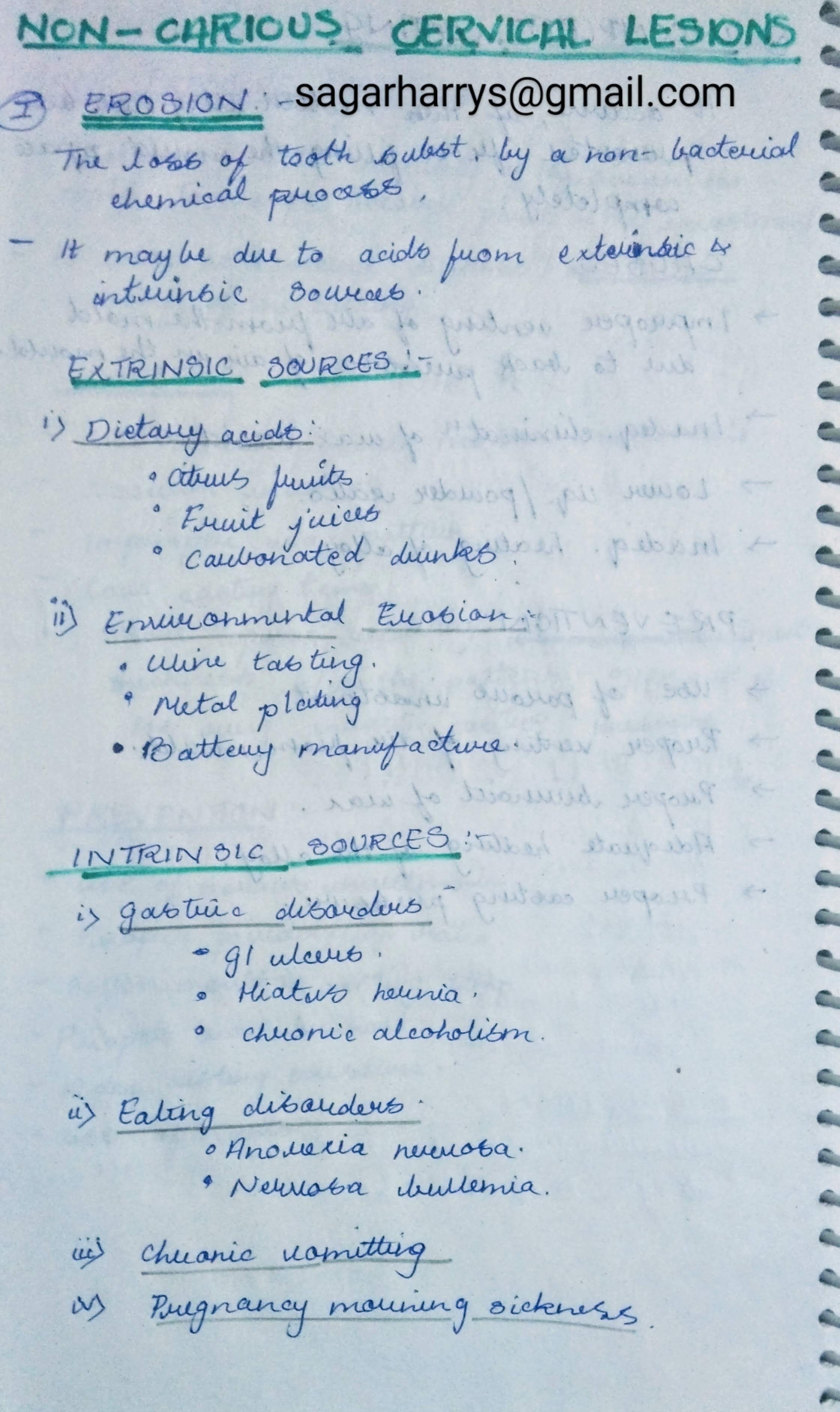
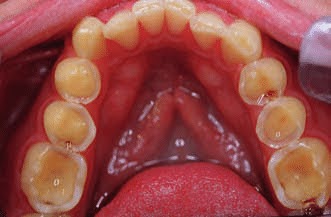
  1. EROSION:

2. ABRASION:

ABRASION

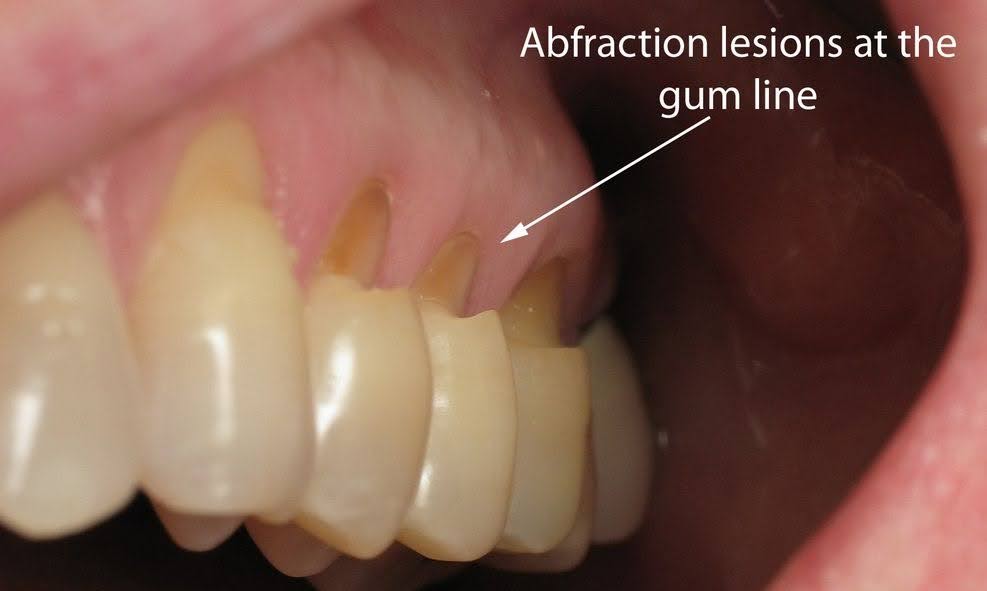
3. ABFRACTION:

ABFRACTION

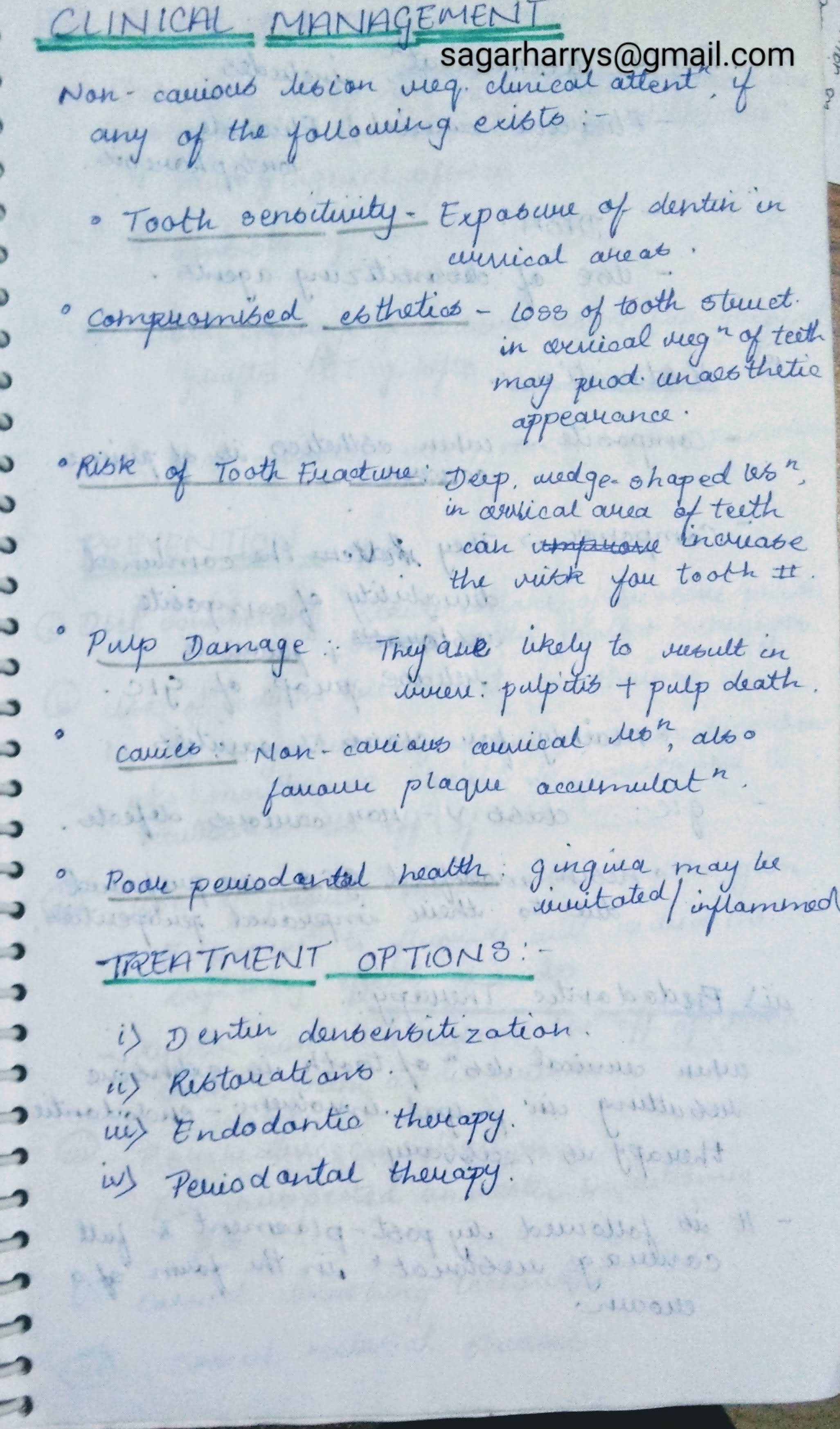
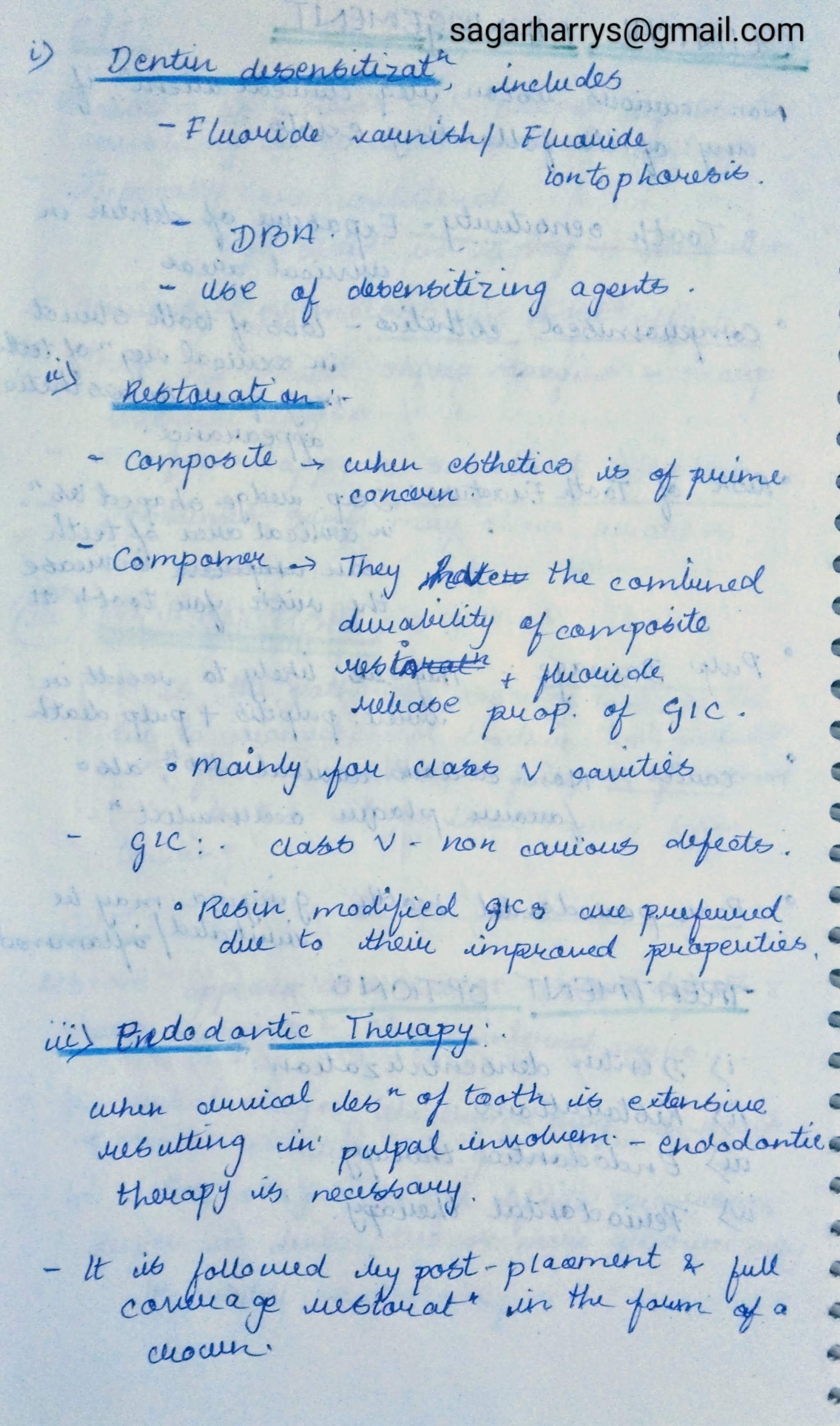
MANAGEMENT:

REFERENCES:

  • Clinical Operative Dentistry & Principles, Ramya Raghu(2nd Edition)
  • pocketdentistry.com
  • ResearchGate.com
  • Dr.Joe NT Nguyens DDS
  • DentalNews.com
  • Youtube.com
  • Healthline.com
  • DentalArcade.com
  • DentaGama.com

LAWS OF ACCESS OPENING

Written by : Dr. Urusa I Inamdar

Krasner and Rankow’s Laws of Access Opening

  • Law of centrality : The floor of the pulp chamber is always located in the center of the tooth at the level of the CEJ .
  • Law of concentricity : The walls of the pulp chamber are always concentric to the external surface of the tooth at the level of the CEJ .
  • Law of the CEJ : The distance from the external surface of the clinical crown to the wall of the pulp chamber is the same throughout the circumference of the tooth at the level of CEJ .
  • Law of symmetry 1 : Except for maxillary molars , the orifices of the canals are equidistant from a line drawn in a mesiodistal direction through the pulp chamber floor .
  • Law of symmetry 2 : Except for maxillary molars , the orifices of the canals lie on a line perpendicular to a line drawn in a mesiodistal direction across the center of the floor of the pulp chamber .
  • Law of color change : The color of the pulp chamber floor is always darker than the walls .
  • Law of orifices location 1 : The orifices of the root canals are always located at the junction of the walls and the floor .
  • Law of orifices location 2 : The orifices of the root canals are located at angles in the floor – wall junction .
  • Law of orifices location 3 : The orifices of the root canals are located at the terminus of the root developmental fusion lines .
Law of Centrality
Law of concentricity
Law of symmetry
Orifice location

References:

  • Dental notes
  • Grossman’s Endodontic Practice (13th edition)
  • Google search

ANATOMY OF PULP CAVITY

Written by : Dr. Urusa I Inamdar

ISTHMUS:

Ribbon shaped or thin connecting structure between two root canals.

Kim et al. have classified the isthmus into following categories:

  • Type I : Faint communication between two canals.
  • Type II : Complete isthmus with a definite connection between two canals.
  • Type III : A complete but very short isthmus between two canals.
  • Type IV : Complete or incomplete isthmus between three or more canals.
  • Type V : Two or three canal openings without visible connections.

Apical Foramen:

In young , incompletely developed teeth , the apical foramen is funnel shaped , with the wider portion extending outward . The mouth of the funnel is filled with periodontal tissue , which is later replaced by dentin and cementum.

As the root develops , the apical foramen becomes narrower .

It is not necessary to shape , clean , or fill root canals to their anatomic apices , but rather to the cementodentinal junction , which usually lies within the canal just short of the apex .

The apical foramen is not always the most constricted portion of the root canal. Constrictions can and do occur before the extremity of the root ks reached. Apical constrictions are found 0.5-1.0 mm away from the root apex.

The apical foramen is not always located in the centre of the root apex . It may exit on the mesial , distal , labial or lingual surface of the root , usually slightly eccentrically.

In few cases , the apical foramen has been found as much as 2-3 mm away from the anatomic apex.

The root canal obturation should end approximately 0.5-1.0 mm short of the anatomic root apex .

Lateral canals and Accessory foramina:

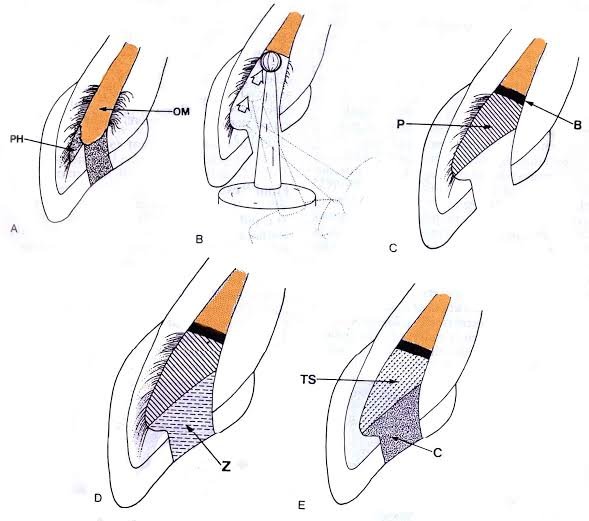
The periodontal vessels curve around the root apex of a developing tooth and often become entrapped in Hertwig’s epithelial root sheath , resulting in the formation of lateral canals and accesory foramina during calcification .This phenomenon frequently occurs in the apical third of the root .

Lateral canals may also occur in the area of bifurcation or trifurcation of multirooted teeth.

With increasing age , the accesory foramina diminish in number because of calcification of their contained soft tissue.

Reference:

  • Dental notes
  • Grossman’s Endodontic Practice