Haemoglobin

By Dr Musaddika Shaikh Dentowesome @drmusaddikashaikh

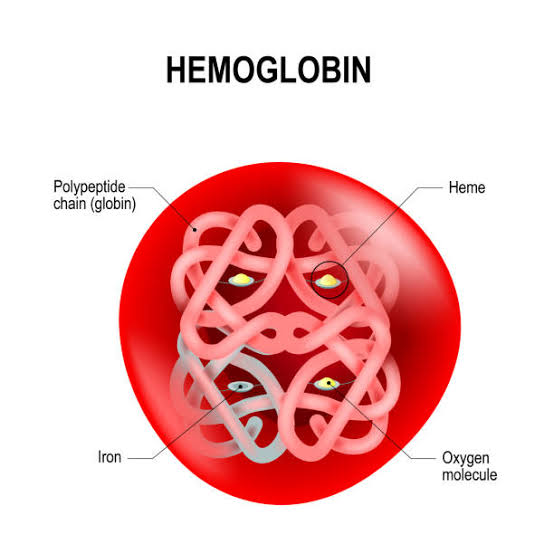
Haemoglobin :- It is protein found in red blood cells that carries oxygen in blood and gives blood red colour
Structure :-
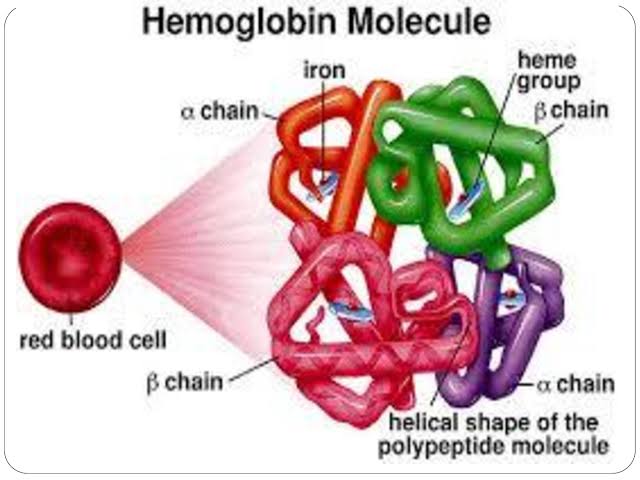
  • Heame is porphin called iron protoporphyrine 9th
  • Iron is ferrous form which combine with oxygen
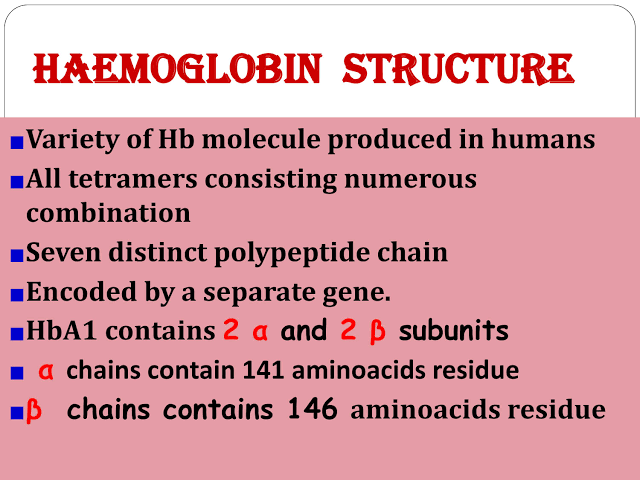
  • Globin :- It is protein 4 polypeptide chain of alpha and beta which contains Mb amino acid each polypeptide attach are heam group
  • Hemoglobin react with oxygen in 0.01 sec
  • Molecular weight of hemoglobin 64,458 g/mol
  • Oxyheamoglobin :- hemoglobin affinity for oxygen by Ph, temperature, concentration
  • Carbaamino-heamoglobin :- carbon dioxide react with heamoglobin to form carbaamino-heamoglobin
  • De-oxegenated heamoglobin :- oxygen removed from heamoglobin
  • Carboxy-heamoglobin :- carba+monooxide reacts with heamoglobin
  • Metheamoglobin :- reduced or oxygenated heamoglobin exposed to drugs is oxidised ferrous to ferric acid metheamoglobin

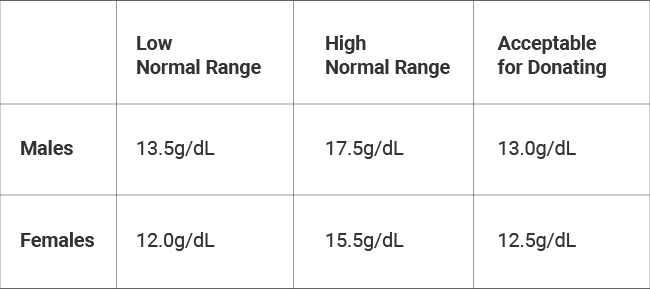
Normal values of heamoglobin :-
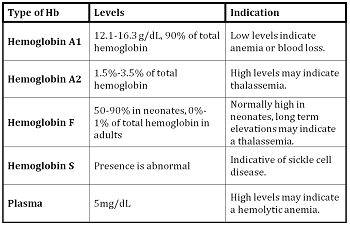
Types :-
Synthesis :-

  • Role of protein :- Low protein reduces heamoglobin
  • Role of minerals :- It helps in formation of heame
  • Role of Cu :- It promotes absorption, mobilization and utilisation of iron
  • Role of cobalt :- It enhances absorption in GI tract
  • Role of vitamin :- Vit C,Vit B12,folic acid helps in synthesis of nucleic acid

Functions :-

  1. Transport of oxygen from lungs to tissues
  2. Transport of carbon dioxide from tissues to lungs
  3. Act as acid balance buffer
  4. It gives red colour to blood
  5. Genetic resistance to malaria etc
  6. Source of physiological active catabolites

Reference :- Book Human physiology for bds A.K Jain Google website study.com,learnpick.in, redcrossblood.org
Coagulation of Blood

By Dr Musaddika Shaikh Dentowesome @drmusaddikashaikh

Defination :-

Arrest or prevention of bleeding by physiological process is called hemostasis

Factors :-

  • F1. Fibrinogen 
  • F2. Prothombin 
  • F3. Thromboplastin 
  • F4. Calcium 
  • F5. Labile  
  • F6. Not known 
  • F7. Stable 
  • F8. Antihaemophillic 
  • F9. Christmas 
  • F10. Stuart 
  • F11. Plasma thrombin antecedent 
  • F12. Hegman 
  • F13. Fibrin stabilizing

Mechanism :-

Injury vessel walls – Formation of clot – Seal off damage blood vessel – Prevent blood loss

Series of event :-

Constriction of blood of blood vessel – Temporary haemostatic plug by platelet – haemostasis

Factors responsible for coagulation :-

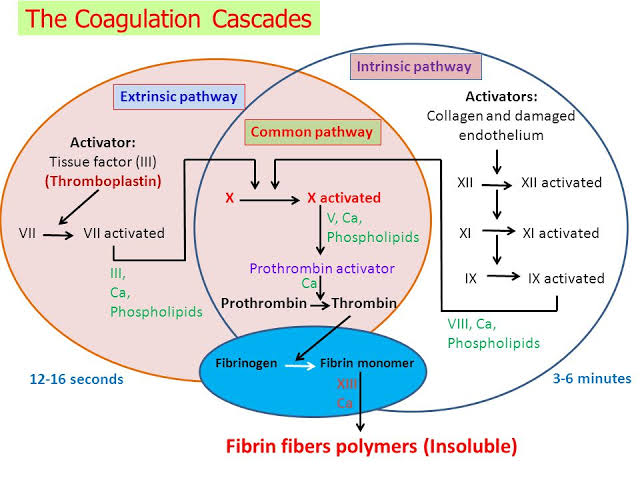
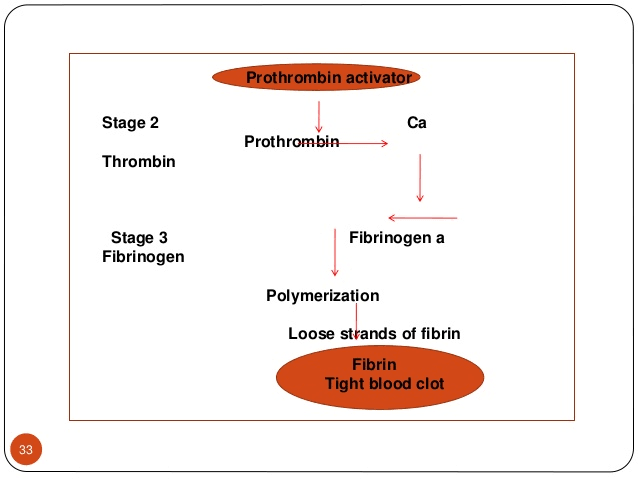
  • Fibrin formation :- by soluble plasma fibrinogen due to f3,f4,f6
  • Thrombin formation :- inactive prothrombin into thrombin by prothrombin activator
  • Prothrombin activator :- by extrinsic and intrinsic factor
  • Clot retraction :- conversion of prothrombin to thrombin within 15-30min
  • Role of Calcium :- it act as catalyst in cascade reaction

Why does not blood clot in circulation? Smoothness of endothelial line prevents adhesion. Negatively charged particles repells cloting factor. Natural anticoagulant eg :- heparin in circulation

Reference :- Book Human physiology for bds A.K Jain Google website slide player

Urea Cycle

By Dr Musaddika Shaikh Dentowesome @drmusaddikashaikh

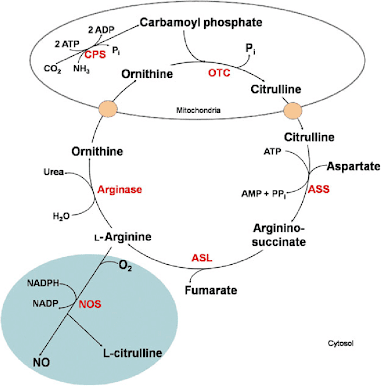
Urea cycle :-

  • It is end product of protein metabolism.
  • It is also known as urea Cycle or ornithine cycle or Krebs hensleit cycle.
  • Nitrogen of amino acids get converted to ammonia which is toxic to body.
  • Ammonia gets converted into urea and detoxified.
  • Urea is mainly synthesized in liver and transported to kidney for excreation.
  • Urea synthesis in 5steps cyclic process with 5 distinct enzymes.
  • First two enzymes – mitochondria and Rest – cytosol

Formation of Carbamoyl Phosphate :- Carbamoyl Phosphate synthase 1st present in mitochondria catalyses condensation of NH ions with CO2 to form carbamoyl phosphate. This step consumes 2ATP and is irreversible.

Formation of citrulline :- It is synthesized from carbamoyl phosphate synthetase 1st and Ornithine by transcarbomyle. Ornithine is regenerated and used in urea cycle.

Formation of Arginosuccinate :- It condenses citrulline with aspartate to produce Arginosuccinate. 2amino group of urea is involved in reaction. This step requires ATP which is cleaved to AMP.

Formation of Argentine :- Arginosuccinate breakes to form argenine and fumarate.

Formation of Urea :- Arginase is final enzyme which cleaves argenine to yeild urea and orthinine. Orthinine enters mitochondria for its reuse in urea cycle.

Reaction :-NH4+CO2+ASPARTATE+3ATP = UREA+FUMARATE+2ADP+2PIi+AMP+Ppi

Reference :- Biochemistry book U. Satyanarayan, U Chakrapani. Google website

Glycolysis

By Dr Musaddika Shaikh Dentowesome @drmusaddikashaikh

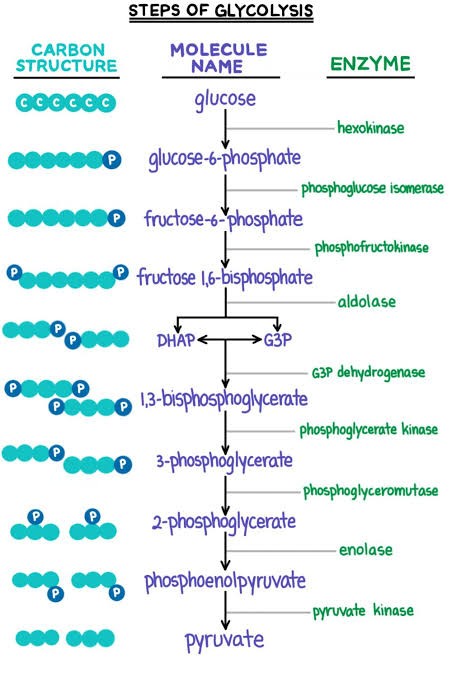
Glycolysis :- It is sequence of reaction converting glucose into lactose and pyruvate with the production of ATP

  • It is also know as EMBDEN MEYENHOFF Pathway.
  • It takes place in cell of body.
  • The enzyme are present in cytosomal fraction.
  • It occurs in presence of oxygen (aerobic) and absence of oxygen (anaerobic).
  • Lactate is end product of anaerobic pathway.
  • Pyruvate is end product of aerobic pathway forming CO2 and H2O.
  • It is major pathway for synthesis of ATP.
  • It is essential for brain.

Reaction :- Glucose+2ADP+2Pi = 2Lactase+2APP

Significance :-

  • It is formed by active skeletal muscle major precursor for gluconeogenesis
  • Lactate is dead end in glycolysis
  • It is carried from skeletal muscle through blood and handed over to liver , where it is oxidized to Pyruvate

Reference :- Books Human Physiology for bds A.K Jain Google website expii

Plasma Proteins

By Dr Musaddika Shaikh Dentowesome @drmusaddikashaikh

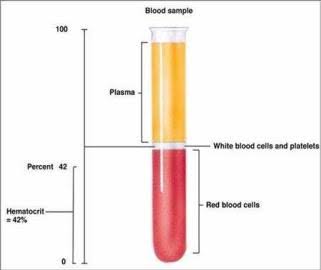
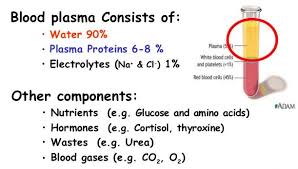
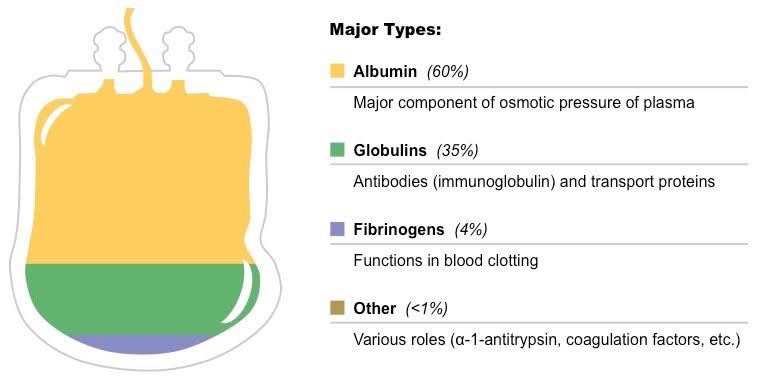
Plasma proteins :- They are also know as blood proteins. They are proteins which are present in blood plasma

Constituents :-

Origin :-

  1. Embryo from Mesenchymal cell
  2. Adult albumin from liver
  3. Globulin from tissue, macrophages,plasma cells, lymphocytes

Types :-

  • Albumin :- 1.control collodial osmotic pressure 2.transport anion,cation,drugs,hormones,enzymes,billirubin
  • Globulin :- regulate iron absorption and transport
  • Fibrinogen :- helps in clotting
  • Hepatoglobin :- prevent loss of iron in urinary excretion

Variation in plasma concentration :- Decrease – haemorrhage causes loss of plasma protein. Fibrinogen, albumin,globulin are regenerated by restoration effect in few days. Decrease of albumin causes during pregnancy,chronic liver disease, malnutrition,fasting, malabsorption,burn,nephrosis. Increase – loss due to burn or dehydration

Functions :-

  • Helps in coagulation of blood
  • Helps in maintaining colloidal osmotic pressure by urea,Na+,glucose
  • Helps in maintaining Hydrostatic Pressure across cavity wall
  • Helps in maintaining viscosity of blood
  • Helps in Hypoproteinemia
  • Helps in immune function

Reference :- Book Human physiology for bds A.K Jain Google website studyblue.com, Philadelphia.edu.jo