In orthodontics, one of the greatest clinical advantages you can develop is predictability. The ability to anticipate how a patient will respond to treatment—especially functional appliance therapy—can transform your treatment plan, appliance choice, and patient counseling. Yet many students focus on memorizing appliance designs while overlooking the cephalometric predictors that actually determine whether treatment will succeed.
One of the most valuable—but often underemphasized—predictive tools lies in understanding mandibular morphology and growth potential, particularly concepts such as the Stutzman angle and the Co–Go–Me angle.
The Landmark Study That Shifted Prognostic Thinking
A pivotal investigation by Lorenzo Franchi and Tiziano Baccetti evaluated pretreatment cephalometric predictors of mandibular growth response in Class II patients treated during peak pubertal growth.
They analyzed 51 patients who underwent functional therapy with Twin Block or Herbst appliances at CS3 (peak growth stage). Importantly, their outcome measure was actual mandibular growth increase, not merely occlusal correction—making the findings especially clinically meaningful.
The Co–Go–Me Angle: A Powerful Prognostic Indicator
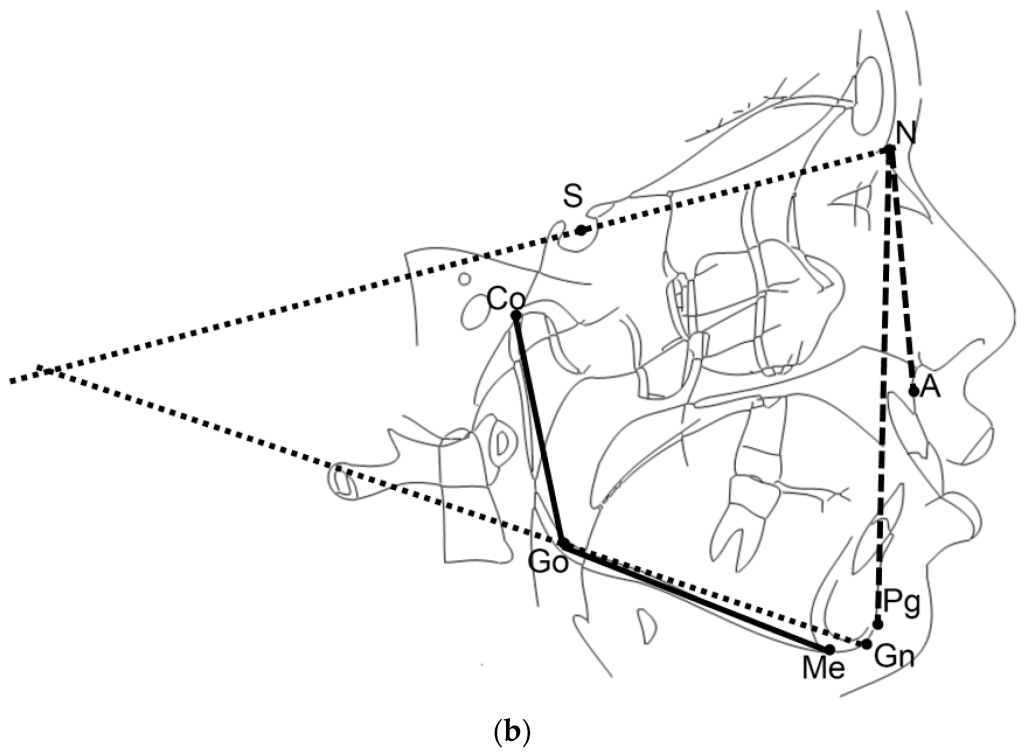
The mandibular angle Co–Go–Me (condylion–gonion–menton) has emerged as a highly practical predictor of treatment response.
- < 125–125.5° → Favorable prognosis
- > 125.5° → Poor prognosis
Interpretation Table
| Value | Prognosis | Clinical Meaning |
|---|---|---|
| < 125.5° | Favorable | Strong mandibular growth potential |
| > 125.5° | Unfavorable | Limited skeletal response expected |
Patients with smaller Co–Go–Me angles typically demonstrate greater mandibular growth during functional appliance therapy.
Additional Cephalometric Features That Predict Success
A strong skeletal response is more likely when the patient also presents with:
- Low mandibular plane angle (hypodivergent pattern)
- Low basal plane angle
- High Jarabak ratio (greater posterior vs anterior facial height)
Together, these features indicate a horizontal growth pattern, which is biologically more responsive to mandibular advancement therapy.
Viva one-liner:
Co–Go–Me < 125° with low MP angle, low basal plane angle, and high Jarabak ratio indicates good prognosis for functional appliance therapy in Class II patients.
Memory Hook
Low angle = Grower → Treat confidently with functional appliance
The Stutzman Angle: Direction Matters as Much as Amount
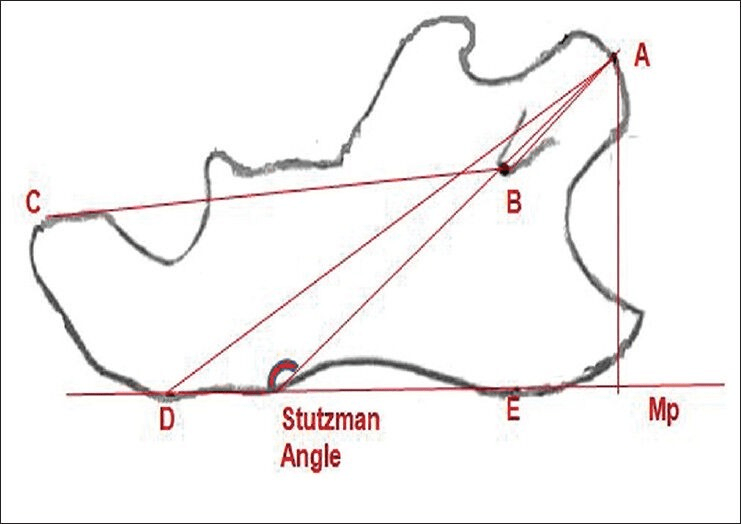
While Co–Go–Me predicts how much growth may occur, the Stutzman angle provides insight into how the mandible grows.
Definition:
The Stutzman angle is formed between:
- the condylar process axis (line from the most posterosuperior condylar point to the midpoint of the mandibular foramen), and
- the mandibular plane
Clinical Significance
This angle reflects directional growth and biologic response, not just magnitude. It is especially useful for monitoring treatment progress over time.
| Change | Meaning | Clinical Interpretation |
|---|---|---|
| Increase (Opening) | Condylar axis elongates/rotates | Active growth or forward positioning |
| No change | Minimal structural change | Limited skeletal response |
| Decrease (Closing) | Remodeling | Stabilization after advancement |
Clinical rule:
Opening = growth or advancement
Closing = remodeling or stabilization
Why These Predictors Matter
Understanding these angles allows clinicians to move beyond trial-and-error treatment. Instead of hoping a functional appliance will work, you can predict response before treatment begins, improving:
- Case selection
- Treatment timing
- Appliance choice
- Patient counseling
- Clinical confidence
In modern orthodontics, success isn’t just about mechanics—it’s about biologic forecasting. And mastering predictors like the Co–Go–Me and Stutzman angles gives you that edge.

 Dentowesome