Managing skeletal anterior open bite (AOB) is one of the trickiest problems you’ll see in clinic. Decisions about which teeth to extract — or whether to extract at all — can change the vertical facial pattern, molar position, and ultimately whether the mandible rotates closed (helpful) or stays/re-rotates open (problematic). Understanding how extraction pattern, tooth movement, and growth stage interact helps you plan smarter treatments and set realistic expectations.
The study in one line
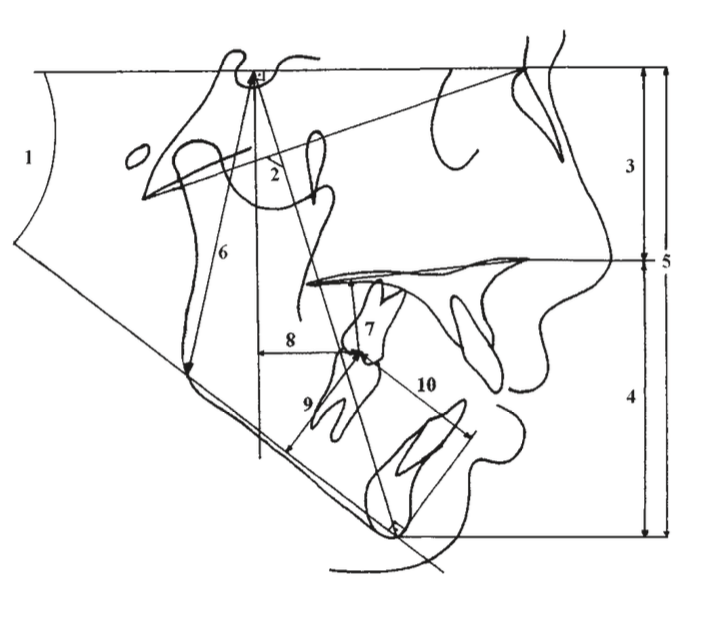
A prospective cephalometric study compared vertical/rotational changes in AOB patients treated with three extraction patterns: first premolars (E4), second premolars (E5), and first molars (E6) — and found that extraction choice (plus how posterior teeth move) influenced mandibular rotation.
1. Extraction Choice & Mandibular Rotation
| Extraction Pattern | Skeletal Open Bite Involvement | Effect on Mandibular Rotation |
|---|---|---|
| 1st Premolars (E4) | Anterior teeth only | No significant rotation. |
| 2nd Premolars (E5) | Extends to posterior teeth | Closing rotation |
| 1st Molars (E6) | Extends to posterior teeth | Greatest closing rotation |
The logic behind those findings comes down to three biomechanical factors:
- Where the extraction space is (anterior vs. posterior in the arch)
- How molars move to close that space (translation vs. extrusion)
- How that movement interacts with mandibular rotation mechanics
2. Posterior Tooth Movement & Extrusion
- E4: Greatest posterior tooth extrusion → prevents mandibular rotation.
- The more teeth you move forward, the harder it is to prevent some extrusion of molars during protraction (especially without TADs or intrusion mechanics).
- E5: Limited posterior extrusion → rotation occurs.
- This shorter movement path makes vertical control easier — fewer teeth to drag along, less tendency for extrusion.
- Reduced extrusion allows the posterior occlusal contacts to move out of the “palatomandibular wedge” and encourages mandibular closing rotation (SN–GoGn, SGn–NBa decrease).
- E6: Large forward movement of molars with minimal extrusion → maximum rotation.
- Posterior occlusal “block” is eliminated quickly, and molars protract mostly horizontally rather than extruding.
- With posterior teeth moving forward and out of the wedge, the mandible is free to rotate up and forward the most.
3. Cephalometric Change Patterns
| Variable | E4 | E5 | E6 |
|---|---|---|---|
| SN–GoGn | ↔ (no change) | ↓ | ↓↓ (largest decrease) |
| SGn–NBa | ↔ | ↑ | ↑↑ |
| ANS–Me / Na–Me | ↑↑ (largest increase) | ↑ | ↑ (smallest) |
| Upper Molar–Palatal Plane | ↑↑ | ↑ | ↑ |
| Lower Molar–Mand. Plane | ↑↑ (largest) | ↑ | ↑ |
4. Clinical Tips
- For AOB limited to anterior teeth: First premolar extraction may not help rotation—consider vertical control strategies.
- Use gable bends, TADs for anchorage/vertical control, intrusion mechanics if needed.
- Avoid mechanics or auxiliaries that encourage molar extrusion during space closure.
- For AOB involving posterior teeth: Second premolar or first molar extraction preferred to facilitate mandibular closing rotation.
- Minimize posterior tooth extrusion during protraction to enhance rotation.
- Treat after peak pubertal growth spurt – less natural extrusion tendency — greater chance of controlled molar protraction and closing rotation.
5. Pearls for exams & case presentations
When presenting a case, include: vertical pattern, extent of AOB, growth indicators (hand–wrist/CS stage), extraction rationale, and how you’ll control vertical molar movement.
Don’t equate “extraction = guaranteed closing rotation.” The pattern of tooth movement (extrusion vs. translation) and growth stage are decisive.
Download the paper:
Spotify Episode Link: https://creators.spotify.com/pod/profile/dr-anisha-valli/episodes/Vertical-changes-following-orthodontic-extraction-treatment-in-skeletal-open-bite-subjects-e36qgc5

 Dentowesome