Rapid Maxillary Expansion (RME) is a time-tested solution for correcting maxillary constriction, improving arch length, and resolving posterior crossbites. But while the skeletal and dental benefits are well known, there’s an equally important consideration: its impact on the supporting alveolar bone.
The forces generated during RME are substantial. They not only separate the midpalatal suture but also transmit stress to teeth and their supporting tissues.
Consequences may include:
- Buccal crown tipping
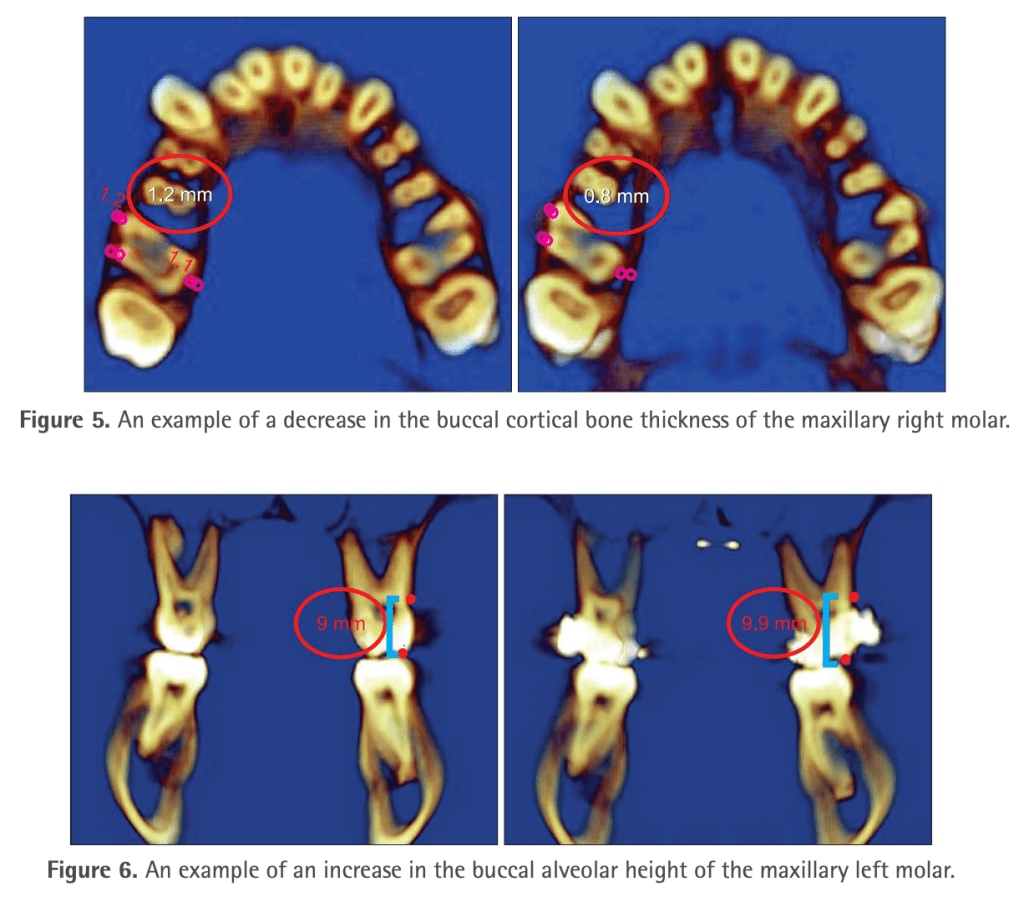
- Crestal bone loss
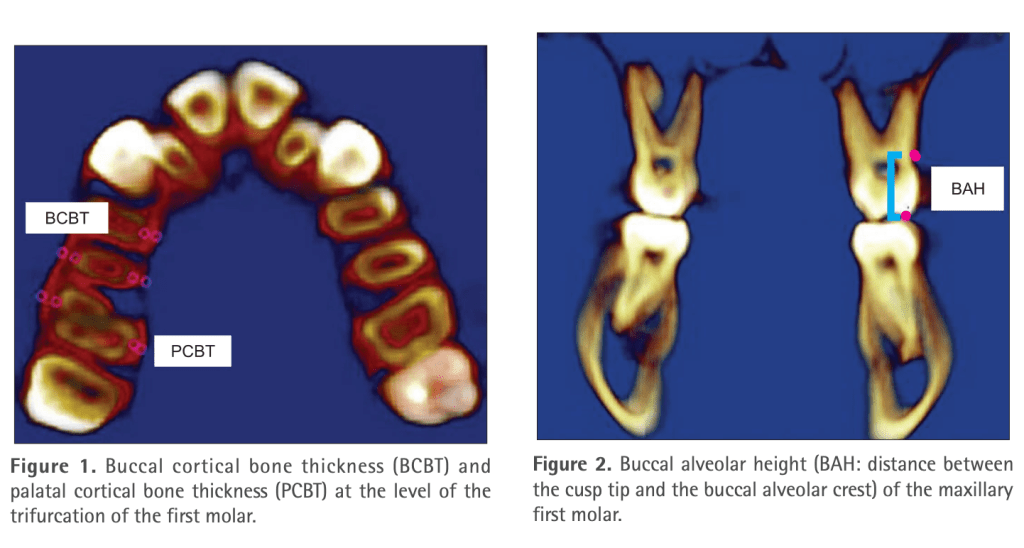
- Changes in buccal and palatal cortical bone thickness
- Development of dehiscence and fenestrations
Understanding these risks allows us to tailor treatment, improve patient outcomes, and safeguard periodontal health.
Appliance & Protocol
- Type: Hyrax-type tooth-borne expander
- Activation: 2 turns/day until palatal cusps of maxillary posterior teeth contact buccal cusps of mandibular teeth
- Retention: 3 months with expander in situ → replaced with transpalatal arch for another 3 months
Key CBCT Findings
| Parameter | Immediate Post-RME | After 6-Month Retention |
|---|---|---|
| Buccal Cortical Bone Thickness (BCBT) | Significant decrease in canines, premolars, and especially first molars | Continued decrease in most teeth |
| Palatal Cortical Bone Thickness (PCBT) | Slight increase (due to buccal tipping) | Decrease toward baseline |
| Buccal Alveolar Height (BAH) | Significant reduction (crestal bone loss) | No further change |
| Dehiscence | Increased incidence post-RME (esp. buccal surfaces of 1st premolars & molars, canines) | Further increase in some teeth |
| Fenestration | Slight decrease post-RME | Minimal further change |


Red Flags During RME
- Sudden gingival recession on anchor teeth
- Mobility in first molars/premolars
- Soft tissue inflammation unresponsive to hygiene measures
- Persistent discomfort or occlusal changes

Tips to Minimize Bone Loss
- Avoid over-activation (follow 0.25 mm × 2/day protocol)
- Consider tissue-borne or hybrid expanders in high-risk cases
- Maintain optimal oral hygiene (chlorhexidine rinse during activation phase)
- Use minimally invasive retention appliances post-expansion
Reference:
Baysal A, Uysal T, Veli I, et al. Evaluation of alveolar bone loss following rapid maxillary expansion using cone-beam computed tomography. Korean J Orthod 2013;43(2):83–9
Spotify Episode Link:
https://creators.spotify.com/pod/profile/dr-anisha-valli/episodes/Evaluation-of-alveolar-bone-loss-following-rapid-maxillary-expansion-using-cone-beam-computed-tomography-e36n10v
Youtube Video Link:
https://youtu.be/jhNngR5s-1I?si=MqOZ4slL22G1-EDu

 Dentowesome