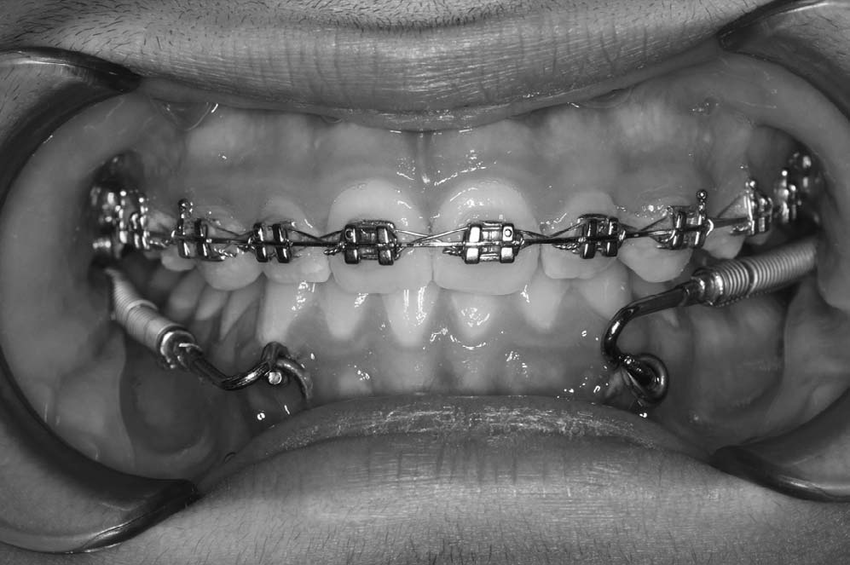
Hey there, future smile designers! 👩⚕️👨⚕️
Let’s take a dive into something that keeps many orthodontists up at night (besides coffee and ceph tracings): Class II malocclusion—aka the “Oops, my mandible missed the memo to grow” situation. 😅
😬 What’s Class II Anyway?
Imagine your upper jaw (Maxilla the Diva 💁♀️) is strutting too far forward, while the lower jaw (Manny the Mandible 😶) is chilling way too far back. Not cute. That’s Class II malocclusion, and it happens in about 24% of orthodontic patients. That’s right—almost a quarter of your future clientele is walking around with a misaligned overbite!
🎯 The Game Plan: Grow that Jaw, Baby!
When the patient is still in their growth spurt era (cue dramatic puberty montage), we can:
- Stimulate the mandible to catch up ⏩
- Inhibit maxillary growth to slow the diva down 🛑
- Or heck—do both like an orthodontic multitasker! 🙌
🤖 Enter: Fixed Functional Appliances (FFAs)
Now these appliances are like your strict tuition master. They don’t rely on patient mood, sugar levels, or whether the moon is in retrograde. They push the jaw forward 24/7. No break. No excuses. Not even during your cousin’s wedding in Madurai.
✅ The Good:
- Works full time, even when the patient is playing PUBG.
- No compliance issue, because we all know teenage boys only remember cricket scores, not elastics. 🙄
❌ The Problem:
These devices sometimes push the lower front teeth forward like an autorickshaw in peak traffic 🚖💨—anchorage loss, da! Which means:
- Less skeletal correction
- More chance of relapse (like that one ex who keeps coming back…even after you blocked them) 😑
🔩 TADs to the Rescue!
Temporary Anchorage Devices (TADs) are like your elder sister who holds the line when relatives start asking about your marks. Strong. Silent. Supportive. 💪
But for serious cases, we need the big guns—miniplates. Surgical anchors that go into the bone. Yes pa, real screws in real bones. 🪛🦴
🦷 Enter: Forsus Fatigue Resistant Device (FRD)
This one is like the Rajinikanth of functional appliances. No-nonsense. Always working. Introduced in 2001, this hybrid hero pushes the mandible forward while gently whispering to the maxilla, “Slow down, akka!”
The latest version? Forsus FRD EZ2 – sounds like something from an engineering boy’s final-year project, no? 😄
It attaches from maxillary molar to mandibular archwire and applies forces that say:
- “Mandible, get up and move!”
- “Maxilla, sit down and behave.”
All day, all night. No complaints. Just action. 💥
🔬 So What Did This Turkish Study Do?
Our fellow dental researchers in Turkey (no, not the country you eat during Christmas, pa—the actual country 🇹🇷) asked:
“Which is better—conventional Forsus FRD or Forsus FRD with miniplate anchorage?”
They wanted to see how each affects:
- 🦴 Skeletal changes
- 🦷 Tooth movement
- 👃 Soft tissue profile
So here’s how the groups panned out:
- MA-Forsus Group (Miniplate Anchored):
15 bravehearts (2 girls + 13 boys) said, “Surgery? Bring it on!”
They were fitted with Forsus FRD EZ2 + Miniplates for approx 9.4 months. - C-Forsus Group (Conventional):
15 polite refusals (8 girls + 7 boys) said “No knife, please!”
Treated with standard Forsus FRD EZ2 for approx 9.46 months.
All patients got 0.018″ Roth brackets. But like filter coffee, how you serve it makes all the difference ☕👇
- MA-Forsus: Only upper arch teeth got bonded (minimalist vibes)
- C-Forsus: All maxillary and mandibular teeth bonded, second molars too (go big or go home)
For C-Forsus kids:
- Maxillary molars got the headgear tubes
- Mandibular archwire joined the fun between canine & premolar
(Simple setup, but no drama-free guarantee)
For MA-Forsus champs:
These kids got a full VIP treatment, surgical-style 🏥💪
🪛 Miniplate Insertion:
- Under local anesthesia (brave heroes, truly)
- A 10mm horizontal incision ~5mm above the gum line
- Mucoperiosteal flaps lifted (like dosa batter, gently and with care)
- Two miniplates placed with:
- 7mm screws at the top
- 9mm screws at the bottom
- 1.5–2mm space between plate and mucosa (no one wants sore spots, okay?)
Sutures out on day 7, and boom—ready for action! 💥

Then, Forsus FRDs were attached like this:
- Upper part: maxillary molar tubes
- Lower part: miniplate long arms (anchorage of the gods, I tell you!) 🙏
📸 Records, Because Pics or It Didn’t Happen
A total of 90 lateral cephs were taken at 3 stages:
- 🕰️ T0 – Before treatment
- 📈 T1 – After leveling
- 🎯 T2 – After Forsus phase
Each ceph was analysed for 17 landmarks and 16 measurements (7 angular + 9 linear) using Dolphin Imaging 🐬💻
(Because nothing says science like measuring bones with a software named after a sea mammal!)
RESULTS
| Aspect | Conventional Forsus (C-Forsus) | Miniplate-Anchored Forsus (MA-Forsus) | Comments |
|---|---|---|---|
| Maxillary Growth (SNA angle) | Significant decrease (maxilla growth restricted) | Significant decrease (same as conventional) | Both act like headgear — saying “Hey maxilla, don’t go forward!” |
| Effective Maxillary Length (Co-A) | Significant increase | Significant increase | Maxilla tries to grow a bit anyway — biology is tricky! |
| Mandibular Growth (SNB & Co-Gn) | Increase (~2.5 mm growth) | Greater increase (~3.69 mm growth) | Miniplate gives better anchorage — mandible grows more confidently, like a proud hero flexing muscles! |
| Mandibular Rotation (SN/GoGn angle) | No significant change | Significant posterior rotation | MA-Forsus pushes mandible down and back! |
| Face Height (Anterior & Posterior) | Significant increase | Significant increase | Face grows taller as mandible adjusts |
| Maxillary Incisor Position | Retrusion (moved backward) | Retrusion | Both cause upper front teeth to move backward — no more “bird beak” smile! |
| Mandibular Incisor Position | Proclination (tipped forward) | Retrusion (moved backward) | MA-Forsus stops unwanted forward flaring — very good news for patients! |
| Upper Lip Position | Retrusion (moves backward) | Retrusion | Upper lip follows upper incisors. |
| Lower Lip Position | Protrusion (moves forward) | No significant change | Lower lip behaves depending on incisor movement — with miniplate, it stays chill like a calm pond. |
| Side Effects / Complications | Lower incisor flaring, limited skeletal correction | Reduced incisor flaring, better skeletal effect | Miniplate anchorage reduces unwanted tooth movement but needs surgery and careful hygiene. |
| Limitations | No surgery needed, less cost | Requires 2 surgeries, risk of inflammation, higher cost | More effort and money needed with miniplates — patient must be ready for that investment. |

 Dentowesome