Alright, future tooth wizards, let’s talk moments—no, not “romantic sunset” moments, but the kind that makes teeth twirl like ballet dancers! 🩰
1. Moment Basics: The “Push & Spin” Effect
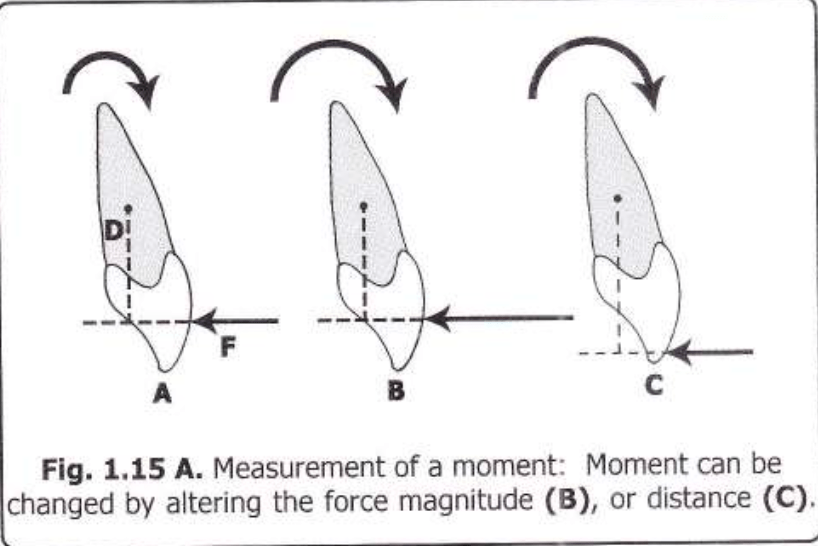
Imagine your patient’s tooth is a stubborn door. If you push close to the hinges (aka the Center of Resistance, C Res), the door barely spins but slides sideways (translational effect). Push far from the hinges? The door swings open dramatically (rotational effect).
- Moment Formula:
Moment (M) = Force (F) × Perpendicular Distance (d)
Units: gm-mm (like saying, “I bench-press 1000 gm-mm of torque!” 💪).
Diagram Alert! Check out Fig 1.15—it’s the OG of “force vs. distance” drama.
2. Clockwise or Anti-Clockwise? Let’s Settle This!
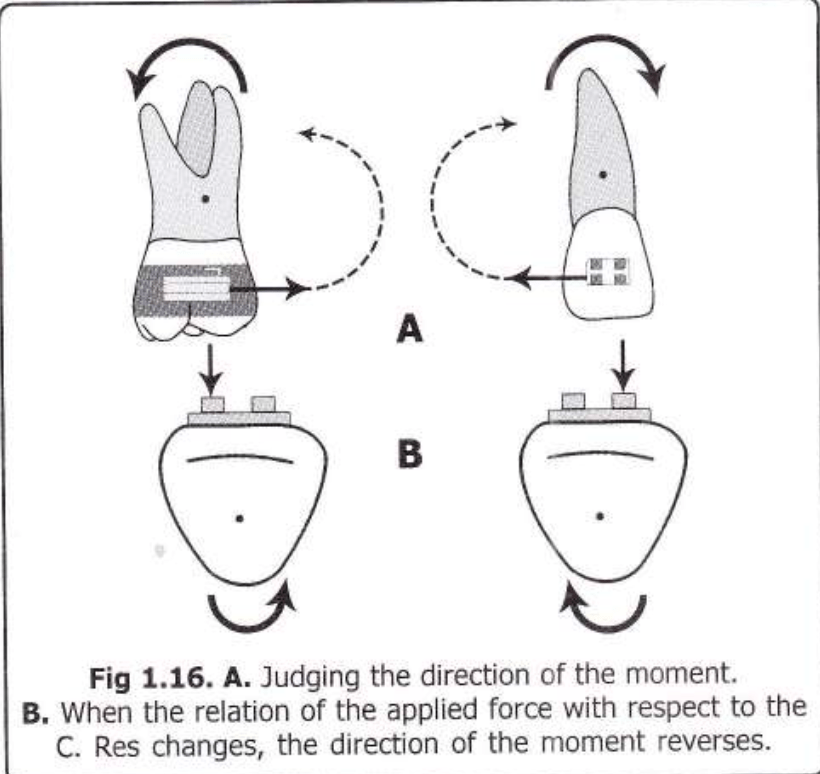
To predict the direction:
- Follow the line of action of the force.
- If it “wraps around” the C Res like a hug, you’ll see if it’s clockwise (👆) or anti-clockwise (👇).
Pro Tip: Flip the force’s direction or shift it to the other side of C Res, and the moment flips too! (Fig 1.16 demonstrates this ✨spicy✨ reversal).
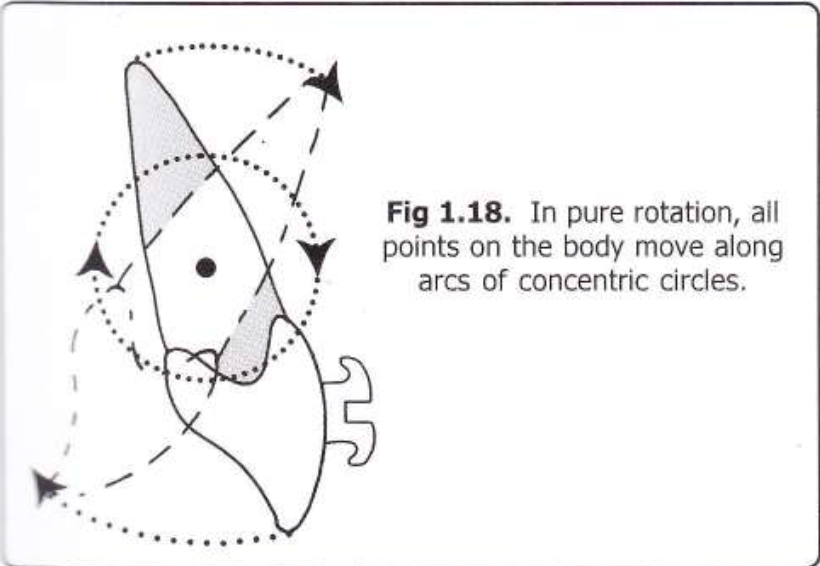
3. Force Couples: The Pure Rotation Party!
Ever seen two kids spinning a merry-go-round? That’s a force couple—two equal, opposite forces not on the same line.
- Example: Your ortho pliers applying a twist to a wire.
- Math Magic:
Total Moment = Force × Distance *between* the forces
(No matter where you apply the couple—it’s a free vector, like that one friend who’s always down to party anywhere 🎉).
Diagram Time! Fig 1.17 shows a couple causing pure rotation (teeth spinning like a TikTok

4. Real-Life Ortho Examples
- Single Force (Mf):
If you push a bracket off-center, the tooth both tilts and moves (like trying to nudge a cat off the couch—it’ll squirm and hiss). - Couple (Mc):
Use a closing loop in your archwire. The loop creates two forces, rotating the tooth without sliding it sideways—pure spin! Example: 100gm forces 10mm apart = 1000 gm-mm moment (💃 Cue the tooth tango!).
5. Why This Matters
- Bracket Positioning: Closer to C Res = more translation (good for intruding/extruding).
- Loops & Springs: Couples = pure rotation (perfect for derotating that snaggletooth).
Fun Fact: Couples are “free vectors”—apply them anywhere on the tooth, and the moment stays the same. It’s like gossip in dental school—it spreads everywhere but the effect is identical. 😜

 Dentowesome