In the bustling world of Navi Mumbai, where careers are cultivated and passions pursued, Kriti Keshav Sherigar shines as a dental intern at MGM Dental College and Hospital. Committed to transforming lives one smile at a time, Kriti is not only a dedicated dental professional but also a former national-level athlete with a penchant for dancing and sports.

1) Could you provide a brief overview of your research project?
My research project had the intriguing title: “Parent’s responses to early presurgical nasoalveolar molding (PNAM) treatment in infants with cleft lip and palate: A qualitative analysis.” Our primary aim was to delve into the responses, coping mechanisms, and psychosocial adjustments of parents whose infants were undergoing PNAM therapy. We conducted face-to-face interviews with parents, discussing various aspects related to PNAM treatment. These interviews were comprehensive and open-ended, allowing us to understand the impact of PNAM on parents and their experiences. We then analyzed the data using inductive thematic analysis.
2) What motivated you to choose this particular research topic?
I was very clear in my head that I wanted pedodontics to be my subject of choice and with the guidance of Dr. Shrirang Sevekar, the Head of the Department of Pedodontics at MGMDCH, we selected this research topic. By reading research papers and articles, we believed that our study could lead to advancements in the treatment and support provided to individuals affected by cleft lip and palate, as well as their families.
3) How did you become interested in the ICMR STS program, and what was your application process like?
I first learned about the ICMR STS program through a lecture at my college that explained the program’s opportunities and benefits. This introduction motivated me to pursue research through the program.
4) What was the main research question or hypothesis you aimed to address in your project?
Our research aimed to address several key questions:
- How do parents respond to PNAM treatment?
- What coping strategies do parents employ during PNAM therapy?
- What patterns of psychosocial adjustments do parents exhibit during PNAM therapy?
- What are the barriers faced by parents during PNAM therapy?
5) How did you design your research proposal and select your methodology?
Our research proposal was carefully designed in accordance with the guidelines provided by ICMR. Given the nature of our study, which focused on qualitative analysis, we selected our methodology after extensive reading of related articles and papers to ensure its suitability.
6) Can you describe the specific methods and techniques you used to collect and analyze data?
We collected data through face-to-face interviews, and the analysis was conducted using inductive thematic analysis. The process involved familiarizing ourselves with the collected data, generating initial codes, collating codes into themes, and then further categorizing themes into subthemes. Ultimately, we created a thematic map based on these themes and subthemes.
7) Were there any surprising or noteworthy discoveries during your research?
Yes, our research yielded some interesting findings. We discovered that various coping strategies, such as social support from family, parents of infants with similar conditions, and the healthcare team, positively benefited parents. Successfully completing NAM therapy resulted in positive outcomes, including increased empowerment through successful feedings and effective management of daily challenges during therapy. Interestingly, our study also concluded that the financial burden may not be the critical factor influencing parents’ rejection of NAM treatment for infants with cleft lip and palate.
8) Were there any unexpected challenges or obstacles that you encountered during your research process? How did you overcome them?
I encountered a few unexpected challenges during the initial phases of my research journey. This was an entirely new experience for me, so understanding the entire research process posed an initial challenge. Additionally, as I was nearing the end of my third year and had university exams looming just a month or two away, juggling my studies, clinical postings, and meeting the ICMR deadlines proved to be quite a task. However, what made all the difference was the unwavering support and guidance of my mentor, Dr. Shrirang Sevekar. His expertise and encouragement were instrumental in helping me navigate these challenges. His guidance motivated me to work harder and approach the research with determination. Ultimately, our research project was selected by ICMR, and I also achieved a good score in my third-year university exams. The feeling of accomplishment and success was truly incredible and made all the effort worthwhile.
8) Are there any specific tips or insights you would offer to future STS applicants to increase their chances of success?
I’d like to offer a piece of advice to future STS applicants: Give it your best effort. The hard work and effort you put into your project are truly worth it. The sense of satisfaction and joy upon completing your project is incomparable. At the start, it might seem confusing, but as you progress, you’ll gain a deeper understanding of the process. The journey is both memorable and highly educational, so work diligently and never give up!
9) Is there anyone you would like to acknowledge or express gratitude to for their support during your research project?
I want to express my heartfelt gratitude to my mentor, Dr. Shrirang Sevekar. He went above and beyond, dedicating extra hours after college to assist me with my doubts and ensure we completed our project on time. His knowledge, patience, and hard work were not only motivating but also truly inspiring. I’d also like to thank my parents and my brother for their unwavering encouragement, which continually pushes me to take on new challenges and supports me along the way.
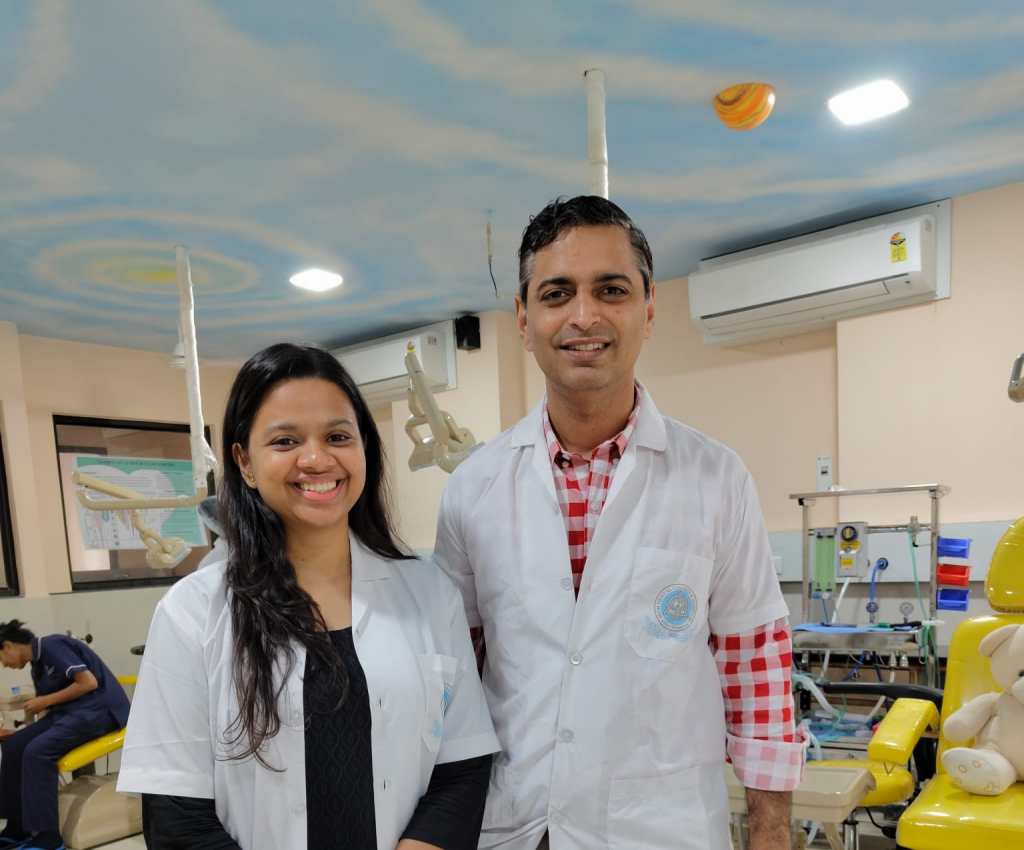
Kriti Keshav Sherigar’s dedication to oral health and her commitment to enhancing the lives of individuals with cleft lip and palate reflect the transformative power of research, compassion, and the pursuit of one’s passions. As she continues to dance through life, Kriti’s contributions to both the field of dentistry and her artistic endeavors are bound to leave an enduring mark.

 Dentowesome