A well-circumscribed radiolucent lesion with a corticated outline was found on a radiograph related to the root of an upper lateral incisor. The tooth was not restored but was slightly discoloured.
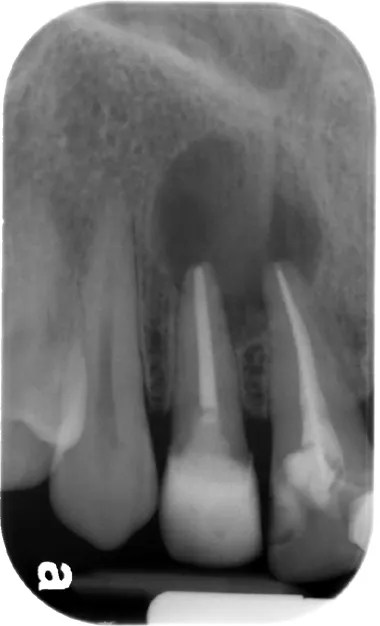
A radicular cyst, also known as a periapical, apical, or dental cyst, is a type of cyst that develops around the root of a tooth. It is typically caused by chronic inflammation in the area, which is usually due to an infection or irritation of the dental pulp.
The development of a radicular cyst is influenced by osmotic pressure. Osmotic pressure refers to the movement of fluid from an area of lower solute concentration (inside the cyst) to an area of higher solute concentration (outside the cyst). This movement of fluid leads to the growth of the cyst, causing it to expand over time. As a result, radicular cysts are often rounded in shape and have a well-defined border or margin.
One of the common signs of a radicular cyst is tooth discoloration. The affected tooth may appear darker or grayer than the surrounding teeth. This discoloration is an indication that the tooth has lost its vitality or blood supply, which can occur when the cyst puts pressure on the nerves and blood vessels in the tooth’s pulp.
The development of a radicular cyst is usually triggered by periapical inflammation. Periapical inflammation refers to inflammation that occurs in the tissues around the apex (tip) of a tooth’s root. This inflammation can result from untreated dental caries (cavities), tooth fractures, or other factors that allow bacteria to enter the pulp and cause an infection.
It’s important to note that while radicular cysts can occur around any tooth, they are most commonly found in relation to the upper lateral incisor teeth. The exact reasons for this predilection are not entirely understood, but it may be due to the unique anatomy and susceptibility of these teeth to inflammation and infection.
Treatment of a radicular cyst typically involves removing the cyst surgically and addressing the underlying cause, such as root canal treatment or tooth extraction if necessary. It’s important for dental professionals to diagnose and manage radicular cysts promptly to prevent complications and maintain oral health.
I hope this explanation helps clarify the concept of a radicular cyst for you. If you have any further questions, feel free to ask!

 Dentowesome