A 1-week-old girl was referred by the paediatrician because of white nodules on her mandibular alveolar ridge.
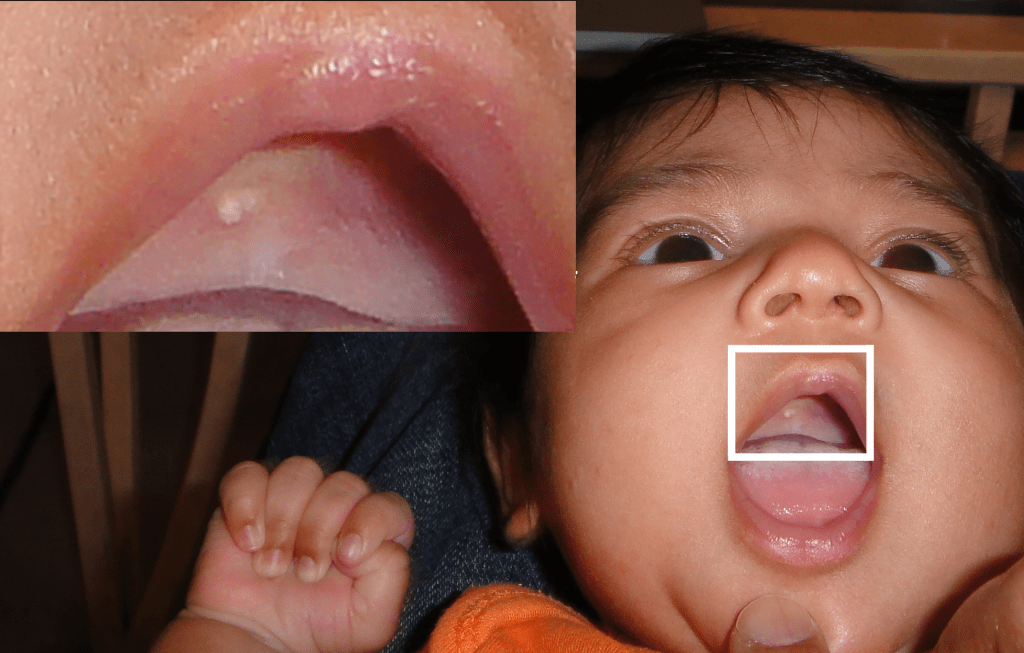
As a dental student, it’s important to learn about various oral conditions that can affect patients of different age groups. Gingival cysts are one such condition that can occur in both neonates (newborns) and adults, although they are more commonly associated with newborns.
In neonates, gingival cysts are often referred to as Epstein’s pearls. These cysts are small, white or yellowish bumps that appear along the gum line or on the roof of the mouth. They are considered a normal finding in newborns and are typically harmless. Epstein’s pearls are thought to result from the accumulation of epithelial cells (the cells that make up the outer layer of the skin) during the development of the gums. They usually resolve on their own within a few weeks or months after birth without requiring any treatment.
On the other hand, gingival cysts can also occur in adults. In adults, these cysts are usually referred to as adult gingival cysts or adult Epstein’s pearls. Adult gingival cysts are similar in appearance to neonatal Epstein’s pearls and can occur anywhere along the gum line. However, unlike neonatal Epstein’s pearls, adult gingival cysts are considered pathological and may require treatment. They are thought to develop due to various factors such as trauma, chronic irritation, infection, or the entrapment of epithelial remnants within the gum tissue.

 Dentowesome