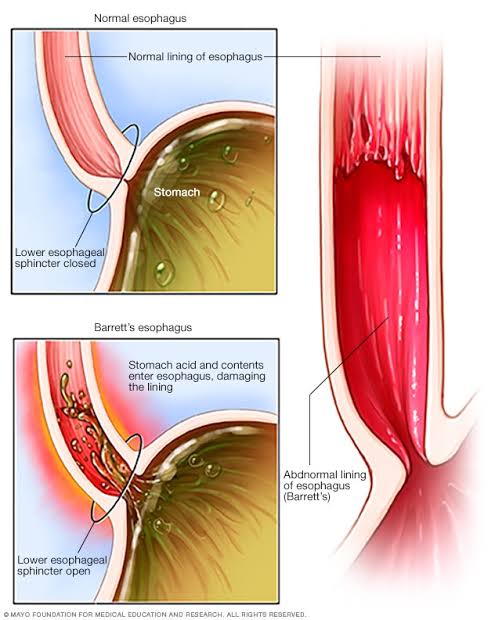
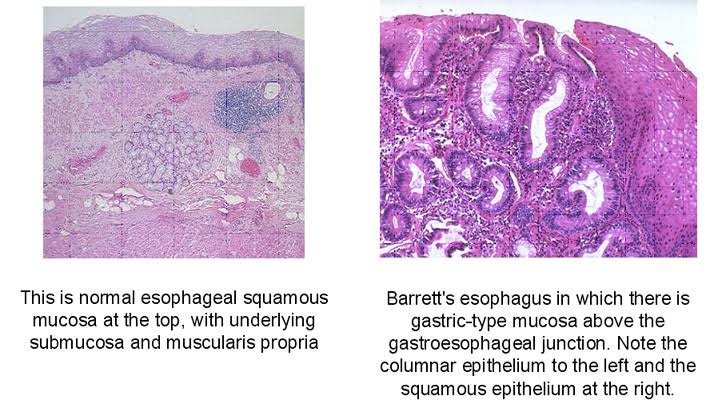
- Barrett’s Esophagus is a complication of GERD that is characterized by intestinal metaplasia within the esophageal squamous mucosa.
- The greatest concern in Barrett Esophagus is that it confers an increased risk of esophageal adenocarcinoma.
- Morphology – Barrett Esophagus can be recognised as one or several tongues or patches of red, velvety mucosa extending upward from the gastroesophageal junction
- This metaplastic mucosa alternates with residual smooth, pale squamous mucosa and interferes with light brown columnar mucosa distally.
- Goblet cells, which have distinct mucous vacoules that stain pale blue by H&E and impart the shape of a wine goblet to the remaining cytoplasm, define intestinal metaplasia and are necessary for diagnosis of Barrett Esophagus.
- Clinical features – Barrett Esophagus can only be identified through endoscopy and biopsy, which are usually prompted by GERD symptoms
Treatment – endoscopic resection, which uses an endoscope to remove damaged cells to aid in the detection of dysplasia and cancer.
Radiofrequency ablation, which uses heat to remove abnormal Esophagus tissue.

 Dentowesome