
THUMB & DIGIT SUCKING :
• Digit Sucking is defined as the placement of the thumb/one or more fingers in varying depths into the mouth.
• It may be practiced even during intra-uterine (IU) life.
• Presence of this habit is quite normal till 3½ – 4 yrs.
ETIOLOGY:
A number of theories have been put forward to explain why thumb sucking occurs. The following are some of the accepted ones:
- Freudian theory: This theory was proposed by Sigmund Freud in the early part of this century.
• He suggested that a child passes through various distinct phases of psychological development of which the oral and the anal phases are seen in the first three years of life.
• In the oral phase, the mouth is believed to be an oro-erotic zone.
• The child has the tendency to place his fingers or any other object into the oral cavity.
• Prevention of such an act is believed to result in emotional insecurity and poses the risk of the child diversifying into other habits. - Oral drive theory of Sears and Wise: Sears and Wise in 1950 proposed that prolonged suckling could lead to thumb sucking.
- Benjamin’s theory:
• Benjamin has suggested that thumb sucking arises from the rooting or placing reflex seen in all mammalian infant.
• Rooting reflex is the movement of the infant’s head and tongue towards an object touching his cheek.
• The object is usually the mother’s breast but may also be a finger or a pacifier.
• This rooting reflex disappears in normal infants around 7 – 8 months of age. - Psychological aspects: Children deprived of parental love, care and affection are believed to resort to this habit due to a feeling of insecurity.
- Learned pattern: According to some authors, thumb sucking is merely a learned pattern with no underlying cause or psychological bearing.
CLASSIFICATION:
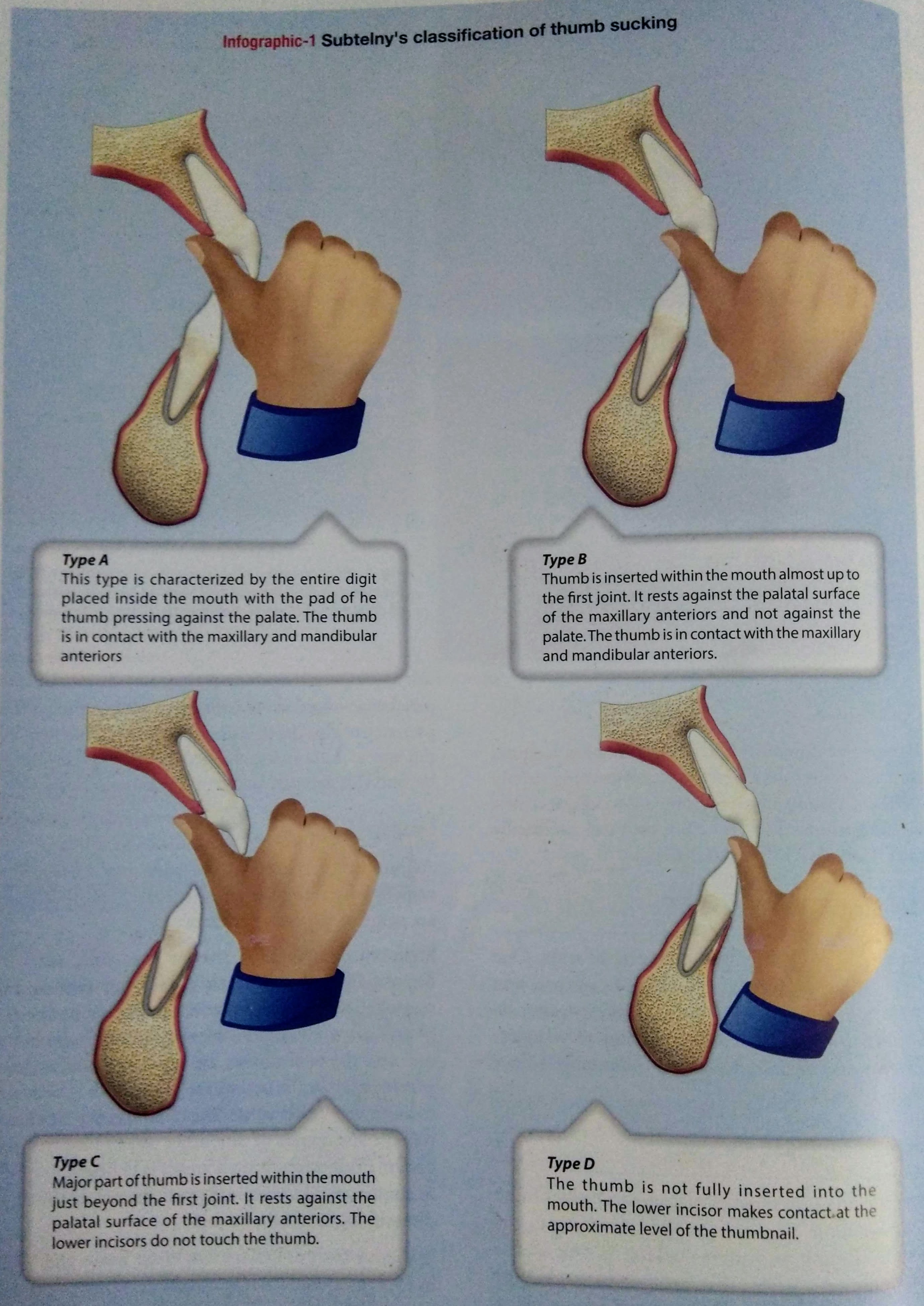
EFFECTS :
The severity of malocclusion caused by thumb sucking depends on:
DURATION: Amount of time spent indulging in the habit.
FREQUENCY : The number of time the habit is activated in a day.
INTENSITY: Vigour with which the habit is performed.
The following are some effects:
- Effects on Maxilla
• Constricted maxilla due to lowered tongue position + buccinator action, while sucking.
• V-shaped narrow palate.
• Posterior cross-bite may occur.
• Increased SNA angle.
2. Effects on Maxillary Teeth:
• Spacing in maxillary anterior teeth.
• Increased maxillary arch length.
• Labial flaring of maxillary anterior teeth.
3. Effects on Upper Lip :
• Short, hypotonic incompetent upper lip
4. Effects on Thumb:
• Presence of clean nails & callus on fingers.
5. Effects on the Lower lip:
• Hyperactive lower lip with increased mentalis activity.
6. Effects on the Mandibular Teeth:
• Retroclination of lower teeth.
7. Effects on Inter-arch Relationship:
• Increased overjet due to flaring of maxillary incisors
• Spacing of maxillary anterior teeth.
• Increased maxillary arch length.
8. Effects on Tongue:
• Lowered tongue position.
• Increased chance of developing tongue thrust habit.
MANAGEMENT:

- PSYCHOLOGICAL APPROACH:
• Parents should be counseled to provide child with adequate love, affection and spend quality time with the child.
• Success of any habit interception largely depends on the subject’s willingness to be helped to discontinue his/her habit.
Dunlops Theory of Beta Hypothesis
States that the best way to break a habit is by conscious purposeful repititions, i.e the child should be made to sit in front of a large mirror &asked to observe himself as he indulges in the habit.
- POSITIVE REINFORCEMENT:
• Keeping track of the habit free days and rewarding the child can give the child a sense of pride.
3. MECHANICAL AIDS:
• Reminding appliances that assist the child who is willing to quit the habit but is not able to do as the habit has entered a subconscious level.
• Following types of habit louis used as mechanical reminding aids in treatment of thumb sucking.
REMOVABLE HABIT BREAKER
Passive removable appliances, that consist of a crib &is anchored to the oral cavity by the means of clasps on the posterior teeth.
FIXED HABIT BREAKER
Heavy gauge stainless steel wire can be designed to form a frame, that is soldered to bands in the molars.
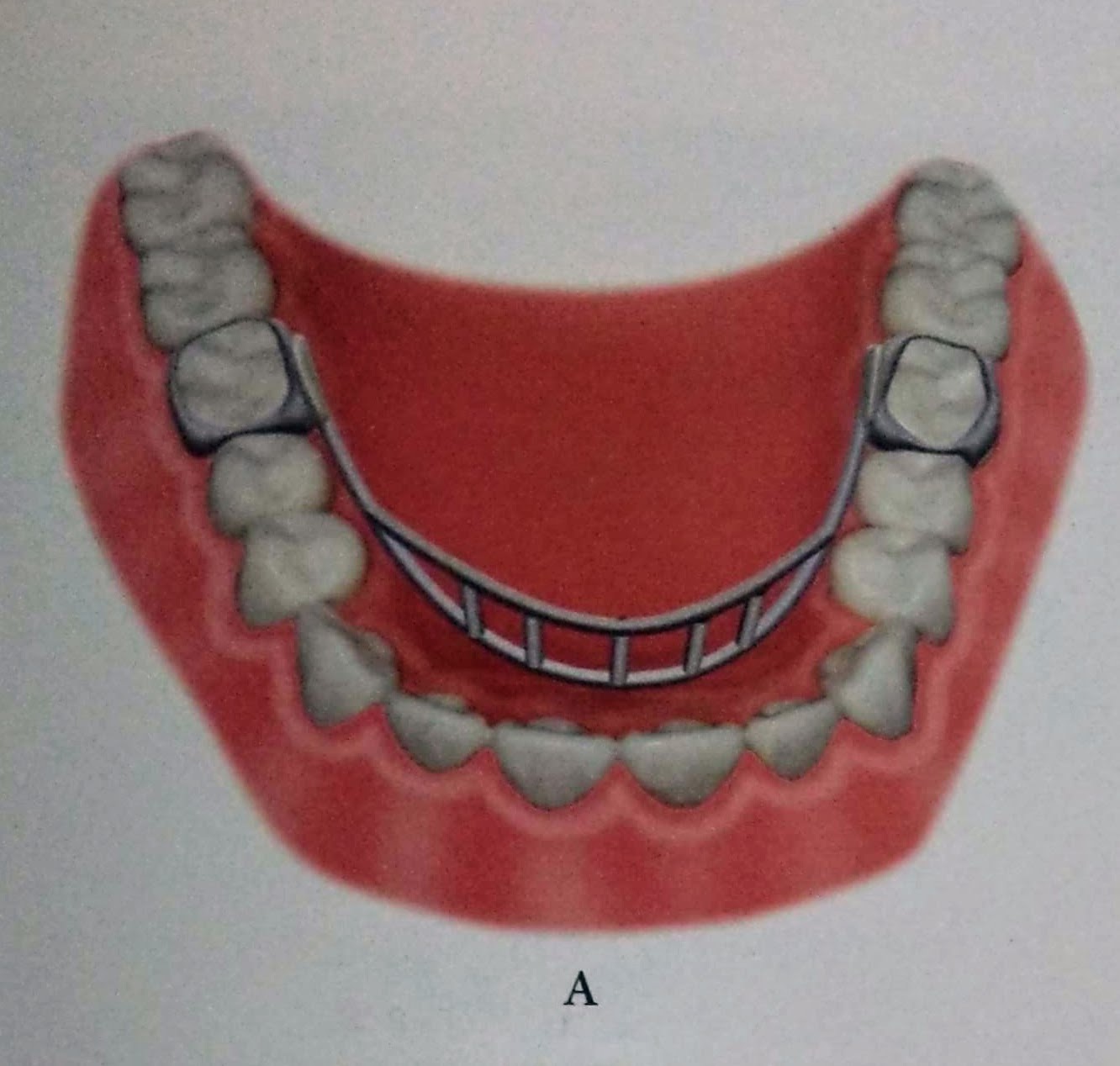
FLAT CRIB THUMB SUCKING APPLIANCE 
VERTICAL RAKE APPLIANCE
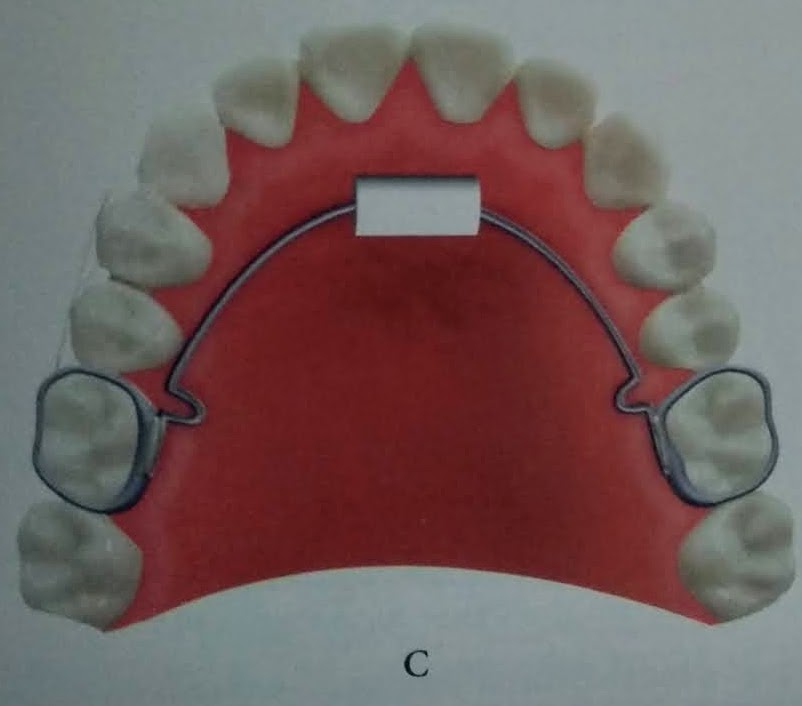
BLUE GRASS APPLIANCE 
VERTICAL CRIB THUMB SUCKING APPLIANCE
4. CHEMICAL APPROACH:
Use of the bitter tasting/foul smelling preparation placed on the thumb, that is sucked can make the habit distasteful.
- Pepper dissolved in volatile medium.
- Quinine
- Asafoetida
REFERENCES:
- ORTHODONTICS:The Art & Science,S.I BALAJHI (7th edition)
- dryasmin.ae

 Dentowesome